You’ve been living with a broken heater for three weeks. The landlord promised to fix it twice, but nothing happened. Now you’re ready to write a formal complaint, but the blank page makes your mind go blank too. That’s normal. Writing an official letter about a tenant rights violation feels like navigating a minefield – one wrong word and you worry about hurting your case. But the right example can turn that anxiety into a clear, confident draft in minutes.
Using a tenant rights violation letter example isn’t cheating. It’s smart. A good sample gives you the structure, the right tone, and the key legal phrases that landlords and property managers expect to see. It saves you from starting from scratch while still letting you add your own details. Think of it as a map, not a cage. You drive, but the map shows the fastest route.
Category: Tenant Rights Violation Letters
Why Bother With a Sample? Because Tone and Format Matter
When you’re frustrated, it’s tempting to fire off an angry email. But professional correspondence – even when you’re in the right – requires a calm, factual tone. A tenant rights violation letter example shows you how to state the problem without sounding hostile. It also teaches you the business letter format: date, landlord’s address, a clear subject line, and a polite but firm body. That structure signals that you take the issue seriously, which often gets faster results.
Ever received a letter that felt too stiff or too casual? You want to land somewhere in the middle. The sample you choose should reflect that balance. For instance, if you’re writing about a health hazard like mold, your tone should be urgent but not hysterical. If it’s about a minor repair, a semi-formal approach works fine.
How to adapt a sample without losing your authentic voice
Don’t copy the sample word for word. That ends up sounding robotic. Instead, read it, understand its structure, then rewrite it in your own words. Start by replacing the generic facts with your specific details: dates, names, what you’ve already done to resolve the issue. Keep the strong phrases – “I am formally requesting repair within 48 hours” – but mix them with your natural language.
A common mistake is using outdated salutations like “To Whom It May Concern” when you know the landlord’s name. Use “Dear [Name]” unless you’re sending a general complaint to a property management office. And if you’re sending the letter via email, digital letter format matters: use a clear subject line (e.g., “Formal Complaint: Heating Issue at [Address]”) and skip the full physical address header if you’re pasting the letter into an email body.
If you need help with the opening paragraph, make it a short summary of the violation. For example: “I am writing to formally notify you of a violation of our lease agreement regarding the heating system in Apartment 3B. This issue has persisted since January 5, and despite two verbal requests, no action has been taken.” That grabs attention immediately.
Common mistakes to avoid in tenant rights violation letters
One big error: forgetting to keep a copy. Always save a version for yourself, preferably with proof of delivery. Another: threatening legal action too early. A sample might include that language, but you only want to escalate if you’ve given the landlord a reasonable chance to fix the problem. Phrases like “I will pursue legal remedies if this is not resolved within 10 days” should be used sparingly and factually.
Also, watch your salutation and closing. Stick with “Sincerely” or “Best regards.” Avoid “Yours truly” in a complaint letter – it sounds overly formal or sarcastic. For email, “Thank you for your prompt attention” works well as a closing line.
Tailoring the sample to your specific situation
Not all tenant rights violations are the same. A bedbug infestation requires a very different letter than a broken lock. Look for a tenant rights violation letter example that matches your exact issue. If you can’t find one, combine parts from a general complaint letter template for landlord repairs with the specific legal language from your state’s tenant handbook. For executive-level complaints – if you’re writing to a corporate landlord’s regional manager – you might want a concise summary style that gets straight to the point.
Every letter should include these elements: your name and address, the landlord’s name and address, a clear description of the problem, the date you first reported it, what you’ve done since, and a specific request. Don’t forget to mention what law or lease clause you believe is being violated if you know it. That shows you’ve done your homework.
Finally, proofread the letter carefully. A typo doesn’t ruin your case, but it does make you look less credible. Read it out loud to catch awkward phrasing. Ask a friend to glance at it. If your sample has letterhead design elements, emulate the clarity – your name at the top, contact info, and the date. You don’t need fancy graphics; clean formatting is enough.
Your next step: treat the sample as a springboard
The best tenant rights violation letters feel professional and personal at the same time. They show that you’re serious but reasonable. Use your sample to get started, but don’t be afraid to adjust as you go. The more you write, the faster it gets. Next time a problem comes up, you’ll already have a template that works for you. And that confidence alone can make all the difference.
If you’re dealing with a more complicated dispute – like a grade dispute or a complaint about an automated phone system failure – the same formal writing tips apply. Check out our grade dispute appeal letter for tone reference, or see how to handle a phone system complaint for language that’s firm but not aggressive. And if your landlord is an unlicensed tradesperson, this sample can help you structure your concerns.
Useful Writing Samples
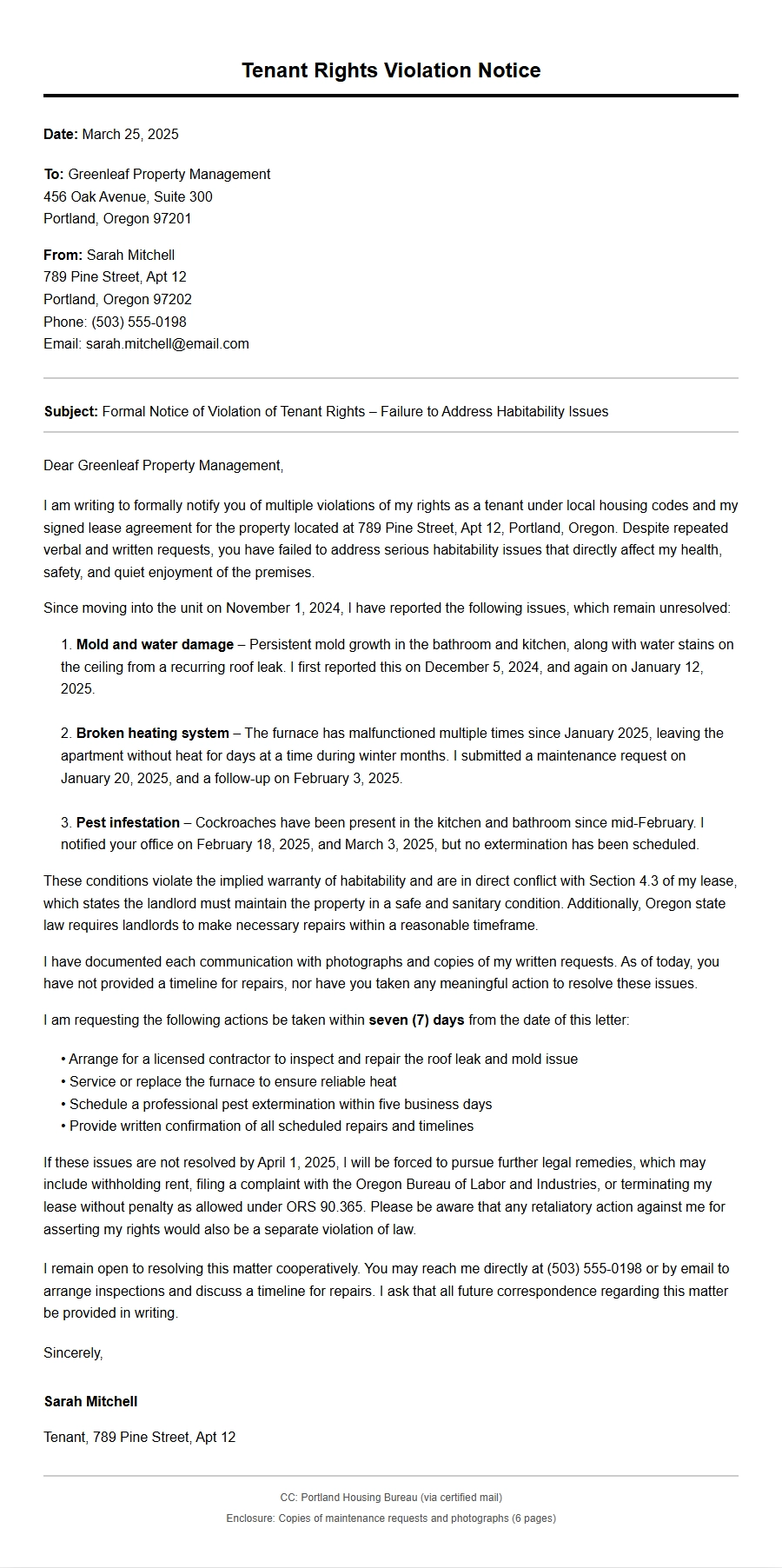
Example Tenant Rights Violation Letter
Failure to Repair Plumbing Issues
Date: October 15, 2023
To: Landlord / Property Manager
Subject: Notice of Unaddressed Plumbing Repairs and Request for Immediate Action
Dear [Landlord Name],
I am writing to formally notify you of ongoing plumbing problems in my unit (Apartment 3B) that have not been repaired despite multiple requests. The following issues persist:
Kitchen sink drain is completely clogged since October 5, causing water backup.
Bathroom toilet runs continuously, wasting water and increasing utility costs.
Hot water in the shower fluctuates between scalding and cold, risking burns.
I previously reported these issues on October 7, October 10, and October 12. A plumber has not visited, and you have ignored my calls. Under the local housing code and our lease, you are required to maintain the premises in habitable condition. Continued neglect is a violation of my tenant rights.
I request that emergency repairs begin within 24 hours and all plumbing issues be resolved within 7 days. If no action is taken, I will exercise my right to withhold rent or pursue legal remedies. Please respond in writing by October 17.
Sincerely, [Your Name] [Phone Number]
Unlawful Security Deposit Deduction
Date: November 2, 2023
To: [Landlord Name]
Subject: Dispute of Unauthorized Security Deposit Deductions
Dear [Landlord Name],
I am writing to dispute the deductions taken from my security deposit of $1,200 after moving out of Apartment 2A. Your itemized statement shows deductions totaling $500 for "carpet cleaning" and "wall repainting." However, these deductions are not justified under our lease or state law.
According to records:
Item
Amount
Reason for Dispute
Carpet cleaning
$200
Carpets were professionally cleaned before move-in; normal wear and tear is not deductible.
Wall repainting
$300
Walls had minor scuffs from normal living; no holes or major damage. Painting is normal maintenance, not my responsibility.
I request a full refund of $500 within 14 days as required by [State] law. Failure to do so may result in a small claims suit for treble damages. Please provide proof of actual costs incurred, if any.
Sincerely, [Your Name]
Illegal Entry Without Notice
Date: December 5, 2023
To: [Landlord Name]
Subject: Notice of Violation – Unauthorized Entry into Premises
Dear [Landlord Name],
You entered my apartment (Unit 5C) on three separate occasions without providing the legally required 24-hour written notice. These entries violate my right to quiet enjoyment and [State] landlord-tenant law.
Details of unauthorized entries:
Date
Time
Reason Stated (if any)
Nov 20, 2023
10:30 AM
“Check the water heater” – no notice given.
Nov 28, 2023
2:15 PM
“Inspect smoke alarms” – you entered while I was at work.
Dec 3, 2023
8:00 AM
No reason – you used your key without my consent.
I demand that you cease all unauthorized entries immediately. Future inspections or repairs must be scheduled with at least 24 hours written notice, except in genuine emergencies. If this continues, I will file a complaint with the housing authority and consider legal action.
Please confirm in writing that you will comply.
Sincerely, [Your Name]
Lack of Heat in Winter
Date: January 12, 2024
To: [Landlord Name]
Subject: Urgent Complaint – Inadequate Heating in Apartment
Dear [Landlord Name],
I am writing to report that the heating system in my apartment (Unit 4D) has been malfunctioning since January 2, 2024. Despite multiple reports, the temperature inside my apartment has consistently fallen below 55°F at night, well below the legal minimum of 68°F required by [City/State] housing code.
Temperature logs from the past week:
Date
Indoor Temp (AM)
Indoor Temp (PM)
Jan 5
52°F
58°F
Jan 6
48°F
55°F
Jan 7
50°F
57°F
Jan 8
46°F
54°F
This condition is a violation of the implied warranty of habitability and puts my health at risk. I request that you restore heating immediately and reimburse me for space heaters I purchased ($75) due to your inaction. If repairs are not completed by January 14, I will withhold rent or file a complaint with the housing authority.
I await your urgent response.
Sincerely, [Your Name]
Mold Infestation and Health Hazards
Date: February 20, 2024
To: [Landlord Name]
Subject: Notice of Mold Growth and Request for Remediation
Dear [Landlord Name],
I am writing to notify you of extensive mold growth in my bathroom and bedroom closet (Apartment 6A). This condition has caused respiratory issues for me and my daughter, including persistent coughing and allergic reactions. I reported the leak from the ceiling on January 25, but no repairs were performed.
Visible mold areas:
Bathroom ceiling – black spots covering approximately 3 square feet.
Bedroom closet – green/white mold on walls and stored clothing.
Base of bathroom wall – water damage and mold along the baseboard.
This is a serious health hazard and a violation of the housing code. I demand prompt remediation by a licensed mold abatement professional, including fixing the roof leak. I also request compensation for damaged clothing (estimated $200). Please provide a timeline for repairs within 5 days.
If ignored, I will contact the health department and exercise my right to repair-and-deduct.
Sincerely, [Your Name]
Pest Infestation (Bedbugs)
Date: March 8, 2024
To: [Landlord Name]
Subject: Complaint – Bedbug Infestation and Failure to Treat
Dear [Landlord Name],
I have found bedbugs in my bedroom (Apartment 7C) since February 28. I immediately notified you, but you have only offered to provide a spray can of insecticide. This does not constitute professional treatment required by law.
Evidence of infestation:
Red bites on my arms and legs, confirmed by a doctor.
Live bedbugs found in mattress seams and behind headboard.
Dark spots (fecal matter) on sheets.
Under [State] law and the lease, you are responsible for treating the entire building if an infestation is found in one unit. Delaying professional extermination is a violation of my right to a safe and habitable home. I request that a licensed pest control company inspect and treat my unit within 3 days. Also, I need reimbursement for medical bills ($50) and replacement of infested bedding ($120).
If you fail to act, I will file a complaint with the health department and consider withholding rent.
Sincerely, [Your Name]
Rent Increase Without Proper Notice
Date: April 1, 2024
To: [Landlord Name]
Subject: Dispute of Unlawful Rent Increase
Dear [Landlord Name],
I received a notice on March 28 stating that my rent would increase from $1,000 to $1,200 effective May 1. This notice provides only 34 days’ notice, which violates the [State] requirement of at least 60 days’ notice for rent increases of more than 10%. Additionally, our lease does not allow mid-term increases unless agreed upon.
Current rent details:
Item
Current
Proposed
Monthly Base Rent
$1,000
$1,200
Increase Percentage
–
20%
Notice Days
–
34 days
Therefore, I reject the proposed increase. I will continue to pay $1,000 per month as per the existing lease terms. If you wish to raise rent after the lease ends, you must provide proper notice at least 60 days before expiration. Please correct this immediately to avoid legal dispute.
Sincerely, [Your Name]
Discrimination Based on Disability
Date: May 14, 2024
To: [Landlord Name]
Subject: Complaint – Denial of Reasonable Accommodation for Disability
Dear [Landlord Name],
I am writing to address your refusal to allow my emotional support animal (ESA) in Apartment 8B, despite my providing a valid letter from my licensed therapist. You stated, “No pets allowed” and threatened eviction if the dog remains.
This request is a reasonable accommodation under the Fair Housing Act due to my disability (anxiety disorder). The ESA is not a pet; it is a prescribed support animal. I submitted the letter on April 20 and followed up twice, but you did not respond.
Your actions constitute discrimination and violate federal and state fair housing laws. I demand that you:
Withdraw the eviction threat immediately.
Approve the ESA accommodation in writing.
Waive any pet fees, as ESAs are exempt.
If you do not comply within 10 days, I will file a complaint with HUD and seek legal counsel. I am prepared to document further discrimination.
Sincerely, [Your Name]
Retaliation for Filing a Complaint
Date: June 21, 2024
To: [Landlord Name]
Subject: Cease and Desist – Retaliatory Eviction Notice
Dear [Landlord Name],
On May 28, I submitted a formal complaint to the housing authority about the broken elevator in my building (Apartment 9A). On June 15, you served me a 30-day notice to vacate citing “renovation of the unit.” This timing strongly suggests retaliation, which is illegal under [State] law.
Timeline of events:
Date
Event
May 28
I filed complaint about elevator nonworking for 2 weeks.
June 5
Housing authority inspected the building.
June 15
You issued eviction notice, claiming “renovation.”
I have been a model tenant for 4 years, always paying rent on time. No prior complaints about my tenancy. This eviction notice is clearly retaliatory and violates the law. I demand immediate withdrawal of the notice. If you proceed, I will file a retaliation claim in court and seek damages, including attorney fees.
Please confirm withdrawal in writing by June 30.
Sincerely, [Your Name]
Privacy Violation – Excessive Noise from Landlord
Date: July 10, 2024
To: [Landlord Name]
Subject: Complaint – Landlord Harassment and Invasion of Privacy
Dear [Landlord Name],
I am writing to formally complain about your repeated late-night entry into my unit (Apartment 1A) without notice, as well as the excessive noise you create while entering the basement directly below my bedroom between 11 PM and 2 AM. This has been occurring for three weeks despite my verbal requests to stop.
Specific incidents:
June 25 – You used your key to enter my apartment at 11:30 PM claiming need to “check pipes.” No emergency existed.
July 2 – Loud banging in basement at 1:00 AM woke me and my son.
July 8 – You entered again at 10:45 PM without knocking or notice.
These actions violate my right to quiet enjoyment and the lease clause requiring notice for entry and quiet hours from 10 PM to 7 AM. I demand that you:
Cease all unauthorized entries.
Stop basement work after 9 PM.
Provide a written apology and assurance of compliance.
If this harassment continues, I will file a police report and seek a restraining order, as well as contact the housing authority.
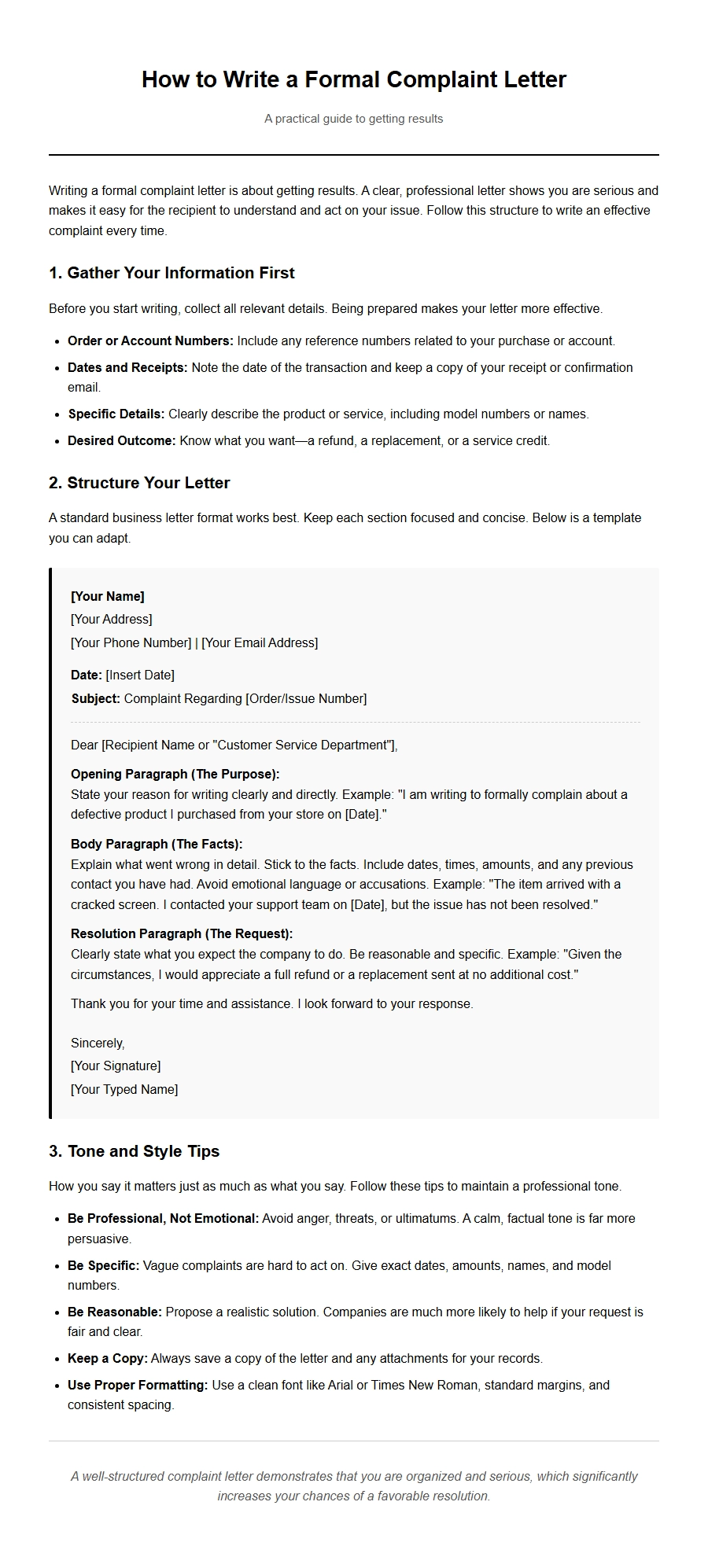 How to Write a Formal Complaint Letter
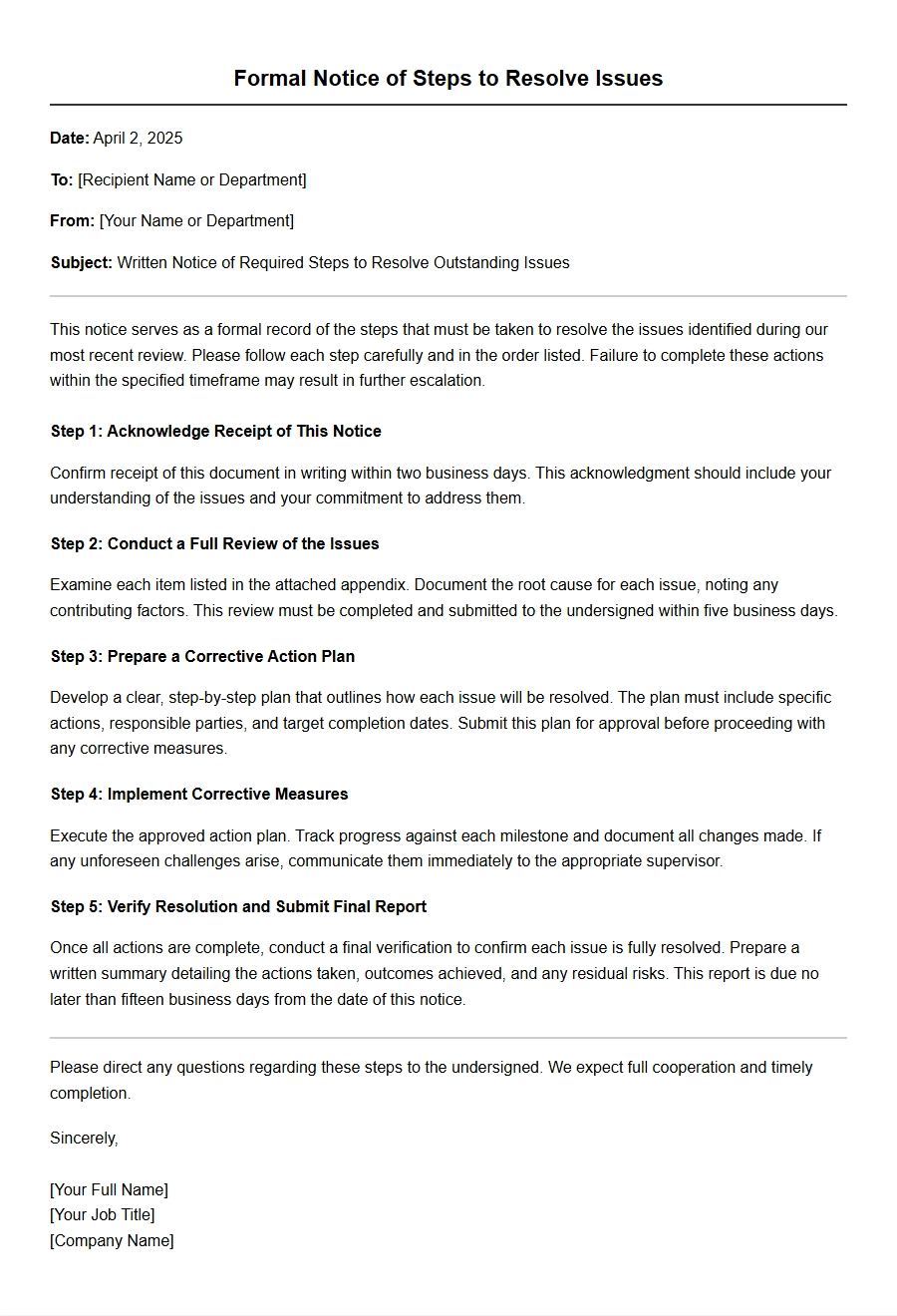 Steps to Resolve Issues via Written Notice
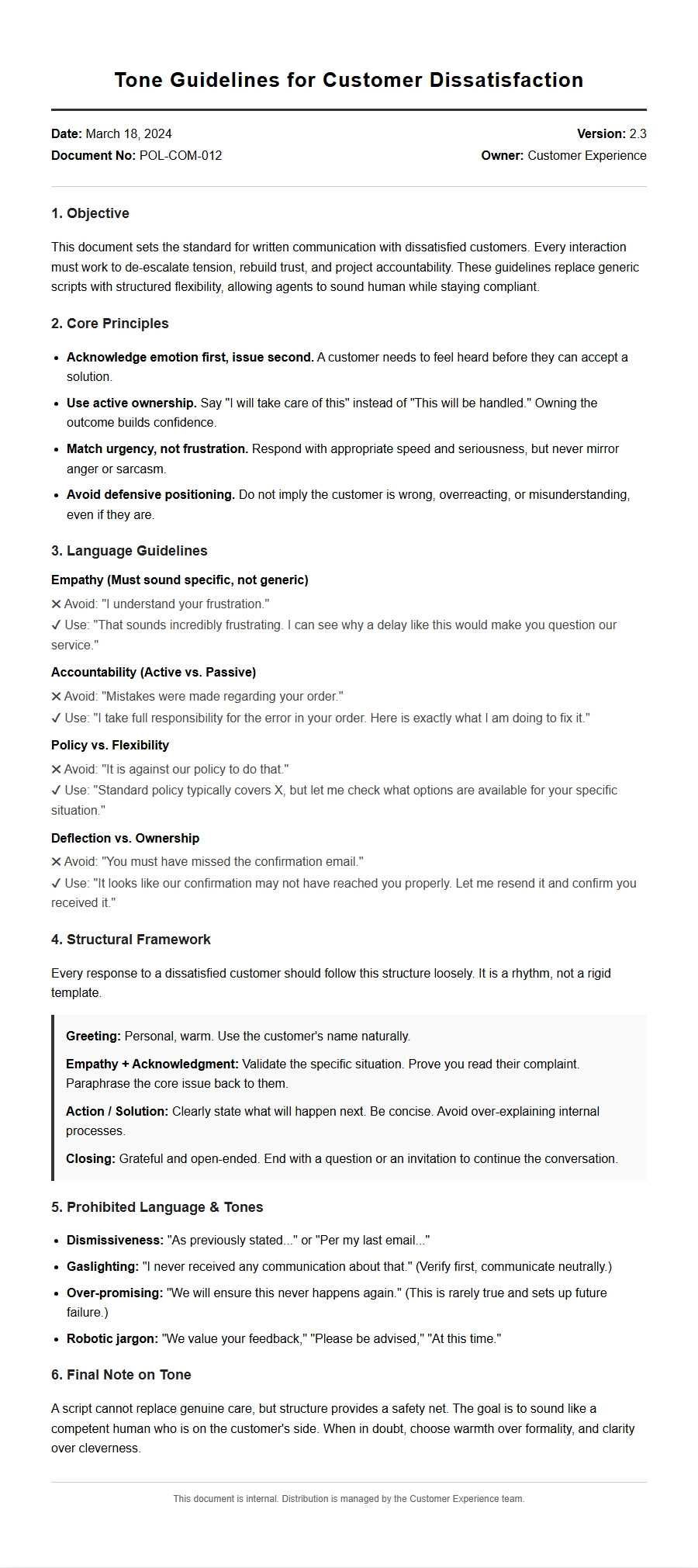 Tone Guidelines for Dissatisfied Customer Letters
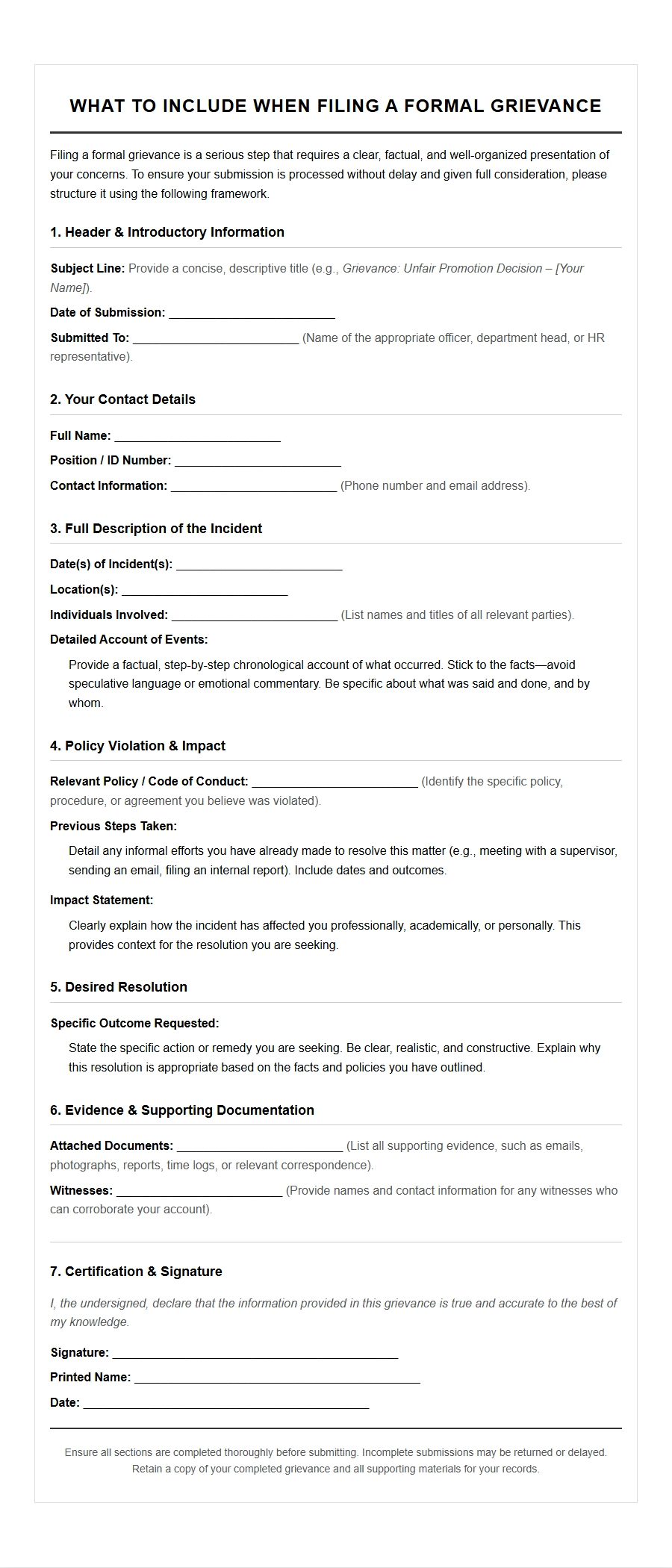 What to Include in a Formal Grievance Letter
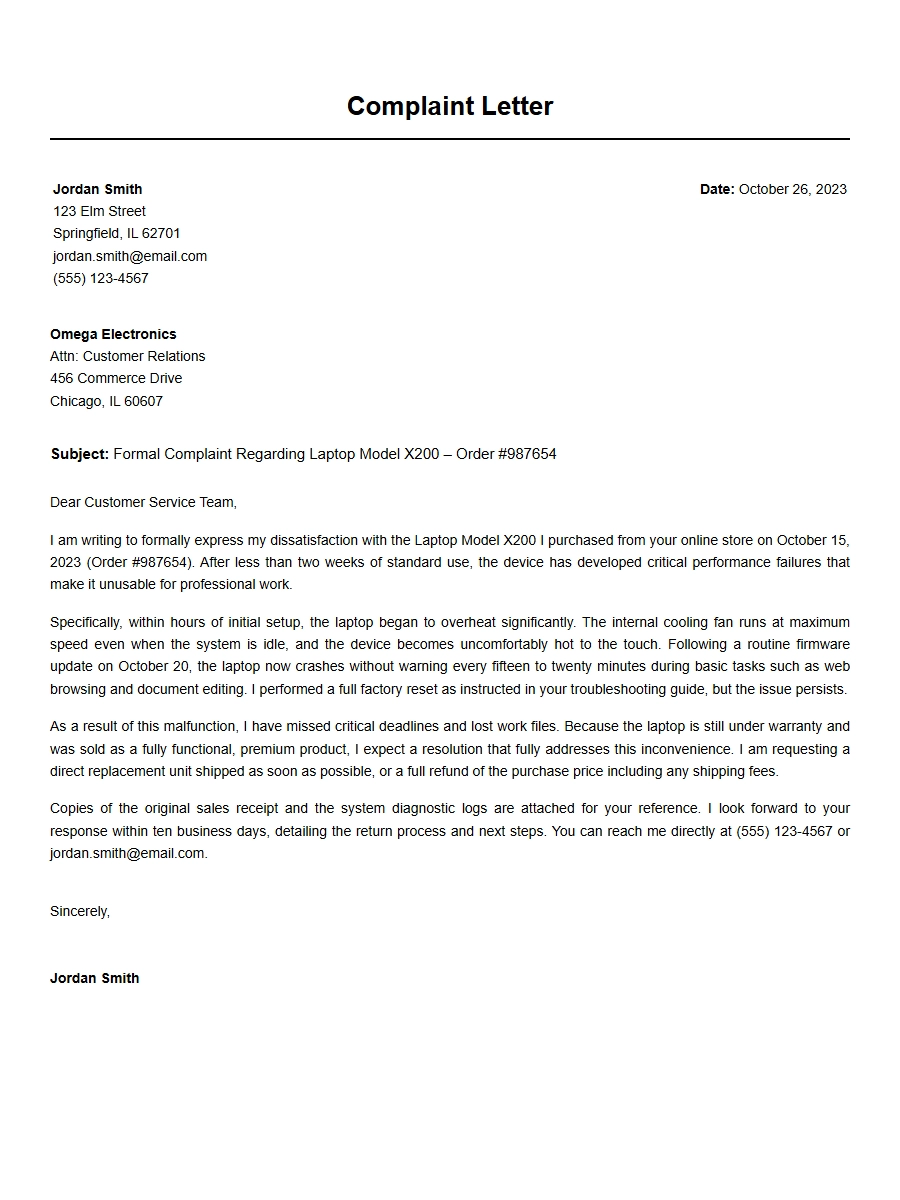 Structure of an Effective Complaint Letter
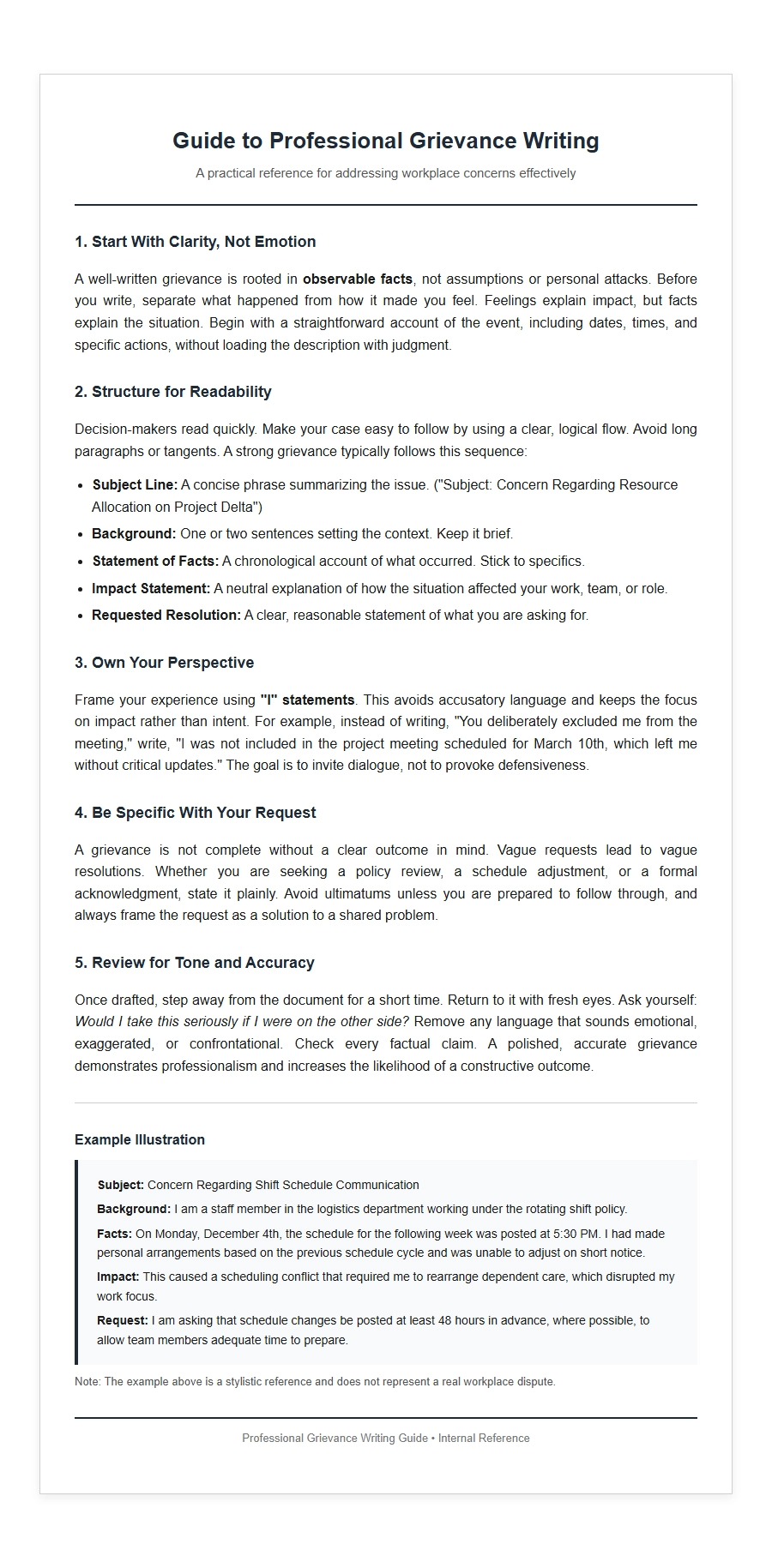 Best Practices for Writing Professional Grievance Letters