You’re holding a pen or staring at an email draft, and the words just won’t come. Writing a condolence letter is hard. You want to say the right thing, but you’re afraid of sounding stiff, clichéd, or worse—like you don’t care. That blank page can feel overwhelming. But you don’t have to start from scratch.
Using a condolence letter sample isn’t cheating. It’s a smart way to get the structure right—where to place the salutation, how to open, what to include in the body, and how to close. A good letter template gives you a framework so you can focus on what matters: your genuine message. It’s like having a trusted colleague whisper, “Start here, then add your own words.”
Category: Professional Empathy and Etiquette
The key is choosing the right sample for your situation. A formal condolence letter to a company executive will look different from one to a close coworker. For a boss or a client’s family, you’ll want a business letter format with proper letterhead and a respectful tone. For a teammate, a simpler, warmer digital letter format might feel more appropriate. The sample should match the relationship and the context—whether it’s a printed card or an email.
How to adapt a sample without losing your voice
Once you pick a sample, it’s your turn to personalize. Replace generic lines like “I was sorry to hear of your loss” with something specific. “I’ll always remember how Tom helped me with the quarterly reports—he had a way of making spreadsheets feel less tedious.” That little detail makes the letter feel real.
Watch your tone in writing. A condolence letter should be warm and sincere, not stiff or corporate. Avoid overly formal phrases like “We extend our deepest sympathies” if that’s not how you normally speak. It’s okay to say “My heart goes out to you” or “I’m thinking of you during this tough time.” The salutation and closing matter too. “Dear Mr. Smith” works for formal letters; “Dear Jen” is fine for a peer. End with “With deepest sympathy” or simply “With love.”
Common mistakes to avoid
One big error is using an outdated letter structure. For instance, starting with “To Whom It May Concern” in a condolence letter feels cold and impersonal. Always address the recipient directly by name. Another mistake is ignoring the medium. If you’re sending a printed letter, pay attention to letterhead design and envelope etiquette—especially how to address a widow. For a digital letter, include a clear subject line like “Thinking of you” and keep paragraphs short so it’s easy to read on a phone.
Don’t forget to proofread your letter. A typo in a sympathy message can feel careless. Read it aloud, or ask someone to glance at it. And while a sample can guide you, avoid copying the entire thing word-for-word. A customizable letter means you adjust it to reflect your voice and your relationship with the bereaved.
When to use formal vs. casual samples
If you’re writing a formal letter of condolence to an executive, the sample should include a proper header, a respectful salutation, and a closing that matches the company culture. For a colleague on bereavement leave, a shorter, more personal note works. You can see examples of these in our guide on condolence notes for colleagues on leave.
The best condolence letters balance professionalism with genuine warmth. They follow letter writing etiquette without sounding robotic. Start with the person’s name, express your sympathy directly, share a brief memory or praise, then offer support without pressure. Avoid long paragraphs. Short, sincere sentences land better.
Practice helps. The more you write, the easier it becomes to know what to say. Use a sample as a springboard—not a crutch. Let it remind you of the letter structure and common phrasings, then fill in your own experience. Over time, you’ll learn to trust your instincts.
One final thought: the most important thing is that you reached out. Even if your letter isn’t perfect, your effort is what counts. Keep the sample handy for next time, but don’t be afraid to write your own version. The more you do it, the more natural it feels.
Realistic Samples
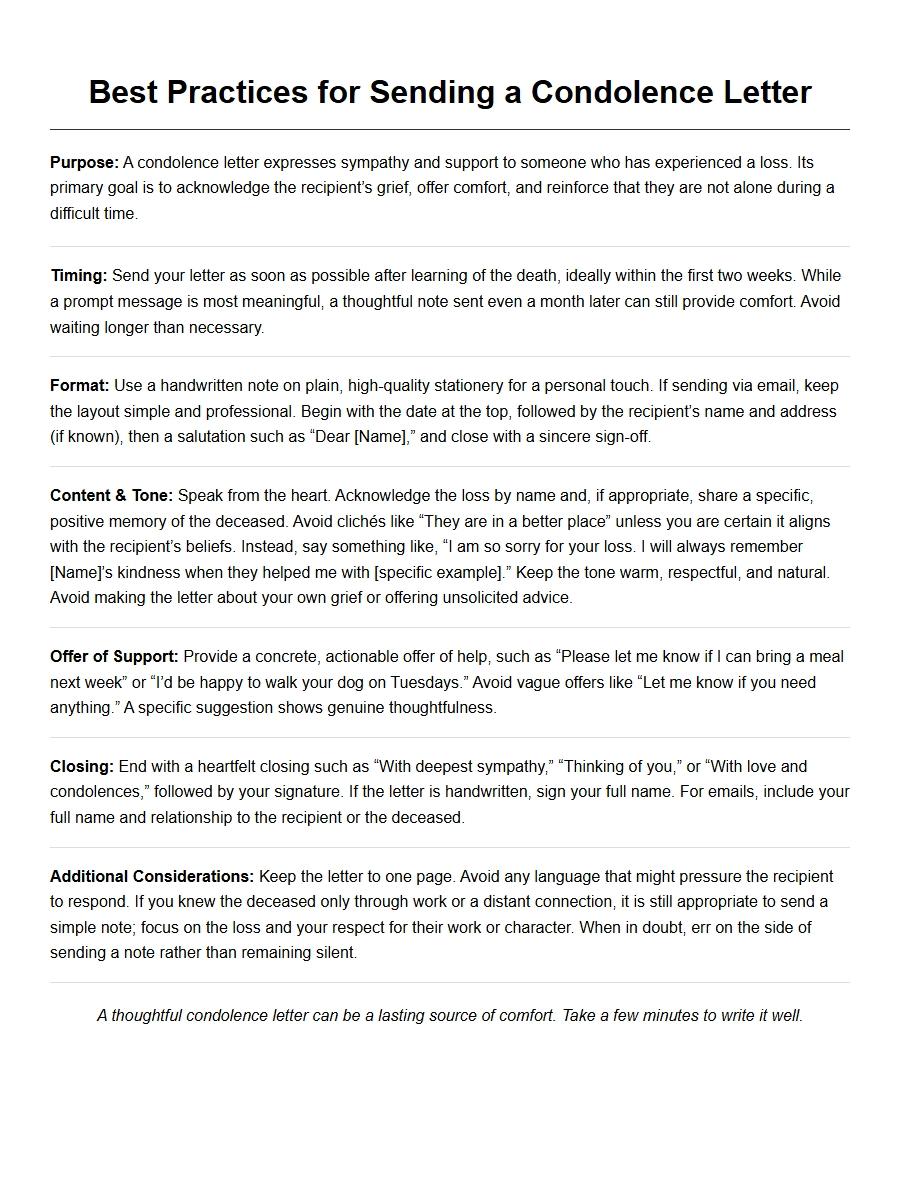
Best Practices for Writing a Condolence Letter
Send Promptly but Not Prematurely
The best practice for timing a condolence letter is to send it within the first two weeks after the death. This window shows the bereaved that you care without intruding on their immediate shock. Sending a card too early—within the first 24 to 48 hours—can feel overwhelming when the family is still making funeral arrangements. Conversely, a letter arriving after a month may seem like an afterthought. Aim for the period between the funeral and the first month. If you learn of the death later, send the note anyway; it is never too late to express sympathy, but sooner is generally better. A timely letter provides comfort when grief is still raw but not chaotic.
Maintain a Sincere and Empathetic Tone
The tone of a condolence letter should be warm, genuine, and respectful. Avoid dramatic or overly emotional language, as this can feel performative. Instead, use simple, heartfelt words such as “I’m so sorry for your loss” or “It broke my heart to hear about [Name].” Steer clear of clichés like “They’re in a better place” unless you are certain the recipient shares that belief. Focus on the survivor’s pain and your shared loss. A good rule is to imagine the letter being read aloud at a quiet moment—if it sounds natural and sincere, it is right. Empathy means acknowledging the hurt without trying to fix it.
Personalize with a Specific Memory
A meaningful condolence letter includes a small, specific memory of the deceased. This makes the note unique and shows you truly knew and valued them. For example: “I will always remember how your mother brought fresh cookies to our block party every summer” or “Your father’s laugh during our fishing trips was contagious.” Avoid general praise like “He was a good man.” Specific details help the bereaved feel that their loved one is remembered as an individual, not just a statistic. If you did not know the deceased well, mention a quality the survivor often spoke about. Keep the memory brief—two to three sentences is enough.
Choose Stationery and Format Carefully
For best practices, a handwritten letter on high-quality stationery is the gold standard. It conveys time, effort, and personal touch. Use plain, neutral paper (white or cream) with a matching envelope. If your handwriting is very difficult to read, type the letter on nice paper and sign it by hand. Avoid email, texting, or social media messages for formal condolences; they lack permanence and intimacy. If you must email because you lack the address, apologize for the impersonal method. The physical letter itself becomes a keepsake the family can hold and reread. Lastly, include your return address on the envelope.
Keep the Letter Concise and Focused
A condolence letter should be about 100 to 200 words—long enough to convey genuine feeling, short enough to respect the recipient’s limited attention. Grieving people often struggle to read lengthy content. Start with the sympathy expression, then add one personal memory or quality, and close with a brief offer of support. Avoid long narratives about your own experiences with grief, as that shifts focus away from the survivor. Use short paragraphs (two or three sentences each) for easy reading. If you find yourself rambling, edit ruthlessly. A tight, sincere note is far more comforting than a verbose one.
Avoid Common Pitfalls and Insensitive Phrases
Several well‑intentioned phrases can hurt rather than help. Never say “I know how you feel,” because grief is deeply individual. Avoid telling the bereaved to “be strong” or “stay positive”—this dismisses their pain. Do not try to find a silver lining or say “At least they are no longer suffering” unless you are certain the family feels that way. Also, never offer unsolicited advice about coping or spirituality. Stick to acknowledging the loss and the survivor’s courage. If you made a mistake in the past with the deceased, do not bring it up. The letter is solely for the living.
Address the Recipient Correctly
Use the name or relationship that feels most natural and respectful. For a close friend, “Dear Sarah” is appropriate. For a colleague, “Dear Mr. Johnson” or “Dear Jane” (if you’re on first‑name terms) works. If you do not know the family well, use the surname (e.g., “Dear the Morgan Family”). Avoid nicknames or overly familiar terms. The opening should acknowledge the receipt of the news: “I was so saddened to learn of your husband’s passing.” Then immediately express sympathy. Getting the name right is critical—double‑check the spelling. A misspelled name can make the letter seem careless.
Offer Specific, Practical Help
A meaningful condolence letter includes a concrete offer of assistance, but only if you genuinely mean it. Avoid vague offers like “Let me know if you need anything.” Instead, propose something specific: “I can bring dinner on Thursday evening—does chicken or lasagna work better?” or “I’m free to walk your dog every morning next week.” This reduces the burden on the grieving person to think of a need. If you are not able to provide practical help, offer emotional support: “I’d love to take you for coffee next week or just listen on the phone.” Make sure to follow through. An empty offer can feel worse than no offer.
Close with a Warm and Appropriate Sign‑off
The closing of a condolence letter should be simple and genuine. Common phrases include “With deepest sympathy,” “With heartfelt condolences,” or “Thinking of you.” Avoid “Sincerely” (too formal) or “Love” (unless you are very close). After the sign‑off, include your full name—first and last—so the family knows exactly who wrote. If you have a personal connection, you might add a line about hoping to see them soon. For example: “I will call you in a few weeks to check in.” This sets an expectation for future contact without pressure. Finally, hand‑sign the letter if it is typed.
Consider a Thoughtful Follow‑up
After sending a condolence letter, a brief follow‑up weeks or months later can be very supportive. Grief often intensifies after the funeral when daily support fades. Wait 4–6 weeks, then send a short card or email: “I’ve been thinking of you and want you to know you’re still in my heart.” Alternatively, make a phone call or invite the person for a casual outing. Focus on listening, not asking how they are “over it.” A follow‑up is not required for every relationship, but if you were close, it shows ongoing care. Do not mention your earlier letter unless they bring it up. The best follow‑up is simple and non‑intrusive.
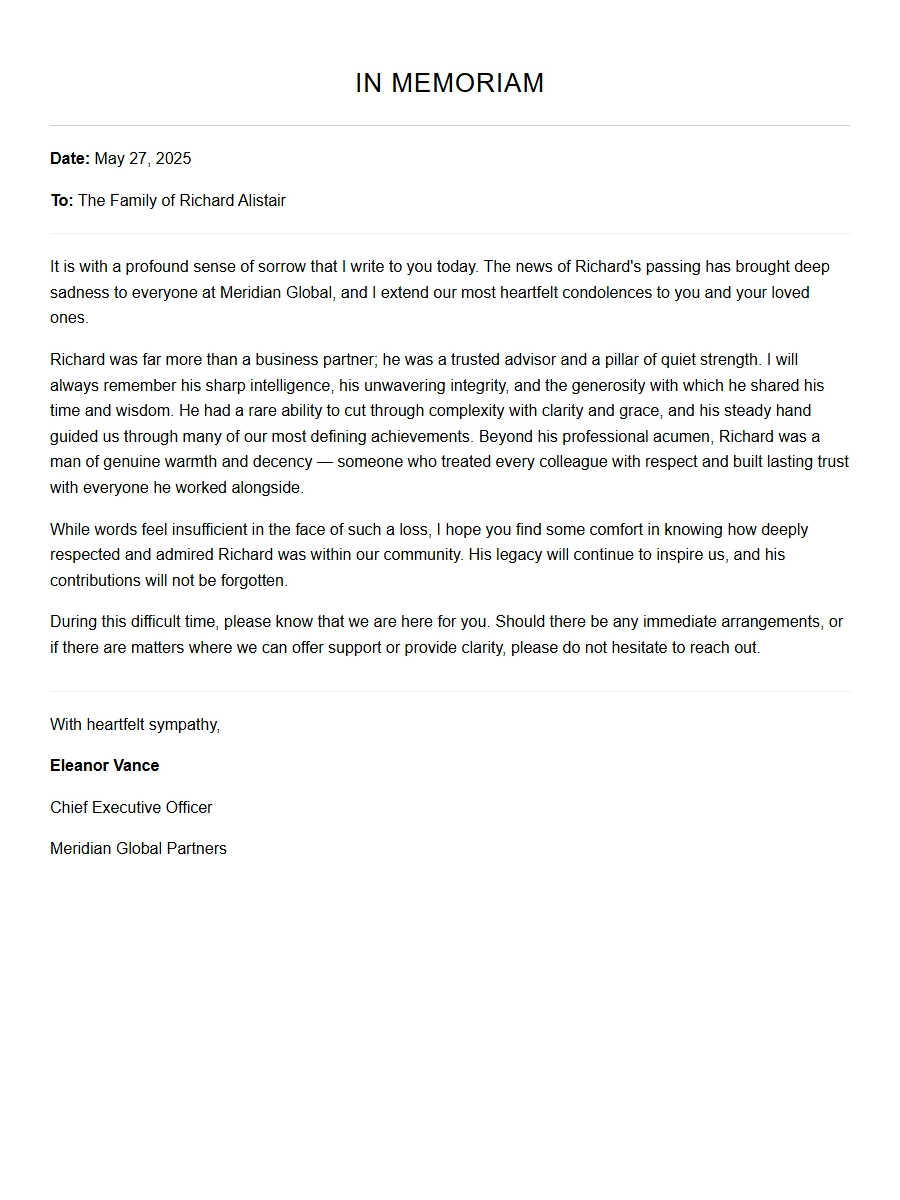 Formal Condolence Message for a Business Partner
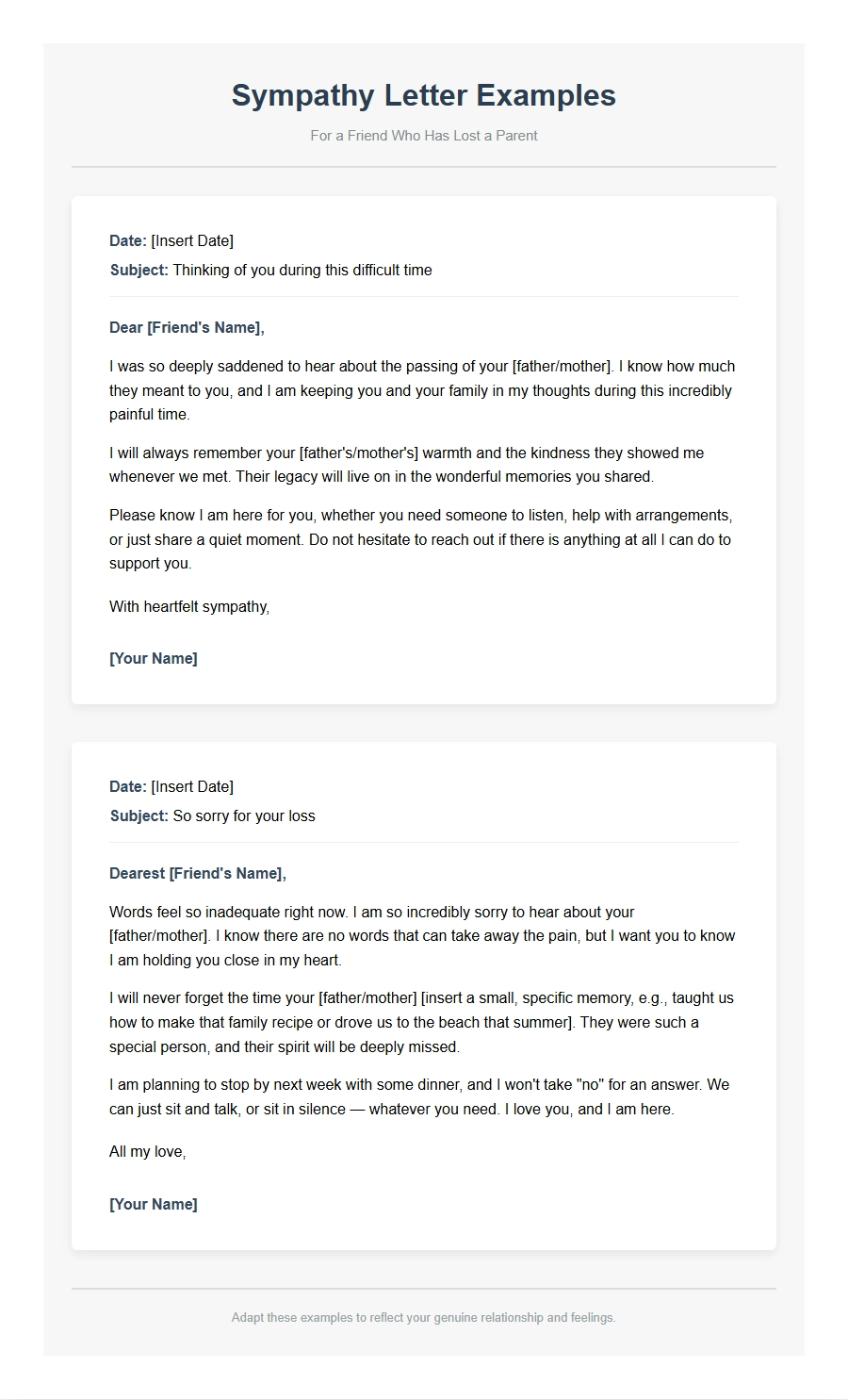 Sympathy Letter Examples for a Friend Who Lost a Parent
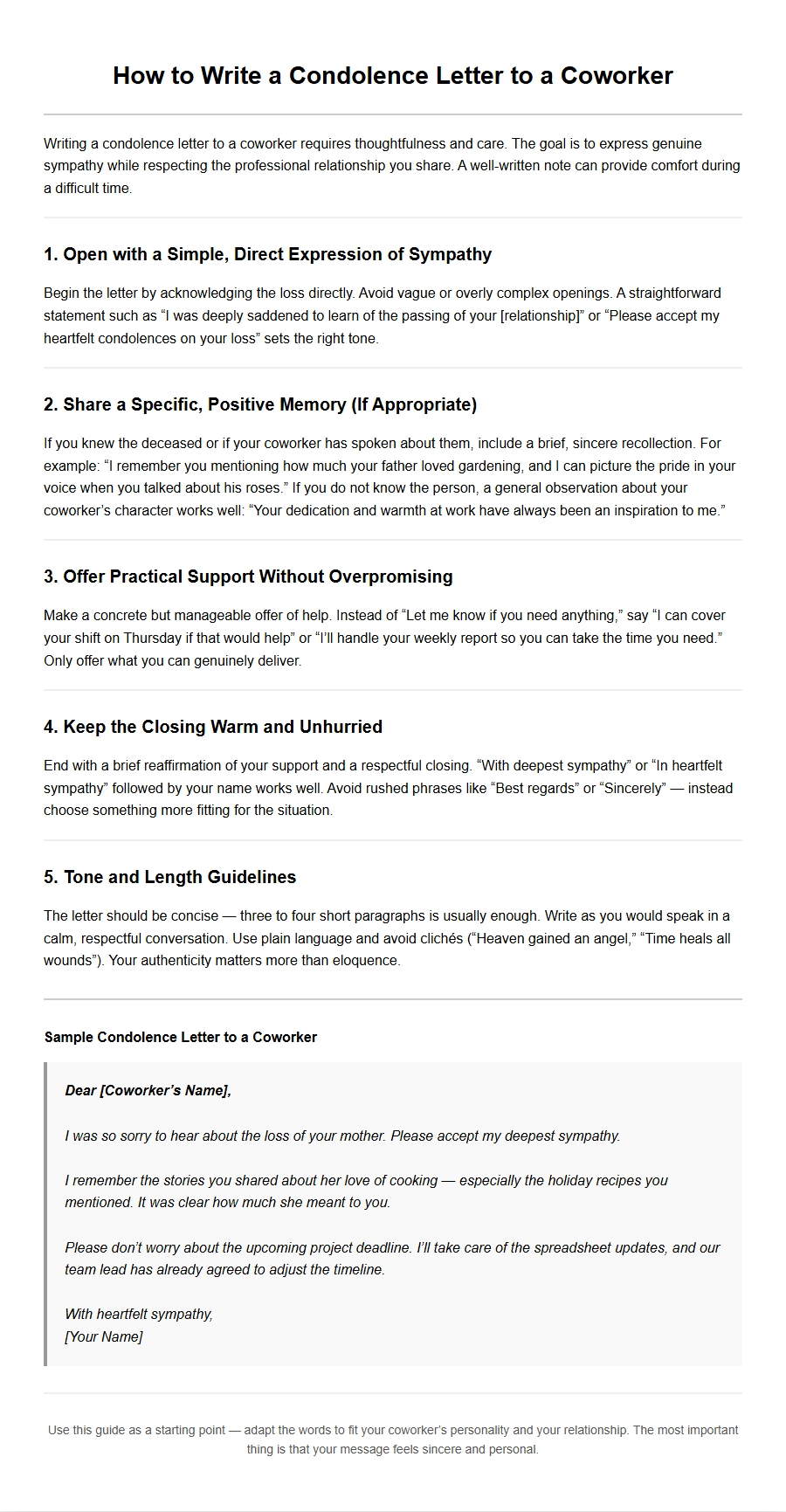 How to Write a Condolence Letter to a Coworker
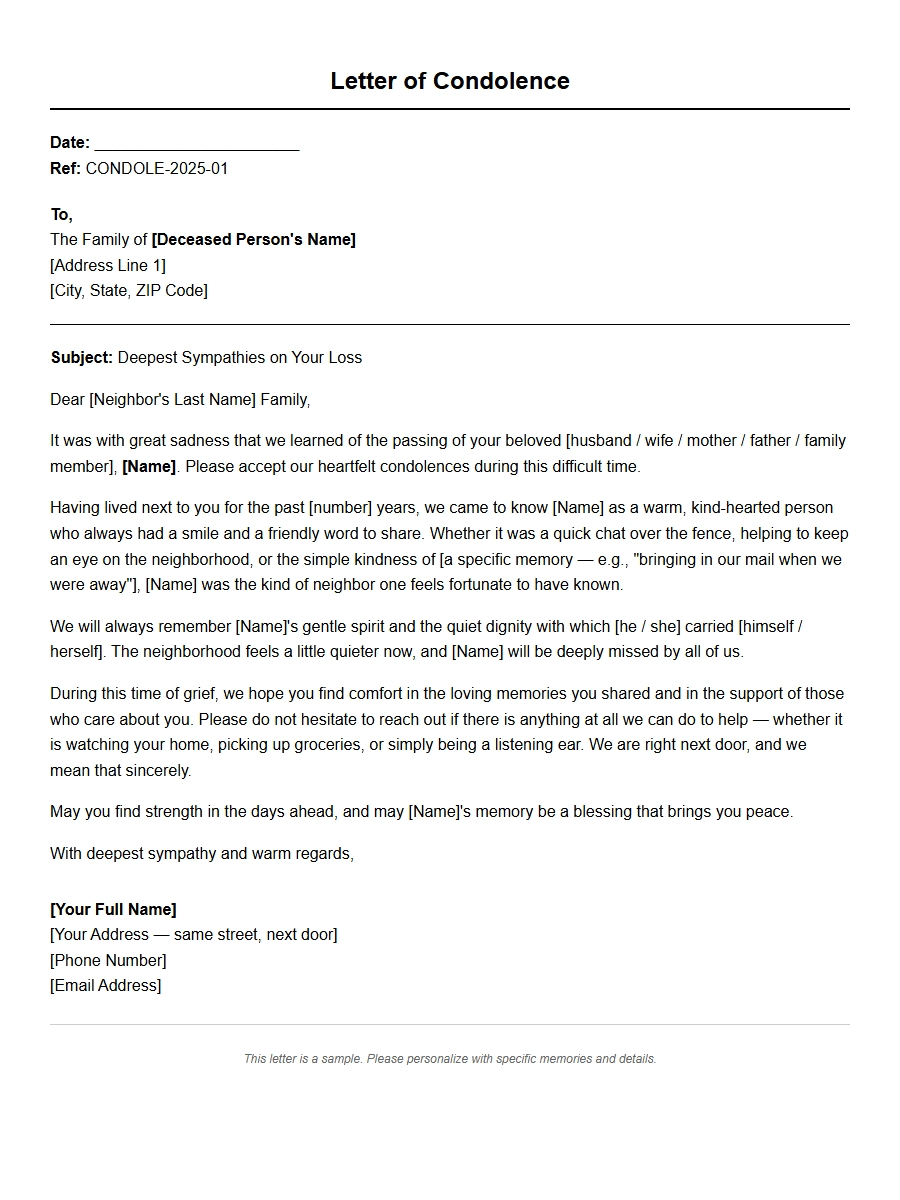 Condolence Letter Sample for a Neighbor
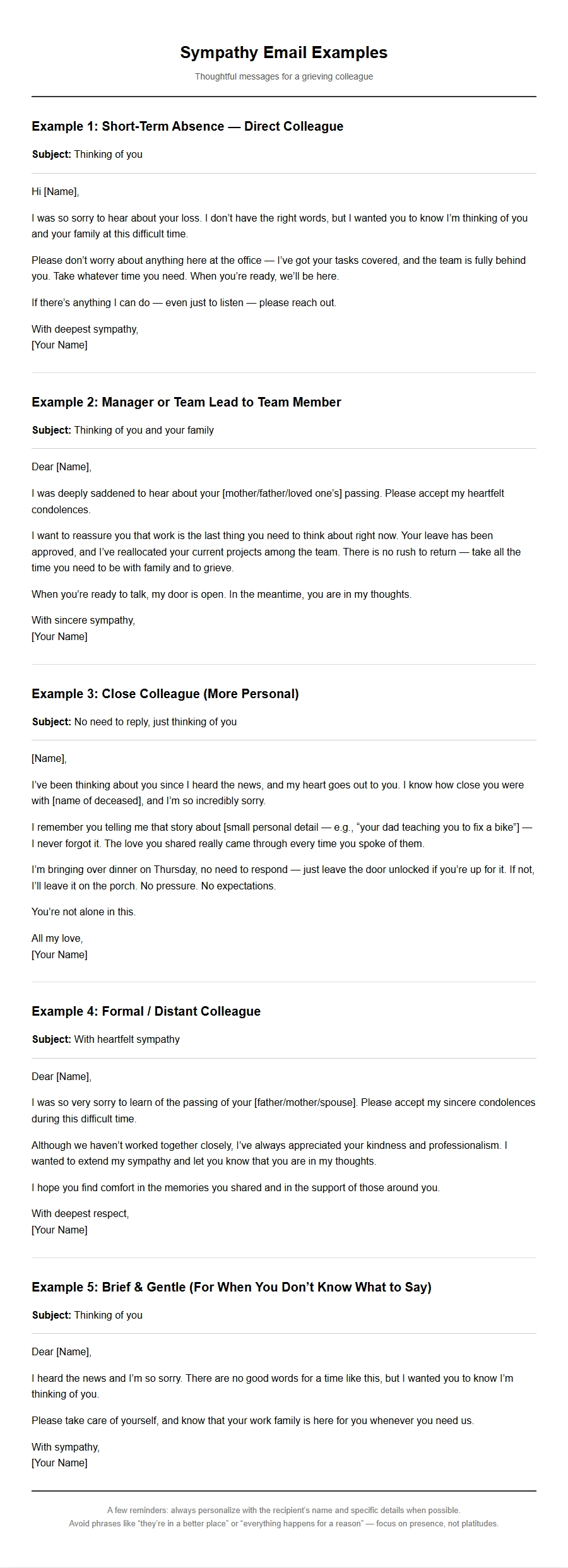 Sympathy Email Examples for a Grieving Colleague
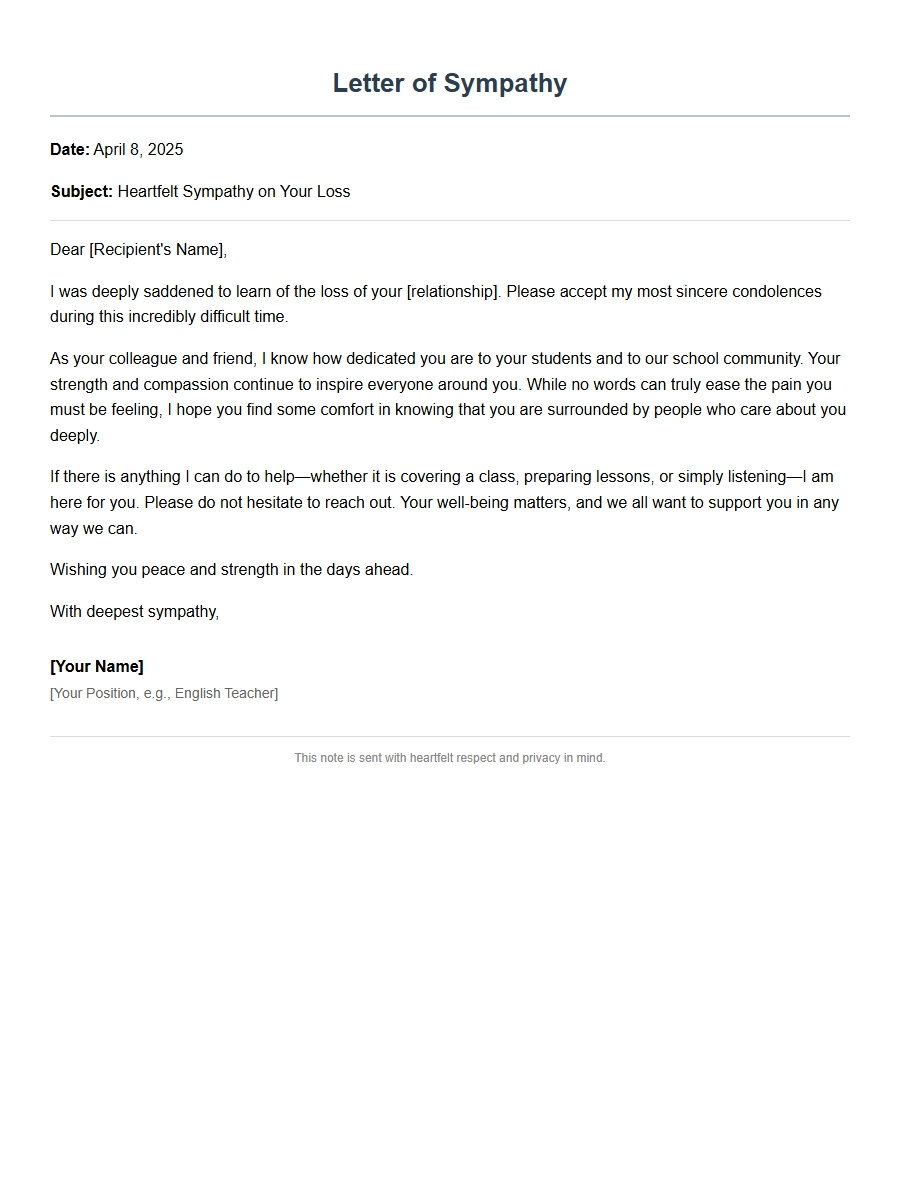 Condolence Words for a Teacher