Scrolling through your feed, you see the news. A friend has lost someone. You want to say something, but every word feels either too hollow or too heavy. Staring at that comment box or direct message can freeze you. A good sample condolence text for social media friends isn't a crutch—it’s a way to find your footing without fumbling for words in a painful moment.
Why a sample helps (and doesn’t make you less genuine)
Using a sample doesn’t mean copying and pasting. Think of it as a warm‑up. It gives you a structure—the right tone, a respectful salutation, a safe closing—so you can focus on the personal part that only you can write. A well‑chosen sample respects the person grieving and saves you from awkward gaps or over‑sharing. It’s not cheating. It’s being smart about emotional correspondence when you’re already uncertain.
Category: Sympathy messages
Choosing the right sample for the situation
Not every condolence fits every friend. The sample you pick depends on how well you know the person and where you’re posting it. A public Facebook comment needs to be shorter and more careful than a private Instagram DM. A close friend’s loss calls for a warmer, more personal phrase, while a colleague’s parent’s death asks for respectful distance. Look for samples labeled “short and simple,” “warm but brief,” or “formal sympathy” and match your level of closeness.
The best condolence samples give you a skeleton. You add the muscle. Start with the sample’s opening line—something like “I’m so sorry to hear about your loss.” Then rewrite the next sentence in your own words. Maybe mention a memory, or simply say “I’m thinking of you.” Avoid clichés like “they’re in a better place” unless you know the person believes that. Tailor the closing too: “Sending love” works for a close friend, while “With deepest sympathy” fits a more formal connection.
A common mistake is leaving the sample untouched. It reads robotic. Change at least the middle paragraph to something that reflects how you actually knew the person or the relationship with the friend who’s grieving. That small edit makes the message feel real.
Watch your salutation and closing
On social media, you don’t need “Dear” unless you’re writing a longer message. A simple “Hey [name],” or just starting with their name is fine. For the closing, avoid overly formal sign‑offs like “Sincerely” in a comment. Use “With love,” “Thinking of you,” or just your name. If you’re writing a private message, treat it more like a letter — but still keep it conversational. For formal condolence letters sent on paper, the sign‑off rules are different; see how to sign off a formal sympathy letter for those guidelines.
Common mistakes to avoid
Don’t make the message about you. Avoid “I remember when I lost my…” unless the other person invites that. Keep the focus on their loss and their feelings. Also, watch the platform. A Twitter reply can be two lines. An email needs more. And never paste a long sample into a public post without trimming it—it looks awkward.
Another error: forgetting to proofread. A typo in a condolence message can sting more than in a regular post. Read it once out loud. If it sounds stiff, loosen it. If it sounds too casual, tighten it. How to mention religion in condolence letter can help if you’re unsure about including faith—some friends appreciate it, others don’t.
Using the sample as a springboard
The real value of a sample is that it gets you started. Once you’ve written a few messages, you’ll develop your own rhythm. You’ll learn what feels right for each friend and each platform. Next time, you won’t stare at the blank page as long. Practice makes it quicker, but the heart of it stays the same: show up, be brief, be kind.
Your words don’t need to be perfect. They just need to be yours and to show you care. A good sample clears the path. You take the steps.
Templates and Samples
Condolence Messages for Social Media Friends
For a Recent Loss
Dear [Friend's Name],
I was so deeply saddened to hear about the passing of your [relationship, e.g., mother, father, partner]. There are truly no words that can ease the pain you must be feeling right now. I just wanted to reach out and let you know that I am holding you in my heart during this incredibly difficult time.
Please remember that it is okay to not be okay, and please do not hesitate if you need someone to talk to, or even just to sit in silence with you. I am here for you, day or night.
With heartfelt sympathy, [Your Name]
For a Friend's Parent
Thinking of You, [Friend's Name].
I am so incredibly sorry for the loss of your father. He was such a kind and wonderful man, and his memory will always be a blessing. I know how close you were, and my heart breaks for you and your family.
While I cannot begin to imagine your sorrow, I hope you find some comfort in the beautiful memories you shared. If there is anything at all I can do to help—whether it is picking up groceries, watching the kids for an afternoon, or just being a sounding board—please do not hesitate to ask.
You are in my thoughts and prayers.
With love, [Your Name]
Short & Sweet (For Social Media)
Rest in Peace, [Name]. My deepest condolences to your family and loved ones. You were taken far too soon, but your light will never fade in our hearts. Sending love and strength to you all during this painful time.
Thinking of you, [Friend's Name].
So sorry for your loss. 💔
Gone but never forgotten.
With sympathy, [Your Name]
For a Loss That Was Expected
Dear [Friend's Name],
Although we knew this day would come, the reality of it is still incredibly painful. I am so sorry for the passing of your [relationship]. These last few months have been a true testament to your love and strength, and I admire you so much.
Please take all the time you need to grieve and heal. Your [relationship] is finally at peace, and their suffering has ended. That is a small comfort, but an important one.
Whenever you feel ready, I would love to take you out for a coffee or a walk. Until then, know that I am thinking of you and sending you all my love.
Warmly, [Your Name]
For a Sudden or Tragic Loss
I am absolutely heartbroken to hear this news. [Friend's Name], there are no words to describe how sorry I am for your sudden, tragic loss of [relationship]. This is just devastating, and my heart goes out to you.
Please know that the entire community is here to support you. In times like these, we have to lean on each other. I am sending you all the strength in the world, and I am not going anywhere.
Practical support:
Meal delivery sign-up (link in bio)
Childcare/Pet care offered
Errands or rides
You are not alone. I am holding you close in my thoughts.
With deep sorrow, [Your Name]
For a Colleague or Professional Connection
Dear [Friend/Colleague's Name],
I was so sorry to learn of the passing of your [relationship]. While our connection is primarily professional, I consider you a friend, and I am deeply saddened by your loss.
Please know that you are in my thoughts. If you need any help covering deadlines or any flexibility with projects while you take time for your family, please do not hesitate to let me know. I am happy to assist in any way I can.
Take all the time you need. Your well-being is the priority.
Task
Status
Covering [Project Name]
Offered
Flexible deadlines
Approved
Thinking of you, [Your Name]
For a Friend Who Lost a Sibling
My dear [Friend's Name],
I am so incredibly sorry for the loss of your brother/sister. The bond between siblings is so unique and precious, and to lose that is a profound grief. My heart aches for you and your family.
I remember the stories you used to tell me about them—they were always so full of life and love. That spirit will live on in you. Please do not isolate yourself; let your friends be your rock right now. I am always just a phone call away, day or night.
Memory I hold dear: [Insert a brief, sweet memory if applicable, e.g., The time they made everyone laugh.]
All my love, [Your Name]
Religious or Spiritual Condolence
Peace be with you, [Friend's Name].
I am so sorry to hear about the passing of your beloved [relationship]. May God grant them eternal rest and surround you and your family with comfort and strength during this time of great sorrow. They are now in a place of peace and light.
“Blessed are those who mourn, for they will be comforted.” (Matthew 5:4)
I am keeping you all in my prayers and sending you my deepest, most heartfelt sympathies. If you need anything at all, please let me know.
In faith and friendship, [Your Name]
For a Pet Loss
Oh [Friend's Name], I am so, so sorry. Losing a beloved pet is losing a family member, pure and simple. [Pet's Name] was such a wonderful, loyal friend, and I know how much joy they brought to your life.
They were so lucky to have you as their human, and you gave them the best life possible. The paw prints they left on your heart will never fade. Please give yourself grace and space to grieve this loss. I am here for you if you need to vent, cry, or just share funny stories about them.
Things that helped me:
Creating a small memory box
Lighting a candle in their honor
Looking through old photos
Sending you so much love, [Your Name]
Simple, One-Line Style (For Quick Message)
[Friend's Name], my heart goes out to you on the loss of your [relationship]. Sending you all my love and strength during this unimaginable time.
You are in my heart and my prayers. I am here for you, always.
Please let me know if you need anything at all—a meal, a ride, or just a quiet listener. I am nearby.
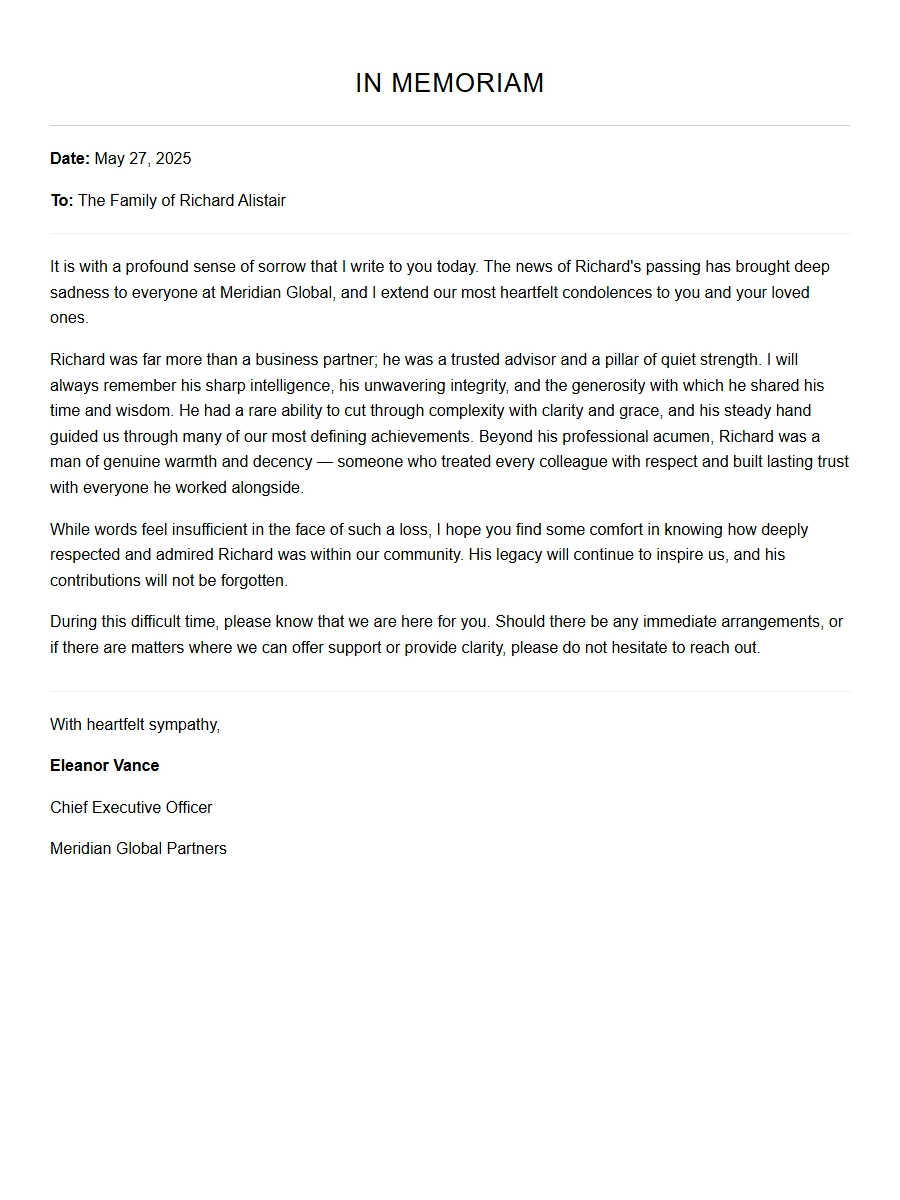 Formal Condolence Message for a Business Partner
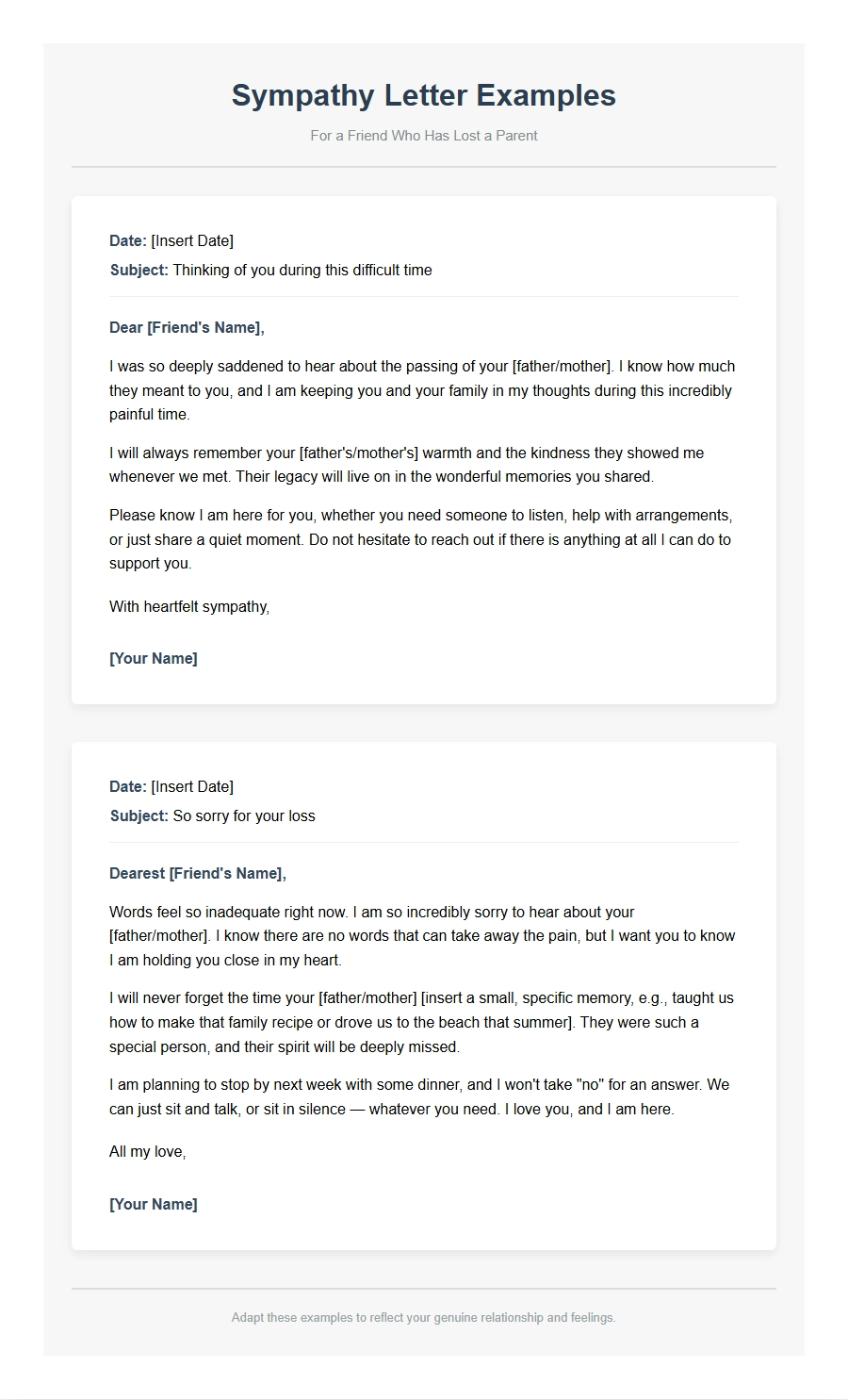 Sympathy Letter Examples for a Friend Who Lost a Parent
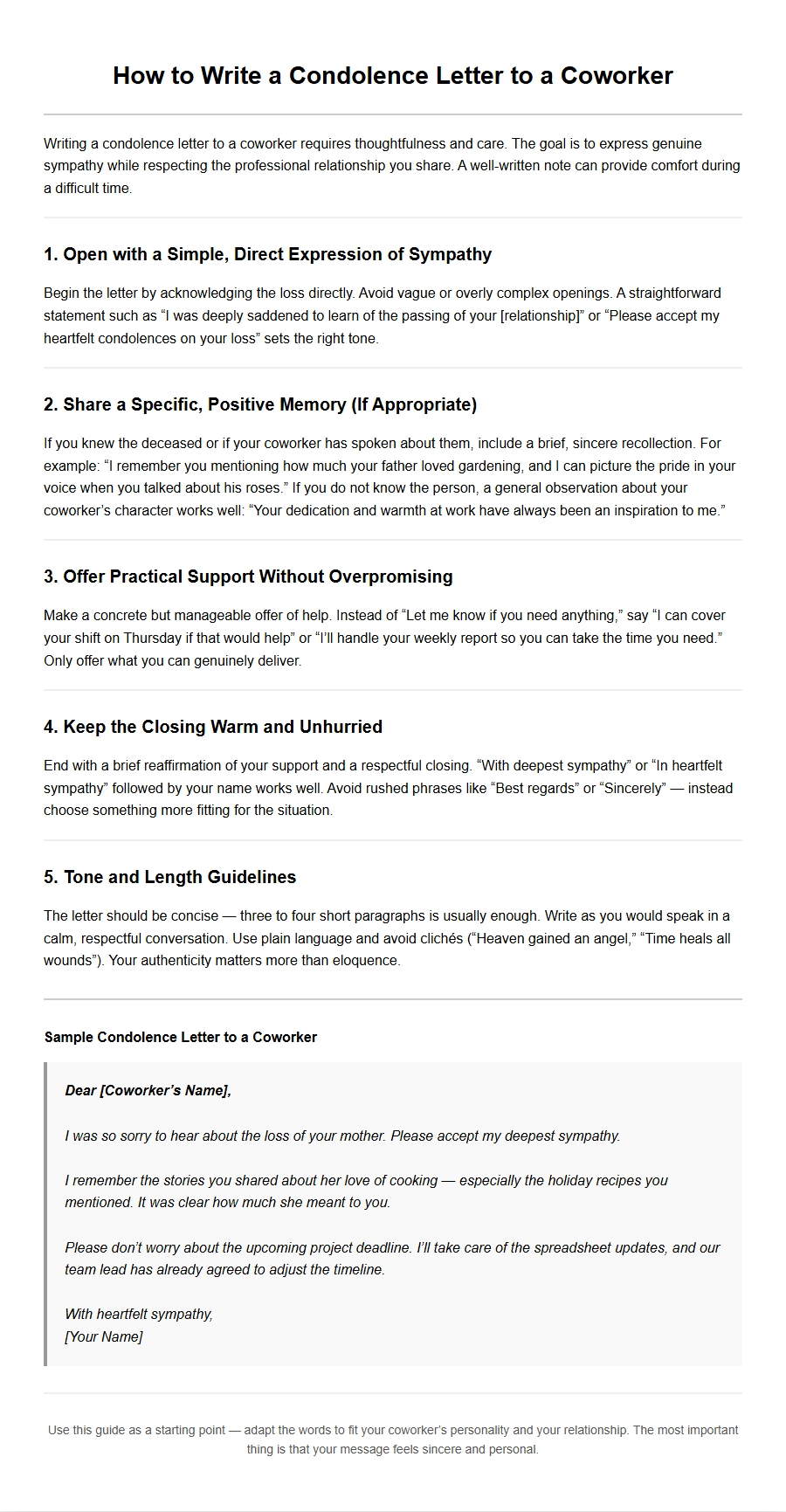 How to Write a Condolence Letter to a Coworker
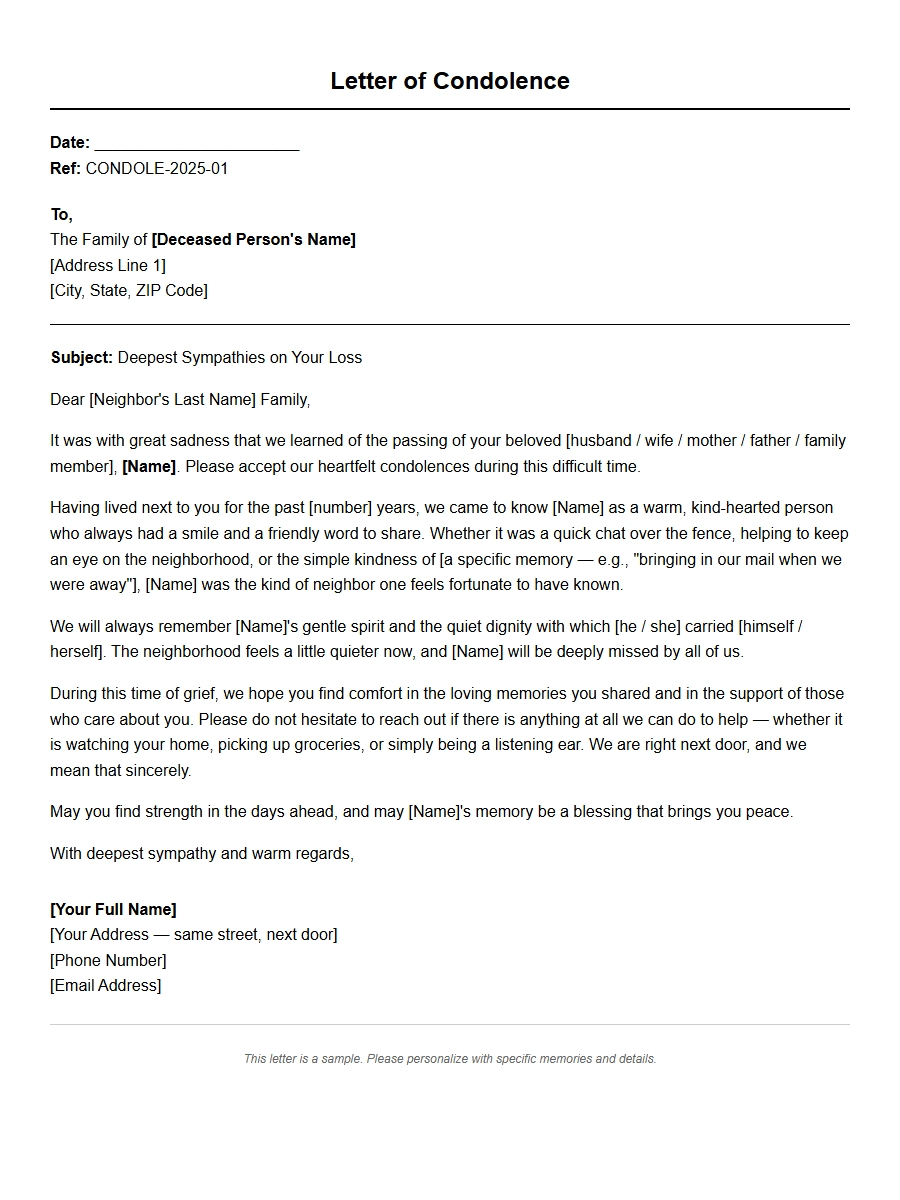 Condolence Letter Sample for a Neighbor
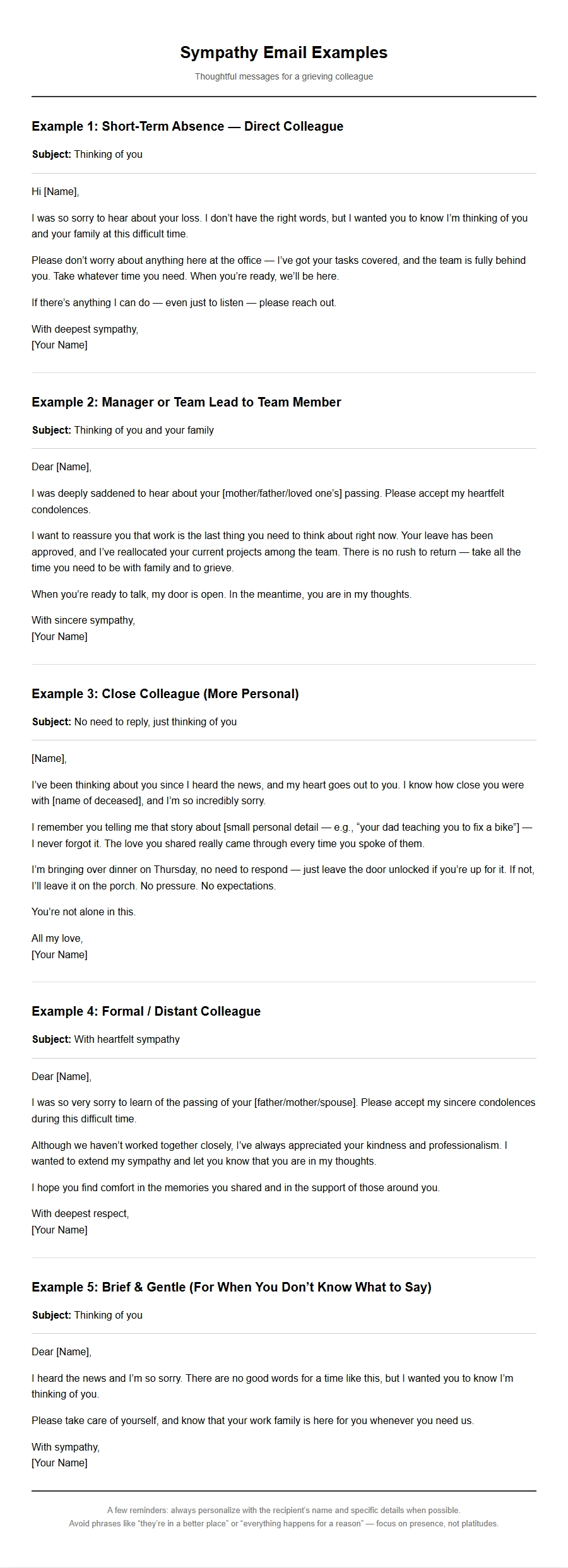 Sympathy Email Examples for a Grieving Colleague
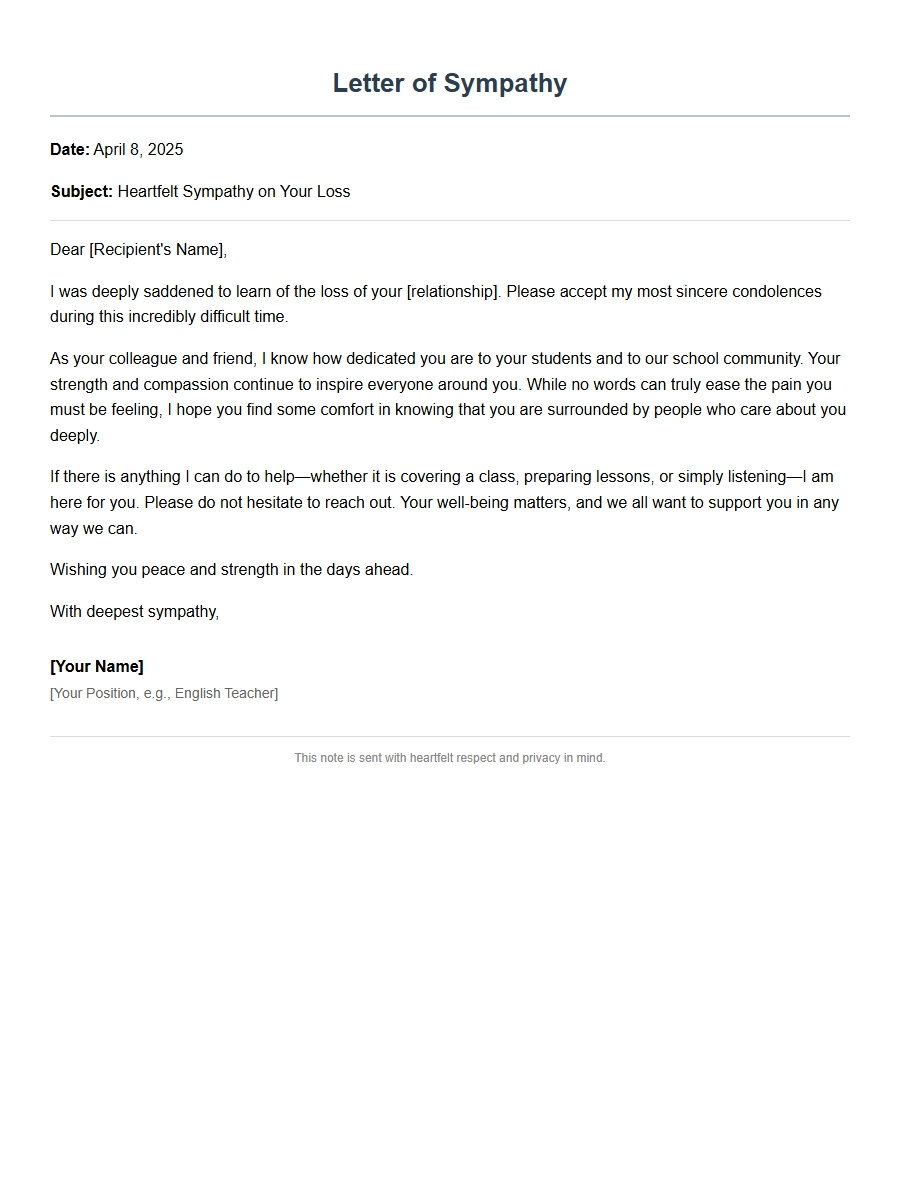 Condolence Words for a Teacher