When you need to send a letter to a widow, addressing the envelope correctly shows respect and thoughtfulness. But if you’re feeling unsure about the right title or format, you’re not alone. Many people freeze up over this small detail—especially when emotions are already high. The good news is that a clear envelope address is simple to get right, and a good letter template can guide you through the rest of the message.
Using a sample is not cheating. It’s a smart way to save time and avoid awkward mistakes. A reliable letter sample gives you the structure, tone, and key phrases you need, while leaving room for your own personal touch. The same goes for the envelope: a few basic rules will help you write it with confidence.
Category: Etiquette & Letter Writing
How to choose the right salutation and title
The most common way to address a widow is “Mrs. [her married surname].” For example, if her name is Jane Smith and her late husband was John Smith, “Mrs. John Smith” is traditional. But that may feel outdated—some widows prefer “Mrs. Jane Smith” or simply “Jane Smith.” If you don’t know her preference, use “Ms. Jane Smith.” It’s a safe, polite option that works for any woman regardless of marital status.
When you write the envelope, place the name and address in the center. Use a clear business letter format even for personal correspondence: name, street address, city, state, ZIP code. For a printed letter, include your return address in the upper left. For a digital letter sent as an attachment, the email subject line should be clear and respectful—something like “With sympathy for your loss.”
Mistakes to avoid when addressing a widow
One common error is assuming every widow wants “Mrs.” followed by her husband’s full name. Some women find that impersonal or even painful. Another mistake is using an outdated address if she has moved after her spouse’s death. Always double-check the current address. And if you’re handwriting the envelope, write legibly—it’s a small act of care that makes a big difference.
If you’re writing a letter of recommendation or a professional letter to a widow, use “Ms.” unless you know she prefers “Mrs.” For formal writing tips, keep the tone consistent from envelope to closing. A respectful salutation like “Dear Mrs. Smith” or “Dear Jane” sets the right mood. If you’re adapting a cover letter example or a resignation letter sample for a different purpose, remember that sympathy letters require a softer, more personal touch.
Tailoring your letter to the relationship
How you address the envelope also depends on how close you were to the widow. For a close friend, you might write “Jane Smith” without a title. For a more formal relationship—like a coworker or a distant relative—stick with “Mrs.” or “Ms.” The same thinking applies to salutation and closing. If the letter is part of a longer correspondence, you can find sympathy letter structure for long relationship guidance in our related articles.
If your letter is religious in nature, you may want to reference faith in the message. For example, if you’re sending a religious condolence letter example Christian condolence letters, the envelope can still follow standard etiquette. The content is what carries the spiritual comfort.
When you cannot attend the service, a mailed letter becomes even more meaningful. That’s when careful addressing really matters—it shows you took the time to do it right. For more on that, see our article on how to send condolences when you cannot attend service condolence letters.
Quick tips on tone and proofreading
Ever received a letter that felt too stiff or too casual? The tone in writing should match your relationship. A widow you worked with for years can handle a warmer note; a widow you barely know deserves a more formal, respectful approach. Proofreading your letter is essential—read it aloud to catch awkward phrasing. Also check the envelope: a misspelled name or wrong ZIP code can delay delivery at a sensitive time.
If you’re writing after a cremation, some details differ. Our article on sending condolences after cremation services condolence letters covers those nuances. The envelope address stays the same, but the message can acknowledge the type of service.
Make the sample your own
The best letters feel both professional and personal. Start with a customizable letter structure, then adjust the opening paragraph to reflect your genuine feelings. For example, “I was so sorry to hear about John’s passing” is fine, but “I’ll never forget how John helped me with that project last year—he was always so generous” is better. Specific memories matter more than generic phrases.
Don’t worry about getting it perfect on the first try. Practice makes the process faster. Use the envelope and letter sample as a springboard, not a crutch. Over time, you’ll build confidence and a natural style. The most important thing is that your message comes from the heart—and that it arrives at the right address, respectfully addressed.
Helpful Reference Samples
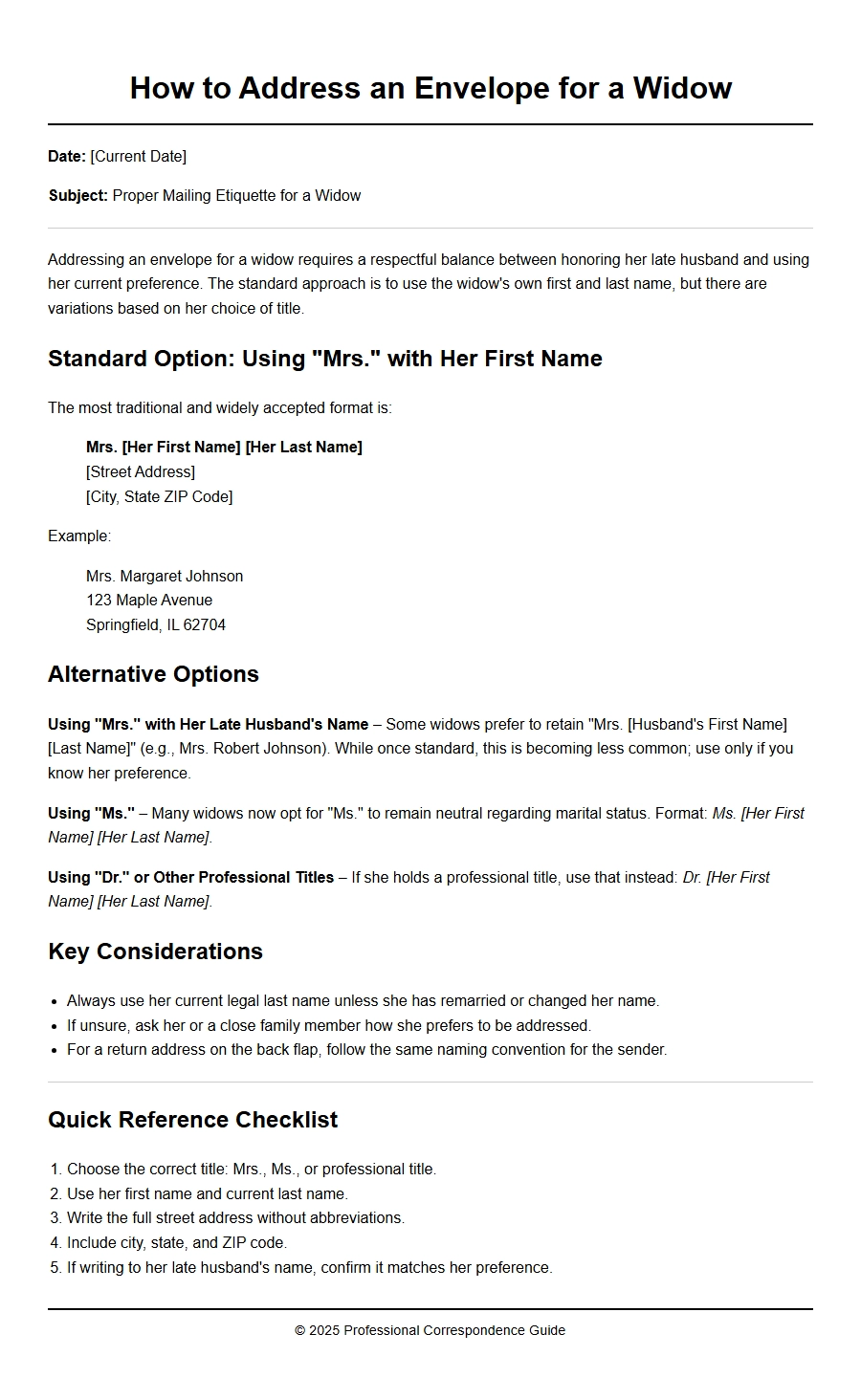
Addressing an Envelope for a Widow
Formal Condolence Letter Envelope for a Widow
When sending a formal condolence letter to a widow, the envelope should reflect respect and tradition. Use the title "Mrs." followed by her late husband's full name if she has kept his surname. For example:
Mrs. John A. Smith
If you know her first name and prefer a more personal address, you may write:
Mrs. Mary Smith
Include the complete mailing address on separate lines:
Line 1: Recipient name (as above)
Line 2: Street address or PO Box
Line 3: City, State ZIP code
Place the return address in the upper left corner. Use black or blue ink, and avoid any decorative fonts. This traditional format conveys your sincere condolences in a dignified manner.
Informal Condolence Note Envelope
For a close friend or relative, the envelope can be less formal but still respectful. Address the widow by her first name, for example:
Mary Smith
Or simply:
Mary
If you have a personal nickname, it may be appropriate. Include the full street address below. You may omit titles like "Mrs." or "Ms." for a warmer tone. For example:
Mary Smith
456 Oak Drive
Springfield, IL 62701
This style is ideal for handwritten notes where a formal address might feel distant. Ensure the writing is legible and the envelope is neat. A personal touch can bring comfort during a difficult time.
Addressing Envelope When Widow Keeps Married Name
Most widows retain their married surname. In such cases, the envelope can be addressed using her late husband’s first name with "Mrs." or her own first name. Both are common:
Mrs. John Smith (traditional)
Mrs. Mary Smith (modern)
Use her full legal name for mail delivery. Avoid using "and" or linking her name to her deceased spouse. Example:
Mrs. Mary Smith 123 Elm Street Anytown, NY 10001
If you are uncertain which format she prefers, the safer choice is her first name with "Mrs." This respects her identity while maintaining tradition. The envelope should be clean and free of extra markings.
Addressing Envelope When Widow Uses Her Maiden Name
Some widows choose to revert to their maiden name. If you know this preference, address the envelope accordingly. Use the title "Ms." to avoid assumptions about marital status:
Ms. Mary Johnson
Note that "Mrs." is technically for married women, but some widows still use it with their maiden name. To be safe, use "Ms." Example:
Ms. Mary Johnson
789 Pine Lane
Greenville, SC 29601
If you are unsure of her preference, you can ask a family member. The key is to honor her choice. A correctly addressed envelope shows thoughtfulness and respect for her identity during bereavement.
Envelope for a Widow with "Mrs." Title
Using "Mrs." is a traditional and respectful way to address a widow. It indicates her former marital status. Write the title followed by her husband's full name or her own first name:
Mrs. John A. Smith Mrs. Mary Smith
Both are acceptable, though the latter is more personal. Place the address in the center of the envelope:
Component
Example
Name
Mrs. Mary Smith
Street
321 Maple Ave
City, State ZIP
Riverside, CA 92501
If the widow was known by her husband's initials professionally, you might use that. However, for condolence letters, the personal touch is more meaningful.
Envelope for a Widow with "Ms." Title
"Ms." is a modern title that does not indicate marital status. It is appropriate for widows who prefer not to be identified as married or widowed in correspondence. Address the envelope as:
Ms. Mary Smith
Or if she uses her maiden name:
Ms. Mary Johnson
Use the same format as other envelopes:
Line 1: Ms. [First Last]
Line 2: Address
Line 3: City, State ZIP
This choice respects her privacy and individual identity. It is increasingly common in both formal and informal contexts. Always verify her preferred title if possible.
Envelope Addressed to Widow and Her Children
Sometimes a condolence letter is intended for the widow and her children. In that case, address the envelope to her first, then include "and Family" or list the children:
Mrs. Mary Smith and Family Mrs. Mary Smith, John and Sarah
Example format:
Mrs. Mary Smith and Family 654 Birch Road Lakewood, CO 80215
When listing children, use their full names only if they are adults. For younger children, first names are sufficient. This approach acknowledges the entire household and is especially kind for collective condolences.
Envelope for a Widow Living with Family
If the widow is staying with relatives after her spouse's death, address the envelope to her at the family address. Use her name only, not the family name, unless she is staying indefinitely:
Mary Smith c/o John and Jane Doe 987 Cedar Lane Portland, OR 97201
Alternatively, if the family prefers, you can address it to the family with her name noted. For clarity, include "c/o" (care of). This ensures the letter reaches her directly. Example:
Mrs. Mary Smith
c/o Mr. and Mrs. John Doe
Address as above
This method is respectful and practical during a transitional period.
Return Address Placement on Condolence Envelope
The return address is essential on condolence envelopes so the widow knows who sent the letter. Place it in the upper left corner. Format:
Your Name Your Street Address Your City, State ZIP
Do not use decorative stamps or stickers. Keep it simple. For example:
Field
Example
Return Name
Emily Brown
Return Address
111 Cedar Street
City, State ZIP
Boston, MA 02118
Ensure your return address is legible. This also helps in case the letter is undeliverable. It is a small but thoughtful detail.
Common Mistakes When Addressing Envelope to a Widow
Avoid these errors to ensure your condolence envelope is respectful:
Using the deceased's name without "Mrs." — e.g., "John Smith" implies the husband is still alive. Always use "Mrs." or her name.
Addressing to both spouses — e.g., "Mr. and Mrs. John Smith" is incorrect after his death.
Using outdated titles — e.g., "Mrs. John Smith" is traditional but some widows prefer "Ms." or their first name.
Omitting the ZIP code — delays delivery.
Illegible handwriting — use clear printing.
Double-check the spelling of her name and address. A small table of do's and don'ts:
Do
Don't
Use "Mrs. Mary Smith" or "Ms. Mary Smith"
Use "Mr. and Mrs. John Smith"
Include return address
Forget the return address
Write legibly
Use fancy fonts
These tips help your letter arrive correctly and show care.
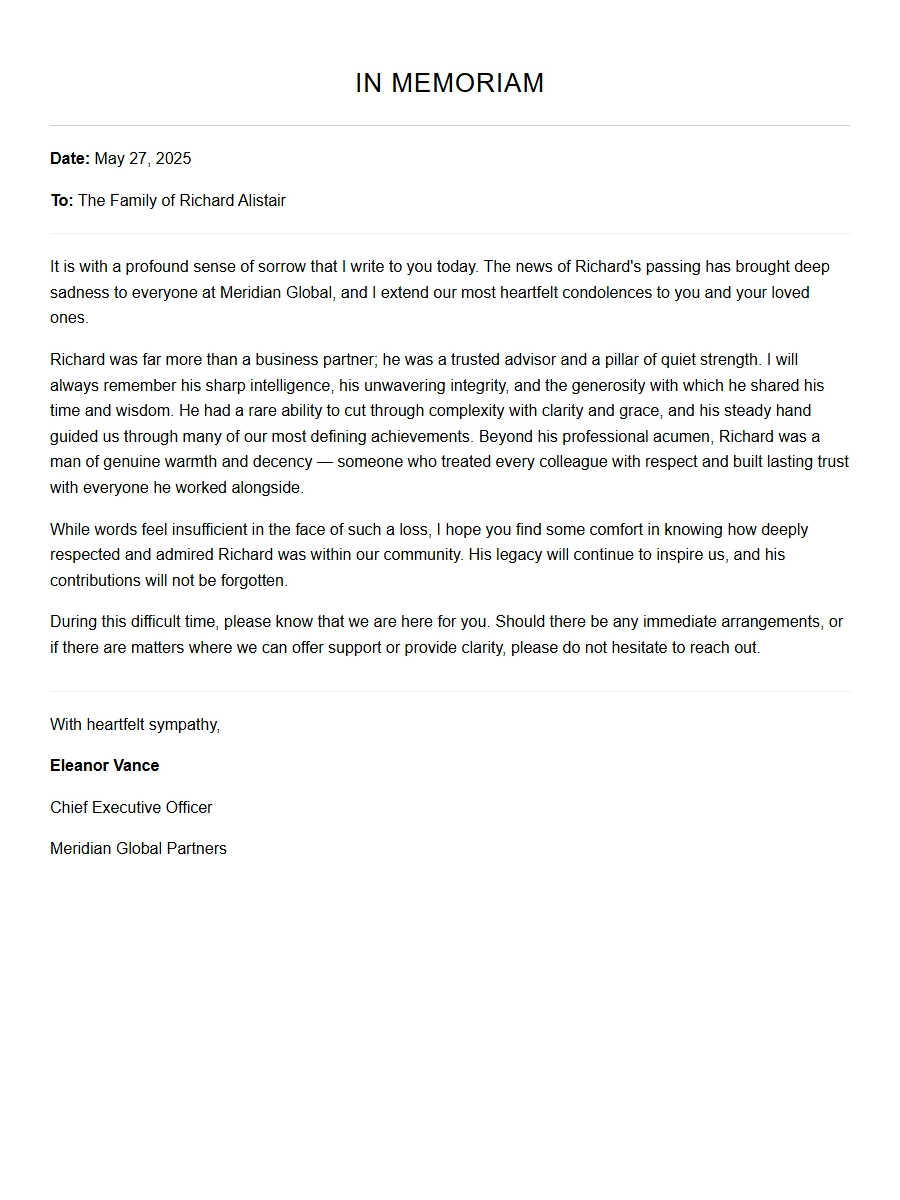 Formal Condolence Message for a Business Partner
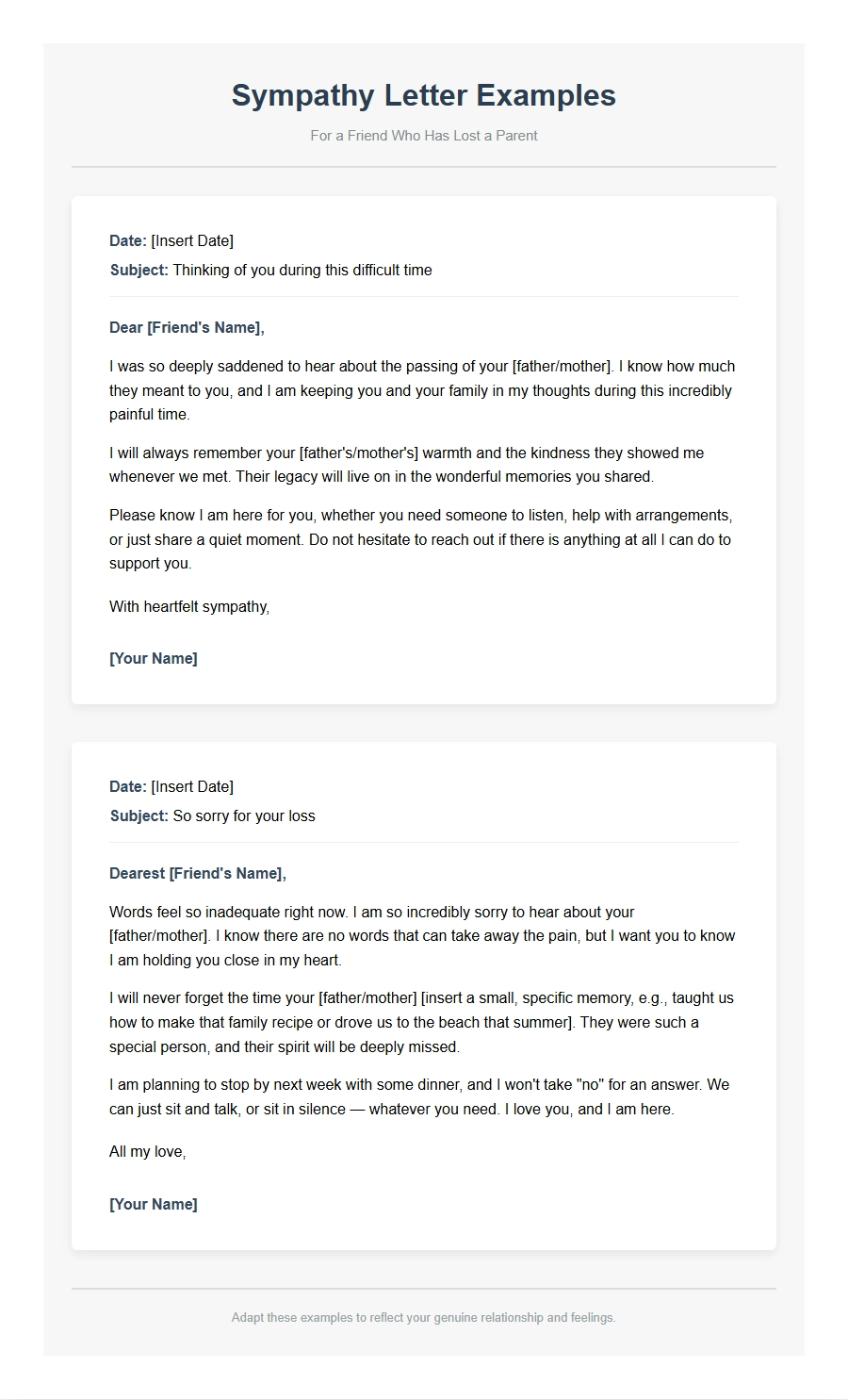 Sympathy Letter Examples for a Friend Who Lost a Parent
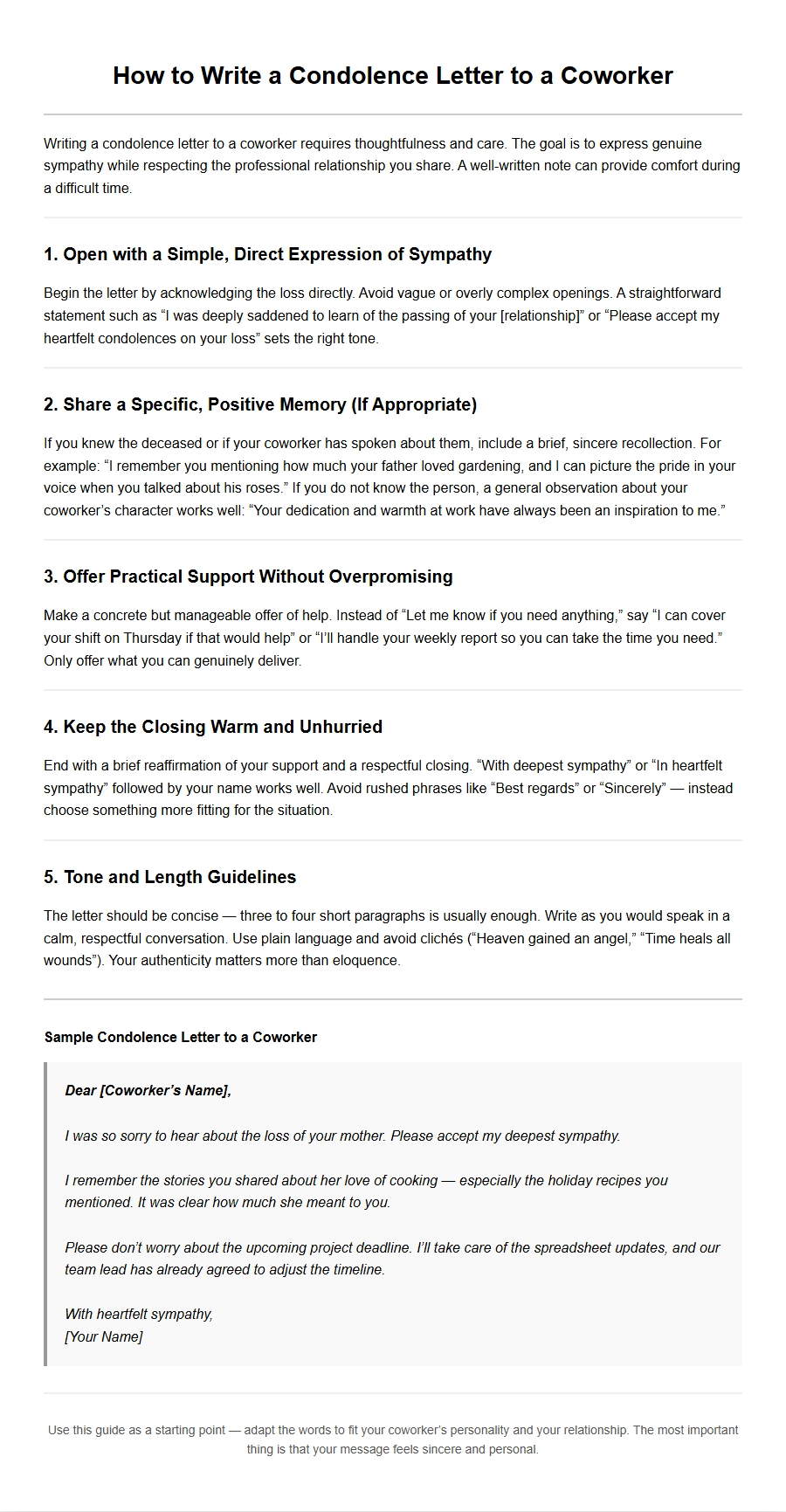 How to Write a Condolence Letter to a Coworker
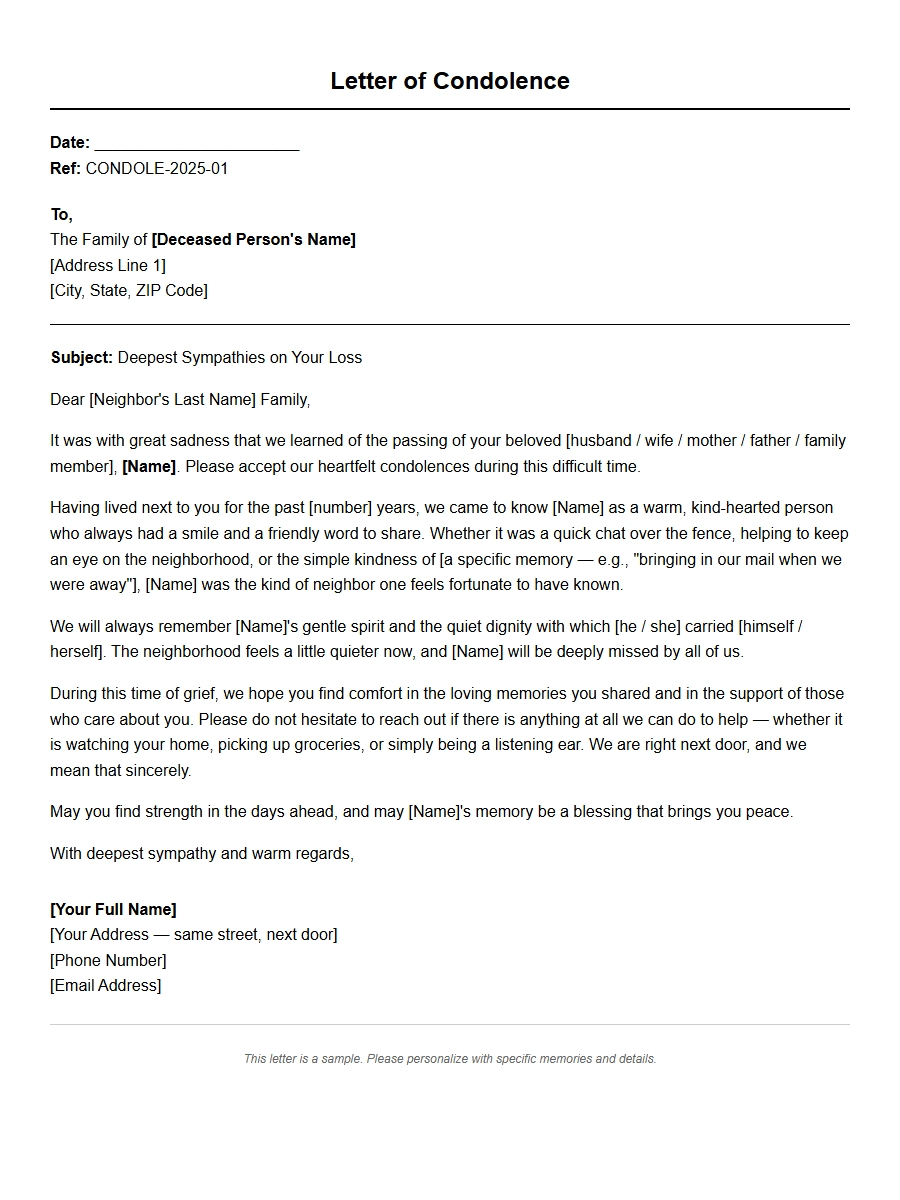 Condolence Letter Sample for a Neighbor
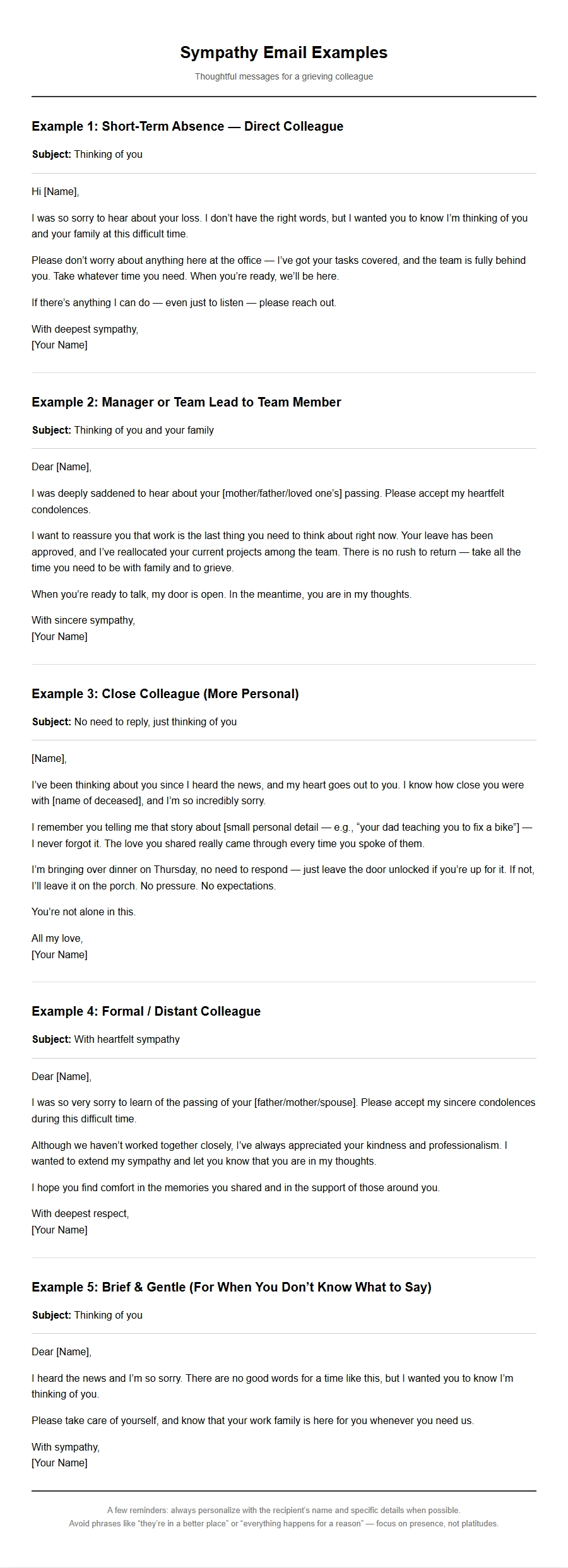 Sympathy Email Examples for a Grieving Colleague
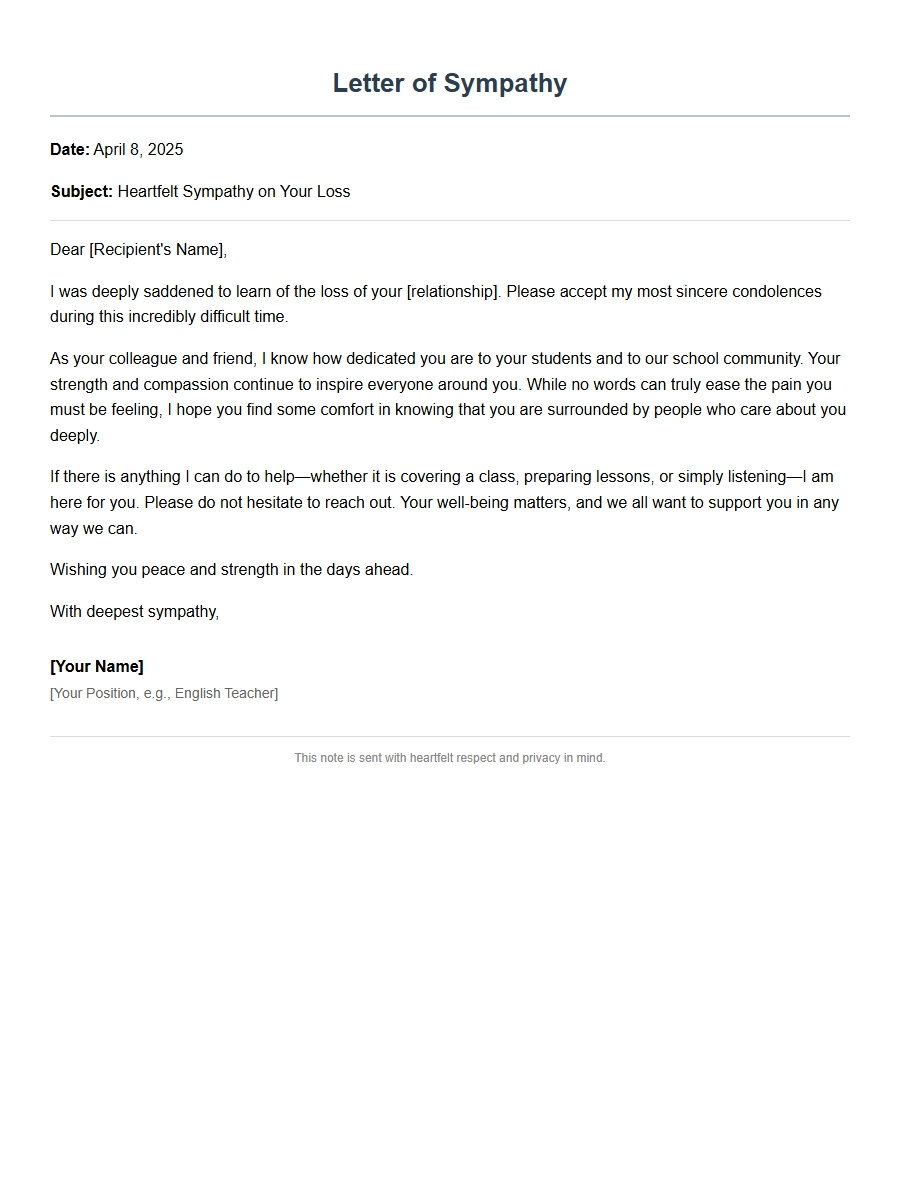 Condolence Words for a Teacher