Billing Error Correction Letter to Utility Provider
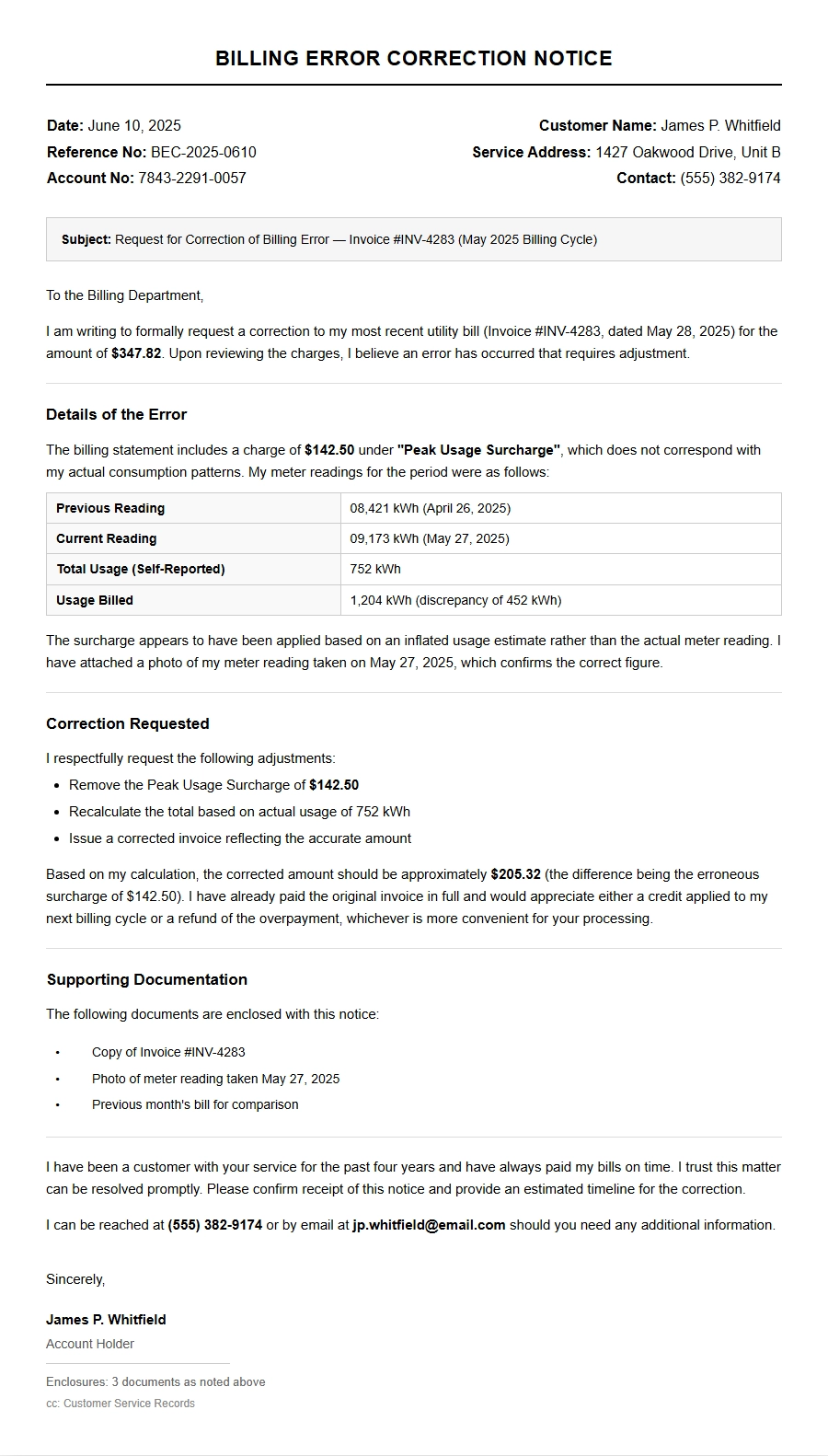
You’ve just opened your utility bill and spotted a charge that doesn’t make sense—maybe a late fee you didn’t earn, a rate hike that wasn’t communicated, or a duplicate charge for last month’s payment. That mix of frustration and urgency is real. You need to get it fixed fast, but writing a professional letter to your utility provider can feel like a chore you don’t have time for. You’re not alone. Many people freeze when they have to draft a formal complaint. But a well-written billing error correction notice can save you hours on the phone and get your money back sooner.
Using a letter template for this isn’t cheating—it’s a smart shortcut. A solid sample gives you the letter structure you need, the right salutation and closing, and the tone in writing that strikes a balance between firm and polite. You don’t have to reinvent the wheel. The best professional correspondence starts with a framework that works, then you customize it with your own details. Think of it as a springboard, not a crutch.
Category: Utility Billing Issues
Before you start, figure out which style fits your situation. Is this a simple overcharge, or is it a recurring problem that needs a formal dispute? For a one-time error, a concise email might work. For a pattern of mistakes, you’ll want a printed letter with letterhead design (even a simple header with your name and address). The business letter format is your friend here: date, provider’s name and address, clear subject line like “Billing Error Correction Notice – Account [number].”
When you adapt a sample, keep your authentic voice. Formal writing tips suggest using “I” statements rather than passive voice. Instead of “It appears that an error was made,” say “I noticed a charge of $XX that I don’t recognize.” That’s more direct and easier for the customer service rep to act on. Also, tailor your opening paragraph to grab their attention—mention the specific error and the amount immediately. For example: “I am writing to dispute a $45.67 late fee on my September bill, as my payment was confirmed on time.”
Common mistakes can trip you up. Using an outdated salutation like “To Whom It May Concern” when you could look up the customer service manager’s name feels impersonal. In a digital letter format (like email), make sure your subject line is descriptive, not vague. Another pitfall: forgetting to attach supporting documents. Scan your bank statement showing the payment date and include a copy of the bill. Proofreading letter before sending is essential—a typo in your account number can delay everything.
If you’re unsure about the legal side of your dispute, you might want to review our steps to resolve issues via written notice. That article breaks down the process from initial contact to escalation. And if your provider seems unresponsive, knowing the difference between a complaint letter and a demand letter can help you decide your next move.
For more serious or repeated errors, you may need to reference legal requirements for sending a pre-litigation complaint notice. But for most residential issues, a clear, calm letter works. If your situation involves a travel-related charge (like a utility trip fee that wasn’t disclosed), our guide on challenging travel agent itinerary alteration costs might give you ideas on how to structure your argument.
Remember, the goal is to get your account corrected, not to win an argument. Keep your tone professional but human. Use phrases like “I appreciate your help in resolving this,” and avoid accusations. A little patience goes a long way. And once you’ve written a few of these notices, the process becomes second nature.
So grab that sample, tweak it to sound like you, and send it off. Practice makes the process faster, and each letter builds your confidence. The best letters—the ones that get results—feel both professional and personal. Start with a solid foundation, then make it yours.
Samples for Inspiration
Billing Error Correction Letter to Utility Provider
Initial Billing Error Notice – Overcharged Amount
Dear Utility Provider,
I am writing to report a billing error on my recent statement. My account number is ABC-789-1234, and the error pertains to an overcharge on the electricity line item. I received my bill dated June 15, 2025 for the amount of $245.78, but based on my meter reading and previous usage patterns, the correct amount should be approximately $198.50.
Please find below the detailed comparison of my expected charges versus the billed amount:
Item
Billed Amount
Expected Amount
Electricity Usage
$198.00
$150.72
Service Fee
$15.00
$15.00
Taxes & Surcharges
$32.78
$32.78
The overcharge of $47.28 appears to stem from an incorrect meter reading or an entry error in your system. I request that you review my account and issue a corrected statement and a refund of the excess amount. Please acknowledge receipt of this notice within 10 business days. Thank you for your prompt attention.
Missed Credit Adjustment Notice
Dear Customer Service,
This letter is to correct a billing error on my water utility account (Account #: WTR-567-8901). I previously received a credit of $35.00 from a service disruption in April, but it was not applied to my current bill dated July 1, 2025. Instead, I was charged the full amount of $112.40 without the credit.
The breakdown of my bill is as follows:
Water usage charge: $78.50
Sewer fee: $25.90
Late fee (incorrectly applied): $8.00
Total charged: $112.40
The correct total, with the $35.00 credit applied, should be $69.40 (excluding the late fee). Additionally, please remove the erroneous late fee of $8.00 as my payment was on time last month.
I request an adjustment to reflect these corrections and a revised invoice. Please update your records and send a corrected bill. I look forward to your response within 7 days.
Duplicate Payment Billing Error
To Whom It May Concern,
I am disputing a billing error on my gas utility account (Account #: GAS-345-6789). I recently made a payment of $89.00 on June 20, 2025 via online banking, but your system shows an outstanding balance of $89.00 on my July 10 bill, suggesting the payment was not recorded. However, I also have a record of a second payment of $89.00 due to an autopay glitch, resulting in a duplicate charge.
Here is a summary of recent transactions:
Date
Description
Amount
June 20, 2025
Online payment (manual)
-$89.00
July 1, 2025
Autopay deduction (duplicate)
-$89.00
July 10, 2025
Billed amount (incorrect)
$89.00
I have overpaid by $89.00. Please reverse the duplicate autopay charge, credit the original payment, and adjust my account balance to zero. If needed, I can provide bank statements. Kindly confirm the correction within 14 days. Thank you.
Incorrect Rate Applied Notice
Dear Billing Department,
I wish to report a billing error on my electricity service (Account: ELE-901-2345). My current bill from June 2025 uses a standard residential rate of 12.5 cents/kWh, but I am enrolled in the Time-of-Use plan with a rate of 9.8 cents/kWh during off-peak hours. The error resulted in an overcharge of approximately $32.00.
My usage details for the billing period are listed below:
Billing period: May 20 – June 18, 2025
Total kWh used: 620 kWh
Off-peak usage (eligible for 9.8 cents): 310 kWh
Peak usage: 310 kWh (billed at standard rate, but off-peak should be discounted)
I request that you recalculate my bill using the correct rate schedule. Please issue a corrected invoice refunding the difference of $32.00 (310 kWh * 2.7 cents). Attach a revised statement to this notice. I await your confirmation by the next billing cycle.
Unauthorized Fee Correction Notice
Dear Utility Provider,
I am writing to dispute a billing error on my account (#: WST-456-7890). My recent bill for July 5, 2025 includes an unauthorized late payment fee of $10.00 and a service charge of $5.00 for a home call that I never requested. My payment was made on time, and I have no record of any technician visit.
Here is a copy of the disputed charges:
Charge Type
Amount
Reason for Dispute
Late fee
$10.00
Payment sent on June 30 (due date)
Service call fee
$5.00
No appointment scheduled
Please remove both fees from my account immediately. My correct balance should be $78.50 for actual usage. I request a written confirmation that these adjustments have been made, along with a corrected bill. If further verification is needed, I am available to provide payment proof. Thank you for resolving this promptly.
Billing Error Due to Meter Reading Issue
To the Billing Team,
I am submitting a billing error correction notice for my water service (Account: H2O-123-4567). The meter reading on my June 25, 2025 bill shows a consumption of 5,000 gallons, which is triple my typical usage of 1,500 gallons. I believe this is due to a meter malfunction or a misread.
Below is my historical usage for comparison:
April 2025: 1,200 gallons
May 2025: 1,400 gallons
June 2025 (billed): 5,000 gallons (error)
My estimated correct bill should be based on 1,500 gallons, bringing the charge from $95.00 down to approximately $32.00. I request a re-read of the meter or a manual adjustment. If necessary, I can take a photo of the current meter reading (1,523 units). Please correct my account and issue an amended statement within 10 business days. I appreciate your cooperation.
Overbilled Due to Promotional Rate Expiration
Dear Customer Support,
I am reporting a billing error on my internet/utility bundled account (Account: UTL-789-0123). My bill dated July 15, 2025 reflects a total of $150.00, but the promotional rate I signed up for in January 2025 should be active until October 2025 at $99.00/month.
Please review the charges below:
Service
Billed Rate
Promised Rate
Electricity
$85.00
$75.00 (promo)
Internet
$65.00
$24.00 (bundle discount)
The difference is $51.00. I request a correction to apply the promotional rates retroactively to June. Please adjust my balance to $99.00 and refund the overpayment or credit my next bill. Send a corrected invoice. I look forward to your confirmation within 5 business days. Thank you.
Erroneous Principled Adjustment Notice
To Whom It May Concern,
I am disputing a billing error on my sanitation account (Account #: SAN-234-5678). My bill for June 30, 2025 shows a "prior balance adjustment" of $25.00 that I do not recognize. The previous month's statement showed a zero balance. This adjustment appears to be an error, increasing my current bill from $40.00 to $65.00.
Itemized charges on current bill:
Regular service fee: $40.00
Prior balance adjustment (erroneous): $25.00
Total billed: $65.00
I request a thorough review of my account history. If this adjustment is a system glitch, please remove it. My expected correct total is $40.00. Please provide a detailed explanation of the adjustment and a corrected bill. I expect a response within 14 days. Thank you for your attention to this matter.
Incorrect Tax Calculation Correction
Dear Billing Department,
I am writing to correct a billing error on my combined utility bill (Account: UTL-890-1234). The July 2025 invoice applied a tax rate of 8% on the entire amount, but my residential service is tax-exempt under state law (exemption certificate on file). The erroneous tax is $12.00 on a base charge of $150.00.
Here is the breakdown:
Component
Amount
Tax Applied (8%)
Electricity usage
$100.00
$8.00 (incorrect)
Water service
$50.00
$4.00 (incorrect)
I request the removal of the $12.00 tax chargeament. My correct total should be $150.00. Please adjust my account and send a corrected bill. If necessary, I can resubmit my tax exemption documentation. I look forward to your prompt action within 10 business days. Thank you.
Estimated Usage Billing Error After Self-Read
Dear Utility Provider,
I am submitting a billing error notice for my gas account (Account: GAS-901-2345). My bill for July 1, 2025 was based on an estimated reading of 200 therms, resulting in a charge of $160.00. However, I submitted a self-reading on June 30, 2025 showing only 120 therms used. The actual consumption should be $96.00.
I have attached a photo of my meter reading for verification. Please recalculate my bill based on the actual reading and issue a corrected statement with the overcharge credited to my account. Kindly confirm the adjustment and update your records accordingly. I appreciate your swift resolution, ideally within 10 business days. Thank you.
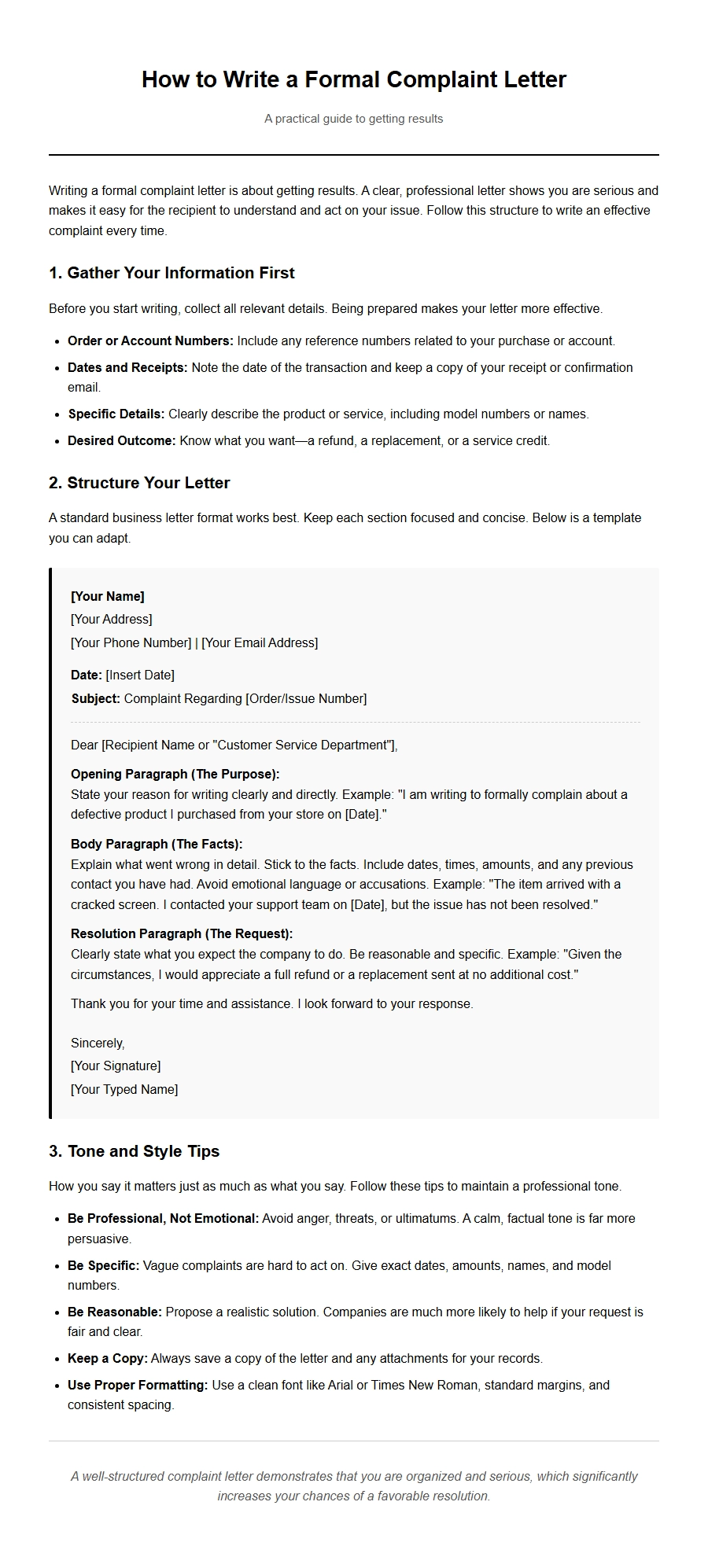 How to Write a Formal Complaint Letter
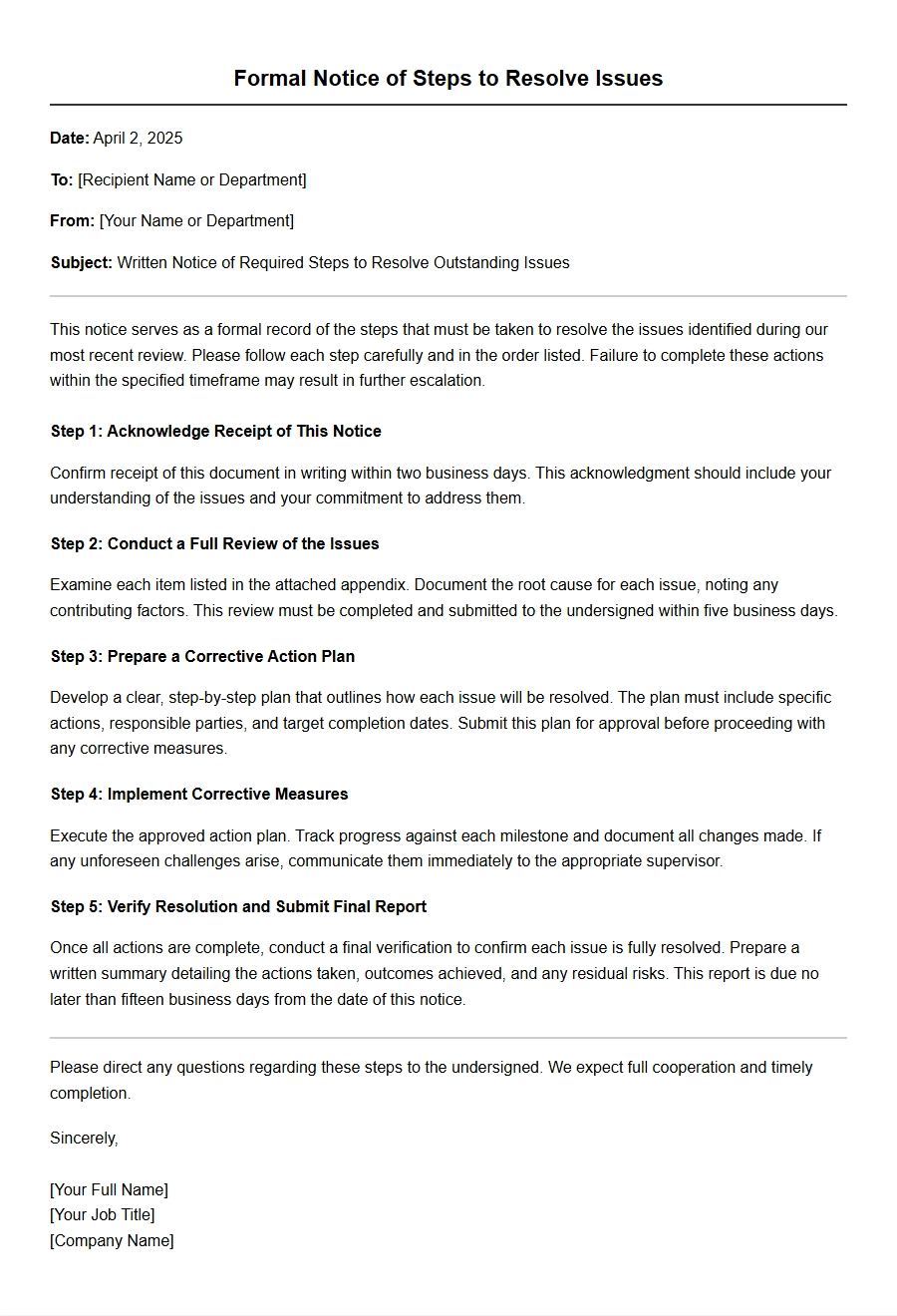 Steps to Resolve Issues via Written Notice
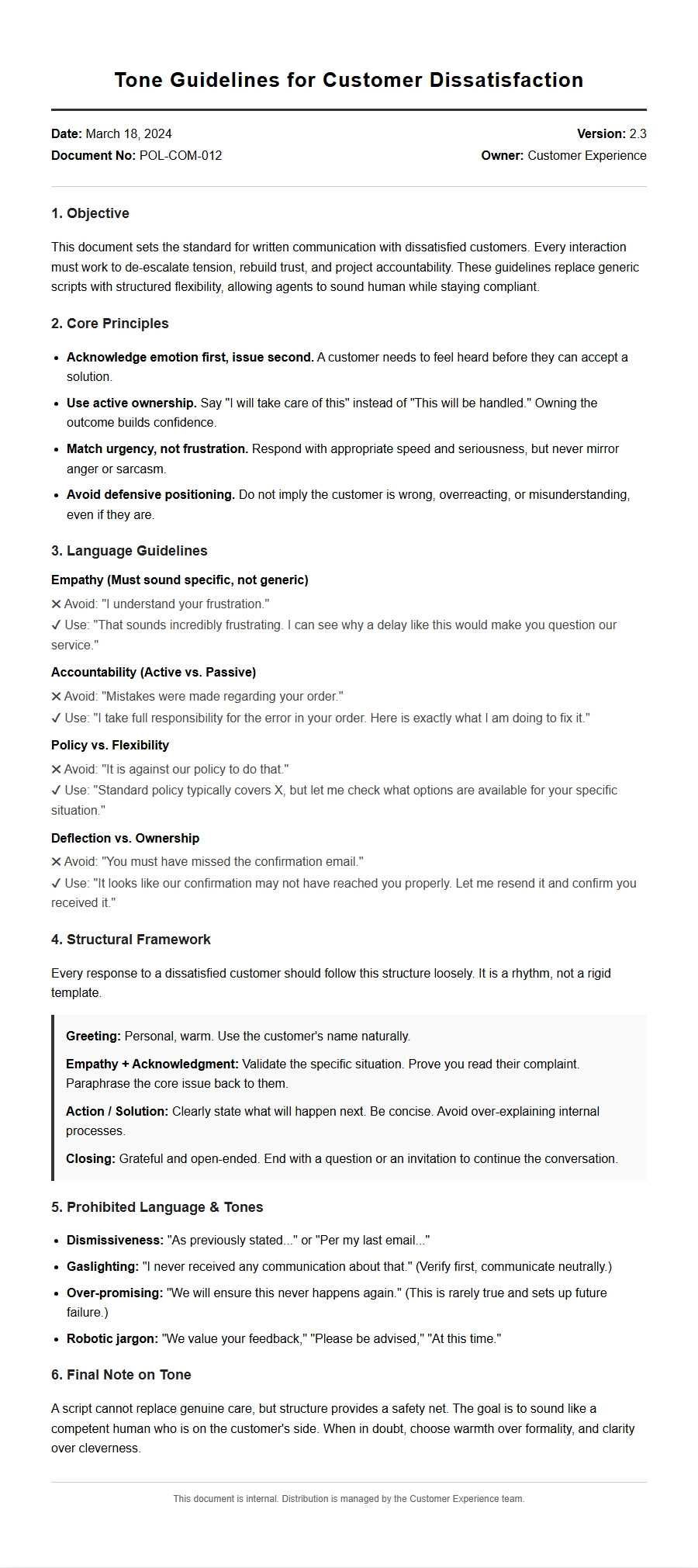 Tone Guidelines for Dissatisfied Customer Letters
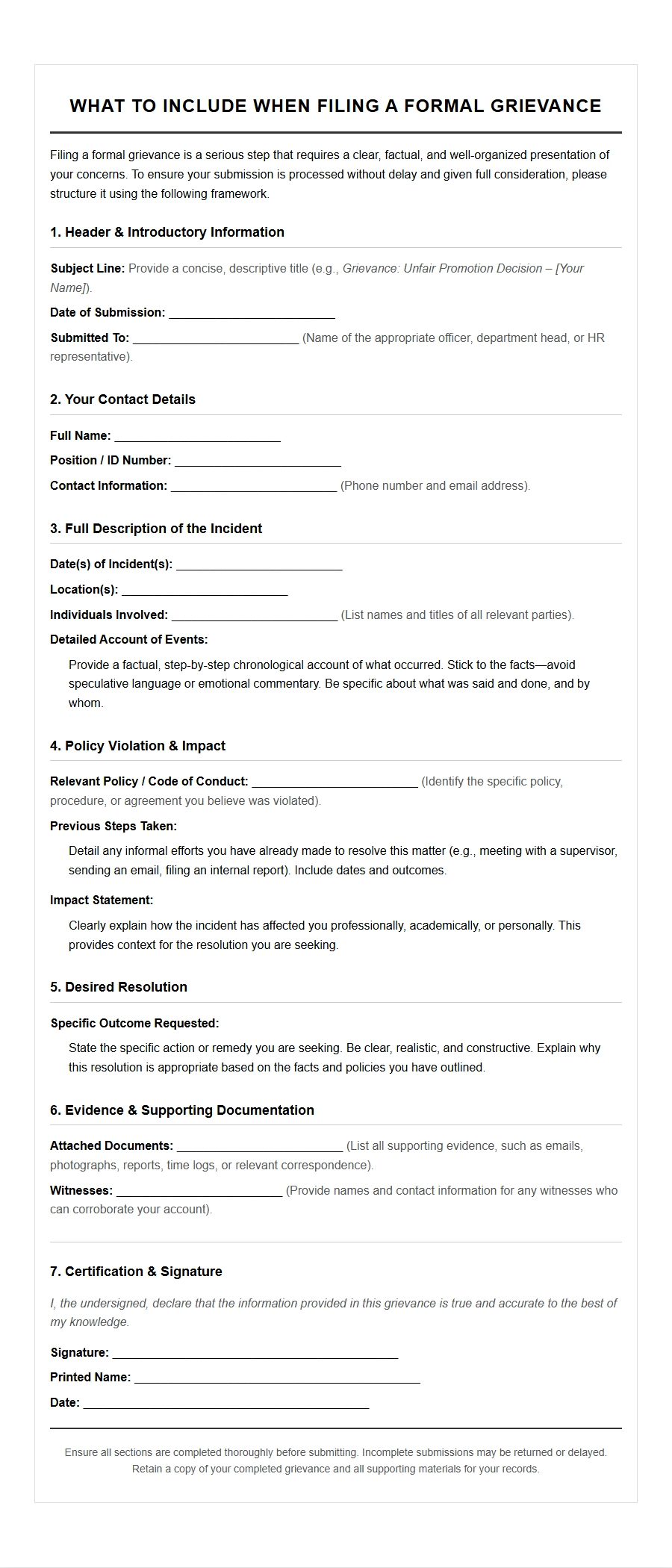 What to Include in a Formal Grievance Letter
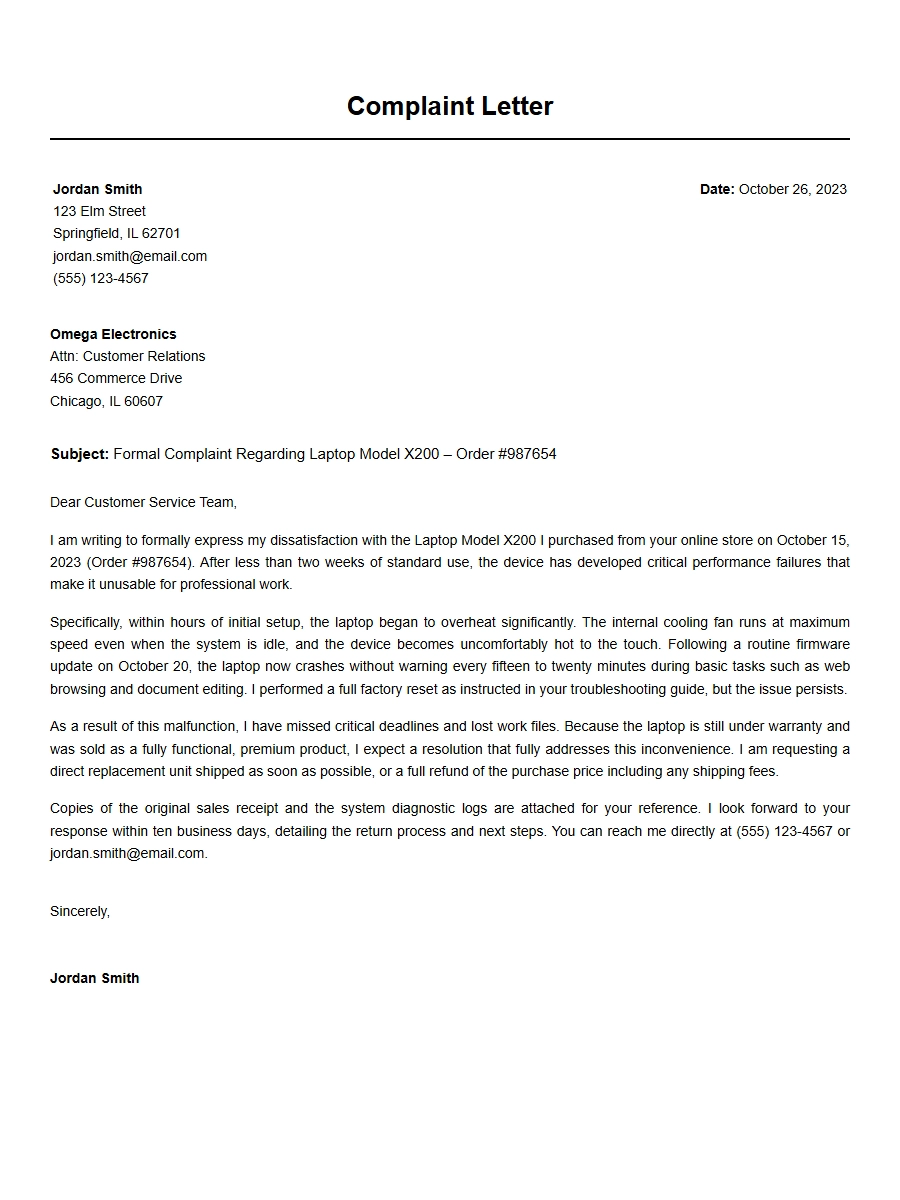 Structure of an Effective Complaint Letter
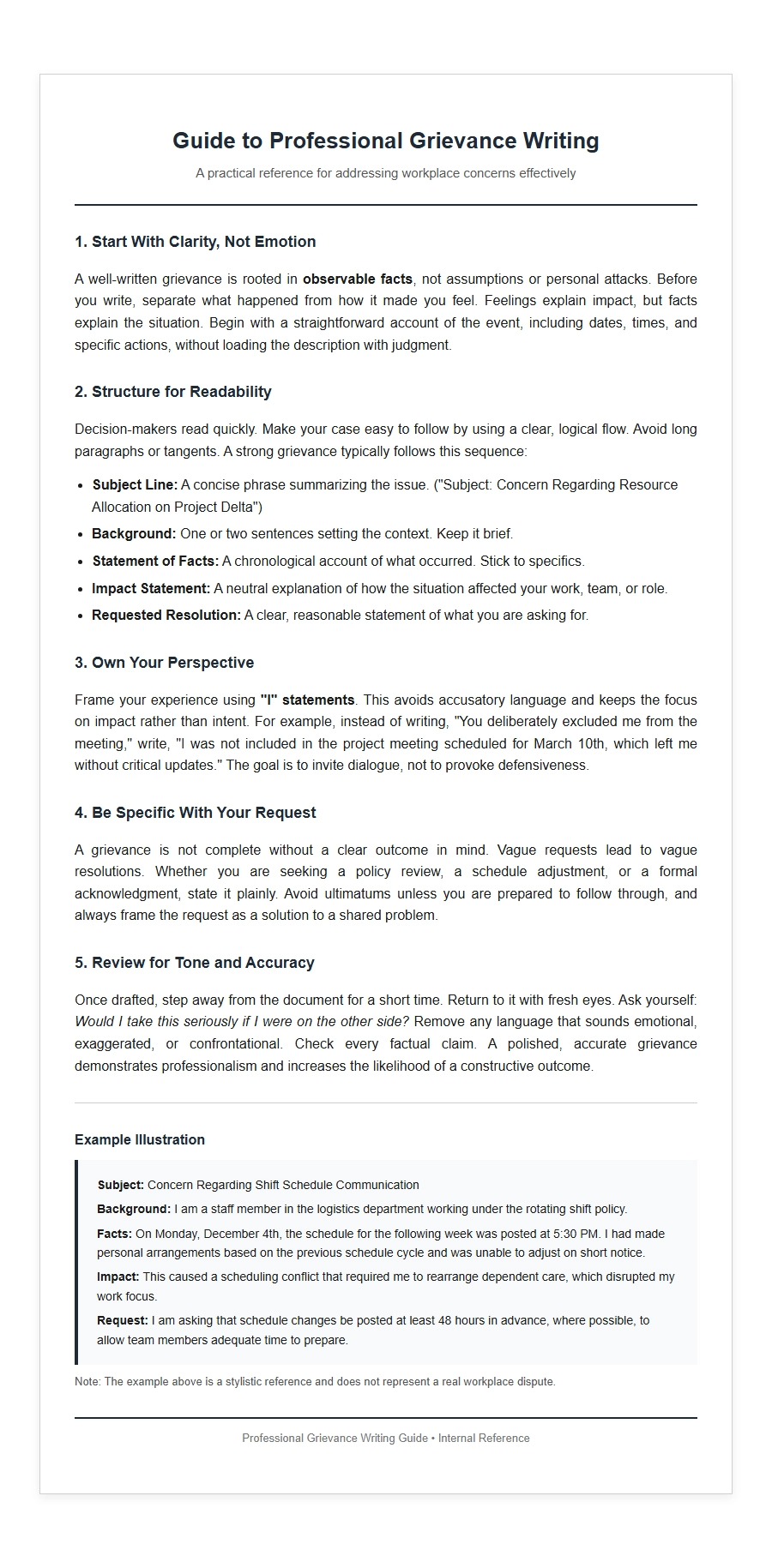 Best Practices for Writing Professional Grievance Letters