Staring at a blank page when you need to write a professional letter can feel paralyzing—but the right sample turns that anxiety into a confident, polished draft in minutes. You know you need to escalate an issue, but you also want to stay professional and maintain the relationship. Getting that balance wrong can backfire, so it's natural to feel stuck.
Using a letter template isn't cheating. It's a smart way to start. A good sample gives you structure, tone, and key phrases that have been tested in real situations. You still have room to personalize it, but you don't have to invent the wheel from scratch every time. That's especially true for a polite but firm escalation email draft, where the stakes are higher and the tone matters a lot.
Category: Professional Letters & Templates
Why a polite but firm tone works for escalation emails
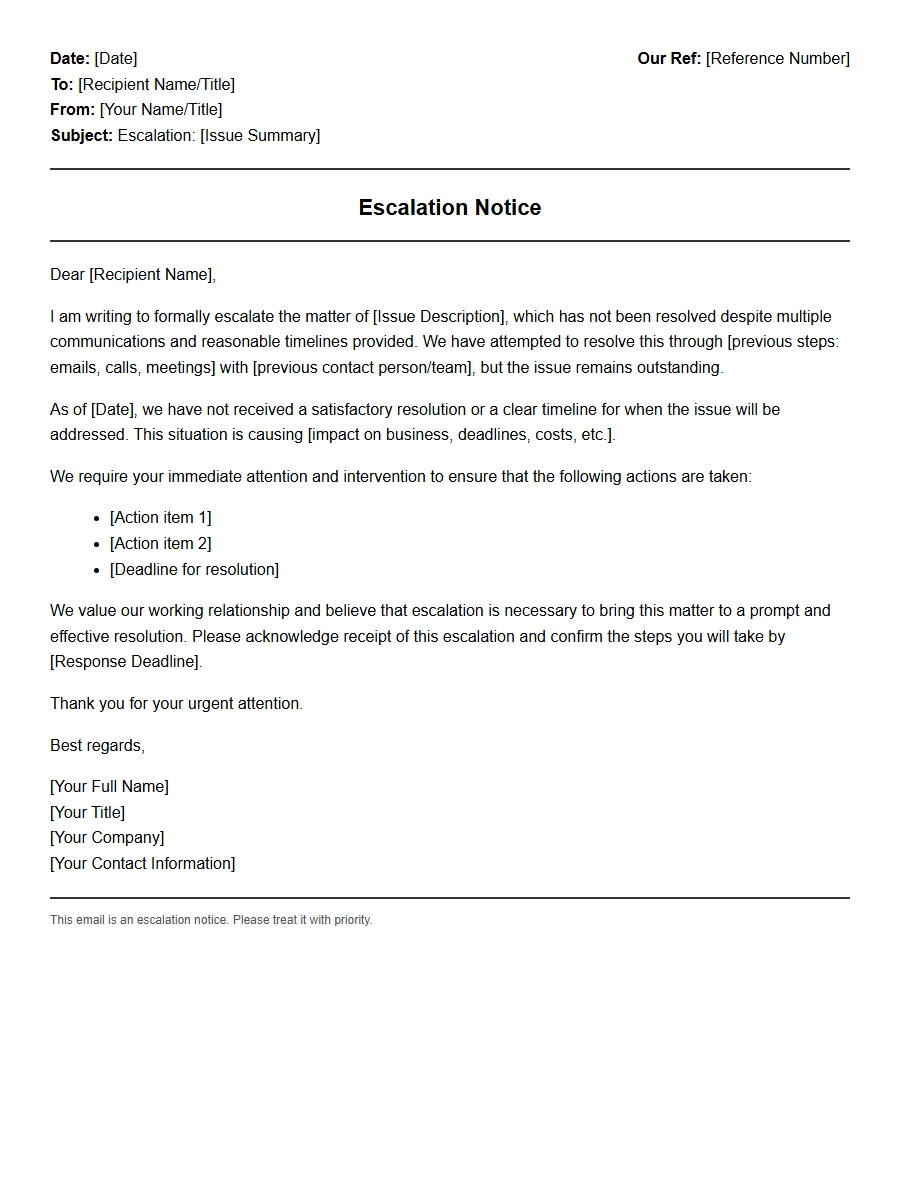
An escalation email isn't an angry email. Its purpose is to move a stuck issue forward by raising it to the right person. The best escalation emails are clear about the problem and the outcome you need, but they don't blame or threaten. They show you're reasonable, persistent, and professional. That's exactly what the phrase "polite but firm" captures.
Think about it: if you sound aggressive, people get defensive and nothing gets resolved. If you sound too soft, your issue gets ignored. The middle ground is where results happen. A good escalation email sample helps you hit that middle ground without guessing.
Choosing the right sample for your situation
Not all professional correspondence is the same. An escalation to senior management about a serious issue needs a different tone than a simple follow-up to a vendor. When you look for a sample, match it to your specific context.
For example, if you're writing about workplace misconduct, you want a sample that's direct but respectful. You can start with phrases like "I wanted to share a concern that hasn't been resolved through our usual channels" instead of "This is unacceptable." The first version opens a door. The second slams one shut.
If your issue is less sensitive, like a late delivery or an unclear invoice, you can use a lighter version of the same structure. Samples that include formal writing tips often show you how to adjust your language depending on the recipient's seniority and your existing relationship.
How to adapt a sample without losing your voice
The risk with any letter template is that your email ends up sounding generic. That's avoidable. Start by reading the sample twice. First, understand its logic. Second, notice where you can insert your specific details—the exact date, the names, the steps you've already taken.
Then rewrite the opening paragraph in your own words. Most samples have a standard opening like "I am writing to escalate the following issue." That's fine as a base, but you can make it more natural. Try: "I'm reaching out because we haven't been able to resolve the delivery delay through the usual contacts." Same meaning, but it sounds like you.
The key is to keep the letter structure from the sample but replace the generic sentences with your real situation. The salutation and closing are good places to personalize too. Use "Dear [Name]" if you know the person, and close with "Thank you for your help" rather than a robotic "Sincerely" unless the context is very formal.
Common mistakes to avoid
One big mistake is using outdated language. "To whom it may concern" feels cold and dated. If you don't know the right person, take five minutes to find their name. If you can't, use "Dear [Department Name] Team" or "Dear Hiring Manager" for cover letters. The same logic applies to escalation emails—name the person if you can.
Another mistake is ignoring the format. An escalation email sent in a digital format should have a clear subject line like "Escalation: Order #12345 – Delivery Still Pending." That's not rude. It's helpful. It tells the recipient exactly what this is about before they open it.
Also, don't forget to proofreading letter before you hit send. A typo in an escalation email makes you look careless, and it undermines your credibility. Read it out loud. If a sentence feels awkward, reword it. If your tone in writing sounds sharp when you read it aloud, soften it.
When to use an escalation email vs. other formats
Sometimes a phone call is faster. But if you need a paper trail, an email is better. Escalation emails are especially useful when you're dealing with a recurring problem that hasn't been solved through normal channels. If you've tried once or twice already, an escalation is the right next step.
If you're writing about a safety issue at school or a public facility, the tone needs to be especially clear and respectful. You can review a sample for notifying a school board about facility safety hazards to see how that specific context works. The same structure applies, but the language is more formal because you're addressing a governing body.
If you're dealing with a legal or administrative decision, like a traffic court verdict, your escalation needs to show you understand the process. Take a look at this example of appealing a traffic court verdict via a written petition for the level of detail required.
For more general situations, a standard complaint letter structure works well. The sample for how to write a formal complaint letter gives you a solid foundation that you can adapt.
Tailoring the opening paragraph to grab attention
Your first two sentences are the most important. They need to state the issue and why you're escalating now. Don't bury the lead. If you're writing about unprofessional behavior, say that directly but professionally. "I'm writing to escalate a concern regarding the conduct of [Name], which has not been resolved after two discussions with their manager." That's clear, factual, and it moves the conversation forward.
If you're requesting action on misconduct, you might need a more detailed approach. Check this escalation email to senior management regarding misconduct to see how others have framed it. The structure is the same, but the specific language matters more when the issue is serious.
Similarly, if you're asking for a refund due to a course cancellation, your escalation should reference the original agreement and the previous attempts to resolve it. The sample for appeal for tuition refund due to course cancellation shows how to present your case without sounding demanding.
Forward-looking thought
Use any sample as a springboard, not a crutch. The best escalation emails feel both professional and personal. They show you've done the groundwork, you're being fair, and you expect a resolution. Practice makes the process faster. The more you write these, the more natural the balance between polite and firm becomes. Start with a solid sample, make it yours, and send it with confidence.
Samples You Can Use
How to Draft a Polite but Firm Escalation Email
Overdue Payment Reminder – Second Notice
Dear [Client Name],
I hope this message finds you well. This is a polite but firm follow-up regarding Invoice #INV-2025-037 for $4,250.00, due on 15 February 2025. As of today, the amount remains unpaid.
We value our partnership, but we must enforce our payment terms to maintain service continuity. Please arrange payment by 5 March 2025 to avoid a late fee of 2% per month.
Invoice Summary:
Item
Amount
Due Date
Web Development Services
$4,250.00
15 Feb 2025
If payment has already been sent, please disregard this notice. Otherwise, contact me immediately to discuss a resolution. We appreciate your prompt attention to this matter.
Best regards, [Your Name] Accounts Receivable
Service Level Agreement Violation – Urgent Action Required
Dear [Vendor Name],
We have identified a breach of our Service Level Agreement (SLA) for the Cloud Hosting Services contract dated 01 Jan 2025. Specifically, uptime fell to 96.2% in February, below the guaranteed 99.9%.
We request a formal explanation and a remediation plan within 5 business days. Continued non-compliance may result in a penalty deduction as per clause 8.3 of our agreement.
SLA Metrics Affected:
Uptime from 01 Feb to 28 Feb 2025: 96.2% (required: 99.9%)
Downtime total: 6 hours 45 minutes
We value your service but require contractual adherence. Please confirm receipt and your proposed corrective actions by 15 March 2025.
Sincerely, [Your Name] IT Manager
Unresolved Customer Complaint – Final Warning
Dear [Support Team],
I am writing regarding Ticket #CS-4892 submitted on 10 February 2025 regarding a defective Model X Printer. To date, no replacement or repair has been scheduled despite two prior reminders.
This is a polite but firm escalation. If I do not receive a confirmed resolution by 12 March 2025, I will escalate to the Better Business Bureau and consider legal action for breach of warranty.
Case History:
Date
Action
10 Feb 2025
Initial complaint logged
20 Feb 2025
First follow-up email sent
01 Mar 2025
Second follow-up sent, no reply
I expect a response within 48 hours. Thank you for your cooperation.
Regards, [Your Name]
Refund Request Escalation – Overdue Processing
Dear [Customer Service Lead],
I am following up on Refund Request #REF-3321 for $179.99 submitted on 01 February 2025 for an order returned on 25 January 2025. Per your policy, refunds are processed within 10 business days — it is now 20 business days.
I appreciate your apology during our last call, but action is required. Please process the refund by 15 March 2025 or provide a clear reason for the delay. Failure to do so will result in a chargeback through my bank.
Order Details:
Order #: ORD-9872
Product: Wireless Bluetooth Headphones
Return received: 27 Jan 2025
Refund amount: $179.99
Trusting this matter will be resolved promptly. I look forward to your confirmation.
Best, [Your Name]
Project Deadline Extension Request – Not Approved
Dear [Client Name],
We have reviewed your request for an additional 14 days on the Website Redesign Project (due 20 March 2025). While we understand unforeseen challenges, we cannot approve this extension without revised terms.
This is a polite but firm reminder that the original contract specifies a strict deadline. To proceed, we need a revised delivery plan and a $500 late fee as per clause 5.2. Please respond by 14 March 2025 with your decision.
Current Timeline:
Milestone
Original Date
Proposed Date
Design Completion
01 Mar 2025
15 Mar 2025
Final Delivery
20 Mar 2025
03 Apr 2025
We value your business and want to keep this project on track. Your prompt decision is appreciated.
Sincerely, [Project Manager]
Delayed Shipment – Request for Immediate Action
Dear [Logistics Team],
I am writing regarding Order #SHIP-564 placed on 01 March 2025 for industrial supplies. The estimated delivery was 08 March 2025, but tracking shows it is still at the warehouse.
This delay is impacting our production schedule. We require delivery by 14 March 2025 to avoid a production halt. Please confirm expedited shipping at no extra cost. If this cannot be met, we will seek alternative suppliers.
Order Summary:
Item: Machine Parts Kit (SKU: MP-452)
Quantity: 5 units
Order value: $2,300.00
We trust you will prioritize this matter. A confirmation by end of business today would be appreciated.
Regards, [Your Name] Procurement Manager
Incorrect Billing – Request for Correction
Dear [Billing Department],
I discovered an error on my March 2025 invoice for account #ACCT-7823. I was billed $350.00 for a premium plan, but I downgraded to the basic plan on 15 February 2025 which costs $150.00.
Please rectify this by issuing a credit for the difference of $200.00 by 18 March 2025. Failure to do so will result in a dispute with my credit card company.
Billing Comparison:
Item
Charged
Should Be
Premium Plan (Mar)
$350.00
—
Basic Plan (Mar)
—
$150.00
I appreciate your prompt correction. Kindly send an updated invoice.
Best, [Your Name]
Unacceptable Customer Support Response – Escalation
Dear [Manager Name],
I am writing to escalate a complaint about your support team's handling of Issue #SUP-8741. On 05 March 2025, I reported a software bug that prevents login. After three emails, the response I received was a generic FAQ link, which was not helpful.
This is a polite but firm request for a senior technician to resolve this matter by 15 March 2025. I have provided all relevant logs in my initial report. Continued inaction may lead to cancellation of my subscription.
Communication Log:
05 Mar: Initial report submitted
07 Mar: Auto-reply received
09 Mar: Second email sent, no response
11 Mar: Third email, generic FAQ provided
I expect a dedicated support agent and a fix. Thank you for your understanding.
Sincerely, [Your Name]
Membership Renewal Dispute – Unauthorized Charge
Dear [Billing Support],
I discovered a charge of $49.99 on my account for Membership #MEM-5521 renewal on 01 March 2025. However, I explicitly requested cancellation via email on 15 February 2025 (confirmed by support ticket #CAN-321).
This is a polite but firm demand for a full refund by 15 March 2025. If not resolved, I will file a dispute with my bank for unauthorized transaction.
Charge Details:
Date
Description
Amount
01 Mar 2025
Annual Renewal – Premium
$49.99
Please refund to my original payment method and confirm cancellation in writing. I await your prompt action.
Regards, [Your Name]
Subcontractor Non-Performance – Final Notice
Dear [Subcontractor Name],
We are writing regarding Contract #SUB-875 for Electrical Installation due 10 March 2025. As of today, only 60% of work is complete, and the site is at a standstill.
This is a final notice: we require full completion by 20 March 2025. Failure to meet this deadline will result in a penalty of $200 per day as per clause 12.1, and we may terminate the contract.
Work Progress:
Wiring for floors 1-3: Done
Wiring for floors 4-5: Not started
Panel installation: Pending
We need your manpower plan by 15 March 2025. Please confirm your commitment to this schedule.
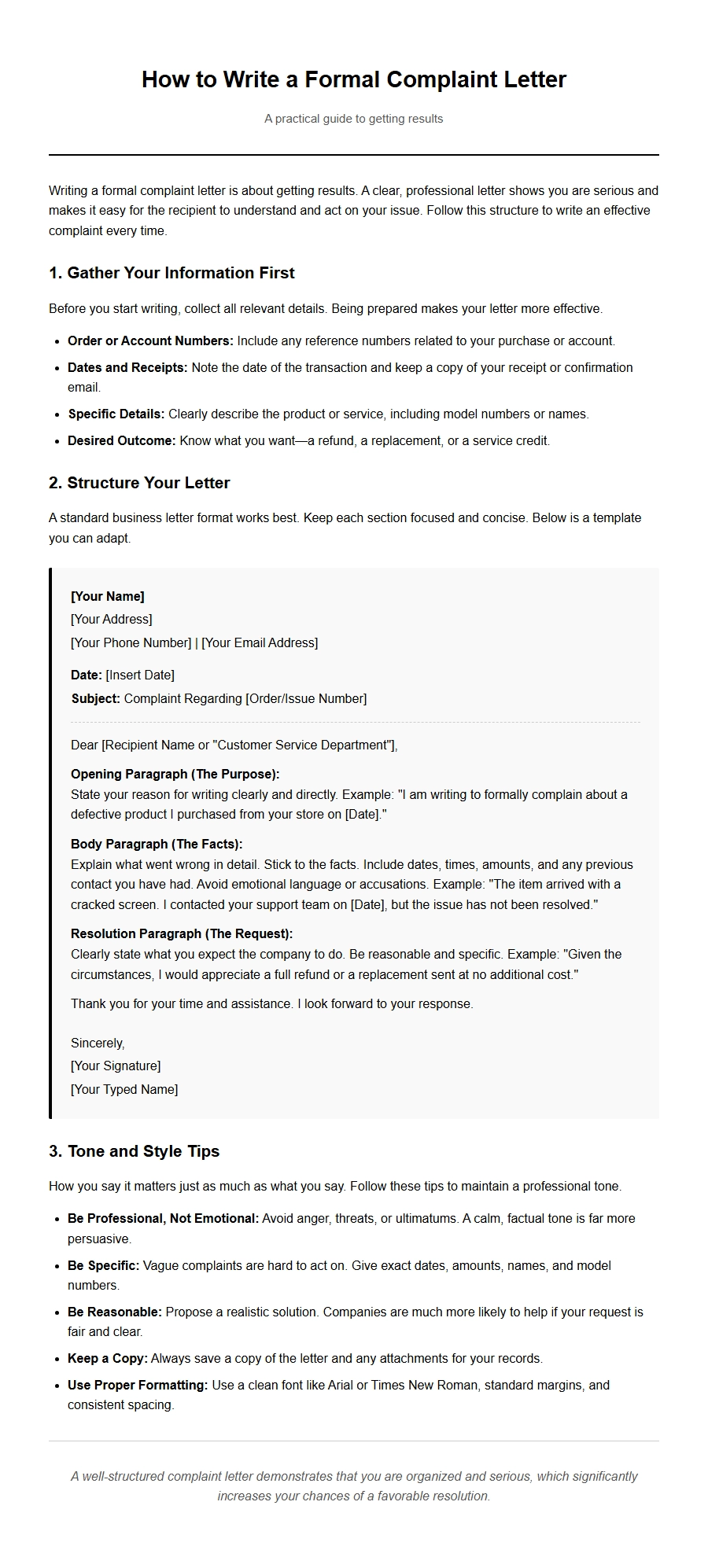 How to Write a Formal Complaint Letter
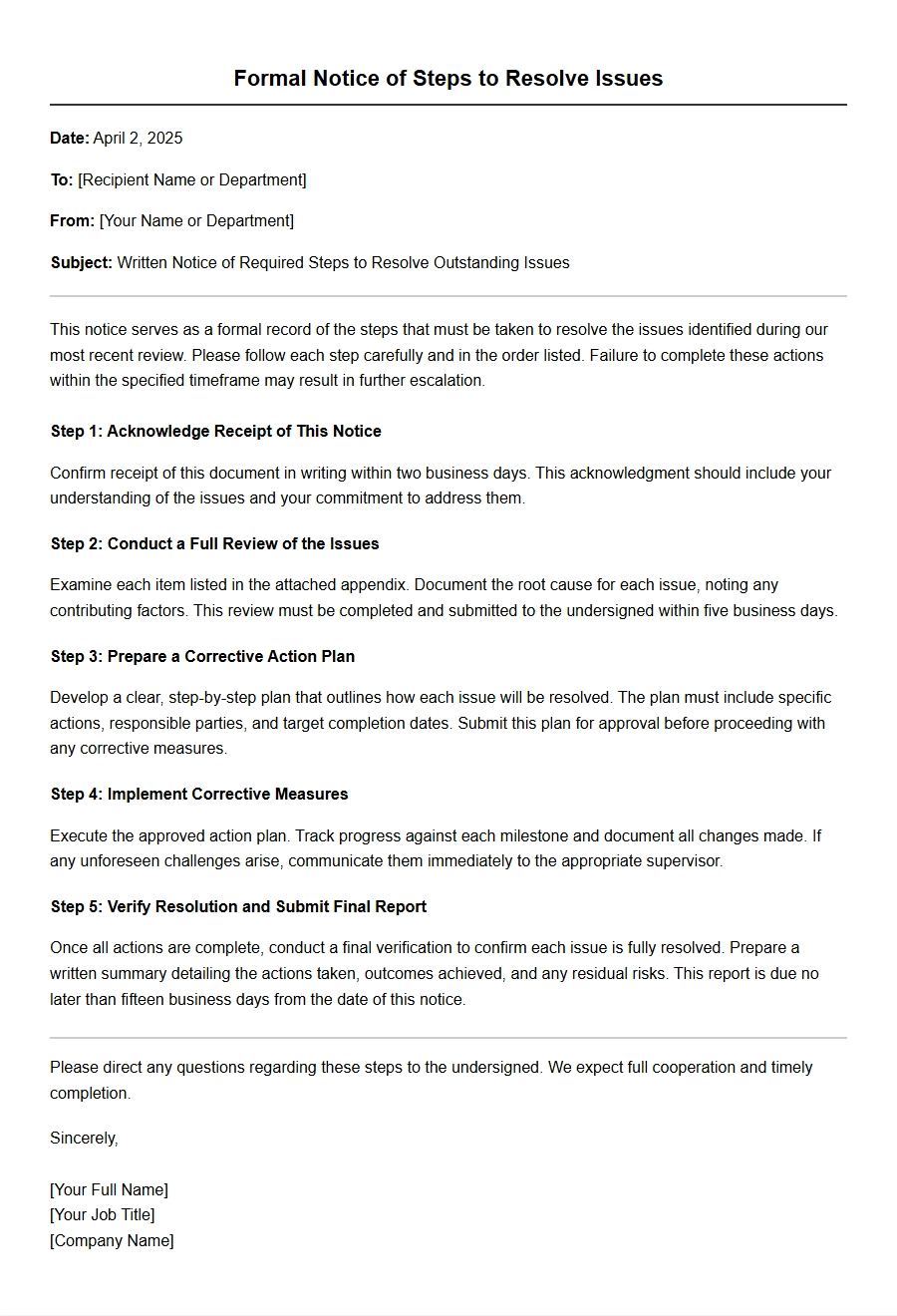 Steps to Resolve Issues via Written Notice
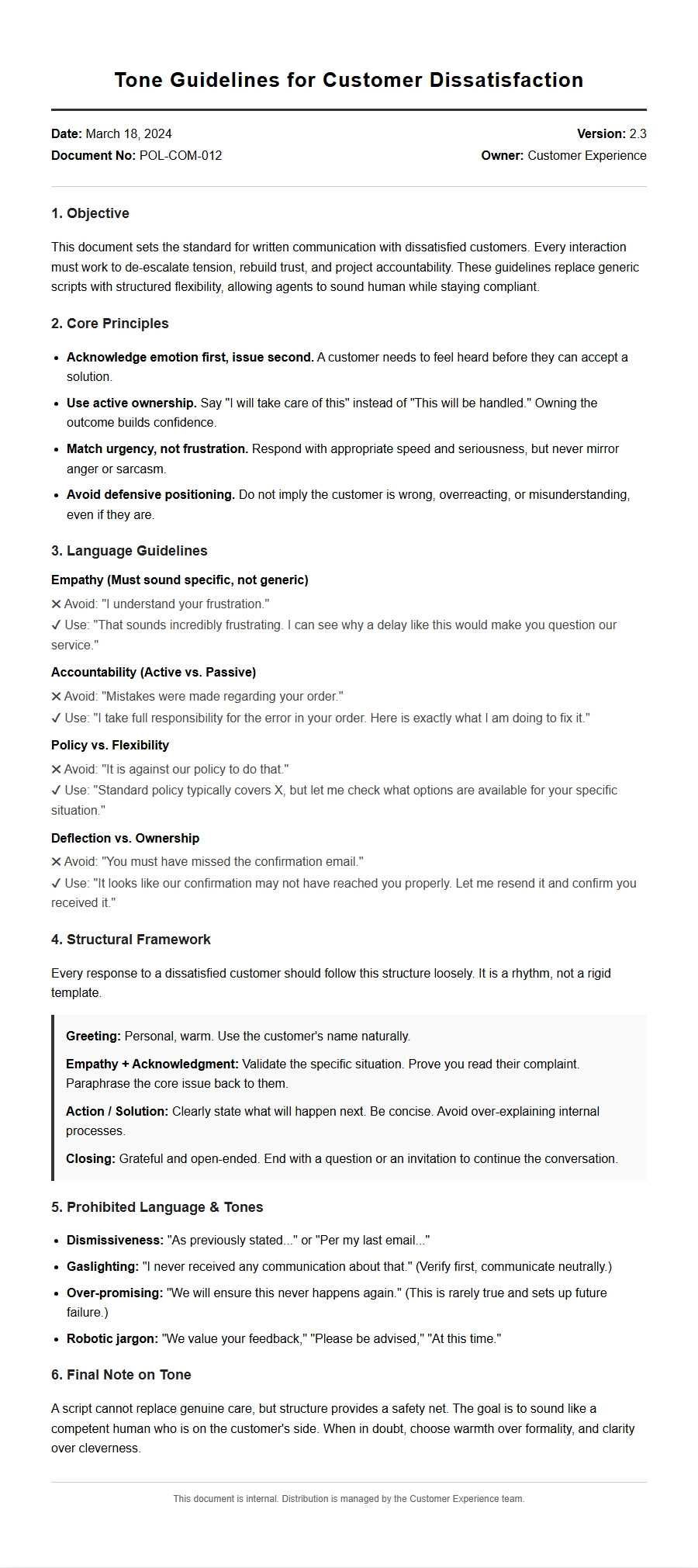 Tone Guidelines for Dissatisfied Customer Letters
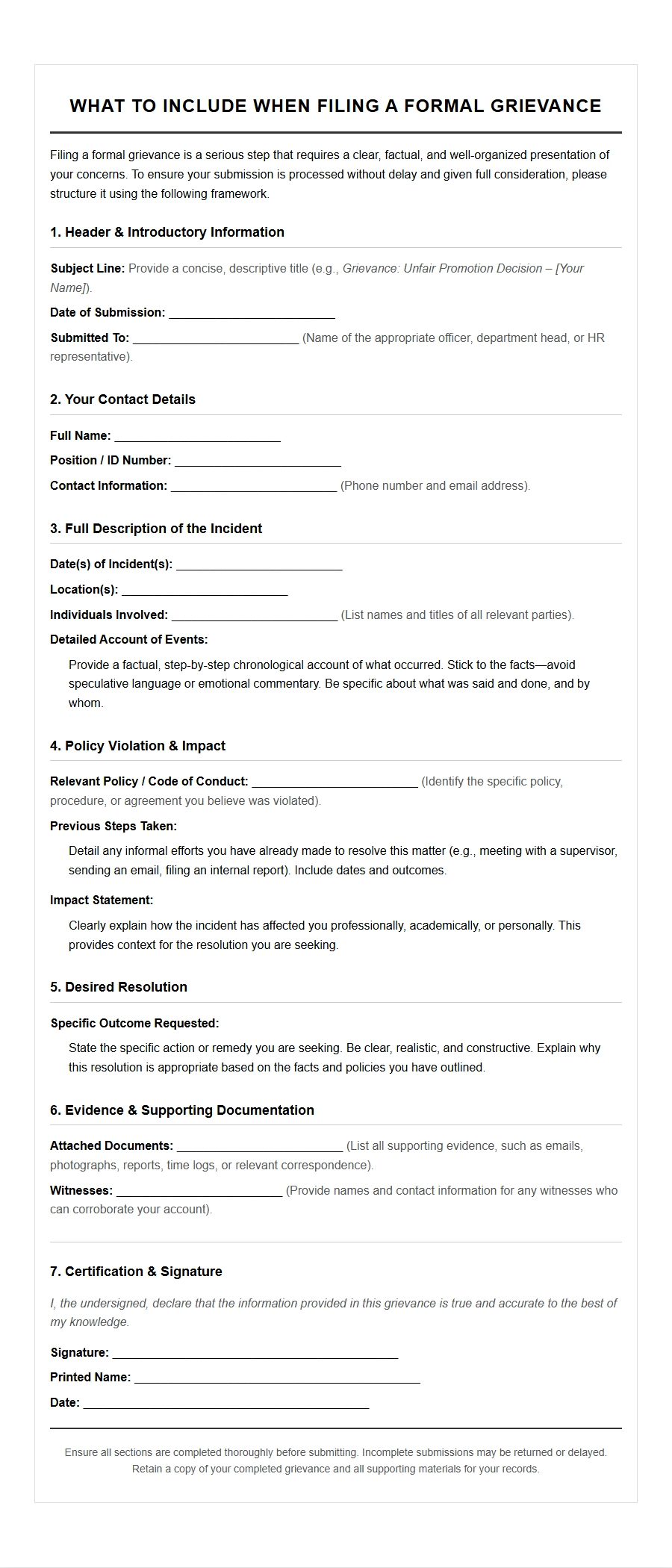 What to Include in a Formal Grievance Letter
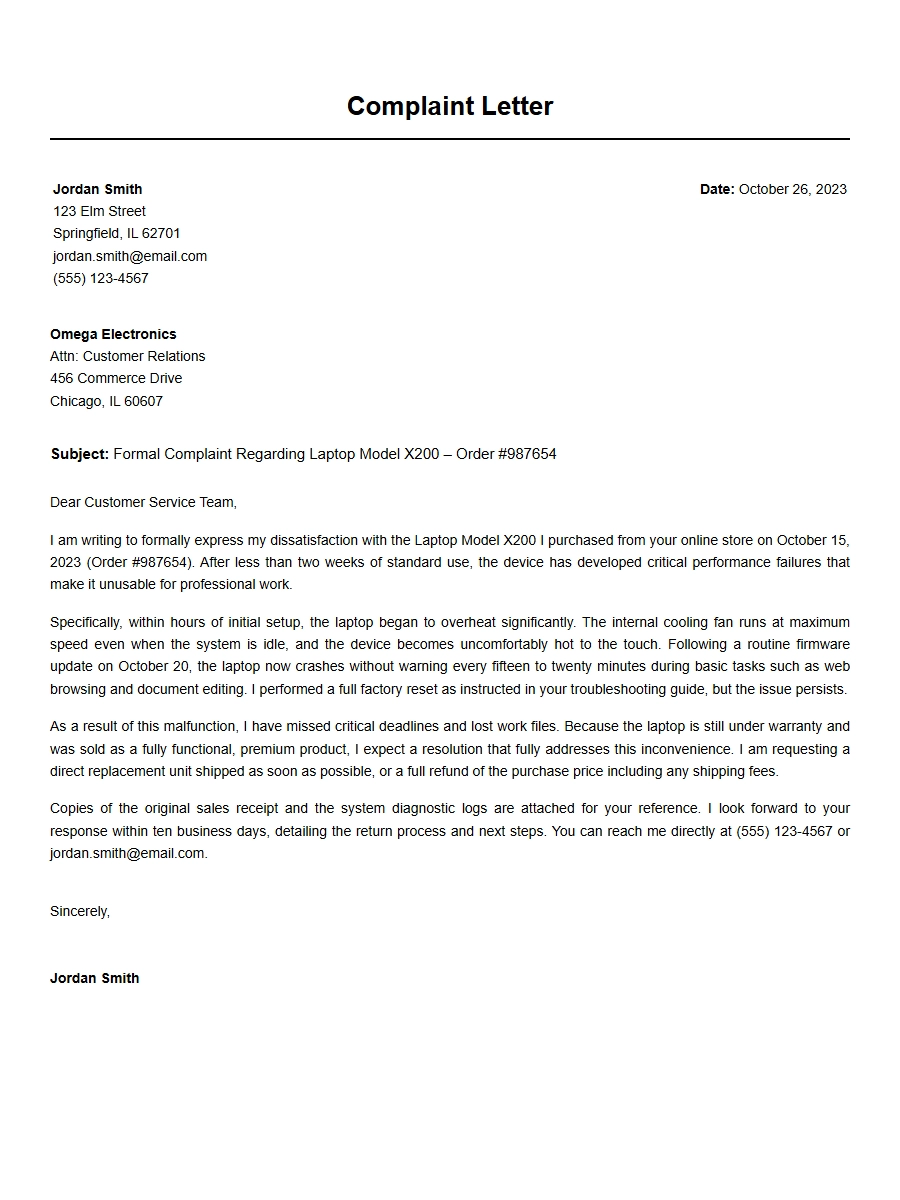 Structure of an Effective Complaint Letter
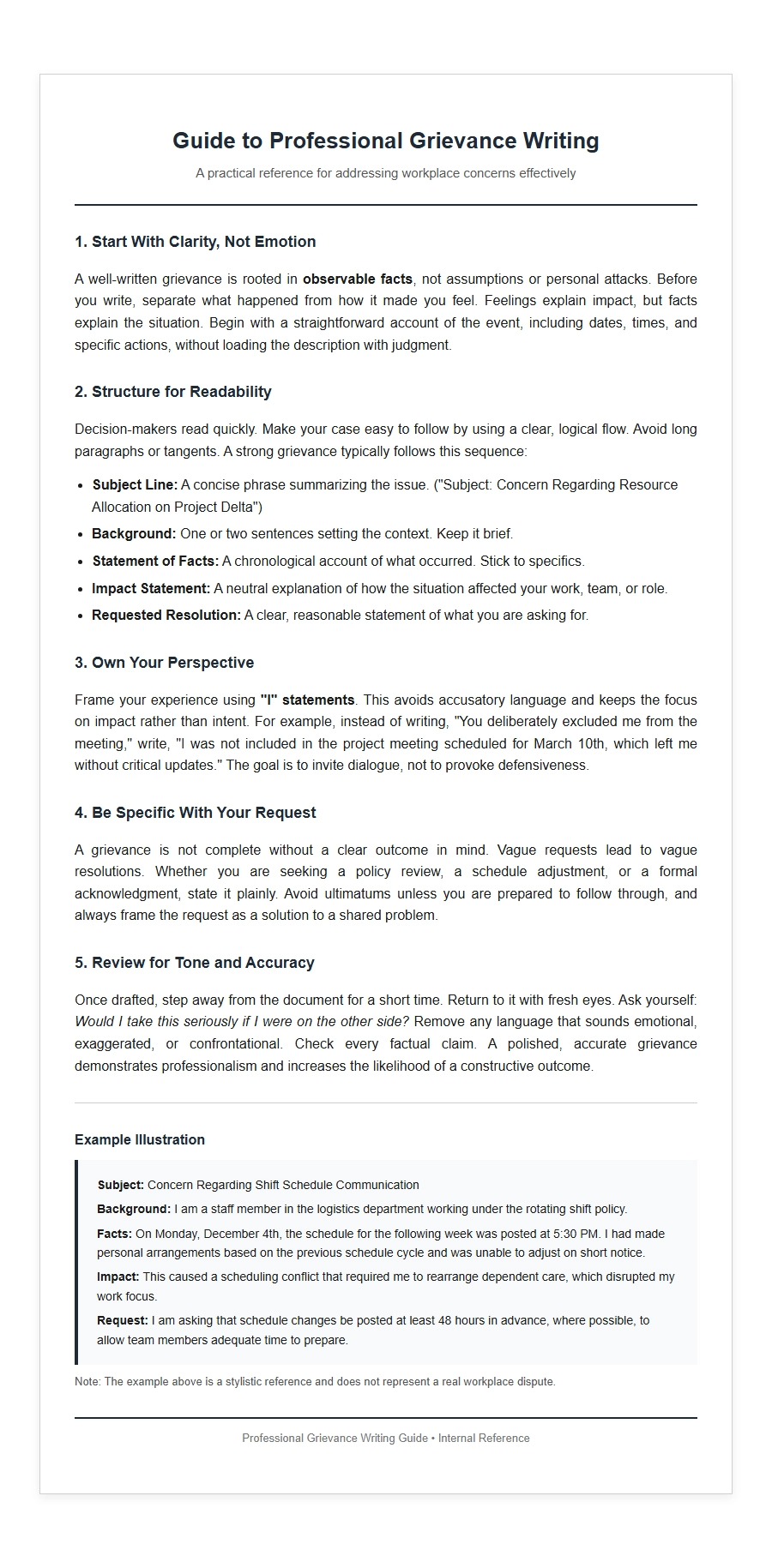 Best Practices for Writing Professional Grievance Letters