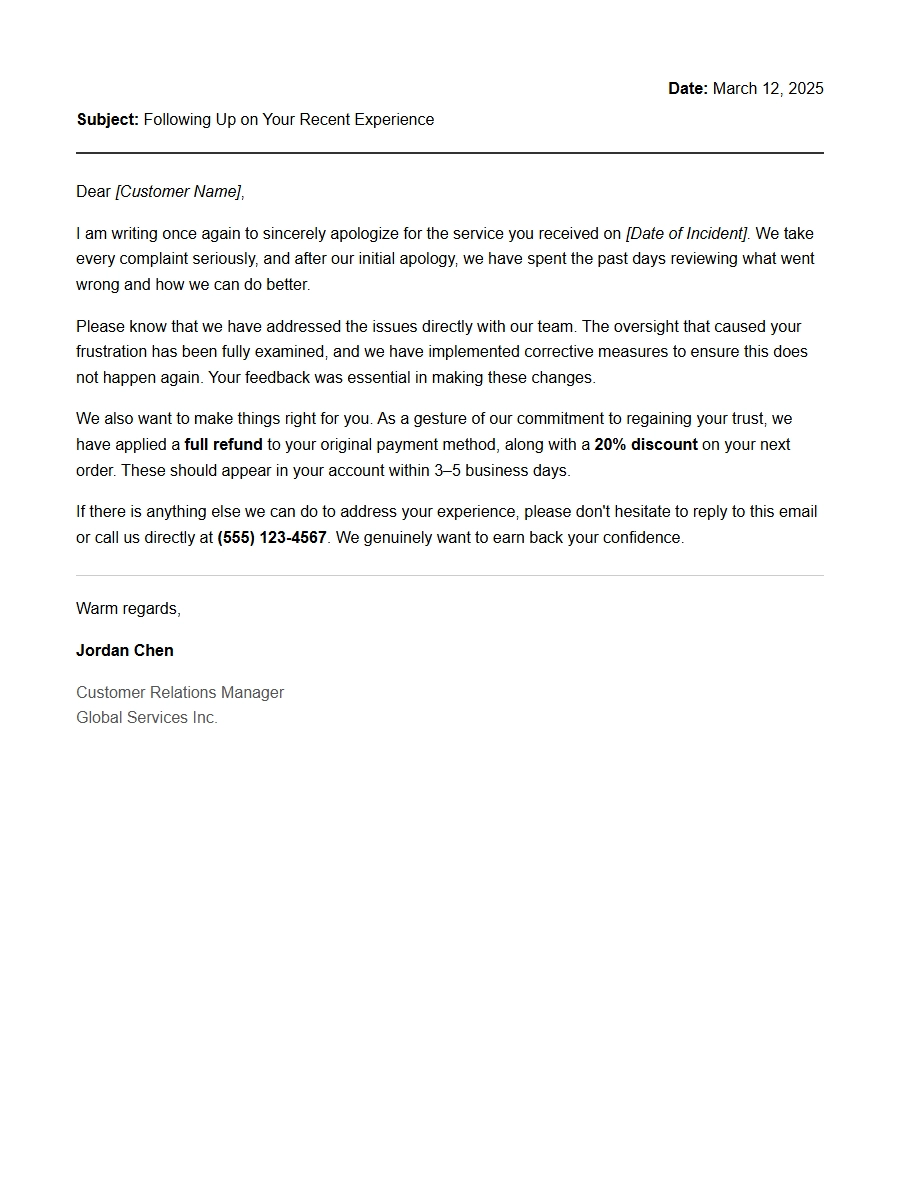
You finally got that apology from the company. They admitted fault, offered a refund, or fixed the problem. So, why do you still feel a little awkward? Writing an apologetic follow up after receiving bad service apology feels oddly formal, like you're thanking someone for cleaning up a mess they made. But sending a brief, professional acknowledgment isn't just polite—it saves you time and locks in the agreement.
You don't need to start from scratch. Using a well-structured letter template for this post-resolution follow-up is a smart move. It gives you a neutral, professional framework so you don't accidentally sound bitter or overly chummy. The right template handles the letter structure and salutation and closing for you, leaving you free to just fill in the details and get on with your day.
Category: Complaint Follow-Up & Resolution
Why send a follow-up at all?
This type of professional correspondence serves three clear purposes. First, it creates a written record that you accepted the resolution. Second, it rebuilds a small bridge of trust with the business. Third, it makes you feel better because you've closed the loop. Whether you're responding to a faulty product or a botched service, a quick note clarifies that the issue is truly behind you.
What to say in your note
Start by referencing the original problem and the apology they gave you. Keep it brief. Something like: "Thank you for your response to my recent complaint about the incorrect invoice charges. I appreciate you correcting the billing error and explaining how it happened." This sets the context without rehashing the anger.
Then, pivot to the outcome. This is where you confirm the resolution. "I have received the refund, and the credit is now showing on my account." This acts as a confirmation receipt, preventing any future disputes about whether the issue was resolved. For specific situations, like a utility billing error or a product quality problem, naming the exact fix keeps everything above board.
Finally, end on a neutral, professional note. You don't have to be overly warm, but you should avoid hostility. "Thank you for your attention to this matter. I consider it resolved." That's it. You've just practiced excellent letter writing etiquette.
Common mistakes to avoid
One common error is mixing the tone in writing. If your original complaint was heated, your follow-up should be cool and businesslike. Don't re-open the argument unless the resolution was incomplete. Another mistake is ignoring the format. If you received an apology by email, a printed business letter format with a fancy letterhead design is usually overkill. Stick to a digital letter format via email.
People also forget to proofread their letter carefully. A typo in an acknowledgment feels sloppy. Read it once out loud to catch awkward phrasing. And remember, unlike a resignation letter sample which ends a relationship, this note is about strengthening one—or at least ending the interaction on decent terms.
How to adapt the template without losing your voice
A good customizable letter lets you swap out the company name and details in under two minutes. The first paragraph is your hook—thank them specifically for the action they took. The second paragraph is your confirmation. The third is your closing. This letter structure works for almost every service recovery scenario, from a dispute over consulting fees to a membership contract issue at the gym.
The hardest part is striking the right tone in writing. You want to show appreciation that they fixed the issue, without sounding like you were wrong to complain in the first place. Stick to facts over feelings. "The replacement unit arrived today and is working perfectly" is much stronger than "I'm so happy you finally sent me a working one."
Don't overthink this. A good follow-up isn't about being clever. It's about being clear and closing the book on a bad experience. Use a simple template to get the words down, then tweak the opening line to sound like you. The more you do it, the faster it gets. Eventually, you'll handle these moments with no sweat at all—just a few minutes of smart, professional follow-through.
Samples to Guide You
Apologetic Follow-Up After Bad Service Apology
Accepting Apology for Poor Hotel Stay
Subject: Follow-Up on Your Apology for My Recent Stay
Dear Customer Service Team,
Thank you for your prompt and sincere apology regarding the issues I experienced during my stay from March 12 to March 15, 2025, at your Downtown location (Booking #42109). I appreciate that you have acknowledged the noisy room condition and the delayed housekeeping service.
I accept your apology and the partial refund of $85.00 you offered. Below is a summary of the agreed resolution:
Issue
Resolution
Room noise due to construction
25% discount on room charges
Housekeeping delay
Complimentary breakfast on March 14
Billing error for mini-bar
Credit of $12.50
Please process the refund to my credit card ending in 4321 within 5 business days. I hope you will act on the preventive measures you mentioned to improve guest experience. Thank you again for handling this matter professionally.
Sincerely, Laura Jenkins
Follow-Up After Tech Support Apology
Case ID: TSC-78945 Date: April 3, 2025
Dear Support Manager,
I received your apology letter dated April 1 regarding the repeated connectivity failures with my modem (Model XT-200) and the frustrating wait times on three separate calls last week. I appreciate that you have taken responsibility and issued a $50 credit on my account.
To ensure the problem is fully resolved, please confirm the following actions as listed in your response:
Firmware update scheduled for April 10 via remote push
Replacement router shipped (Tracking: TRK-8821), arrival expected April 7
One month of free premium support added
I am satisfied with the proposed solution, but I would appreciate a confirmation email once the firmware update is completed. If the situation does not improve after the router replacement, I may request a cancellation without penalty as per your service guarantee. Thank you for listening and for your efforts to make things right.
Regards, Marcus Chen
Apology Accepted – restaurant billing error
Reference: Bill Correction #RST-034 Date: April 5, 2025
Dear Ms. Alvarez,
Thank you for your kind apology letter and the $25 gift certificate you enclosed. I was upset after my birthday dinner at your restaurant on March 28 when I was overcharged for a bottle of wine that we never ordered. I appreciate that you investigated and confirmed the mistake.
I accept your apology and the compensation. To close this matter, please process the refund of $42.00 to my credit card. For your records, my receipt details are:
Item
Charged
Correct
Cabernet Sauvignon
$48.00
$0.00 (not ordered)
Gratuity adjustment
$0.00
18% on corrected bill
I hope the retraining you mentioned for your waitstaff will prevent similar issues. The gift certificate will bring us back for another try. Thank you for turning a negative experience into a positive one.
Best regards, Olivia Park
Apologetic Follow-Up on Flight Delay Apology
File No: FLT-DELAY-8842 Date: April 1, 2025
Dear Airline Customer Relations,
I received your apology regarding the 7-hour delay on Flight AB123 on March 22. I understand mechanical issues can happen, and I thank you for the $200 travel credit and meal vouchers. However, I still need assistance with one follow-up item: my connecting flight was missed, and I had to book a last-minute hotel. Your apology did not mention reimbursement for that expense.
Could you please review the following and consider additional compensation?
Hotel night at Skyline Inn: $165.00 (receipt attached)
Taxi from airport to hotel: $32.50
Two meals not covered by vouchers: $28.00
Expense
Amount
Date
Hotel
$165.00
Mar 22
Taxi
$32.50
Mar 22
I appreciate your apology and hope you can also reimburse these out‑of‑pocket costs. I would be happy to provide receipts if needed. Thank you for your understanding.
Sincerely, David Kwon
Apology for my outburst, accepting store apology
Store Ref: CRM-115 Date: April 2, 2025
Dear Store Manager,
I am writing to follow up on your apology letter dated March 30 regarding my complaint about the defective blender (Model BlendPro 500) and the rude tone I used with your staff. I want to apologize for my own behavior – I was frustrated because the blender had stopped working after only three uses, and I took it out on your employee. I regret that.
Thank you for taking my complaint seriously and for offering a replacement blender plus a $20 store credit. I have already received the new unit and it works perfectly. Please convey my apologies to the assistant who helped me.
I appreciate the detailed explanation you provided in your apology regarding the malfunction (a known batch defect) and the steps you have taken to train staff on handling such situations. I will be more careful in the future. Thank you for your professionalism and for making things right.
Best regards, James Whitfield
Accepting Apology – delayed online order
Order #: 98765 Date: April 3, 2025
Dear Customer Service,
I received your apology email regarding the delayed delivery of my order (a leather handbag, $245) which arrived 10 days late. I appreciate you explaining that the delay was due to a warehouse inventory error. Your apology was sincere, and I accept it.
As per your offer:
Free expedited shipping on my next order – I will use code FREESHIP25 within 30 days.
A 15% discount on my current order – I see it has been applied as a $36.75 refund.
I have also received the handbag and it is in perfect condition. Thank you for following up and for the compensation. If you could kindly confirm that the refund has been processed to my PayPal account, I would appreciate it. I hope your team has resolved the inventory issue so other customers do not face similar delays.
Sincerely, Amara Okafor
Acknowledging Apology for Billing Mistake
Account #: 4512 7890 1234 Invoice: INV-2025-03-21
Dear Billing Department,
I received your apology letter dated April 1 regarding the double charge for my March subscription. I appreciate the prompt action and the credit of $99.00 to my account. Please find below a summary of the corrected charges:
Date
Description
Amount
March 1
Monthly subscription (original)
$99.00
March 1
Duplicate charge (erroneous)
$99.00
April 1
Credit applied
-$99.00
My current balance now shows $0.00, which is correct. Thank you for explaining that the duplicate was caused by a glitch in your payment processor. I am satisfied with the resolution and the apology. However, I would like to request a written confirmation that this error has been resolved to avoid recurrence. Please also update my payment method to use the new card I provided earlier this week. Thank you for your attention to this matter.
Best regards, Peter Larsen
Apologetic Follow-Up after Insurance Claim Apology
Claim #: CLM-45678 Date: April 7, 2025
Dear Claims Adjuster,
Thank you for your detailed apology letter regarding the delayed processing of my home insurance claim for water damage (incident March 2). I understand that staff shortages caused the hold‑up, and I appreciate the $150 goodwill payment as an apology.
While I accept the apology, I want to follow up on a few points:
The final settlement amount of $3,200 has been deposited – confirmed.
I still have not received the separate check for temporary accommodation ($850) which was promised in your letter.
Could you please provide the check number and date of issuance for the accommodation payment? Also, your apology mentioned a review of processes – could you share when that review will be completed? I hope this improves future response times. Thank you for your cooperation and for handling my claim fairly despite the delay.
Sincerely, Rachel Green
Accepting Apology for Rude Employee
Store: Downtown Branch #204 Date: April 4, 2025
Dear Manager,
I received your apology regarding the rude treatment I experienced from a sales associate on March 28. I appreciate you taking my complaint seriously and informing me that the employee has been counseled. I am also grateful for the $50 gift card you enclosed.
I accept your apology and do not wish to pursue the matter further. However, I hope you will consider the following suggestions from your apology to improve customer service:
Mandatory refresher training on de‑escalation for all staff.
Visible name tags so customers can easily identify team members.
Follow‑up call to customers after a complaint is filed.
I will visit the store again next week to use the gift card, as I appreciate the store’s selection. Thank you for restoring my trust.
Best regards, Elena Ruiz
Apology Follow-Up – Wrong Item Shipped
Order #: 11023 Date: April 6, 2025
Dear Fulfillment Team,
Thank you for your apology letter regarding the shipment of a toaster instead of the espresso machine I ordered (Order #11023, placed March 25). I appreciate your honesty about the picking error and the immediate action taken.
As per your letter:
Correct espresso machine shipped on April 1 (Tracking: RTRK-3321).
Prepaid return label for the toaster included.
$30 credit applied to my account.
I received the espresso machine yesterday and it works perfectly. I will return the toaster via UPS by end of week. I appreciate the apology and the hassle‑free resolution. One small request: please confirm that the $30 credit will not expire within 30 days – I plan to use it for a coffee grinder next month. Thank you for your excellent follow‑up service.
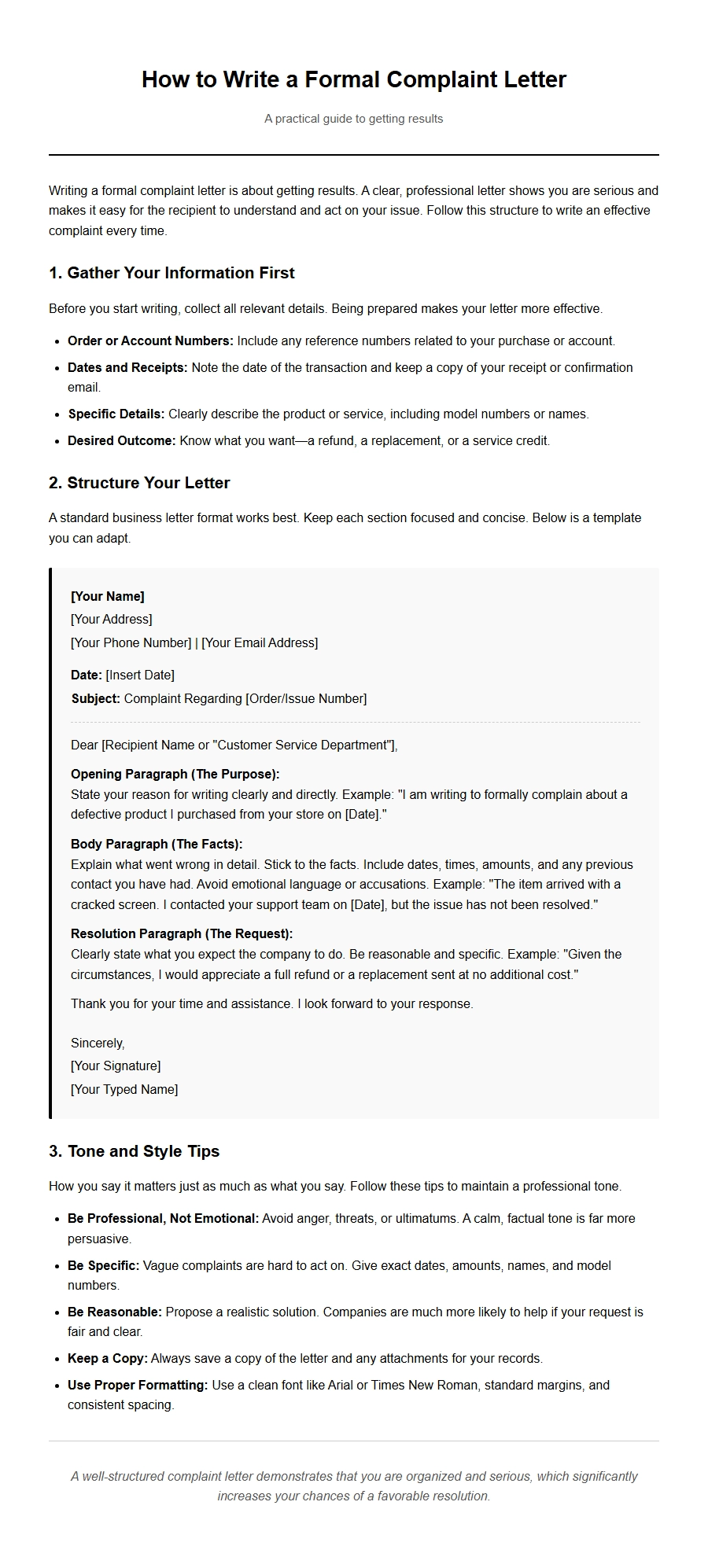 How to Write a Formal Complaint Letter
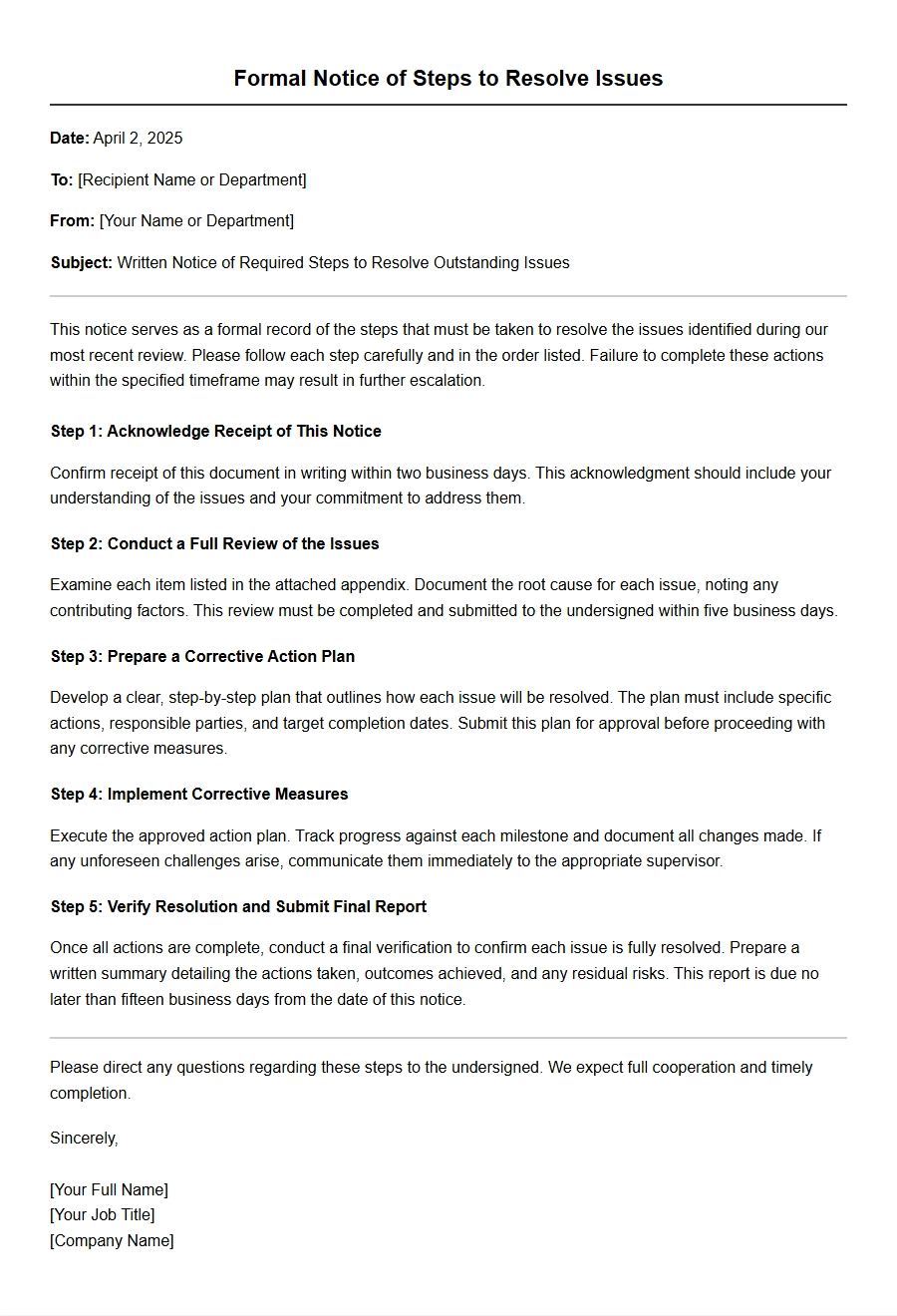 Steps to Resolve Issues via Written Notice
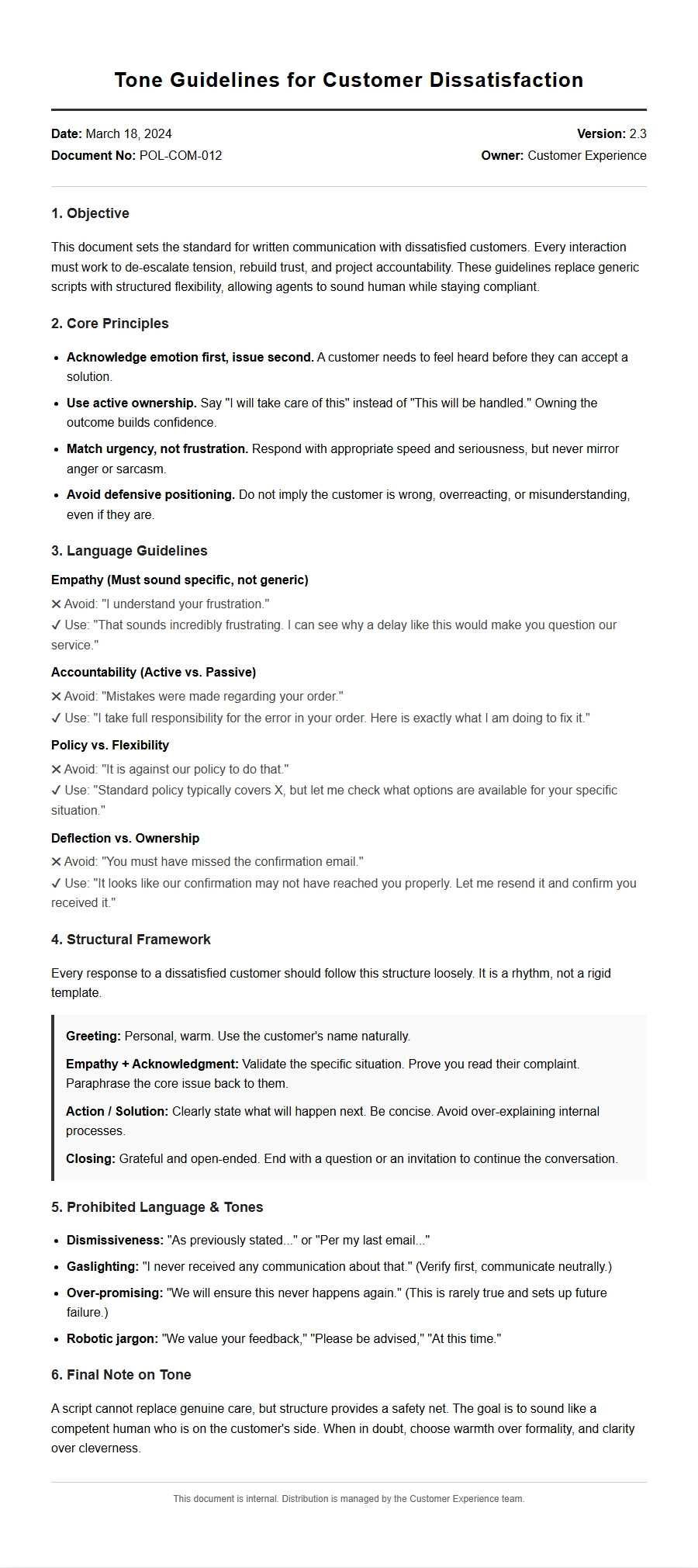 Tone Guidelines for Dissatisfied Customer Letters
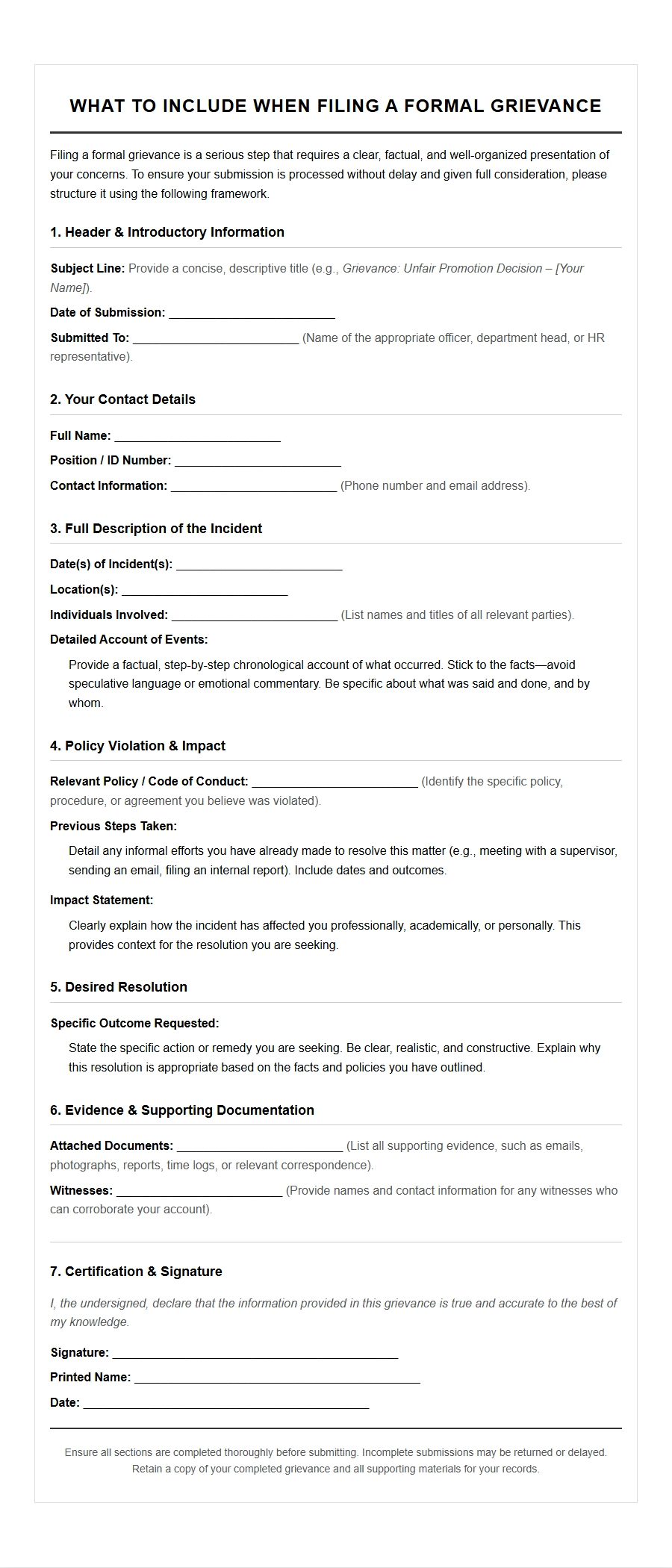 What to Include in a Formal Grievance Letter
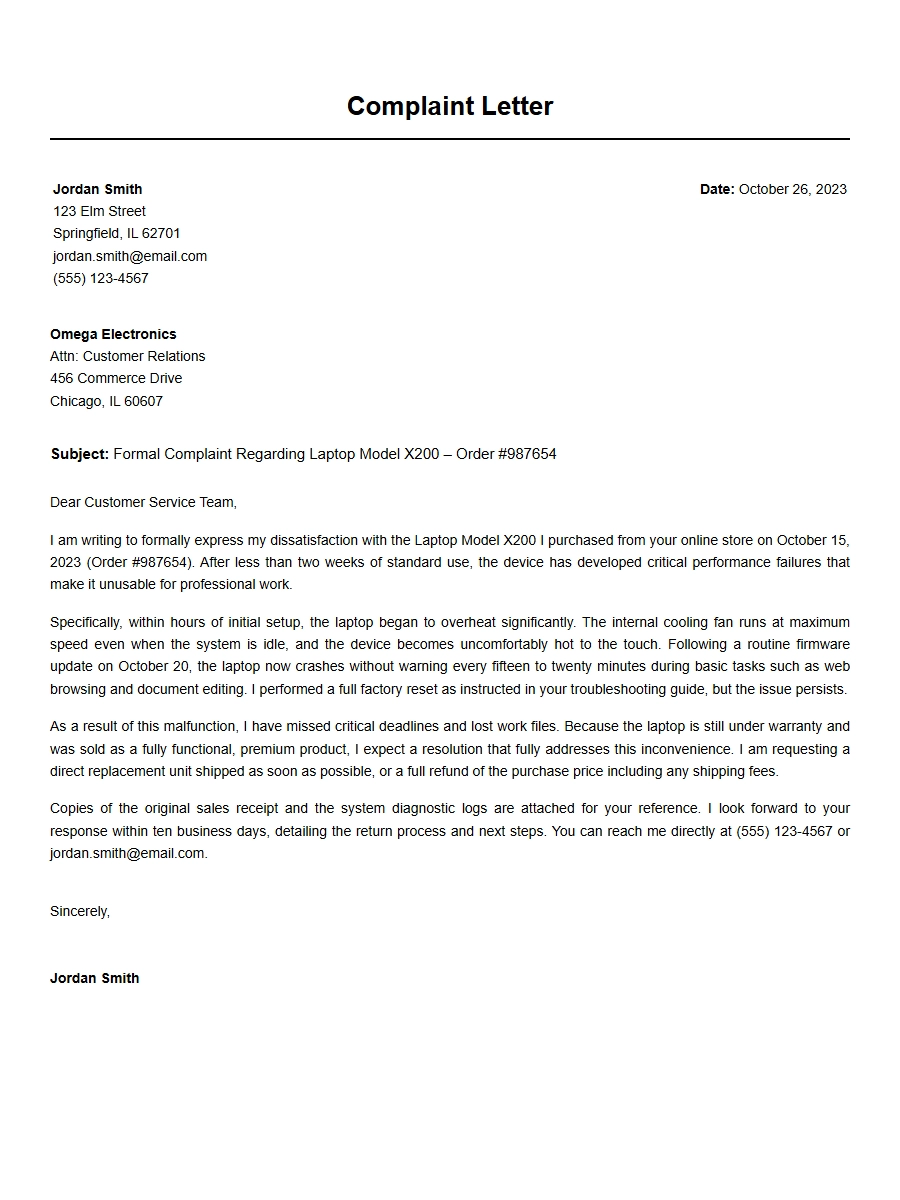 Structure of an Effective Complaint Letter
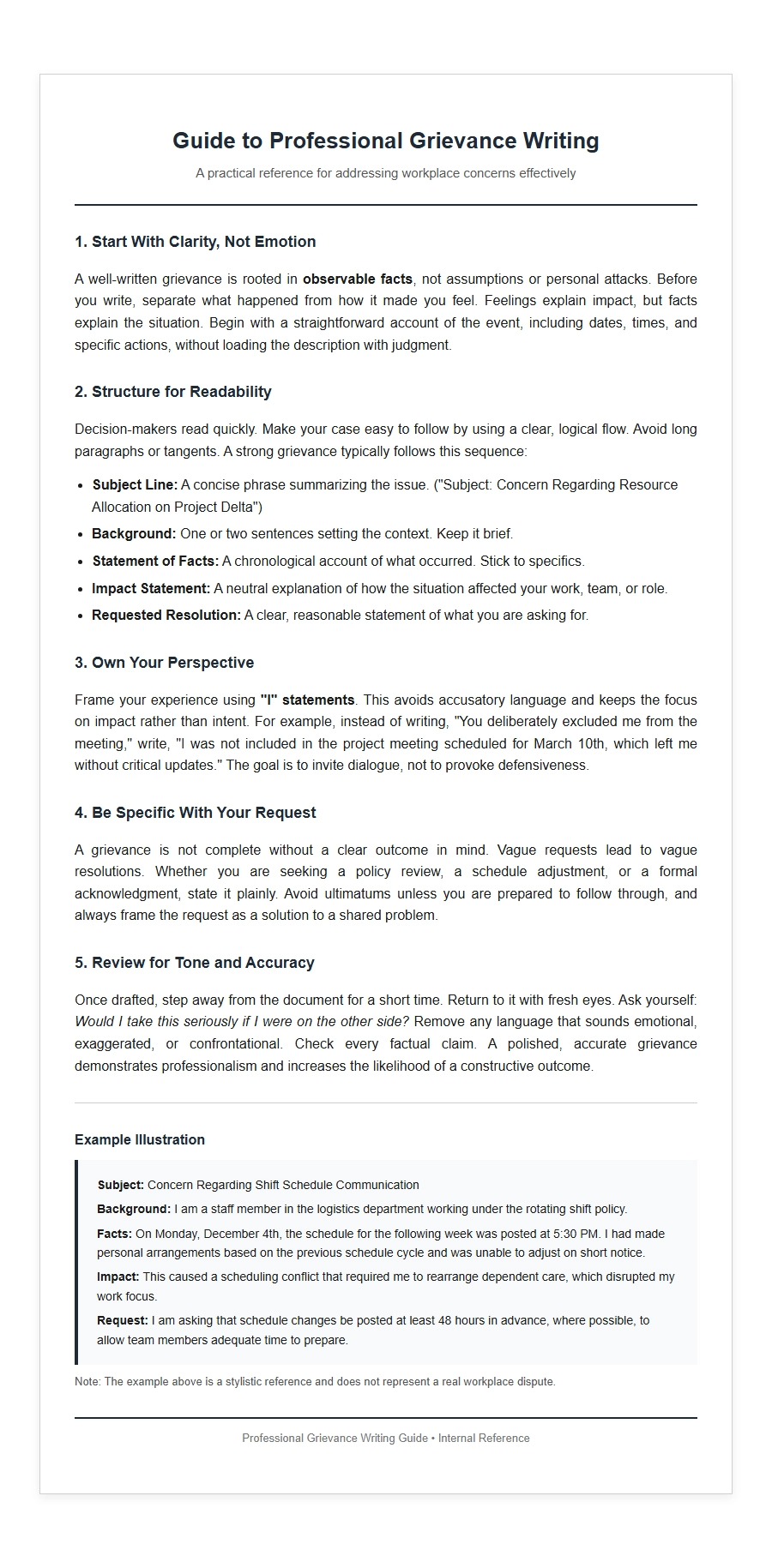 Best Practices for Writing Professional Grievance Letters