You’ve just had the wedding of your dreams. The cake was cut, the toasts were raised, and your guests traveled from near and far to celebrate with you. Now comes the part that feels almost as stressful as planning the whole event: writing thank-you notes. Staring at a stack of blank cards can be paralyzing—but a solid gratitude letter template for wedding guests turns that anxiety into a confident, polished draft in minutes.
Why Use a Template? It’s Not Cheating, It’s Smart
Some people worry that using a letter template means their notes will sound robotic. The opposite is true. A good template gives you a proven structure, the right tone, and key phrases—while leaving plenty of room for your own voice. Think of it as training wheels: once you’ve written a few, you’ll internalize the rhythm and can go without. Using a sample is no different from looking at cover letter examples when applying for a job or referencing a resignation letter sample when leaving a position. It’s a time-saving strategy that helps you focus on what matters: showing genuine appreciation.
Category: Wedding Thank You Letters
Choosing the Right Sample for Your Situation
Not all wedding thank-you notes are the same. A formal black-tie affair calls for a different tone than a backyard barbecue reception. Look for a template that matches your wedding’s style and your relationship with the guest. If your aunt gave you a generous cash gift, your note will be more structured than a quick message to your college roommate who sent a small but thoughtful present. Pay attention to the salutation and closing: “Dear Aunt Susan” feels warmer than “To the Smith Family,” and “With love” works better than “Sincerely” for close friends. Learning basic letter writing etiquette helps you make these choices naturally.
How to Adapt a Template Without Losing Your Voice
The best customizable letter still needs your personality. Start by reading the sample aloud. Does it sound like you? If not, swap out a few adjectives or change the sentence rhythm. For example, instead of “We were so grateful for your presence,” try “It meant the world to us that you made the trip.” Keep the letter structure intact—greeting, mention the gift or gesture, share a specific memory, express thanks again, closing—but fill each section with your own words. That’s where tone in writing really shines.
A quick tip: the opening paragraph is your hook. Mention something personal from the wedding day: “Seeing you on the dance floor during ‘Uptown Funk’ made our night.” That grabs attention far better than a generic start. Common mistakes include using outdated salutations like “To Whom It May Concern” (please don’t) or ignoring the format difference between a handwritten card and a digital letter. If you’re sending thank-you emails, keep the subject line clear and skip the letterhead design; for printed notes, a simple thank-you card works better than a full business letter format.
Another mistake? Waiting too long. Aim to send notes within three months of the wedding. If you’re stuck, use a proofreading letter trick: read it out loud to catch awkward phrasing. And don’t forget to double-check the spelling of names—nothing kills sincerity faster than “Dear Jessic” when her name is Jessica.
Use the Template as a Springboard, Not a Crutch
The best letters feel both professional and personal. A gratitude letter template for wedding guests is your starting line, not the finish. Practice makes the process faster, and after writing a dozen, you’ll be able to dash off a note in five minutes without looking at a sample. So take the pressure off, grab a template, and start writing. Your guests will appreciate hearing from you—and you’ll appreciate finally checking that task off your list.
Realistic Samples
Wedding Gratitude Letter Template for Guests
Classic Formal Thank You
Dear Guest Name,
We are writing to express our heartfelt gratitude for your presence at our wedding. Your attendance made our celebration truly special, and we are so grateful that you shared this milestone with us. The joy and warmth we felt surrounded by our loved ones will remain a cherished memory forever.
We also want to thank you for your generous gift. Your thoughtfulness and kindness touched us deeply. We look forward to using your gift as we begin this new chapter together.
As we settle into married life, we hope to stay in touch and see you again soon. Please accept our sincere thanks once more.
With love, The Newlyweds
Casual and Warm Note
Hey Guest Name,
We just wanted to say a huge thank you for coming to our wedding! It meant the world to us that you were there to celebrate. The day was perfect, and having you by our side made it even better.
We hope you had as much fun as we did. The dancing, the food, and the laughter – it was all made amazing because you were part of it.
Thanks again for your love and support. We can't wait to catch up soon!
Take care, Jen & Tom
Thank You for Attending from Afar
Dear Guest Name,
We are truly touched that you traveled so far to join us on our wedding day. Your effort and commitment to being with us did not go unnoticed, and we are incredibly grateful.
Your presence added so much joy to the celebration.
We appreciated every moment we got to spend with you.
Thank you for making the journey – it meant the world to us.
We hope you enjoyed the festivities as much as we did. Please stay in touch, and we look forward to visiting you soon!
With endless thanks, Alex & Maria
Thank You for the Thoughtful Gift
Dear Guest Name,
Thank you so much for the wonderful gift you gave us for our wedding. We were blown away by your generosity and thoughtfulness. Your gift is not only beautiful but also something we will use and treasure for years to come.
Gift
From
Cookware set
Guest Name
We feel so lucky to have you in our lives. Your support means more than words can express.
Warmly, Sam & Rachel
Thank You for Helping with the Wedding
Dear Guest Name,
We cannot thank you enough for all the help you provided before and during our wedding. Your support made the day run smoothly and allowed us to relax and enjoy every moment.
Setting up decorations
Coordinating with vendors
Greeting guests at the entrance
You went above and beyond, and we are so grateful. You truly are a wonderful friend!
We look forward to returning the favor whenever you need us.
With heartfelt appreciation, Chris & Emma
Short and Sweet Thank You
Dear Guest Name,
Thank you for coming to our wedding! Your presence made our day unforgettable. We are so happy you could celebrate with us.
We appreciated your kind words and warm wishes. It was wonderful to share this milestone with you.
Best wishes, Laura & Mark
Thank You from the Newlyweds
To Guest Name,
Together, we want to thank you for being part of our special day. Your smile, your laughter, and your good wishes filled the air with joy. We felt so loved.
Reflecting on the ceremony, the toasts, and the dance floor, we realize how blessed we are to have you in our lives. Thank you for making our wedding everything we dreamed of.
We are looking forward to building a future with friends like you by our side. Please stay in touch!
With love, James & Sarah(together now and always!)
Thank You with a Memory Highlight
Dear Guest Name,
We are writing to thank you for joining us on our wedding day. One of our favorite memories is when you surprised us with that heartwarming speech at dinner – we still smile thinking about it.
Your words reminded us why friendship is so precious. Thank you for sharing that moment with everyone. It made the evening even more magical.
We hope to create many more memories with you in the years to come. Again, thank you from the bottom of our hearts.
With gratitude, Mike & Anna
Thank You for Your Kind Words
Dear Guest Name,
We were so moved by the beautiful things you wrote in our guestbook. Your kind words will stay with us forever. You wrote: "May your love grow stronger with each passing day." That truly touched our hearts.
Thank you also for your warm wishes and the lovely orchid you gave us. It now sits on our mantle as a daily reminder of your thoughtfulness.
We are so lucky to have you in our circle. Much love and thanks!
Sincerely, John & Lisa
Thank You for Being Part of Our Day
Dear Guest Name,
Your presence at our wedding meant more to us than you can ever know. Not because of any gift, but because you chose to spend your time celebrating with us on one of the most important days of our lives.
Your warm hug at the reception
Your laughter during the first dance
Your smile in every photo
These are the memories we treasure. Thank you for being part of our story. We are so excited for the future with you in our lives.
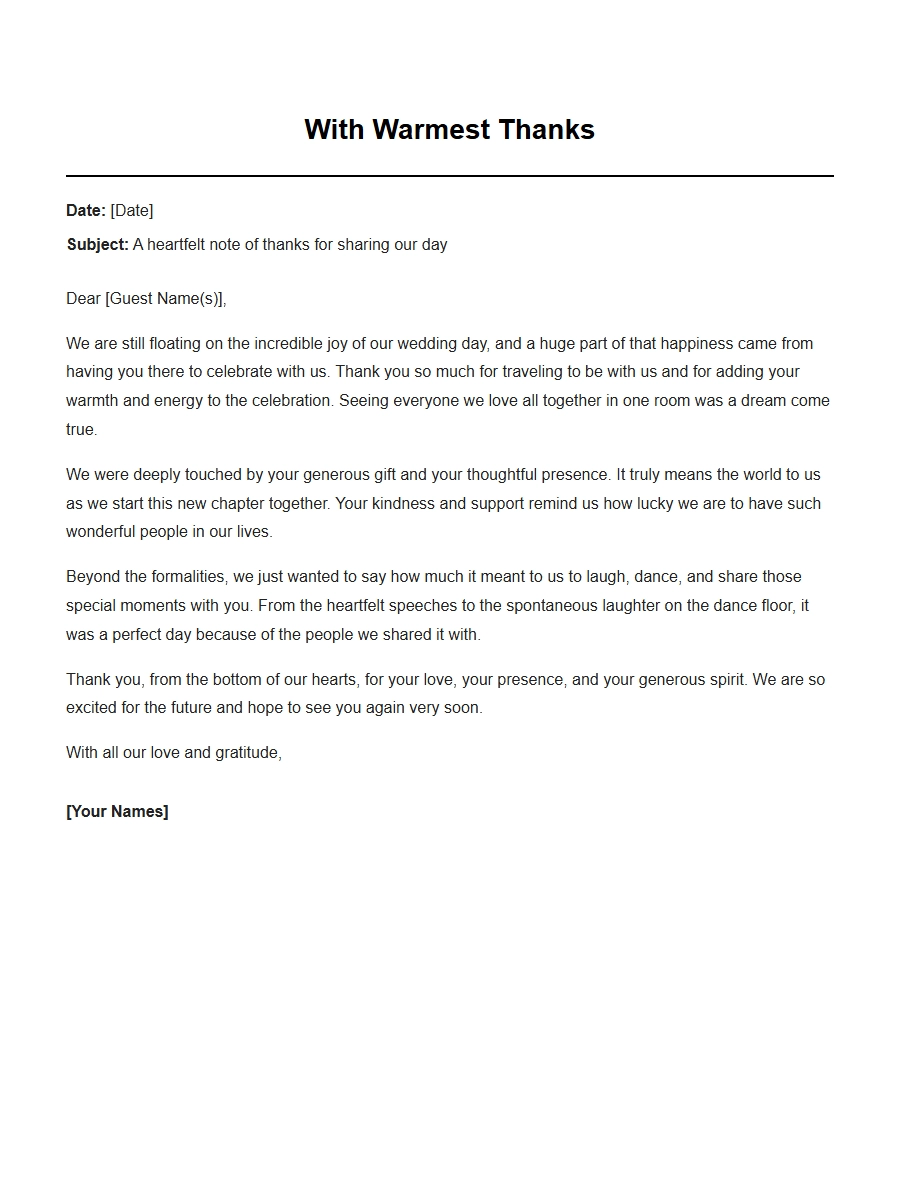
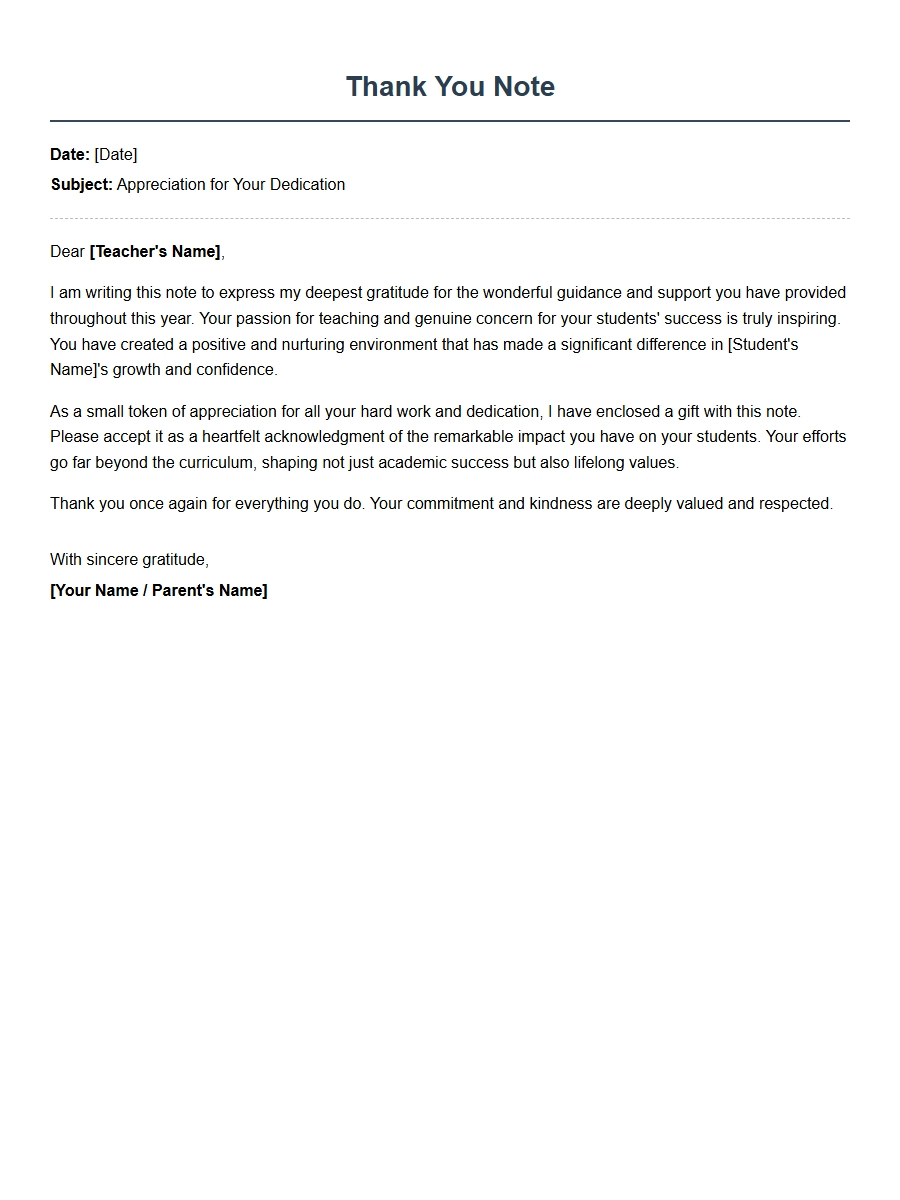 Sample Thank You Note for Teacher Gift
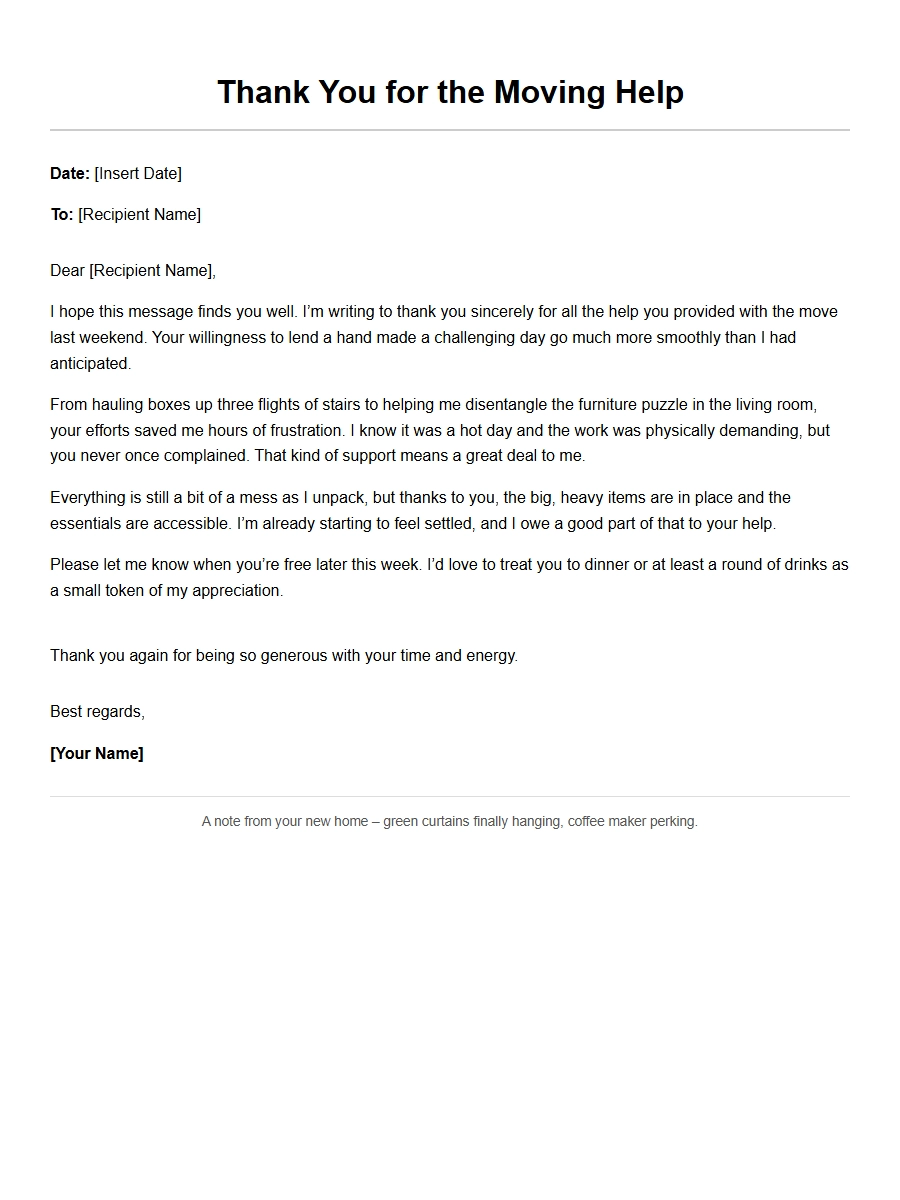 Thank-You Letter for Help with Moving
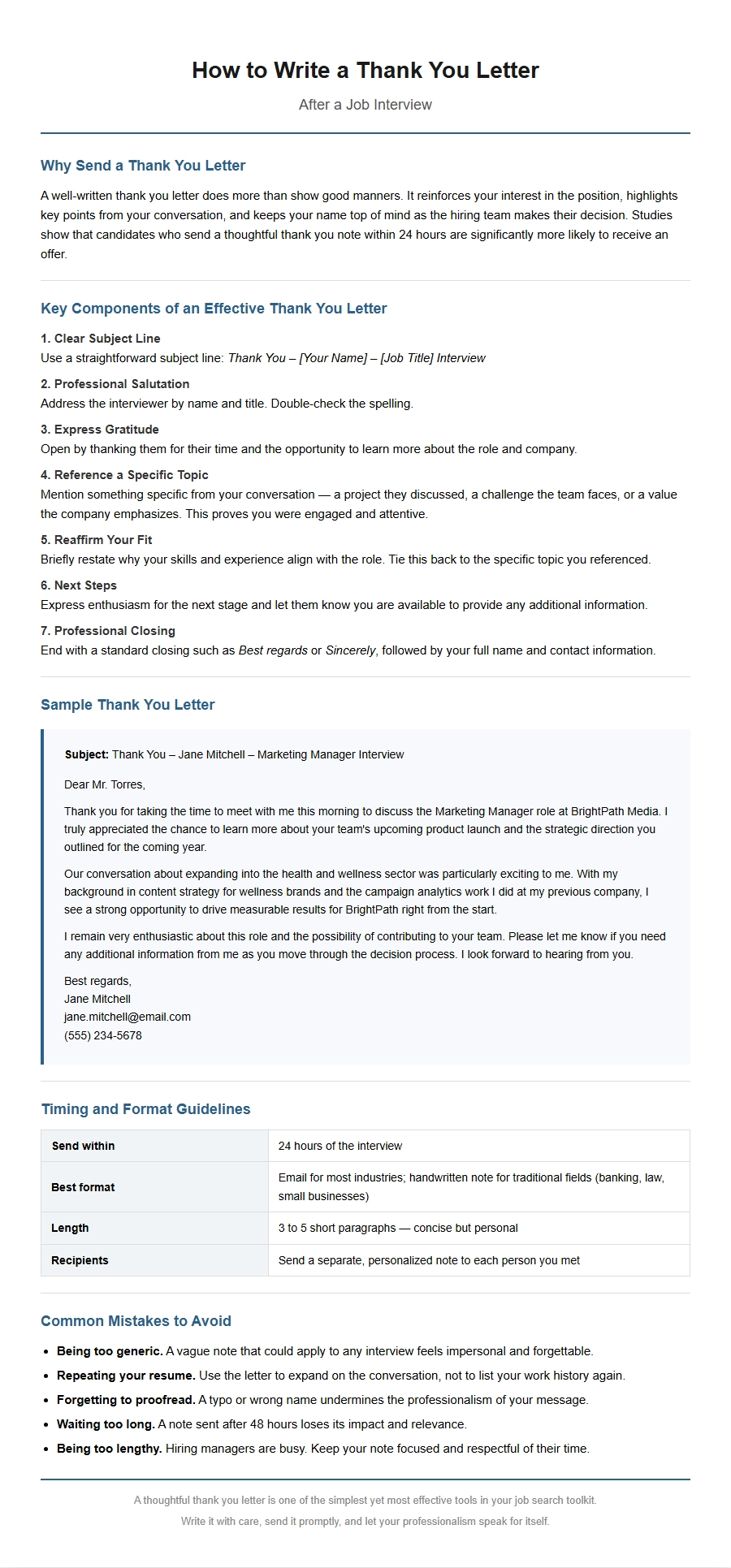 How to Write a Thank You Letter After an Interview
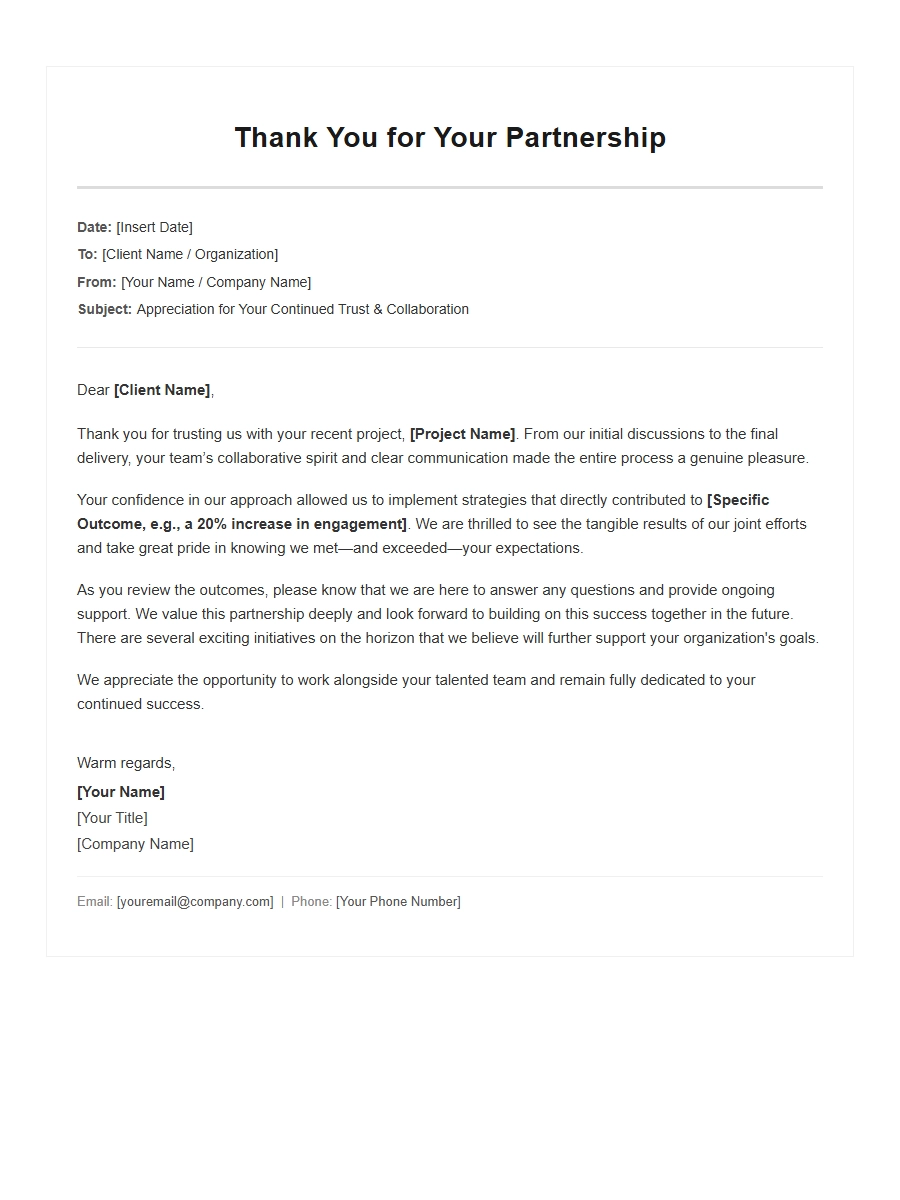 professional thank you email example for client - Thank-You Letters
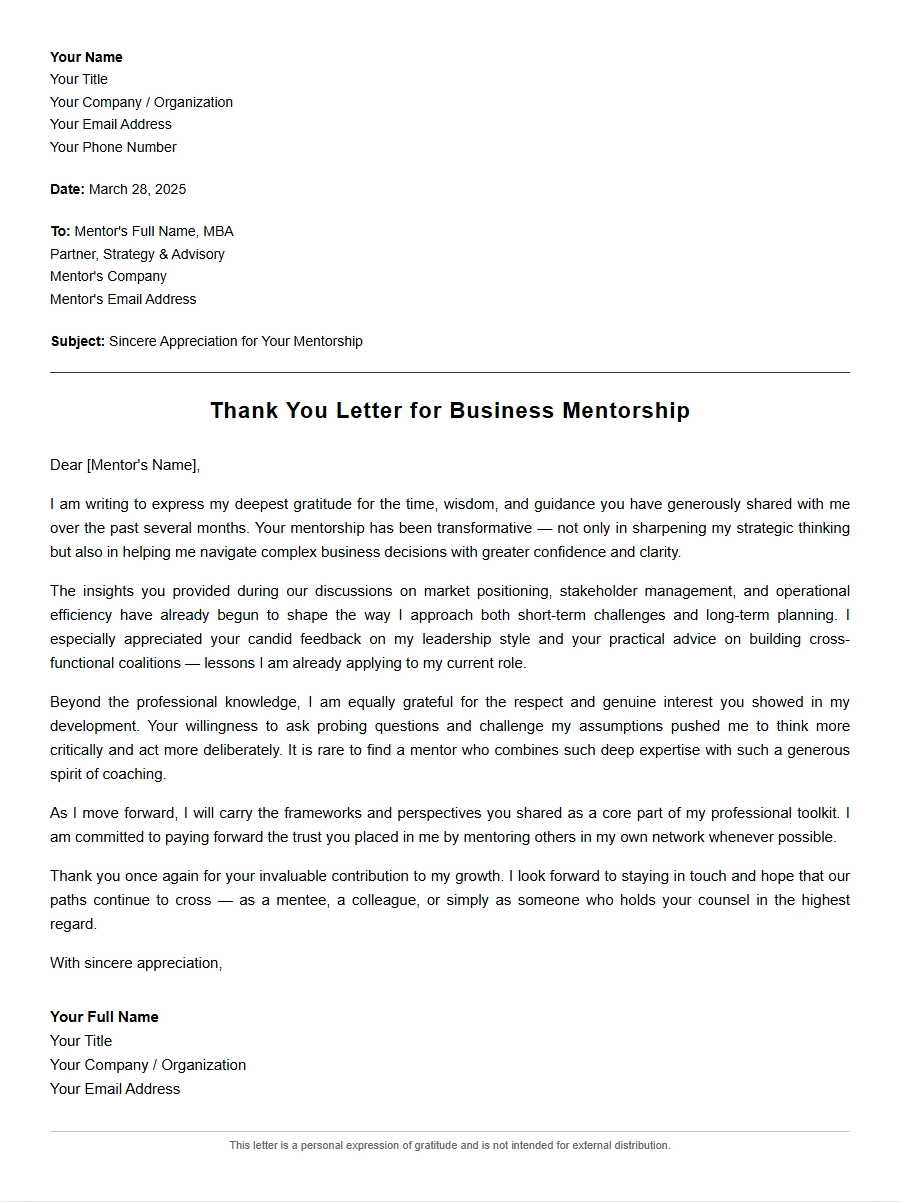 Business Mentor Thank-You Letter Guide
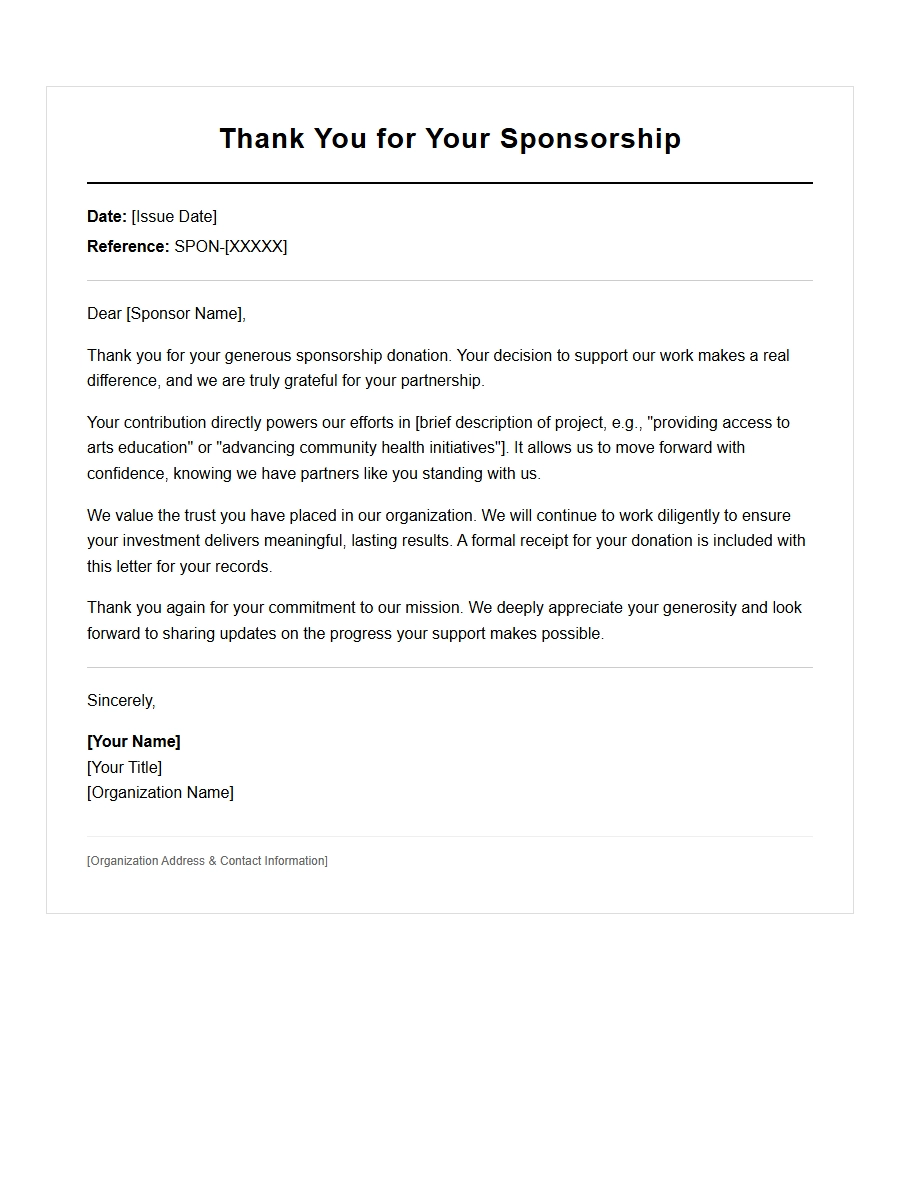 Thank You Letter for Sponsor Donation