Complaint vs Demand Letter: What's the Difference?
You’re sitting down to write a formal letter, but you’re not sure if it should be a complaint or a demand. That confusion is completely normal. The two sound similar, but they serve very different purposes. Pick the wrong one, and you might sound too aggressive when you’re just trying to solve a problem—or too soft when you really need to get paid.
Knowing the difference saves you time, frustration, and awkwardness. And yes, using a well-crafted sample is a smart shortcut. It gives you the right structure, tone, and key phrases so you can focus on your specific details. Think of it as a starting point—not a crutch.
Category: Business Correspondence & Formal Letters
What’s a Complaint Letter?
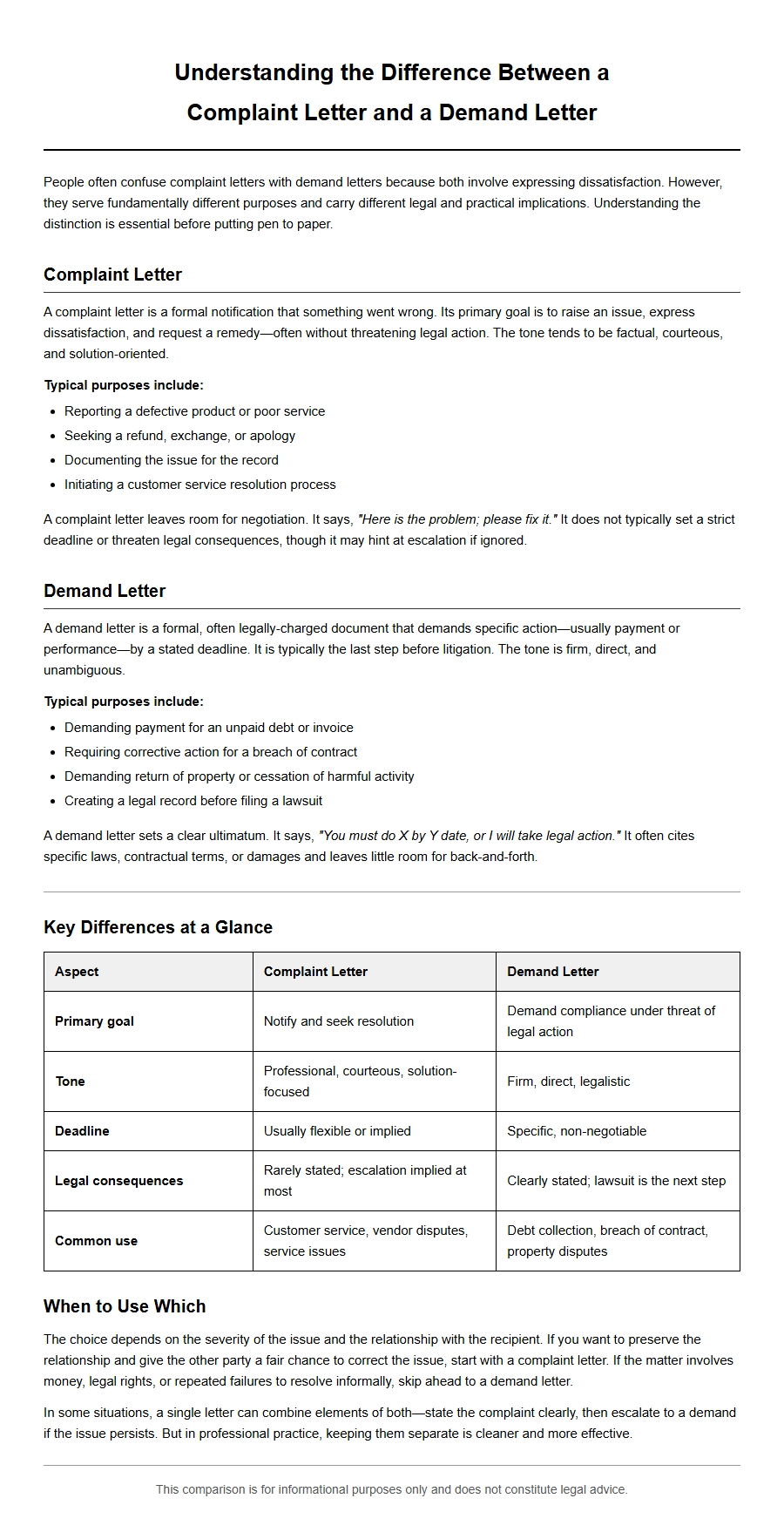
A complaint letter is how you express dissatisfaction and request a fix. You send it to customer service, a vendor, or a company when something went wrong—a defective product, poor service, or a billing error. The tone is polite but firm. You explain what happened, what you expect them to do, and when you expect it.
For example, if you bought a jacket online and it arrived with a torn seam, you’d write a complaint letter asking for a refund or replacement. You’d stick to facts, avoid emotional language, and end with a reasonable deadline. That keeps the conversation professional and increases your chances of a quick resolution.
Common mistakes? Using an aggressive tone that shuts down communication, or forgetting to include supporting details like order numbers and photos. A good letter template helps you avoid those pitfalls.
What’s a Demand Letter?
A demand letter is a formal request for payment or action before legal steps. It’s often used in disputes over unpaid invoices, breach of contract, or property damage. The tone is more direct and legalistic. You state the facts, cite any relevant agreements, and set a clear deadline—usually with a warning that you’ll pursue legal action if ignored.
Demand letters are common when a business hasn’t paid for services, when a tenant damages a rental unit, or when someone fails to meet a contract obligation. If you’re dealing with an attorney about a missed court filing deadline, a demand letter might be the wrong tool—a complaint letter is more appropriate for notifying them of a mistake and asking for correction.
One big mistake? Being too vague. A demand letter needs specific amounts, dates, and deadlines. Without them, it’s just a strongly worded note.
Key Differences at a Glance
The main difference is purpose. A complaint letter aims to resolve a problem amicably. A demand letter aims to enforce a right and often precedes legal action. That difference shapes your tone in writing, the degree of formality, and the kind of salutation and closing you use.
Complaint letters tend to be shorter and more conversational. Demand letters are longer, more structured, and often include references to contracts or laws. Both need proper business letter format, but a demand letter usually requires a more formal letterhead design if you’re representing a company.
How to Choose the Right Sample and Adapt It
Start by identifying your situation. If you’re disappointed with a product or service, grab a complaint letter sample. If you need to collect money or enforce an agreement, look for a demand letter sample. Many cover letter examples and resignation letter samples are for job-related purposes—ignore those unless they fit your specific need.
Once you have a sample, customize it. Change the opening paragraph to state your situation clearly. Use plain language. Don’t copy the sample word-for-word; adapt it to sound like you. For instance, if you’re writing about dissatisfaction with an online purchase quality, swap the generic language with details about the item and what you want done.
Pay attention to the letter structure. Most formal letters follow a standard flow: your contact info, date, recipient address, salutation, body, closing, and signature. For email, adjust the format slightly—use a subject line and include your contact info below your name. That’s a key part of digital letter format.
Common Mistakes to Avoid
Using outdated salutations like “To Whom It May Concern” when you can find a real name. Skipping proofreading—typos undermine your credibility. Sending a demand letter when you haven’t first tried a complaint letter, which can escalate a situation unnecessarily. And ignoring the tone guidelines for customer dissatisfaction correspondence—stay respectful even when frustrated.
The first time you write a letter like this, it might take a while. That’s okay. Use a sample to guide you, but write in your own voice. The best professional correspondence feels both respectful and personal. After sending a few, you’ll know instinctively which type to use and how to tailor it. Before long, you’ll be able to draft one in minutes—no blank-page panic required.
Samples for Inspiration
Complaint vs Demand Letter: What's the Difference?
Key Differences at a Glance
Aspect
Complaint Letter
Demand Letter
Purpose
Express dissatisfaction and request resolution
Formally demand payment or action before legal steps
Complaint Letter vs Demand Letter: Scenario Comparison
Scenario: You hired a contractor who failed to complete a bathroom renovation on time.
Complaint Letter: You write to the contractor expressing disappointment about the delay. You request a new completion date and ask for a discount due to inconvenience. The tone is polite but firm. You reference the original contract but stop short of legal threats.
Demand Letter: You write after the complaint letter fails to get results. You state that the delay has caused financial loss. You demand a specific amount (e.g., $2,500) as compensation for additional rent paid due to the unfinished bathroom. You give a 14-day deadline and threaten small claims court if ignored.
The key difference is that the complaint letter seeks cooperation, while the demand letter asserts a legal right to compensation.
Sample Complaint Letter (No Legal Threat)
To: Customer Support Manager, QuickFix Appliances
Subject: Defective Washing Machine – Request for Replacement
Dear Manager,
I purchased a QuickFix Model X1200 washing machine on March 1, 2025 (Invoice #QF-45678). The machine started making loud noises during the spin cycle and now fails to drain water.
I contacted your support twice but received no resolution. I am dissatisfied with both the product and the service.
I request a full replacement or a refund within 10 business days. I am willing to provide proof of purchase and a video of the issue. I trust we can resolve this amicably.
Thank you.
John Rivers
Sample Demand Letter (Legal Overtones)
To: QuickFix Appliances Legal Dept.
Subject: Formal Demand for Refund – Washing Machine Defect
Dear Legal Counsel,
This is a formal demand under the Consumer Protection Act. On March 1, 2025, I purchased a QuickFix X1200 washing machine (Invoice #QF-45678). The product malfunctioned after three uses, and despite two repair attempts, it remains inoperable.
Therefore, I demand a full refund of $1,299.99 plus $50 for incidental costs (transport and time). Payment must be received by May 15, 2025.
If payment is not made by the deadline, I will file a complaint with the Better Business Bureau and pursue damages in Small Claims Court, including court costs and attorney fees.
Expect your response.
John Rivers
Identifying Features: Complaint vs Demand
Complaint Letter usually includes:
Clear description of the problem
Emotional or disappointed tone
Request for a solution (repair, replacement, apology)
No specific deadline or legal mention
Demand Letter typically contains:
Precise monetary claim or action required
Firm, unemotional language
Explicit deadline (e.g., 14 days)
Consequence of non-compliance (lawsuit, credit report)
The difference often determines the next step: a complaint may lead to negotiation, while a demand letter is a prelude to litigation.
When to Use Each Type of Letter
Use a complaint letter when:
The issue is minor and you trust the other party
You want to preserve a business relationship
You have not yet tried to resolve the problem informally
Use a demand letter when:
A complaint letter was ignored or rejected
You have a clear financial loss or legal right
You are prepared to take legal action if necessary
In many cases, a complaint letter is the first step. If it fails, a demand letter escalates the matter and creates a paper trail for court. Knowing the difference helps you choose the right approach.
Transition from Complaint to Demand Letter
Often a dispute evolves. Here is a timeline example:
Step
Action
Document
1
Initial contact by phone
Verbal complaint
2
Written complaint sent via email
Complaint letter
3
No response after 2 weeks
Follow-up complaint
4
Demand letter delivered by certified mail
Demand letter
5
Still no payment
Lawsuit filed
The shift occurs when the recipient fails to address the complaint. The demand letter clearly states the amount owed and a final deadline, putting the matter on a legal footing.
Checklist: Writing a Complaint Letter vs Demand Letter
Complaint Letter Checklist:
Describe the issue factually
State what you want (refund, repair, apology)
Keep tone respectful
Include reference numbers
Set a reasonable timeframe (not a threat)
Demand Letter Checklist:
State exact amount or action demanded
Cite relevant laws or contracts if known
Set a firm deadline (e.g., 10 days)
Mention consequences (lawsuit, interest)
Send via certified or registered mail
Using these checklists ensures you choose the right format and tone for your situation.
Example: Mixed Complaint with Early Demand Element
Sometimes a single letter blends both, but it is risky. Example:
Dear Manager,
I am writing about the defective laptop (Order #L7890) I received on April 1. It fails to charge. This is my second complaint.
I request a replacement by April 20. If I do not receive it, I will consider legal action and report the matter to the consumer protection agency. I expect your prompt reply.
This letter starts as a complaint but includes a demand-like threat. It may work if you want to show seriousness without a separate demand letter. However, a pure demand letter would be more formal and cite specific legal grounds.
Legal Weight: Complaint vs Demand in Court
A complaint letter is rarely used as evidence of a legal claim unless it contains an admission. It primarily serves as a request.
A demand letter, on the other hand, is crucial evidence in court. It shows:
The plaintiff attempted to resolve the matter out of court
Defendant was put on notice of the claim
A deadline was given but not met
Judges may reduce damages if the plaintiff failed to send a demand letter. The difference lies in the letter’s legal function: complaint = negotiation tool; demand = prerequisite to litigation.
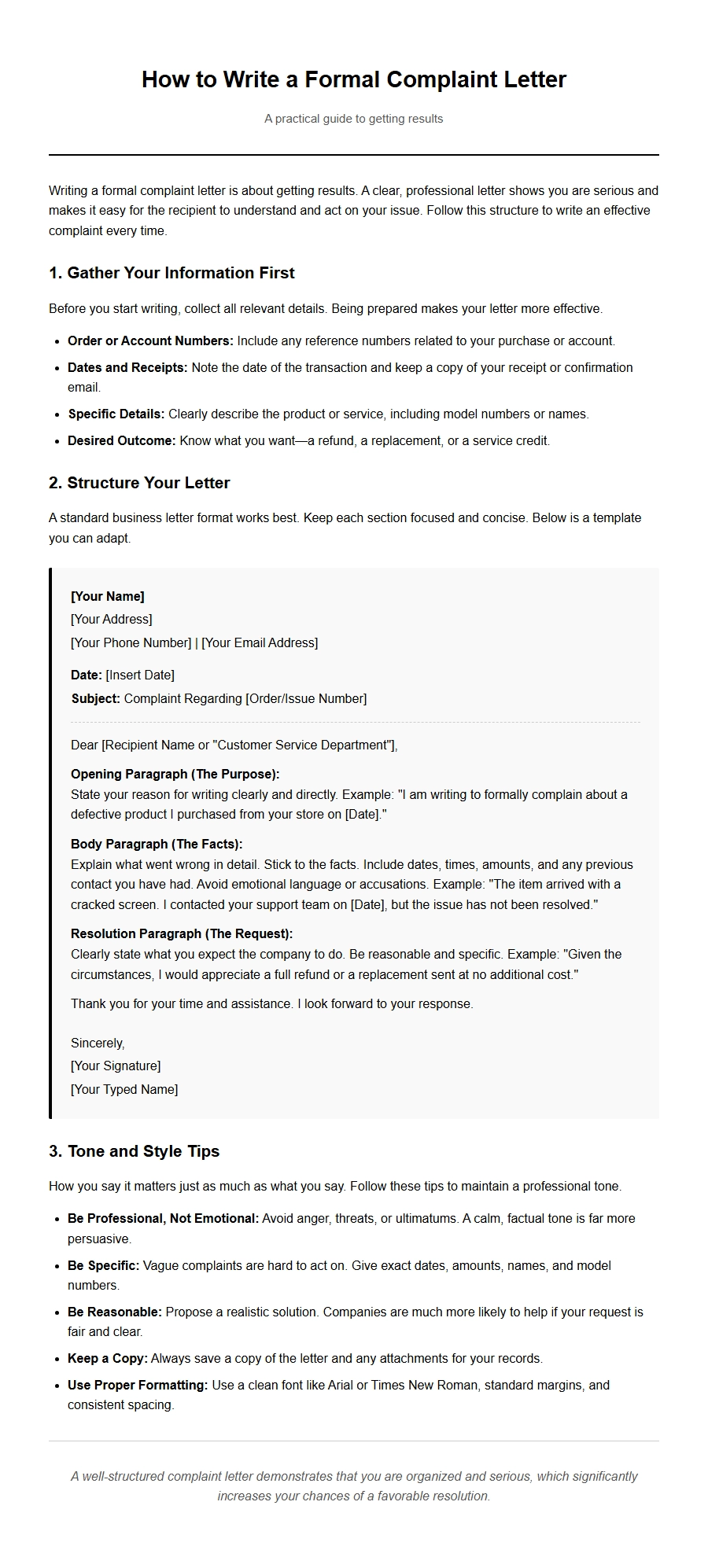 How to Write a Formal Complaint Letter
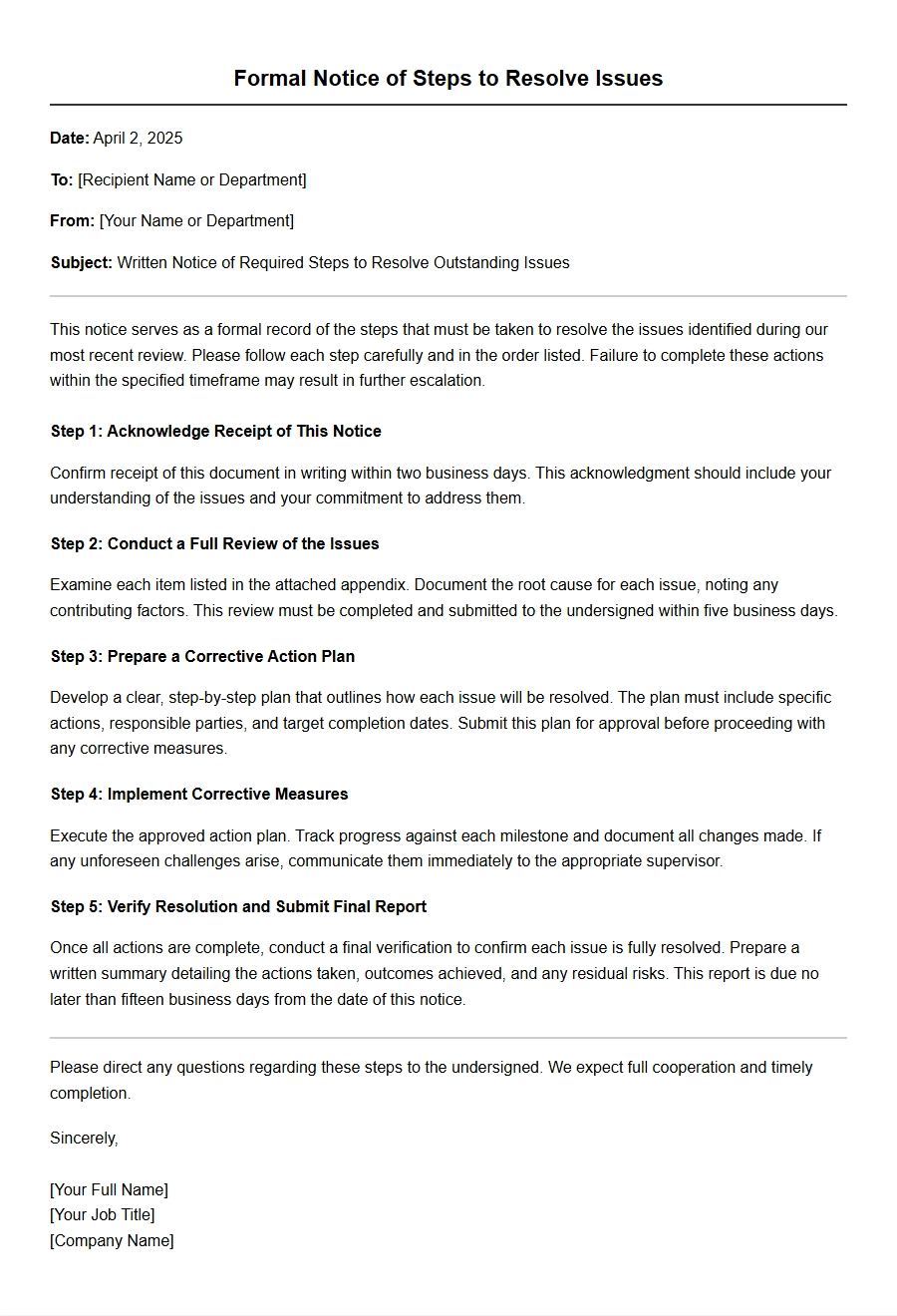 Steps to Resolve Issues via Written Notice
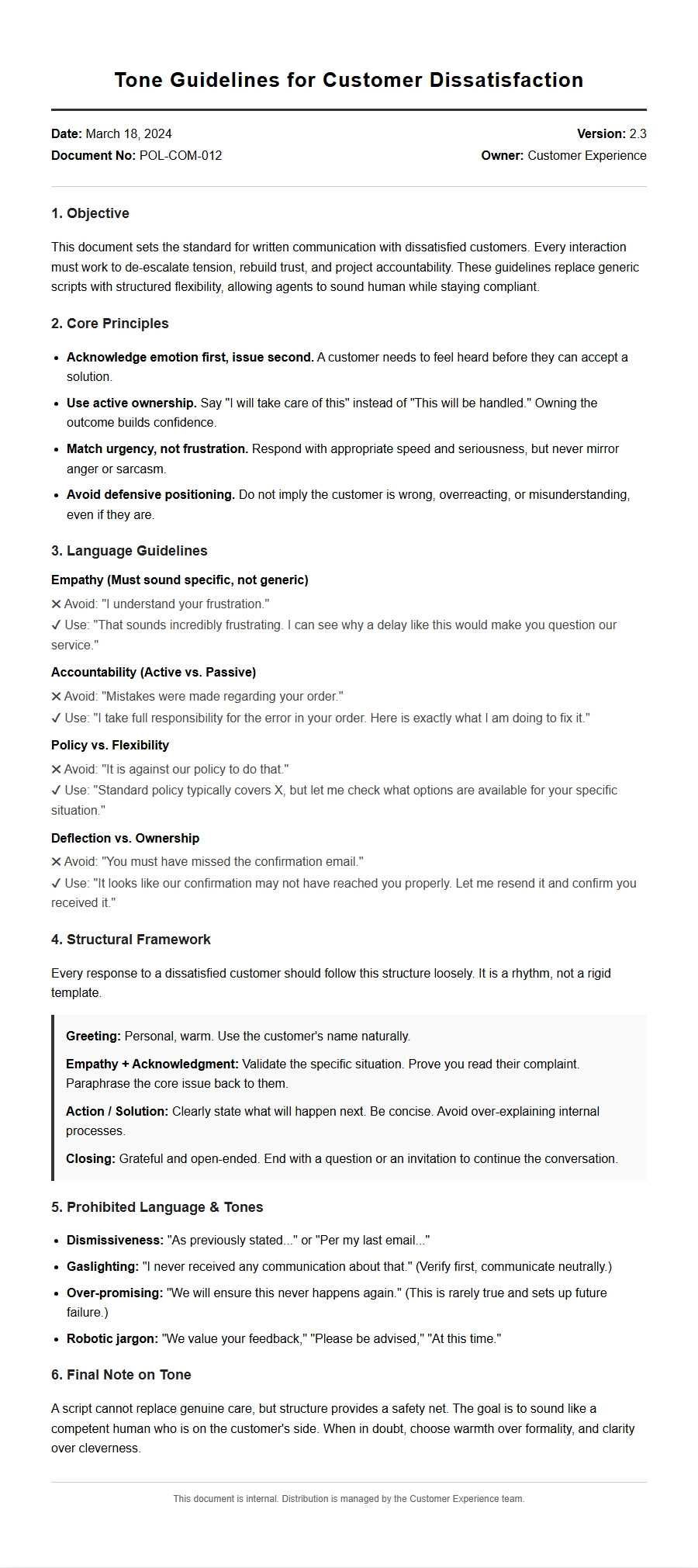 Tone Guidelines for Dissatisfied Customer Letters
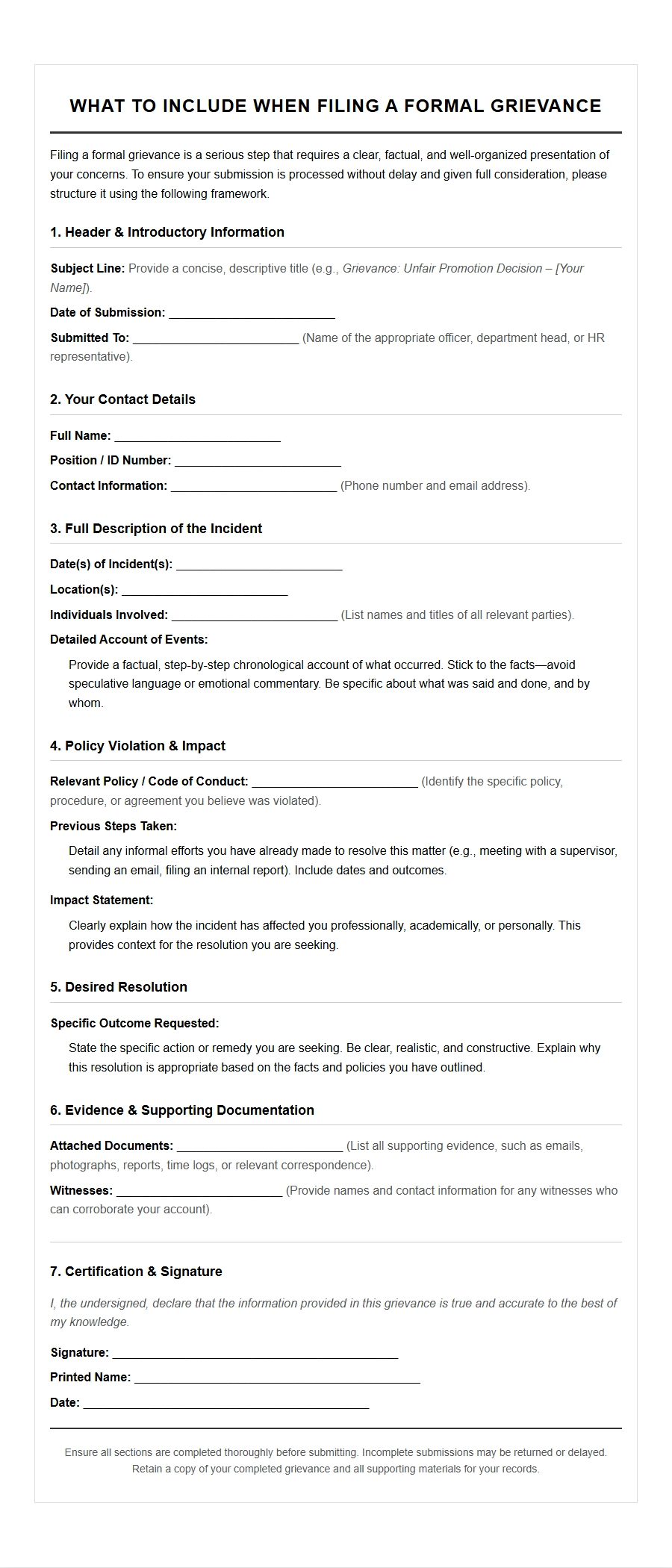 What to Include in a Formal Grievance Letter
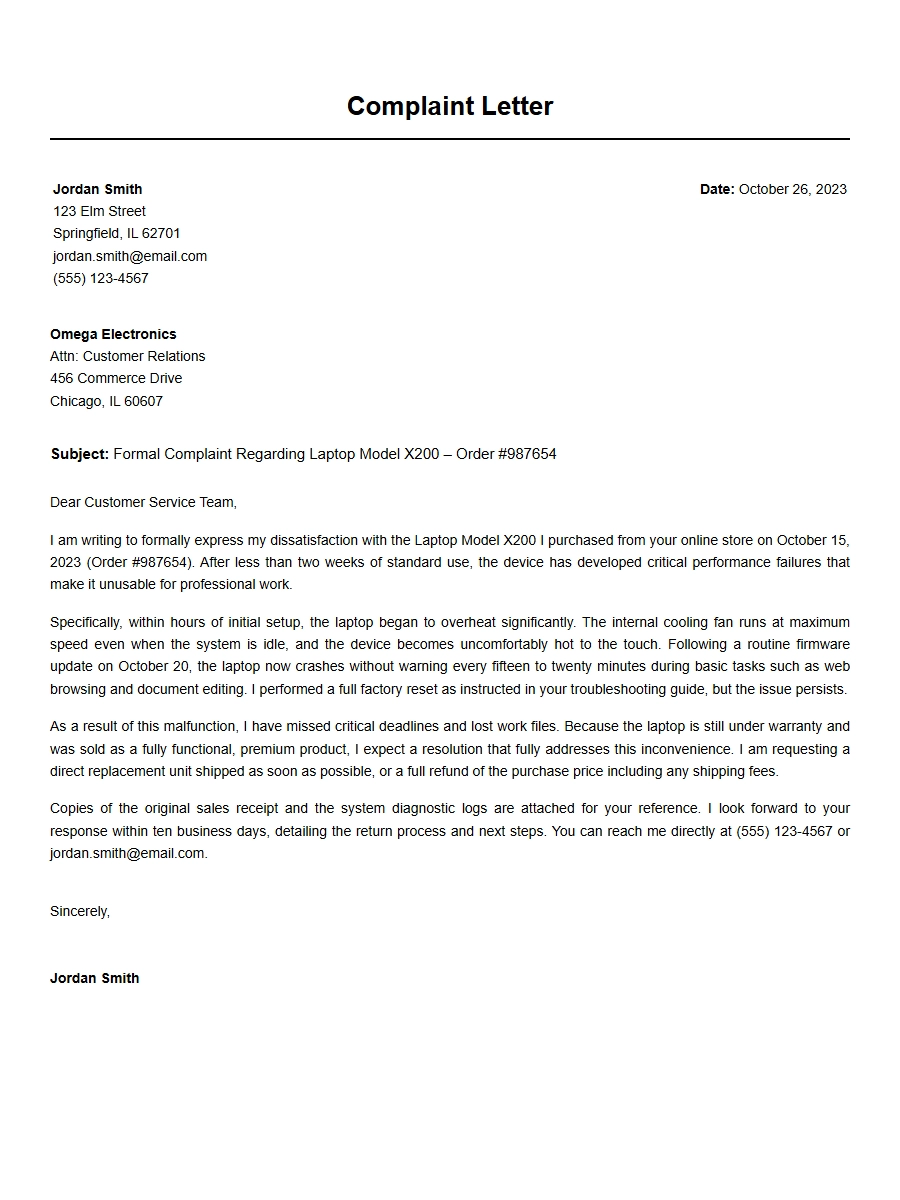 Structure of an Effective Complaint Letter
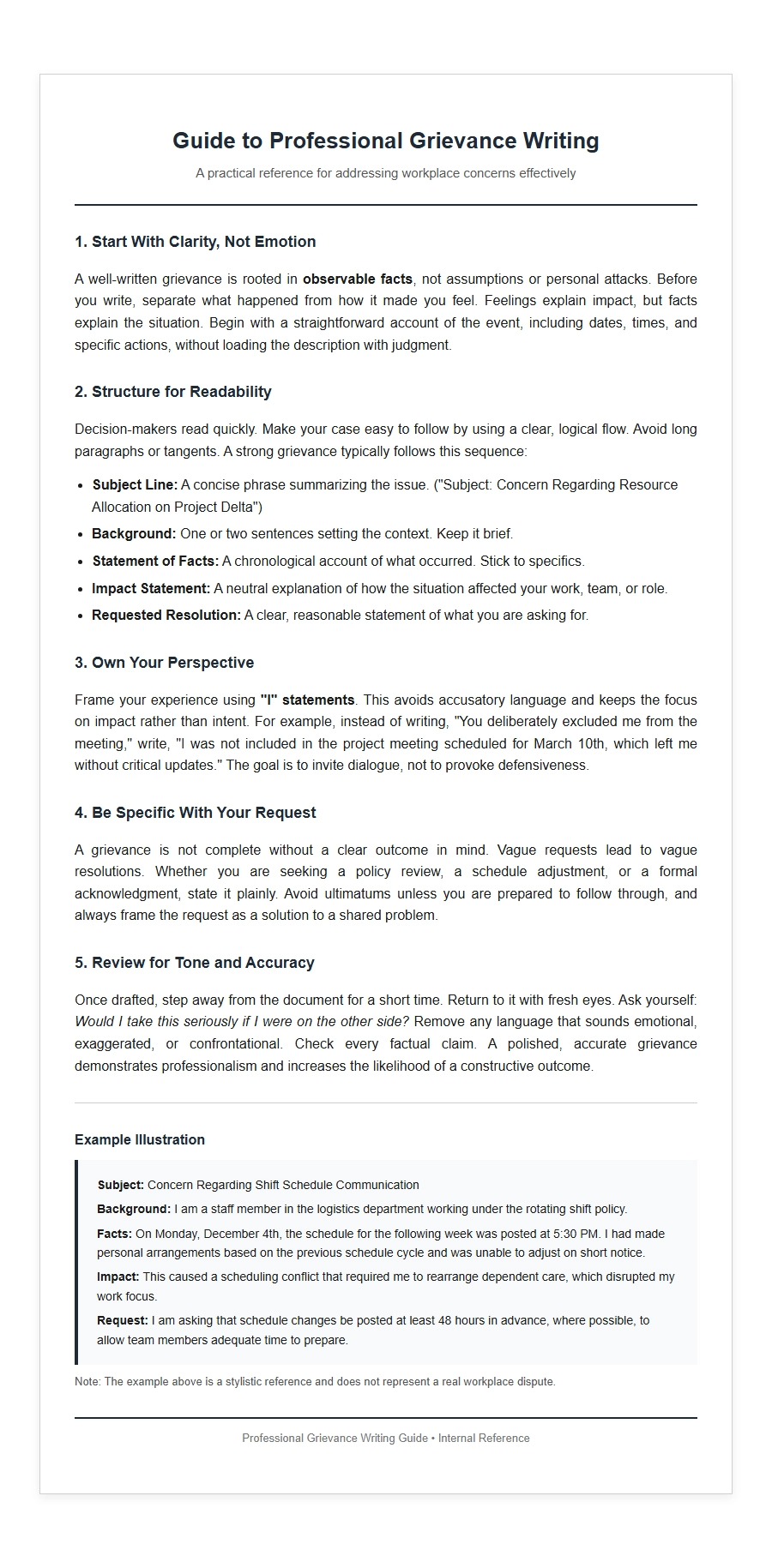 Best Practices for Writing Professional Grievance Letters