How to Write a Complaint Letter for a Credit Card Unauthorized Transaction
You look at your credit card statement and feel that jolt of panic. A charge you don’t recognize. Maybe $47 at an online store you’ve never heard of, or a subscription that somehow started without you. Your first instinct is to call the bank, but that often leads to a frustrating customer service loop. Drafting a formal letter to challenge an unauthorized transaction feels like the grown-up thing to do, but finding the right words can be surprisingly hard.
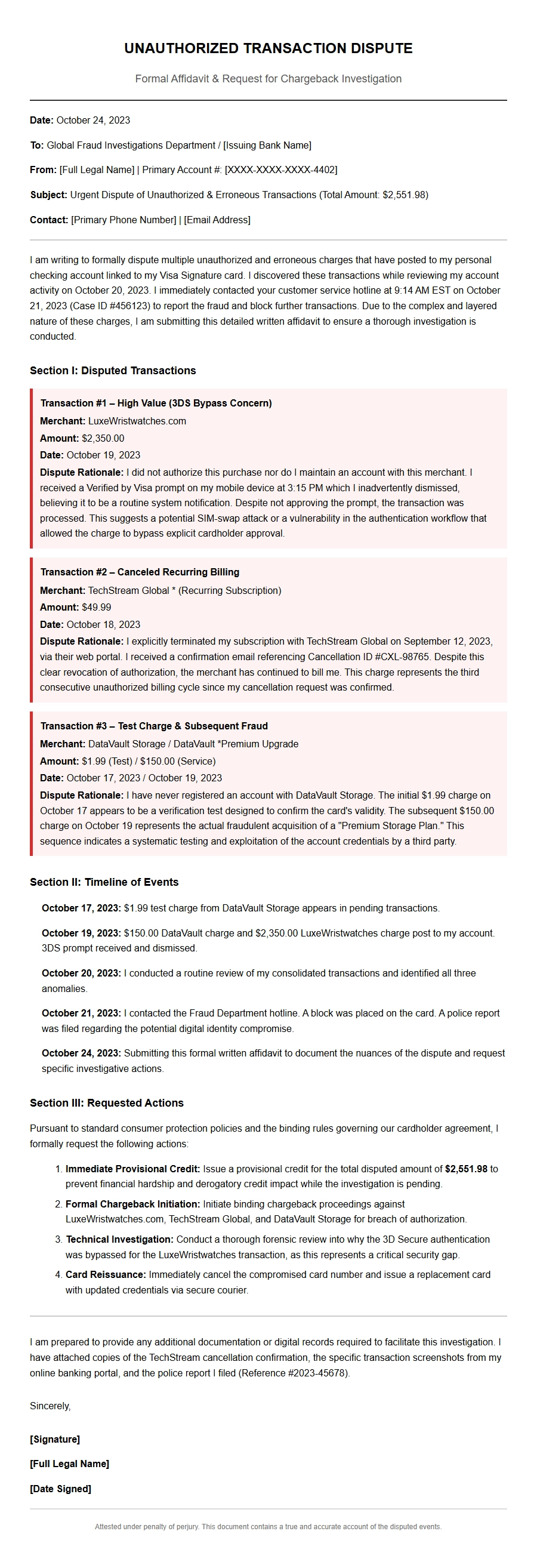
Using a letter sample for this situation isn’t cheating. It’s a smart shortcut. A good sample gives you the professional correspondence framework you need—the formal structure, the right legal tone, and the exact phrases that trigger a serious response from a fraud department. You don’t have to reinvent the wheel for a situation that happens to thousands of people every day. You just need to fill in your specifics.
Here’s the thing about good business letter format: it forces you to be clear. A solid letter template for a disputed transaction will include your account number, the transaction date, the exact amount, and a clear statement that you did not authorize the charge. That structure protects you. Without it, your complaint letter risks sounding like a vague complaint rather than a formal demand for investigation.
Category: Consumer Rights Letters
How do you pick the right sample for a fraud dispute?
Not all letter samples are equal. Some are too casual—they sound like an email to a friend. Others are too stiff, using outdated language like “pursuant to” in every sentence. You want a sample that strikes a balance. It should be formal enough to be taken seriously, but natural enough that it sounds like you wrote it.
Look for a sample that includes a reference to your cardholder agreement. That’s a smart move. It reminds the bank that you know your rights under the Fair Credit Billing Act (FCBA). A good sample will also include a request for a written response and a timeline. You’re not just asking nicely. You’re setting expectations.
How do you adapt the sample without losing your voice?
This is where most people trip up. They copy the sample word for word, and the letter sounds hollow. Instead, read the sample first. Understand its purpose. Then rewrite the opening in your own words.
For example, if the sample starts with “I am writing to dispute an unauthorized charge on my account,” you can change it to “I noticed a charge on my statement that I did not make, and I need your help getting it removed.” See the difference? Same information, but one sounds like a human wrote it. Keep the formal salutation and closing, but let the middle paragraphs breathe in your natural voice.
Common mistakes that get your letter ignored
You’d be surprised how many people send a dispute letter without their account number somewhere visible. Don’t make that mistake. Put it at the top, after your address and the date. Another common error is using a generic subject line like “Dispute.” Instead, use something specific, like “Unauthorized Charge of $47.50 on Account Ending in 1234.” This helps the processing team route your letter correctly.
Also, pay attention to tone in writing. You don’t need to be angry or demanding. You need to be firm and factual. Say “I did not authorize this transaction,” not “I think someone stole my card.” Be precise. Vagueness slows down the process.
Printed letter or email? Know the difference
If you send a physical letter, use a clean letterhead design. It doesn’t need to be fancy. Just your name, address, phone number, and email at the top. If you’re sending it digitally, skip the letterhead graphic and use a plain text format. Fancy formatting can get stripped out or cause display issues on the bank’s end.
For email, put your account number and “Unauthorized Transaction Dispute” in the subject line. Keep the body structured like a business letter. Don’t write a wall of text. Break it into short paragraphs.
Proofreading is your last chance to get it right
Before you send, read the letter out loud. Does it sound like you? Is the charge amount correct? Did you include the date? One small typo in the transaction date can cause delays. Have someone else glance at it if you can. Fresh eyes catch mistakes you’ve read past three times.
If you’re building a formal grievance, the same letter writing etiquette applies. Be clear, be polite, and keep a paper trail. Save a copy of every letter you send, along with the mailing receipt or email timestamp.
Use the sample as a springboard
The best letters feel both professional and personal. They follow the rules of formal writing tips without sounding like a robot wrote them. Use the sample to get started, but make it your own. The more you practice, the faster it becomes. Next time you see an unfamiliar charge, you’ll know exactly what to say.
Samples for Inspiration
How to Write a Complaint Letter for a Credit Card Unauthorized Transaction
Dispute Unrecognized Online Purchase
Date: March 10, 2025
To: Customer Service Department, First Federal Bank
Re: Dispute of Unauthorized Transaction – Account ****1234
I am writing to formally dispute an unauthorized transaction on my credit card account. On March 8, 2025, a charge of $49.95 appeared from QuickShop Digital. I did not make this purchase nor authorize anyone to use my card for it.
Transaction details:
Date: March 8, 2025
Amount: $49.95
Merchant: QuickShop Digital
I suspect my card details were compromised during a previous online transaction. I have not received any goods or services from this merchant. Please reverse this charge and issue a new card. I can provide a signed affidavit if needed.
I expect a provisional credit within 10 business days as per your policy. Thank you for your prompt attention.
Sincerely, Alexis Rivera
Fraudulent Charges After Card Theft
Date: March 12, 2025
To: Fraud Department, Metro Credit Union
Re: Unauthorized Transactions on Lost Card – Account 9876-5432-1098
On March 9, 2025, my wallet was stolen. I immediately called to report the lost card, but before the block took effect, several unauthorized transactions were made.
Date
Merchant
Amount
03/09
E-Plus Electronics
$1,250.00
03/09
City Gas Station #45
$65.30
03/10
Online Gold Dealer
$2,800.00
Total unauthorized: $4,115.30. I have filed a police report and a copy is attached. Please immediately block my card (already done by phone) and reverse these charges. As a victim of theft, I expect zero liability for these fraudulent transactions under federal regulations.
Please provide written confirmation of the reversal and a new card within 3 business days.
I am disputing multiple unauthorized charges from MemberPlus Rewards that appeared on my statement beginning in January 2025. I never signed up for any membership or service with this company.
January 15: $12.99
February 15: $12.99
March 1: $12.99 (additional)
I called MemberPlus on March 2, and they claimed I subscribed via a third-party site, but I have no records of such consent. I demand that Horizon Bank reverse all three charges totaling $38.97 and block future attempts from this merchant. Attached is my written statement denying authorization.
Please also issue a new card number to prevent further abuse. Thank you for handling this promptly.
Yours faithfully, Maria Gonzalez
Charge for Service Not Rendered
Date: March 16, 2025
To: Dispute Resolution, National Bank
Re: Unauthorized Charge for HVAC Service – Account 4567-8912-3456
On March 10, 2025, a charge of $895.00 from A+ Air Conditioning Repair was posted to my account. I did not request any service from this company, nor did they perform work at my home. I have records showing I was out of town that day.
I attempted to resolve this with the merchant; they claim the job was done at a different address. That confirms this is not my charge. I hereby dispute it and request a full refund to my card.
Please start a chargeback under reason code “Services Not Provided.” I can provide my travel itinerary as proof of absence. Expect a response within 10 days.
Thank you, Linda K. Park
Card Cloned at Gas Station
Date: March 18, 2025
To: Fraud Team, Capital Trust Bank
Re: Unauthorized POS Transaction – Card Present but not by me
On March 15, 2025, a transaction for $347.80 at FuelPlus Gas #7 appeared on my account. I had my card in my wallet at home at that time. This strongly indicates my card was cloned, likely from a previous skimming incident.
I have the card in my possession and can provide a photograph with today’s newspaper to prove I was nowhere near that station. Please reverse the charge immediately and expedite issuance of a replacement card with EMV chip technology. I also request a fraud alert be placed on my account.
I was surprised to see a charge of €49.99 (≈ $54.68) from Paris Boutique Online on March 17, 2025. I have not traveled to Europe recently nor shopped on any French website. I believe my card details were stolen and used fraudulently.
Transaction details:
Date: March 17, 2025
Merchant: Paris Boutique Online (France)
Amount: €49.99
Conversion fee: $1.50
I have never authorized any international transaction on this card. Please dispute the charge with the merchant and reverse the full amount including any foreign transaction fees. I also request to have my card replaced and a note added to block international transactions unless approved by me beforehand.
On March 5, 2025, I canceled my subscription to StreamAll Media. Despite confirmation of cancellation, a charge of $14.99 appeared on my March 19 statement. I immediately called the merchant, but they refused to refund, claiming the cancellation didn’t process correctly.
I have the cancellation confirmation email (ID #CANCEL-4829) and a screenshot of my account showing the subscription ended. This charge is unauthorized because I revoked my recurring billing consent.
I request that you initiate a chargeback for this amount under reason code “Canceled Recurring Transaction.” Please also block all future charges from this merchant on this card.
Thanks, Michael R. Bennett
Old Card Number Used After Replacement
Date: March 24, 2025
To: Account Services, PrimeOne Bank
Re: Unauthorized Charge on Closed Card Number – Account 1111-2222-3333-4444
I replaced my credit card in February 2025 due to a lost card. My new card number is 5555-6666-7777-8888. However, on March 15, a charge of $199.00 from TechGadget Subscriptions appeared on the old card number, which I believed was closed.
I did not authorize this charge. The merchant likely stored the old card number and used it without updating. Since the old account should have been automatically blocked, I consider this an unauthorized transaction. Please reverse the charge and ensure the old card number is permanently disabled.
I can provide copies of the statements showing both card numbers if needed. Thank you.
Sincerely, Emma K. Watson
Multiple Small Test Transactions Indicating Fraud
Date: March 26, 2025
To: Fraud Prevention, Community Credit Union
Re: Unauthorized Test Transactions – Account ending 6754
I noticed several very small transactions on my account on March 23, 2025, which are typical signs of card testing before a larger fraud.
Merchant
Amount
Status
Test Merchant 1
$0.01
Pending
QuickPay Check
$0.50
Cleared
VerifyNow
$0.25
Cleared
I did not authorize any of these. I suspect my card is being used for verification by fraudsters. Please block my card immediately, reverse these small charges, and issue a new card. I have already changed my online banking password.
Please monitor my account for any subsequent attempts. I am available to provide any additional verification.
Thank you, Omar S. Ahmed
Charge for Item Returned But No Refund
Date: March 28, 2025
To: Billing Disputes, FirstRat Bank
Re: Unauthorized Retention of Payment – Returned Item
On February 20, 2025, I purchased a laptop from ElectroWorld for $1,299.00. I returned it on February 28 because it was defective, with a return authorization #RET-7392. The merchant confirmed receipt on March 5 but has not issued a refund.
Despite my repeated calls, they claim the refund is “processing.” As of March 28, the charge remains on my card. Since I do not have the item and have not authorized them to keep my money, this transaction has become unauthorized retroactively. I request that you initiate a chargeback for the full amount plus any related fees.
Attached: proof of return tracking, delivery confirmation, and email exchanges. Please act promptly.
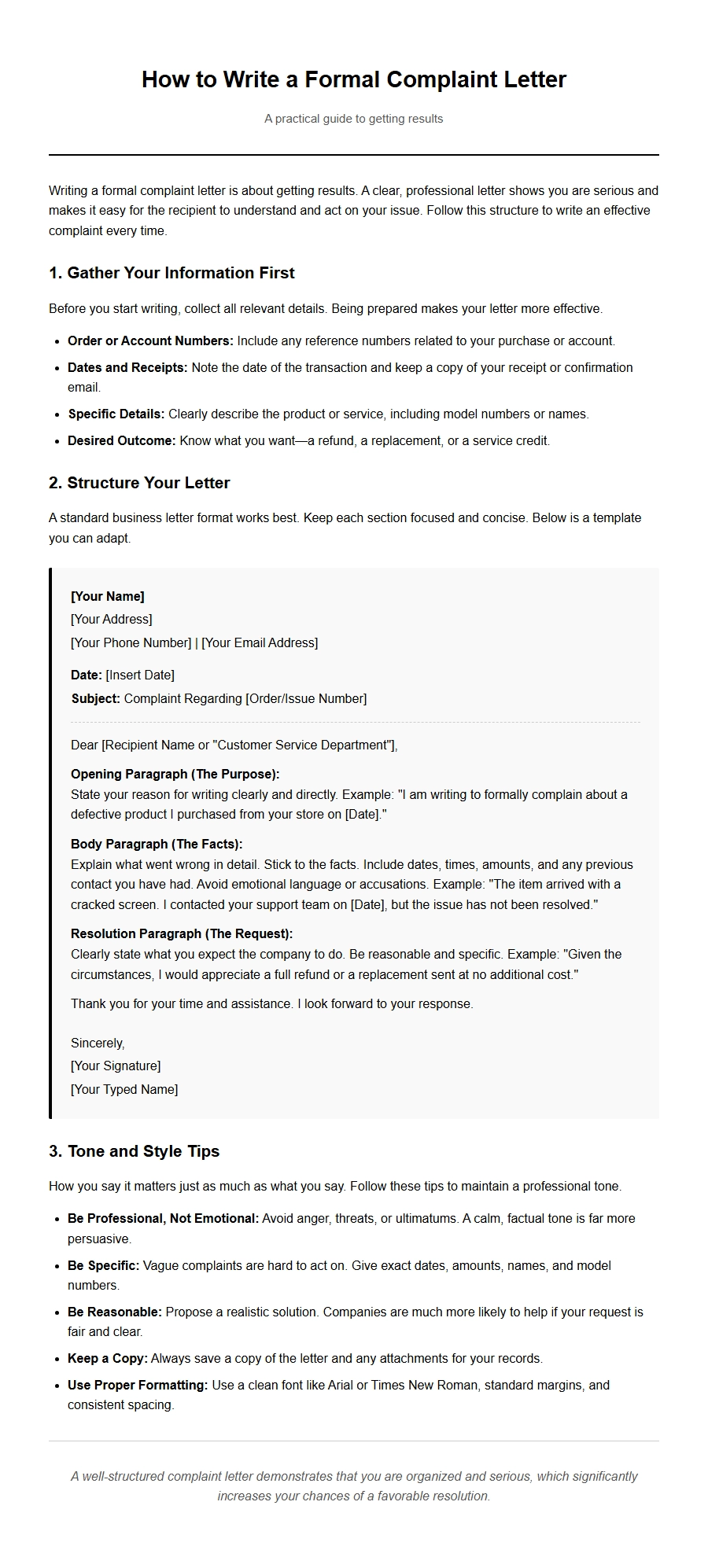 How to Write a Formal Complaint Letter
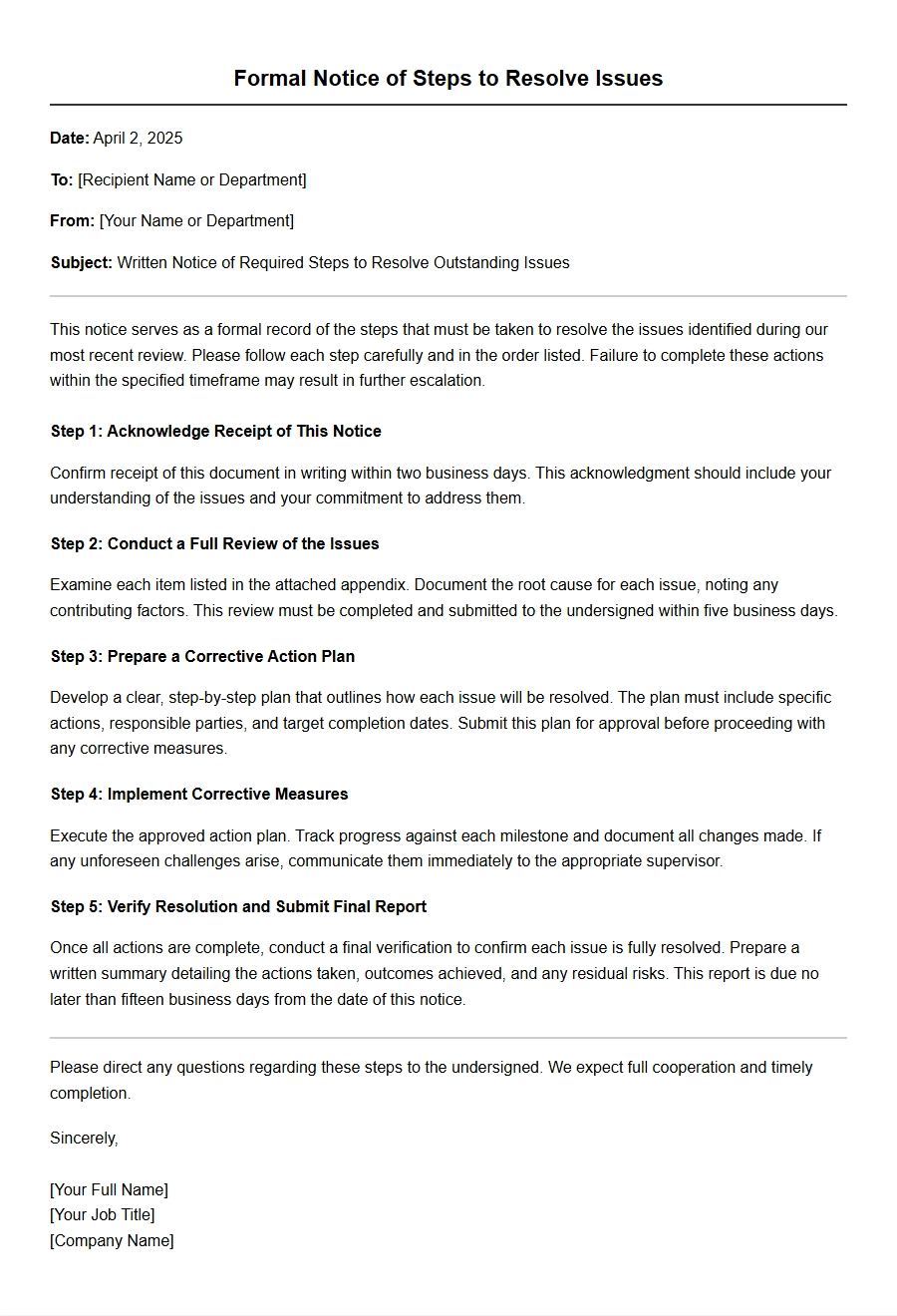 Steps to Resolve Issues via Written Notice
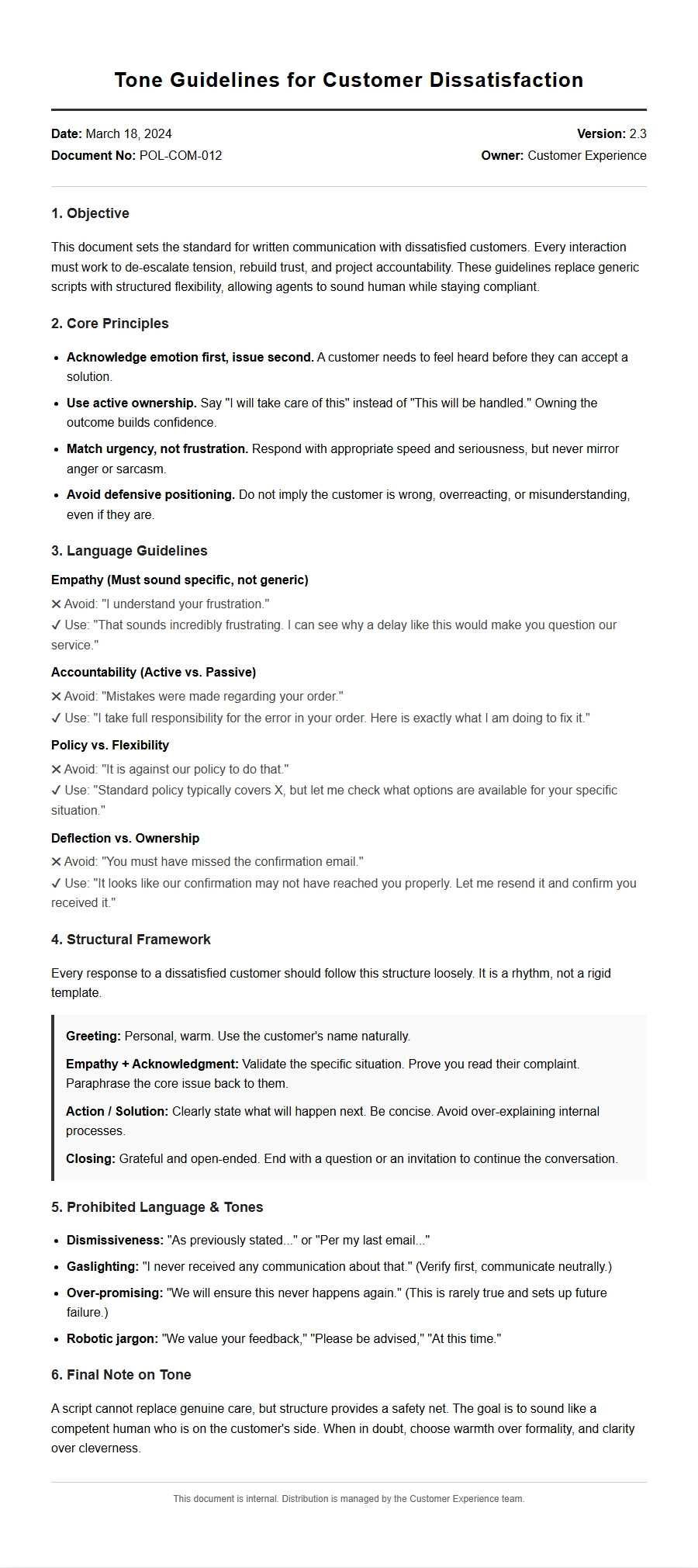 Tone Guidelines for Dissatisfied Customer Letters
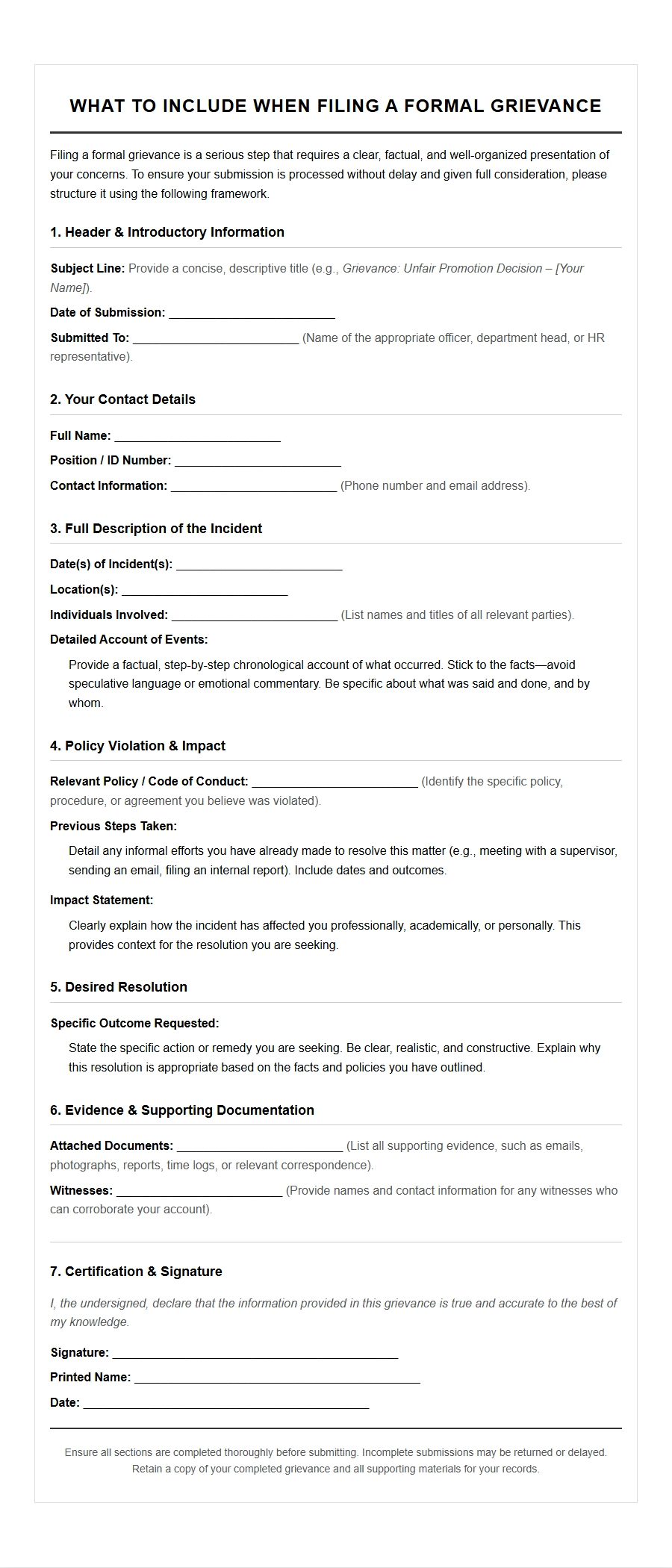 What to Include in a Formal Grievance Letter
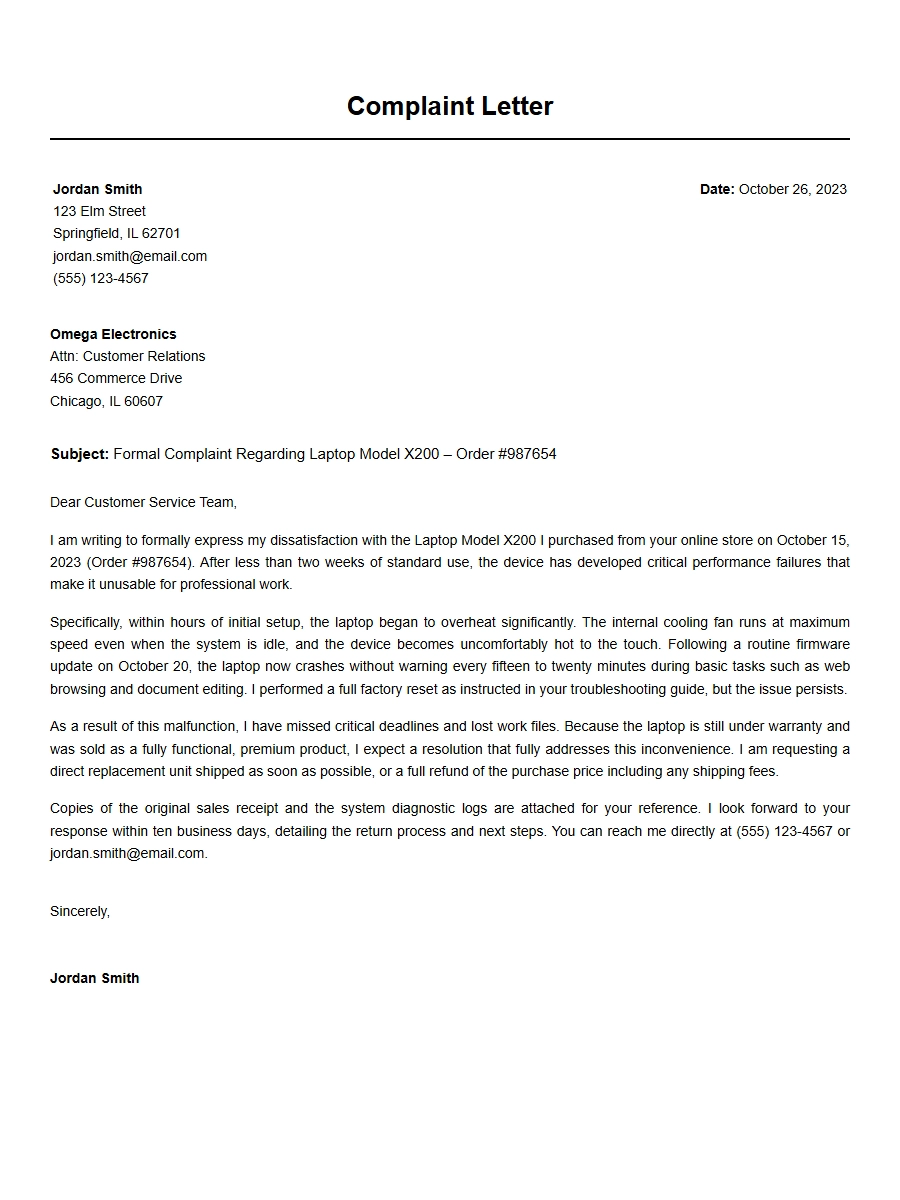 Structure of an Effective Complaint Letter
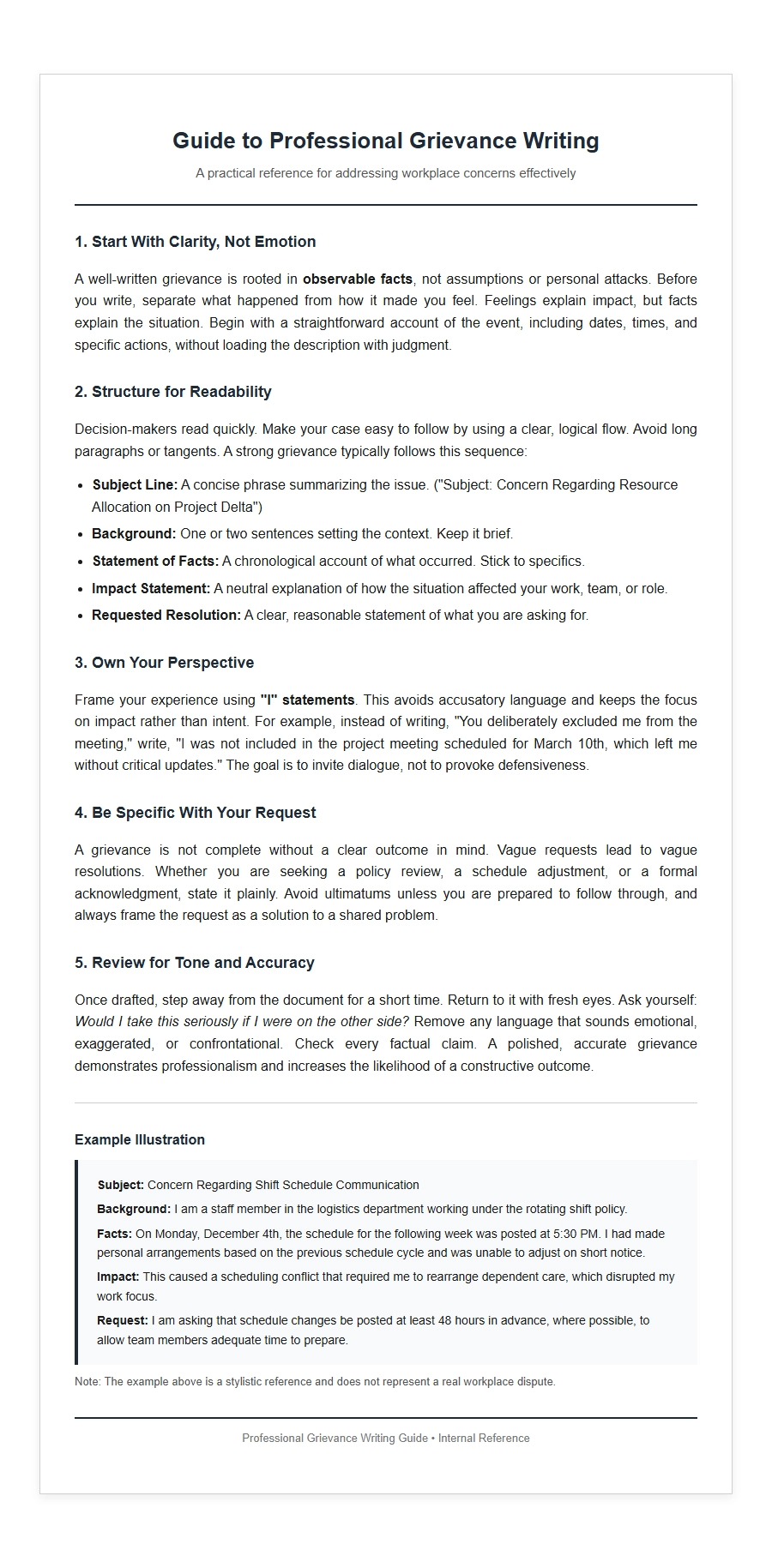 Best Practices for Writing Professional Grievance Letters