When a step parent passes away, grief can feel complicated. You want to honor their role in your life, but you’re not sure how to put that into words. Maybe you didn’t have a close relationship. Or maybe they were a second parent. Either way, finding the right condolence message feels impossible. That blank page stares back at you.
Using a condolence message sample isn’t taking the easy way out. It’s a smart starting point. A well-written template gives you the structure—the salutation, the body, the closing—so you can focus on what matters: adding your own memories and sincerity. Think of it as a framework, not a script. You’ll still personalize it, but you won’t have to invent the format from scratch.
Category: Condolence Letters
How do I choose the right tone for a step parent?
When you’re picking a sample, consider the relationship. If your step parent was very involved, a warm, personal tone works best. You might share a specific memory. If the connection was more distant, keep it respectful and straightforward. The goal is to acknowledge their life without pretending a closeness that isn’t there. A simple “I was sorry to learn of your stepfather’s passing” followed by a brief kind remark is often enough.
For the salutation, match the formality to your situation. “Dear [Name]” works for most relationships. If you’re writing to someone more formal, like a spouse you don’t know well, use “Dear Mr. and Mrs. [Last Name].” Avoid generic openings like “To whom it may concern”—sympathy letters call for a personal address.
What should the body of the message include?
Start with your sympathy. Then offer something specific. “I’ll always remember how your stepmom made me laugh at family dinners.” That’s more meaningful than a generic phrase. If you don’t have a strong memory, a general comment about their kindness or strength works too. End with an offer of support if sincere—but don’t promise something you can’t deliver. A simple “Thinking of you” is fine.
Pay attention to the closing. “With deepest sympathy,” “Warmly,” or “Thinking of you” are all appropriate. Avoid “Sincerely” for sympathy letters—it feels too business-like. For email condolences, keep the same structure but use a clear subject line like “Thinking of you during this time.” Digital letter format still deserves proper salutation and closing.
Common mistakes to avoid
One big pitfall is using outdated or overly formal language. Phrases like “in your time of grief” feel stiff. Instead, say what you mean: “I was so sorry to hear about your step dad.” Also, proofread your message. A typo can make it seem careless. Read it aloud to catch awkward phrasing. Check the spelling of names—nothing hurts more than a misspelled loved one’s name.
Another mistake is ignoring the format. If you’re printing and mailing the letter, use letterhead or nice paper. If it’s an email, keep it short and scannable. Don’t force a long message if it feels unnatural. Short and personal beats long and generic every time.
Real examples to guide you
Let’s say you’re writing to a friend who lost their stepmother. You might start: “Dear [Friend], I was so sad to hear about your stepmom. I know she played a big part in your life, and I’m thinking of you.” That’s direct, warm, and personal. If you’re writing to a colleague who lost a stepfather, keep it more reserved: “Dear [Name], I was sorry to learn of your stepfather’s passing. Please accept my condolences. You’re in my thoughts.”
The best condolence messages feel both professional and personal. The sample you choose is just a starting point—it gives you the skeleton. Your own words add the heart. With practice, writing these letters becomes easier. You’ll find your own voice, and every message you write strengthens your ability to offer comfort. So pick a template, make it yours, and send it. That’s the kindest thing you can do.
Useful Writing Samples
Condolence Messages for Loss of Step Parent
To a Stepfather Who Was a True Father
Dear [Name],
I was so saddened to hear of your stepfather's passing. He was not just a stepfather to you—he was a true father in every way that mattered. I remember how he cheered at your games, listened to your dreams, and stood by you through every challenge. His love was steady and unconditional.
Please know that I am holding you close in my thoughts. May you find comfort in the many beautiful memories you shared. He will live on in your heart forever.
With deepest sympathy, [Your Name]
For the Loss of a Loving Stepmother
Dear [Name],
I am deeply sorry to learn about the loss of your stepmother. She had such a warm and gentle way of making everyone feel welcome. I will always remember her kindness and the genuine interest she took in each of us.
Her love for you and your family was evident in everything she did. May the legacy of her care and compassion bring you strength in the days ahead. You are in my prayers.
With heartfelt condolences, [Your Name]
Remembering a Kind Step Parent
Dear [Name],
I was so sorry to learn of your stepmother's death. She was one of the kindest people I have ever known, and her warm smile brightened every room. I feel grateful to have shared many conversations with her over the years.
She brought so much joy and stability to your family. I know you will miss her deeply. Please take comfort in knowing that her kindness lives on in all the lives she touched. You and your family are in my thoughts.
With sympathy, [Your Name]
A Stepmother's Gentle Love
Dear [Name],
I am so sorry for your loss. Your stepmother had a gentle, loving spirit that made our home feel fuller. She never missed a chance to ask how I was, and she always had a plate of cookies ready when I visited.
She chose to love us not out of obligation but out of genuine affection. That kind of love is a treasure that will never fade. May you find peace in the memories of her caring heart. You are in my thoughts.
With love and sympathy, [Your Name]
For a Step Parent Who Made a Difference
Dear [Name],
I was so sorry to hear about your stepfather's passing. He was a remarkable man who made a real difference—not just in your life, but in the lives of everyone who worked with him. I will never forget his unwavering integrity and his knack for telling a good story over coffee.
He often spoke of you with such pride. His guidance and encouragement shaped many of us. Please accept my deepest condolences during this difficult time. May you find strength in the values he instilled.
With sympathy and respect, [Your Name]
To a Family Member: Honoring Your Step Parent
Dear [Name],
I am so sorry for the loss of your stepmother. She became part of our family so naturally, and I will treasure the holidays we spent together. She had a wonderful sense of humor and knew just how to bring people together.
Her love for you was clear in every hug and every encouraging word. I hope that as you grieve, you feel surrounded by the warmth of all the memories you shared. She will be deeply missed.
With all my love, [Your Name]
Sympathy for a Beloved Stepfather
Dear [Name],
I was heartbroken to learn of your stepfather's passing. He was such a kind, gentle soul who always had a moment to chat over the fence. I remember the way he tended his garden so carefully—the same way he tended to his family.
He made your house a home. I hope you find comfort in knowing how much he was loved by all of us who were lucky to know him. You and your family are in my thoughts and prayers.
With deepest sympathy, [Your Name]
Such a Loss of a Wonderful Step Parent
Dear [Name],
I was so sorry to hear about the loss of your stepmother. She was a wonderful woman who touched so many lives, including mine. As your teacher, I watched her support you with such dedication—she never missed a parent-teacher conference and always wanted the best for you.
Her belief in you was unwavering. Please remember that her love and guidance will stay with you always. I am thinking of you during this sad time.
With heartfelt sympathy, [Your Name]
In Memory of a Stepmother Who Cared
Dear [Name],
I am so deeply sorry for your loss. Your stepmother had such a caring heart—she always made me feel welcome in your home. I recall how she would ask about my studies and cheer me on, just as she cheered for you.
She was more than a stepmother; she was a friend and a mentor. I hope you take comfort in the beautiful bond you shared. You and your family are in my prayers.
With sympathy and love, [Your Name]
For the Passing of a Step Parent: A Child's Tribute
Dear [Name],
I was so sorry to learn that your stepfather has passed away. I know he was not your biological father, but he was your dad in every way that counts. I will always remember how he taught you to fix a bike, and how he laughed at your jokes.
He chose you, and you chose him—that love is real and permanent. Hold onto the memories of his patience, his support, and his pride in you. You are in my thoughts as you navigate this loss.
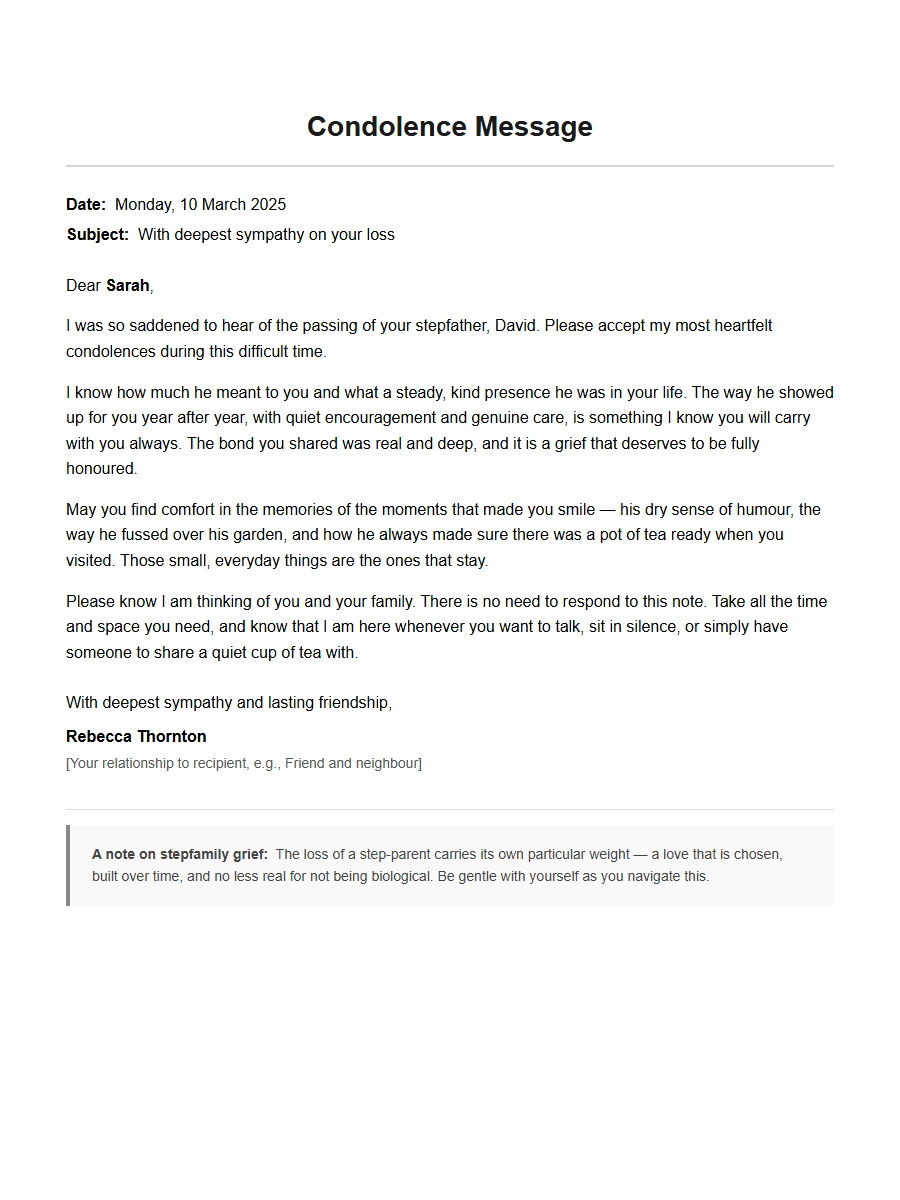
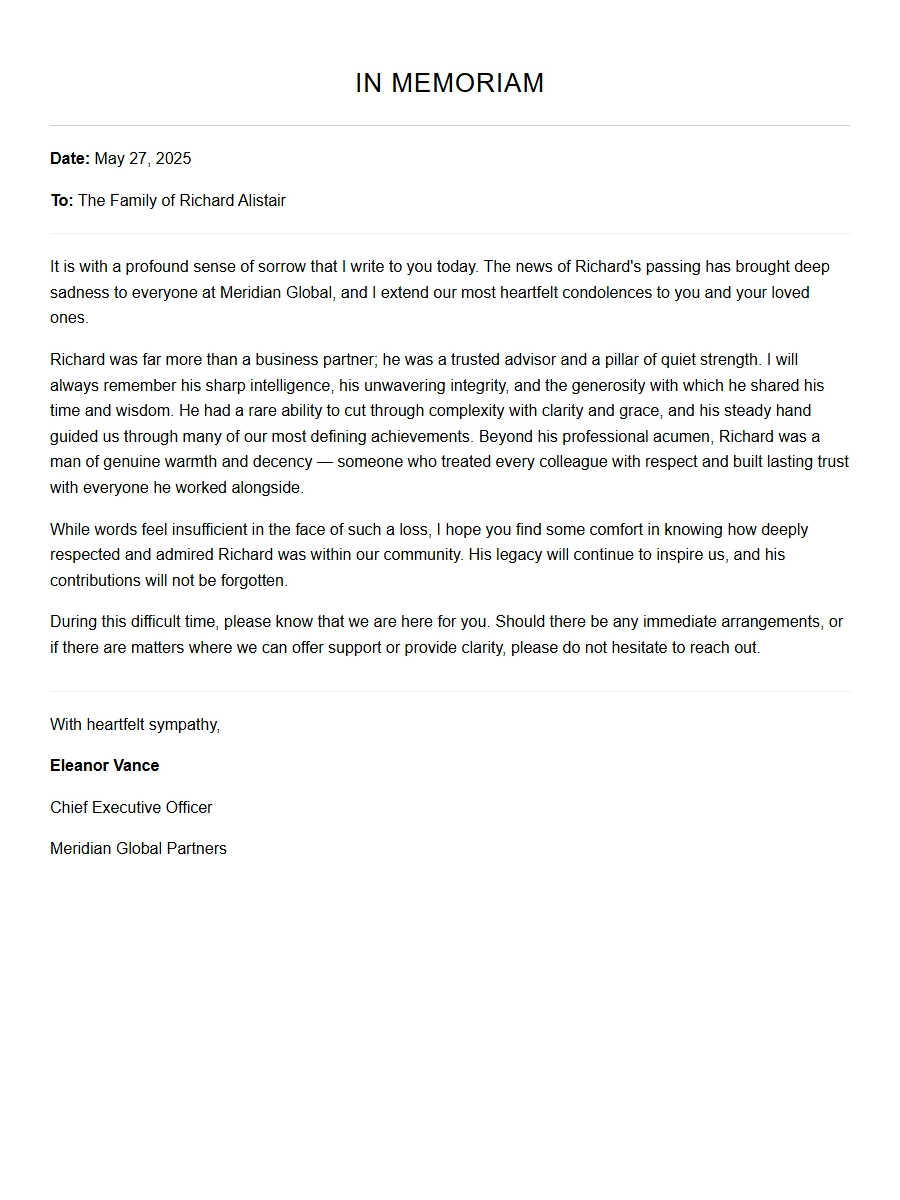 Formal Condolence Message for a Business Partner
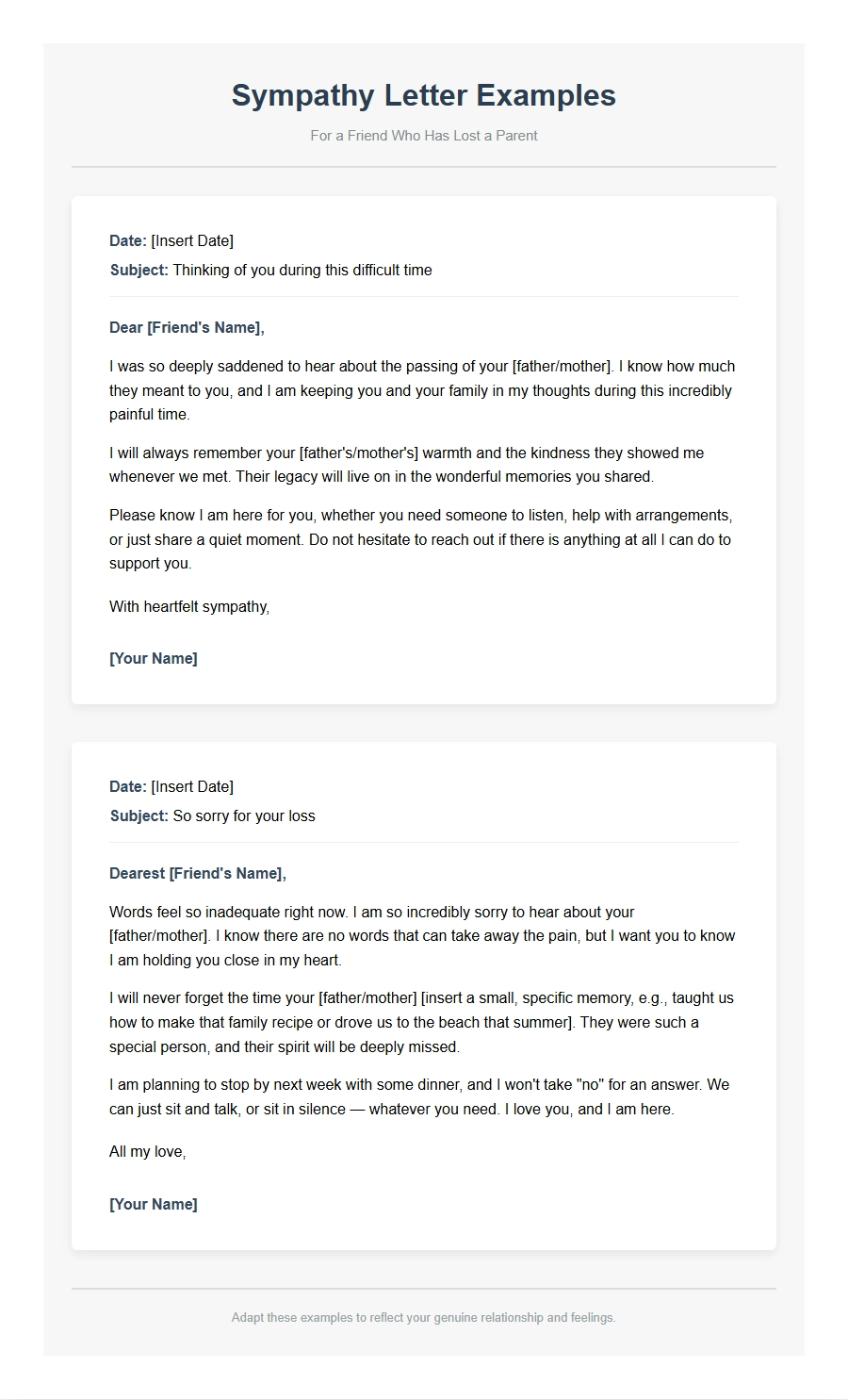 Sympathy Letter Examples for a Friend Who Lost a Parent
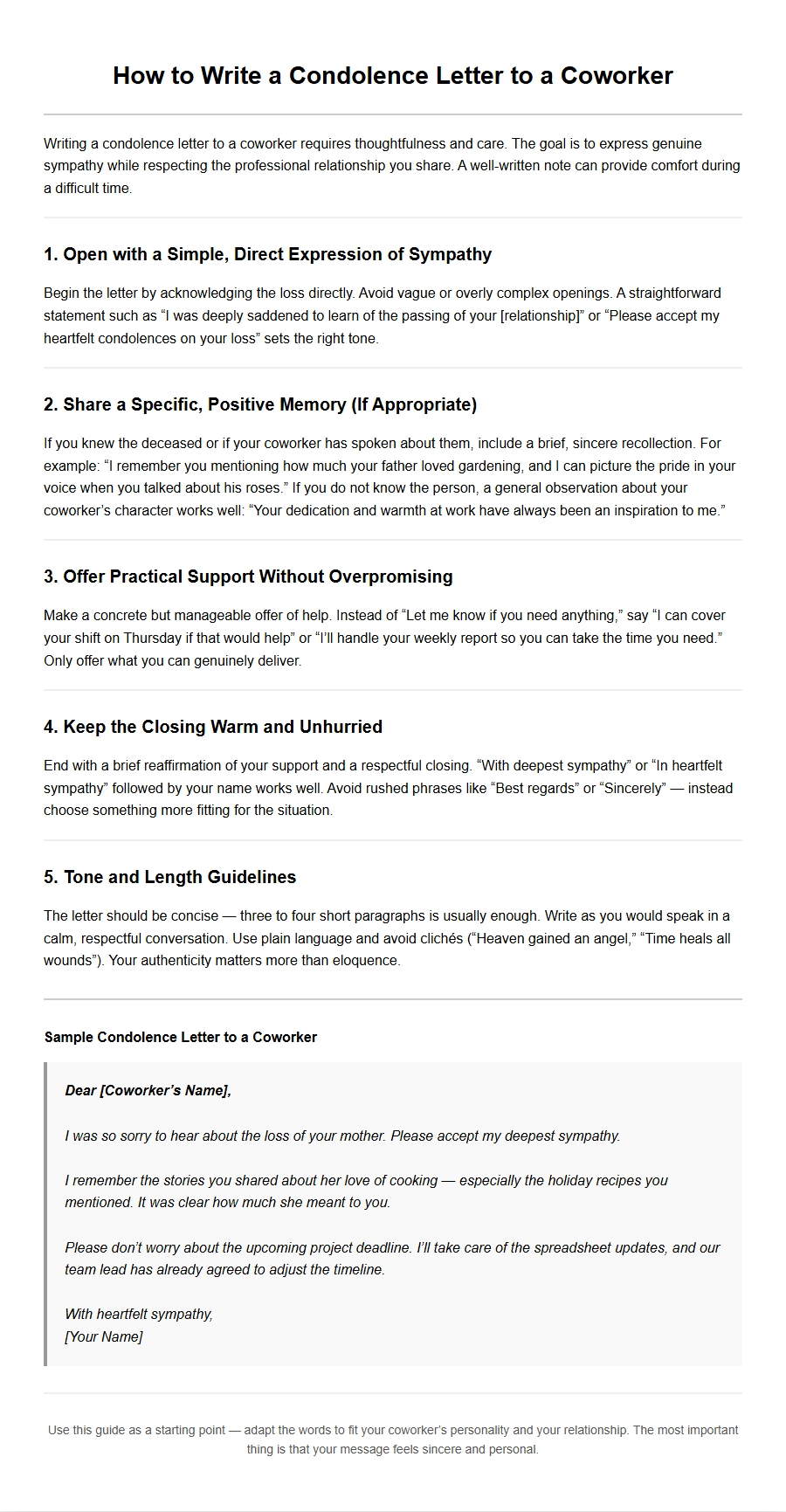 How to Write a Condolence Letter to a Coworker
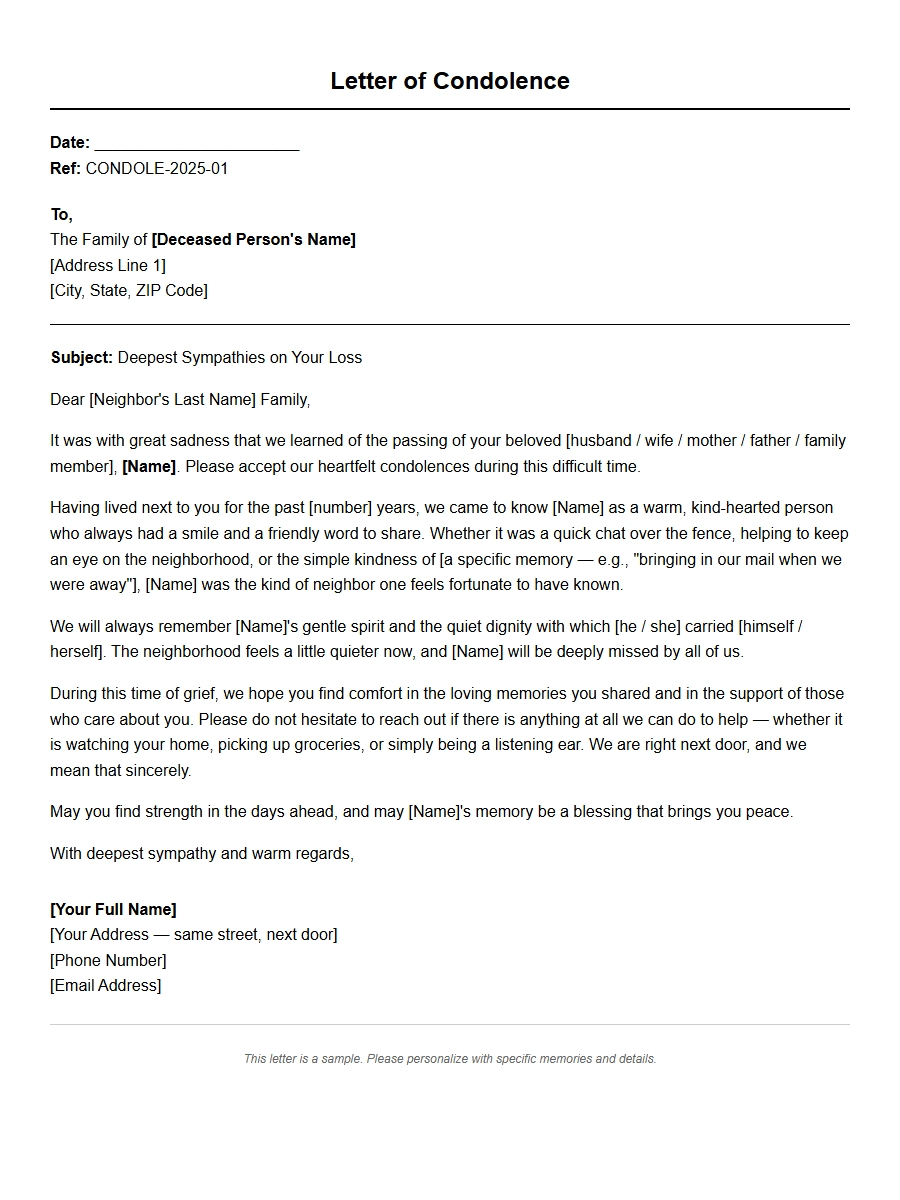 Condolence Letter Sample for a Neighbor
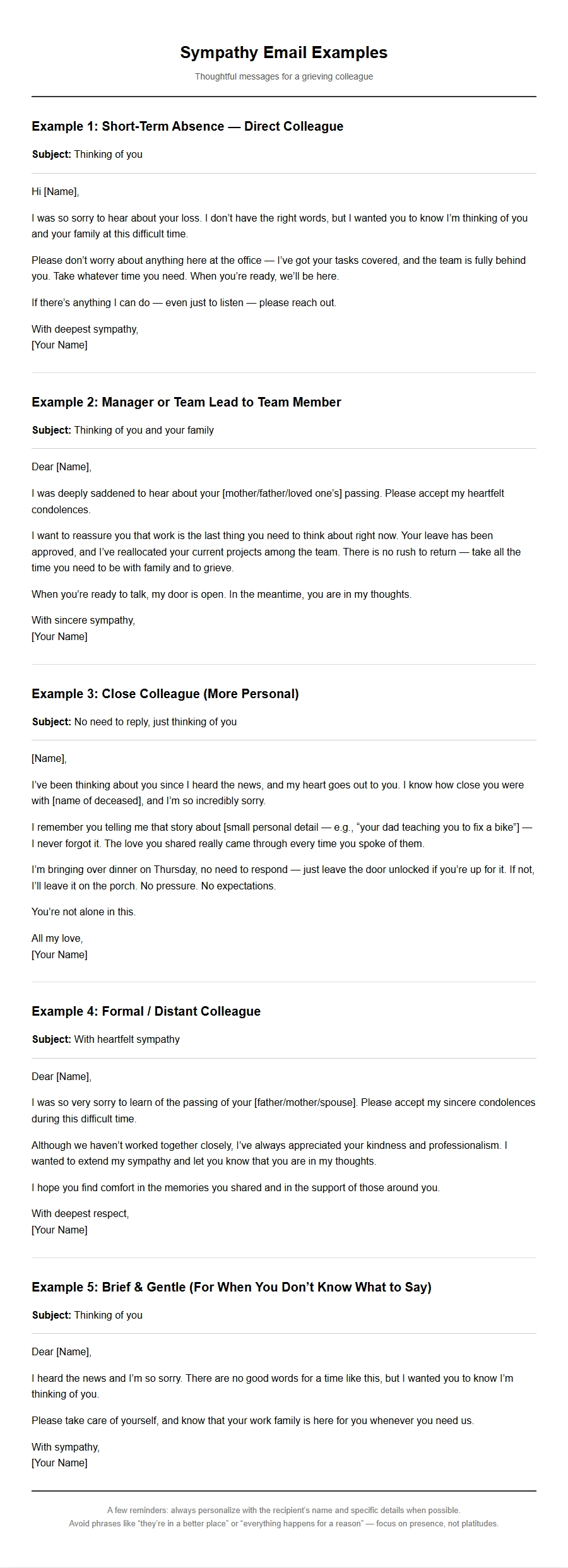 Sympathy Email Examples for a Grieving Colleague
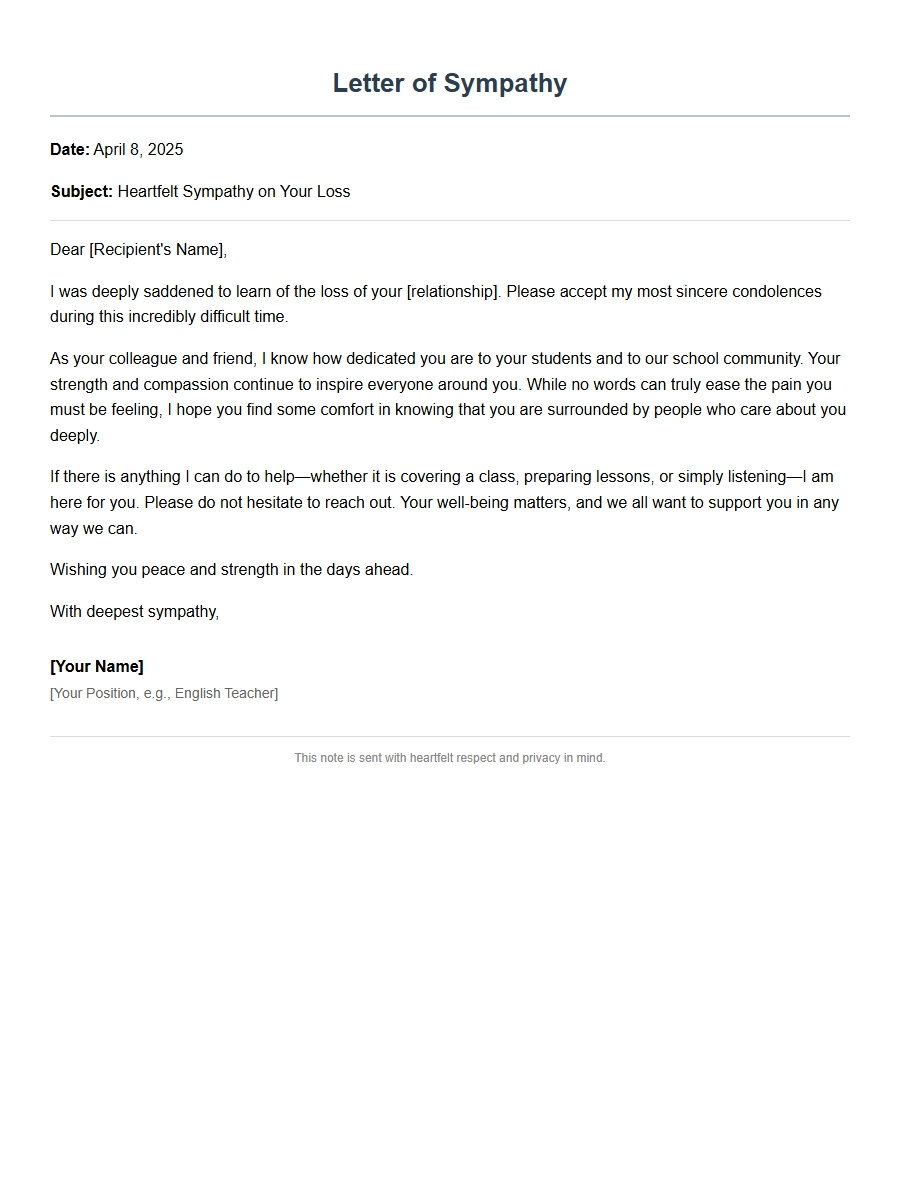 Condolence Words for a Teacher