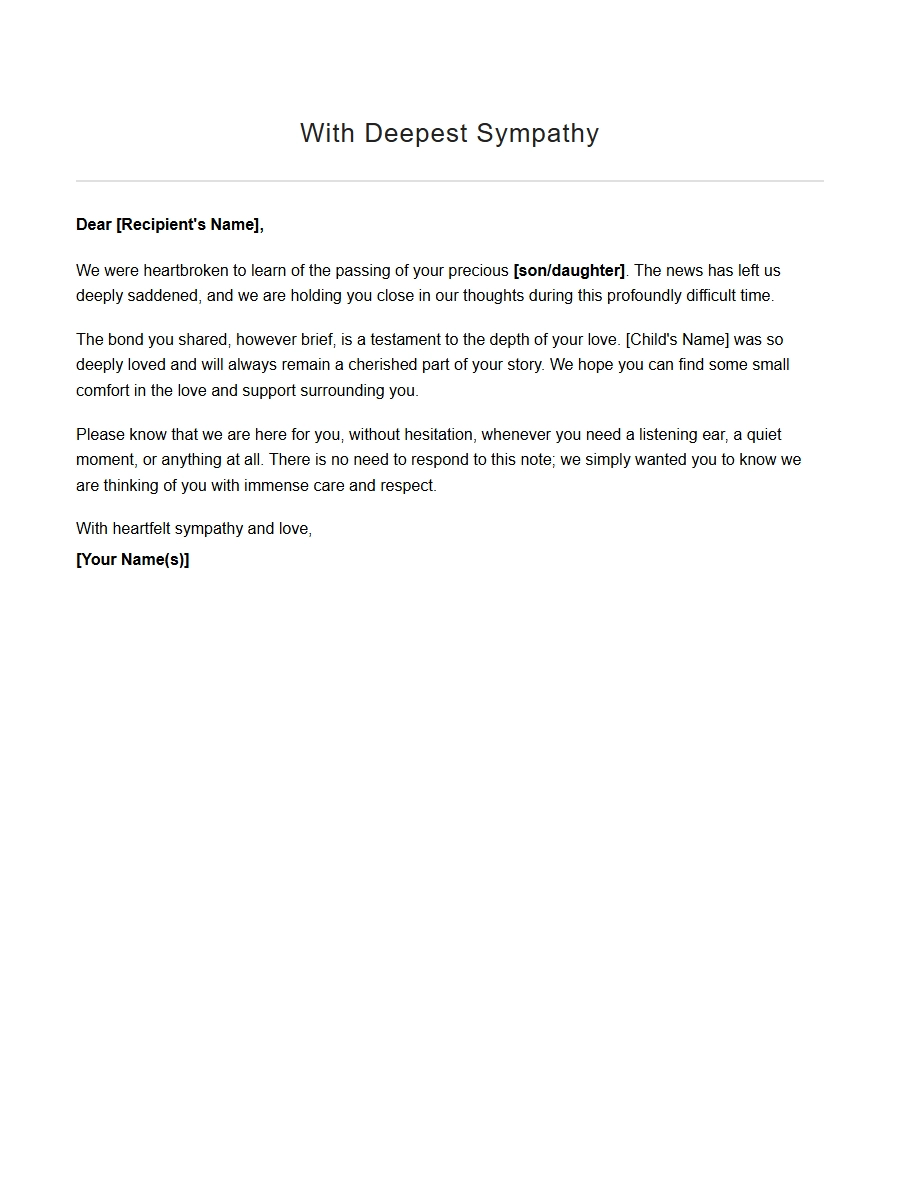
You’re staring at a blank screen, trying to find the right words for a sympathy note after the loss of a baby boy or girl. Your heart is heavy, and your mind is blank. This is not a letter anyone wants to write. But the right sample can help you move past that paralysis and focus on what matters: offering genuine comfort.
Using a sample for a condolence message isn’t cheating. It’s a smart way to get past the awkwardness. A good letter template gives you a respectful structure, a warm tone, and phrases that feel natural. You can then adapt that framework to reflect your specific relationship with the grieving parents. It saves you from worrying about letter writing etiquette when your emotions are already raw.
Choosing the right sample for this delicate situation
A sympathy note for the loss of an infant is different from other condolence letters. The loss is profound, but the parents may not have many memories to share. Your note should acknowledge the baby’s short life and the depth of the parents’ grief. Avoid clichés like “everything happens for a reason.” Instead, focus on simple, direct expressions of sorrow.
Look for samples that use a gentle, respectful tone in writing. Formal language can feel cold here. A semi-formal approach works best—something you might say in person if you had the words. The salutation and closing should be warm. “Dear [Names]” and “With deepest sympathy” are better than rigid formulas.
How to adapt a sample without losing your voice
Start with the sample’s letter structure. Most condolence notes have three parts: an opening that names the loss, a middle that offers a specific memory or acknowledgment, and a closing that offers ongoing support. Follow that flow, but swap the generic language for your own.
For example, if the sample says “we are so sorry for your loss,” add why. “We are so sorry for the loss of little Ethan. We’ll always remember the quiet joy in your eyes when you held him.” That small detail makes the note personal. Do not force a memory if you don’t have one. It’s okay to say, “We never got to meet your daughter, but we know she was deeply loved.”
A quick tip on tailoring the opening paragraph
The first sentence is the hardest. Start by naming the baby and stating your sadness directly. “We were heartbroken to hear about Amelia’s passing.” This is honest and immediate. Avoid softening the truth with euphemisms like “passed away” if that feels unnatural to you. Save the softer language for the later paragraphs.
If you are writing on behalf of a team, use a professional greeting for executive bereavement team-condolence letters. But if you are writing as a neighbor or friend, keep it personal. A condolence letter sample for a neighbor might be more casual than one for a coworker, but the core empathy is the same.
Common mistakes to avoid in a baby loss sympathy note
The biggest mistake is talking about the future. Avoid “you can try again” or “you’re young, you’ll have more children.” This is deeply painful for grieving parents. Stay in the present. Acknowledge their current pain. Also, do not compare losses. “I know how you feel” is rarely true. Instead, say “I cannot imagine your pain, and I am so sorry.”
Another oversight is formatting. A handwritten note is best for a personal connection. If you must send an email, use a clean digital letter format with no frills. Avoid letterhead design that looks like a corporate announcement. This is a personal message, not a business memo.
If the loss occurred during a holiday season, be extra sensitive. Check our guide on condolence message for loss during holidays for tips on timing your note.
When to offer practical support instead of cash
Some people struggle with whether to send flowers or money. In many cases, a meal delivery or a donation in the baby’s name is more thoughtful. If you prefer to offer flowers, learn how to offer flowers instead of cash in letter condolence letters. It gives the parents a choice without pressure.
For friends who are traveling to be with family during this time, our advice on a condolence message for friend traveling abroad can help you write something practical and kind.
Proofreading your final note
Before you send it, read the note aloud. Does it sound like you? If it feels too stiff, rewrite one or two sentences in your natural voice. Proofreading letter draft ensures you haven’t used an outdated salutation or typed the wrong name. A small typo can feel careless in such a sensitive note.
Remember, the goal is not to write a perfect letter. It is to let the parents know they are not alone in their grief. Use the sample as your starting point, but let your heart finish the note. That authenticity is what they will remember. Practice writing these notes will make it easier over time, but even the first one matters deeply.
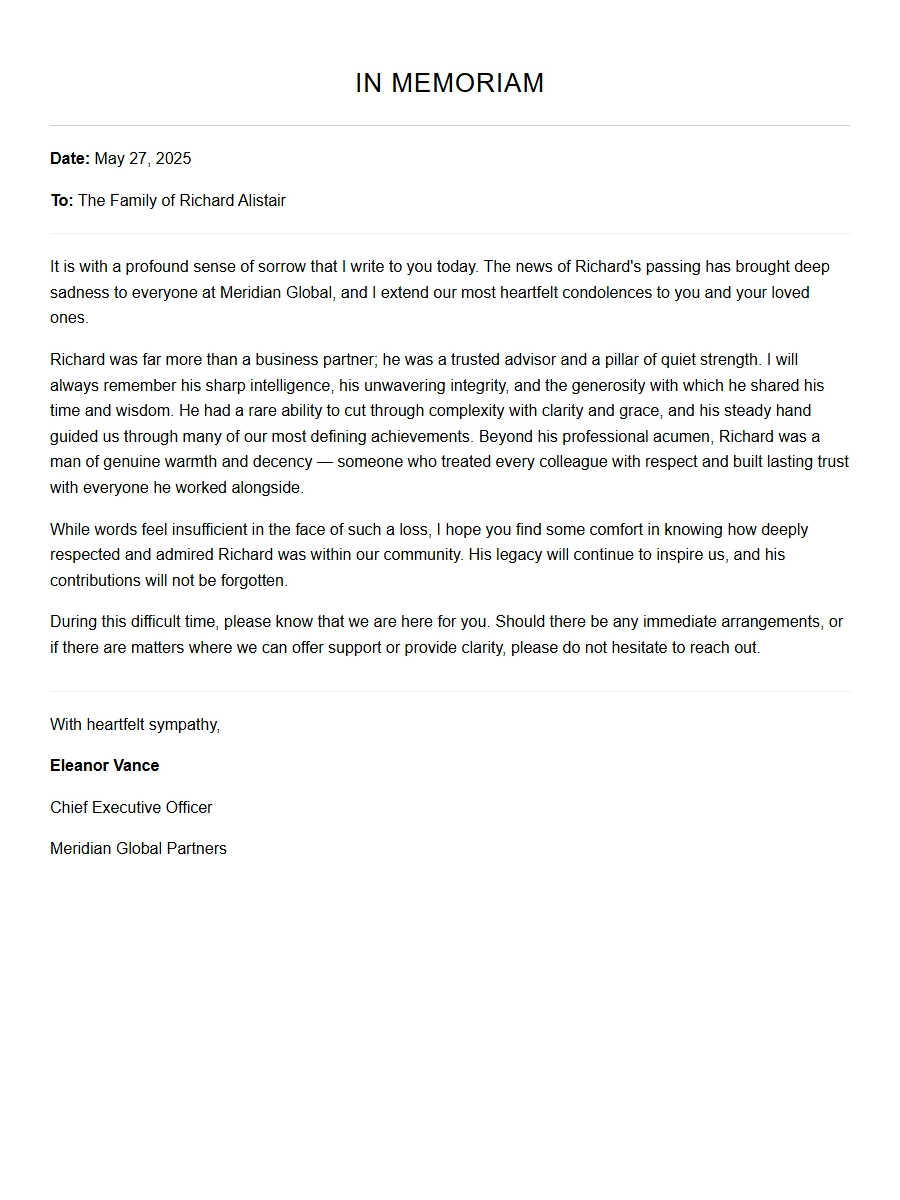 Formal Condolence Message for a Business Partner
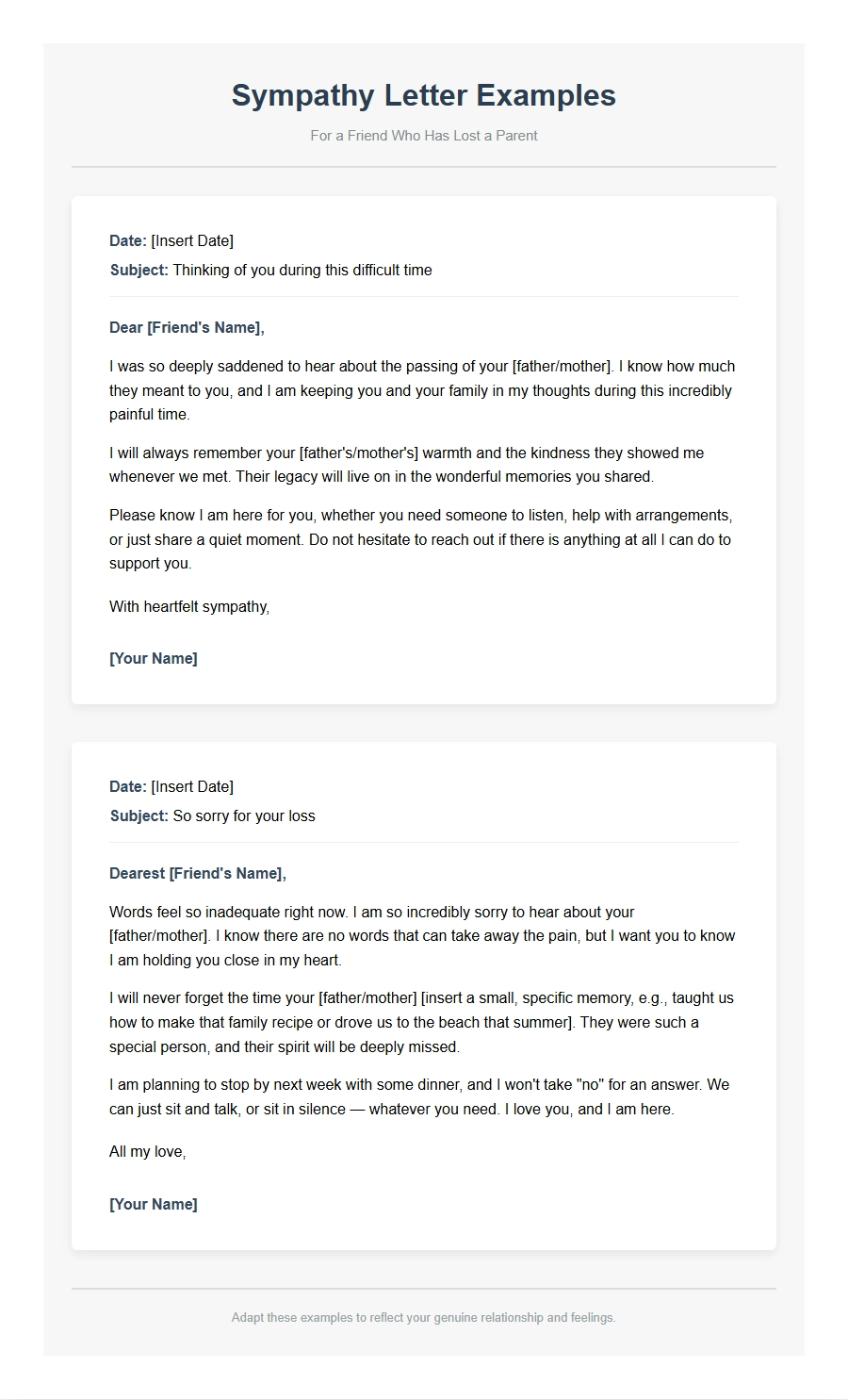 Sympathy Letter Examples for a Friend Who Lost a Parent
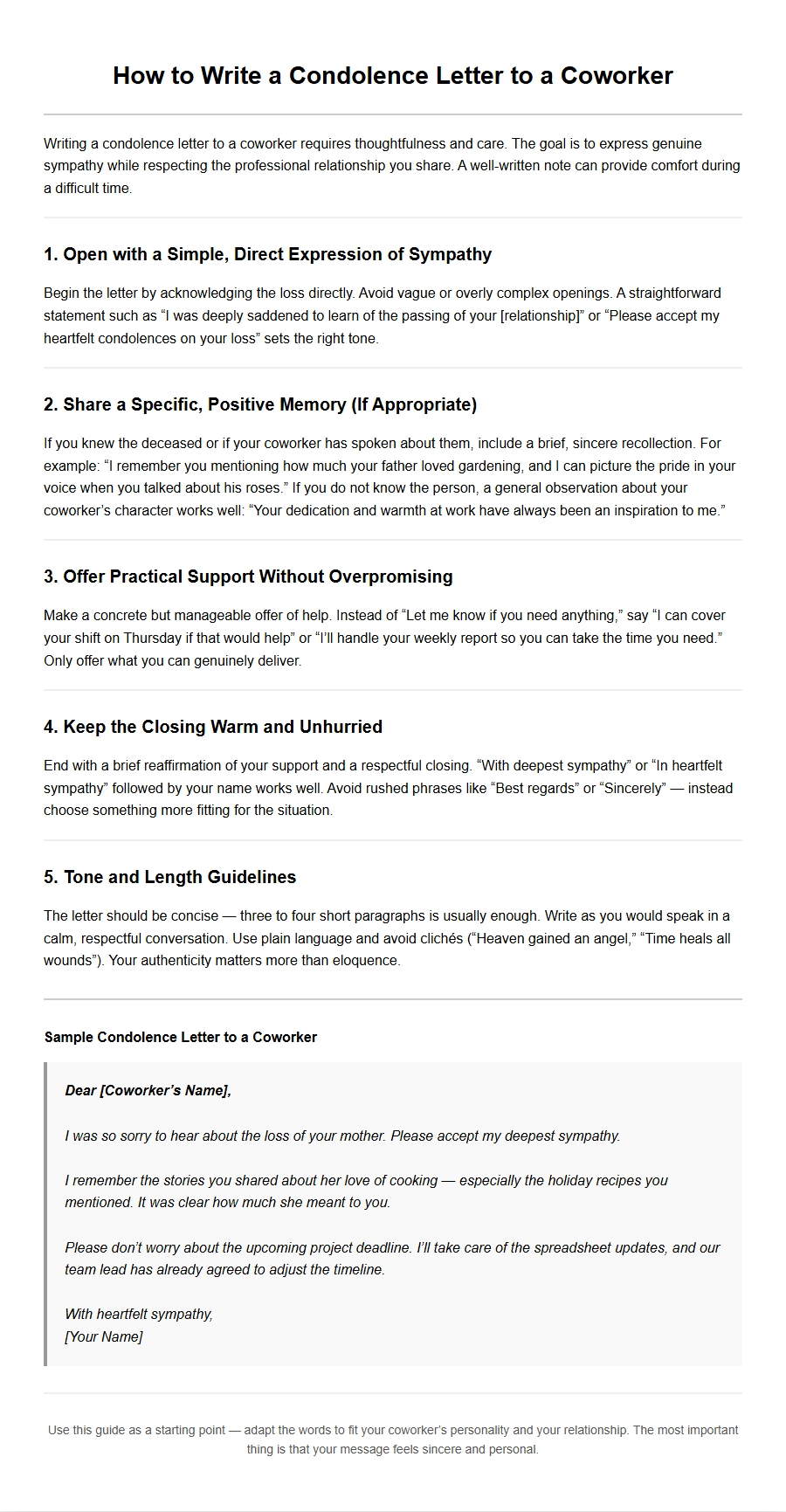 How to Write a Condolence Letter to a Coworker
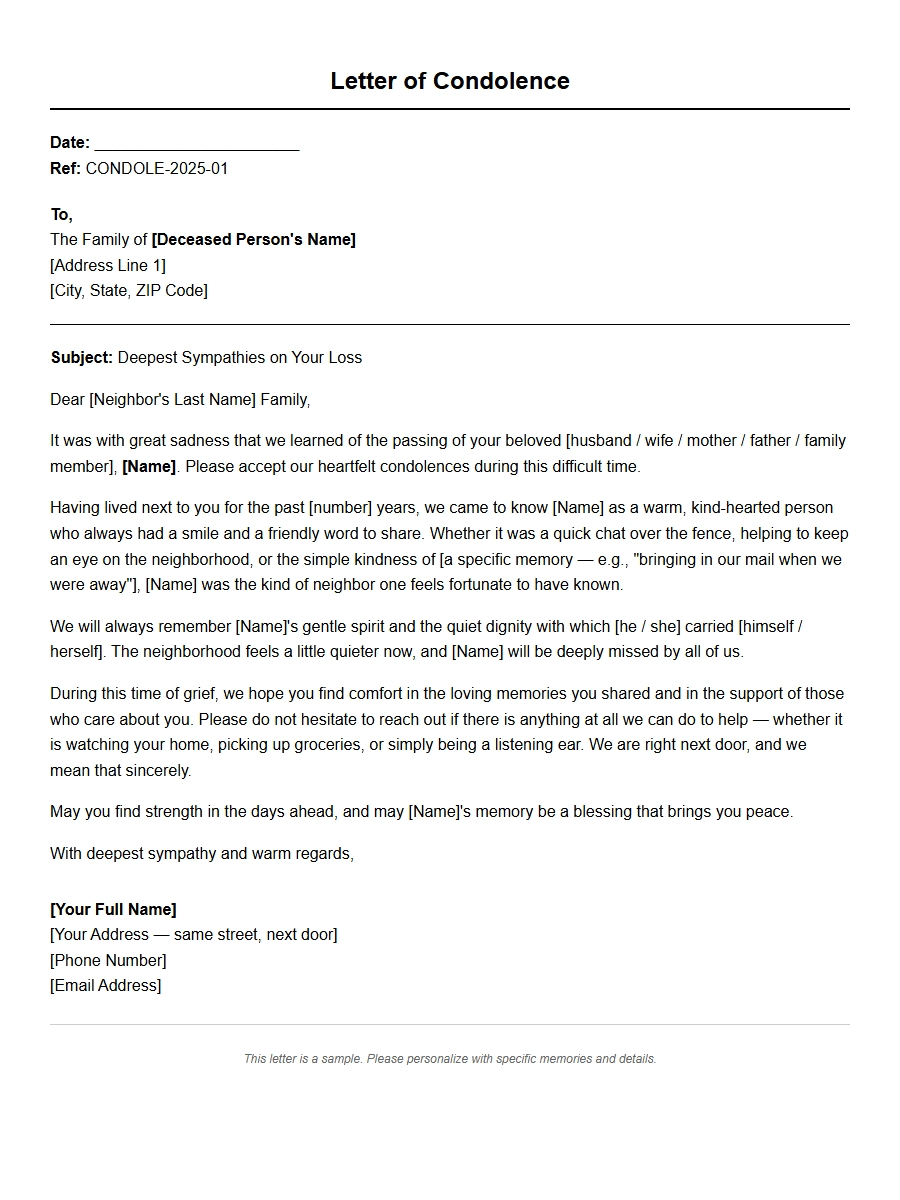 Condolence Letter Sample for a Neighbor
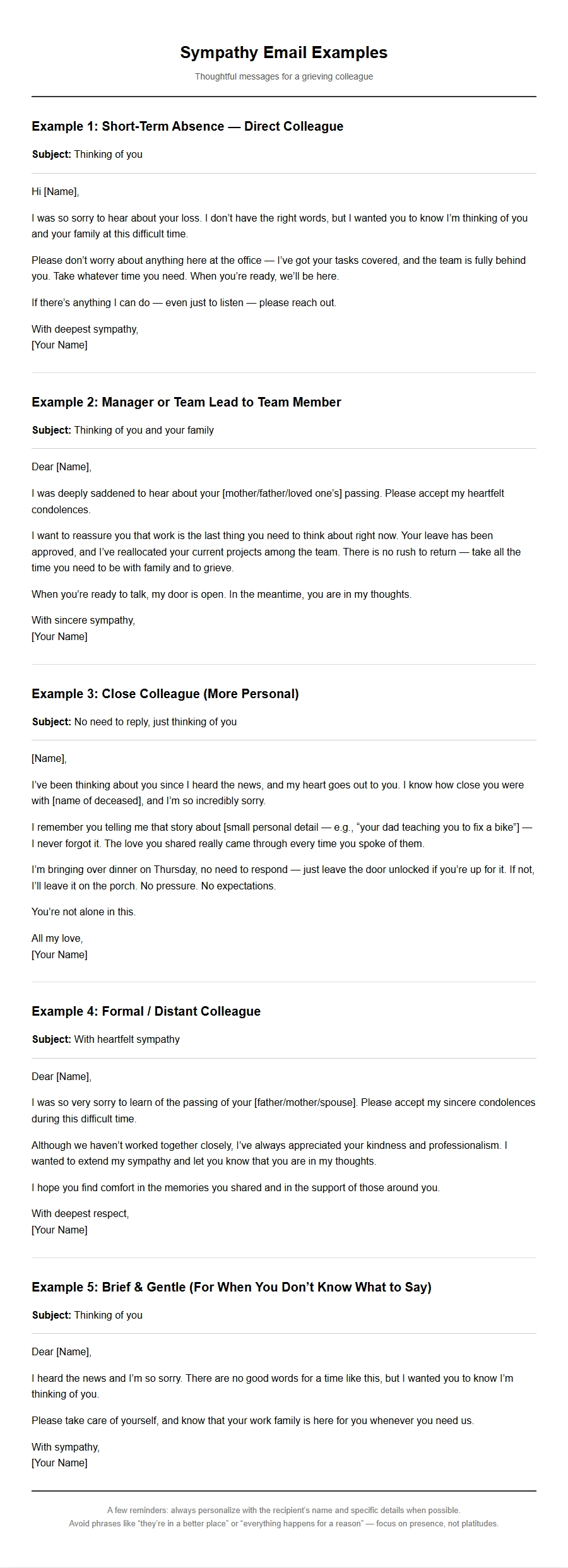 Sympathy Email Examples for a Grieving Colleague
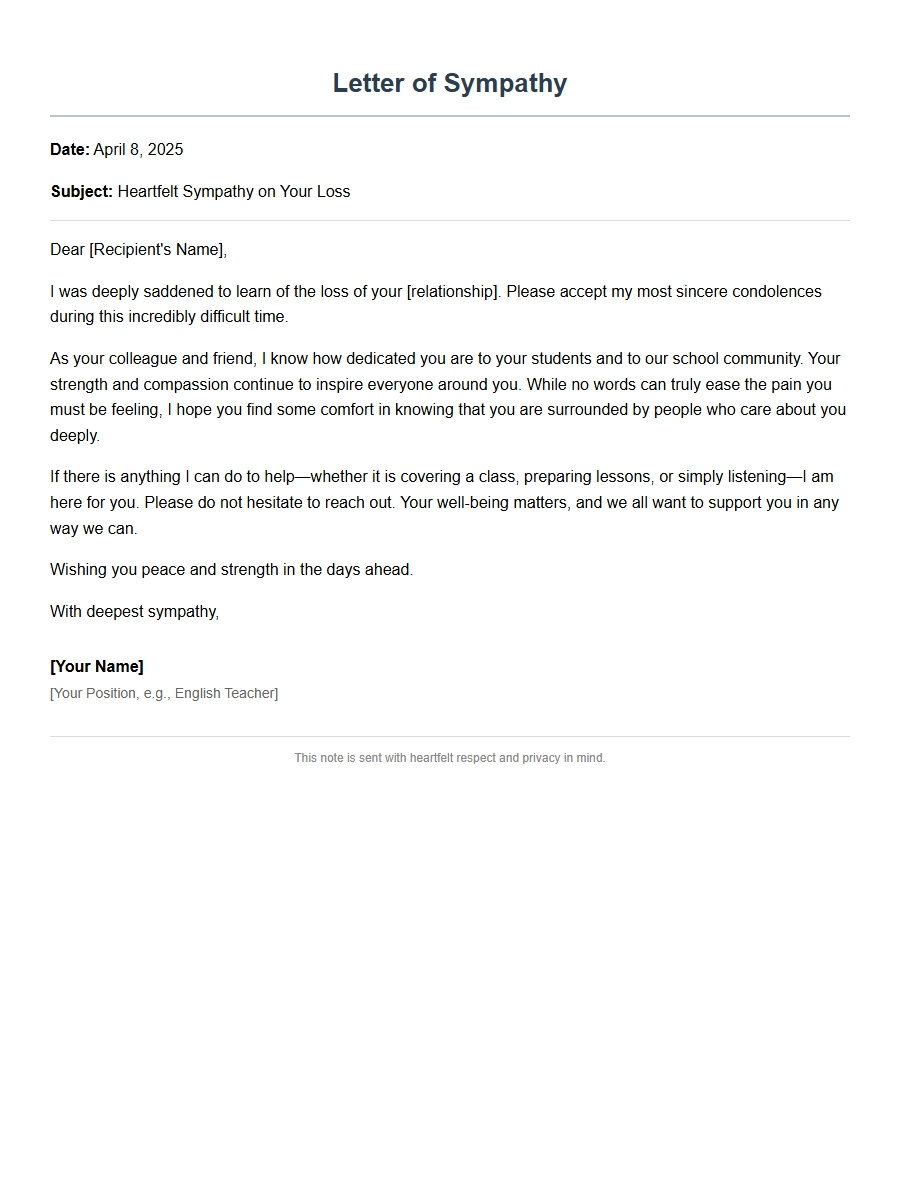 Condolence Words for a Teacher