You're reeling from the news yourself, and now you have to write something that brings comfort. Finding the right condolence phrase for unexpected accident death feels nearly impossible—words can seem hollow in the face of sudden, tragic loss. Yet the letter or message you send matters deeply. It acknowledges the shock, honors the person who died, and lets the bereaved know they're not alone.
Why a sample phrase isn't cheating—it's a lifeline
When grief muddles your thinking, staring at a blank page only adds stress. A well-crafted sample gives you a starting point: a structure that respects the situation, a tone that balances sympathy with professionalism, and phrases that say what you mean without fumbling. Think of it as a template, not a script. You'll adapt it to your relationship with the bereaved and your own voice. That's not lazy—it's smart letter writing etiquette under pressure.
Category: Condolence Phrases by Relationship
What makes a condolence phrase work after an accident
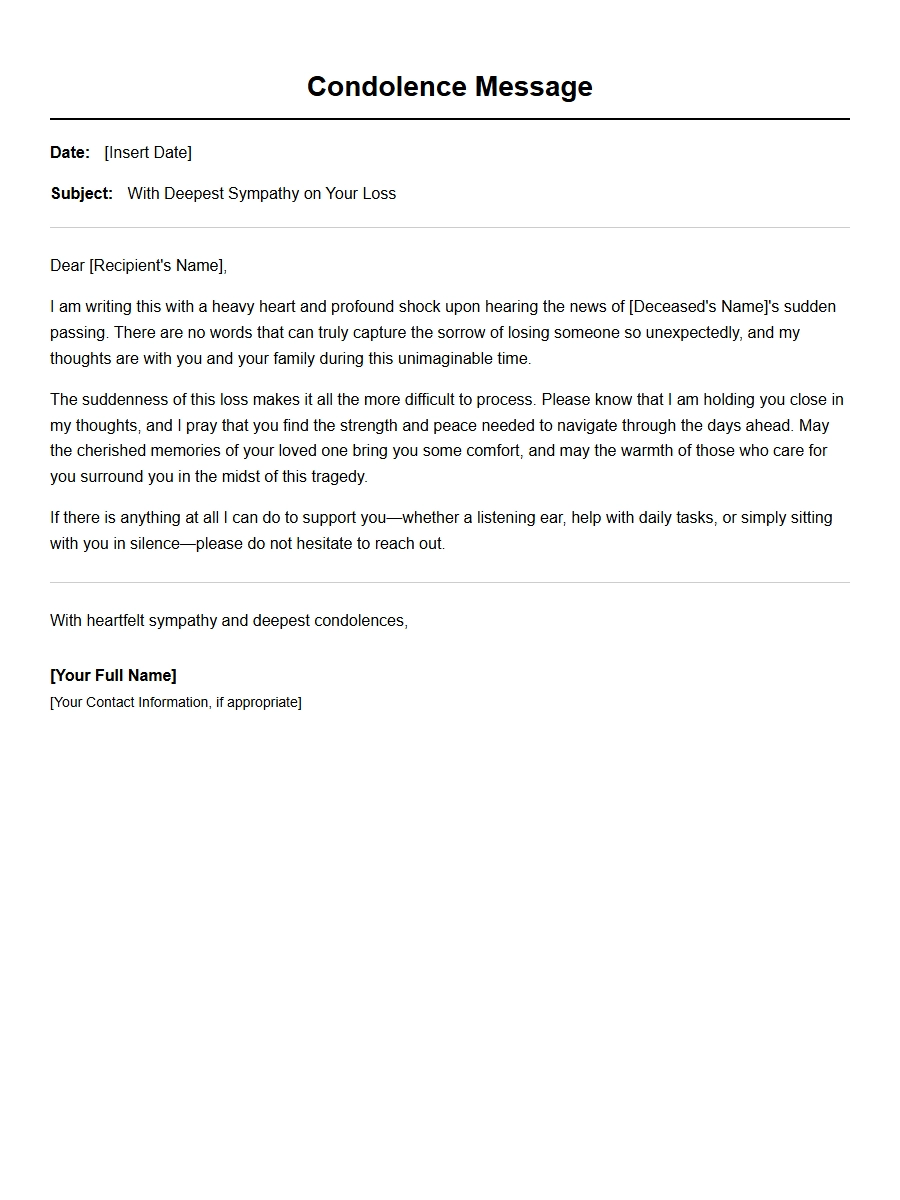
Unexpected death carries an extra layer of disbelief. Your words need to acknowledge that without adding pain. Avoid clichés like "everything happens for a reason"—that rarely helps. Instead, lead with your own shock and genuine sorrow. For example: "I was devastated to hear about [name]'s sudden passing. There are no words, but I want you to know I'm thinking of you." That's a simple, honest professional correspondence that works for both email and printed notes.
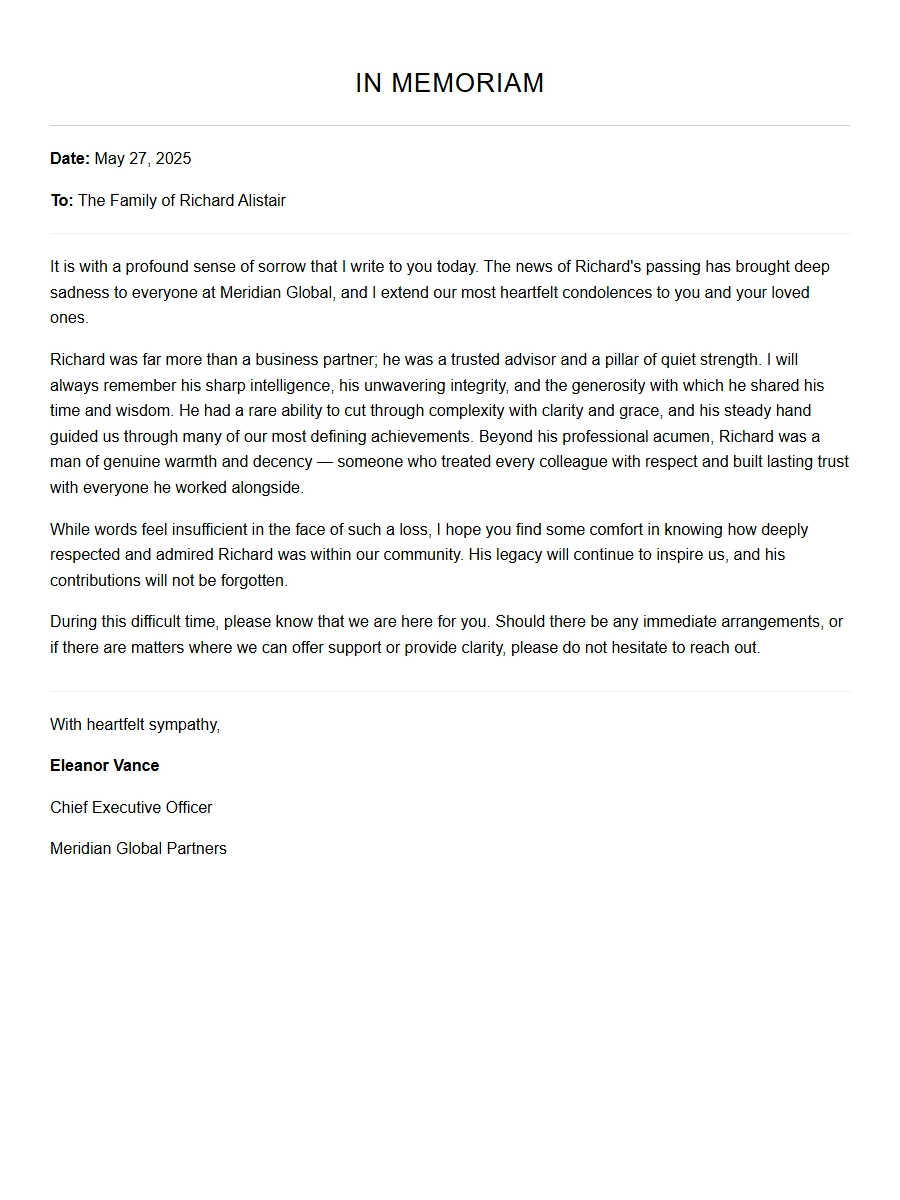
If you're writing a more formal letter of recommendation style condolence—perhaps on behalf of a business or organization—keep the same warmth but adjust the business letter format. Use a standard salutation and closing: "Dear [Name]," and "With deepest sympathy," then your name. The body can echo the same sentiment: "We were all shocked to learn of [name]'s accident. [He/She] was a valued colleague, and we will miss [him/her] greatly."
How to choose and customize your phrase
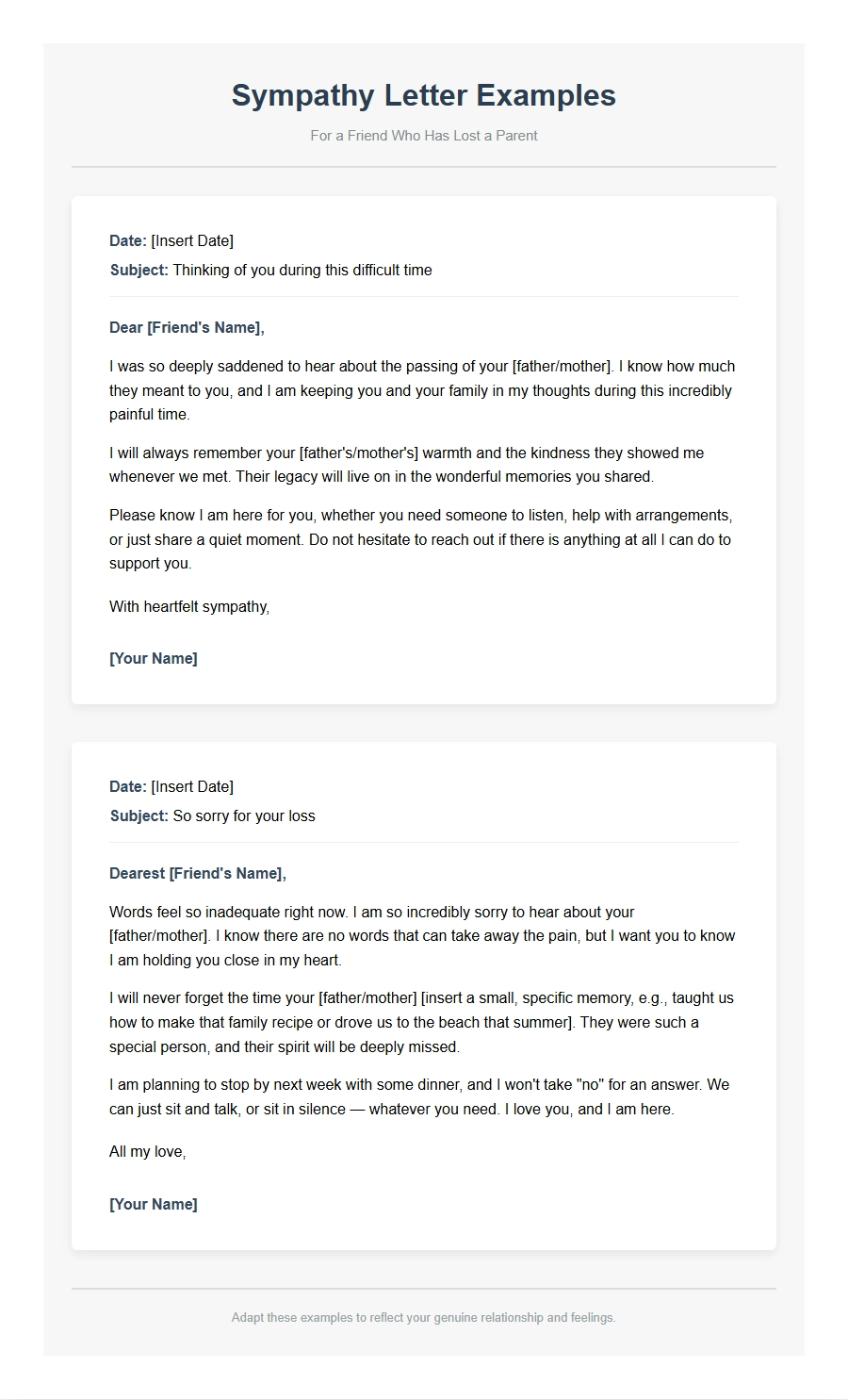
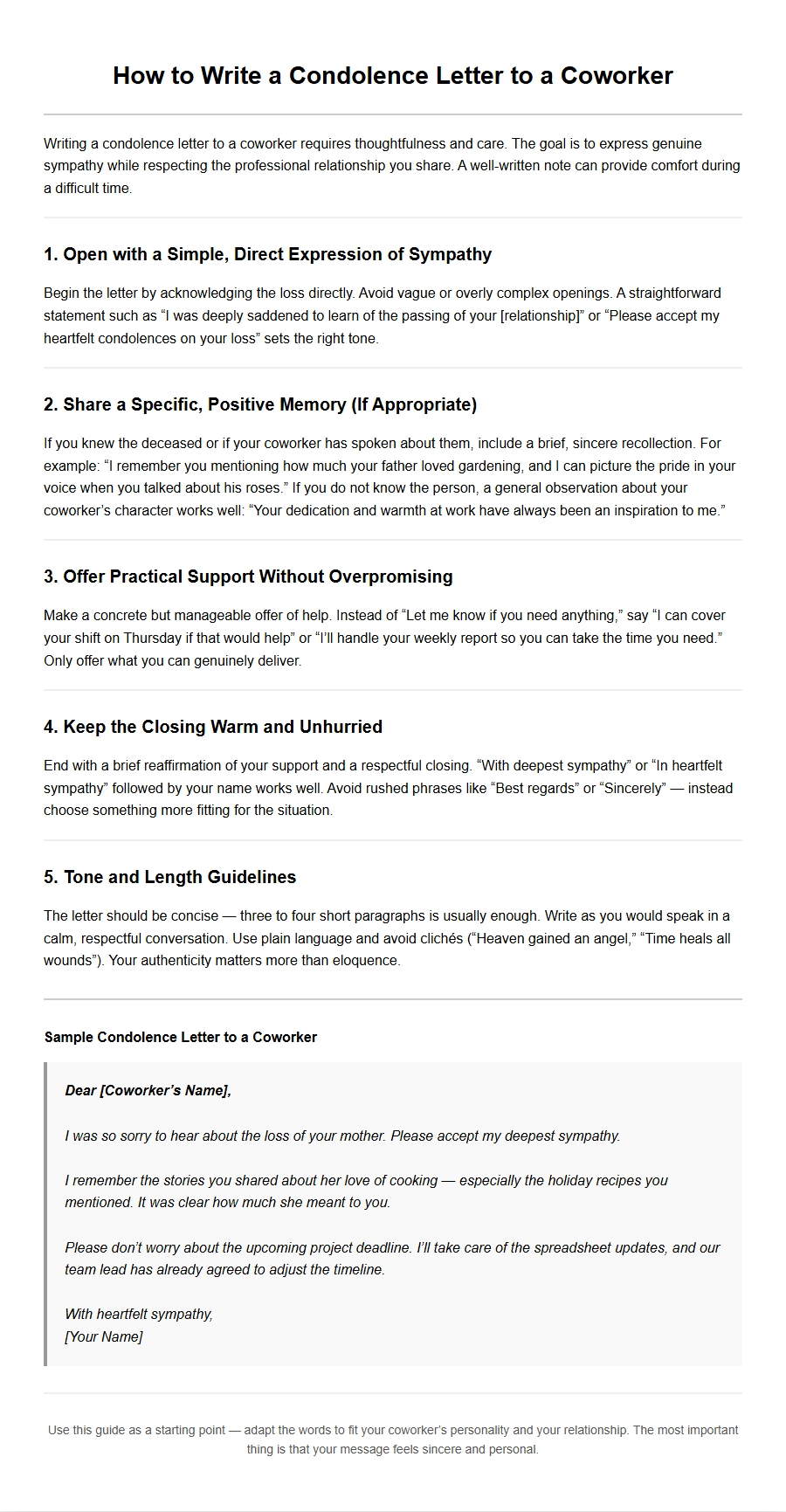
First, consider your audience. A condolence phrase for unexpected accident death for a close friend will be more personal than one for a business associate. For a friend, you might add a specific memory: "I keep thinking about the time [name] and I laughed until we cried over that camping trip. That's how I'll remember [him/her]." For a coworker or client, keep it respectful but human: "I'm so sorry for your loss. [Name] was a kind and dedicated person, and this is a terrible shock."
Don't be afraid to say you don't know what to say. That honesty is often more comforting than a polished but empty line. One of the most effective cover letter examples—wait, wrong context. But the principle holds: authenticity beats perfection. So if you're stuck, write: "I wish I had the right words. Please know I'm holding you in my thoughts."
Also be mindful of tone in writing. An accidental death doesn't call for flowery language. Short, direct sentences can convey sincerity better than long, complicated ones. And if you're sending digital messages, use proper digital letter format: a clear subject line like "Thinking of you" and a respectful sign-off.
Mistakes to avoid
One common error is using outdated salutation and closing formulas that sound stiff. "To whom it may concern" is too impersonal for condolence. Instead, always use the recipient's name if you know it. Another mistake: ignoring the medium. A printed note on nice paper feels different from an email. If you're emailing, keep it concise but still warm. Don't rely on emojis or overly casual language.
Also, avoid trying to explain the accident or assign blame. Phrases like "at least they didn't suffer" can feel dismissive. Stick to empathy and support. If you're writing a resignation letter sample—no, that's not relevant here. But the same principle of clarity applies: don't ramble. A condolence note that's too long can overwhelm. Two or three heartfelt paragraphs are plenty.
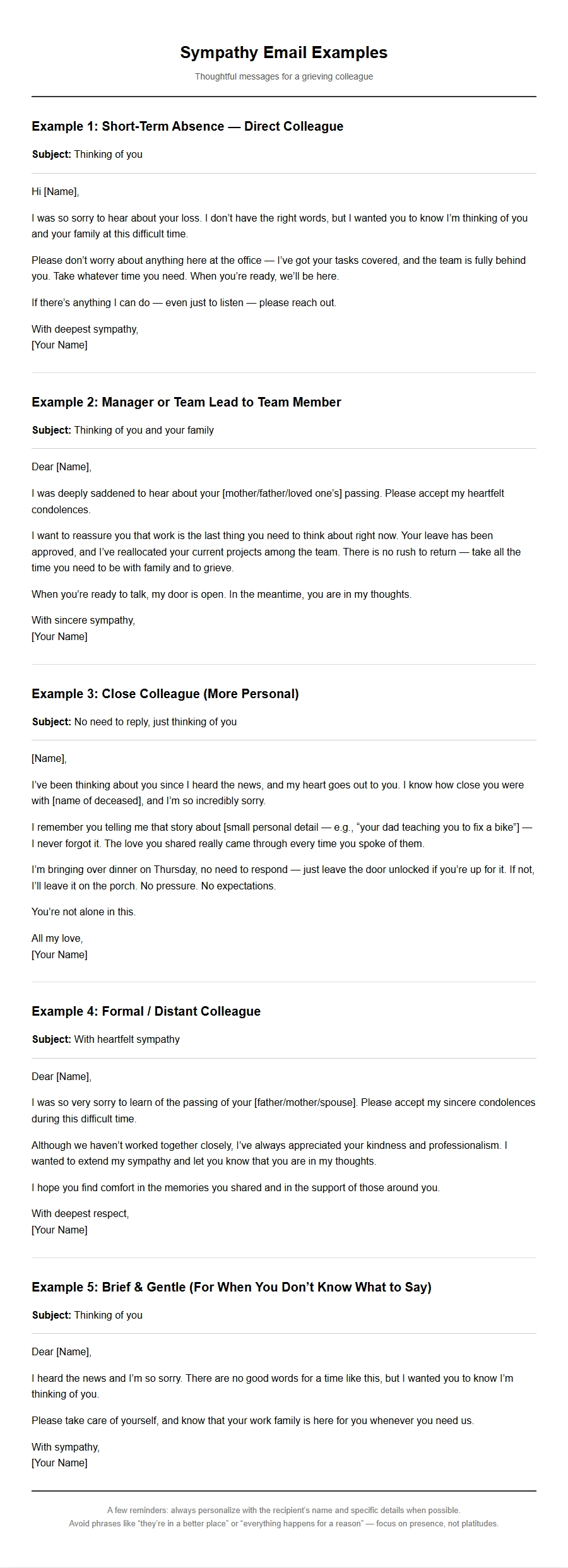
Imagine you're writing to a colleague after their spouse died in a car accident. You might write:
"Dear [Name], I was so shocked and saddened to hear about [spouse's name]'s sudden death. I can't imagine what you're going through. Please know that you and your family are in my thoughts. If there's anything I can do—even just to sit with you—I'm here. With deepest sympathy, [Your Name]."
The best condolence messages feel both professional and personal. A sample phrase gives you a foundation, but your own voice—your genuine care—makes it land. Practice helps; you'll get faster and more comfortable each time. So take a deep breath, pick a letter template that fits, and write from the heart. You'll manage more than you think.
Letter to a Friend Who Lost a Spouse in a Car Crash
Dearest Sarah,
I was shattered to hear about Mark’s sudden passing in the accident. There are no words that can ease the pain of losing your partner so abruptly. Please know that I am holding you in my thoughts and wrapping you with love from afar.
I remember how Mark would always laugh at my terrible jokes and how he supported your every dream. His energy filled every room. If you ever need someone to sit with in silence, to bring you a meal, or to help with the endless arrangements, I am just a phone call away. You are not alone in this.
With deepest sympathy,
Emily
Condolence to a Colleague After a Workplace Accident
Dear Michael,
The entire team was devastated to learn about the tragic accident that claimed your brother David’s life. He was a dedicated and kind soul, and his absence is deeply felt here at work. Please accept our heartfelt condolences.
We understand that this is an incredibly difficult time. To support you, we have arranged the following:
Two weeks of paid bereavement leave, with flexibility to extend.
A meal train organized by your colleagues—details will be shared shortly.
A memorial fund in David’s name at the company’s donation site.
Please do not hesitate to reach out if you need anything. We are thinking of you and your family.
With sincere sympathy,
Your HR Team
Short Sympathy Card Note for a Sudden Accident
Dear Thompson Family,
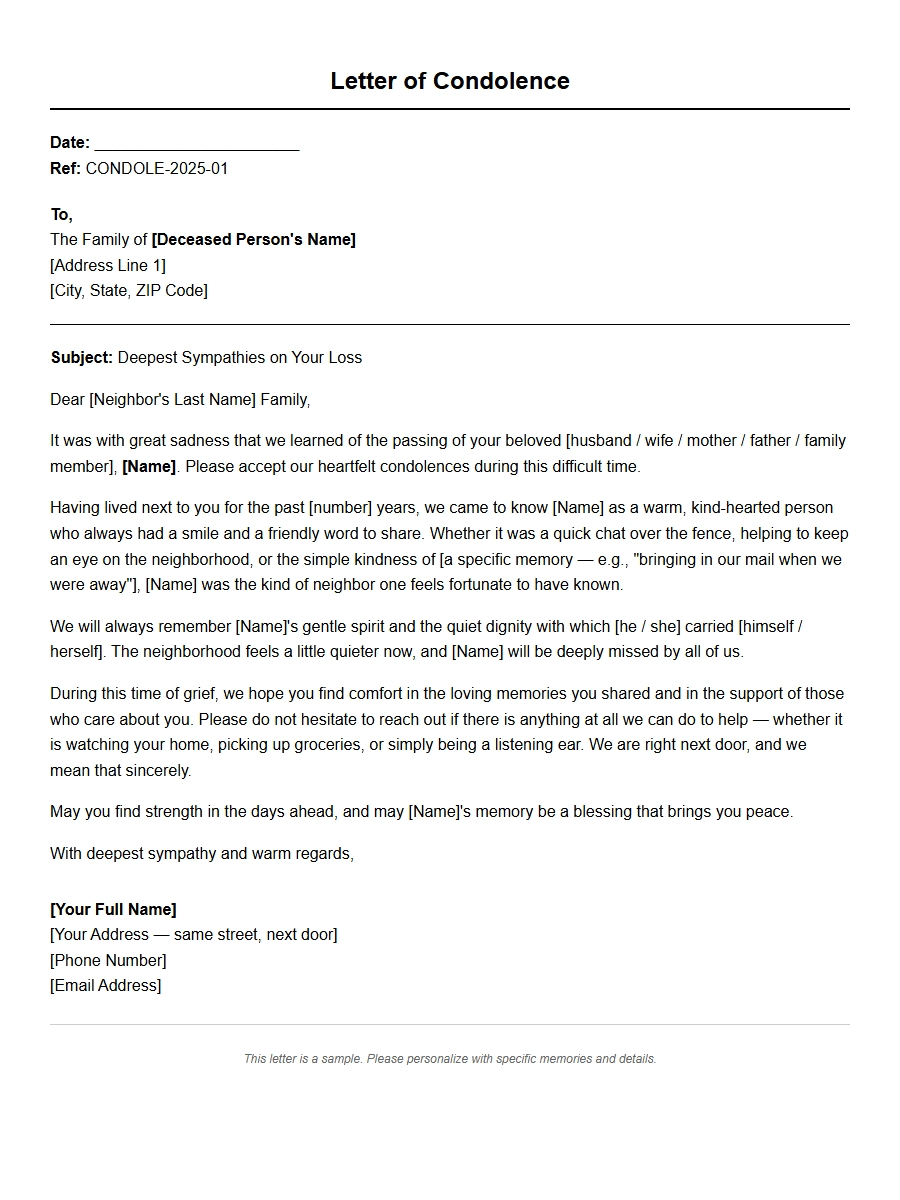
Words cannot express the shock and sorrow we feel after learning of Jane’s sudden passing in the accident. She brought so much light into our neighborhood with her warm smile and generous heart.
We are praying for strength and peace for you all. May the cherished memories of her laughter and kindness bring you comfort in the days ahead.
With love and deepest sympathy,
Your neighbors, The Garcias
Letter from Employer to Employee’s Family After a Fatal Accident
Dear Mrs. Anderson,
On behalf of the management and staff at TechCorp, I extend our deepest condolences on the tragic loss of your husband, James. He was a respected and valued team member for over a decade, and his sudden death has left us all in profound grief.
We are committed to supporting you during this time. Below are the benefits and assistance we are providing:
Item
Details
Life insurance payout
$250,000 – payable within 14 days
Bereavement leave for family
10 paid days for immediate relatives
Counseling services
Free for 12 months via Employee Assistance Program
Please contact the HR director at (555) 123-4567 for any assistance. You are in our thoughts.
With heartfelt sympathy,
Rebecca Chen, CEO
Letter to a Parent Who Lost a Child in an Accident
Dear David and Maria,
I am writing with a heavy heart after hearing about the tragic accident that took your precious daughter, Lily. No parent should ever have to endure such an unimaginable loss. I am so deeply sorry.
Lily was a bright, curious child who touched everyone she met. I remember her laughter during our neighborhood picnics and her fascination with butterflies. Those memories are a testament to the wonderful upbringing you gave her.
Please know that I am here for you—whether you need a shoulder to cry on, help with meals, or simply someone to sit with in silence. You are not alone in this sorrow.
With all my love,
Your friend, Patricia
Email Condolence for a Neighbor’s Sudden Accident
Subject: Thinking of you after the accident
Dear Mrs. Rivera,
I was heartbroken to hear about your husband Carlos’s sudden passing in the accident. He was such a kind and helpful neighbor, always ready to lend a hand or share a friendly wave. Our street will not be the same without him.
Please let us know if you need anything at all—we can help with grocery runs, childcare, or just be there to listen. You are in our thoughts and prayers.
With deepest sympathy,
Tom and Lisa, your neighbors at 42 Elm Street
Formal Letter from a Community Organization
Dear Family of the Late Robert Kim,
The Board of Directors of the Sunnydale Community Center extends our sincerest condolences on the sudden and tragic passing of Robert. He was an active volunteer and a beloved member of our community, always giving his time to help others.
In honor of his memory, we will be holding a moment of silence at our next meeting on March 15th. Additionally, we are establishing a small memorial plaque in the main hall.
We also wish to share a list of community support resources available to you:
Grief counseling through the Hope Center – call (555) 987-6543
Meal assistance from the local food bank – deliveries available weekly
Transportation assistance for appointments – contact us for details
Please accept our deepest sympathies. You are in our hearts.
Warmly,
Patricia Ng, Chairperson
Sympathy Letter with Meal and Help Schedule Table
Dear Chan Family,
Words cannot express how sorry we are for your sudden loss of Eric. He was a dear friend and an incredible father. To help lighten your load, we have organized a support schedule for the next two weeks. Please feel free to add or adjust as needed.
Date
Meal / Help
Volunteer
March 12
Dinner (lasagna & salad)
Jenny (555-1111)
March 13
Grocery run (10 am)
Mike (555-2222)
March 14
Childcare (3–6 pm)
Lisa (555-3333)
March 15
House cleaning (2 pm)
David (555-4444)
We are all thinking of you and your children. You don’t have to face this alone.
With love,
Your friends from the book club
Letter Recalling Shared Memories After a Boating Accident
Dear Chloe,
I was devastated to learn about your cousin Nathan’s sudden death in the boating accident. He was a vibrant soul who always brought adventure and laughter into our lives. I will never forget the summer days we spent fishing at the lake, or the way he could tell a joke that made everyone double over.
Here are a few moments we shared that I hold dear:
His silly impersonations during our campfires
The time he taught me how to paddle a canoe without capsizing
His endless optimism even when the weather turned stormy
May these memories bring you comfort. I am here for you, always.
With deepest sympathy,
Maya
Brief Condolence for a Friend After a Sudden Accident
Dear Tom,
I just heard the awful news about your accident loss. I am so, so sorry. I can’t imagine the pain you’re going through right now. Please know that I am thinking of you and your family.
If you need someone to talk to, or even just a quiet presence, I am here. Take all the time you need. Sending you strength and peace.
 Formal Condolence Message for a Business Partner
 Sympathy Letter Examples for a Friend Who Lost a Parent
 How to Write a Condolence Letter to a Coworker
 Condolence Letter Sample for a Neighbor
 Sympathy Email Examples for a Grieving Colleague
 Condolence Words for a Teacher