You've been asked to write a eulogy, and the weight of it sits right in your chest. It's not just a speech. It's the last story you get to tell about someone you cared about. And staring at a blank screen, trying to find the right words for that, can feel impossible. That's where a thoughtful eulogy letter sample helps. It's not a shortcut. It's a scaffold. It gives you a structure so you can stop worrying about where to start and start focusing on what actually matters: who they were and what they meant to you.
Using a sample doesn't mean you're being lazy or impersonal. The best letter templates for eulogies do one critical thing: they solve the problem of form. Where does the introduction go? How do you move from a funny story to a sincere moment without it feeling jarring? A sample shows you the letter structure that has worked for others, so you can pour your real memories into a container that already makes sense. That frees you up to feel the words, not just arrange them.
When you choose a sample, match it to the relationship. A eulogy for a parent will sound different than one for a close friend. The tone in writing needs to reflect your actual bond. If you were the one who always cracked jokes with them, don't suddenly write a stiff, formal piece. But also don't force humor if it doesn't feel true. A good sample will show you how to blend warmth with dignity. For a close friend, you might look at this personal touch sympathy letter to see how intimate language can still feel respectful.
Category: Condolence Letters
Let's talk about adapting a sample without losing your voice. Start by reading it once all the way through. Don't write anything yet. Just let the rhythm of it sink in. Then, when you go back, swap out the generic details first. Change "she always made time for others" into a specific memory, like "I still think about the Tuesday night she drove an hour just to bring me soup." That's the personalization that makes a template feel like you. Pay special attention to the salutation and closing. "Dear friends and family" works, but "To everyone who loved my uncle" feels warmer. The ending matters even more. Don't just sign off with "Sincerely." End with a line that echoes their spirit, like "We'll keep telling your stories."
One mistake people make is trying to cram in every good quality the person had. You don't need to list everything. Pick two or three clear traits and illustrate them with brief stories. That's more powerful than a long list of adjectives. Also, if you're sending the letter by email instead of reading it aloud, remember digital letter format matters. Keep paragraphs short. Use a clean font. If you're printing it and reading from paper, consider subtle letterhead design maybe just their name and dates at the top so it feels like a keepsake.
If you're writing for a more distant relative, you might want something less intimate but still kind. Take a look at this condolence letter for a distant relative to see how to balance respect with distance. Or maybe the death was sudden and unexpected, and you're struggling to find the right tone for shock. In that case, this phrase for unexpected accident death can help guide you through the raw edges of grief.
Don't worry about perfection. Your first draft is allowed to be messy. Write the hard parts. Cry into the keyboard if you need to. Then step away for a few hours. When you come back to proofreading letter, read it out loud. Your ear will catch what your eyes miss: awkward sentences, places where the rhythm stumbles, spots where a sentence feels too stiff. Trust your voice. The people listening don't need a professional speech. They need to hear you remembering someone they also loved. That's the only thing a sample can't give you. But it can give you the confidence to say it.
For those who might share a shorter message on social media, or who want to acknowledge the loss online alongside the letter, this sample condolence text for social media can offer a lighter touch without losing sincerity.
And if the family has asked for help with medical bills or support, this guide on asking for medical bills support shows how to request help without making people feel awkward about giving.
Think of the eulogy letter sample as training wheels, not a cage. Once you've used it to find your balance, you'll know when to let go and ride on your own. The first time is the hardest. The next time, you'll already have a voice that knows how to speak from the heart without forgetting the structure. And that's a skill you'll carry with you, every time you're asked to honor someone's life with your words.
Samples to Guide You
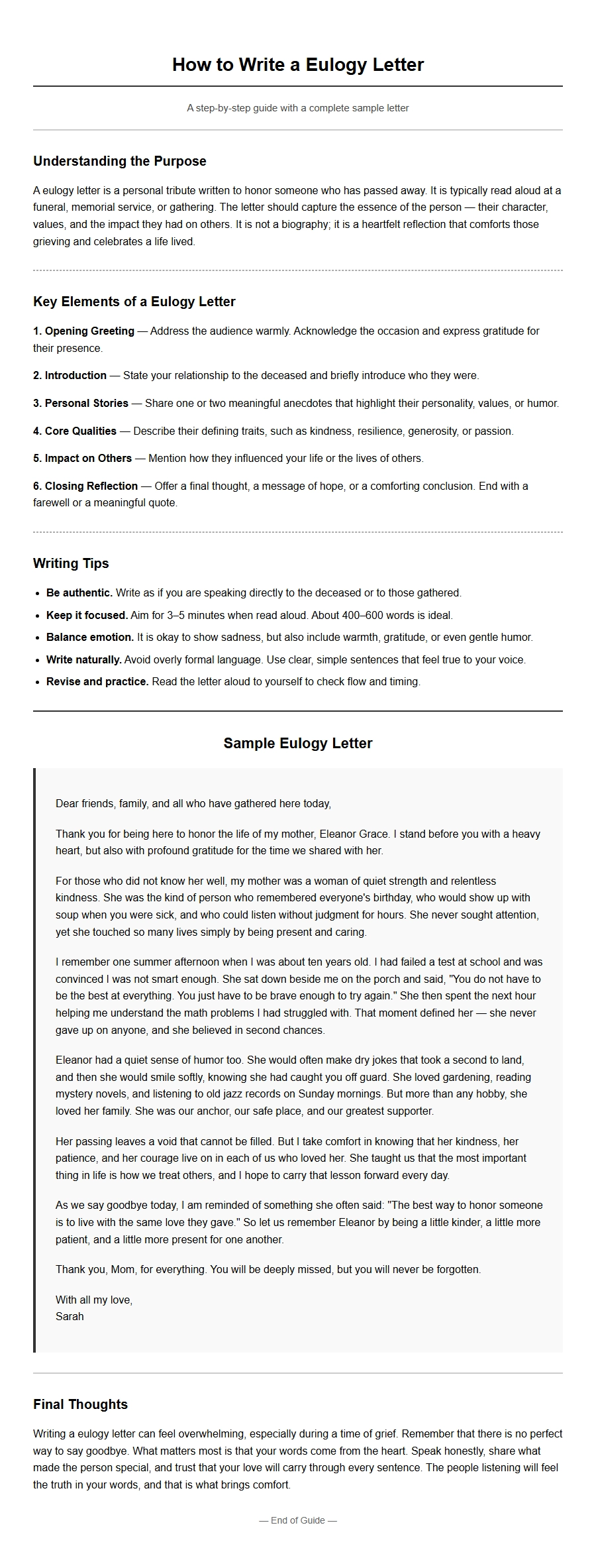
How to Write a Eulogy Letter (with Sample)
Basic Eulogy Letter Structure
A eulogy letter typically follows a clear structure to honor the deceased and offer comfort. Use this template as a guide:
Section
Purpose
Opening
Greeting and expression of gratitude for attendees.
Introduction
State your relationship to the deceased and the purpose of the letter.
Body Paragraphs
Share memories, qualities, and impact of the person. Use specific anecdotes.
Conclusion
Offer final words of farewell, hope, or inspiration.
Closing
Sign off with a heartfelt message, such as "With love and remembrance."
Keep the tone warm and respectful. Aim for 3–5 paragraphs, speaking from the heart. Practice reading aloud to ensure natural flow.
Remember: a eulogy letter is a personal tribute, not a formal obituary. Focus on the person’s character and the legacy they leave behind.
Eulogy Letter for a Spouse
Writing a eulogy for a spouse is deeply personal. Here is a sample to help you express love and loss:
Dear family and friends,
Thank you for being here to celebrate the life of my beloved [Name]. We shared [number] years together, and every moment was a gift. [Name] had a way of lighting up a room with their laughter and kindness. I will always cherish our morning coffee chats and the way they held my hand during hard times.
One memory stands out: the time we got lost on a road trip and ended up finding the most beautiful sunset. [Name] said, "Sometimes getting lost leads to the best discoveries." That was their outlook on life—embracing every twist with grace.
Though my heart aches, I find comfort in knowing [Name] is at peace. I will carry their love with me every day. Thank you all for your support.
With eternal love, [Your Name]
Eulogy Letter for a Parent
A eulogy letter for a parent honors their role and lessons. Example:
To everyone gathered here,
I stand before you as a child forever grateful for [Mother/Father]’s guidance. They taught me integrity, patience, and the importance of family. Even in their final days, they showed strength and humor—like when they insisted on wearing mismatched socks to brighten the nurses’ day.
I could fill pages with their wisdom. A simple table of values they instilled:
Value
Example
Kindness
Volunteered at the shelter every weekend.
Resilience
Overcame illness with a smile.
Curiosity
Learned to play guitar at age 70.
I will miss their voice, their hugs, and their unwavering belief in me. Thank you for being part of their beautiful story. May we carry their love forward.
With deepest love, [Your Name]
Eulogy Letter for a Close Friend
Honoring a dear friend requires warmth and authenticity. Sample:
Hello everyone,
I’m so grateful to share this tribute to my best friend, [Name]. We met in college and instantly clicked—bonding over terrible puns and late-night pizza. [Name] was the person you could call at 3 a.m. for anything, from a broken heart to a flat tire.
One of my favorite memories is when we decided to build a treehouse as adults. It was a disaster—crooked nails and all—but we laughed until we cried. That was [Name]: finding joy in imperfection.
They taught me the value of true friendship: listening without judgment, showing up, and always bringing snacks. I will hold these lessons close. Let’s honor [Name] by being that kind of friend to others.
You are missed beyond words, my friend. Rest easy.
Forever your friend, [Your Name]
Eulogy Letter for a Colleague
A professional yet heartfelt eulogy letter for a coworker. Example:
Dear team, friends, and family,
I am honored to speak about [Name], a remarkable colleague and friend. I worked alongside [Name] for [number] years at [Company]. They were more than a coworker—they were a mentor, a source of calm during deadlines, and the person who always remembered everyone’s birthday.
Their contributions to our projects were invaluable. A few highlights of their professional legacy:
Led the initiative that saved the department 20% in costs.
Mentored five junior staff members who credit [Name] for their growth.
Organized the annual charity drive for a decade.
But beyond achievements, [Name] brought humanity to the office. They listened, encouraged, and celebrated our wins. Their absence leaves a void that cannot be filled. Let us continue their spirit of collaboration and kindness.
Rest well, dear colleague.
With gratitude, [Your Name]
Eulogy Letter Opening Lines
Opening a eulogy letter can be daunting. Here are several effective opening lines to choose from, each with a different tone:
Tone
Sample Opening Line
Warm
"Thank you all for coming to celebrate the life of [Name], who filled our days with love and laughter."
Grateful
"I stand here today with a heart full of gratitude for having known [Name]."
Direct
"[Name] was many things: a parent, a friend, a teacher. Most of all, they were a beacon of hope."
Poetic
"Like a gentle breeze that lingers, [Name]’s memory will forever touch our lives."
Humorous
"[Name] would probably tell me to keep this short—so they could get the last laugh. And I’ll try."
Choose an opening that reflects your relationship and personality. It sets the tone for the entire eulogy. Practice it until it feels natural, and remember that sincerity matters more than perfection.
Eulogy Letter Closing Paragraphs
The closing of a eulogy letter should provide comfort and finality. Here are a few sample closing paragraphs that can be adapted:
Simple Farewell: "Though we say goodbye, [Name] will live on in our hearts. Rest in peace, dear [Name]."
Inspirational: "Let us honor [Name] by living with the same courage and compassion they showed us every day."
Promise of Remembrance: "I promise to keep your memory alive by sharing your stories with future generations."
Poetic: "And so we let you go, as the sun sets on your journey here. You are free, and we are forever grateful."
Personal: "I will miss your laugh, your advice, and your unwavering support. Thank you for being my [relationship]."
After the closing paragraph, sign off with a phrase like "With all my love," "Forever in my heart," or "Yours in remembrance." Then include your name. Keep the closing brief and sincere—it’s the last impression you leave.
Eulogy Letter with Personal Anecdote
Including a vivid personal story makes a eulogy memorable. Example based on a fishing trip:
Dear everyone,
I want to share a story that captures who [Name] really was. A few summers ago, we went fishing—a sport neither of us knew much about. We spent three hours untangling lines and caught nothing. But [Name] didn’t care. They sat back, looked at the sky, and said, "Sometimes the best catch is the peace you find in waiting."
That day taught me patience and presence. [Name] had a gift for turning ordinary moments into lessons. They approached life with that same calm, even during storms. I will forever carry that lesson, and I hope you will too.
Thank you for the memories, [Name]. You will be deeply missed.
With love, [Your Name]
This structure can be adapted for any cherished memory—a shared meal, a road trip, or a quiet conversation. The key is to show, not tell, their character through the story.
Eulogy Letter for a Grandparent
A eulogy letter for a grandparent often reflects generational wisdom and love. Sample:
To family and friends,
My [Grandfather/Grandmother], [Name], was the anchor of our family. They taught me to bake cookies, garden, and appreciate the simple joys—like watching birds or reading a worn-out novel. Their home always smelled like cinnamon and warmth.
They had a saying for every occasion. A few of their favorite proverbs:
"The best things in life aren’t things."
"Patience is not the ability to wait, but the ability to keep a good attitude while waiting."
"Family isn’t just blood; it’s who you love and who loves you back."
I will miss our long phone calls and the way they always ended with "I love you more." They left a legacy of kindness and resilience. Let’s honor them by being patient, generous, and present—just as they were.
Rest in peace, dear grandparent. You are loved eternally.
With gratitude, [Your Name]
Eulogy Letter for a Sibling
Saying goodbye to a sibling is heartbreaking. Here is a sample that balances love and remembrance:
Dear everyone,
My [brother/sister], [Name], was my first friend and my forever confidant. We grew up sharing a room, secrets, and dreams. Even when we fought over the remote, we always made up with a shared bowl of ice cream.
One memory that makes me smile: the summer we tried to build a go-kart from scrap wood. It was a wobbly failure, but we spent days laughing and learning. [Name] never let failure discourage them—they saw it as an adventure. That adventurous spirit defined them.
They were brave, loyal, and fiercely protective. I will carry their voice in my heart, reminding me to take risks and cherish every moment. Thank you for being part of their beautiful life. Let’s hold each other close, as [Name] would have wanted.
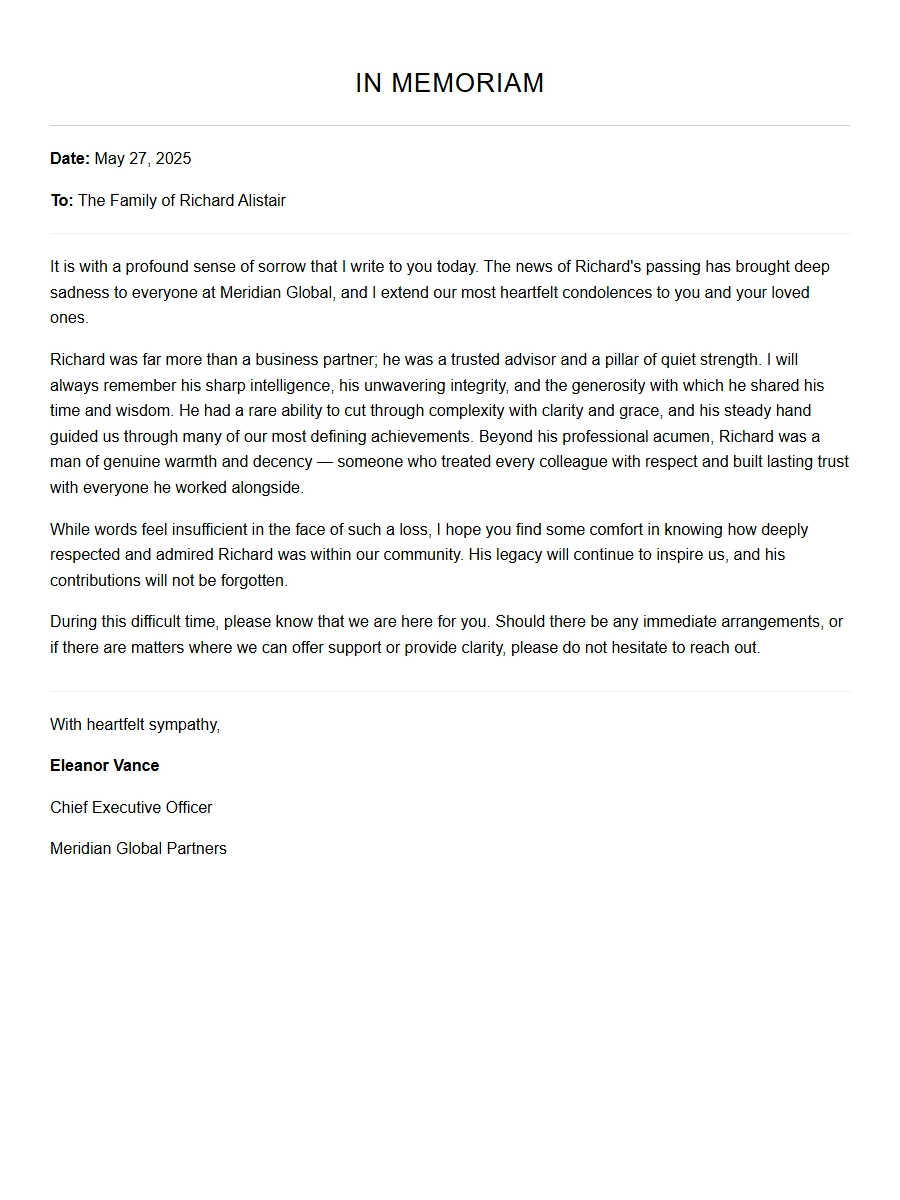 Formal Condolence Message for a Business Partner
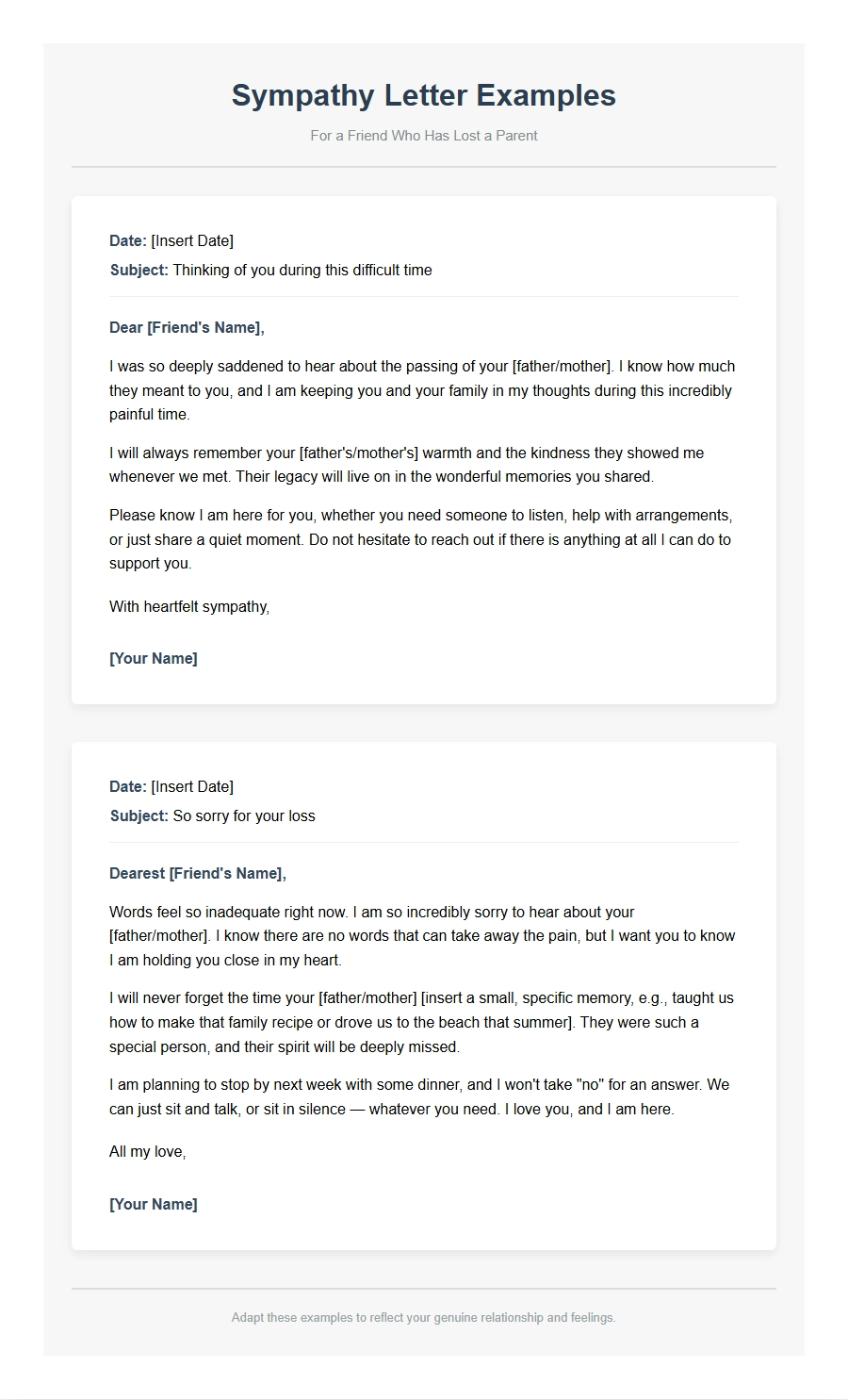 Sympathy Letter Examples for a Friend Who Lost a Parent
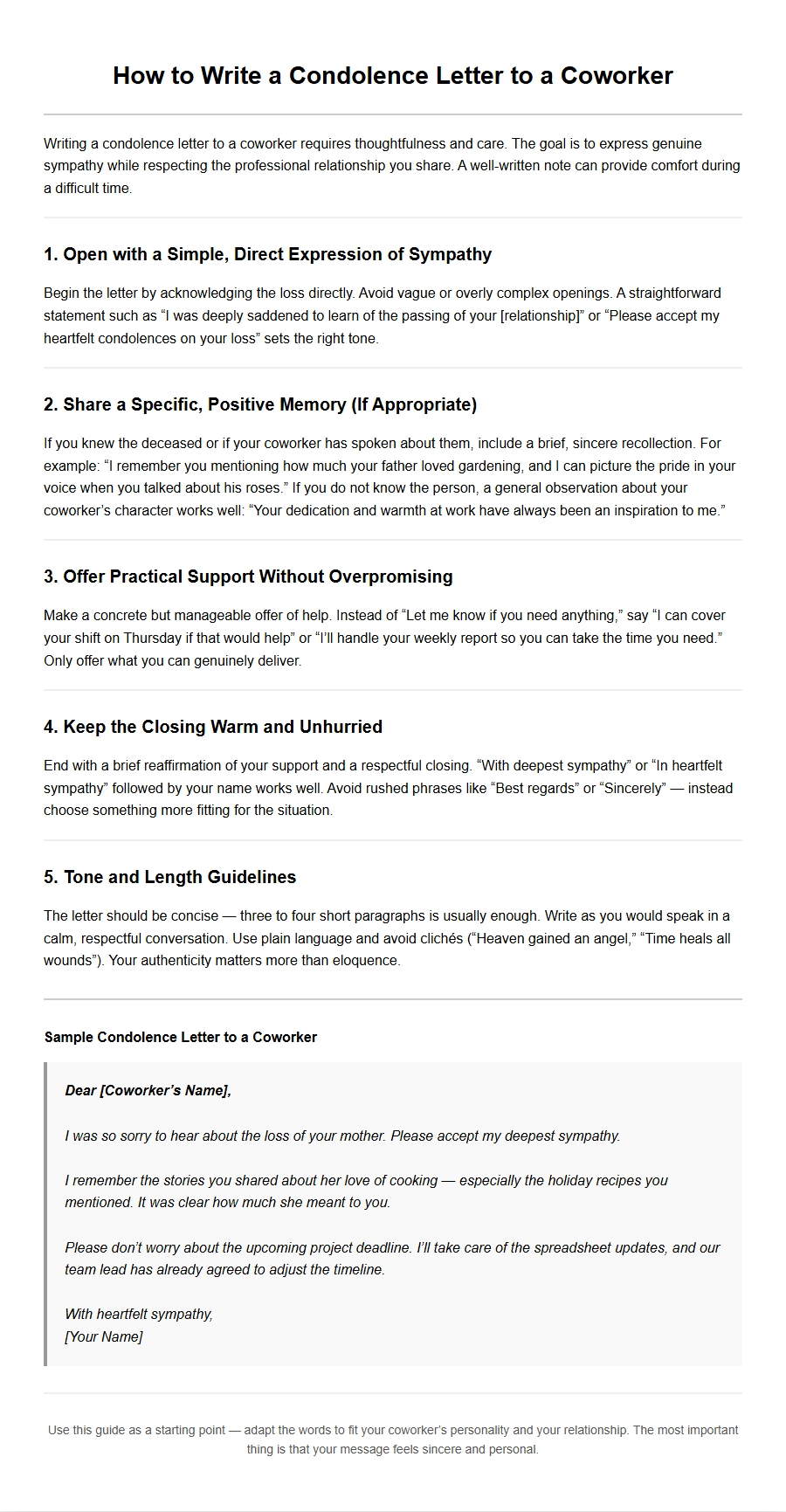 How to Write a Condolence Letter to a Coworker
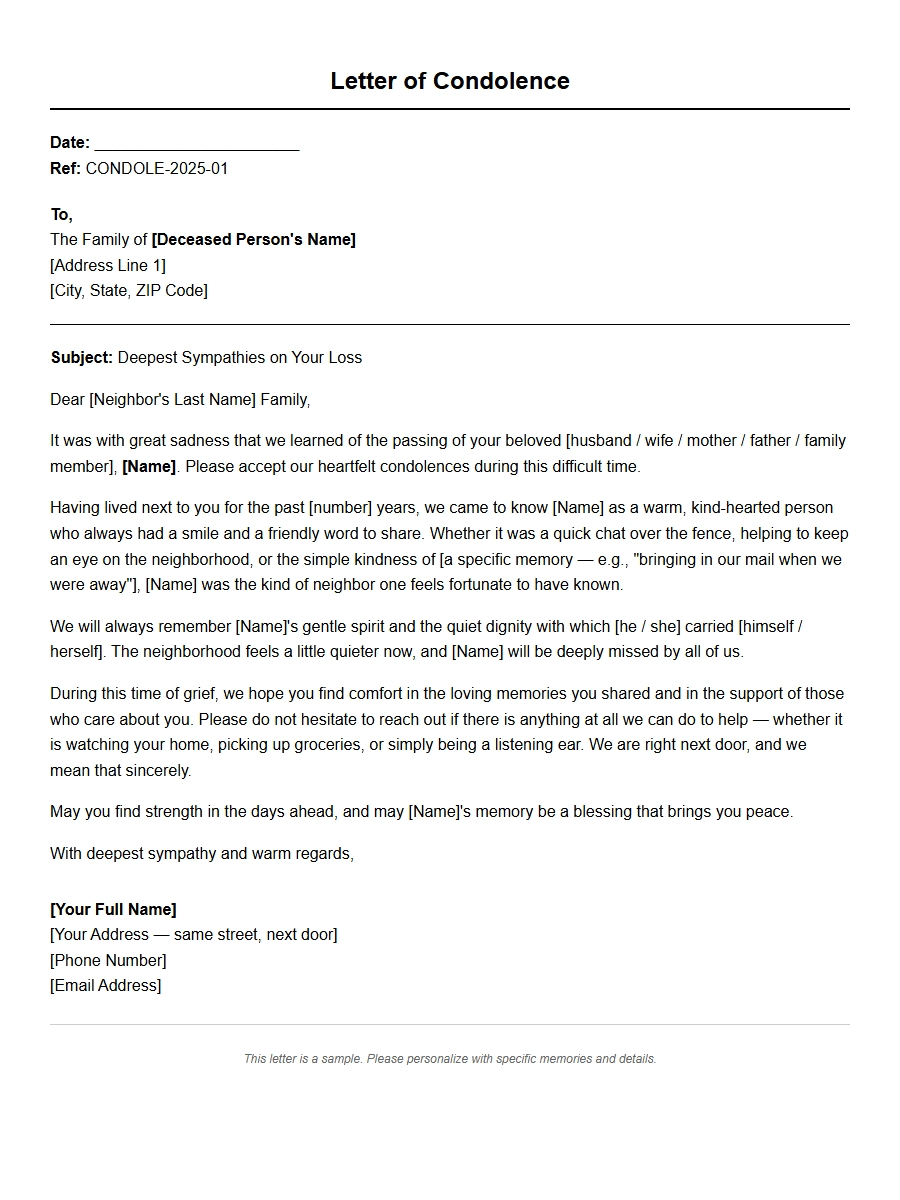 Condolence Letter Sample for a Neighbor
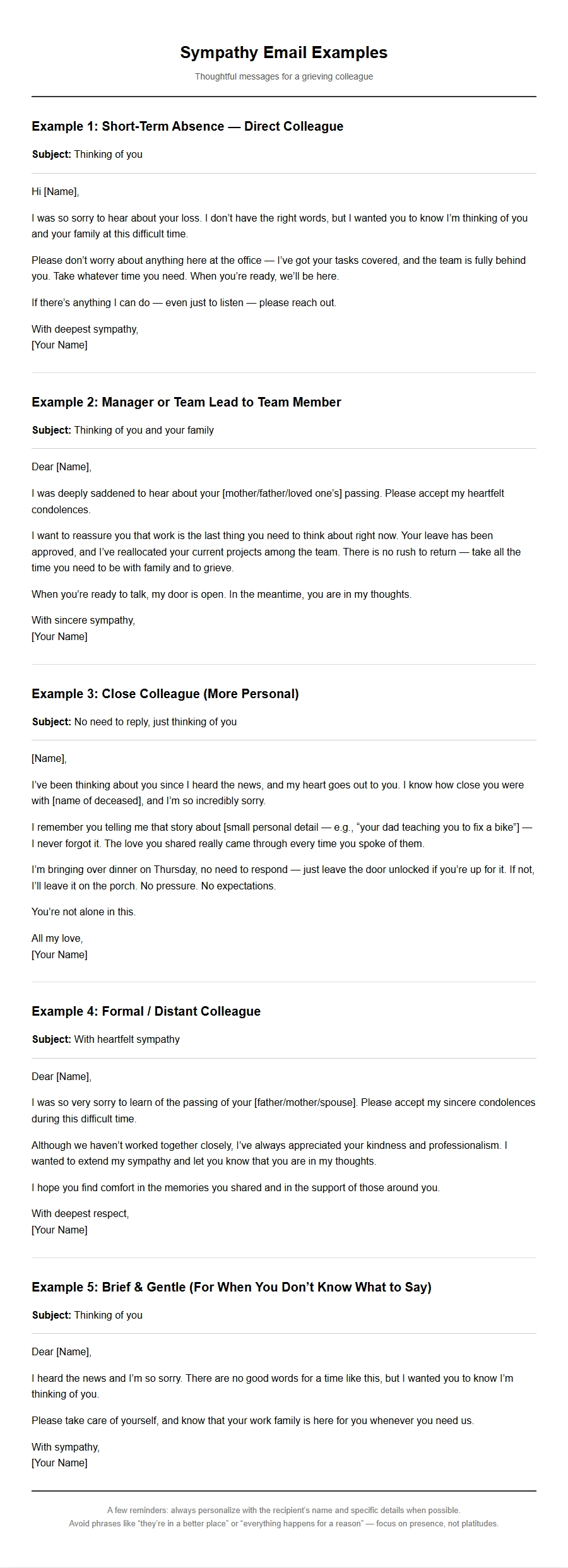 Sympathy Email Examples for a Grieving Colleague
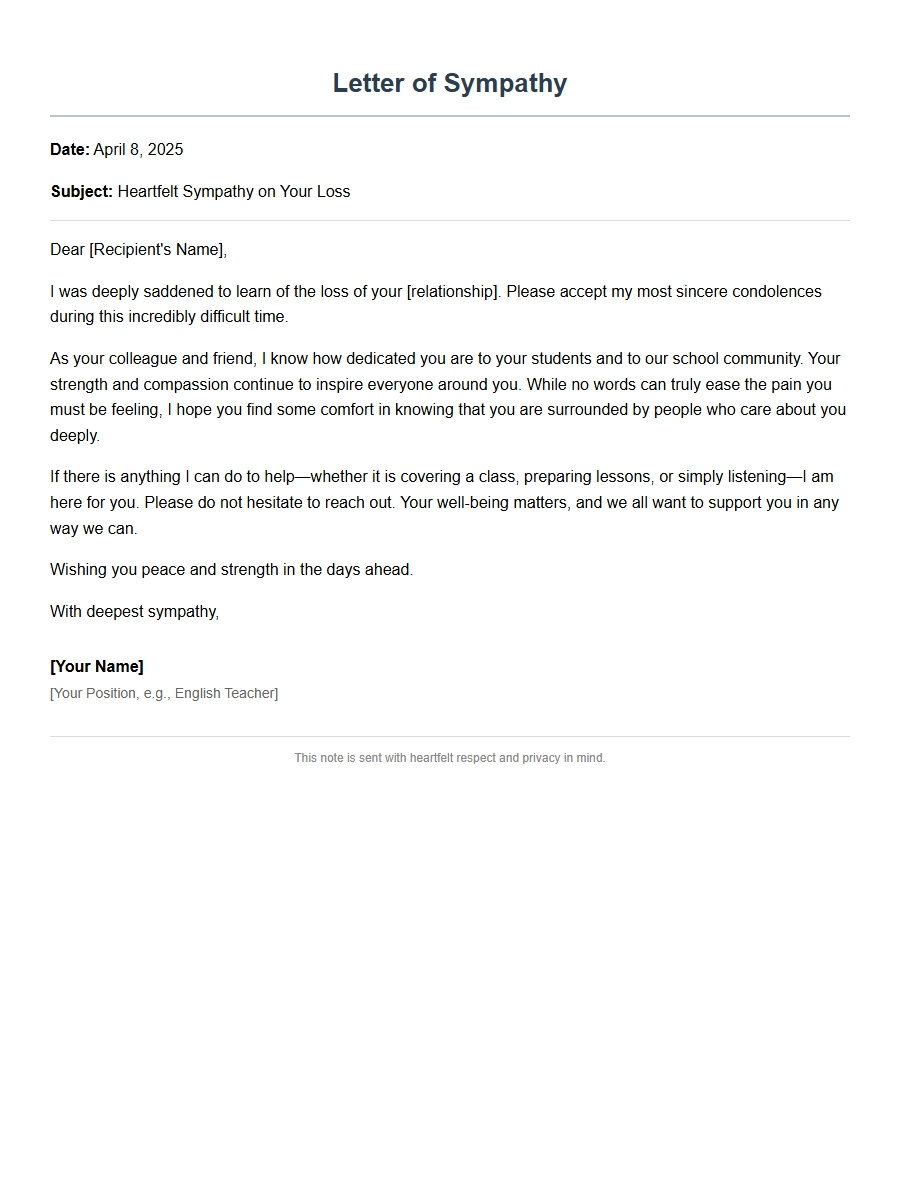 Condolence Words for a Teacher