You've just learned that your friend's loved one has passed away, and your friend is thousands of miles away in another country. Sending a condolence message from a distance feels different. You can't show up at their door. You can't hug them. All you have is words. That pressure to get it right can freeze you up completely.
The good news is that a carefully written message can reach across any distance. It's not about finding some perfect, magical phrase. It's about showing up in a way that feels real and helpful to someone who is grieving while navigating life abroad.
Let's talk about what actually works in this specific situation.
Why this is different from a standard condolence message
When your friend is traveling abroad, they're dealing with grief on top of displacement. They might be in a country where they don't speak the language fluently. They could be struggling with time zone differences that make it hard to call home. They may feel isolated or guilty for not being there in person. Your message needs to acknowledge that extra layer of difficulty without making it about you.
Start by naming the situation simply. Something like, "I'm so sorry about your grandmother. I know being so far away makes this even harder." That one sentence tells your friend you understand their specific pain. It's not generic. It's personal and immediate.
Category: Condolence messages
How to structure your condolence message for a friend abroad
A good structure gives you a framework so you don't have to invent everything from scratch. Think of it as a letter template you can adapt, not a script you have to follow word for word.
Start with a direct expression of sympathy. "I was so sad to hear about your uncle's passing." Keep it straightforward. Then acknowledge the distance. "I can't imagine how difficult this must be while you're so far from home." This shows empathy without assuming you know exactly how they feel.
Next, offer a specific memory or quality about the person who died. "I'll always remember how your uncle laughed at the family cookouts." Specific details matter more than vague compliments. Then close with a practical offer of support that works long-distance. "I'd love to call you next week when you have time. No pressure to respond now. I'm thinking of you."
What to avoid when writing to a friend abroad
Most people make the same few mistakes. The biggest one is giving advice. Don't say things like, "At least they're in a better place" or "You should focus on the good memories." Grief doesn't work that way. Your job is to sit beside them in the pain, not to fix it.
Another common slip is making the message about your own feelings. "I'm so upset about this" shifts the focus to you. Keep the spotlight on your friend and the person they lost.
Also avoid clichés about distance. "Distance means so little when someone means so much" sounds like a greeting card. Your friend doesn't need platitudes. They need you to say, "I know this is hard from far away. I'm here however I can help."
Practical tips for sending the message
Consider how your friend will receive the message. If they're in a different time zone, a text or email might be better than a call they can't answer. A written message gives them space to process it in their own time. They can read it when they're ready.
You might also send something that arrives physically. A card or a small care package sent to their address abroad can feel surprisingly powerful. It's tangible. It shows you took time and effort. Just be mindful of shipping times and customs.
If you're writing an email, keep the format clean. Use a standard business letter format only if it fits your relationship. For most friends, a warm, natural tone works better. Use a simple salutation and closing like "Dear [Name]" and "With love" or "Thinking of you."
If you're unsure how formal to be, match the tone in writing to your normal friendship. A friend you joke with can handle a slightly more casual message. A more reserved friend might appreciate something quieter. Trust your knowledge of them.
What to do after you send the message
Don't expect a response. Grief is exhausting, and your friend may not have the energy to reply. That doesn't mean your message wasn't appreciated. Follow up gently after a week or two. Send a simple text. "Just checking in. No need to reply. Hope you're doing okay today."
The best condolence messages don't try to be perfect. They try to be present. Your friend doesn't need a poet. They need someone who sees them, acknowledges their loss, and stays nearby even from across the world.
Write the message. Send it. Then keep showing up. That consistency over weeks and months is what your friend will remember long after the distance between you has closed.
Browse Sample Ideas
Condolence Messages for a Friend Traveling Abroad
Condolence for Traveling Friend
Dear Alex,
I was deeply saddened to hear about the loss of your grandmother. I know how close you were to her, and it must be especially difficult to receive such news while you are abroad in Japan. I wish I could be there beside you, but please know that my heart is with you across the miles.
Below are a few thoughts I hope might offer you some comfort during this hard time:
Remember that grief has no timetable — allow yourself to feel whatever comes.
Keep her memory alive by sharing stories with us when you return.
If you need to talk at any hour, I am just a video call away.
I have arranged a small care package to be delivered to your hotel tomorrow: some tea, a journal, and a soft blanket. Take care of yourself, even when it feels impossible. Grief is a journey, and you don’t have to walk it alone.
With deepest sympathy, Your friend always, Jordan
Message of Support While Overseas
My dear Sam,
Learning that your father passed away while you are in London for work must be overwhelming. I cannot imagine the weight you are carrying. Please allow me to offer my sincere condolences and a few practical suggestions that might ease the burden during your stay.
Date
Action
Contact Person
Today
Notify your company about bereavement leave
HR Manager (I can help draft the email)
Tomorrow (10 a.m. local time)
Video call with your siblings to plan arrangements
Anna (your sister)
Next 3 days
Secure an earlier flight home if needed
Travel agency
Do not hesitate to ask me to handle any logistics from here — I have already contacted the airline about flexible rebooking because of your situation. You are stronger than you know. Lean on me. Lean on your community. We will get through this together, even from opposite sides of the Atlantic.
With love and solidarity, Morgan
Short Condolence Note for Traveler
Hello Jamie,
I just heard about your uncle’s passing. I am so sorry. I know you’re studying abroad in Paris right now, and that distance makes everything feel surreal. I wanted you to have a few words to hold onto.
Please remember:
You are allowed to grieve even while you are far from home.
Your family understands you would be there if you could.
Whenever you need a break from the noise of the city, I can be a quiet ear.
I have also put together a small list of resources you might find helpful there:
Local bereavement support group (online) – link shared in your email
Your embassy can assist with emergency travel documents if you decide to return early.
Take things one moment at a time. Sending you a huge hug across the channel.
With care, Taylor
Condolence with Practical Travel Tips
Dear Casey,
When I learned that your cousin passed away while you were on a business trip in Dubai, my heart ached for you. Balancing sorrow with the demands of travel is so hard. Here is a simple guide I made to help you manage the next steps while abroad.
Step
Task
Notes
1
Contact your travel insurance
Some policies cover bereavement trip interruption.
2
Inform your hotel of the situation
They may offer late checkout or a quiet room.
3
Arange a video call with family for funeral plans
I can set up a group call if needed.
4
Take care of yourself — eat, rest, hydrate
You cannot pour from an empty cup.
I am praying for peace that transcends distance. You carry your cousin’s love with you wherever you go. If you need someone to book flights or contact the consulate, I am here for you. Never hesitate to reach out.
With deepest sympathy, Riley
Letter for a Friend Studying Abroad
My dear Jordan,
I was heartbroken to hear that your grandfather passed away while you are studying in Sydney. Being so far from the family gatherings he loved must make this even harder. I want you to know that we are all thinking of you.
I have spoken with your mom, and we agreed on a few things to help you through this:
I will send you a daily text with a memory of your grandpa — to keep his spirit close.
Your mom will send you a care box with a small photo album and some comfort items.
We have set up a shared online journal where family members can write their favorite stories about him.
You do not have to respond to any of these if you are not ready. Just let the love flow in. Traveling through grief is a solitary road, but we can walk beside you from afar. Please be kind to yourself, get some rest, and know that your grandfather was so proud of you for chasing your dreams in Australia.
With all my love, Avery
Condolence for Friend on Vacation
Dear Morgan,
I can’t believe you received news of your sister’s passing while you were enjoying a holiday in Bali. Life is so unpredictable. I am sending you my deepest sympathies and a gentle reminder that it is okay to pause the vacation and feel everything.
Below is a list of contacts I have gathered for you in Bali, just in case you need immediate support:
English-speaking counselor: +62 361 123 4567
Consulate emergency line: +62 21 123 45678
Bereavement support group (online, 24/7): check your inbox for the link
I have also spoken with the hotel manager, who kindly offered to extend your stay at no extra charge if you need extra time to process. Do not worry about the logistics — I am handling communication with your family back home. You just focus on breathing. Write me whenever you want, even if it’s just a single word.
You are loved. You are not alone, even on this island far away.
Holding you in my heart, Casey
Condolence for Friend Working Abroad
Hello Riley,
It is with a heavy heart that I offer my condolences on the loss of your mother. I knew her kindness through the stories you shared. Being stationed in Seoul for work and not being able to rush home must feel unbearable. I am here for you.
Let me give you a few practical steps that might help:
Priority
Action
Assistance from me
1
Notify your manager & request emergency leave
I can help draft the email
2
Check travel options for early return
I have already contacted the airline
3
Contact the embassy for expedited documents
I can look up the forms
4
Take care of your mental health
I will send a list of counselors in Seoul
Remember, grief has no timeline and no borders. You can be strong and break down. I am keeping you in my thoughts, and I will keep checking in until you are home safe. You are not alone on this continent.
With unwavering support, Jamie
Condolence via Email While Traveling
Dear Alex,
I just received your message about your grandmother’s passing while you were in Tokyo. I am so incredibly sorry. I wish I could give you a hug in person, but let me share some practical things I’ve arranged on this end.
Please check your email for the following:
Flight rebooking options (I pre-checked change fees — waived for bereavement).
A link to a virtual grief support group in English that meets at 8 p.m. Tokyo time.
A small monetary transfer from your siblings to cover immediate expenses — no need to repay.
In the meantime, find a quiet café and take a deep breath. Your grandmother loved that you were exploring the world. She would want you to take care of yourself first. I will call you tomorrow at 9 a.m. your time just to check in. You do not have to talk if you don’t want to.
With all my love, Taylor
Sympathy Message During Business Trip
My dear Casey,
Hearing that your father passed away while you are in New York for a conference left me speechless. I am so sorry. Please allow me to help you navigate this from afar. I have already called your hotel and spoken to the front desk — they will offer a late checkout and a quiet room for reflection.
Here are a few immediate steps you can take:
Contact your company’s travel department for emergency return arrangements.
Call your brother to coordinate funeral plans — I can set up a conference call.
Take a break from the conference sessions; family comes first always.
I have also compiled a list of resources for grief support in NYC:
Service
Contact
Type
Crisis Counselor
+1 212 555 0199
In-person or virtual
Consulate (if needed)
+1 212 555 0123
Emergency assistance
Bereavement group (evening)
via Zoom (ID in your inbox)
Peer support
You are not alone. Your father was so proud of your career. Take it one hour at a time. Lean on me, I am just a message away.
With deepest sympathy, Morgan
Condolence for Friend on Exchange Program
Hello Sam,
I was so sorry to learn about your aunt’s passing while you were on an exchange program in Berlin. Being so far from home during a loss is incredibly tough. I want you to know that we are all thinking of you and holding space for your grief.
I have put together a few things that might help you feel supported from abroad:
Weekly video calls with your family — we can build a schedule that works for different time zones.
A shared online photo album where we all post memories of your aunt.
A list of quiet parks and peaceful spots in Berlin where you can sit and reflect.
Your exchange program coordinator has been informed (with your permission), and they are offering flexible attendance for the next week. No questions asked. Please do not worry about grades — your well-being comes first.
Whenever you need to talk, I am awake at odd hours. Send a message and I will respond. You carry your aunt’s love with you everywhere, especially in this foreign city. Take things slow. Breathe.
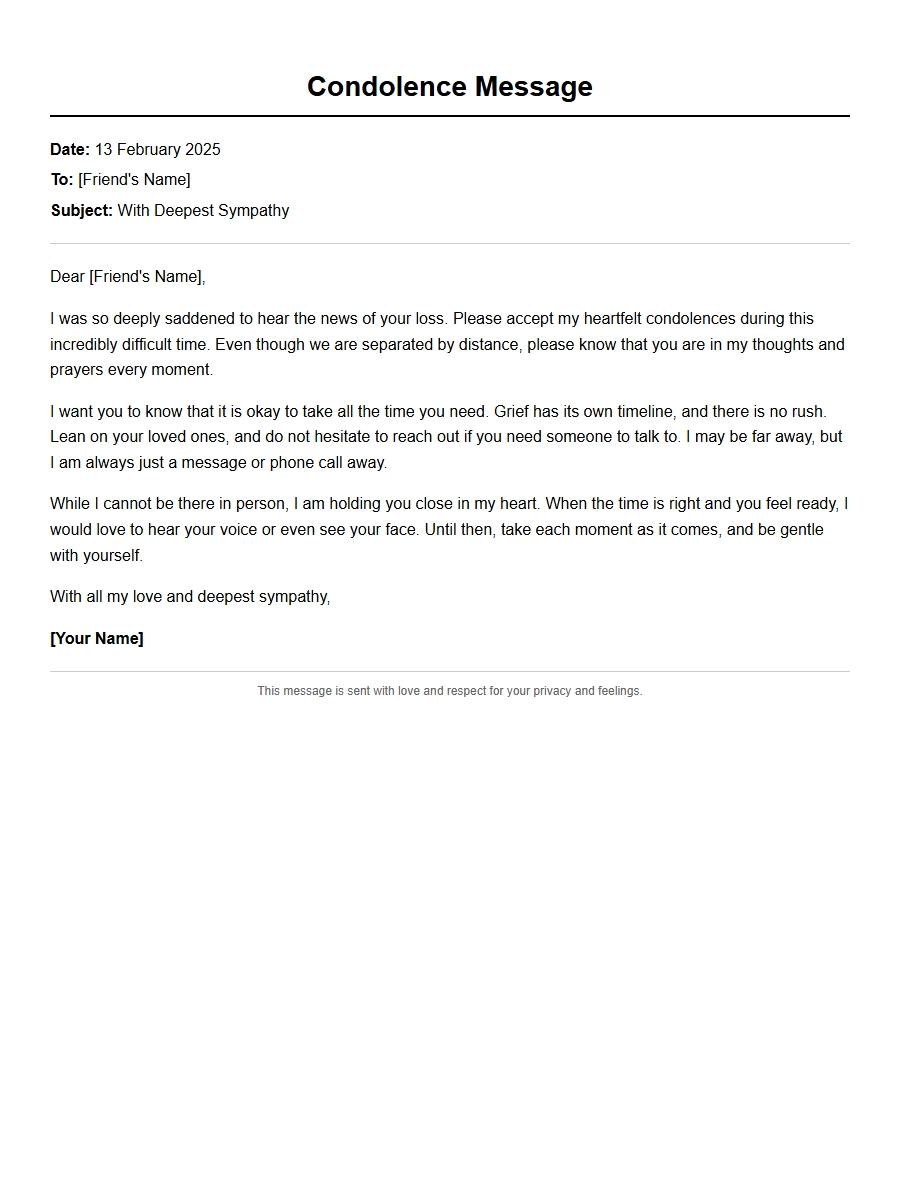
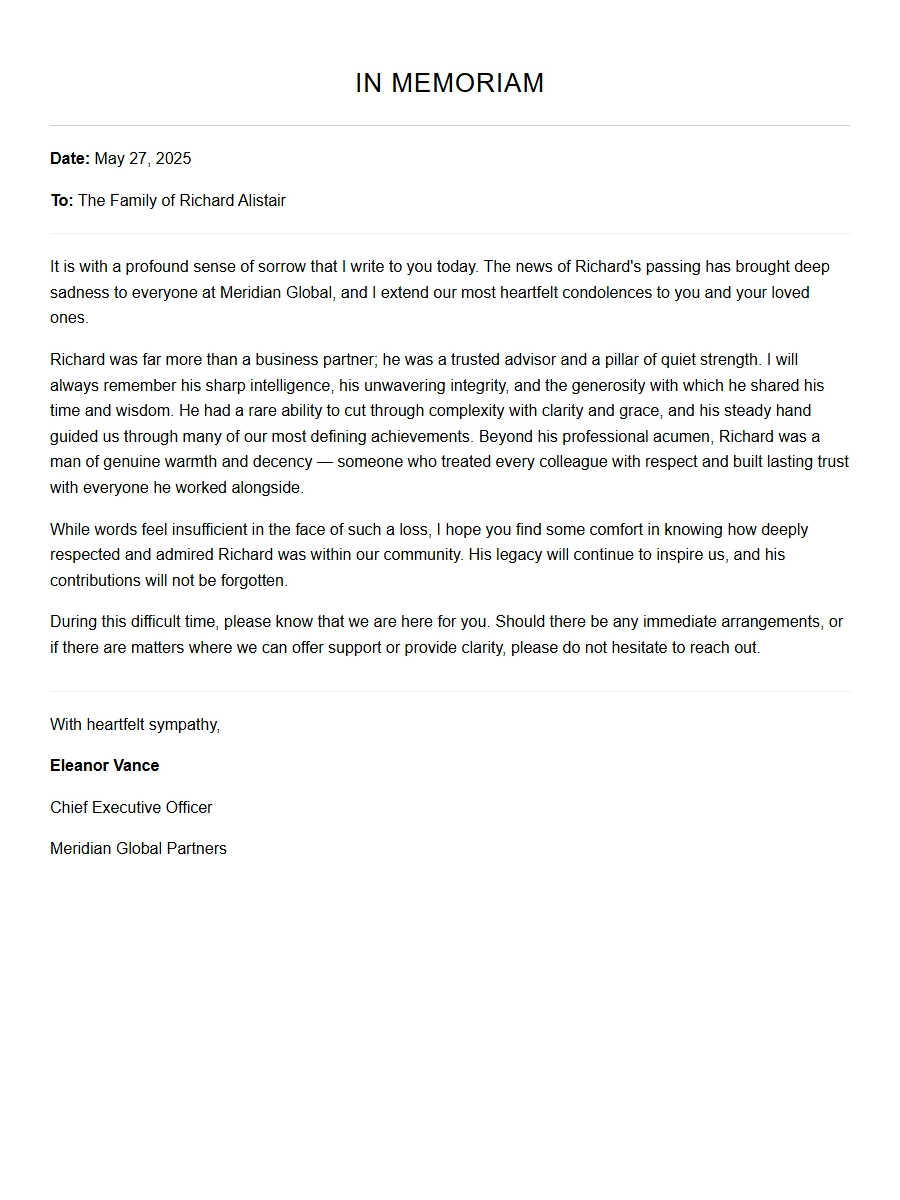 Formal Condolence Message for a Business Partner
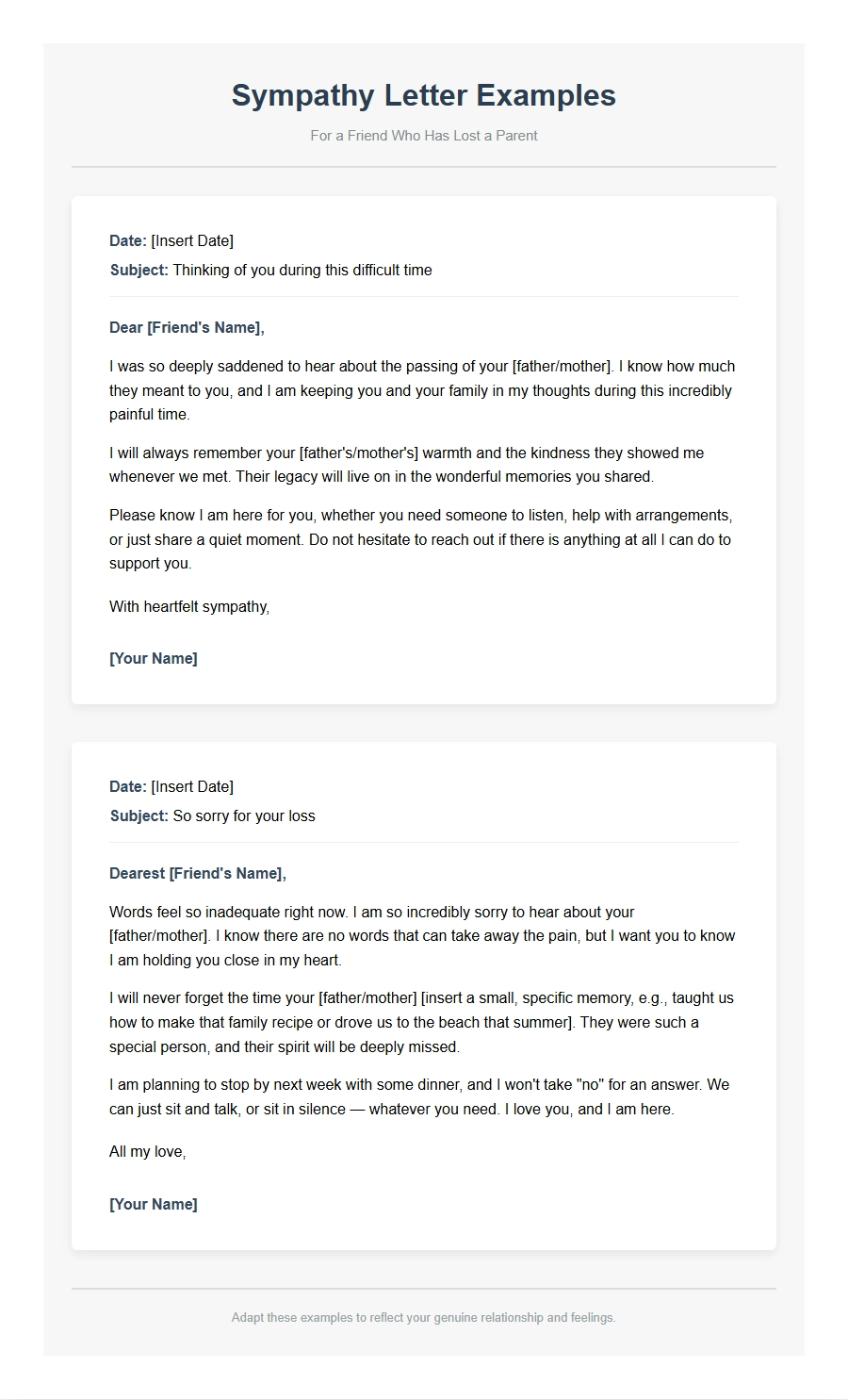 Sympathy Letter Examples for a Friend Who Lost a Parent
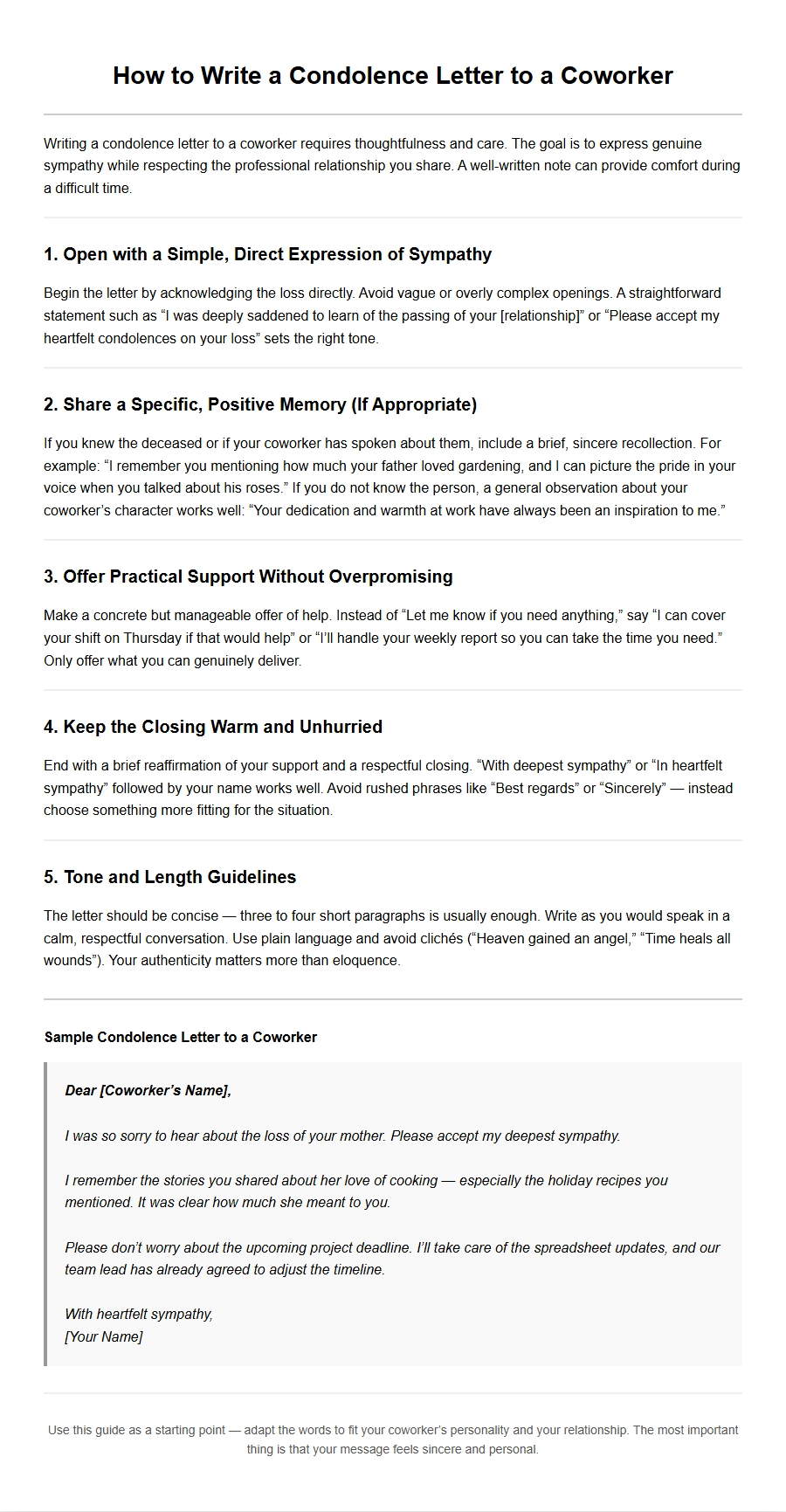 How to Write a Condolence Letter to a Coworker
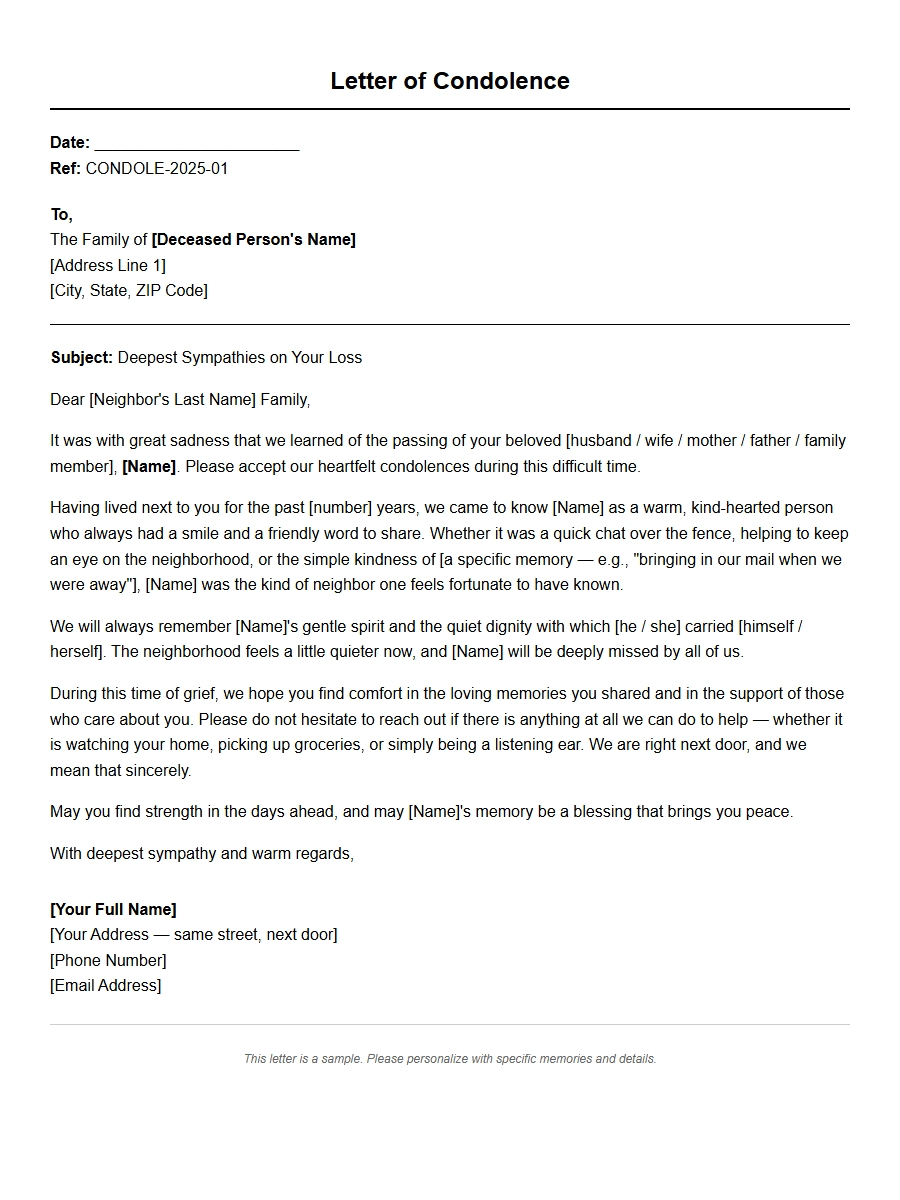 Condolence Letter Sample for a Neighbor
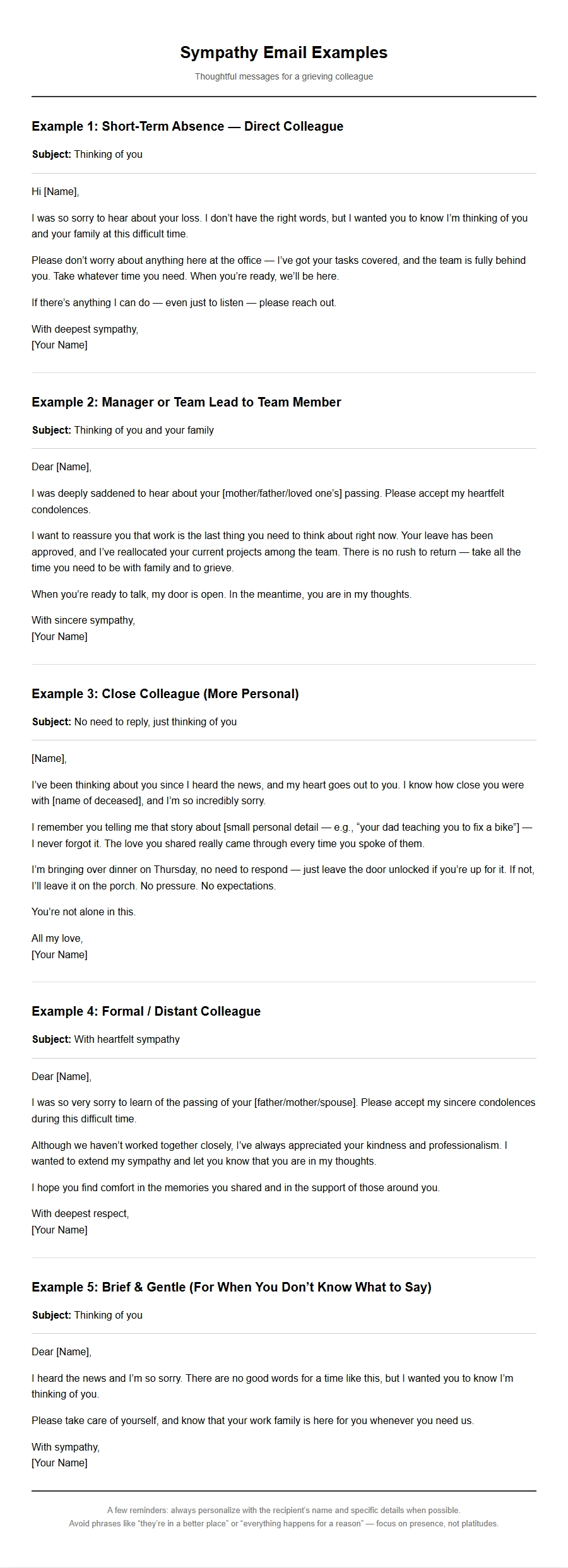 Sympathy Email Examples for a Grieving Colleague
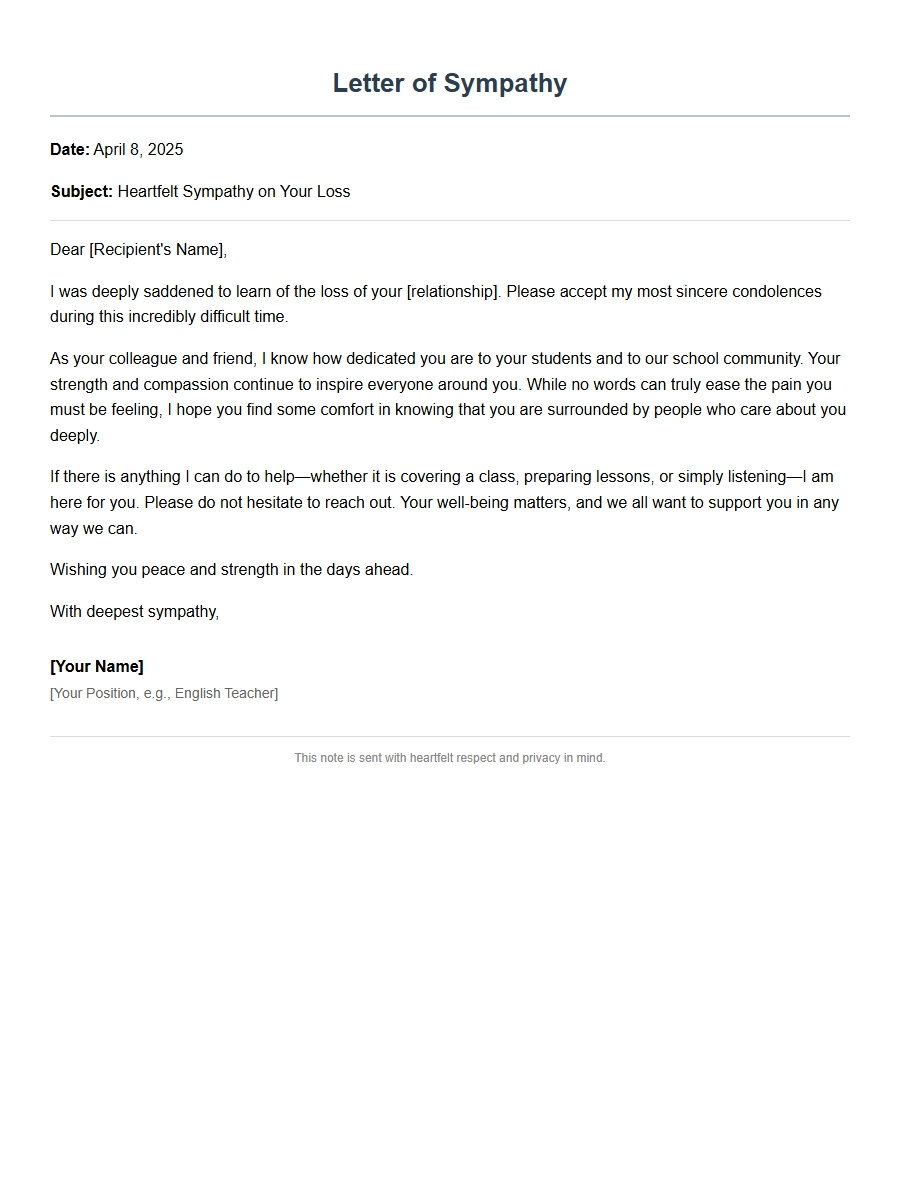 Condolence Words for a Teacher