You’re stuck in a home that feels unsafe, and every day you wait feels like another risk. Maybe there’s mold creeping up a wall, a broken lock on the front door, or wiring that sparks when you flip a switch. You want to write your landlord, but you’re not sure what to say or how to say it without sounding like you’re complaining too much. That blank page isn’t helping.
Let’s fix that. You don’t need to be a professional writer to send effective professional correspondence. You need a clear, calm letter that gets your landlord to act. And a good notifying landlord of unsafe living conditions sample can get you there in ten minutes, not an hour.
Why a sample isn’t cheating—it’s smart
A letter template gives you a solid structure. You get the right business letter format, a proper salutation and closing, and the key phrases that make your concern sound serious without being aggressive. You don’t have to invent the wheel. You just have to fill in your details and adjust the tone to match your situation.
Think of it like a recipe. You wouldn’t bake a cake without knowing the basic steps. A template is your base. You personalize it with your specific problem, like the flickering lights or the broken heater.
Before you start writing: pick the right approach
Not every landlord relationship is the same. If you’ve been friendly with your landlord for years, a more casual email might work. If they’re distant or you’ve had issues before, stick to a formal letter. The category of your problem also matters. A quick repair request is different from a serious health hazard.
Category: Unsafe Conditions
For serious issues—like no heat in winter, exposed wires, or a pest infestation that makes you sick—you want a formal written record. That letter becomes proof if you need to escalate things later. Start with a clear subject line like “Notice of Unsafe Living Conditions at [Your Address].” That’s not dramatic. It’s precise.
How to adapt a sample without losing your voice
You’ll find plenty of cover letter examples or resignation letter sample templates out there, but for this, you need something specific. Look for a sample that matches your type of safety issue. Most samples follow this logic:
First paragraph: State the problem clearly and when you first noticed it. “I discovered black mold in the bathroom on October 10th.” That’s it. No extra fluff.
Second paragraph: Explain why it’s unsafe and how it affects you. “The mold has given my son asthma symptoms, and the smell is constant.” This is where you show urgency.
Third paragraph: Ask for a specific action and a deadline. “Please arrange professional mold remediation by October 20th.”
Don’t copy the sample word for word. Swap out the details and rewrite the tone in writing so it sounds like you. If you’re naturally direct, be direct. If you usually write politely, keep that politeness. The goal is a customizable letter that feels authentic, not like you copied it from the internet.
A quick tip for the opening line
Your first sentence sets the tone. Instead of “I am writing to inform you,” try something more natural: “iet, I need to let you know about a safety issue in my apartment.” That grabs attention without sounding robotic. If you’re mailing a printed letter, use a simple letterhead design at the top—just your name, address, and date. For email, keep it clean and skip the fancy formatting.
Common mistakes people make
I’ve seen people send emails with no subject line. Don’t do that. The landlord might miss it. Also, avoid outdated salutations like “To Whom It May Concern.” Use your landlord’s name if you know it. If you don’t, “Dear Property Manager” works fine.
Another mistake? Forgetting to proofread. A typo doesn’t ruin your message, but it makes you look careless. Run through a quick proofreading letter check. Read it out loud. Does it sound like something you’d actually say? Good.
If you’re sending a digital letter format via email, make sure your font is readable (Arial or Calibri, size 11 or 12). Don’t use colors or decorations. Keep it simple so your landlord focuses on the problem, not the design.
What if the landlord doesn’t respond?
That happens. If you don’t hear back in a few days, send a follow-up. You can use a similar structure but shorter: “I sent a notice about the broken lock on October 12th and haven’t heard back. Please confirm when this will be fixed.” If that still gets ignored, you may need to contact local housing authorities. Having your original letter on file makes that step much easier.
Your next step
Find a sample that fits your exact issue. Fill in your details. Read it once for tone, once for accuracy. Then send it. A good letter won’t solve every problem overnight, but it puts you in control. You’ve done your part. That’s what matters.
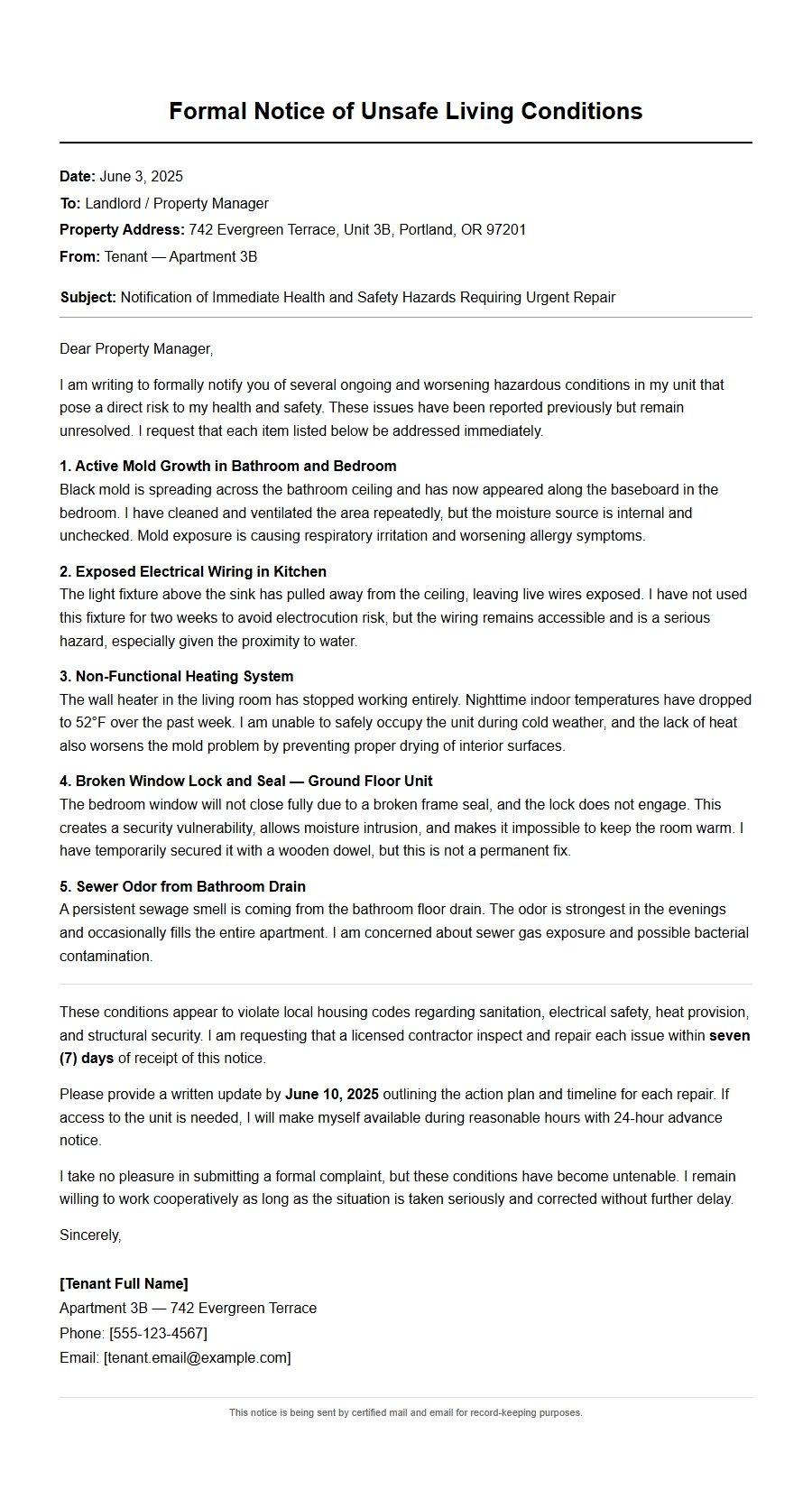
Formal Complaint Letter for Unsafe Living Conditions
Dear Landlord,
I am writing to formally notify you of several unsafe living conditions in my apartment at 123 Main Street, Apt 4B. These issues pose a serious risk to my health and safety and require immediate attention.
Mold growth in the bathroom ceiling and behind the toilet, causing respiratory issues.
Faulty electrical wiring resulting in flickering lights and occasional sparks from outlets.
Broken window lock in the bedroom, compromising security.
Plumbing leak under the kitchen sink, leading to water damage and potential slip hazard.
I request that you arrange for professional repairs within 48 hours. If not addressed, I will have no choice but to contact the local housing authority and potentially withhold rent as allowed by law.
Please acknowledge receipt of this notice and provide a timeline for repairs. Thank you.
Sincerely, Jane Tenant
Urgent Email Notice About Gas Leak
Subject: URGENT – Gas Leak in Apartment 3C
Dear Property Manager,
I am writing to notify you of an immediate danger: a strong gas smell has been present in my kitchen since noon today. I have already turned off the stove and opened windows, but the odor persists. This is a life-threatening condition that requires emergency response.
Please arrange for a gas company technician to inspect the line immediately. I also request that you send a maintenance person to shut off the gas supply at the building valve until repairs are completed.
I have attached photos of the suspected area near the oven connector. I expect a response within 30 minutes; otherwise, I will call 911 and the fire department.
Thank you for your prompt action.
Regards, Ali Khan Apartment 3C Phone: (555) 123-4567
List of Unsafe Conditions with Severity Ratings
To Whom It May Concern,
Please find below a detailed list of unsafe conditions in my unit at 78 Oak Street, #2. Each item includes a severity rating and recommended action.
Issue
Location
Severity
Remedy
Exposed wiring near baseboard heater
Living room
High – fire risk
Hire licensed electrician to rewire
Severe mold infestation under sink
Kitchen
High – health hazard
Remove mold, fix leak, drywall repair
Broken railing on second-floor landing
Stairwell
Medium – fall risk
Replace railing and secure posts
Non-functional smoke detector in bedroom
Bedroom
High – life safety
Install new battery or replace unit
This notice serves as my formal complaint. I expect all high-severity items to be resolved within 7 days. Failure to do so will result in a complaint to the city code enforcement office.
Please let me know when inspections can be scheduled.
Notice of Intent to Withhold Rent Due to Uninhabitable Conditions
Dear Landlord,
This letter constitutes official notice that I intend to withhold rent beginning with the next payment cycle unless the following unsafe conditions are remedied.
Current issues making the premises uninhabitable:
No heat – furnace has been broken for 10 days despite multiple requests. Indoor temperatures have dropped to 50°F (10°C).
Raw sewage backup in bathroom floor drain, causing foul odor and biohazard risk.
Broken front door lock – strangers have entered the building twice this week.
Under [State] law, I am entitled to a habitable dwelling. I am placing rent into escrow until all items are fixed. I will provide proof of escrow deposit upon your request.
I am available Monday–Friday after 5 PM for repairs. Please respond in writing within 5 business days.
Sincerely, Maya Patel Apt 6A, 456 Elm Street
Complaint Letter to Landlord Regarding Broken Heating System
Dear Mr. Johnson,
I am writing to formally complain about the ongoing failure of the heating system in my unit at 210 Pine Street, #12. The heat has been non-functional since November 5th, and it is now November 18th. The indoor temperature has dropped to 45°F at night.
This is a violation of the implied warranty of habitability and poses a serious health risk, especially given the current freezing outdoor temperatures. I have a young child and an elderly parent living with me.
I have called your maintenance line four times and left messages, but no one has come to inspect the system. Please arrange for a professional HVAC technician to repair or replace the furnace immediately.
If no action is taken within 48 hours, I will:
Contact the local building code enforcement
Seek emergency accommodations at your expense
Consider legal action for damages
I look forward to your prompt response.
Yours truly, David Chen
Request for Emergency Repair of Structural Damage
Dear Landlord,
I am notifying you of an emergency situation in my apartment at 55 Maple Drive, #3. The ceiling in the living room has a large sagging section, approximately 4 feet by 3 feet, with visible cracks and water stains. It appears the roof is leaking and the ceiling is at risk of collapse.
This condition is extremely unsafe and could cause serious injury. I have moved furniture out of the area and placed a bucket to catch drips, but the ceiling is worsening by the hour.
I request that you dispatch a contractor immediately to assess the structural integrity and perform temporary shoring. I also ask that you arrange for a roofer to inspect and repair the leak.
Please call me at (555) 987-6543 as soon as you receive this message. I will not leave my apartment until this is resolved for safety reasons, but I appreciate quick action.
Thank you, Rosa Martinez
Formal Demand Letter for Pest Infestation
To: Pinecrest Properties Management
Re: Unit 7B – Severe Bed Bug and Roach Infestation
This letter serves as a formal demand for immediate pest control services. My apartment has become infested with bed bugs and cockroaches over the past three weeks. Despite reporting the issue on October 1, October 15, and November 1, no professional treatment has been conducted.
The infestation has caused:
Multiple bites leading to skin infections and sleepless nights
Spread of cockroaches into food storage areas, posing a health hazard
Emotional distress and damage to personal belongings
This condition violates the sanitary standards required by [City Name] Health Code Section 5-12-1. I demand that you hire a licensed exterminator to treat the entire building within 7 days. If you fail to act, I will report the violation to the Department of Public Health and pursue legal remedies including rent abatement.
Please provide a written plan for treatment within 3 business days.
Sincerely, Kevin O'Neill
Complaint Regarding Lack of Hot Water
Dear Landlord,
I am writing to formally notify you that there has been no hot water in my apartment at 88 West Avenue, #2B for the past five days. The water heater appears to be malfunctioning, and despite leaving two voicemails with your office, no action has been taken.
This is an unsafe condition because:
It prevents proper hygiene, increasing risk of illness.
Cold water makes cleaning wounds and dishes difficult, raising sanitation concerns.
In winter, lack of hot water can exacerbate cold-related health issues.
I request that you repair or replace the water heater within 24 hours. If the unit requires parts that cannot be obtained quickly, please provide a temporary solution such as a point-of-use heater or offer alternative accommodations.
I expect a response by end of day tomorrow. I will document all future attempts to contact you and the duration of this outage for possible rent deduction.
Thank you for your urgent attention.
Best regards, Sarah Thompson
Letter About Electrical Hazards and Fire Risk
Dear Property Owner,
I am writing to report multiple electrical hazards in my rented unit at 1200 Lakeview Drive, Apartment 5C. These issues present an immediate fire risk and must be addressed urgently.
The following problems have been observed:
Outlet in the kitchen sparks every time I plug in an appliance.
Circuit breaker trips repeatedly when using the microwave and toaster at the same time.
Exposed wires behind the living room light switch.
The smoke detector in the hallway is missing its cover and chirps continuously.
I have taken temporary measures by unplugging devices and avoiding use of the faulty outlet, but this is not a long-term solution. I need a licensed electrician to inspect the entire apartment and perform necessary repairs.
Please schedule an appointment as soon as possible. I am home after 4 PM on weekdays. If I do not hear from you within 48 hours, I will contact the fire marshal for an inspection.
Thank you for your cooperation.
Sincerely, Marcus Williams
Notice of Mold Infestation and Health Risks
Dear Landlord,
I am notifying you of a significant mold problem in my apartment at 15 River Road, Unit 6. Black mold has been growing on the walls and ceiling of the bathroom and has now spread to the bedroom closet. The mold appeared after a plumbing leak in the upstairs unit that was never properly dried.
My family and I have been experiencing the following health symptoms:
Persistent coughing and sneezing
Headaches and fatigue
Worsening asthma for my son
I have attached photographs and a doctor’s note confirming that our symptoms are likely due to mold exposure. My lease guarantees a safe and healthy living environment.
I demand that you:
Hire a certified mold remediation company to remove the mold and repair the leak source.
Provide a timeline for the work.
Notify me if I need to vacate temporarily during the process.
This is a serious health hazard. I expect a response within 3 business days, or I will involve the health department.
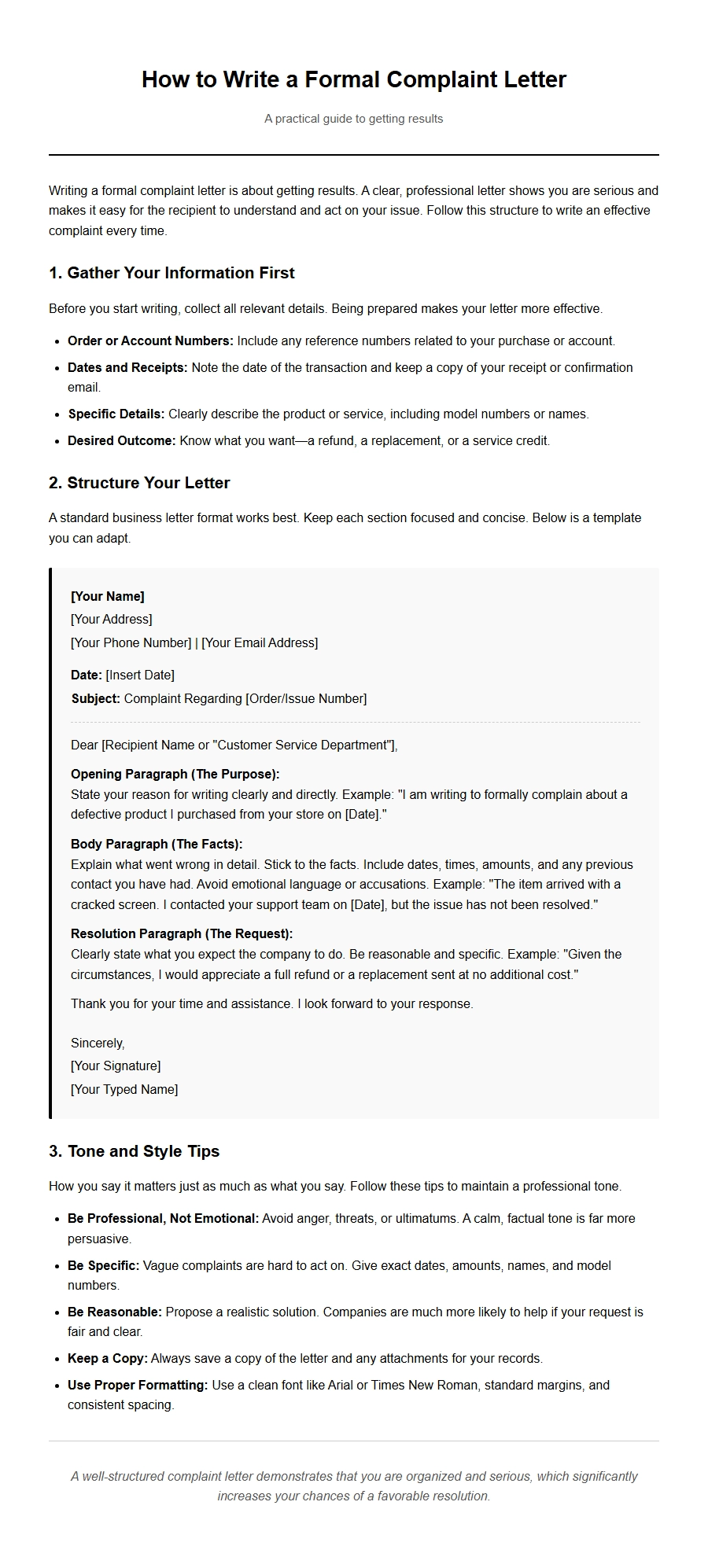 How to Write a Formal Complaint Letter
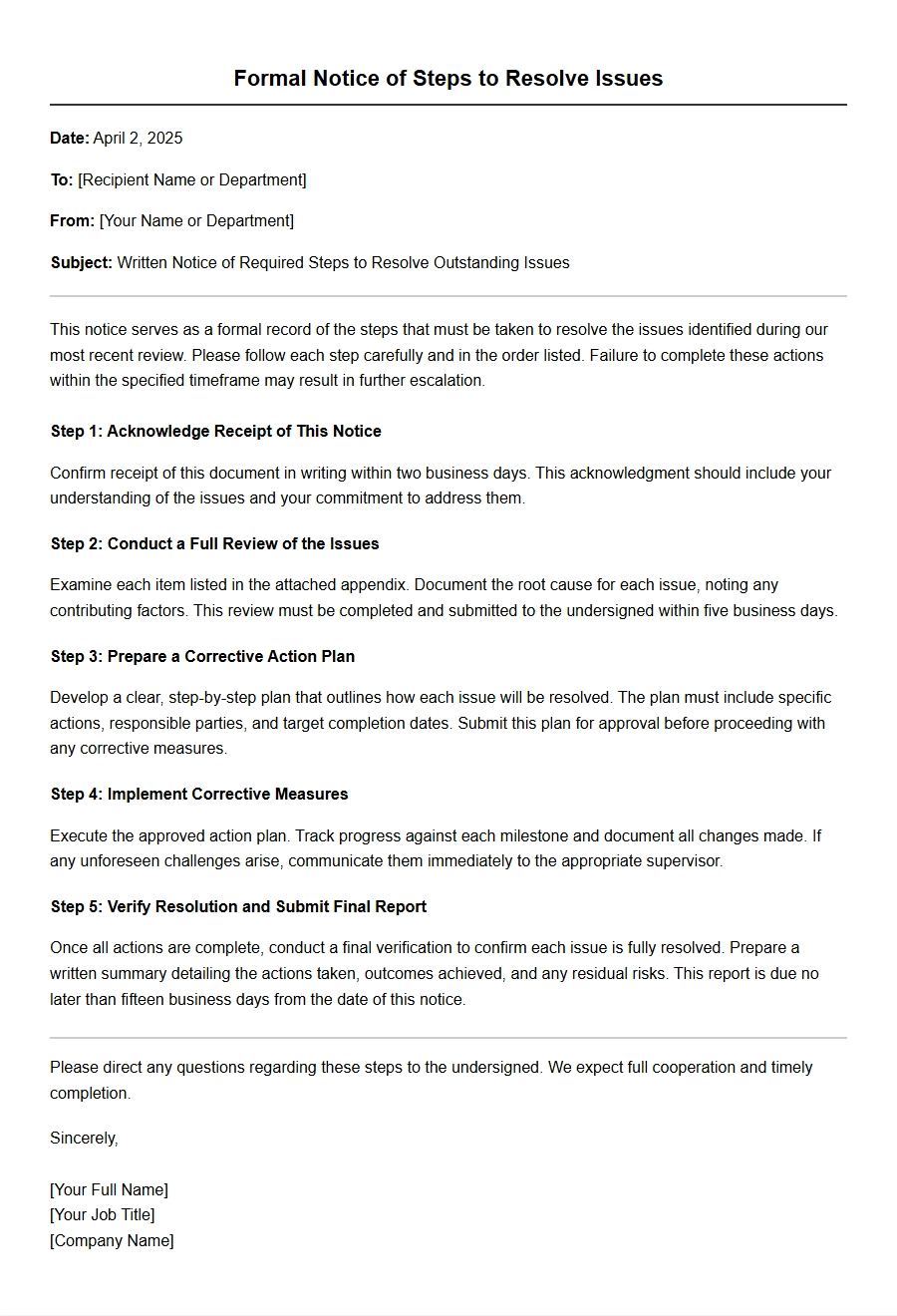 Steps to Resolve Issues via Written Notice
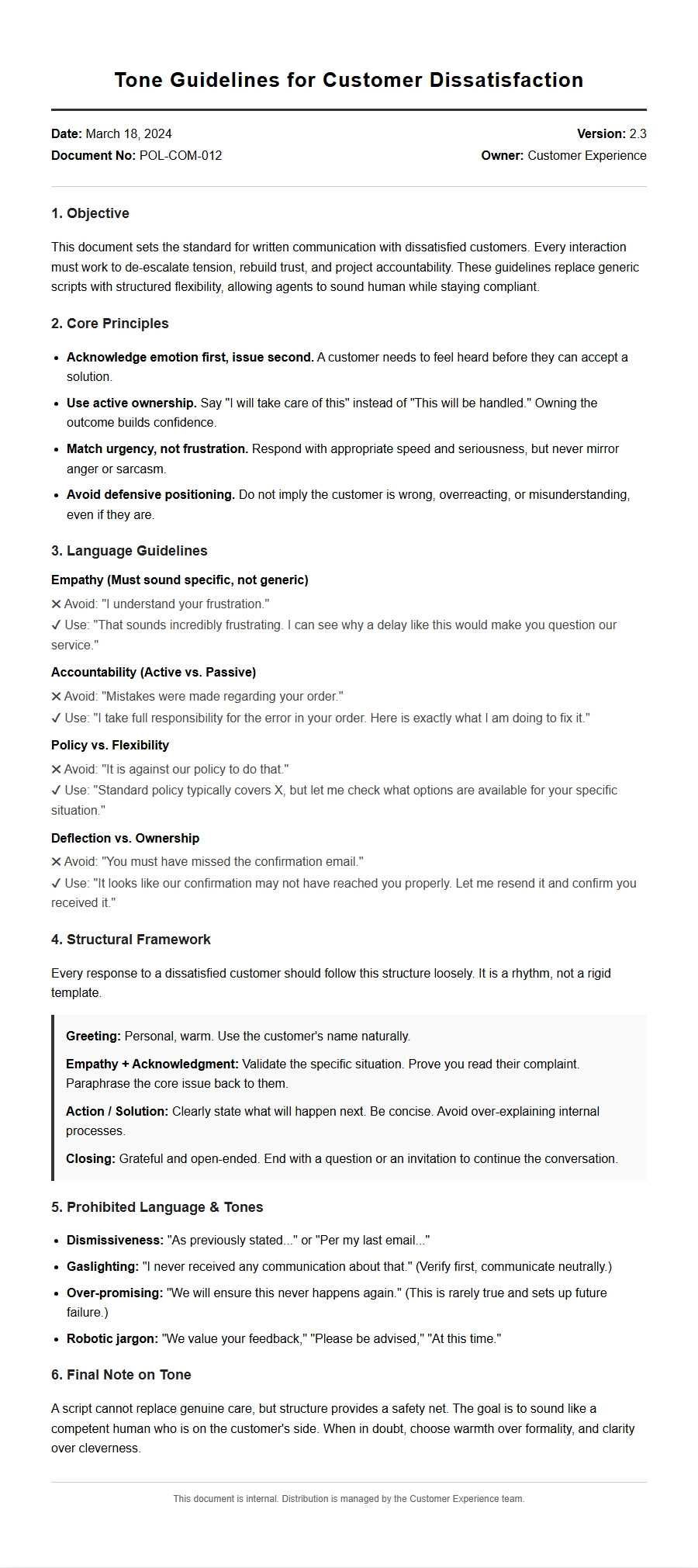 Tone Guidelines for Dissatisfied Customer Letters
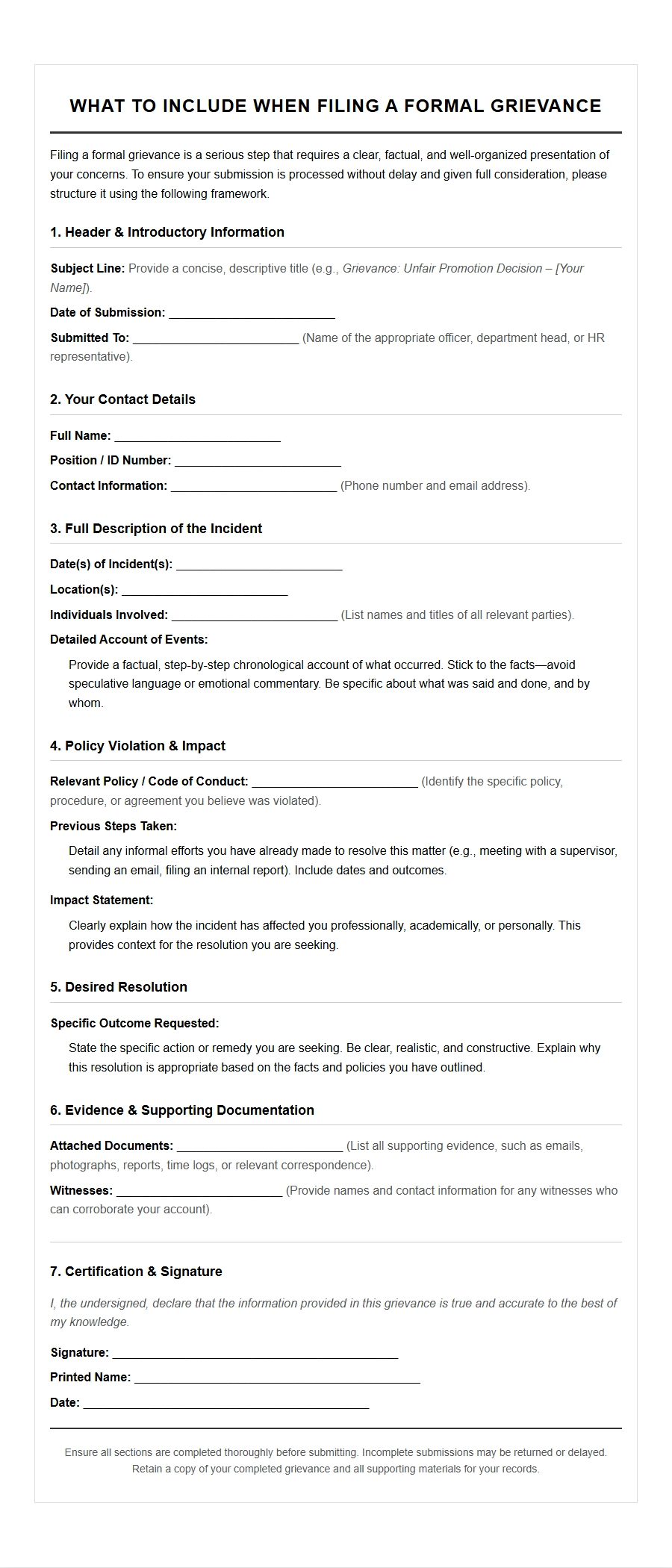 What to Include in a Formal Grievance Letter
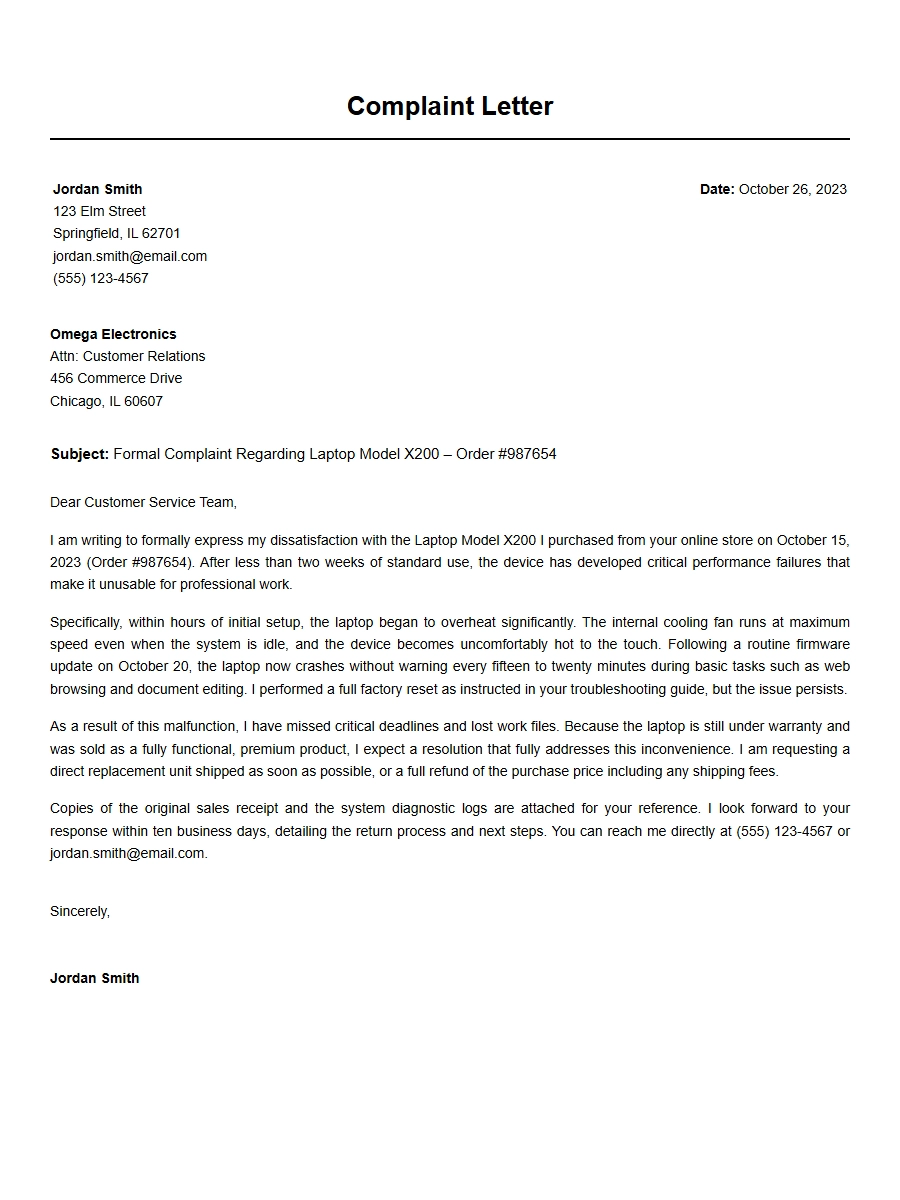 Structure of an Effective Complaint Letter
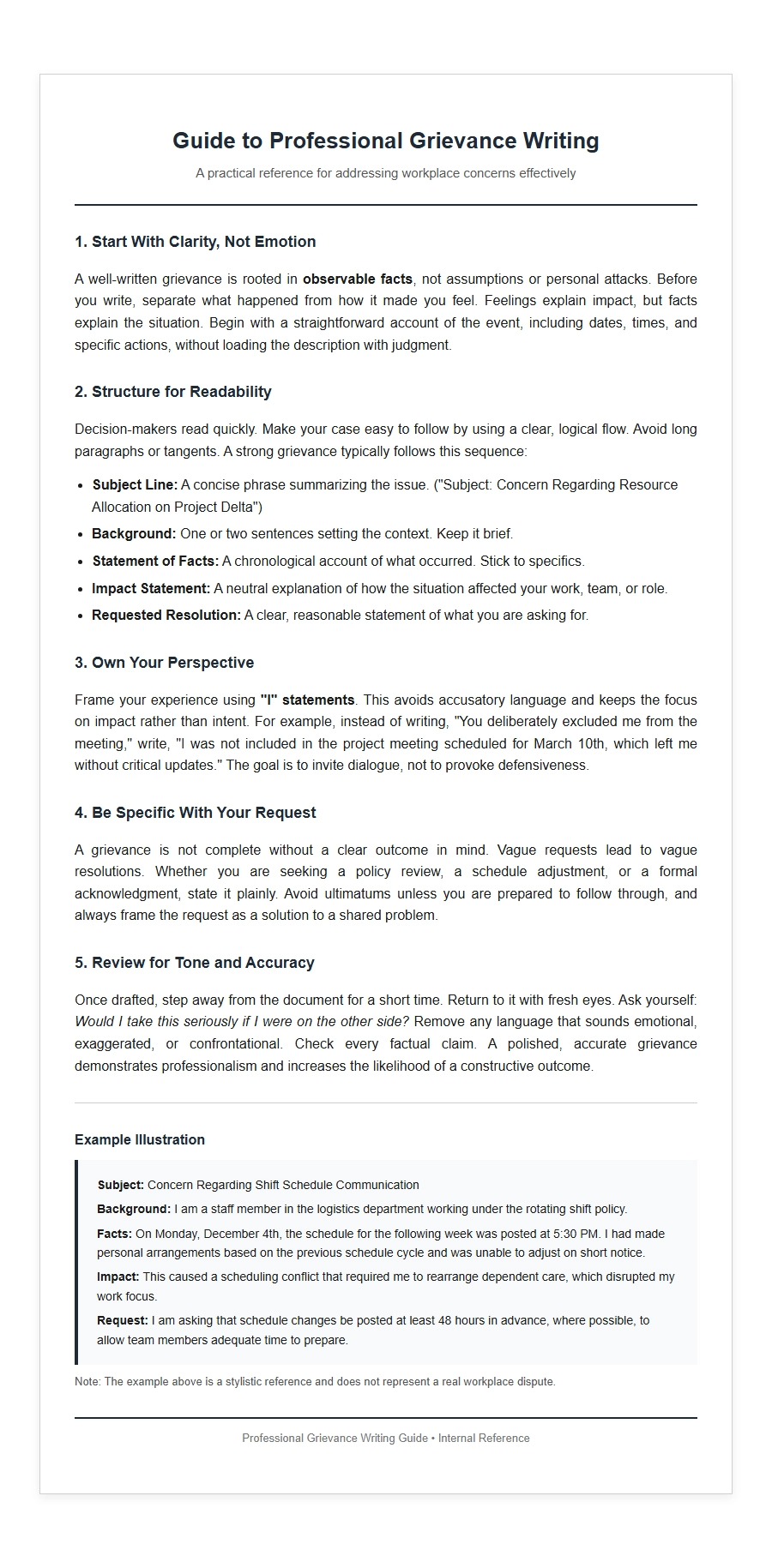 Best Practices for Writing Professional Grievance Letters