Sample Complaint Letter for Delayed Package Delivery
You ordered something important—maybe a birthday gift, a work tool, or a household essential. Days pass. The tracking number stops updating. Customer service gives vague promises. Meanwhile, your package is stuck somewhere in a warehouse or on a truck, and you’re left wondering what happened. That frustration is valid. And when you need to write a complaint about a delayed package delivery service, the last thing you want is to stare at a blank screen.
Using a letter sample isn’t cheating. It’s a practical shortcut that gives you a solid structure, the right tone, and proven phrasing—while still letting you add your own details. Think of it as a starting point, not a crutch. You’ll save time and avoid the common missteps that weaken a complaint, like sounding too angry or too vague. A good sample shows you exactly how to state the facts, express your disappointment, and request a resolution—all without emotional noise.
Category: Formal complaint letters
Why a sample helps when writing a complaint about a delayed package
A blank page can make a simple problem feel overwhelming. A complaint letter, after all, is a piece of professional correspondence. Even if you’re sending it via email, the basic business letter format still matters: a clear subject line, a proper salutation, a logical flow, and a polite closing. A complaint about delayed package delivery service is no different. A sample guides you through each element—how to address the company, summarize the issue, and ask for a specific outcome like a refund, replacement, or compensation.
You’ll see how to incorporate key details: the order number, delivery date, tracking history, and any previous conversations with support. That structure keeps your letter focused and gives the company everything they need to act quickly. Without a template, it’s easy to ramble or leave out essential info. With one, you can fill in the blanks and still sound like you.
Choosing the right sample for your situation
Not all complaint letters are the same. Are you writing to a small Etsy seller or a giant retailer like Amazon? Is your package lost or just late? The tone should match the relationship and the severity. For a formal complaint against a large company, you’ll want a more structured letter with references to their service guarantees. A friendly reminder to a local shop might be shorter and more casual. Look for a letter template that fits your specific delay: late delivery, lost package, damaged item, or repeated excuses.
If you’ve already tried customer service chat or phone calls without success, your written complaint should mention that history. That shows you’ve given them a chance to fix it. In that case, a formal objection to their handling of the issue works well. For example, you might reference a pattern of missed deadlines, which is similar to a formal objection but in a consumer context.
How to adapt a sample without losing your voice
The trick is personalization. Don’t just swap in your name and order number. Rework the opening paragraph to reflect your actual experience. Instead of “I am writing to complain about a delayed delivery,” try “I placed order #12345 on January 10, and the tracking has shown no movement since January 15. I need this item by Friday.” That grabs attention immediately because it’s specific and urgent.
Avoid formality that sounds stiff. If you normally use contractions in conversation, use them in your letter. “I’ve followed up three times” sounds more natural than “I have followed up three times.” Keep the structure from the sample but adjust the tone. Letter writing etiquette today allows for directness without rudeness. As long as you remain polite and professional, you can drop the “To whom it may concern” if you know the customer service rep’s name. Use “Dear [Name]” or even “Hello [Name].”
One common mistake: copying the sample’s closing word for word. Instead of “Thank you for your prompt attention,” write “I appreciate your help getting this resolved.” It’s warmer and feels more authentic. Similarly, if you’re sending the letter by email, you don’t need a printed letterhead—just a clear subject line like “Delayed delivery – Order #12345 – urgent.”
Tailoring the opening paragraph to get a fast response
Busy customer service reps scan letters quickly. Your first two sentences should tell them what’s wrong and what you want. Example: “My package was supposed to arrive by March 1. It’s now March 10 and the tracking still says ‘in transit.’ I need either an update or a replacement sent immediately.” That’s clear and actionable. It follows formal writing tips without being cold. You can then add context—like the fact you chose expedited shipping or that the item was a gift.
If you’re dealing with a telecom company that also ships equipment (like a router), the same approach works. You might adapt language from a notification about data overage charges to frame the delay as a service failure.
Proofreading before you send
A letter with typos or missing dates undermines your credibility. Read it out loud, or have someone else glance at it. Double-check the company’s correct name and address. Make sure your contact info is included. Proofreading your letter should be a quick step—don’t overthink it, but don’t skip it. A small error like the wrong order number can delay the resolution by days.
Also, decide on your delivery method. An emailed complaint gets there instantly, but a physical letter can feel more serious. If you’re mailing it, use a standard business envelope and consider a delivery confirmation service. For digital letters, a clean digital letter format with plain text or a simple PDF works best.
Common pitfalls to avoid
One is using outdated salutations like “Dear Sir or Madam” when you could address a specific department. Another is dumping all your frustration into one paragraph—keep it organized. If you have multiple issues (e.g., delayed delivery plus rude customer service), separate them clearly. Also, don’t threaten legal action unless you’re really ready to take that step. Instead, ask for a specific remedy: a refund, a replacement, or a discount on a future order.
Remember that a complaint letter is a form of professional correspondence, even if you’re writing from your kitchen table. Keep the tone firm but not hostile. You’re asking for a solution, not starting a fight.
Use the sample as a springboard, not a crutch
The best complaint letters feel both professional and personal. The sample gives you the skeleton—you add the flesh. Over time, writing these letters gets easier. You’ll develop an instinct for what works: a clear timeline, a polite but direct request, and a follow-up plan. For example, you might say, “If I don’t hear back within 48 hours, I’ll escalate this to your supervisor.” That shows you’re serious without being aggressive.
If your situation involves a more formal setting—say, a delayed shipment from a supplier that affects your business—you can look at similar complaint examples like a workplace harassment complaint for tone guidance. The structure of stating the issue, providing evidence, and requesting action is universal.
For the most common problem—a late package from an online retailer—your letter should be straightforward. No need for dramatic language. Just the facts and what you want done. A good sample helps you hit that balance. And if you need to escalate, you can adapt the same letter into a grade dispute appeal style, citing their own delivery guarantees.
One last thought: don’t wait too long. A timely complaint shows you care about the resolution and keeps your case fresh in the company’s system. Write it today, send it, and then follow up if needed. You’ll be glad you did—and the blank page will feel a lot less intimidating next time.
Samples for Inspiration
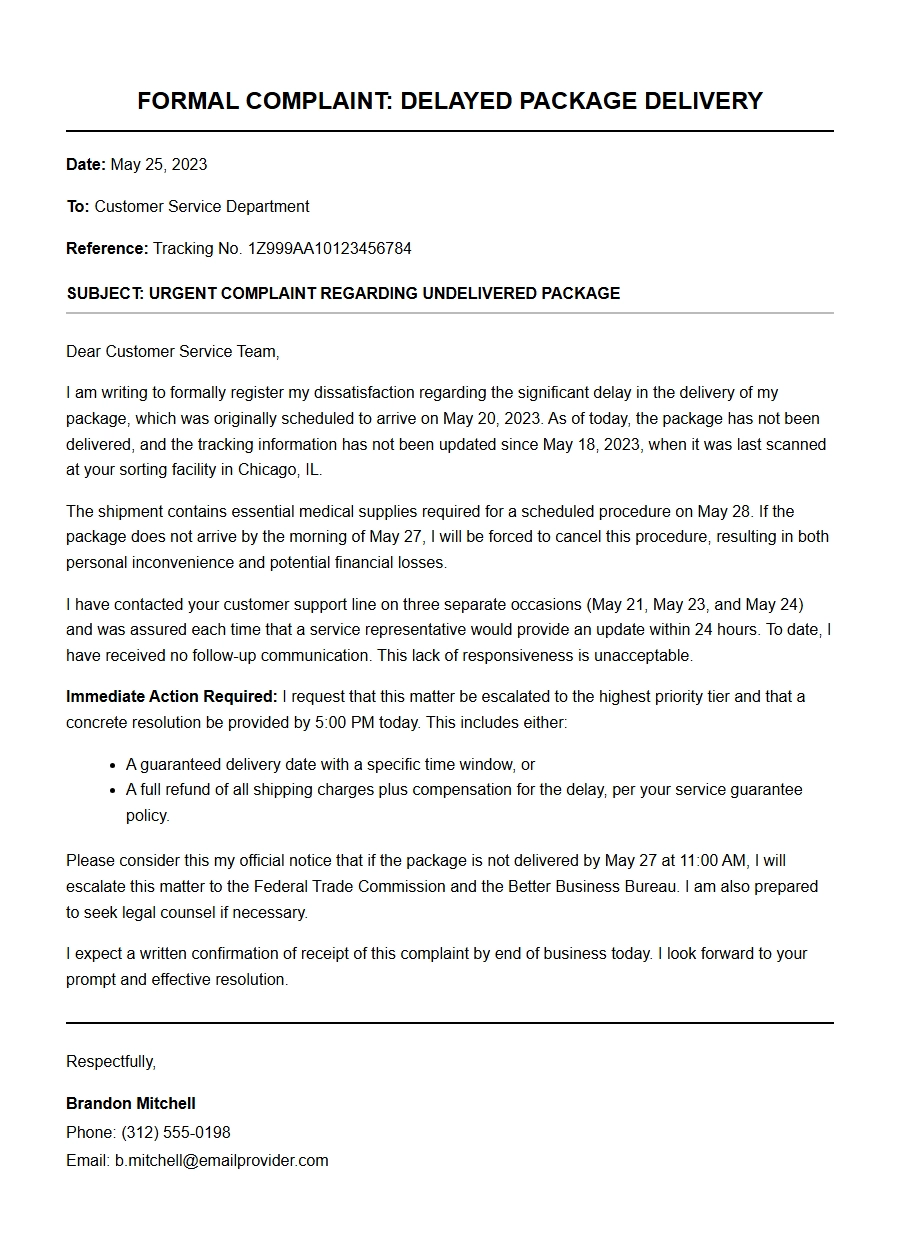
Sample Complaint Letter for Delayed Package Delivery
Formal Complaint for Missed Delivery Window
Date: March 5, 2025
To: Customer Service, FastShip Courier
I am writing to formally complain about the delayed delivery of package Tracking # FSC-9876-ABC. The guaranteed delivery date was February 28, 2025, yet as of today the package has still not arrived. This delay has caused significant inconvenience as the contents were essential for a business presentation.
Below is a summary of the shipment details:
Field
Details
Tracking Number
FSC-9876-ABC
Expected Delivery
February 28, 2025
Current Status
In transit – no update since March 2
Package Value
$250.00
I request immediate action to locate my package and deliver it by end of this week. Please also confirm any compensation for the service failure. I expect a response within 48 hours.
Sincerely, James Miller
Business Supply Chain Complaint Due to Delay
Order ID: B2B-4523 Date: March 4, 2025
Dear Wholesale Supplies Inc.,
I am writing to express my serious concern regarding the delayed shipment of our bulk order placed on February 10, 2025. The delivery was scheduled for February 25 but has not yet arrived. This delay has forced us to halt production on two major client projects.
Below is the affected order breakdown:
Item
Quantity
Unit Price
Total
Electronic Components Kit
50
$15.00
$750.00
Packaging Material Boxes
200
$2.50
$500.00
We rely on timely deliveries to maintain our own service levels. The lack of communication about the delay has been disappointing. Please provide a new firm delivery date and consider expedited shipping at no extra cost to mitigate our losses. Failure to resolve this promptly may affect our future partnership.
Awaiting your urgent reply, Robert Lin, Operations Manager
Sentimental Gift Arrived Too Late
Date: February 20, 2025
To: Customer Support, GiftExpress
I am heartbroken and frustrated. I ordered a personalized birthday gift (Order # GP-8842) on February 1 with expedited shipping to arrive by February 14. The package was delivered only yesterday, February 19, five days after the birthday. The surprise was ruined.
The key details of this order are:
Recipient: My daughter, turning 10
Placed: Feb 1, 5:00 PM (priority delivery selected)
Carrier: ExpressPost – tracking showed no movement from Feb 8-16
Contents: Custom name bracelet (value $45)
This was not a routine purchase; it carried sentimental value. Your tracking service failed to provide accurate updates and your support team gave vague apologies. I request a full refund of shipping costs plus a goodwill voucher for the emotional distress. I expect a written acknowledgement and a concrete compensation offer.
Sincerely, Maria Gonzalez
Pattern of Repeated Delays – Request for Investigation
Account #: 8876-5432 Date: March 3, 2025
To the Logistics Manager at ShipRight Logistics,
I am writing to document a recurring issue with delayed deliveries from your service. Over the past three months, five out of eight packages shipped via your network have arrived more than a week late. The most recent example: Tracking # SR-2301 ordered on Feb 20, still not delivered as of today.
Here is a list of the problematic shipments:
Dec 12 – Arrived Dec 28 (16 days late)
Jan 5 – Arrived Jan 22 (17 days late)
Jan 30 – Arrived Feb 15 (16 days late)
Feb 15 – Arrived Mar 2 (15 days late)
Feb 20 – Still missing (as of Mar 3)
This pattern indicates systemic routing or staffing problems. I rely on your service for my small online store, and these delays damage my reputation and cause lost sales. I request a thorough investigation and a written plan to resolve this. If the issue persists, I will move to a different carrier.
Please respond by March 7, 2025.
Regards, David Tran
Demand for Refund of Shipping Fees Due to Delay
Shipment ID: ZX-7642 Date: February 28, 2025
To the Claims Department, QuickPost Services,
I am requesting a full refund of shipping charges for package Tracking # QP-1199-B. I paid $29.99 for Guaranteed 2-Day Delivery, but the package arrived on the 7th day. The delivery guarantee clearly states that if the package is not delivered within the promised window, the shipping cost will be refunded.
Details of the shipment:
Service
Cost
Promised by
Actual delivery
Express 2-Day
$29.99
Feb 20
Feb 25
I have attached a screenshot of the tracking history showing the arrival date. No weather or address issues were cited. According to your policy (section 4.2), this qualifies for a refund. Please credit the amount to my original payment method within 10 business days. If not, I will escalate this to the Better Business Bureau.
Thank you for your prompt action, Emily Watson
Damaged Package After Prolonged Delay
Claim #: DMG-2025-031 Date: March 2, 2025
Dear Customer Service, FastFreight Co.,
I am lodging a complaint about a package that arrived both late and damaged. My order (Tracking # FF-4456) was supposed to be delivered by February 10 but arrived on February 22. When I opened the box, the ceramic vase inside was shattered.
Shipment timeline:
Order placed: Feb 5
Expected: Feb 10
First delay notice: Feb 9 (weather delay)
No update: Feb 10-18
Delivered: Feb 22 – box crushed
I believe the prolonged transit and improper handling caused the damage. The item was valued at $120. I have photographic evidence. I request a full reimbursement for the item value plus the original shipping fee of $15. Please open a formal claim and send me the claim number. I expect compensation within 14 days.
Sincerely, Alan Brooks
Lack of Communication and Tracking Updates
Reference: Support Ticket #8843 Date: March 1, 2025
To the Operations Manager, Global Parcel,
I am extremely dissatisfied with the lack of communication regarding my package Tracking # GP-77-9090. It has been stuck on “In Transit” for ten days with no further update. I have called your support line three times and received only generic responses.
Summary of my attempts to get information:
Feb 20 – Called, agent said “will investigate” – no callback
Feb 23 – Emailed, auto-reply only
Feb 28 – Live chat, agent disconnected after 15 minutes
Meanwhile, the package contains urgent medication for my elderly mother. The silence is unacceptable. I need a competent representative to locate the package and provide a realistic delivery window. Additionally, please explain why your tracking system is failing to update. I expect a detailed response within 24 hours, otherwise I will file a formal complaint with the postal regulatory authority.
Regards, Sarah Chen
Complaint to Online Retailer About Courier Delay
Order #: STORE-56789 Date: March 3, 2025
Dear TechZone Customer Support,
I am writing because the laptop I ordered on February 21 (promised delivery March 1) has still not arrived. The tracking shows it left your warehouse on Feb 22, but the courier (ShipNow) claims it is still in transit with no estimated date. This is unacceptable for a $1,200 purchase.
Order details:
Item
Price
Original ETA
Laptop Model X Pro
$1,199.99
March 1
Shipping
Free
–
Since I ordered directly from your store, I expect you to take responsibility for the courier’s failure. I request either: (1) a reshipment via a reliable carrier with expedited delivery, or (2) a full refund including any discounts. Please confirm your proposed solution within 48 hours. I have been a loyal customer for five years, and this experience is making me reconsider.
Sincerely, Kevin O’Brien
E-Commerce Seller Complains About Outgoing Shipment Delay
Seller ID: SHOP-44A Date: March 4, 2025
To the Shipping Partner Team, eFulfill,
As a seller on your platform, I am deeply concerned about a delayed outgoing shipment to my customer. The order (Customer Order # CUS-221) was handed to your facility on February 26 with a delivery promise of March 2. As of today, the tracking still shows “Label Created” and the package has not been scanned for pickup.
Impact on my business:
Customer has already left a negative review blaming me for the delay.
I risk losing future sales due to poor seller metrics.
This is the third such occurrence this quarter.
I need immediate action: either process the shipment within 24 hours or allow me to use an alternative carrier. Please also provide a written apology or compensation to offer to my customer. If this pattern continues, I will terminate my contract with your fulfillment service. I expect a call from your account manager by end of day tomorrow.
Regards, Nancy Wu, Owner of CraftyBox
International Package Delay and Customs Issues
Customs Reference: CUST-8891 Date: March 5, 2025
To the International Shipping Department, Oceanic Parcels,
I am writing to complain about a severe delay in my international shipment from Germany to the United States. Tracking # OP-77-INTER was dispatched on January 20, 2025, with an estimated delivery of 10-14 business days. It is now 30 business days later and the package is still held in customs with no progress.
Timeline of events:
Jan 20 – Shipped from Berlin
Feb 5 – Arrived at US customs (NYC)
Feb 8 – “Customs clearance in progress”
Feb 15 – No update
Mar 5 – Still “Customs delay” – no further information
Your customer service tells me to “wait for customs,” but they cannot even confirm what documents are missing. The package contains important business samples valued at $850. I need you to proactively contact customs, provide any necessary paperwork, and get the package released. I also expect a refund of the shipping fee ($65) for the excessive delay. Please escalate this to your customs liaison and respond with an action plan by March 7.
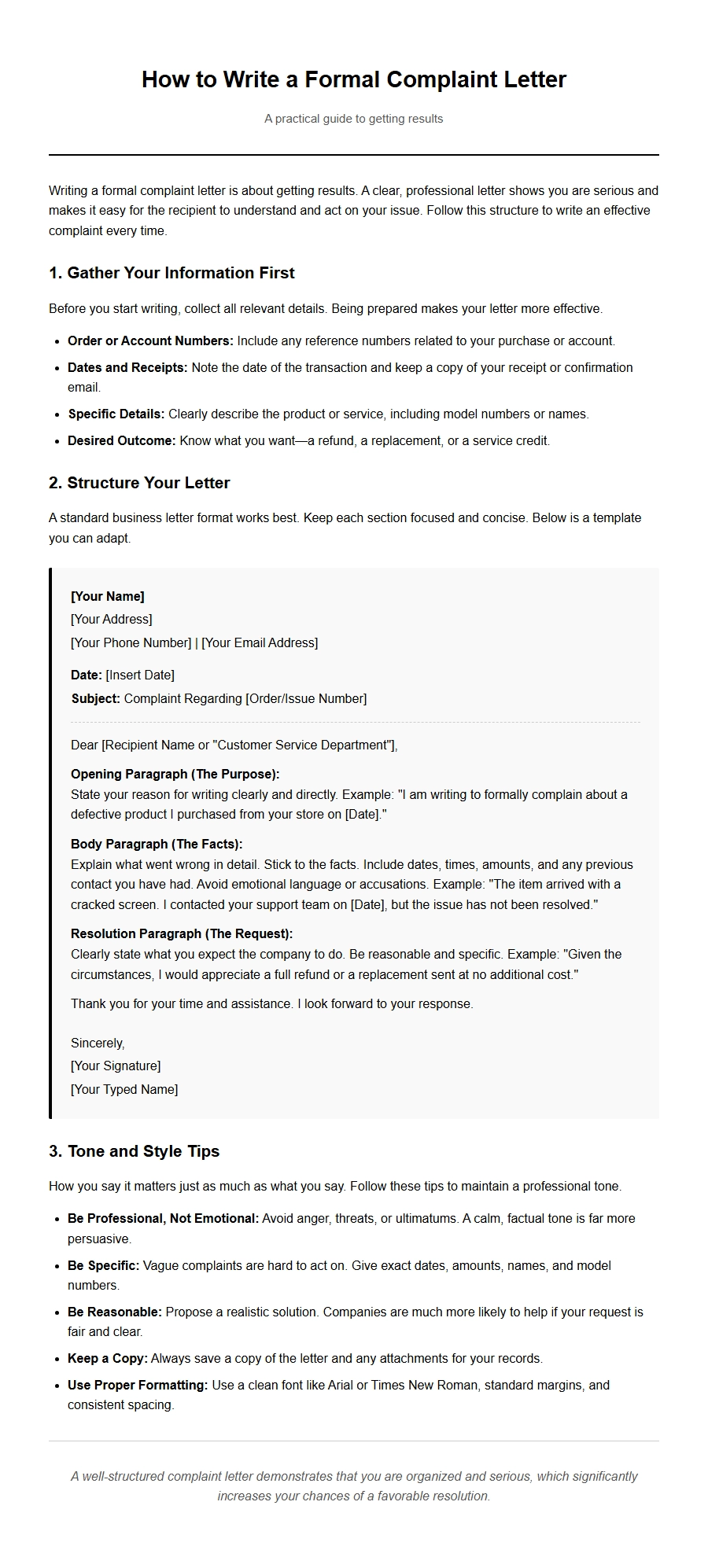 How to Write a Formal Complaint Letter
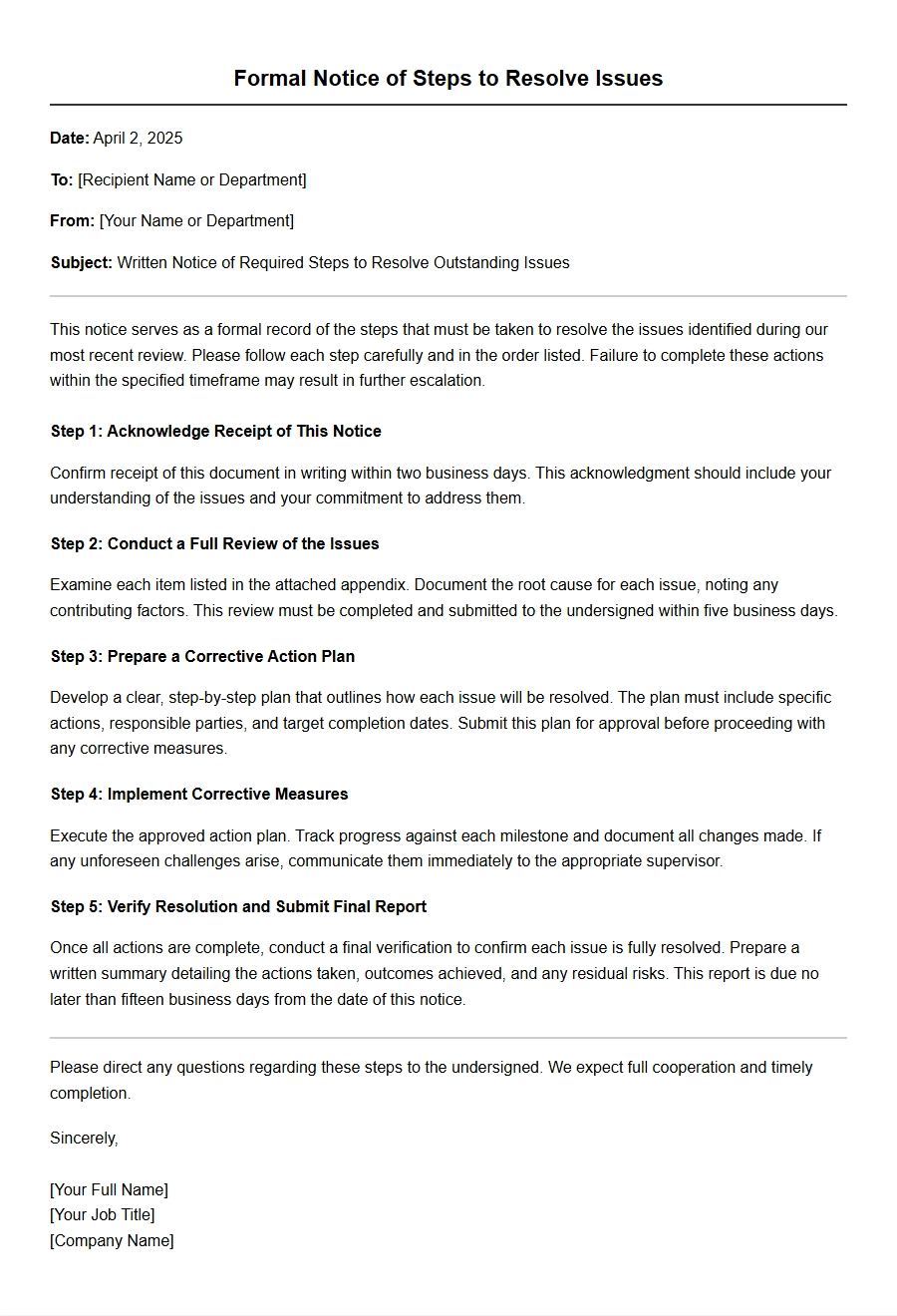 Steps to Resolve Issues via Written Notice
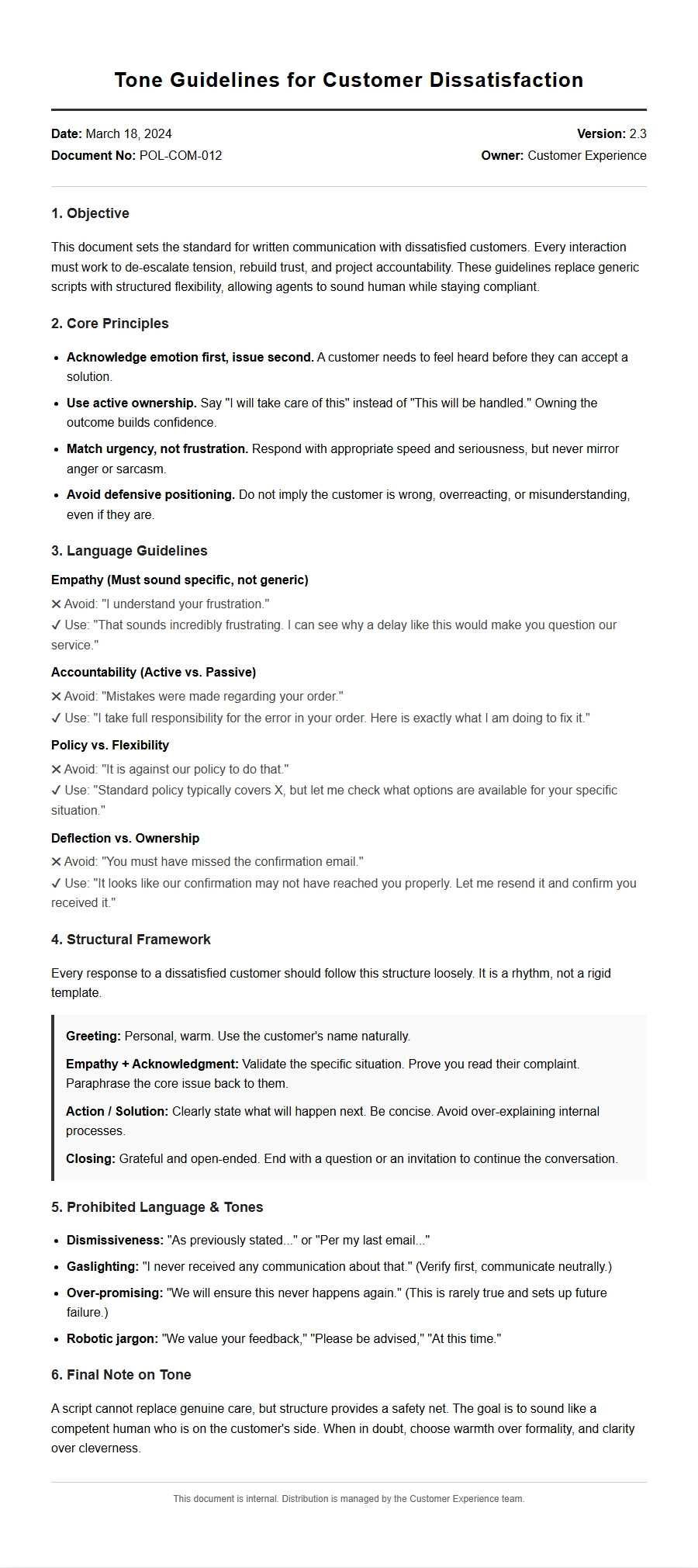 Tone Guidelines for Dissatisfied Customer Letters
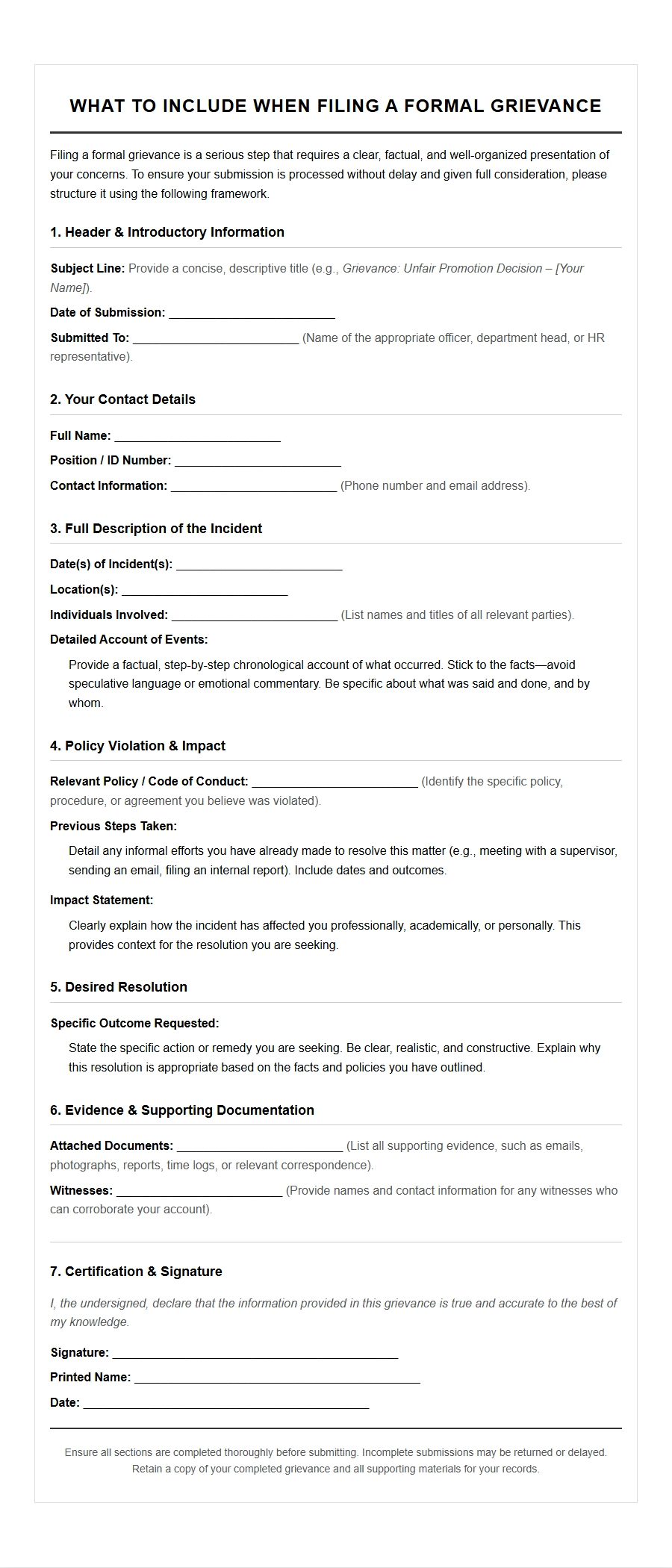 What to Include in a Formal Grievance Letter
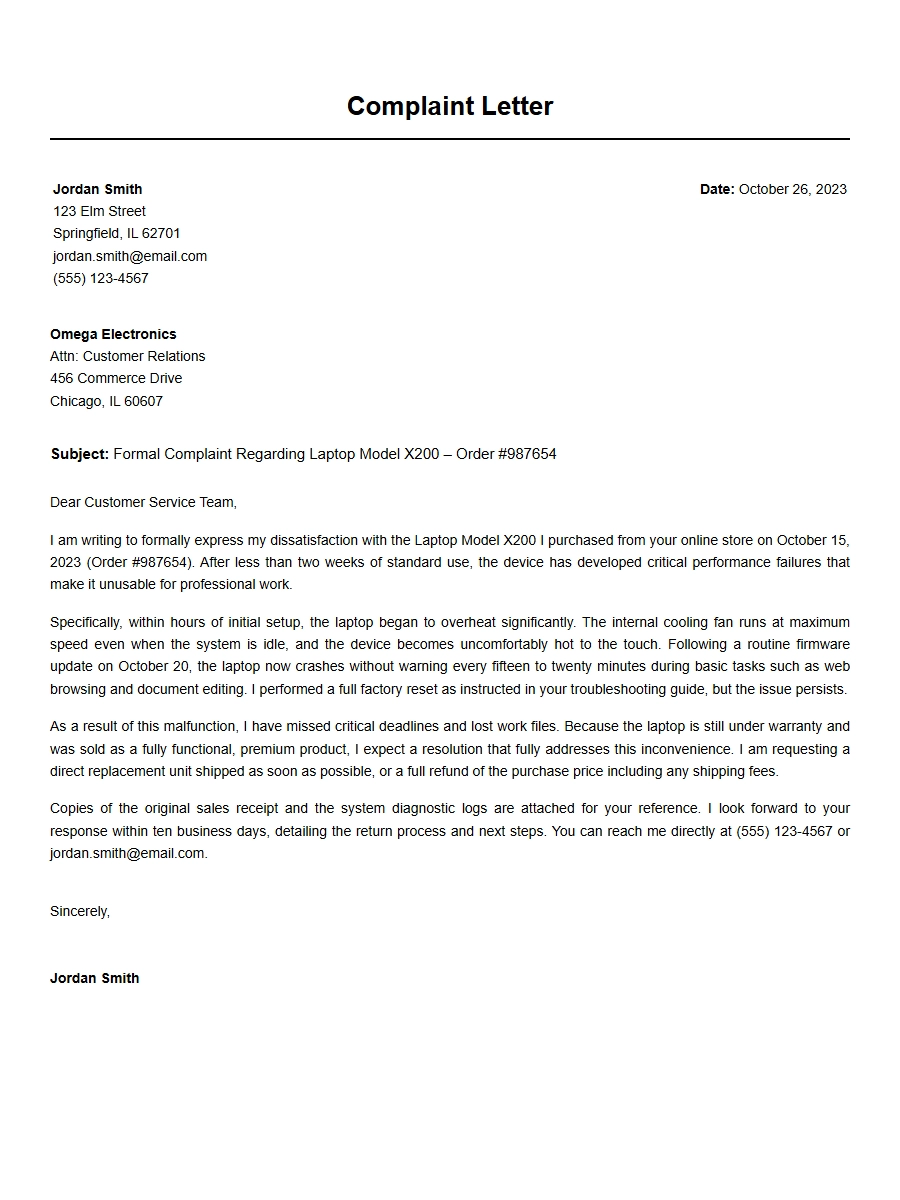 Structure of an Effective Complaint Letter
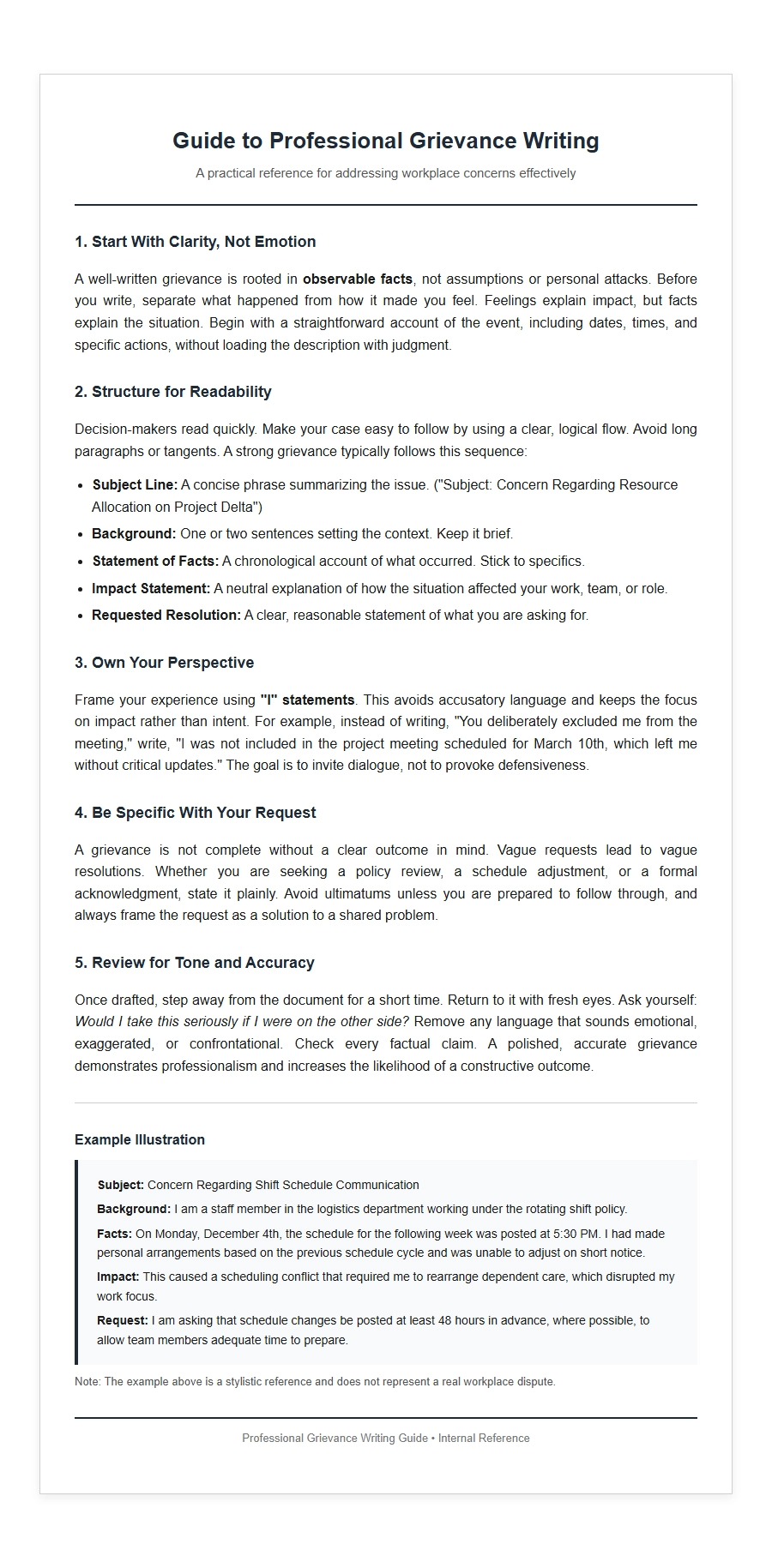 Best Practices for Writing Professional Grievance Letters