You need to write a formal complaint about workplace harassment, but your mind goes blank. The incident is heavy, the language has to be just right, and you're worried about sounding too emotional or too cold. That's exactly why a solid sample helps. It’s not cheating—it’s a smart starting point that gives you structure, the right tone, and key phrases you can tailor to your own situation.
Why using a sample makes your complaint stronger
A good letter template lays out the business letter format before you even type a word. It shows you where to put your address, the date, the subject line, and the inside address. It also models the kind of professional correspondence that Human Resources and legal teams expect. When you’re writing about harassment, clarity and professionalism are your best allies. A sample removes the guesswork so you can focus on what matters: describing the behavior, the impact, and what you’re asking for.
Category: Workplace Harassment Complaints
How to choose the right sample for your situation
Not all harassment complaints are the same. Yours might involve a single severe incident or a pattern of hostile conduct. Look for samples that match the type of harassment you experienced—verbal, physical, or discriminatory. Also consider the setting: a formal letter to HR may follow a more rigid letter structure than a complaint sent by email. If your workplace is more casual, you can still adapt a formal sample but keep the core facts and tone in writing respectful and specific.
Making the sample your own without losing your voice
The best customizable letter lets you swap in details like dates, names, and descriptions. Start by replacing the placeholder text with your own story. But don’t just copy the sample word for word—read it aloud and see if it sounds like you. If the language feels too stiff, loosen it slightly. For example, change “I am compelled to bring to your attention” to “I need to let you know about.” The goal is to sound both professional and human. A common mistake is to use an outdated salutation and closing like “To Whom It May Concern” when you know the recipient’s name. Update that to something direct like “Dear [Manager’s Name].”
Tailoring your opening paragraph to grab attention
Your first few lines should state the purpose clearly and urgently. Instead of a vague “I am writing to express concerns,” say exactly what happened with a date and a brief description. For instance: “On March 10, during the team meeting, [Name] made repeated comments about my appearance that made me feel unsafe.” That gives the reader a reason to pay attention immediately. If you’re also sending a digital letter format via email, keep the subject line specific: “Formal Complaint: Harassment by [Name] on [Date].”
Common formatting and tone pitfalls
Even a strong complaint can be undermined by small mistakes. Avoid using “Dear Sir” or “Dear Madam” unless you’re certain of the gender and role—prefer the person’s full name. If you’re printing the letter, use simple letterhead design with your contact info at the top. For email, skip the letterhead and just include your details below your name. Proofreading letter before sending is non-negotiable. Read it once for facts, once for tone, and once for typos. A single typo can make you seem careless, which weakens your credibility.
A letter of recommendation or a resignation letter sample might use very different language than a harassment complaint, but the principle is the same: you borrow structure, then infuse it with your own experience. The more you practice writing these letters, the faster and more confident you’ll become. Start with a sample, adapt it honestly, and run it past someone you trust if you can. The best complaints feel both professional and personal—because they are yours.
Examples for Different Needs
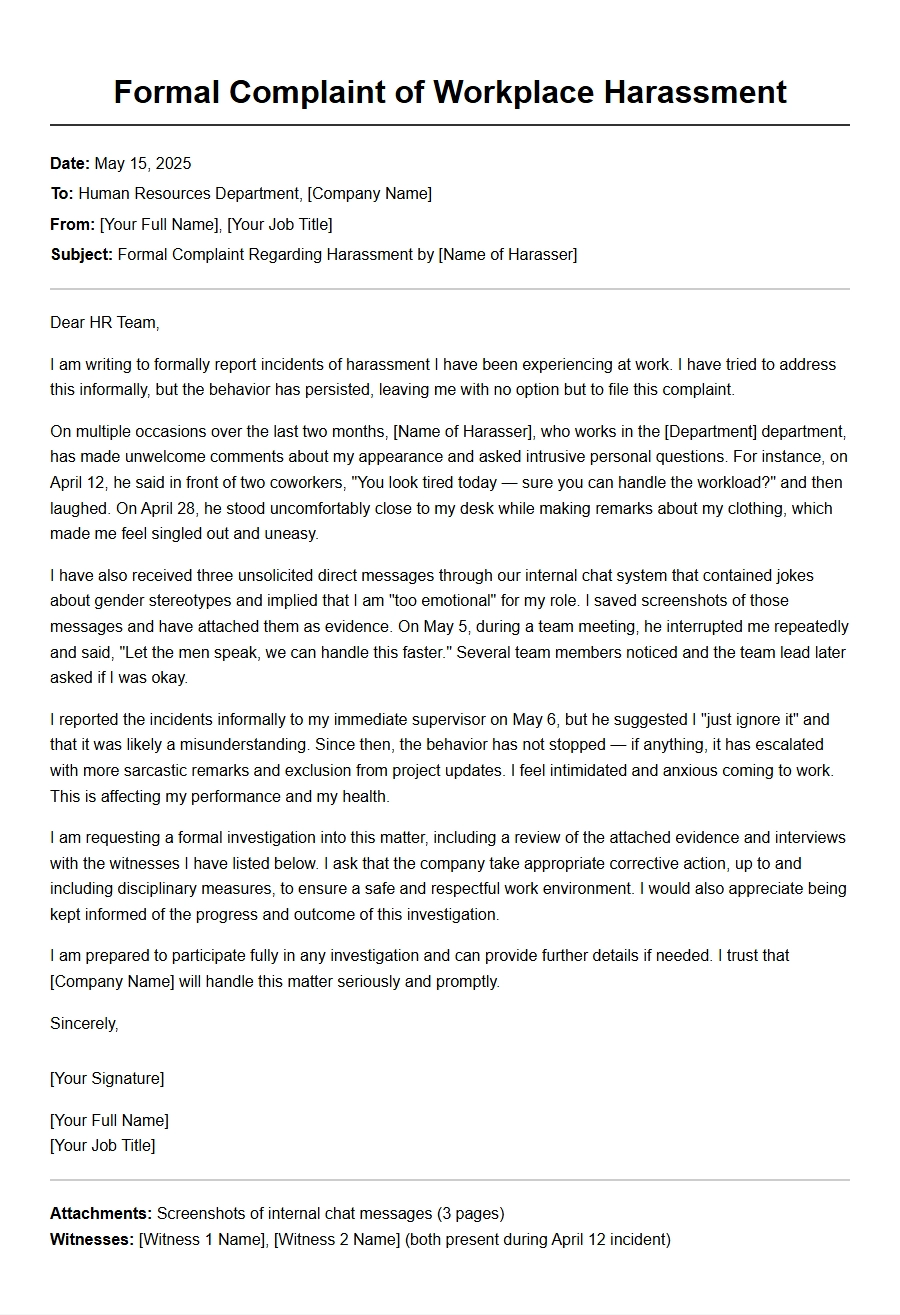
Formal Complaint Letter for Workplace Harassment
Complaint Letter to HR – Sexual Harassment
To: Human Resources Department
From: Jane Doe, Senior Analyst
Subject: Formal Complaint of Sexual Harassment by John Smith
I am writing to formally report a series of sexual harassment incidents involving my colleague John Smith (Employee ID 4521). The behavior has created a hostile work environment and violates company policy.
The following incidents have occurred over the past three months:
Date
Time
Location
Details
2024-10-12
3:30 PM
Break Room
Mr. Smith made explicit comments about my clothing and appearance.
2024-11-05
11:00 AM
Cubicle 4B
He leaned over my desk and whispered an inappropriate joke of a sexual nature.
2024-12-01
5:15 PM
Parking Lot
He blocked my path and insisted I go for a drink, refusing to take no for an answer.
I have documented each incident in my personal log and have the names of two witnesses who observed the December 1 event. I request an immediate investigation and appropriate action. Please treat this matter confidentially.
Date: December 5, 2024
Formal Grievance Form – Bullying and Intimidation
Grievance ID: GRV-2024-089
Employee: Michael Chen, Warehouse Associate
Supervisor: Karen Lee, Shift Manager
Nature of Complaint: Repeated bullying, verbal intimidation, and public humiliation.
I have been subjected to ongoing mistreatment by Supervisor Karen Lee since August 2024. The following specific instances demonstrate a pattern of behavior that makes it impossible for me to perform my duties safely:
October 15, 2024: During morning shift, Ms. Lee shouted at me in front of the entire team, calling me "incompetent" and threatening to "fire you if you can't keep up." She then threw a clipboard at my workstation.
November 8, 2024: She deliberately assigned me the most physically demanding tasks without training, then publicly mocked my slower pace.
November 22, 2024: In a one-on-one meeting, she told me I was "a waste of company resources" and that she would "make my life hell" if I reported her.
I have spoken with union representative Tom Brown (Badge #338) who advised me to file this formal grievance. I request a neutral third-party investigation and that Ms. Lee be removed from direct supervision of my team during the process. I have recorded dates, times, and names of colleagues present for each incident.
Filed: December 3, 2024
Email to Manager – Hostile Work Environment
To: Sarah O'Connor (s.oconnor@company.com)
From: David Kim (d.kim@company.com)
Subject: Formal Report – Hostile Work Environment Created by Team Lead Rivera
Dear Sarah,
I am writing to formally bring to your attention a hostile work environment that has developed in the Customer Support team due to the actions of Team Lead Maria Rivera. I have attempted to resolve this informally, but her behavior has escalated.
The key issues are as follows:
Constant belittling: Ms. Rivera interrupts me during team meetings and dismisses my contributions with phrases like "That's a stupid idea – stick to what you know."
Unequal workload: I have been assigned twice the number of tickets as my peers, with the same deadline. When I asked for help, she replied, "Figure it out or find another job."
Retaliatory scheduling: After I complained privately to you last month, she changed my shift to the least desirable hours (10 PM – 6 AM) without discussion.
I have attached a log of incidents with timestamps. I am requesting a transfer to another team pending an investigation. Please acknowledge receipt of this email. I expect this matter to be handled confidentially and in compliance with our anti-harassment policy.
Thank you. David Kim Date: December 2, 2024
Complaint Regarding Racial Discrimination
To: Equal Opportunity Office – Regional HQ
From: Aisha Patel, Data Analyst II
Subject: Formal Complaint – Racial Discrimination and Microaggressions
I write this complaint to document a pattern of racial discrimination I have experienced in the IT Department under the supervision of Director Robert Thompson. I am a woman of South Asian descent and the only person of color on my team.
Examples of discriminatory treatment include:
Slurs and jokes: On multiple occasions, Mr. Thompson has made mock Indian accents when speaking to me and told an offensive joke about "curry and call centers" during a team lunch.
Exclusion from opportunities: Despite my performance ratings in the top 10%, I have been passed over for two high-profile projects that were given to less experienced white colleagues.
Disparate treatment in feedback: My performance reviews include subjective comments such as "needs to be more assertive" and "communication style does not fit our culture," while my white peers receive only objective metrics.
I have documented dates, witnesses, and copies of emails that contain microaggressions. I request a formal investigation and corrective action in accordance with our Diversity & Inclusion policy. I also ask to be reassigned to a different director until the matter is resolved.
Date: November 29, 2024 Witnesses Available: James Lee (IT), Priya Singh (Consultant)
Witness Statement for Harassment Investigation
Statement ID: WS-1212-01
Witness Name: Mark Johnson, Accountant
Date of Statement: December 12, 2024
Incident Under Investigation: Harassment complaint filed by Carla Reyes against Supervisor Derek Dunn.
I am providing this statement voluntarily regarding events I observed on November 28, 2024, in the finance department. At approximately 2:15 PM, I entered the break room and saw Mr. Dunn standing very close to Ms. Reyes, who had her back against the counter. Her body language appeared tense, and she was holding a coffee mug with both hands.
Mr. Dunn said: "You know you only got that promotion because of your looks, right? Don't let it go to your head." He then laughed and touched her shoulder. Ms. Reyes stepped away and said, "Please don't touch me." Mr. Dunn replied, "You're so sensitive. Lighten up."
I was present for about two minutes before leaving. I reported this to my team lead, Anna Wong, the same day. I have no prior relationship with either party, and I am willing to testify further if needed.
Signature: Mark Johnson
Formal Complaint Against Supervisor – Retaliation
To: Ethics and Compliance Committee
From: Lisa Tran, Project Coordinator
Subject: Complaint of Retaliation After Reporting Unsafe Conditions
I am filing this formal complaint under our company's whistleblower protection policy. On October 15, 2024, I reported a safety violation to my supervisor, Gary Norton. The violation involved faulty wiring in our office that had caused a minor electrical fire. Mr. Norton told me to "keep quiet" and not escalate.
I escalated to the Safety Officer anyway. Since then, Mr. Norton has engaged in clear retaliation:
Date
Retaliatory Act
Evidence
Oct 22
Removed me from a key project without explanation
Email reassignment
Nov 5
Issued a written warning for "poor attitude" – first ever in 3 years
Copy of warning
Nov 18
Changed my performance goals to impossible targets
Revised goals document
I have copies of all correspondence. I request that Mr. Norton be instructed to cease all retaliation, that my written warning be rescinded, and that an investigation be opened into his conduct. I fear further reprisal if my anonymity is not protected.
Date: November 25, 2024
Complaint Letter to Ethics Committee – Repeated Verbal Abuse
To: Ethics Committee
From: Robert Garcia, Sales Representative
Subject: Formal Complaint – Verbal Abuse by Manager Helen Cruz
I am compelled to write this letter due to the relentless verbal abuse I have suffered from my direct manager, Helen Cruz, over the past six months. Despite my attempts to address this directly with her, the situation has deteriorated.
Specific examples of her verbal abuse include:
Daily yelling: Ms. Cruz routinely shouts at me in her office with the door open, using profanity. On December 1, she screamed, "You're an idiot! How did you even get hired?" other employees heard.
Personal insults: She has called me "lazy," "stupid," and "a waste of space" during team meetings.
Threats: On November 20, she told me, "I will make sure you never work in this industry again if you complain."
I have kept a dated log with 12 separate incidents. I also have witnesses from the team (Mary Adams, Tom Cheng) who have offered to corroborate. I request that the Ethics Committee intervene and impose disciplinary measures. I also ask for a temporary reporting structure change to prevent further abuse during the investigation.
Submitted: December 10, 2024
Incident Report for Physical Harassment
Incident Report ID: IR-2024-15
Reporting Employee: Fatima Hassan, Lab Technician
Date of Incident: December 8, 2024, 4:45 PM
Location: Laboratory B, Storage Room
Description: While I was retrieving supplies from the storage room, colleague Daniel Edwards entered and blocked the door. He stood very close, preventing me from leaving, and said, "You've been ignoring me. I'm going to make you pay attention." He then placed his hand on my waist and squeezed. I pushed him away and exited quickly.
Witnesses: None in the immediate area, but Security Camera B-12 covers the storage room entrance. I have requested footage be preserved.
Prior Incidents: I had reported unwelcome attention from Mr. Edwards to Supervisor Wang on November 20, 2024, but no action was taken. I am filing this report formally per company policy.
Actions Taken: I went directly to the security office and filed an initial verbal report with Officer Kim at 5:10 PM. I also sent an email to HR at 5:30 PM. I am now providing this written account.
Signature: Fatima Hassan
Request for Investigation – Psychological Harassment (Mobbing)
To: Workplace Harassment Investigation Unit
From: Elena Vasquez, Software Developer
Subject: Request for Formal Investigation into Systematic Mobbing
I respectfully request an investigation into a systematic campaign of psychological harassment (mobbing) directed at me by a group of three colleagues in the Development Team: lead developer Ryan Cole, designer Jessica Wu, and QA analyst Ben Park. The coordinated behavior has been ongoing since September 2024.
Examples of mobbing tactics used against me:
Isolation: I am excluded from team lunches, group chats, and project meetings despite being on the project. When I ask for information, I am told "it was discussed – you should have been there."
Sabotage: Code I write is deliberately broken by unauthorized changes (proven by Git logs). I am then blamed for bugs.
Rumors: Ms. Wu spreads false rumors that I am planning to quit, leading management to stop assigning me new work.
Public humiliation: During stand-ups, Mr. Cole interrupts me and rephrases my updates as if I am incompetent.
I have collected screenshots, log files, and a list of 15 specific incidents with dates. I request a neutral investigator and full confidentiality. I am afraid for my mental health and career if this continues.
Date: December 7, 2024
Formal Complaint Against Coworker – Inappropriate Comments
To: Office of Employee Relations
From: Tomás Rivera, Marketing Coordinator
Subject: Formal Complaint Regarding Inappropriate Comments by Alice Knight
I am filing this complaint against Alice Knight (Marketing Director, Office 203) for a pattern of inappropriate and offensive comments that constitute harassment under our company's code of conduct. While the comments are not explicitly sexual or racial, they target my personal life and create a demeaning atmosphere.
Summary of remarks made in the presence of coworkers between October and December 2024:
October 14: "Still single? You must be doing something wrong. Want me to set you up with my cousin?" – followed by laughing.
November 3: In a team meeting: "Tomás, you're too quiet. Are you depressed? Maybe get some meds."
November 28: While I was on a phone call: "Who's that – your mommy? Call her back later, we have real work to do."
December 2: During a one-on-one: "You know, people think you're weird because you don't join happy hour. Lighten up."
I have asked Ms. Knight three times to stop making personal remarks. She dismisses me by saying I am "too sensitive." I have witnesses (Pat Johnson, Nora Flynn) who can confirm these remarks. I request a written warning to Ms. Knight and a formal acknowledgment that this behavior is unacceptable.
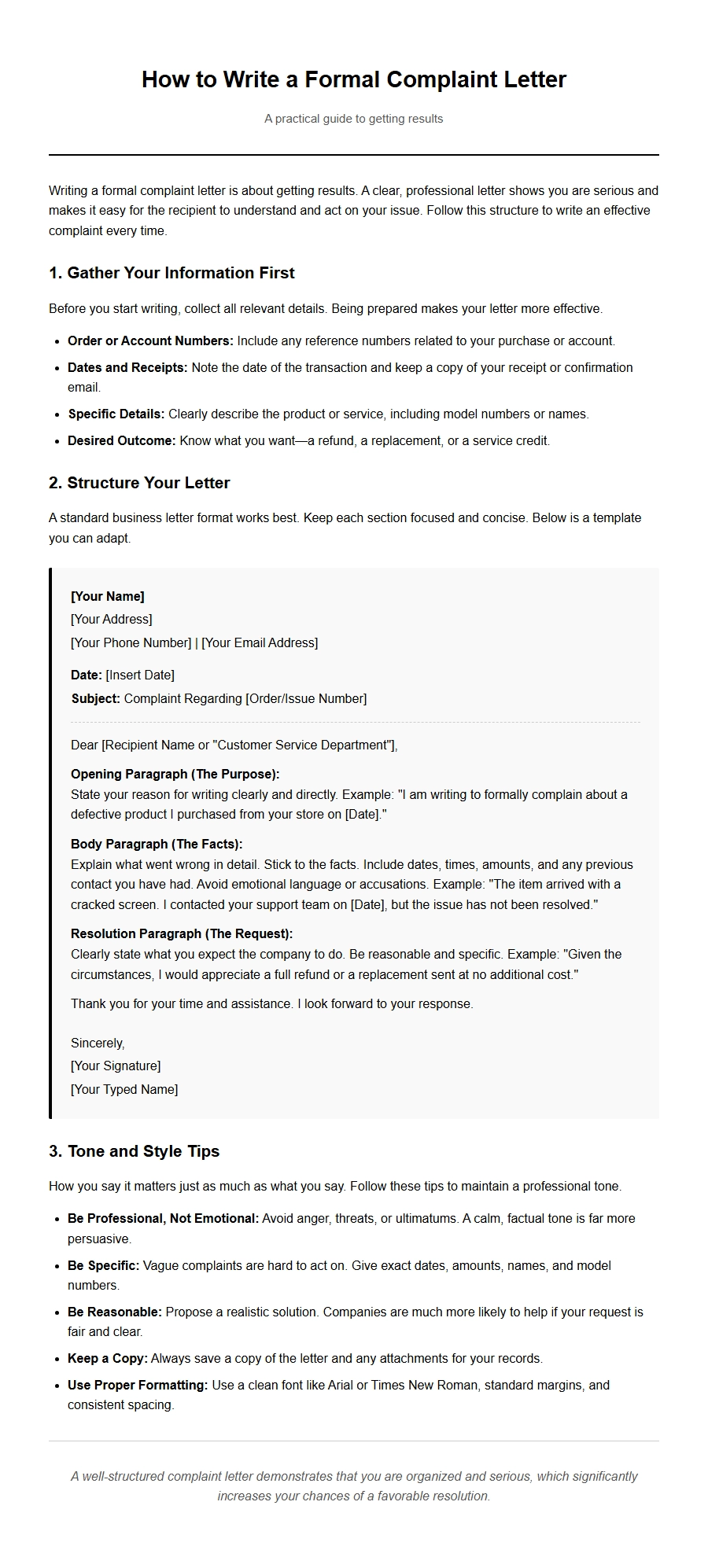 How to Write a Formal Complaint Letter
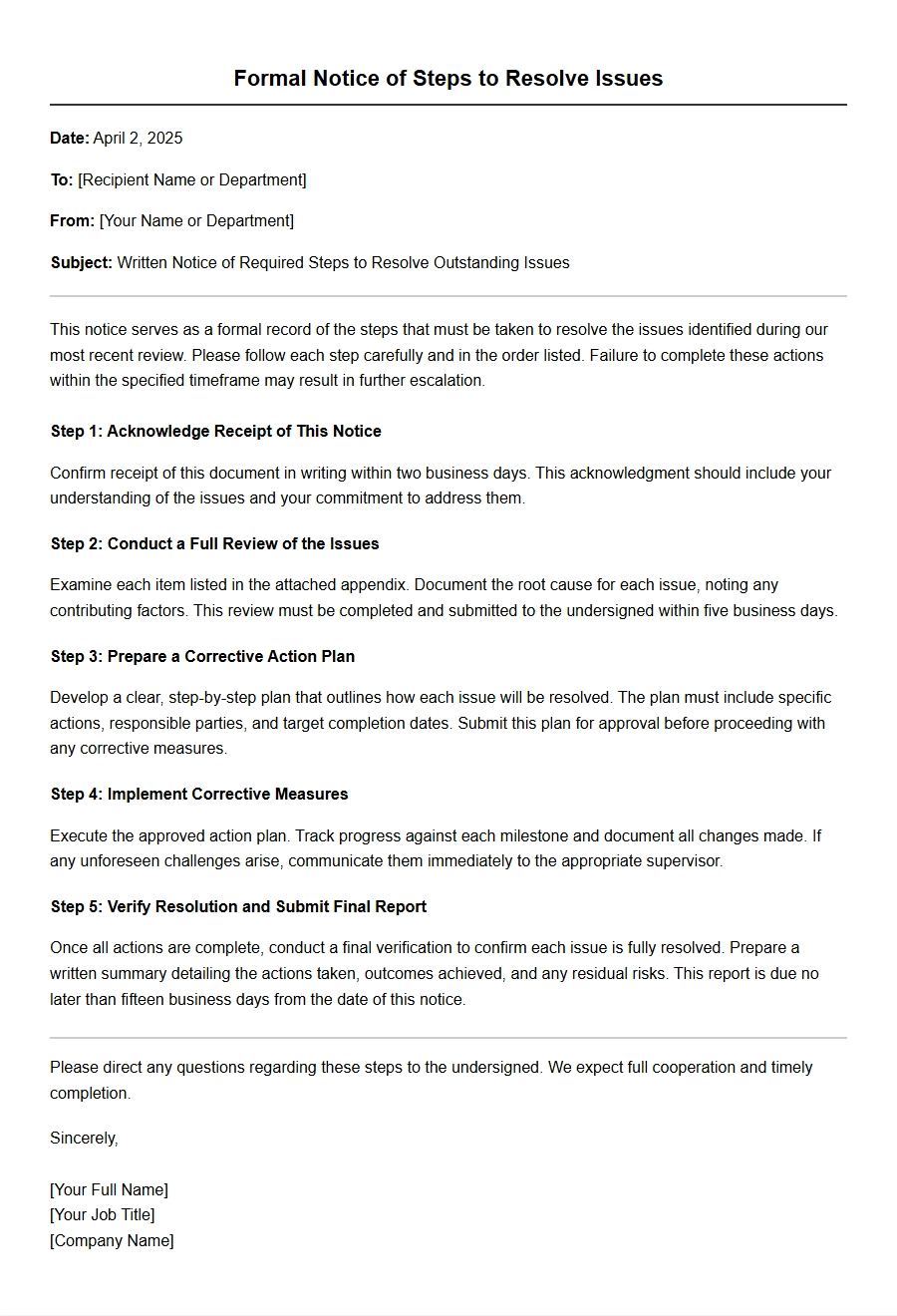 Steps to Resolve Issues via Written Notice
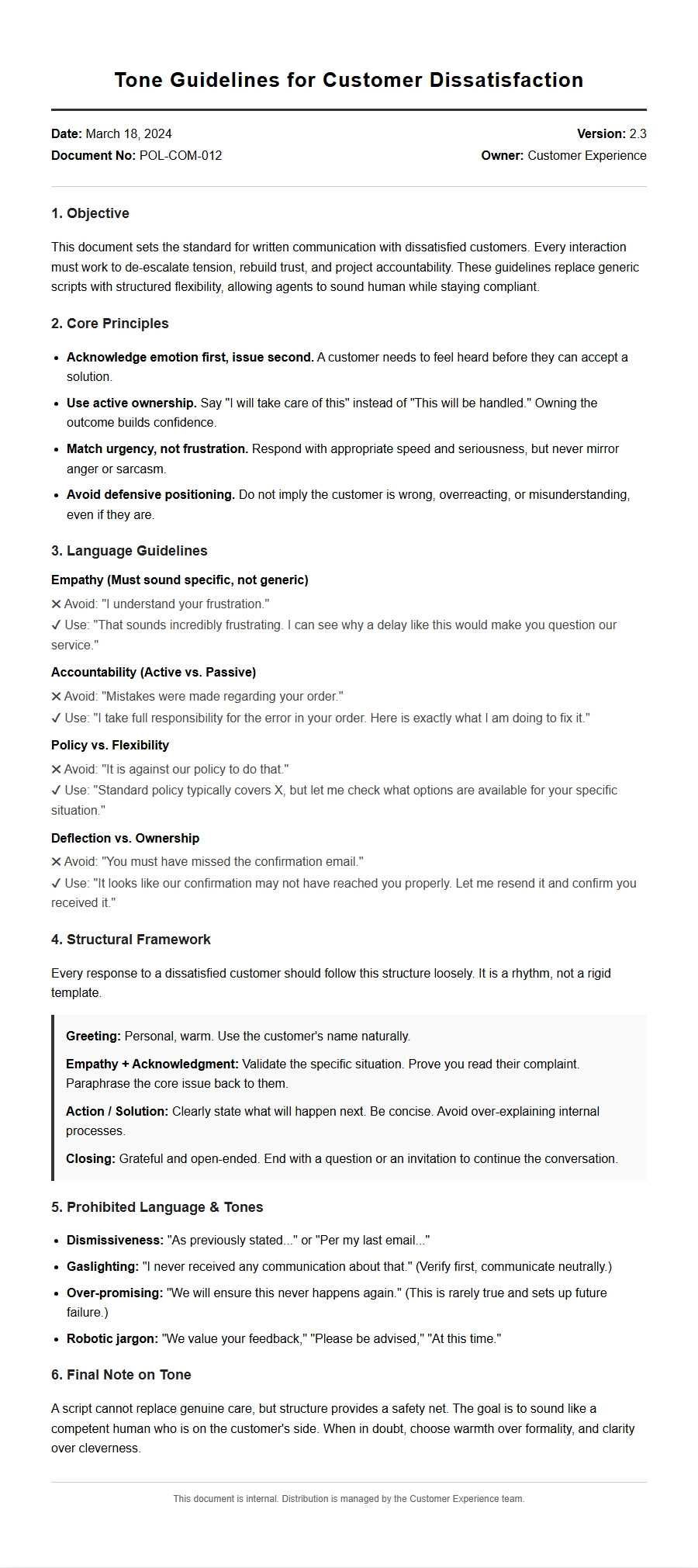 Tone Guidelines for Dissatisfied Customer Letters
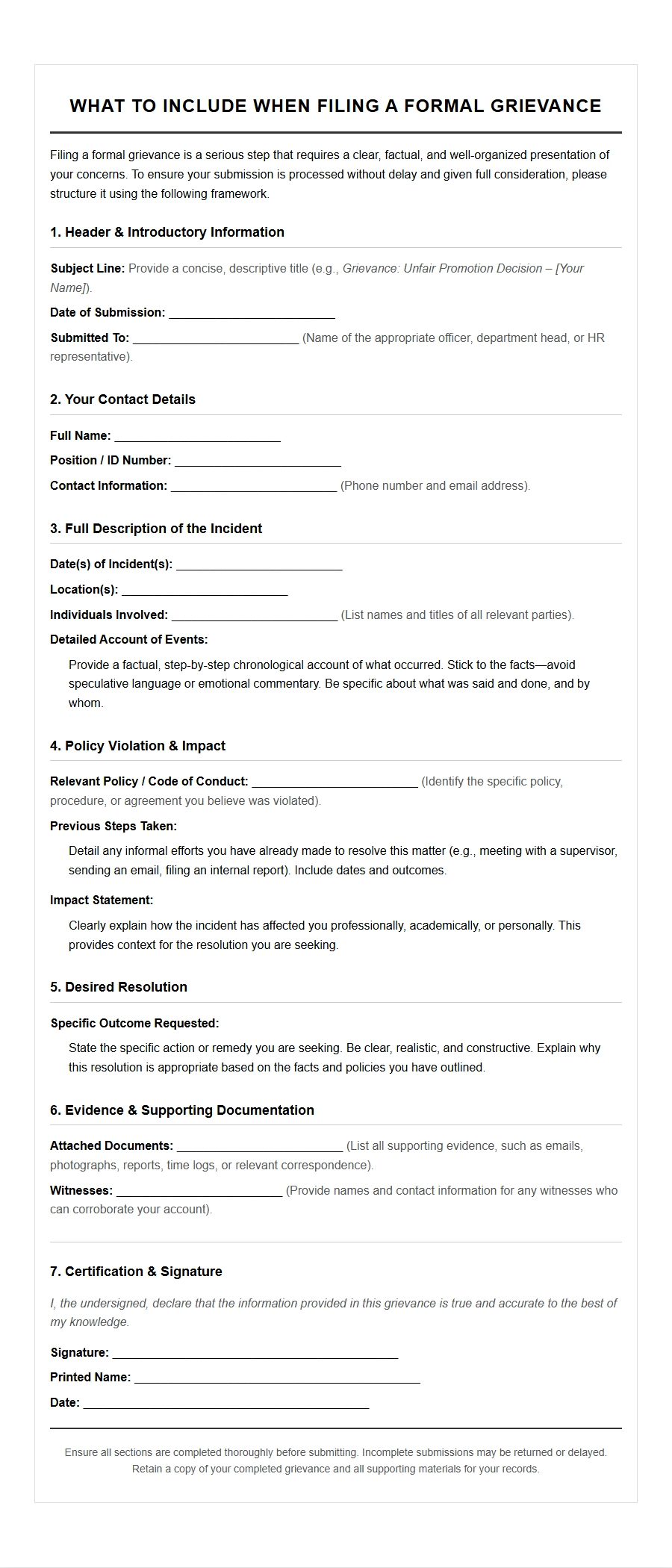 What to Include in a Formal Grievance Letter
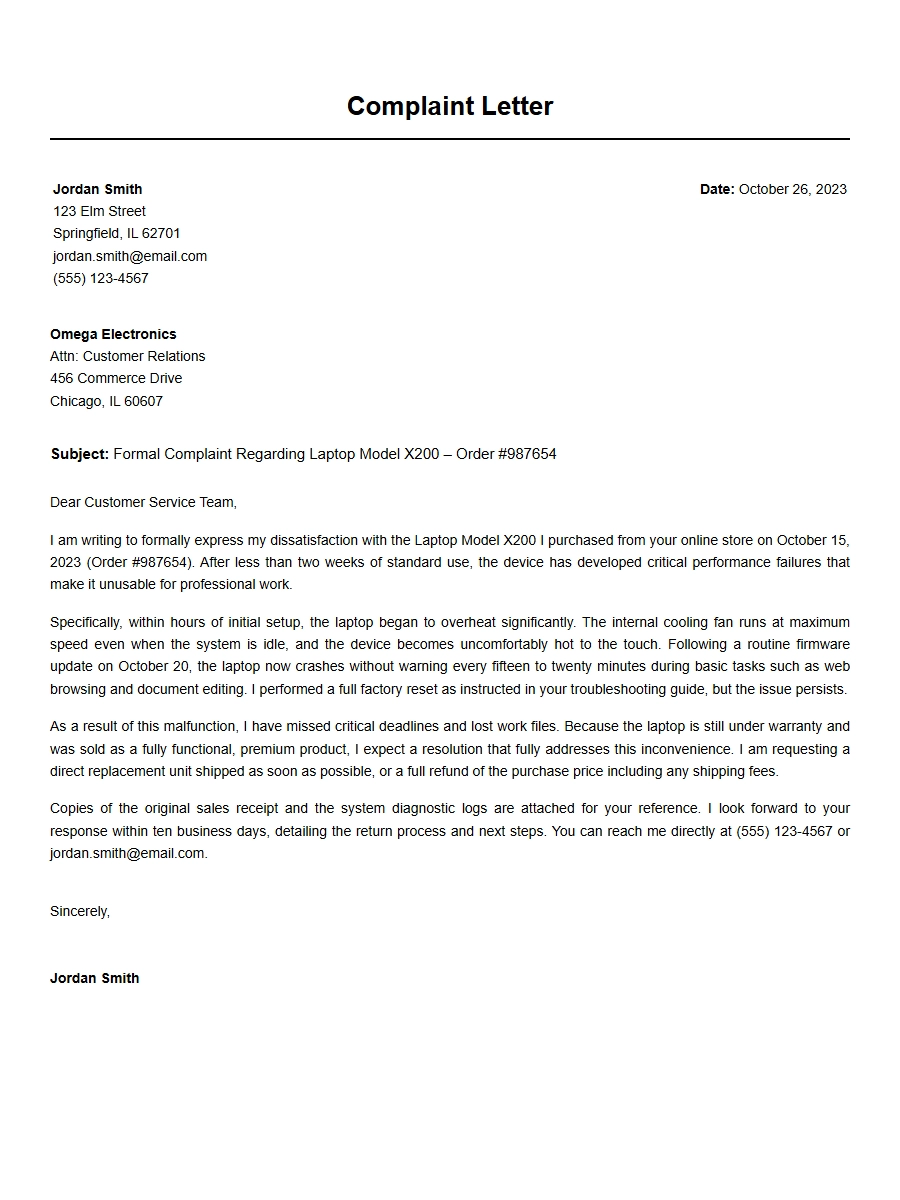 Structure of an Effective Complaint Letter
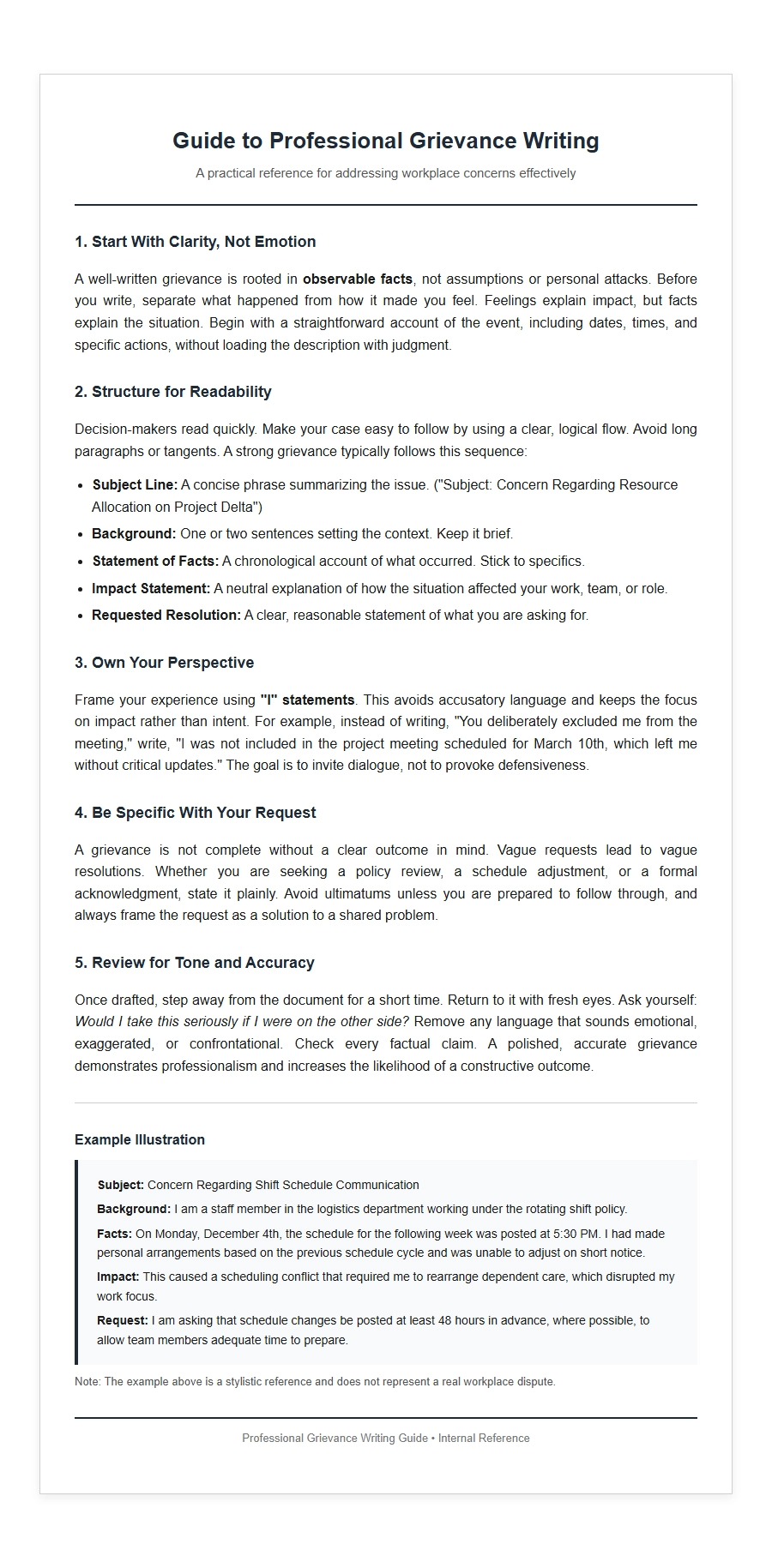 Best Practices for Writing Professional Grievance Letters