You’re staring at a blank email or message box. Someone you care about is grieving, and you want to reach out. But the words just aren’t coming. That’s completely normal. Digital sympathy messages can feel even trickier than handwritten notes because you can’t control the timing or the tone as easily. The pressure to get it right can be overwhelming.
Using a thoughtfully written sample as a starting point isn’t cheating. It’s a smart way to overcome that initial block. A good letter template gives you a respectful letter structure and the right salutation and closing. Think of it as a guide that handles the formal scaffolding so you can focus on adding your own warmth. The best customizable letter samples leave room for your specific memory or inside joke, which is what truly comforts a grieving person.
Category: Digital Sympathy Best Practices
The first decision is platform. A direct message on social media calls for a shorter, more casual approach than an email or a message left in a digital condolence book. For a formal digital letter format, you’ll want to include a clear subject line, a proper greeting, and a structured body. The tone in writing should match your relationship. If you were close colleagues, a slightly more formal professional correspondence tone works. If you’re a close friend, let your genuine voice show through.
Start with the opening. A simple "I was so saddened to hear about your loss" is direct and honest. The body is where you personalize. Did you find a specific memory that captures the person’s spirit? Mention it briefly. Don’t worry about being profound. Your presence in their digital inbox is the message. End with a straightforward offer of support, like "Thinking of you during this difficult time," rather than generic platitudes.
One big mistake is ignoring letter writing etiquette for the specific platform. Avoid overly ornate fonts or colors in an email. Don’t use outdated salutation and closing like "To Whom It May Concern" for a condolence note. "Dear [Name]" works beautifully. Also, always spend a moment proofreading letter content. A typo in a sympathy message can distract from your sentiment. Just as you wouldn’t copy a resignation letter sample without personalizing the details, you shouldn’t send a generic sympathy message.
If you were very close to the person who passed, you might worry about finding the right words. Our guide on how to write a letter when you knew them well can help you navigate that specific kind of grief. Maybe the loss is of a beloved pet. Many people feel unsure how to express sympathy here, but our resource on condolences for loss of dog or pet offers a warm and appropriate starting point.
After you send your message, you might receive a kind reply or even a gift. It’s thoughtful to acknowledge this, and learning how to write a thank you note for sympathy gifts is a necessary next step in the process. Certain losses require a very specific touch. For instance, writing a sympathy message for loss of twin sibling involves acknowledging a uniquely profound bond.
If you are writing to a spouse, the stakes feel incredibly high. You want to offer deep support without overstepping. Our article on what to say in a condolence letter to a spouse breaks down how to strike that balance.
The goal isn't to write a perfect letter. It’s to send a meaningful message. Use a sample to break the ice, but let your own voice carry the sentiment. The more you practice reaching out, the less intimidating it becomes. Your willingness to show up, even digitally, is what truly matters to someone who is grieving.
Browse Sample Ideas
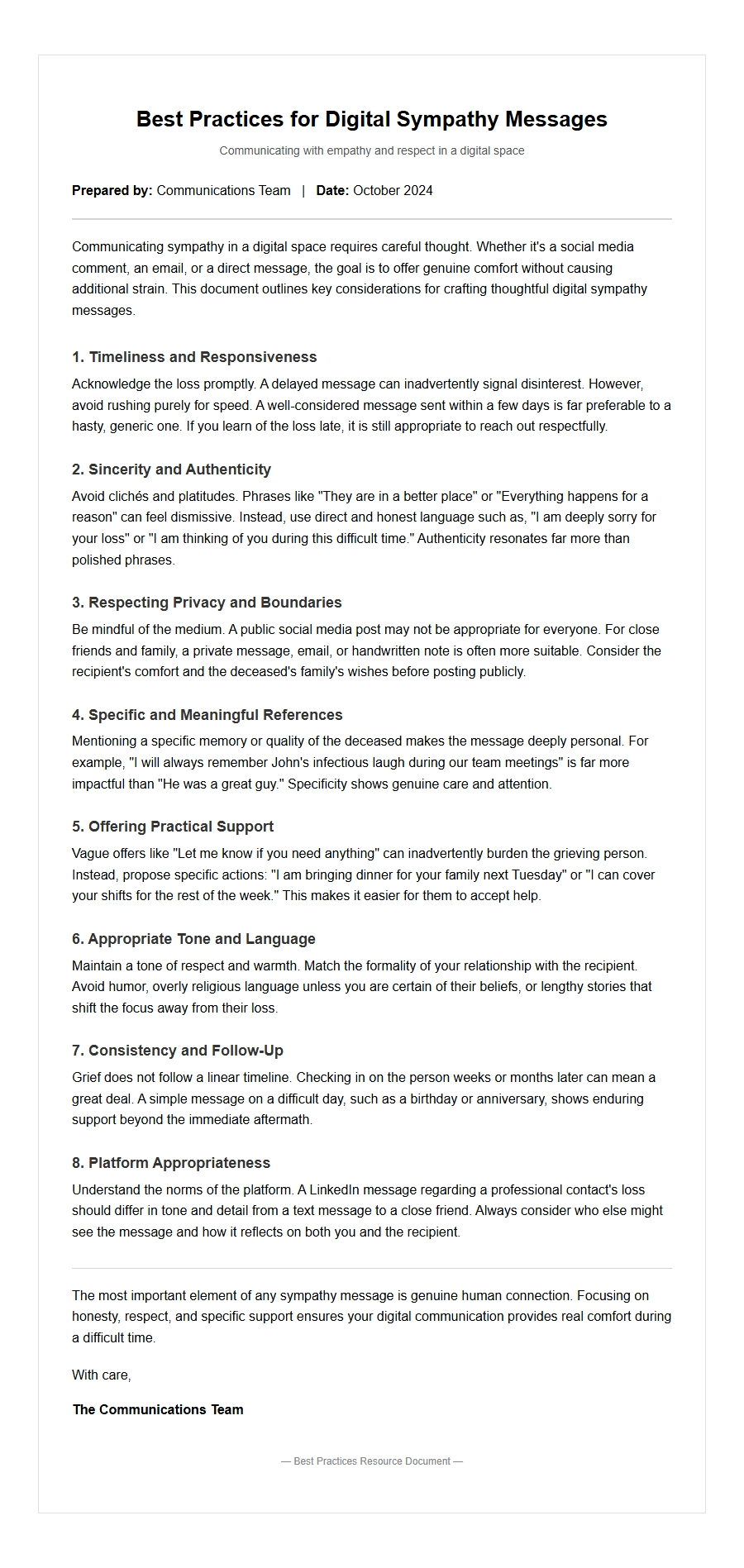
Best Practices for Digital Condolence Letters
Timely Acknowledgment
When expressing sympathy digitally, promptness shows you care. Aim to send your message within a day or two of learning the news. A short, sincere note is better than a delayed, lengthy one.
Example template:
Dear [Name], I am so deeply sorry to hear about the passing of [Deceased's Name]. I wanted you to know I am thinking of you during this unimaginably difficult time. Please don't hesitate to reach out if you need anything at all.
Best practices:
Send within 48 hours when possible
Keep initial message brief – a longer story can come later
Use the person's preferred platform (email, social media, or text)
Personalize with a Memory
A generic condolence can feel hollow. One of the most meaningful best practices is to include a specific, positive memory of the deceased. This honors their life and shows you truly knew them.
Example paragraph:
I will never forget the time [Deceased's Name] taught me how to make their famous apple pie. They had such patience and joy in sharing that recipe. Every time I bake it, I think of their laughter.
How to do it:
Choose a short, warm memory
Mention a shared experience or quality you admired
Avoid any negative or ambiguous recollections
Keep it to one or two sentences if the message is brief
Offer Specific Support
Vague offers like “let me know if you need anything” can overwhelm grieving people. Instead, propose concrete help. This best practice makes it easier for them to accept support.
Table of actionable offers:
Type of help
Sample wording
Meals
“I'd like to bring dinner on Tuesday. Is that okay?”
Errands
“I can pick up groceries or drop off mail – just say when.”
Childcare
“I'm free Saturday afternoon if you need someone with the kids.”
Listening
“I'm here to listen whenever you want to talk, even if it's late.”
State your offer clearly and let them respond without pressure. A follow-up after a few weeks is also appreciated, as initial support often fades.
Choose the Right Platform
Not all digital channels are appropriate for every relationship or loss. Best practice is to match the platform to your closeness and the family's announced wishes.
Guidelines:
Close family or intimate friend: A personal email or private message is best. Avoid public Facebook posts if you haven't confirmed they welcome it.
Acquaintance or colleague: A brief, respectful email sent to the bereaved’s work or personal account works well.
Extended network: If there is an official online memorial or announcement page, a comment there can be appropriate.
Group messages: Use caution – it's often better to write individually than to include the person in a group chat.
When in doubt, err on the side of privacy. You can always send a more personal message later.
Keep It Brief but Heartfelt
Condolence messages in digital form should be concise. Respect that the recipient may be overwhelmed and not able to read long paragraphs. A focused, sincere few lines can speak volumes.
Example of a balanced digital message:
Dear [Name], I was heartbroken to learn of [Deceased's Name]’s passing. They brought so much light to those around them. I’m holding you in my thoughts and sending all my love. Please know I’m here for you in the weeks ahead.
Phrases like “Heaven gained an angel” or “Everything happens for a reason” can feel dismissive or insensitive. Best practice is to speak from the heart using language that feels authentic to your relationship.
Instead of clichés, try these substitutes:
Avoid saying
Consider saying
“They are in a better place”
“I miss them terribly and know you do too.”
“I know how you feel”
“I can only imagine how hard this must be.”
“Time heals all wounds”
“I’m here for you whenever you need a friend.”
“It was God’s plan”
“I have no words, only love for you.”
Stick to expressing your own feelings (sadness, love, gratitude for the person) rather than trying to explain the loss.
Respect Cultural Norms
Digital sympathy messages should honor the cultural and religious background of the bereaved. What is appropriate in one tradition may be offensive in another. Research or ask a mutual friend if unsure.
Examples of cultural considerations:
Jewish tradition: Avoid sending flowers; a donation to a charity is often preferred. Shiva lasts seven days – timing matters.
Muslim tradition: Use “Inna lillahi wa inna ilayhi raji'un” (We belong to God and to Him we return). Offer practical help during the three-day mourning period.
Hindu tradition: Saying “Om Shanti” (peace) is common. Grief is expressed openly, and the family may appreciate a brief, respectful message.
Buddhist tradition: Focus on peace and compassion. Mentioning positive karma or the deceased's good deeds is appropriate.
When in doubt, a simple “I am so sorry for your loss” is universally respectful.
Include a Meaningful Quote
A carefully chosen quote can enhance a digital condolence if it genuinely reflects the deceased's spirit or the sender's feelings. Use it sparingly and always attribute it.
Example with a quote:
Dear [Name], I was so saddened to hear about [Deceased's Name]. They lived with such grace and kindness. I recently came across this line by Kahlil Gibran that made me think of them: “The deeper that sorrow carves into your being, the more joy you can contain.” I hope that brings you a small measure of comfort. With deepest sympathy.
Tips for using quotes:
Pick something that the deceased would have loved or lived by
Keep it short (one or two lines)
Always explain why you chose it
Do not use generic or overused quotes without context
Follow-Up After the Initial Message
One of the overlooked best practices for digital sympathy is the follow-up. Grief doesn't follow a timeline, and a message sent weeks or months later can mean more than the first one.
Sample follow-up email (4–6 weeks after loss):
Dear [Name], I've been thinking of you and wanted to check in. I know the days after a funeral can be especially hard. If you ever want to talk, grab coffee, or just sit in silence, I would be honored to be with you. No pressure – just wanted you to know I haven't forgotten your loss.
Schedule for thoughtful outreach:
1 week after: a quick text or private message
1 month: a short email or card
3 months: a check-in note, especially around holidays or anniversaries
1 year: an acknowledgment of the anniversary of the death
Use a Warm Closing
The closing of a digital condolence message sets the final tone. A cold or rushed ending can undo the warmth of your words. Best practice is to choose a closing that feels genuine and hopeful without being forced.
Preferred closings:
Appropriate closings
Context
“With deepest sympathy,”
Formal relationship or professional setting
“Thinking of you always,”
Close friend or family
“With love and support,”
Intimate friend, when love is expressed
“Holding you close in my heart,”
Very close relationship, especially for a parent or sibling
Closings to avoid: “Best,” “Cheers,” “Talk soon,” “Sincerely” (too cold for personal messages). Always include your name and, if appropriate, your relationship to the deceased or the bereaved.
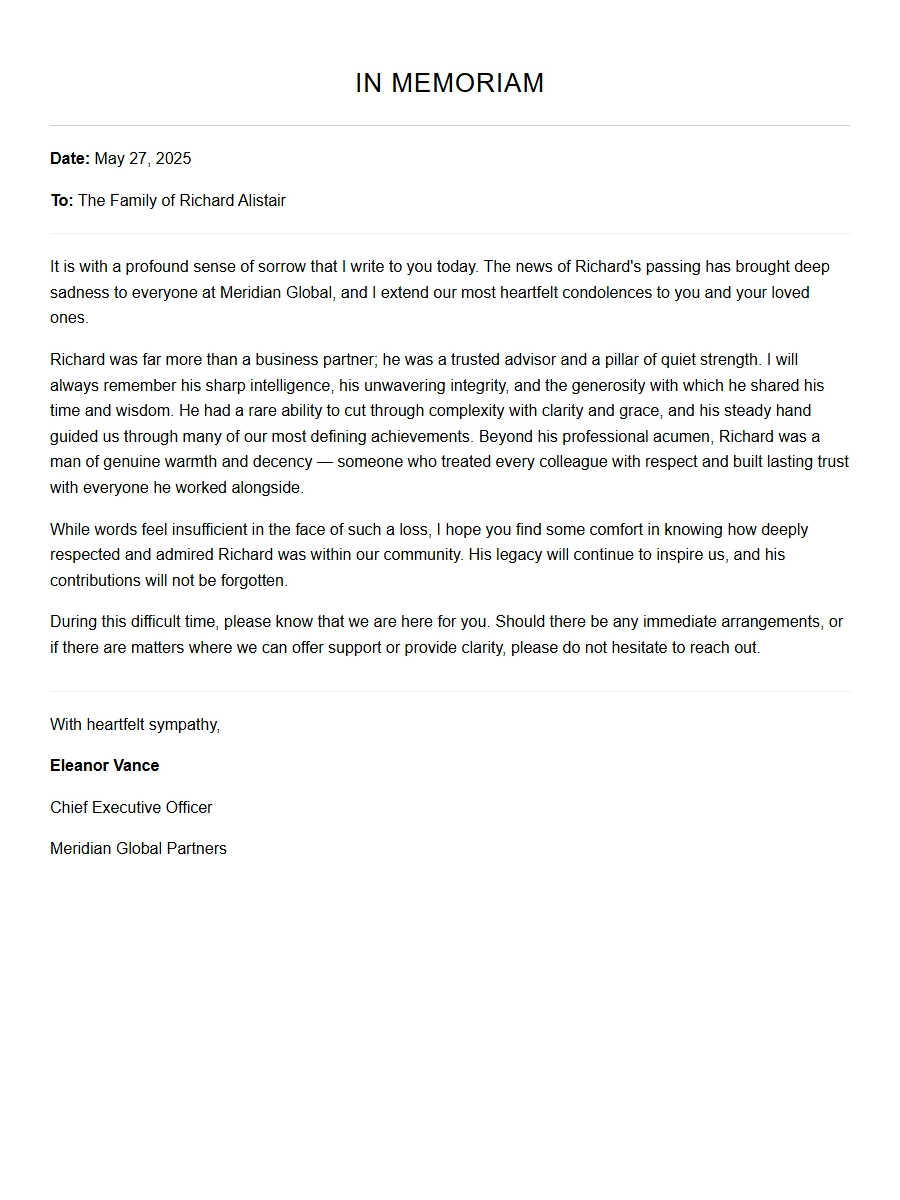 Formal Condolence Message for a Business Partner
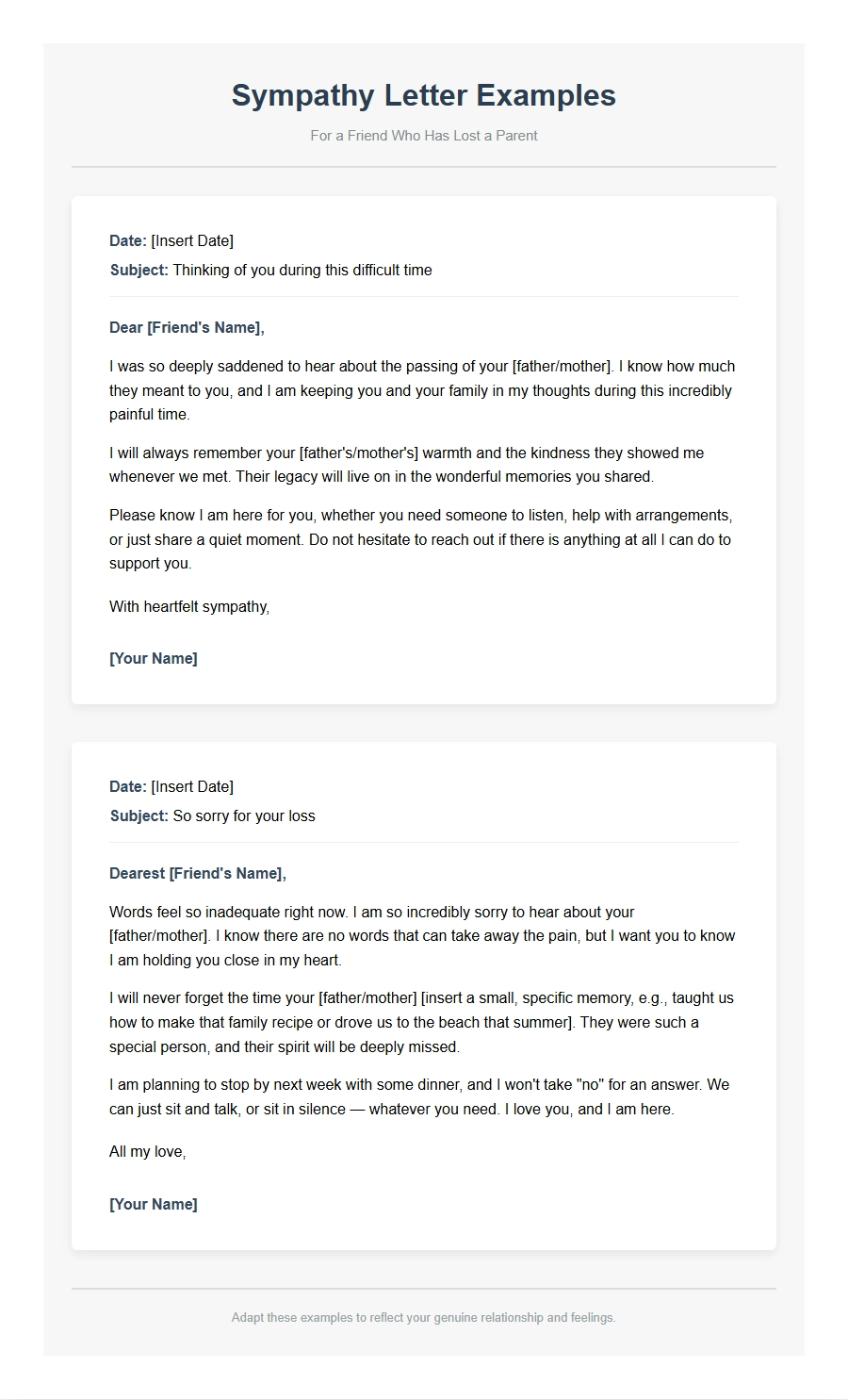 Sympathy Letter Examples for a Friend Who Lost a Parent
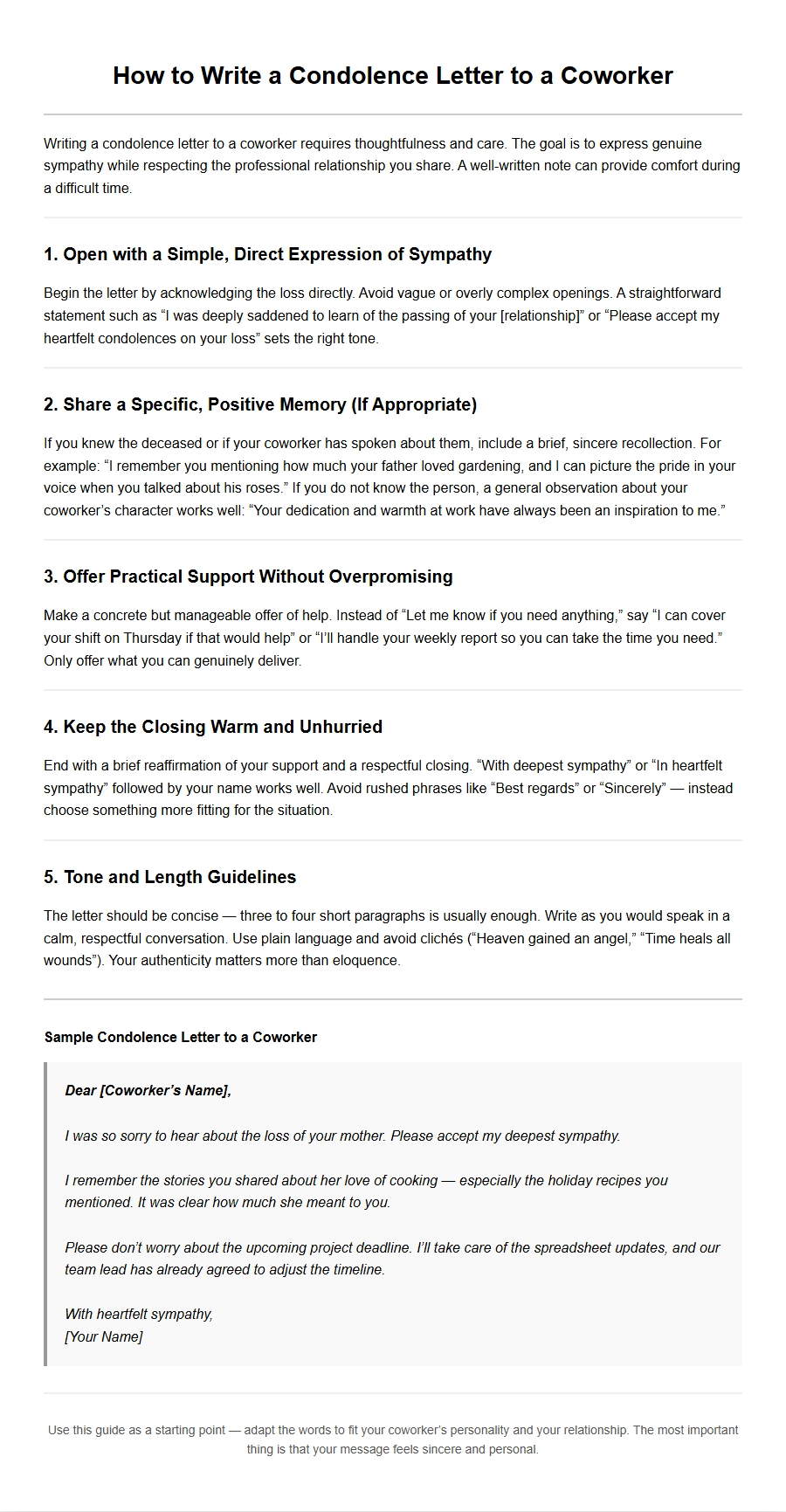 How to Write a Condolence Letter to a Coworker
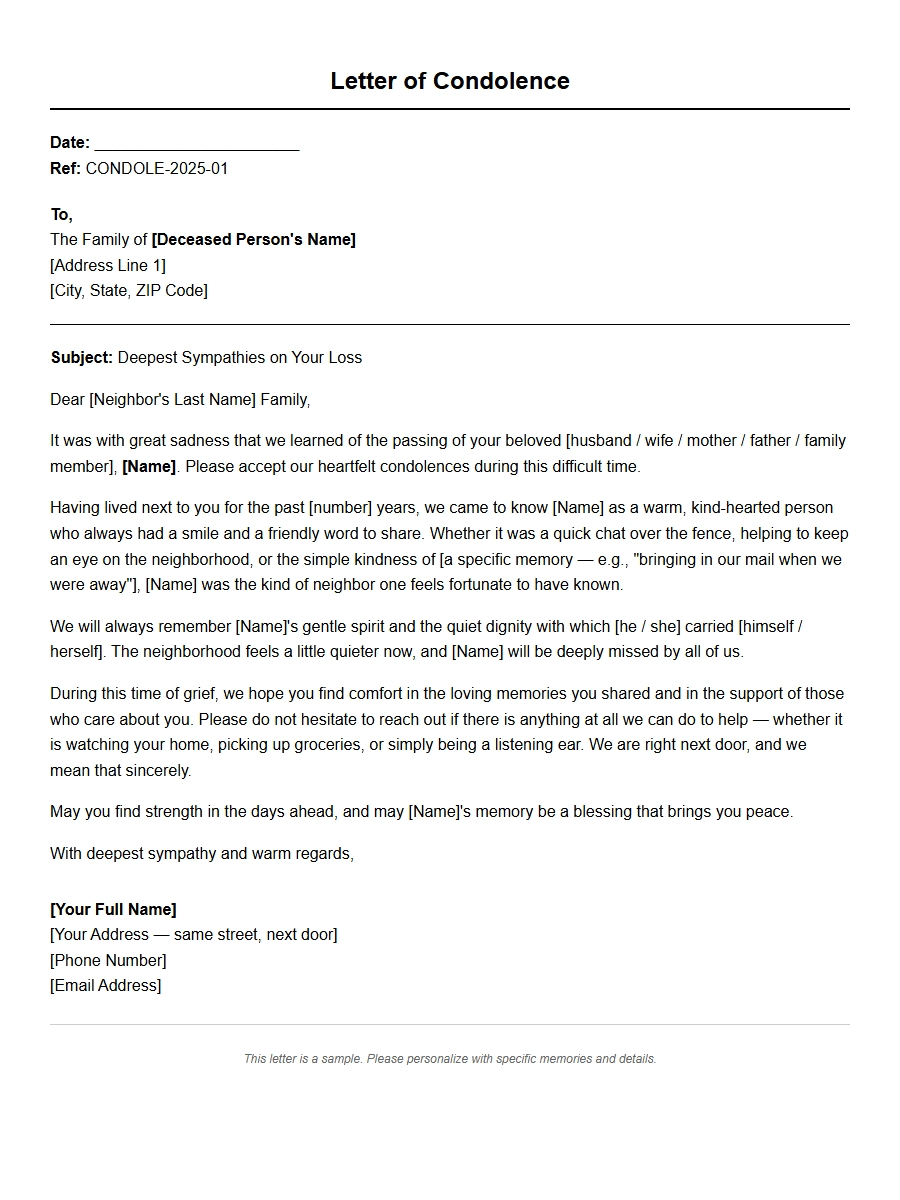 Condolence Letter Sample for a Neighbor
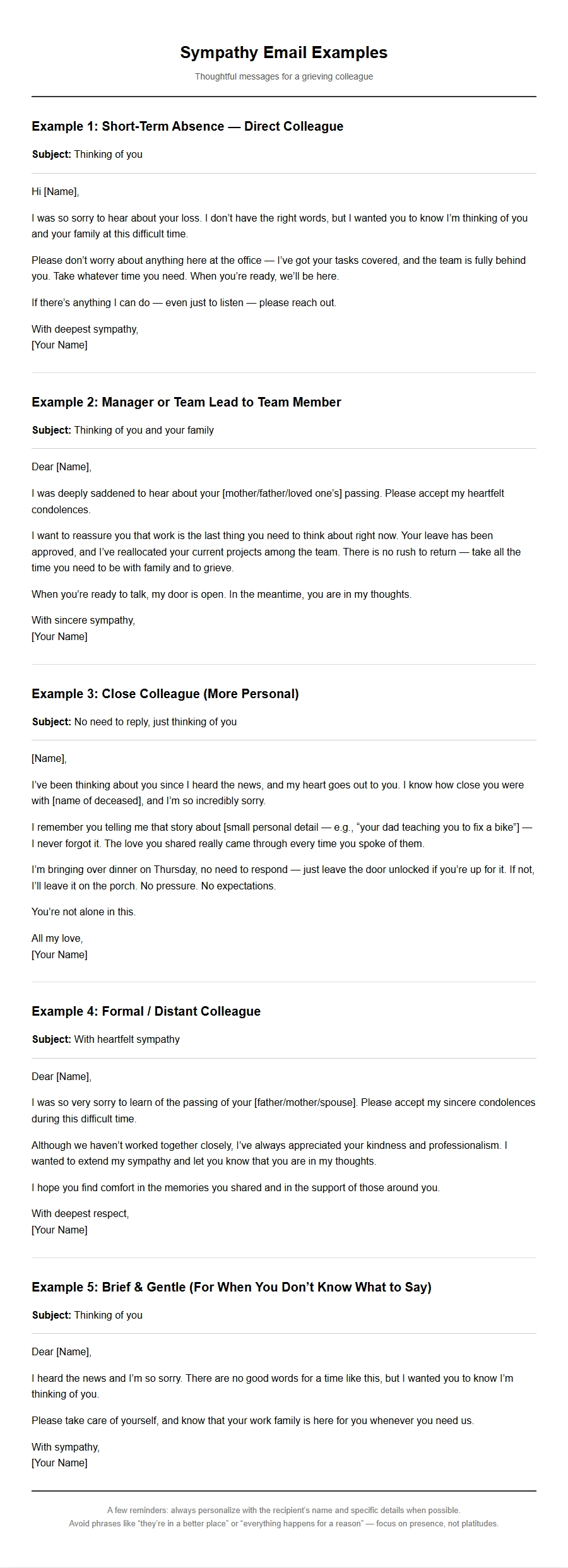 Sympathy Email Examples for a Grieving Colleague
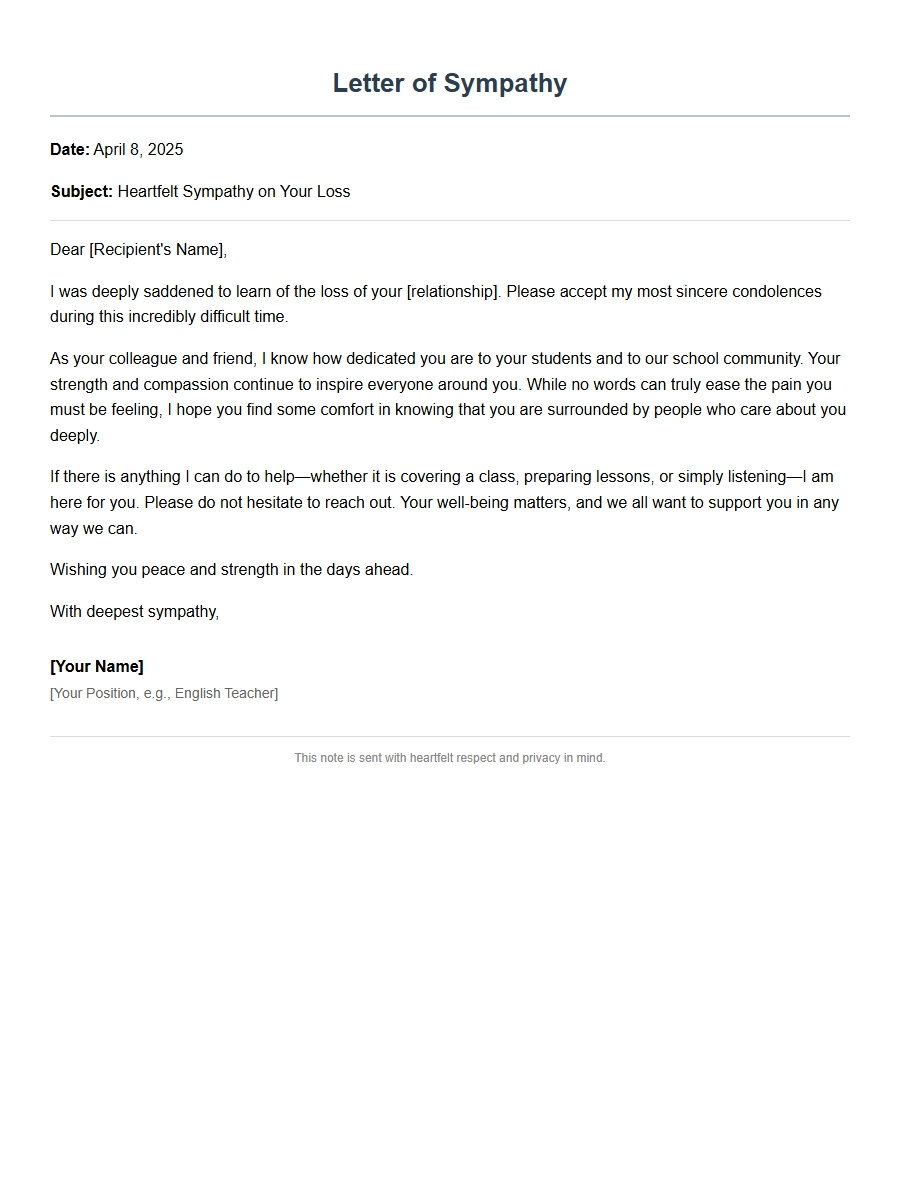 Condolence Words for a Teacher