You’ve sent a condolence letter, and now you’re staring at your inbox wondering if you should follow up. That empty feeling of “Did I say enough? Should I do more?” is completely normal. The thought of reaching out again can feel awkward—like you might be intruding or reopening a wound. But the right follow-up can actually show deep respect and genuine care, and it doesn’t have to be complicated.
Using a sample or a few guiding sentences isn’t cheating. It’s smart. A well-chosen letter template gives you structure and a tone that’s appropriate for professional correspondence while leaving room for your own voice. Think of it as a starting point—a way to focus on what matters instead of second-guessing every word.
Category: Condolence Follow-Up
When and why to follow up after a condolence letter
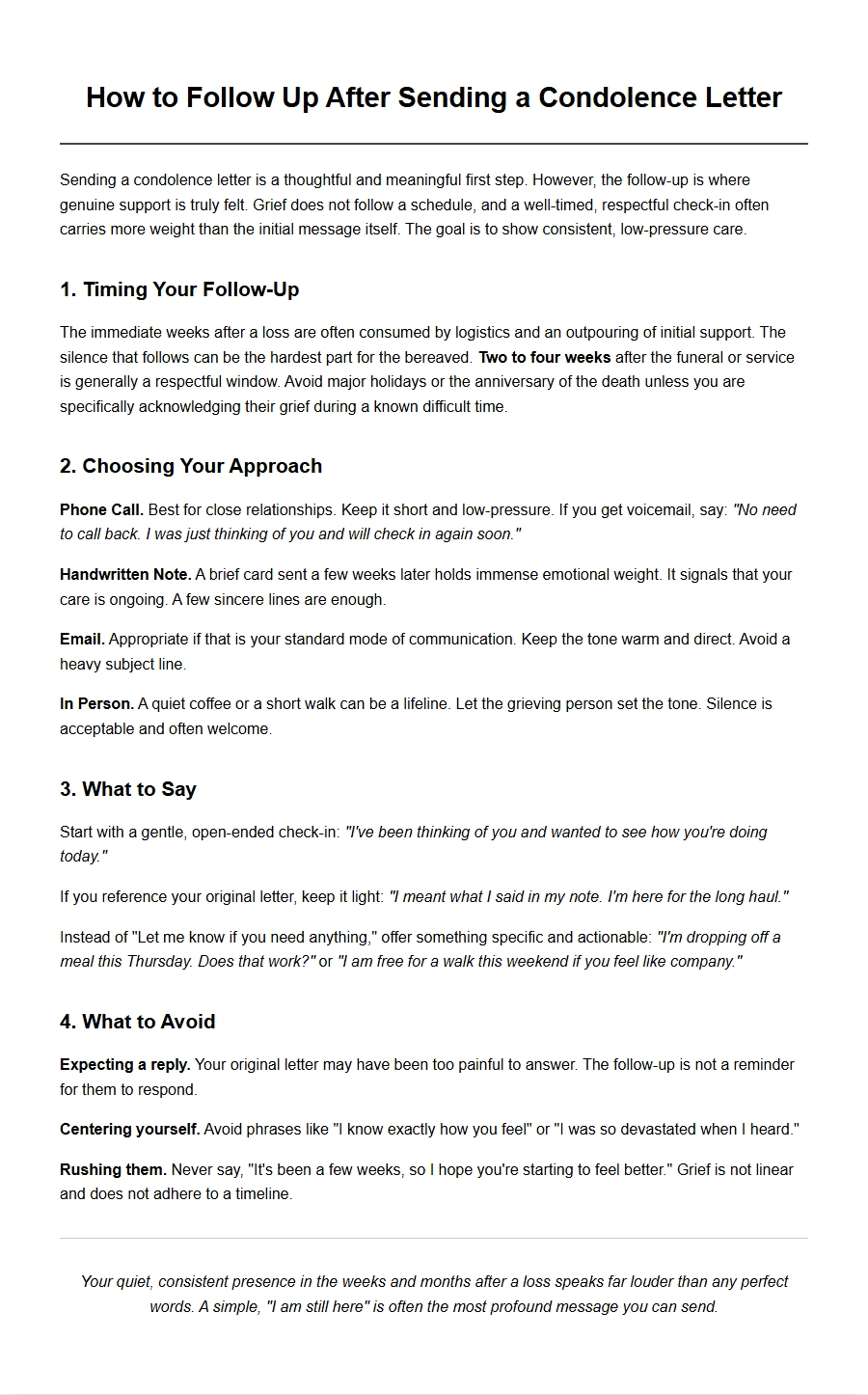
Following up isn’t about reminding them of your first letter. It’s about offering continued support when the initial rush of sympathy cards settles. A week or two after the funeral or memorial, many people feel isolated. That’s when a short, thoughtful message can mean the most. You’re not asking for a reply; you’re simply letting them know you’re still thinking of them.
The timing depends on your relationship. For a close friend, a week after the service feels right. For a coworker, two or three weeks later works—respecting their space without disappearing. The key is to keep it brief and focused on them, not on how you feel.
What to say in your follow-up
You don’t need a full letter. A few sentences are enough. Start by acknowledging the first letter you sent, then gently ask how they’re doing—but only if you’re ready to listen without judgment. A simple line like “I know the weeks after a loss can be heavy, and I wanted you to know I’m still here if you need anything” works. Avoid phrases like “Let me know if I can help” because it puts the burden on them to reach out. Instead, offer something specific: “I’m bringing dinner next Tuesday unless that’s a bad day—just text me a time.”
If you’re following up via email, use digital letter format that mirrors your original tone. Keep the salutation warm (“Dear [Name]”) and the closing gentle (“With heartfelt sympathy”). Don’t worry about letterhead design except for business contexts—a simple, clean email is fine.
Common mistakes to avoid
One major error is following up too soon—like within days of your first letter. It can feel pushy, as if you’re expecting a response or trying to check off a social obligation. Another mistake is using outdated formal writing tips, like “To whom it may concern” for a personal condolence. That kind of salutation feels cold. Also, don’t ignore the mode of delivery. If you sent a physical card, an email follow-up is fine, but don’t double up with another card unless you have a specific reason.
Proofreading your follow-up message matters too. A typo or unclear sentence can make you look careless when the subject is sensitive. Read it aloud to catch awkward phrasing. If you’re unsure about common pitfalls, take a look at our guide on what to avoid in a sympathy letter—it applies just as much to follow-ups.
Adapting a sample without losing your voice
You’ll find many cover letter examples and resignation letter samples online, but condolence follow-up templates are less common. The same principle applies: customize the core structure. Start with the original letter’s tone—did you write formally or more casually? Mirror that. Then add a personal detail that shows you remember something specific about them or their loved one. For instance, “I still think about the story you told me about your dad’s garden” feels real. That kind of touch turns a letter template into genuine correspondence.
If you ever need to write a condolence letter to a coworker, our example can help you get started—then the follow-up flows naturally from the same warm voice.
A final thought
The best follow-ups are short, honest, and free of pressure. You’re not trying to fill a void; you’re just showing that your care didn’t end with the stamp on the envelope. Over time, you’ll learn what feels right for each relationship. And if you’re still unsure, remember that silence after a condolence letter is better than a clumsy second message. But a thoughtful, humble follow-up—one that puts the other person first—can be a gift during a season when kindness is scarce.
Use the sample as a springboard, not a crutch. Practice makes the process easier, and soon you’ll find a rhythm that balances professionalism with genuine warmth. That’s what makes any letter, from a sympathy note to a business letter format, feel both correct and human.
Writing Examples
How to Follow Up After a Condolence Letter
Thanking the Recipient for Their Reply
After sending a condolence letter, it is thoughtful to acknowledge any reply you receive. A brief follow-up shows you value their response and continue to hold them in your thoughts.
Sample thank-you note:
Dear [Name],
Thank you so much for your kind reply to my letter. I am glad you felt comforted by my words. Please know I am still thinking of you and your family during this difficult time. If there is anything I can do—whether running an errand, helping with meals, or simply listening—I am here for you.
With heartfelt sympathy,
[Your Name]
Offering Specific Help One Week Later
Sometimes a general offer isn't enough. A week after your condolence letter, follow up with concrete assistance. This small table lists practical ways to help that you can reference in your message.
Task
Available Days
Notes
Grocery run
Mon, Wed, Fri
Can deliver by 10 AM
Meal drop-off
Any evening
Let me know dietary preferences
Childcare
Sat afternoons
Up to 3 hours
Dear [Name],
I hope you are managing okay. I wrote to you last week and wanted to follow up with a specific offer. Please pick any day from the table above, and I'll be glad to help. No need to reply immediately—just know that you are not alone.
Checking in Without Pressuring a Response
Grief is unpredictable. A gentle follow-up that doesn't demand a reply respects the bereaved person's pace. Use this short note to simply let them know you haven't forgotten them.
Dear [Name],
I know you may not have had time or energy to reply to my letter, and that is completely fine. I just wanted to say that I am still holding you close in my thoughts. No need to write back. However, if you ever feel like talking or just want company, my door is always open.
With quiet support,
[Your Name]
Sharing a Positive Memory Related to the Deceased
Following up with a cherished memory can bring comfort and strengthen your connection. Keep it brief and warm.
Dear [Name],
After I sent my condolence letter, I recalled a wonderful memory of [Deceased Name]. Do you remember that summer barbecue when they taught everyone how to make their famous lemonade? That laughter still echoes in my mind. I hope sharing this brings a small smile through the tears. I am still here if you ever want to swap more stories or simply sit in silence together.
With love,
[Your Name]
Following Up After a Funeral or Memorial Service
If you attended the service, a follow-up can express gratitude for being included and reiterate your ongoing support.
Dear [Name],
Thank you for allowing me to be part of the beautiful memorial service for [Deceased Name]. I was deeply moved by the tributes and the love in the room. As you return to daily life, please know my thoughts remain with you. I have noted these upcoming dates when I am free to help or visit:
Wednesday afternoons
Saturday mornings
Sunday after 2 PM
Let me know if any of these work for you. You are in my heart.
With sympathy,
[Your Name]
A Sympathy Card Follow-Up via Email
When you sent a physical condolence letter, an email follow-up can reach the person if they are more responsive to digital messages.
Subject: Thinking of you
Dear [Name],
I mailed a note to you last week and wanted to follow up electronically in case you haven't been checking mail. Please do not feel pressured to respond. I just wanted you to know that my care for you is constant. The offer to bring a meal or help with paperwork still stands whenever you are ready.
With warmth,
[Your Name]
Follow-Up After a Month: Sustained Support
Grief doesn't end after the first weeks. A follow-up a month later shows you remember the loss and are thinking long-term.
Dear [Name],
It has been a month since [Deceased Name] passed, and I imagine the waves of grief come and go. I wanted you to know I haven't forgotten you. If you'd like, I could bring coffee by this Thursday or Friday. Below are my available slots:
Thursday 2-4 PM
Friday 10-12 PM
Or any time that fits you
No expectations—just a friendly presence. You remain in my thoughts.
Yours sincerely,
[Your Name]
Including an Update on a Charitable Donation Made in Their Name
If a charitable donation was made as part of the condolence gesture, a follow-up can confirm it and provide details.
Dear [Name],
In my previous condolence letter, I mentioned a donation in [Deceased Name]'s honor. I am happy to share that it has been processed. Here are the details:
Charity
Amount
Date
[Charity Name]
$50
March 15, 2025
They will send a separate acknowledgment to you if you provided your address. I hope this small tribute brings a measure of comfort. As always, I am here for you.
Follow-Up for a Distant Friend You Cannot Visit
When distance prevents in-person help, a follow-up can offer virtual support or arrange a call.
Dear [Name],
I realize my condolence letter may have arrived weeks ago and you're still navigating this loss from far away. I'd love to set up a phone call or video chat if you're open to it. Here are times I'm free next week:
Monday: 10 AM - 12 PM (your time zone)
Wednesday: 3 PM - 5 PM
Friday: 7 PM - 9 PM
Just pick a slot, or suggest another. Even a short talk can mean a lot. You are not alone across the miles.
Warmly,
[Your Name]
Follow-Up on an Anniversary or Holiday
Special dates amplify grief. Reaching out around a birthday, anniversary, or holiday shows you remember the significance and that your care continues.
Dear [Name],
As [birthday/anniversary/holiday] of [Deceased Name] approaches, I wanted to send an extra hand of support. I know this time may be particularly hard. If you would like company that day, I am free. Alternatively, I can simply hold space for you in thought. Below are a few ideas if you'd like gentle companionship:
A walk in the park
A quiet coffee together
A phone call to share memories
Whatever feels right, please know I am here. You are always in my heart.
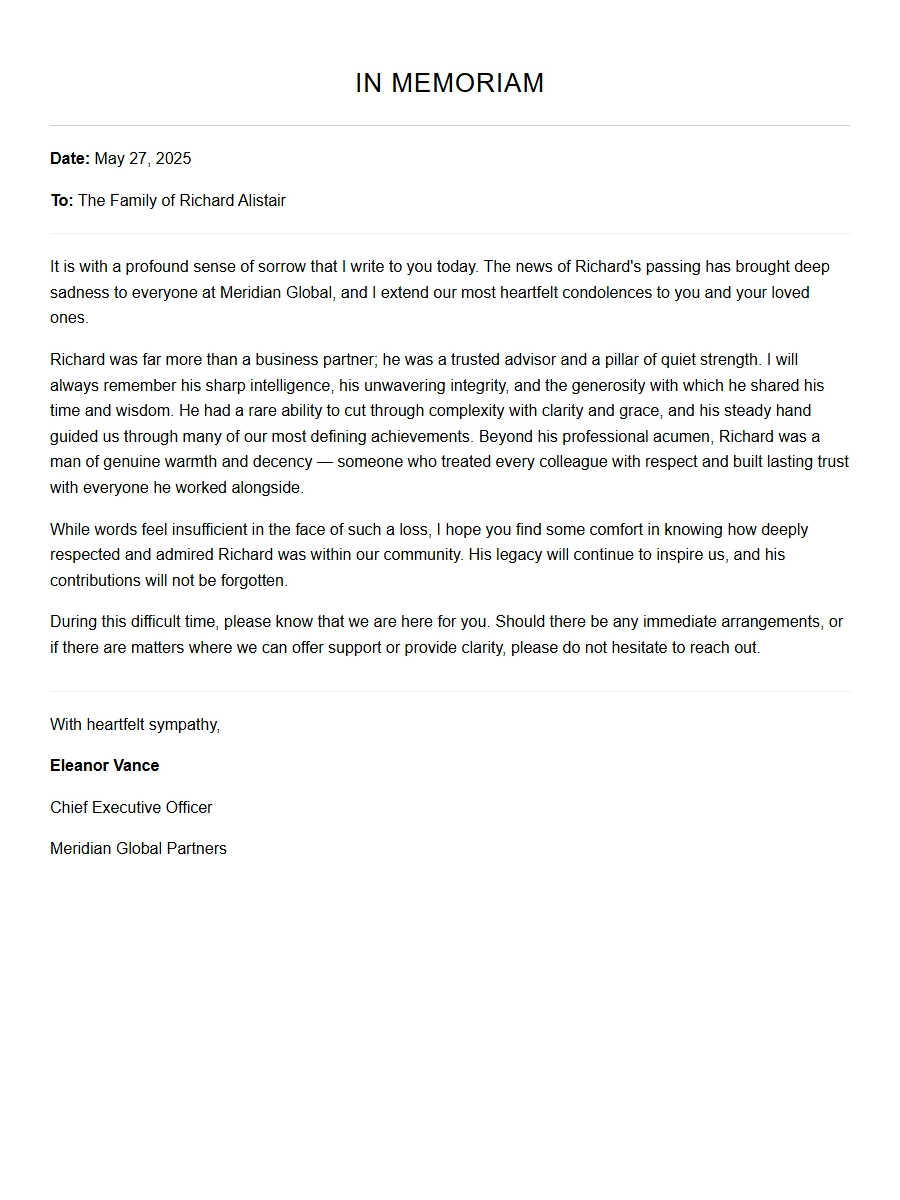 Formal Condolence Message for a Business Partner
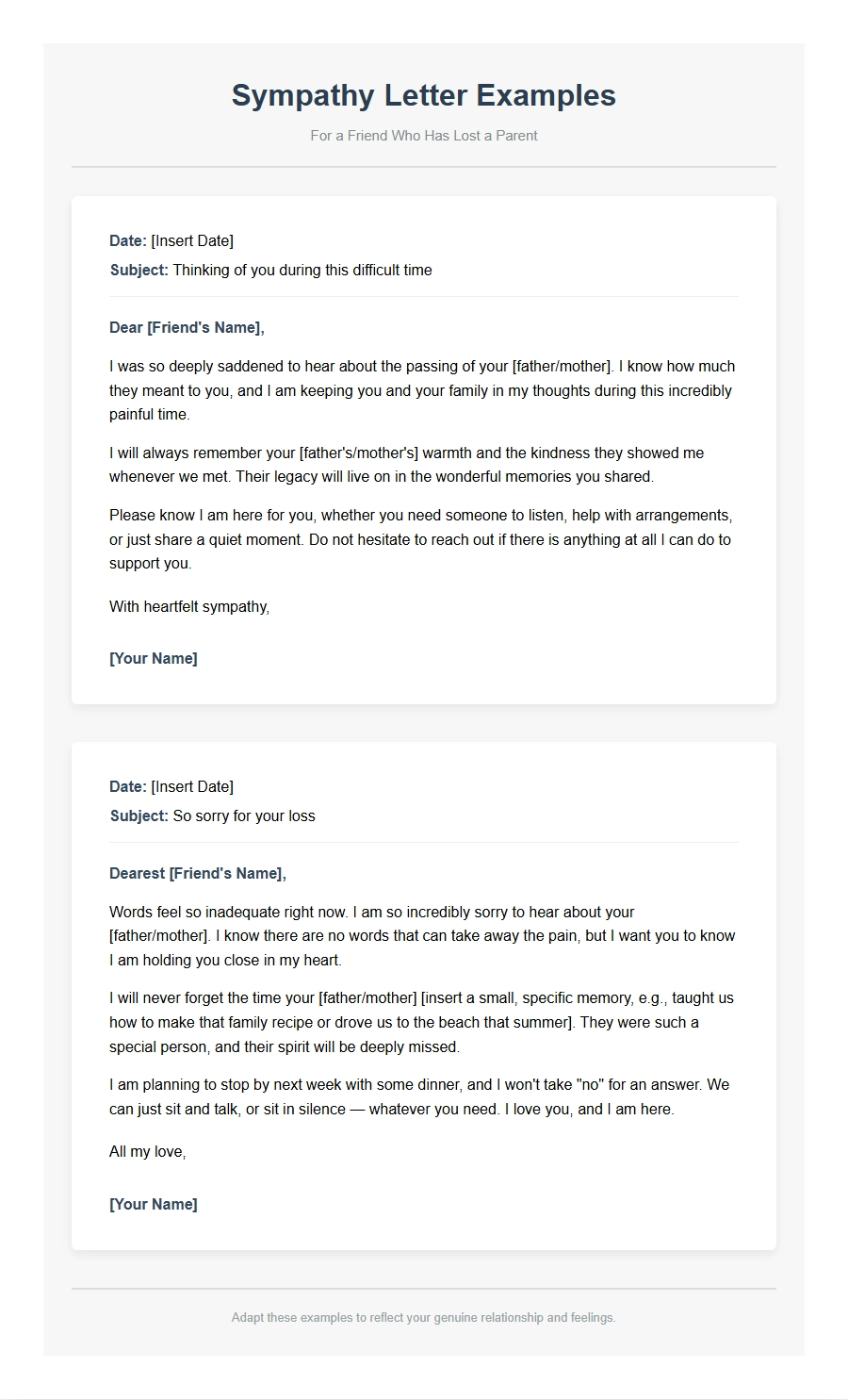 Sympathy Letter Examples for a Friend Who Lost a Parent
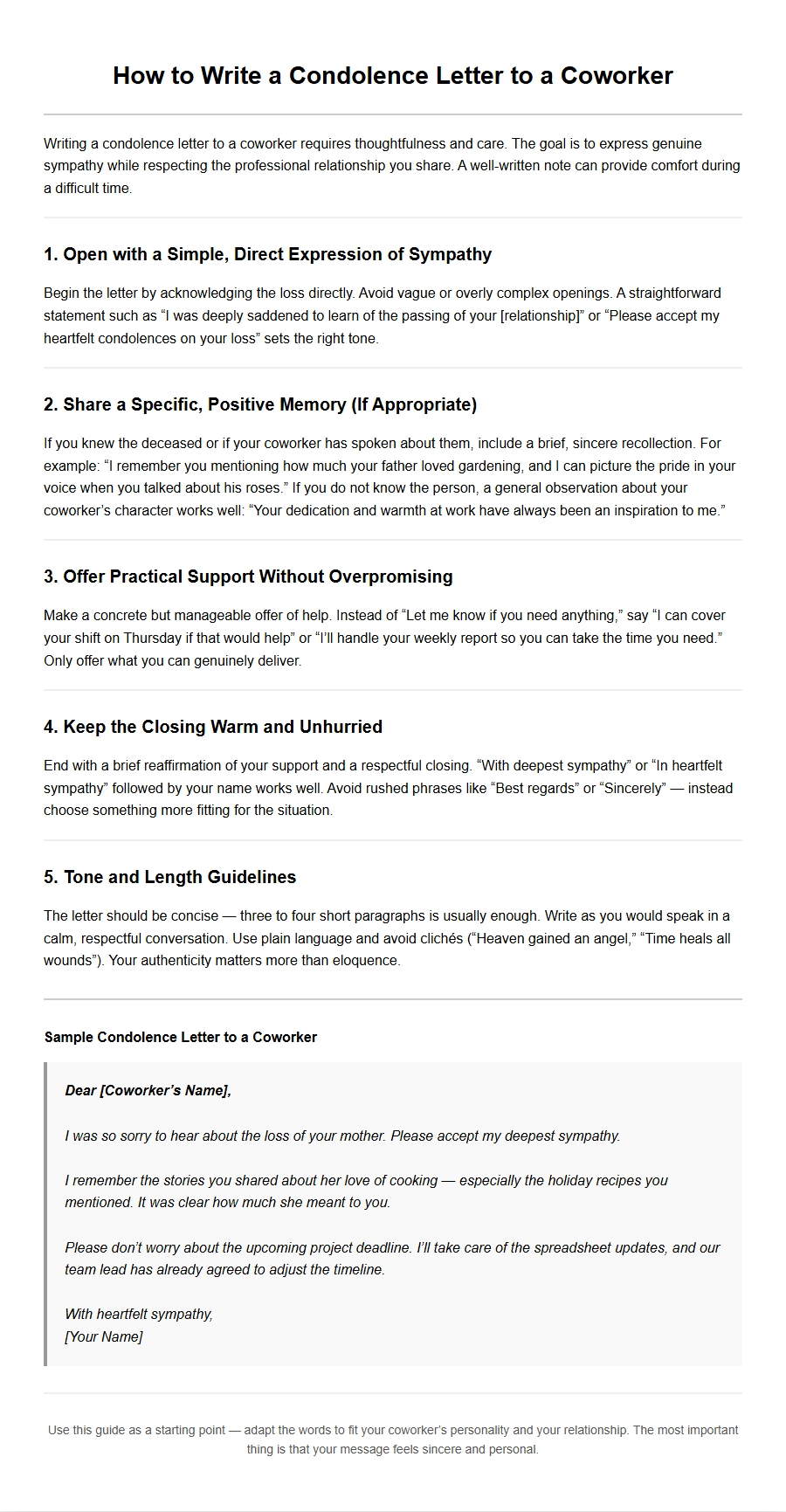 How to Write a Condolence Letter to a Coworker
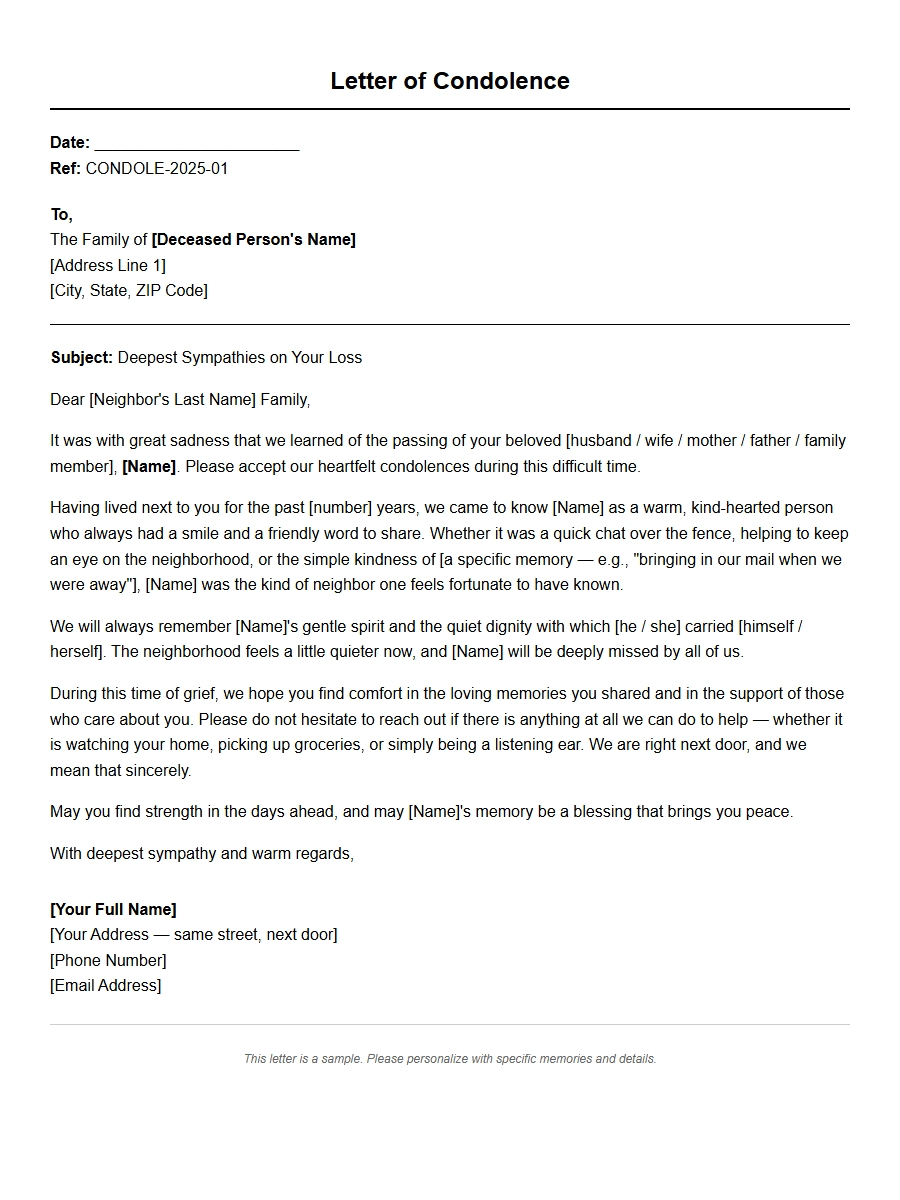 Condolence Letter Sample for a Neighbor
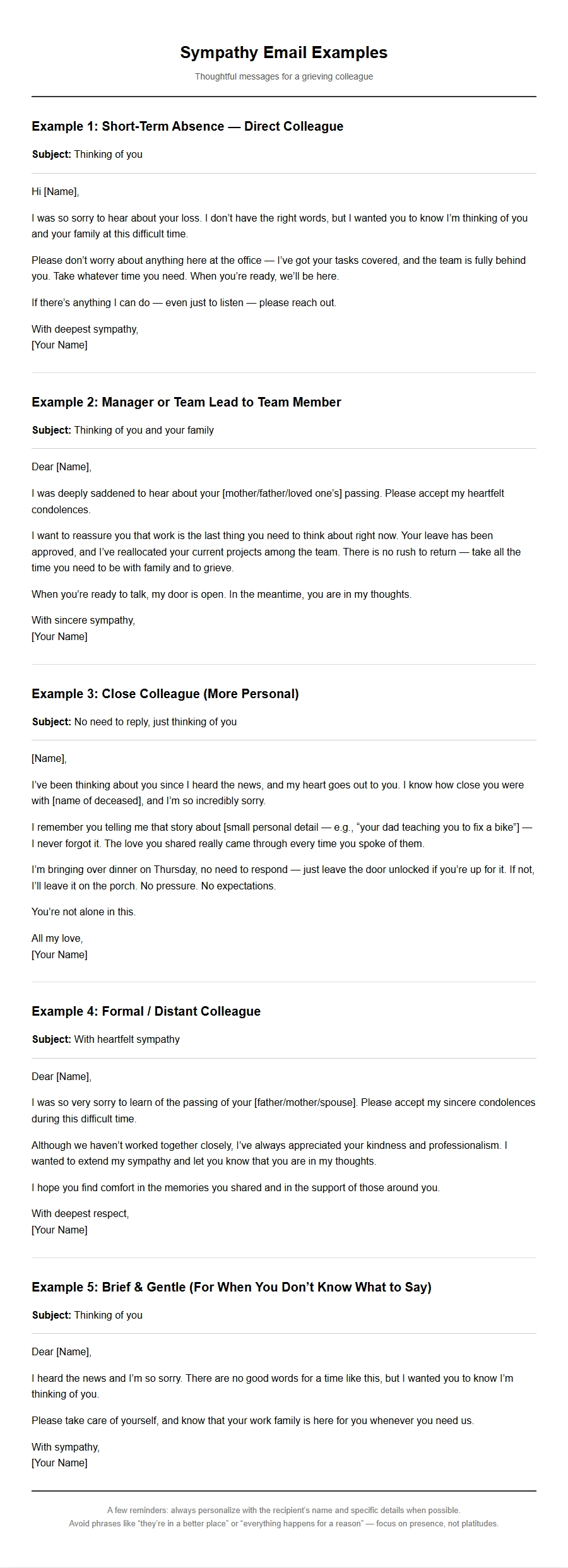 Sympathy Email Examples for a Grieving Colleague
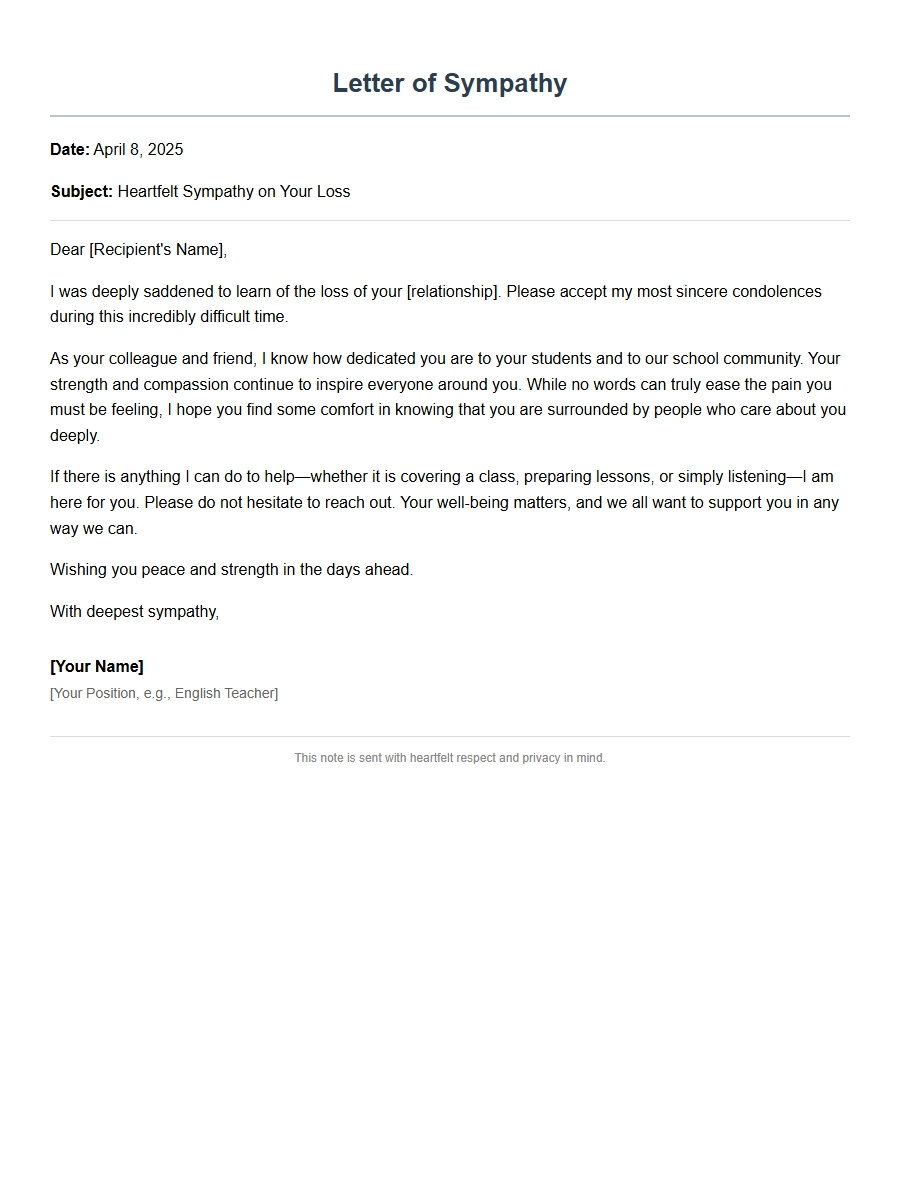 Condolence Words for a Teacher