welcoming new tenant into apartment complex - Personal Letters
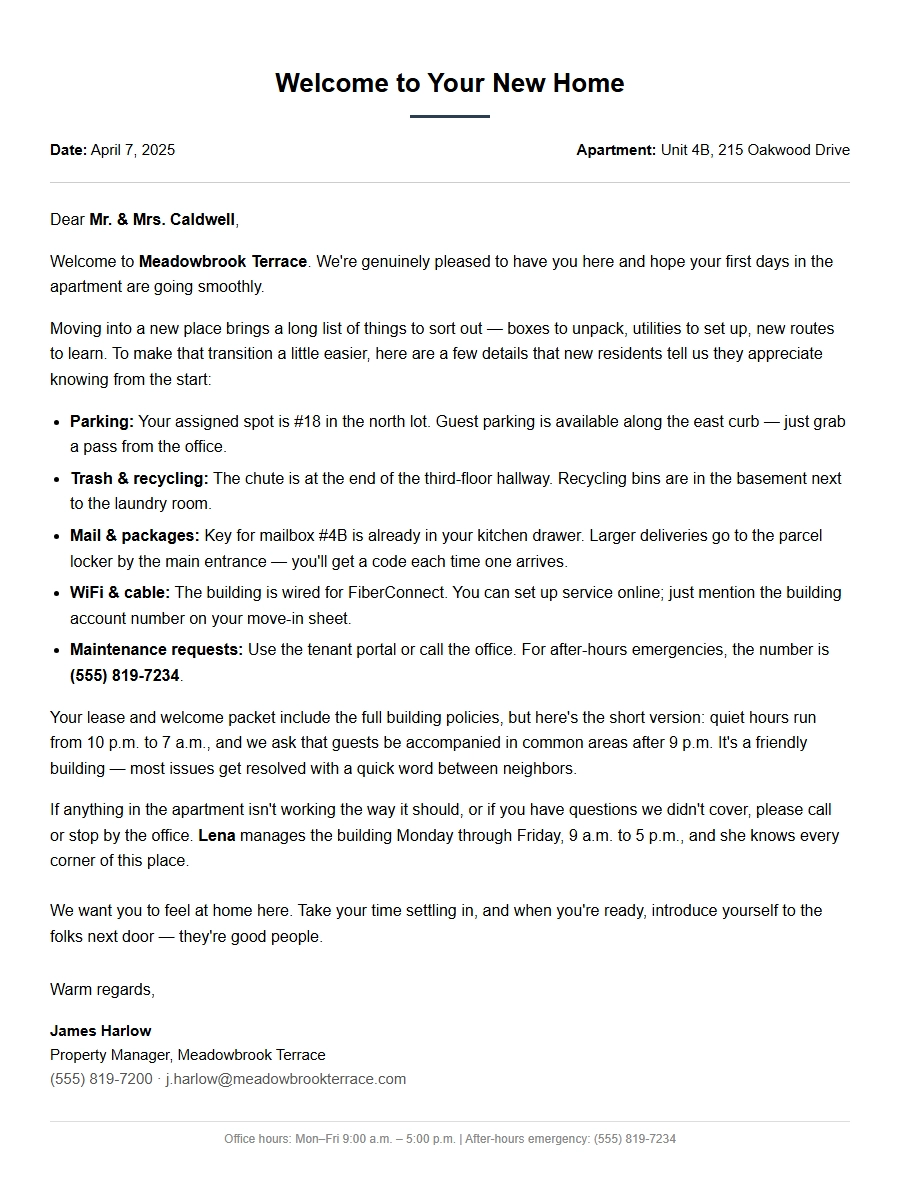
You've got a new tenant moving in next week and you want to send a proper welcome letter. But finding the right words that feel both professional and genuinely warm? That's the tricky part. The blank page stares back, and suddenly you're second-guessing everything. Too formal feels cold. Too casual seems unprofessional. A solid sample cuts through that doubt in seconds.
Using a letter template for welcoming a new tenant isn't taking shortcuts. It's working smarter. A good sample gives you the structure, the standard phrases, and the professional tone you need. You still customize every part that matters. Think of it as a framework that keeps you from forgetting important details while leaving room for your personal touch.
Category: Property Management Letters
What a welcome letter should actually do
A welcome letter sets expectations and builds trust from day one. It's not just a nice gesture. It's the first piece of professional correspondence your tenant receives from you, and it shapes how they view the entire rental experience. The best ones cover the essentials without reading like a legal document.
Start with a warm salutation. "Dear [Tenant Name], welcome to [Building Name]" works fine. Skip the outdated "To Whom It May Concern" or overly stiff openings. You want the tone in writing to feel approachable but still polished. A quick welcome, then straight into the practical details.
What to include in your tenant welcome letter
Cover the basics first. Move-in date and time, key pickup instructions, parking information, and trash disposal rules. Then add building-specific details like laundry room access, package delivery procedures, and maintenance contact information. Your letter structure should follow a logical order so nothing gets overlooked.
Here's where many people stumble. They either dump every possible rule into one overwhelming paragraph or they leave out something crucial like emergency contact numbers. A good sample helps you avoid both mistakes. You get a complete list of what to include, and you can trim or add based on your building's needs.
If you're welcoming a new tenant into an apartment complex with shared amenities, mention those specifically. Pool hours, gym access codes, community room booking. This is where a customizable letter shines because you swap out generic references for your actual building details.
Adapting a sample without losing your voice
Start with the sample structure. Adjust the opening paragraph to reflect your building's personality. If you run a smaller, older building, your language can be warmer. For a large corporate complex, keep it more straightforward and professional. The key is reading it aloud. If it sounds like you wrote it, you're in good shape.
A quick tip: change the first sentence to something specific to the tenant's new unit. Mention the view from their window or the recent renovations. That small personalization makes the whole letter feel genuine instead of mass-produced.
Watch out for common letter writing etiquette mistakes. Using all caps for emphasis looks aggressive. Ending with "Thank you in advance" can feel presumptuous. And double-check your salutation and closing. "Sincerely" or "Best regards" works for most situations. "Yours truly" can feel dated.
Ever received a welcome letter that felt like a form letter? It usually happens when the writer didn't bother to adapt the sample at all. The building name is wrong, or the instructions don't match the actual property. Take five minutes to customize each template. Your tenants will notice the difference.
Digital vs. printed welcome letters
Consider how your tenant will receive the letter. If you're sending it by email, keep the subject line clear: "Welcome to [Building Name] – Your Move-In Information." Use a clean business letter format even in digital form. Skip fancy letterhead design for email. Simple headers with your building logo work best.
If you're printing the letter, invest in decent paper and check that your printer isn't running low on ink. A smudged, crooked print job undercuts the professionalism of your message. And always proofread the letter before sending. A typo in the move-in date creates real confusion.
Maintaining the relationship after move-in
The welcome letter is just the start. Building a good relationship with your tenant takes ongoing effort. If there's ever a misunderstanding down the road, addressing it directly helps. A sincere apology for a misunderstanding can go a long way in preserving trust.
Some property managers send a follow-up note after the first week. A simple "How's everything going?" message shows you care beyond the first handshake. If you're looking for ideas on maintaining that connection, a keeping in touch letter offers a friendly template you can adapt for tenant check-ins.
And if a tenant refers a friend to your building, that's a great sign. A referral request letter shows you how to ask professionally without sounding pushy. Even though it's written for a work context, the structure translates well for tenant referrals.
Handling awkward situations
Sometimes you need to send a letter that isn't purely welcoming. Maybe you're declining a job offer politely for a tenant applicant, or you need to notify tenants about a change. The same rules apply. Use a sample, adapt it to your situation, and keep the tone respectful.
If you ever need to notify guests about a venue change, the same principles of clear, timely communication apply. Your tenants will appreciate knowing what's happening before it becomes a problem.
Using the sample as a springboard
The best welcome letters feel both professional and personal. They give tenants exactly what they need without overwhelming them. Use a sample to get started, but make it your own. Add your building's quirks, your management style, and a touch of genuine goodwill.
Practice makes the process faster. After writing two or three welcome letters, you'll know exactly which details matter most for your building. The sample becomes less of a crutch and more of a checklist. Eventually, you might not need it at all. But having it there for the first few times saves you from staring at that blank page.
Your next step: find a sample that matches your building's style, customize it with your specific details, and send it before move-in day. Your tenant will start their lease with confidence, and you'll start the relationship on solid ground.
Examples You Can Adapt
welcoming new tenant into apartment complex - Personal Letters
Welcome from the Landlord
Dear [Tenant Name],
We are delighted to welcome you to Willow Creek Apartments. Your move-in date is March 1, 2025 for apartment #204. Below are your essential account details:
Item
Details
Monthly Rent
$1,250
Security Deposit
$1,250
Lease Term
12 months (March 1, 2025 – February 28, 2026)
Rent Due Date
1st of each month
Late Fee after 5th
$50
For maintenance requests, call (555) 123-4567 or use the tenant portal. Please review the lease for pet and guest policies. We hope you enjoy your new home!
Sincerely, Grace Martinez, Property Manager
Welcome from Next-Door Neighbor
Hi new neighbor!
Welcome to apartment #205 — I’m in #206, right next door. My name is Jordan. I’ve lived here for two years and can help you get settled.
The best coffee shop is Brew & Bean two blocks east.
Monday night is garbage night; bins are behind the building.
If you ever need a tool or a jump‑start, just knock.
I usually come home around 6 PM. Feel free to text me at (555) 987-6543. The building has a friendly community, and we do a little potluck every first Friday. I’ll save you a seat!
Welcome again, Jordan
Building Amenities and Rules
Dear [Tenant Name],
Welcome to Oakridge Apartments! Please review the following amenities and their hours:
Amenity
Location
Hours
Fitness Center
Basement Level B
5 AM – 11 PM
Pool
Courtyard
9 AM – 9 PM (seasonal)
Laundry Room
Floor 1, Room 101
24 hours
Package Room
Lobby near mailboxes
6 AM – 10 PM
Important rules: No smoking inside or within 20 feet of entrances. Quiet hours are 10 PM – 7 AM. Guests must be accompanied by a resident after 9 PM. Please sign in at the office for pool access.
Enjoy the amenities! Management Team
Parking and Trash Procedures
Hello and welcome to Harborview Complex!
Your assigned parking spot is #12 in the north lot. Please display your parking permit (enclosed) on the rearview mirror. Visitor parking is along the red curb – limit 2 hours.
Trash and recycling schedule:
Day
Waste Type
Location
Monday
General trash
Dumpster behind Building A
Wednesday
Mixed recycling
Blue bins near mailroom
Friday
Yard waste (seasonal)
Compost pile at south fence
Please break down cardboard boxes. Trash chute on each floor is for household waste only – no furniture or electronics. For bulk pickup, email maintenance@harborview.com.
Thanks for keeping our complex clean! The Harborview Staff
Local Restaurant Recommendations
Hey neighbor!
Welcome to the complex! I’ve been here a few months and wanted to share some favorite nearby eats. All are within a 10‑minute walk.
Sofia’s Kitchen – 2nd Ave, #4. Delicious Italian pasta and pizza. Try the truffle gnocchi. Open 11–9.
The Green Bowl – 3rd St. Healthy bowls and smoothies. Their “Hawaiian” bowl is amazing. Open 7 AM–8 PM.
El Fuego Taqueria – across the street. Authentic tacos and burritos. Cash only, but worth it. Open until midnight on weekends.
Also, there’s a farmers market every Saturday at the park on Maple. Great produce and pastries. Let me know if you want to go together! – Maya
Emergency Contact and Safety Info
Dear Resident,
Welcome to Sunset Towers. Your safety is our priority. Please save these contacts:
Service
Phone Number
Emergency (Police/Fire/Ambulance)
911
Building Security (24/7)
(555) 111-2222
Maintenance Emergency
(555) 333-4444
Poison Control
1-800-222-1222
Fire Safety Procedures:
If you hear the alarm, evacuate via the nearest stairwell. Do not use elevators.
Meet at the designated assembly point: front lawn near the flagpole.
Fire extinguishers are located in each hallway near the exit door.
Please keep your unit number visible from the outside. Report any suspicious activity to security immediately.
Stay safe, Management
Pet Policy Reminder
Hello, and welcome to Paws & Play Apartments!
We are a pet‑friendly community. To ensure harmony, please follow these policies:
Maximum pets per unit: 2 (cats or dogs under 40 lbs).
Pet deposit: $300 (non‑refundable).
Leash rule: Pets must be leashed in all common areas.
Clean‑up: Please pick up after your pet. Bags are available at the dog station near Building B.
Barking: Please keep noise minimal, especially during quiet hours (10 PM – 7 AM).
We have a small dog park behind the clubhouse. If you need a veterinarian, Dr. Alice at Healthy Paws Clinic (2 blocks away) offers a 10% discount for residents.
Thank you for being a responsible pet owner. Woof! The Pet Committee
Welcome to the Community Garden
Dear New Gardener,
Welcome to Greenway Gardens! Your unit qualifies for a plot in our community garden. Plots are assigned on a first‑come basis. Current availability:
Plot Number
Size
Sun Exposure
7
4 ft x 8 ft
Full sun
12
3 ft x 6 ft
Partial shade
15
5 ft x 10 ft
Full sun
To claim a plot, email garden@greenway.com with your first and second choices. Tools, compost, and water are provided. There’s a mandatory monthly volunteer day (2nd Saturday).
We also have a shared herb bed near the bench. Feel free to take some rosemary or basil.
Happy growing! Garden Coordinator, Lea
Moving-In Logistics
Dear [Tenant Name],
Congratulations on your move to Lakeside Lofts! To make your move‑in smooth, please follow these steps:
Schedule the elevator: Reserve a 2‑hour slot on moving day by calling (555) 777-8888 at least 48 hours in advance.
Parking for moving trucks: Use the loading zone behind Building C. Do not block resident parking.
Protection: Please place drop cloths in the hallway when moving furniture. You may borrow a dolly from the office.
Disposal: All moving boxes must be broken down and placed in the recycling bin on your floor. No large items left in hallway.
Move‑in time: 8 AM – 6 PM only. No moves on Sundays.
Your move‑in date is April 15, 2025. We will have a staff member available between 9 AM and 12 PM to assist with any issues.
Good luck with the move! Move‑in Coordinator
Wi-Fi and Internet Setup
Hi there, and welcome to Media Hub Apartments!
Getting online is easy. Here are your internet options:
Provider
Plan
Speed
Installation Fee
ComWave
Starter
100 Mbps
$0 (self‑install)
ComWave
Pro
500 Mbps
$49 (professional)
FastNet
Gigabit
1 Gbps
$99
Your unit is pre‑wired with an Ethernet jack in the living room and one in the main bedroom. The router port is located near the kitchen cabinet.
To activate, call 1-800-COM-WAVE and mention your apartment code #304-CODE (enclosed on the welcome packet). If you prefer FastNet, visit their website and use promo code LAKESIDE10 for $10 off first month.
Need help? The tech support team is available 24/7 at (555) 222-3333.
 Thanking a Mentor for Guidance: Sample Messages
 Expressing Gratitude: Handwritten Letter Example
 Expressing Thanks in a Formal Personal Letter
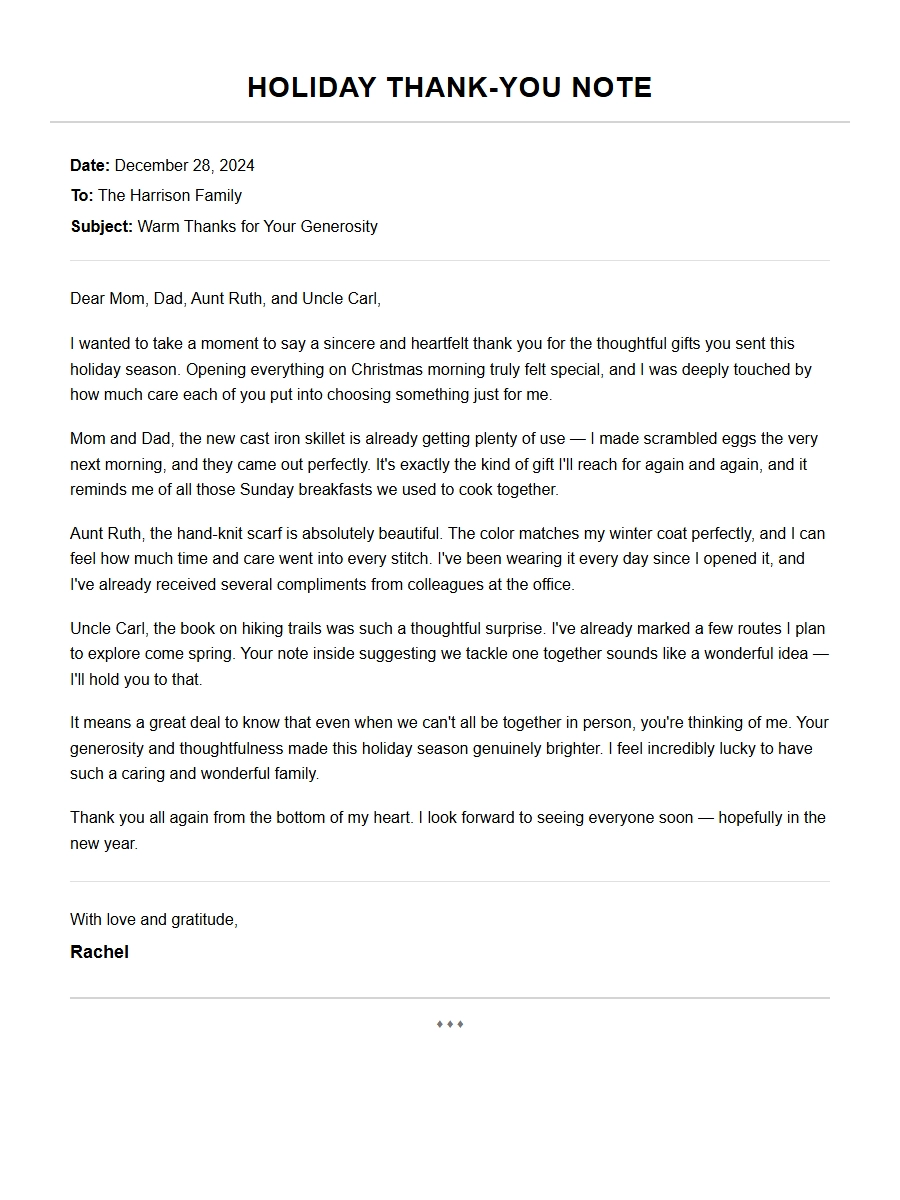 Thank You Letter Examples for Family Holiday Gifts
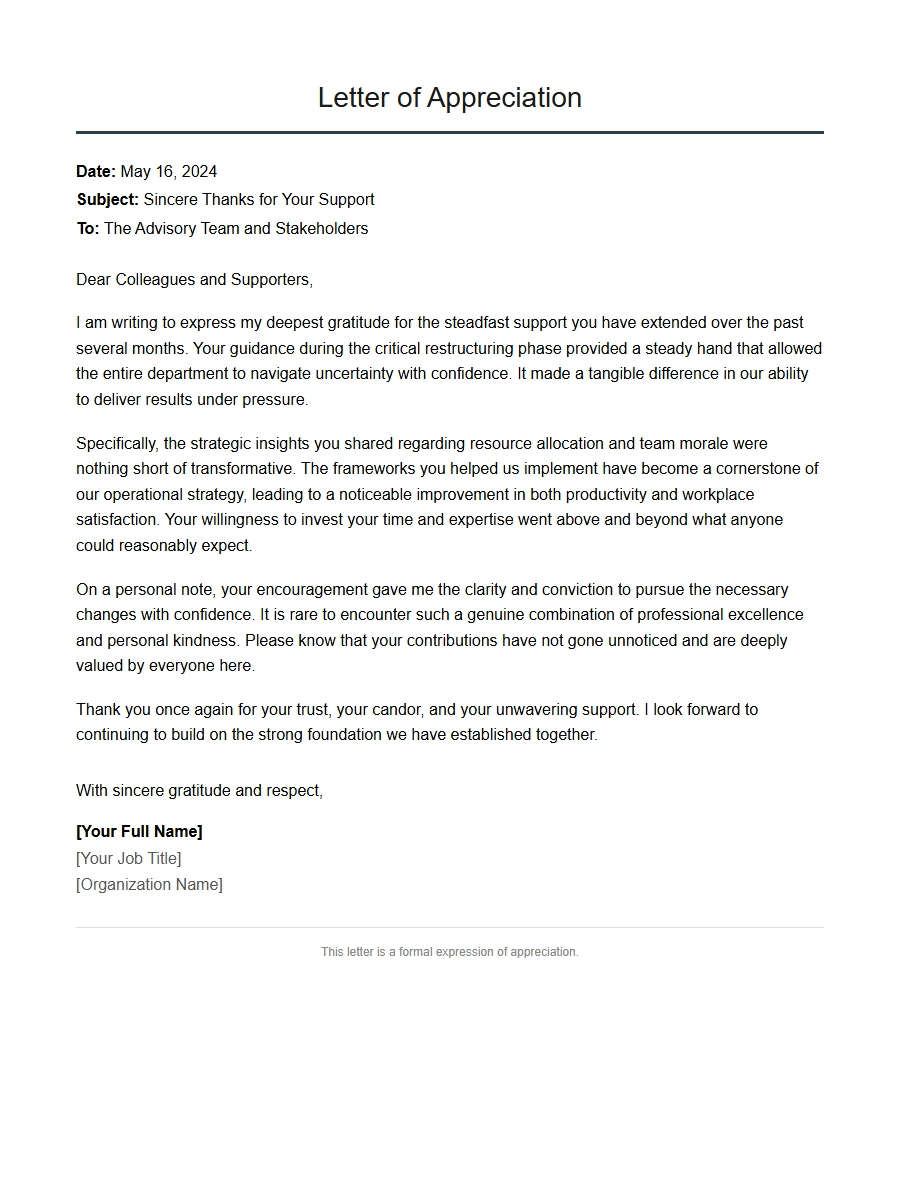 Sample Thank You Letter for Support
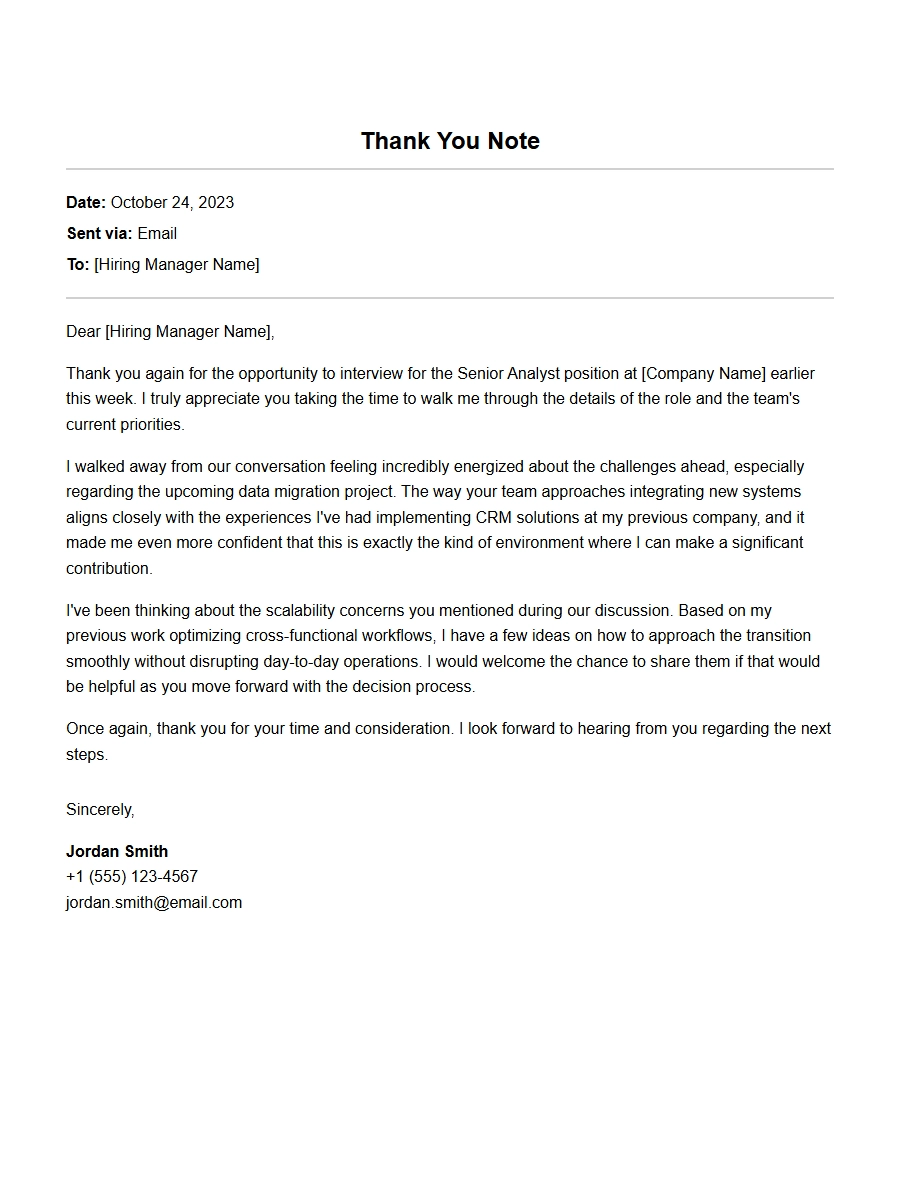 How to Write a Personal Thank-You Note After an Interview