You glance at your inbox and see another order from the same company. That’s the third time this year. You know you should say thank you, but the blank email field stares back. You freeze. A sincere note matters—but what do you actually write? That’s where a thanking customer for repeat business note becomes your best friend.
Why a sample note isn’t cheating
Using a well-written example gives you a head start. It provides the letter structure and the right tone, so you don’t accidentally sound too stiff or too casual. The goal isn’t to copy-paste—it’s to use the skeleton and add your own voice. Think of it as a customizable letter that saves you time while keeping the message personal.
Category: Business correspondence tips
Choosing the right tone for your industry
Not every repeat customer needs the same approach. If you sell handmade crafts, a short and warm email works. If you provide B2B services, you might want a more formal business letter format, even if it’s sent digitally. Consider your audience. A law firm client expects a bit of polish. A coffee shop regular appreciates a casual “thanks for coming in again.”
The same logic applies to your salutation and closing. “Dear [Name]” is safe for professional correspondence. “Hi [Name]” works when you already have a relationship. End with “Best regards” or “Warmly” instead of generic “Sincerely” if you want to feel approachable. For more on adjusting your approach in different situations, see how personal thank-you notes adapt to different relationships.
How to adapt a sample without losing your voice
Start by picking a letter template that matches your scenario. Replace the generic phrases with specific details: mention the product they bought again, the date of their last order, or a quick compliment about their business. Instead of “Thank you for your continued patronage,” try “We love seeing your company’s logo pop up again—especially on that custom order.”
Watch out for common mistakes in professional correspondence. Using “To Whom It May Concern” when you know their name. Forgetting to check the date or misspelling their company name. And if you’re sending a digital letter format via email, keep the subject line clear: “Thank you for your repeat order, [Name]” works better than “Hi.” Always proofread your letter before hitting send—one typo can undo the goodwill you’re building.
Tailoring the opening to grab attention
The first sentence should make the customer feel recognized. Don’t start with “I am writing to thank you.” Instead, open with something specific: “When your order for 500 units came through, we knew you were serious about growth.” That small shift shows you pay attention. If you’re not sure how to structure the full note, a feedback letter sample can teach you how to organize a clear message—just flip the perspective from asking to thanking.
One quick tip on format
If you’re printing the note on company stationery, pay attention to letterhead design. A clean logo and your contact info give a polished impression. For email, skip the letterhead and use a simple signature block. Either way, match the tone in writing to your brand. A fun startup can be playful; a medical supplier should stay professional but grateful. And remember, you can borrow ideas from other contexts—just like you might use a formal request template for medical records, you can use a thank-you template for business and make it yours.
The real value of a repeat-business thank-you note
It’s not just about being polite. A thoughtful message strengthens the relationship, encourages future orders, and sets you apart from competitors who never say thanks. Over time, these small notes build loyalty. And the more you use a sample as your starting point, the faster you’ll be able to write them from memory.
Think of the sample as a springboard. Once you’ve used it a few times, you’ll naturally start tweaking the phrasing to match your own style. That’s when the note stops feeling like a template and starts feeling like something you’d actually say over coffee.
Next time that repeat order lands, you won’t stare at a blank page. You’ll open a file, drop in the details, and send a note that makes the customer feel valued. That confidence comes from practice—and from knowing exactly where to start.
Samples You Can Use
Thank You Letter for Repeat Business
Thank You for Your Recent Repeat Order
Dear Valued Customer,
We are truly grateful that you chose to place another order with us. Your continued trust in our products means the world to our team. Below is a summary of your recent purchase for your reference:
Order #
Date
Items
Total
#10234
2025-03-10
3 premium widgets
$149.97
As a token of our appreciation, we have added 500 bonus points to your loyalty account. These points can be redeemed on your next purchase. We look forward to serving you again soon.
Warm regards, The Customer Care Team
Thank You for Your Loyal Patronage Over the Years
Dear Mrs. Helen Carter,
It has been an honor to serve you since your first order in 2019. Your repeated trust over the past six years is the foundation of our success. We wanted to highlight a few milestones from your account:
Total Orders Placed: 23
Loyalty Tier: Platinum Member
Years as a Customer: 6
Your loyalty inspires us to continually improve. As a small thank you, we have included a 15% discount code (LOYAL15) valid on your next purchase. We are excited to have you with us for many more years.
With sincere gratitude, The Management
Thank You for Renewing Your Subscription
Dear Michael,
Thank you for renewing your Premium Plan subscription for another year. We appreciate your ongoing confidence in our service. Here are the details of your renewal:
Plan
Renewal Date
Next Billing
Annual Fee
Premium Plus
2025-03-12
2026-03-12
$299.00
Your subscription is now active with all features including priority support and unlimited storage. To celebrate your loyalty, we have upgraded your account to include a free one‑month trial of our advanced analytics module.
Thank you for being a valued member of our community.
Best, The Subscription Team
Thank You for Choosing Us Again for Your Service Needs
Dear Mr. Thompson,
We were delighted to receive your booking for a full home cleaning service – your third appointment with us this year. Your repeat business is the highest compliment you can give, and we do not take it for granted.
Our team has noted your preference for eco‑friendly products, and we have scheduled your appointment accordingly. Here is your upcoming service summary:
Service: Deep Clean (4 hours)
Date: Saturday, March 22, 2025
Assigned Team: Green Clean Squad
As a loyal customer, we are offering you a 10% discount on your next booking. Simply use code REPEAT10 when scheduling online.
Thank you for making us your trusted cleaning partner.
Sincerely, Sparkle Home Services
Thank You for Your Repeat Referral Business
Dear Sarah,
We are so grateful that you have referred your colleague, Mark, to our consulting services. This is the third referral from you this quarter, and it speaks volumes about your faith in our work.
To show our appreciation, we have added $50 credit to your account for each successful referral. Here is your current referral summary:
Referral Name
Date Joined
Referral Bonus
Linda Park
2025-01-15
$50
James Liu
2025-02-20
$50
Mark Adams
2025-03-10
$50
Your total referral credit is $150, redeemable on any future service. Thank you for being an ambassador for our brand.
Warmly, The Referral Team
Thank You for Your Ongoing Partnership (B2B)
Dear David,
On behalf of the entire team at CloudStack, I want to thank you and your company for continuing to partner with us on cloud infrastructure projects. Your repeated commitment, including the recent contract renewal for 2025–2026, strengthens our collaboration.
Below is a summary of our partnership milestones:
Years of collaboration: 4
Active projects: 3 (data migration, security audit, AI deployment)
Total contract value this year: $125,000
We value the trust you place in our solutions. As a gesture of appreciation, we are offering your team a complimentary half‑day workshop on cloud security best practices. Please contact your account manager to schedule.
Looking forward to many more successful projects together.
Best regards, Laura Mitchell, Account Director
Thank You for Repeat Custom at Our Small Business
Dear Mrs. Jenkins,
We noticed you have visited our bakery three times this month, and each time you have brought wonderful energy into our shop. As a small family‑run business, your repeat custom means more than we can express.
To celebrate your loyalty, we have prepared a small surprise for your next visit:
Free: One artisan loaf of your choice
Plus: A complimentary coffee or tea
Just show this message at the counter. We have also noted that you love our sourdough – we will hold a fresh loaf for you every Saturday morning. Thank you for being part of our community.
Warmly, The Oven Fresh Family
Thank You for Being a Repeat Donor
Dear Mr. and Mrs. Parker,
We are deeply moved by your decision to support our foundation for the third consecutive year. Your continued generosity helps us provide meals to over 500 families each month.
Here is how your donations have made an impact:
Year
Donation Amount
Meals Provided
2023
$300
120
2024
$500
200
2025 (current)
$400
160
Your commitment inspires us every day. As a token of gratitude, we are including you in our exclusive donor appreciation event next month. More details will follow by email.
Thank you for being a pillar of hope.
With gratitude, Hope Foundation Team
Thank You for Giving Us a Second Chance – Repeat Purchase
Dear Alex,
When you experienced a delay with your last order, we were truly sorry. That is why seeing your latest order – a set of wireless headphones – means so much to us. Thank you for trusting us again.
We have taken steps to ensure your new purchase arrives on time and in perfect condition. Here are your order details:
Order #: 2048
Item: SoundPro X Wireless Headphones
Estimated Delivery: March 18, 2025
As a sincere apology for your previous inconvenience, we have refunded the shipping cost and added a $10 credit to your account. We value your patience and are committed to earning back your full trust.
Thank you for believing in us.
Best regards, Customer Happiness Team
Thank You for Repeat Business – Special Offer Enclosed
Dear Valued Customer,
We noticed that you recently placed your fifth order with us – congratulations! Your loyalty does not go unnoticed. As a thank you, we have created an exclusive offer just for you.
Your Loyalty Reward includes:
20% off your next order of $50 or more
Free shipping on your next two purchases
Early access to our new product launch next month
Use code THANKS20 at checkout. This offer is valid until April 15, 2025. We look forward to serving you again and to many more orders to come.
Thank you for being the best part of our business.
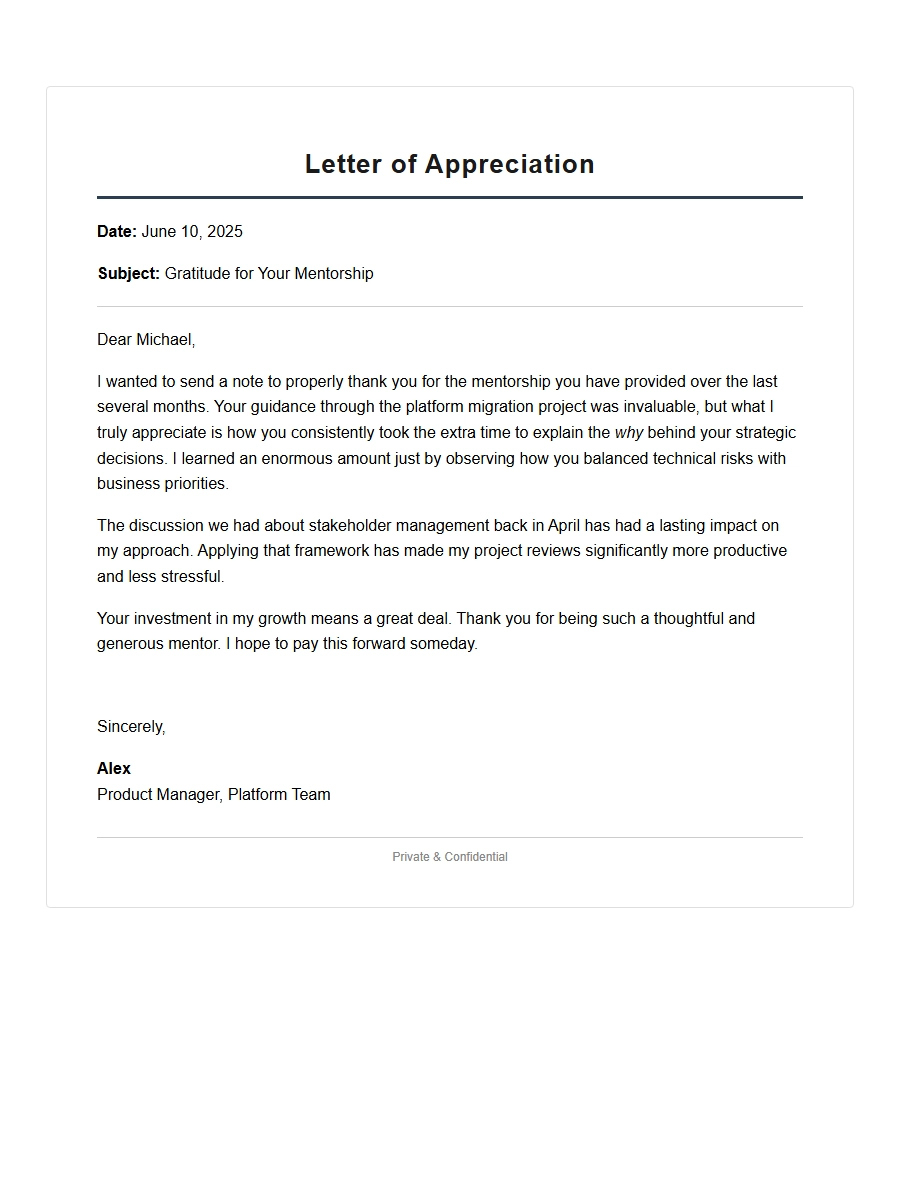 Thanking a Mentor for Guidance: Sample Messages
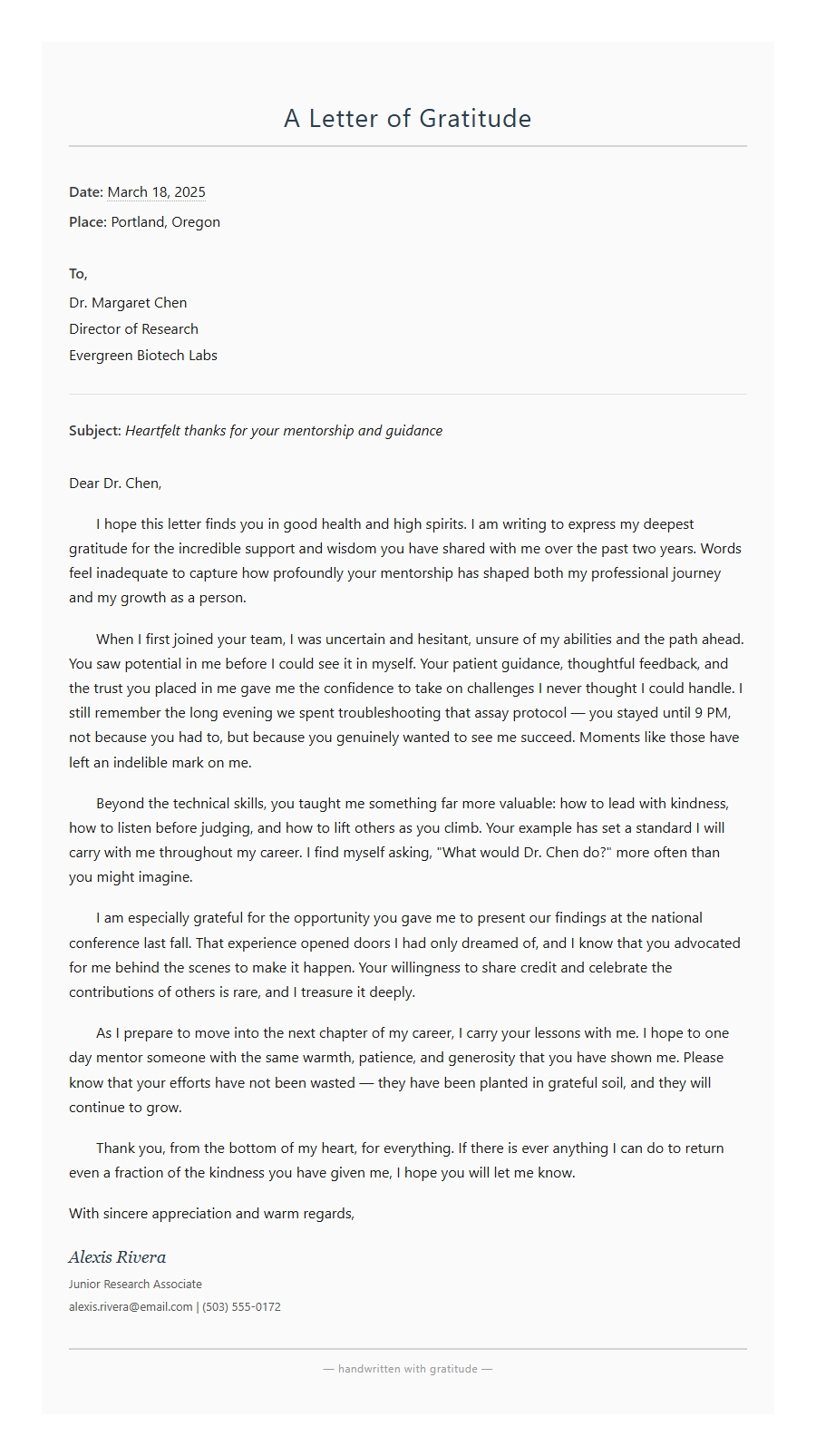 Expressing Gratitude: Handwritten Letter Example
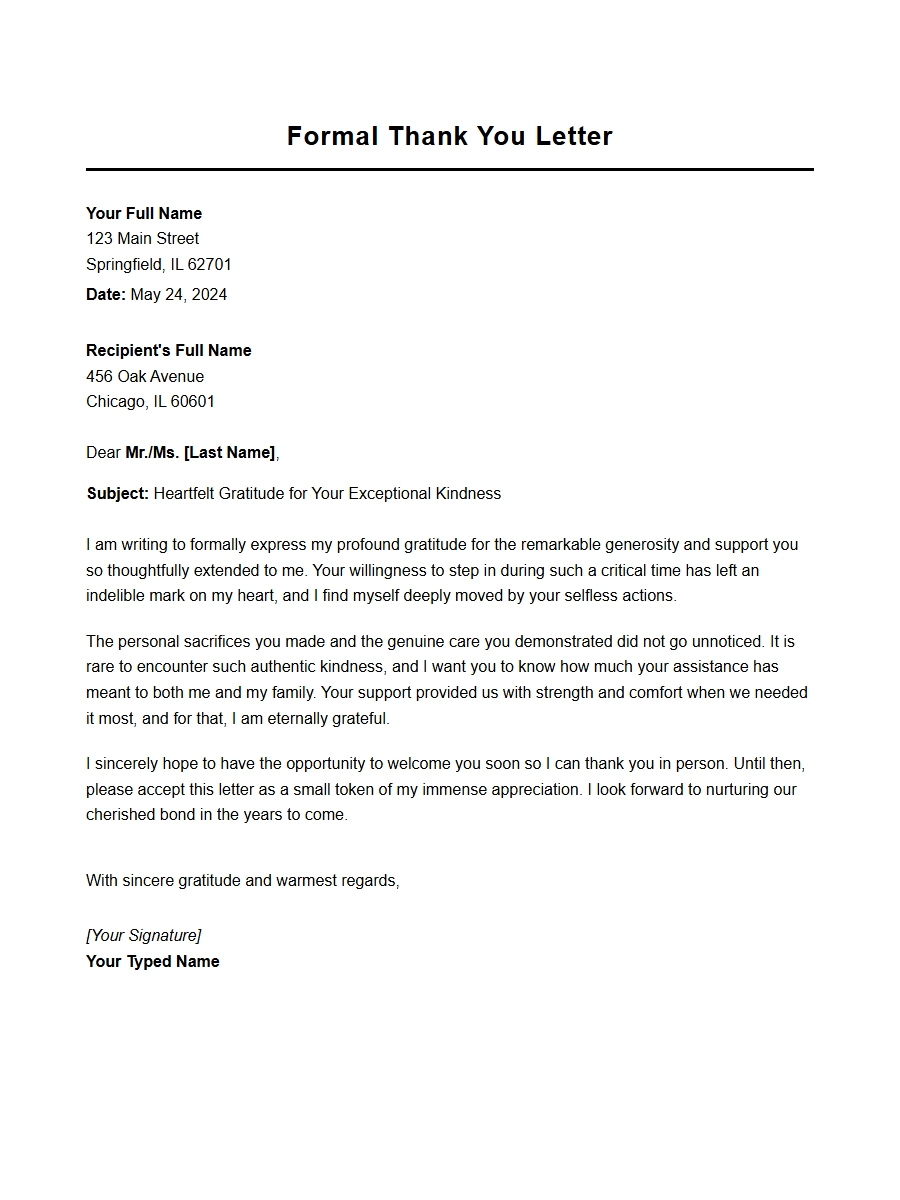 Expressing Thanks in a Formal Personal Letter
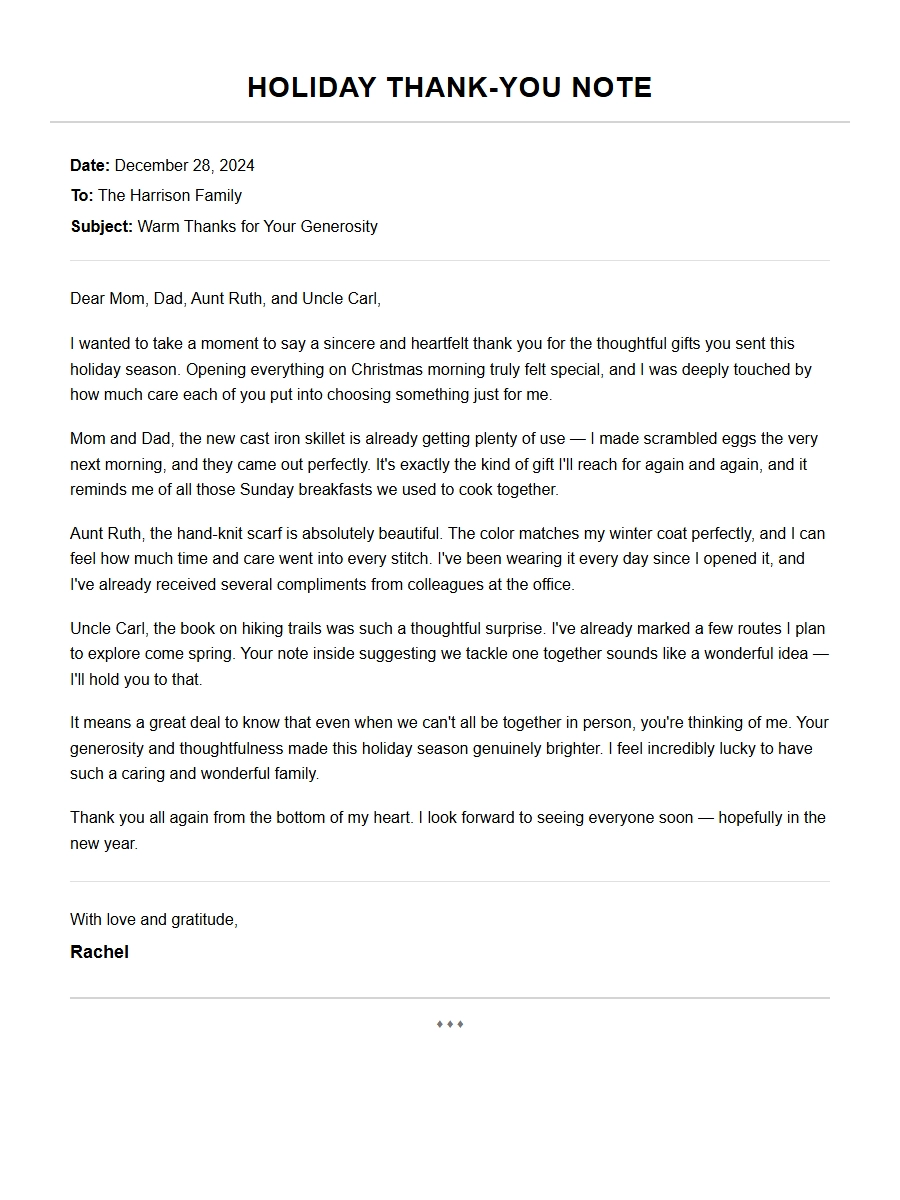 Thank You Letter Examples for Family Holiday Gifts
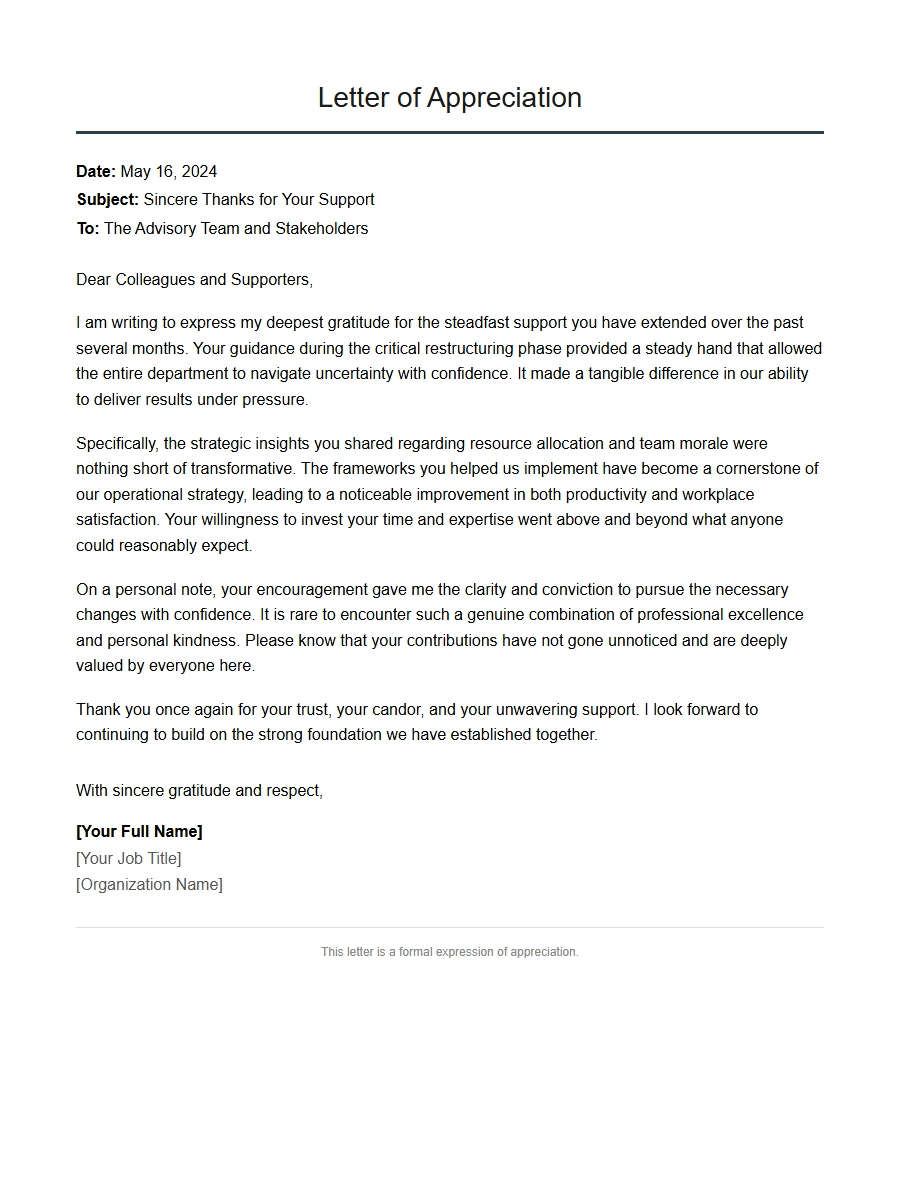 Sample Thank You Letter for Support
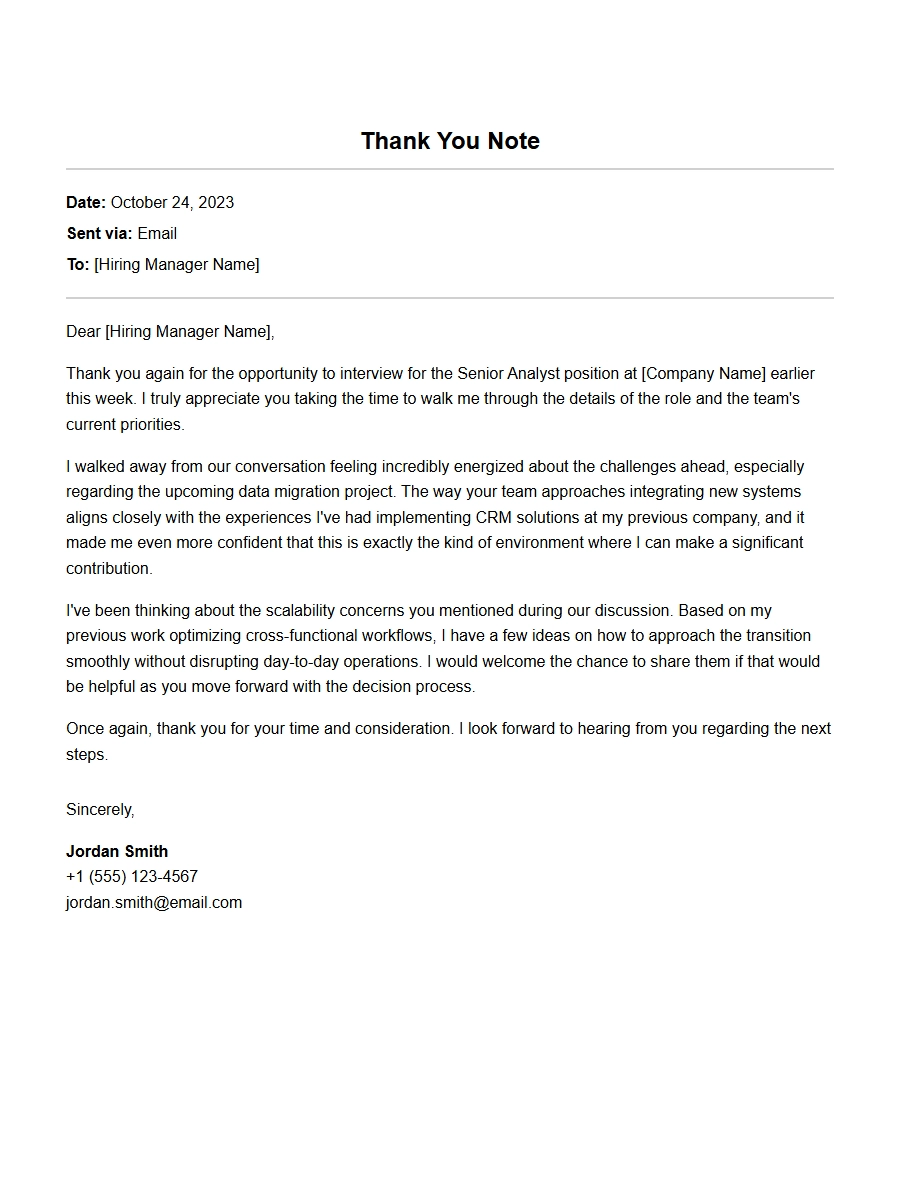 How to Write a Personal Thank-You Note After an Interview