You’ve just received a job offer you didn’t expect—or maybe you’ve decided to accept another position. The excitement fades, and suddenly you’re staring at a blank page trying to figure out how to say no politely without burning bridges. It’s an awkward spot, but a well-crafted letter can keep the door open for future opportunities.
Using a sample to decline a job offer isn’t cheating—it’s a smart time-saver. A good letter template gives you a backbone: the right structure, a professional tone, and key phrases you can adjust. You still personalize it, but you don’t have to reinvent professional correspondence from scratch.
Category: Professional Correspondence
Why a sample helps, not hurts
A blank page is intimidating. A sample removes that pressure. It shows you how to organize your thoughts, what salutation and closing fit the situation, and how to keep the tone warm but clear. You’ll avoid common pitfalls like using an outdated “To Whom It May Concern” in a modern email or sounding too casual for a corporate environment.
Samples also teach you letter structure. You see where gratitude goes, where you state your decision, and how to leave a gracious final note. That’s valuable whether you’re sending a quick email or a printed letter with a letterhead design.
How to choose the right sample for your situation
Not all job offers are the same. If you’re declining a formal offer from a large corporation, you want a more traditional business letter format. For a startup or a creative role, a slightly warmer tone works better. Think about the industry and the recruiter’s personality—did they write a friendly email or a formal letter? Mirror that.
If you’ve ever written a relationship apology letter, you know tone matters. The same idea applies here: you want to be respectful without being stiff. A sample gives you a starting point, but you should adapt it to sound like you.
Practical tips for personalizing a sample
Start with genuine thanks. Mention something specific you appreciated—the conversation with the hiring manager, the clarity of the offer, or the company culture. That shows you’re not just copying a form letter. Then state your decision clearly but gently: “After careful consideration, I’ve decided to accept another opportunity that aligns more closely with my career goals.”
Offer to stay in touch. You never know when paths might cross again. Avoid over-explaining why you’re declining—too much detail can backfire. Keep it positive and brief.
Common mistakes to avoid
One big one is using outdated letter writing etiquette. For email, a subject line like “Declining Offer – [Your Name]” is clear. Skip the full postal address unless it’s a formal printed letter. Proofread carefully—typos in a rejection letter look sloppy, especially after a long hiring process.
Another mistake is being too vague. “I’m not sure this is a good fit” leaves the door open for follow-up questions you don’t want. Be definitive. And don’t forget to respond promptly; ghosting a recruiter is unprofessional and hurts your reputation.
When email vs. printed letter works best
Most job offer declines happen via email. It’s fast, and you can send it the same day you decide. But if you’ve built a close relationship with the recruiter or the company is very traditional, a printed letter on nice paper can leave a lasting positive impression. Use a clean digital letter format for email—plain text is fine, but a simple signature block adds polish.
Making the sample your own without losing professionalism
Don’t be afraid to swap formal language for natural phrases. If you never say “I hereby decline,” don’t force it. Use “I’ve decided to pass on this offer” instead. The sample is a scaffold, not a script. Your authentic voice makes the letter feel genuine, which recruiters appreciate.
If you’ve written a resignation letter notice to manager before, you already know the balance between gratitude and clarity. The same skills apply here.
A final thought
The best decline letters feel both professional and personal. They leave the recipient thinking, “That was classy.” Use the sample as a springboard, not a crutch. The more you practice writing these, the faster and more natural it becomes. And next time you’re in this situation, you’ll know exactly how to handle it.
Samples for Inspiration
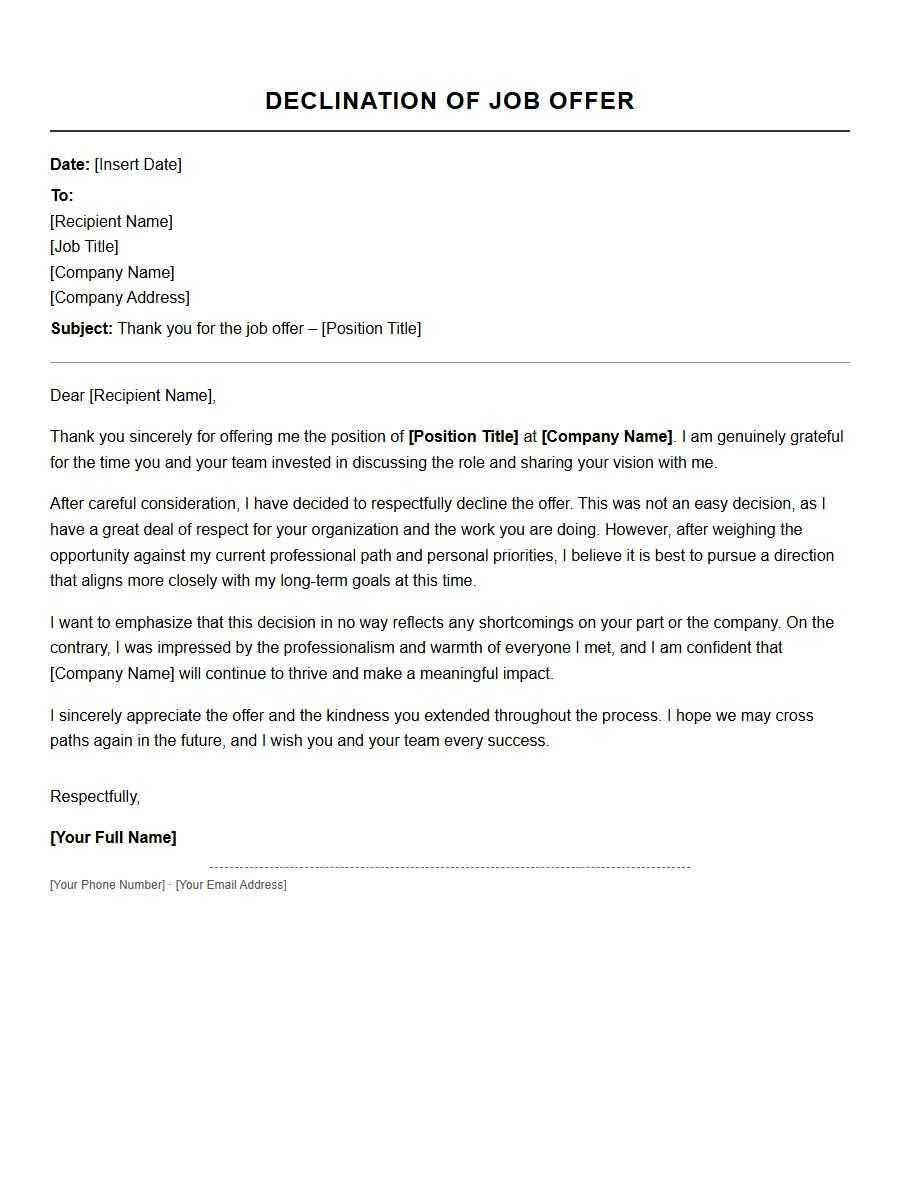
How to Politely Decline a Job Offer via Letter
Decline Due to Better Long-Term Fit
Date: March 15, 2025
To: Hiring Manager, TechVision Corp.
Thank you for the offer of Senior Developer position. After careful consideration, I have decided to decline the offer at this time. I was deeply impressed by your team and projects, but another opportunity aligns more closely with my long-term career goals in AI research.
Offer Summary:
Item
Details
Position
Senior Developer
Salary
$135,000/yr
Start Date
April 1, 2025
I sincerely appreciate your time and the positive interview experience. I hope to cross paths with TechVision again in the future.
Sincerely, Emily Carter
Decline Due to Salary Not Meeting Expectations
Date: March 14, 2025
To: HR Department, FinEdge Ltd.
I am writing to respectfully decline the offer for the Financial Analyst role. While I thoroughly enjoyed meeting your team and learning about FinEdge’s dynamic culture, the offered compensation does not meet my salary expectations given my experience and market benchmarks.
Considerations that led to my decision:
Offer was $75,000 vs. my target of $85,000
Limited bonus structure
No relocation assistance for the required move
I am grateful for your offer and the time invested. I wish FinEdge continued success and hope our paths may cross under different circumstances.
Best regards, James Liu
Decline Due to Relocation Concerns
Date: March 13, 2025
To: Recruitment Team, NorthStar Inc.
Thank you very much for offering me the Marketing Manager position. After thoughtful discussion with my family, I have decided to decline. The role requires relocation to Chicago, which we are not prepared to undertake at this stage due to family commitments and school arrangements.
I remain incredibly impressed by NorthStar’s vision and your team. Please do keep me in mind for remote-based opportunities in the future.
Once again, thank you for this opportunity and your professionalism throughout the process.
Warmly, Sarah Goldstein
Decline After Accepting Internal Promotion
Date: March 12, 2025
To: Talent Acquisition, BrightPath Solutions
I am writing to withdraw my acceptance of the Senior Analyst position originally offered for April 2025. Shortly after my interview, my current employer presented an unexpected internal promotion to Team Lead that I have chosen to accept.
Comparison of offers:
Factor
BrightPath
Current Role
Title
Senior Analyst
Team Lead
Remote
2 days/week
Fully remote
Growth
Good
Immediate path to management
I apologize for any inconvenience this may cause. I am grateful for your generous offer and the positive impression I formed of BrightPath.
Regards, David Okonkwo
Decline for Career Direction Change
Date: March 11, 2025
To: Hiring Manager, GreenLeaf Ltd.
Thank you for offering me the Supply Chain Coordinator position. After much reflection, I have decided to pursue a different career path in sustainability consulting, and therefore must decline your generous offer.
My decision was driven by several factors:
Stronger interest in environmental policy work
Enrollment in a part-time certification program
Desire to leverage my background in a new field
I truly appreciate the time your team spent with me and the warm welcome I felt during interviews. I hope GreenLeaf continues to thrive.
Sincerely, Mariana Silva
Decline Due to Timing Conflict with Another Acceptance
Date: March 10, 2025
To: HR, Apex Technologies
I am writing to express my sincere gratitude for the offer to join Apex as a DevOps Engineer. Unfortunately, I must decline because I had already accepted a competing offer before receiving yours. I apologize for any confusion in the timing of the process.
I deeply valued our conversations and was impressed by Apex’s commitment to innovation. It was a very difficult decision, but the earlier commitment must stand.
Thank you for your understanding. I will follow your company’s progress and hope we can connect in the future.
Best, Carlos Mendez
Decline Due to Start Date Conflict with Notice Period
Date: March 9, 2025
To: Recruitment Team, CloudBase Inc.
Thank you for extending the offer for the Cloud Solutions Architect role. However, after reviewing the required start date, I realize it is impossible for me to respect the 60-day notice period my current employer requires. The agreed start of May 1 conflicts with my contractual obligations.
Schedule details:
Date
Event
Offer extended
March 5
Notice period required
60 days (ends late April)
CloudBase start date
May 1
I regret that I cannot accommodate this timeline. Should a later start or a delayed hire become possible, I would be delighted to revisit this opportunity.
With appreciation, Nina Patel
Decline Due to Values Mismatch After Due Diligence
Date: March 8, 2025
To: Executive Team, Glynn & Co.
I am writing to gently decline the offer to become your Head of Product. While your team was exceptionally welcoming, further research into the company’s recent business practices has revealed a misalignment with my personal values regarding data privacy.
Specific concerns:
Past controversies around user data usage
Lack of transparency in customer communication
My ethical standards require a stronger privacy-first approach
I deeply respect the talent at Glynn & Co. and thank you for the opportunity. I hope my feedback is received constructively.
Warmly, Alan Zheng
Decline After Receiving a Counteroffer from Current Employer
Date: March 7, 2025
To: Hiring Manager, NextWave Solutions
I must respectfully decline your offer for the Senior Engineer position. I was very excited about the role, but after receiving a substantial counteroffer from my current employer, I have decided to stay. The counter included a promotion, salary increase, and flexible hours that match my priorities.
Offer comparison:
Factor
NextWave
Current Company
Salary
$140,000
$145,000 + bonus
Remote
Hybrid
Fully remote
Title
Senior Engineer
Principal Engineer
Thank you for your understanding and for the positive interview process. I wish NextWave all the best.
Sincerely, Priya Sharma
Generic Polite Decline Due to Personal Circumstances
Date: March 6, 2025
To: Hiring Team, Vertex Media
I am writing with sincere thanks for offering me the Content Strategist position. After careful deliberation, I have decided to decline due to a recent change in my personal circumstances that requires me to stay closer to home at this time.
I am grateful for the opportunity to learn about Vertex Media’s creative projects and the welcoming atmosphere. I hold your team in high regard and hope to apply again in the future when things settle.
Please accept my best wishes for your continuing success. You have built something truly special.
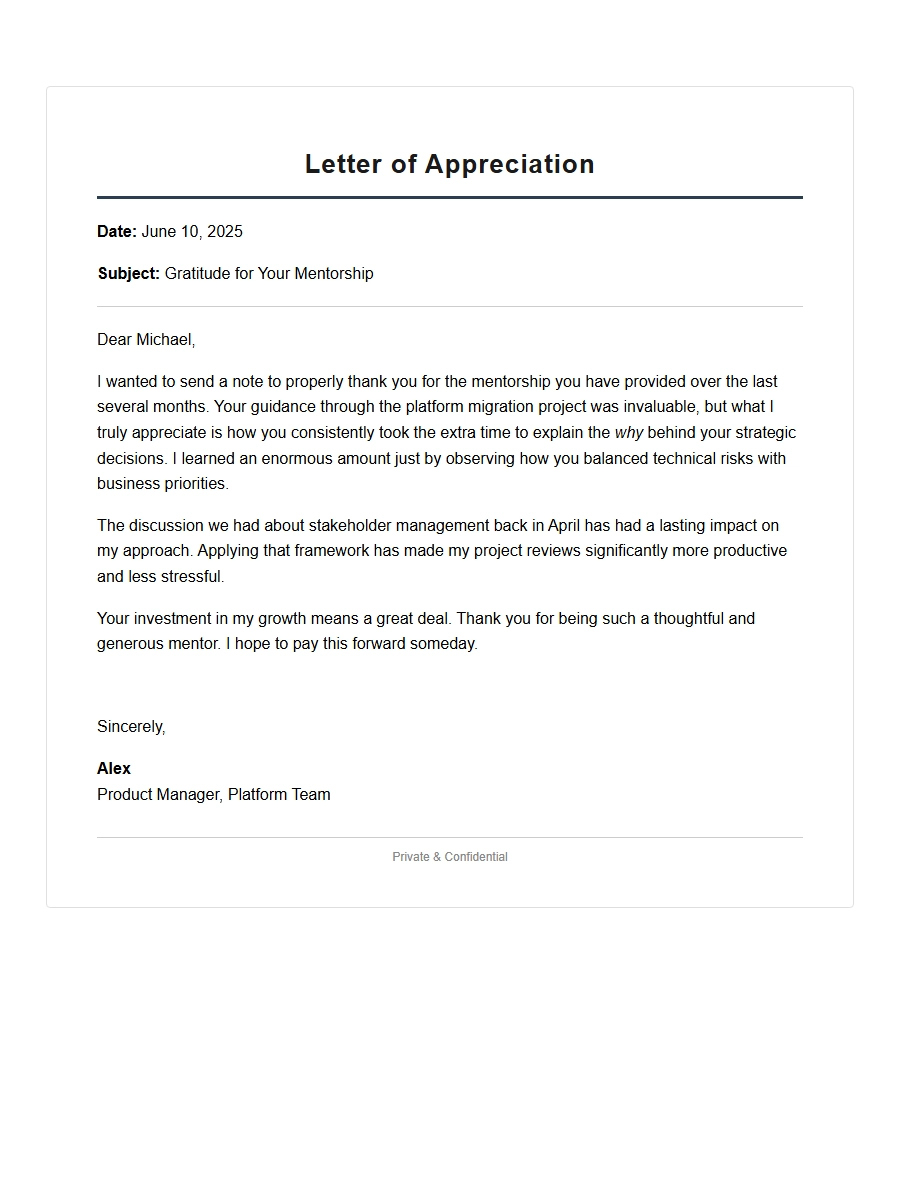 Thanking a Mentor for Guidance: Sample Messages
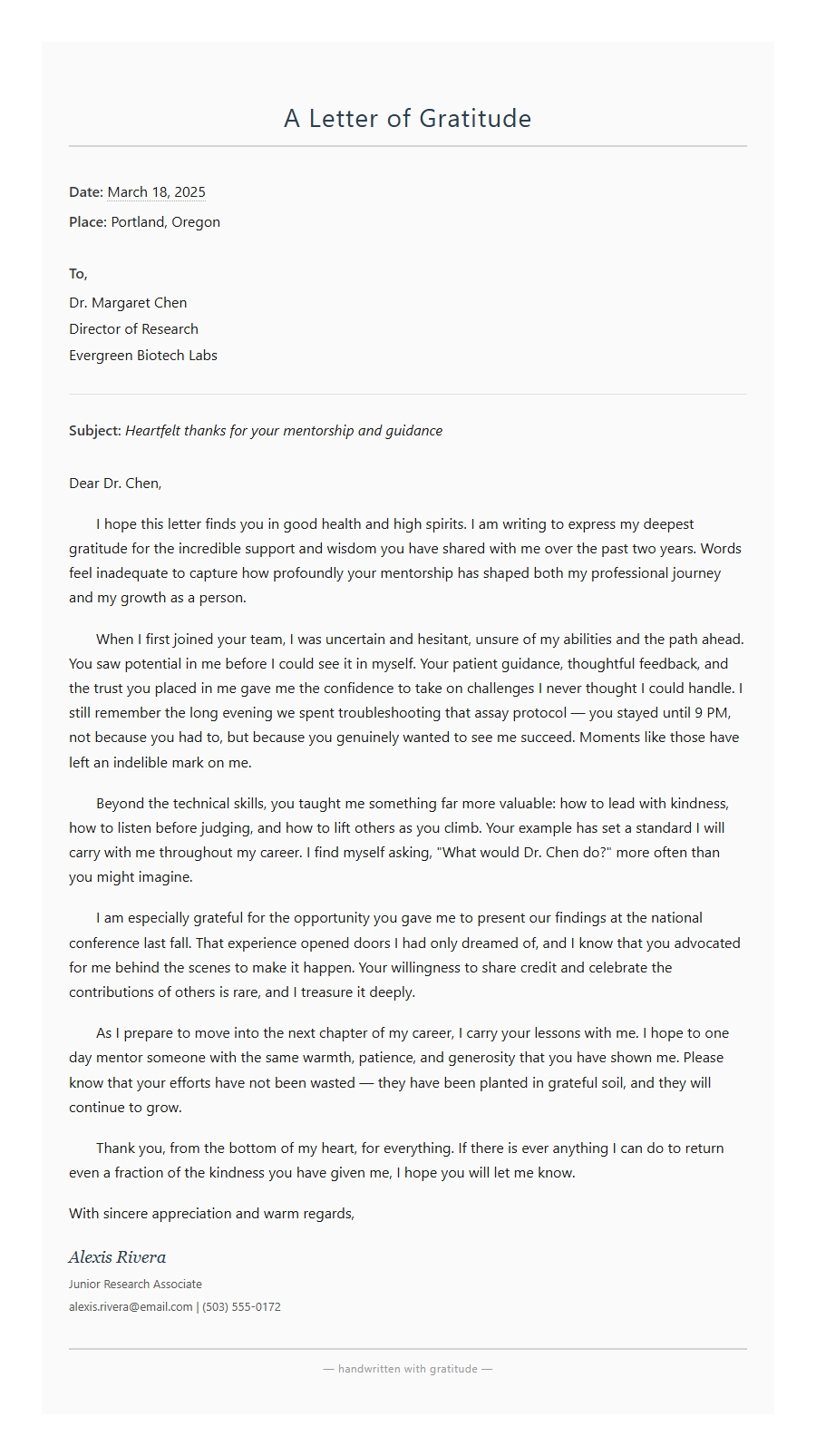 Expressing Gratitude: Handwritten Letter Example
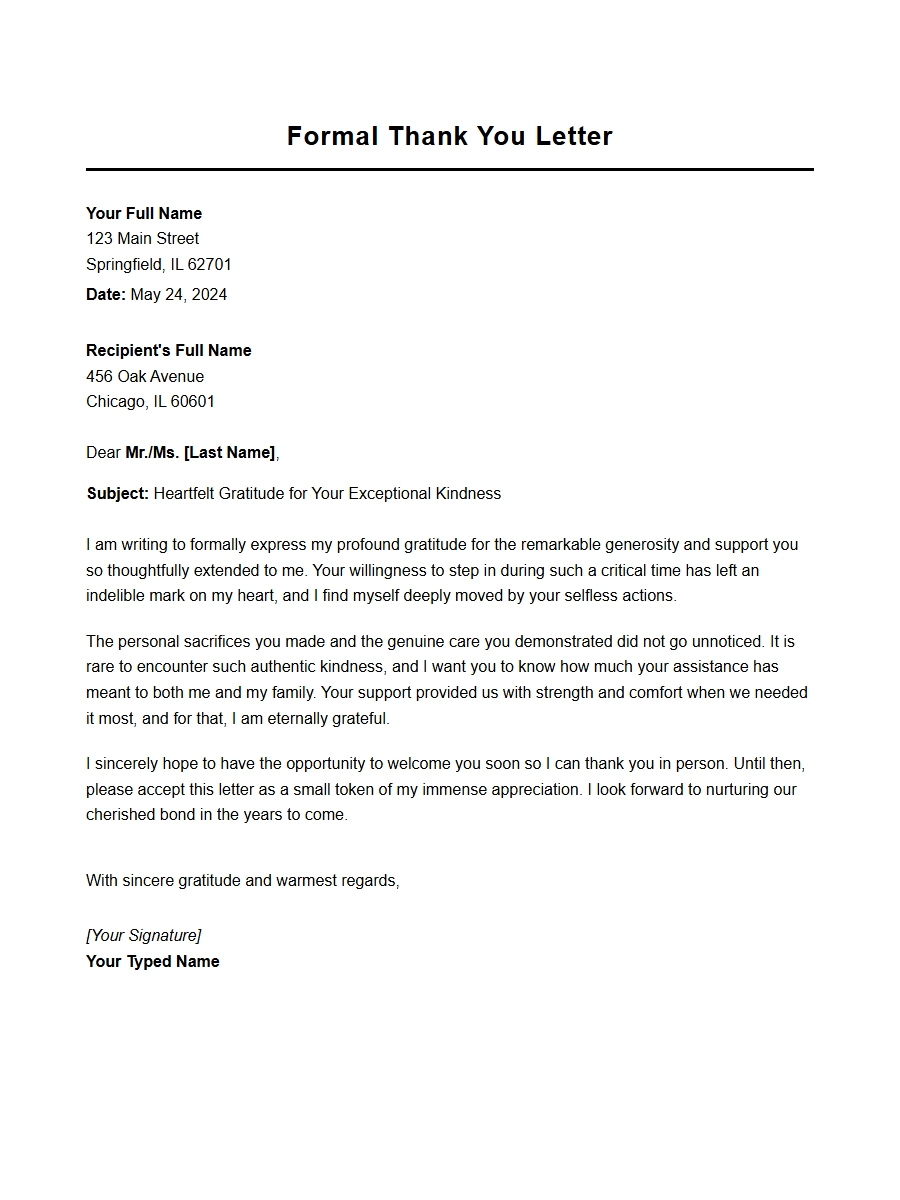 Expressing Thanks in a Formal Personal Letter
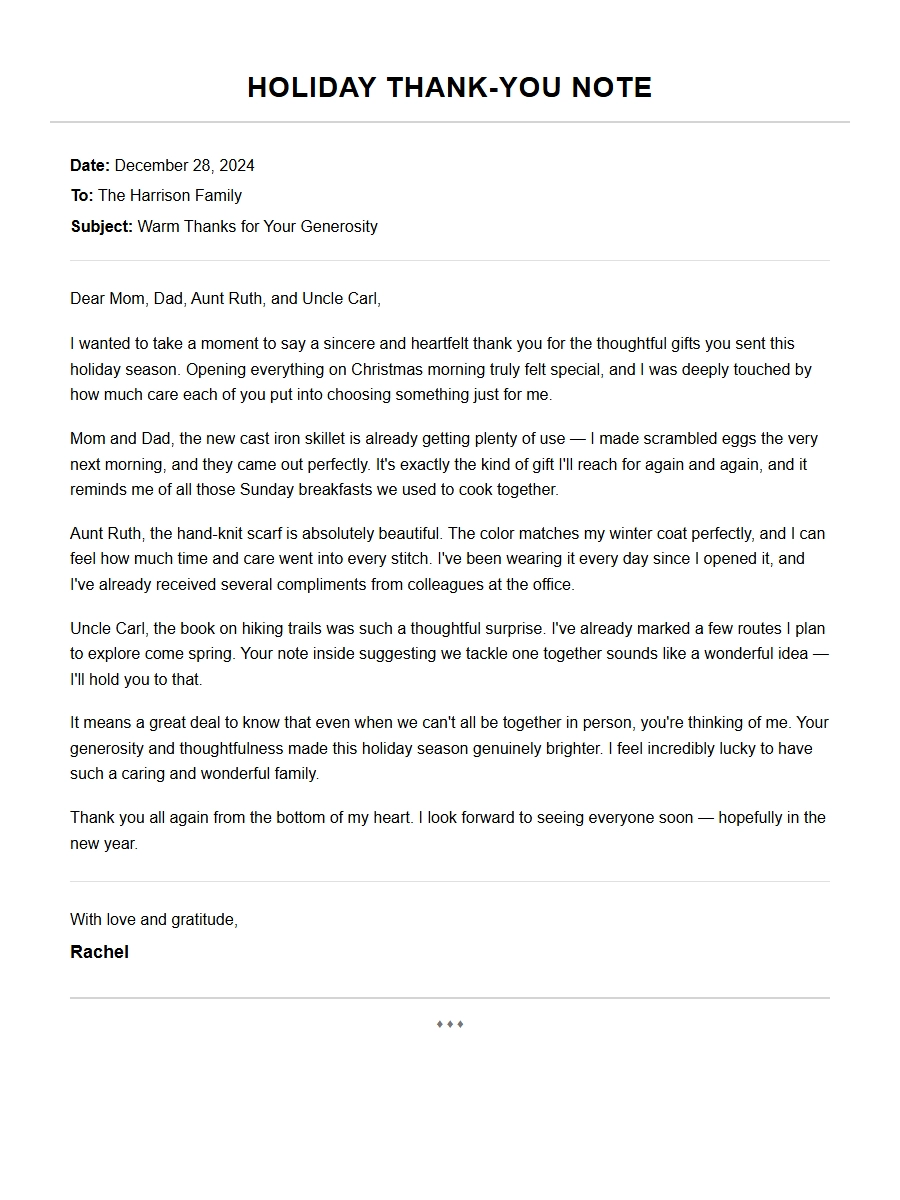 Thank You Letter Examples for Family Holiday Gifts
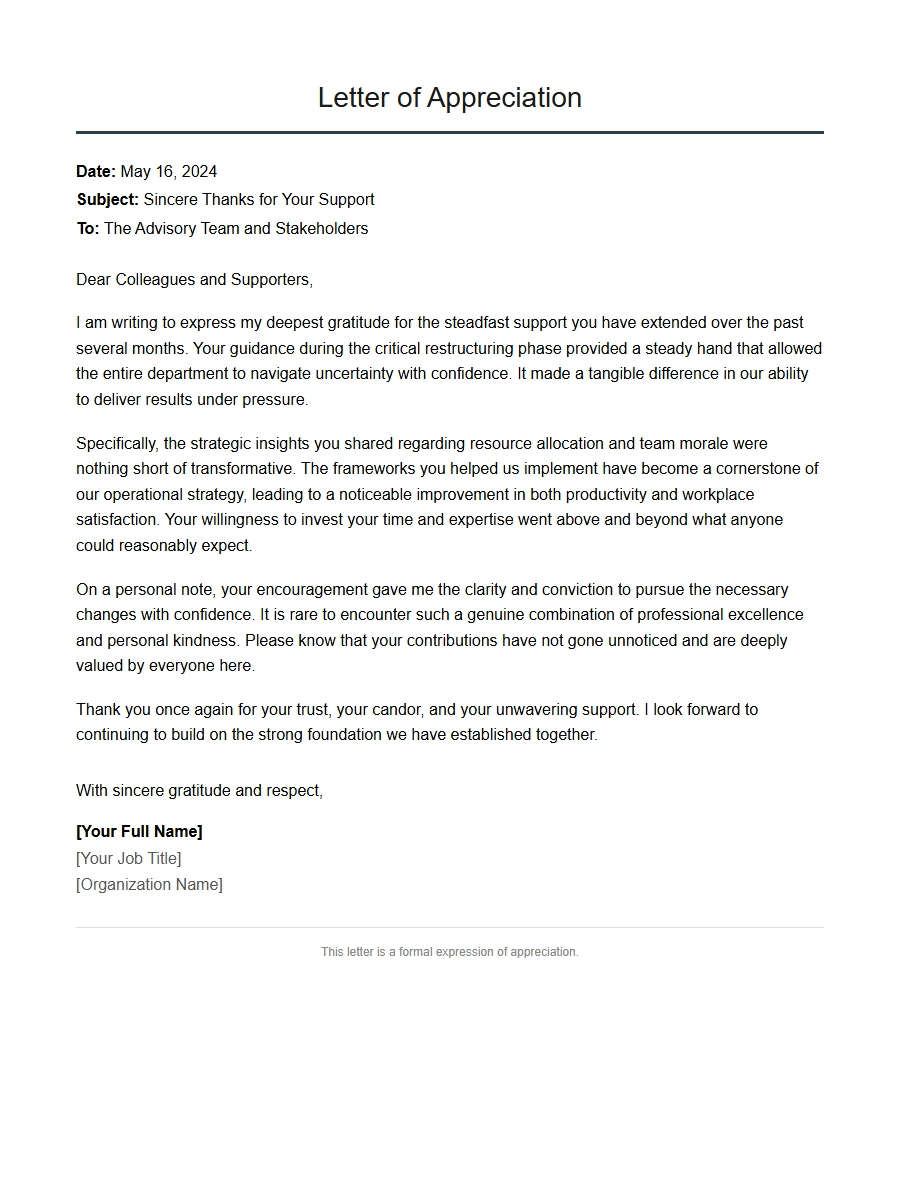 Sample Thank You Letter for Support
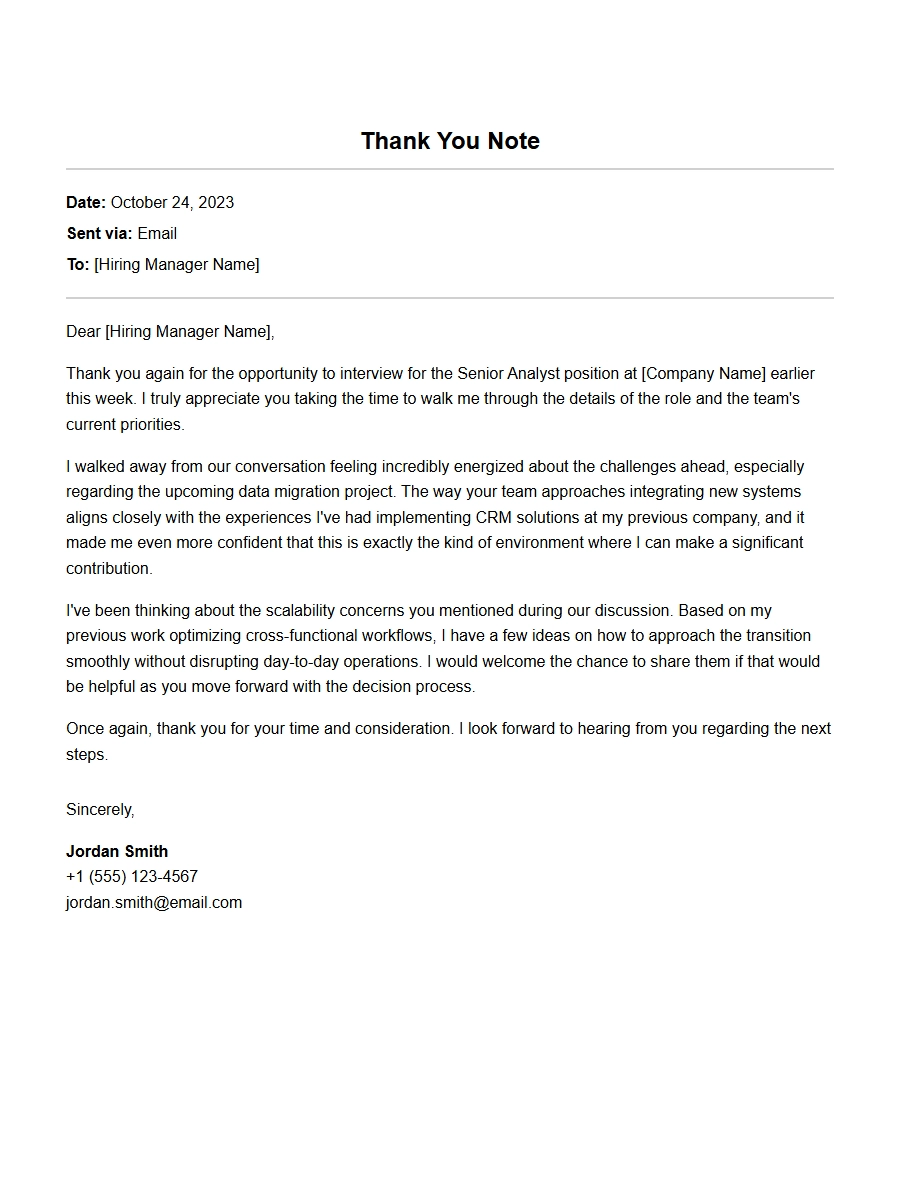 How to Write a Personal Thank-You Note After an Interview