It’s been a while since you last wrote to your pen pal. Maybe life got busy, or you weren’t sure what to say. Now the silence feels awkward, and you’re staring at a blank page wondering how to restart the conversation. That tension is common, but a simple keeping in touch letter to pen pal example can turn that uncertainty into a confident, warm note in just a few minutes.
Category: Personal Correspondence
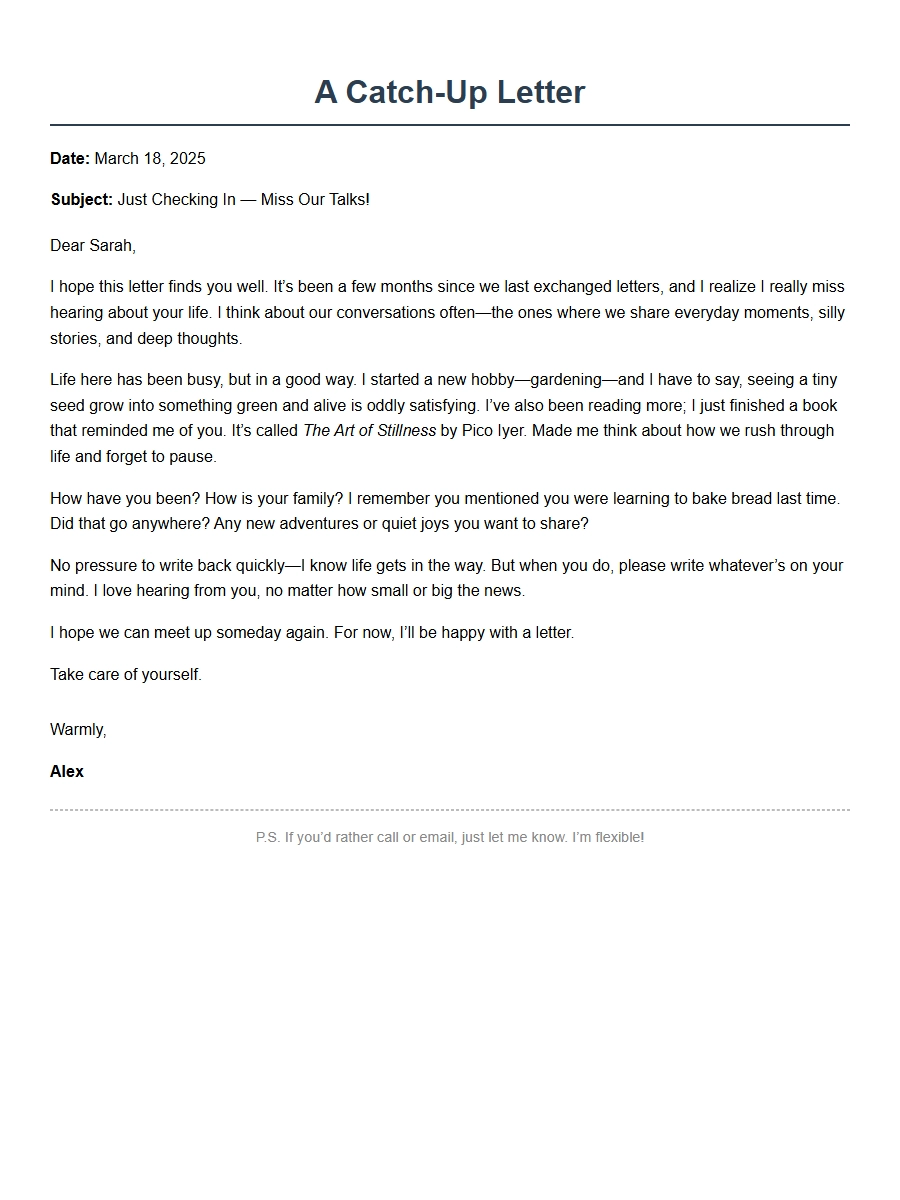
Using a sample isn’t cheating. It’s a smart way to borrow a proven structure, get the tone right, and see how others handle the same challenge. A good example gives you a framework—salutation, body, closing—while leaving plenty of room for your own stories and voice. You’re not copying; you’re customizing.
What a keeping in touch letter to a pen pal example looks like
A typical example opens by acknowledging the gap between letters. Something like “I can’t believe it’s been three months since I wrote last—time keeps slipping away!” That honesty breaks the ice. Then it moves into a quick personal update: what you’ve been doing, a new hobby, or a funny story. Finally, it asks questions about the pen pal’s life to keep the conversation going. The salutation is warm (“Dear [Name],”) and the closing is friendly (“Yours,” “Best wishes,” or “Can’t wait to hear from you”).
This structure works because it balances sharing and listening. You don’t want to send a monologue. The best pen pal letters feel like a two-way chat on paper. Expressing gratitude for their last letter is a natural way to show you value the connection.
How to adapt the sample without losing your authentic voice
The first rule of letter writing etiquette is to sound like yourself. If the sample feels too formal, loosen it. Use contractions (“I’ve,” “you’ll”), short sentences, and the kind of words you’d use when talking to a friend. On the other hand, if your pen pal is more traditional (an older person or a formal exchange), keep a respectful tone. The sample is a starting point, not a script.
A common mistake is copying the opening verbatim. Instead, tweak it to fit your situation. If you feel awkward about the long silence, name it. “I feel a bit guilty for not writing sooner, but I kept thinking about you.” That honesty builds trust. Also watch the closing—don’t use “Sincerely” if you usually sign off with “Take care.” Tone in writing should match your relationship.
When you adapt, pay attention to the salutation and closing. For a pen pal, “Dear” works fine, but you could also use “Hi” or “Hello.” The closing should feel natural. And if you’re sending the letter by email, adjust the format—use a clear subject line like “Catch up from [Your Name]” and keep paragraphs short for screen reading. That’s a simple digital letter format tip.
Practical details that make your letter stand out
Don’t just write one long paragraph. Break your update into small chunks: what you’ve been reading, a recent trip, or something funny your pet did. White space makes the letter easier to read. It also mirrors a real conversation where you pause between topics. When contacting a teacher about your child’s performance, you’d use a formal list, but for a pen pal, casual flow is better.
Proofreading matters too. A typo is fine between friends, but a confusing sentence can interrupt the flow. Read your letter aloud before sealing the envelope or hitting send. That catches awkward phrasing. And if you’re handwriting, take your time—legibility shows care.
Mistakes to avoid when using a pen pal letter sample
The biggest error is ignoring the recipient’s personality. If your pen pal loves humor, don’t send a dry update. Weave in a joke or a lighthearted observation. Another mistake is making the letter all about you. Remember to ask thoughtful questions. “How did your gardening project turn out?” or “Any new recipes you’ve tried?” That shows you remembered past conversations.
Also avoid outdated salutations. “To whom it may concern” has no place in a personal letter. Stick with familiar openings. If you ever write to a property manager about pet permission, you’ll need a formal approach, but a pen pal letter is your chance to be relaxed and friendly.
Use the example as a springboard, not a crutch
The best pen pal letters feel both professional (in the sense of being clear and respectful) and personal. Once you’ve used a sample a few times, you’ll internalize the structure. Then you can write naturally without looking at an example at all. Advocating for a loved one in a hospital setting requires a very different tone, but the habit of writing clearly will carry over to any letter you write.
Requesting records from a previous healthcare provider is another situation where structure matters, but the same principle applies: start with a clear opening, state your purpose, and close politely. For a pen pal, your purpose is connection—so let your personality shine. Practice makes the process faster, and soon you’ll be the one sharing your own keeping in touch letter to pen pal example with a friend who asks for help.
Realistic Samples
Pen Pal Letter Example: Keeping in Touch
First Pen Pal Letter
Dear Emily,
I hope this letter finds you well. My name is Sarah, and I found your address through the international pen pal program. I am 16 years old and live in a small town in Canada. I love reading, hiking, and playing the guitar.
I thought it might be fun to share a few things about my life. Here is a little about me:
Favorite book:To Kill a Mockingbird
Hobbies: Photography, baking, and cycling
School subject: History and English
I am curious about your life in Japan. What do you enjoy doing in your free time? Have you traveled to any interesting places? I would love to hear about your culture and daily routines.
I look forward to your reply and hope we can become good friends through these letters.
Best wishes, Sarah
Catching Up After a Long Silence
Dear Alex,
I know it has been over six months since I last wrote, and I am truly sorry for the long silence. Life got incredibly busy with exams and family obligations, but I have been thinking about you often.
To bring you up to date, here are some highlights from my life:
Event
Date
Details
Graduation
June 2025
Finished high school with honors
Summer job
July–August
Worked at a local bookstore
Travel
September
Visited the Grand Canyon with family
I hope you are doing well. Has anything exciting happened in your life? Did you finish that painting you mentioned in your last letter? Please forgive my delay and write back when you have a moment.
Yours, Maria
Holiday Greetings to a Pen Pal
Dear Carlos,
Merry Christmas and Happy New Year! I hope this festive season brings you joy, warmth, and wonderful moments with family and friends.
I wanted to share some of my favorite holiday traditions:
Baking cookies: My grandmother’s gingerbread recipe is a family staple.
Decorating the tree: We always hang handmade ornaments from my childhood.
Christmas Eve dinner: A big feast with roast turkey and pumpkin pie.
Do you celebrate Christmas in Brazil? If not, what special holidays do you observe? I would love to learn about your traditions.
I am also sending you a small bookmark with a winter scene – I hope you like it. Wishing you peace and happiness in the coming year.
Warmly, Emma
Update on Life Changes
Dear Maya,
It has been a few months since my last letter, and so much has changed. I moved to a new city for university and am studying environmental science. The campus is beautiful, and I have made some great friends.
Here is a snapshot of my new routine:
Time
Activity
Location
8:00 AM
Classes
Science Building
12:00 PM
Lunch with friends
Student Union
3:00 PM
Study group
Library
6:00 PM
Guitar practice
My dorm room
How are things in Mumbai? Did you start your art course at the community center? I enjoyed the sketch you sent last time – you are very talented.
I promise to write more regularly now. Take care!
Love, Priya
Sharing a Hobby: Gardening
Dear Tom,
I recently took up gardening, and I am absolutely hooked. It all started when my neighbor gave me some sunflower seeds. Now I have a small patch of vegetables and flowers in my backyard.
Here is what I am growing this season:
Tomatoes: Cherry and Roma varieties
Basil and mint: For cooking and tea
Marigolds: To attract bees and add color
Sunflowers: They are almost as tall as me!
I find it relaxing and rewarding. Do you have any hobbies you are passionate about right now? If you like gardening too, maybe we could exchange tips or even seeds through the mail.
I also enclose a photo of my first ripe tomato (in the envelope). Let me know what you think.
Happy gardening, Linda
Asking About Their Life
Dear Chen,
I realized that in my last few letters I talked a lot about myself without asking enough about you. So this time, I want to focus on your life. Please tell me everything!
Here are a few questions I would love you to answer:
What is a typical day like for you? (Work, school, hobbies?)
What is your favorite local dish? (I am curious about Chinese cuisine.)
Do you have a pet? If so, tell me about it. If not, would you like one?
What is one dream you have for the future?
I promise to reply quickly this time. I value our friendship and want to know the real you beyond the letters. Looking forward to your stories.
Your friend, Sam
Apologizing for a Delay
Dear Olivia,
I am so sorry for the late reply. Your last letter arrived two months ago, and I kept meaning to write back, but somehow time slipped away. Please forgive me.
I know it is not an excuse, but here is what kept me busy:
Month
Reason for Delay
October
Preparing for my sister’s wedding
November
Fell ill with the flu for two weeks
December
End-of-year exams and projects
Now that things have calmed down, I will make sure to write more often. I have missed our exchange of letters. How was your trip to Scotland? I remember you were planning it last spring.
Please give me another chance – I promise to be a better pen pal from now on.
With sincere apologies, Nina
Introducing a New Interest
Dear Kenji,
I have discovered a new passion – calligraphy. After seeing some beautiful Arabic script online, I bought a starter set of pens and ink. I have been practicing every evening for two weeks.
Here are the tools I am using:
Pens: Pilot Parallel Pens (2.4mm and 3.8mm)
Ink: Higgins black India ink
Paper: Rhodia dot pad (smooth, bleed-proof)
Guide sheets: Printed from an online tutorial
It is challenging but meditative. I even wrote a short poem for you in my best current style (enclosed). Do you have any hobbies that you recently started or want to try? Maybe we can inspire each other.
I also remember you mentioned learning the piano. How is that going?
Write soon!
Yours, Lea
Suggesting a Visit
Dear Aisha,
We have been writing to each other for nearly two years now, and I have an exciting idea. What if we actually met in person? My family is planning a trip to Europe next summer, and we might visit London. I know you live near Manchester, so maybe we could arrange a meeting.
Here is a rough plan I have in mind:
Date
Location
Activity
July 20, 2026
London – King’s Cross Station
Meet for lunch
July 21, 2026
British Museum
Explore together
July 22, 2026
Hyde Park
Picnic and walk
Of course, it depends on your availability and your family’s permission. Please discuss it with your parents and let me know if it could work. I understand if it is too soon, but I would love to finally give you a hug instead of just writing.
Can you believe it? Two years of letters – let’s make this happen!
Excitedly, Mira
Farewell Letter Before Moving
Dear Leo,
This is a difficult letter to write. My family is moving to Australia at the end of this month for my father’s job. That means our pen pal correspondence will have to change. I will have a new address, but I very much want to continue writing.
Before I go, I want to thank you for the wonderful friendship we have built over these three years. You taught me so much about Argentine culture, and your letters always made me smile.
Here are some of my favorite memories from our exchange:
Your detailed description of Buenos Aires cafes – I felt like I was there.
The recipe for empanadas – my family loves it.
Your drawing of your cat Mochi – still on my wall.
I promise to send my new address as soon as we settle in. Please keep writing to me – I will write back even from across the ocean. This goodbye is not the end; it is just a new chapter.
 Thanking a Mentor for Guidance: Sample Messages
 Expressing Gratitude: Handwritten Letter Example
 Expressing Thanks in a Formal Personal Letter
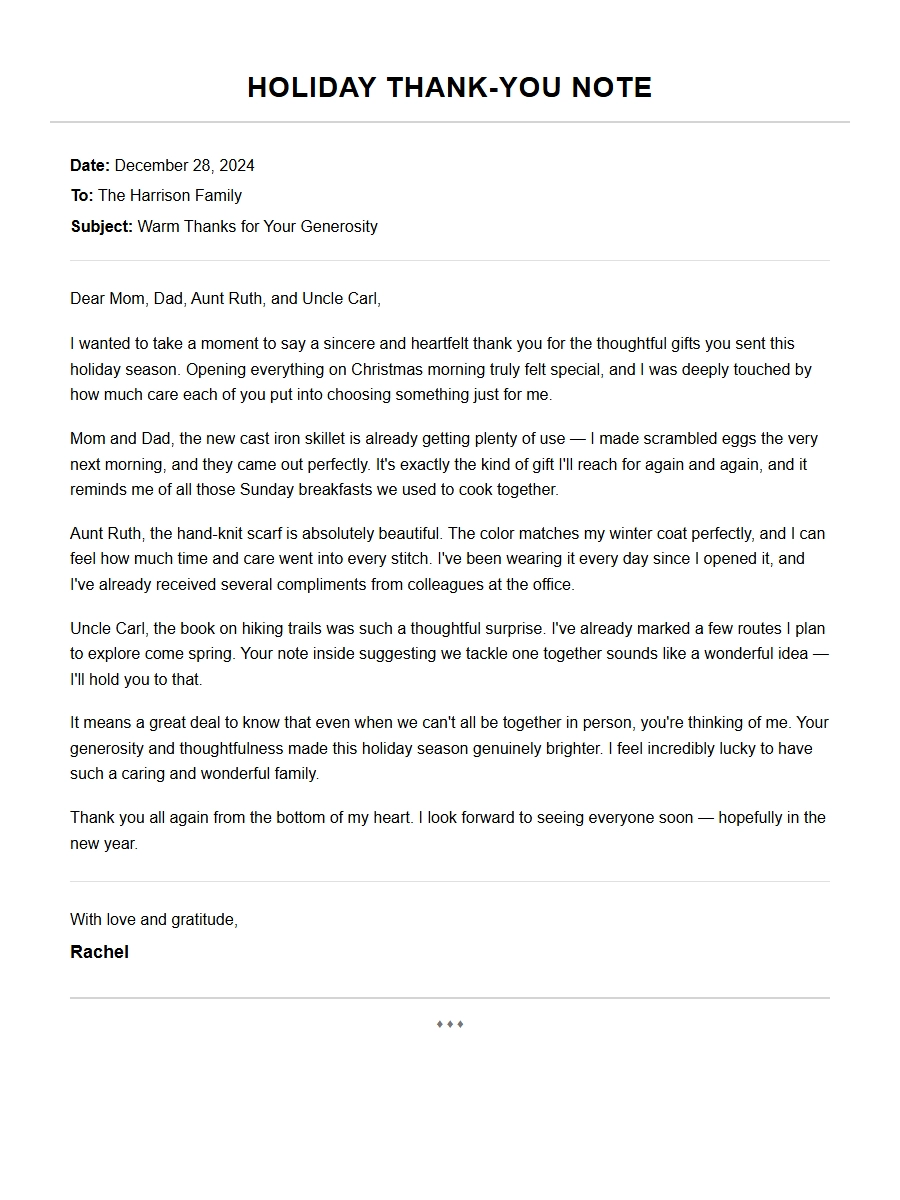 Thank You Letter Examples for Family Holiday Gifts
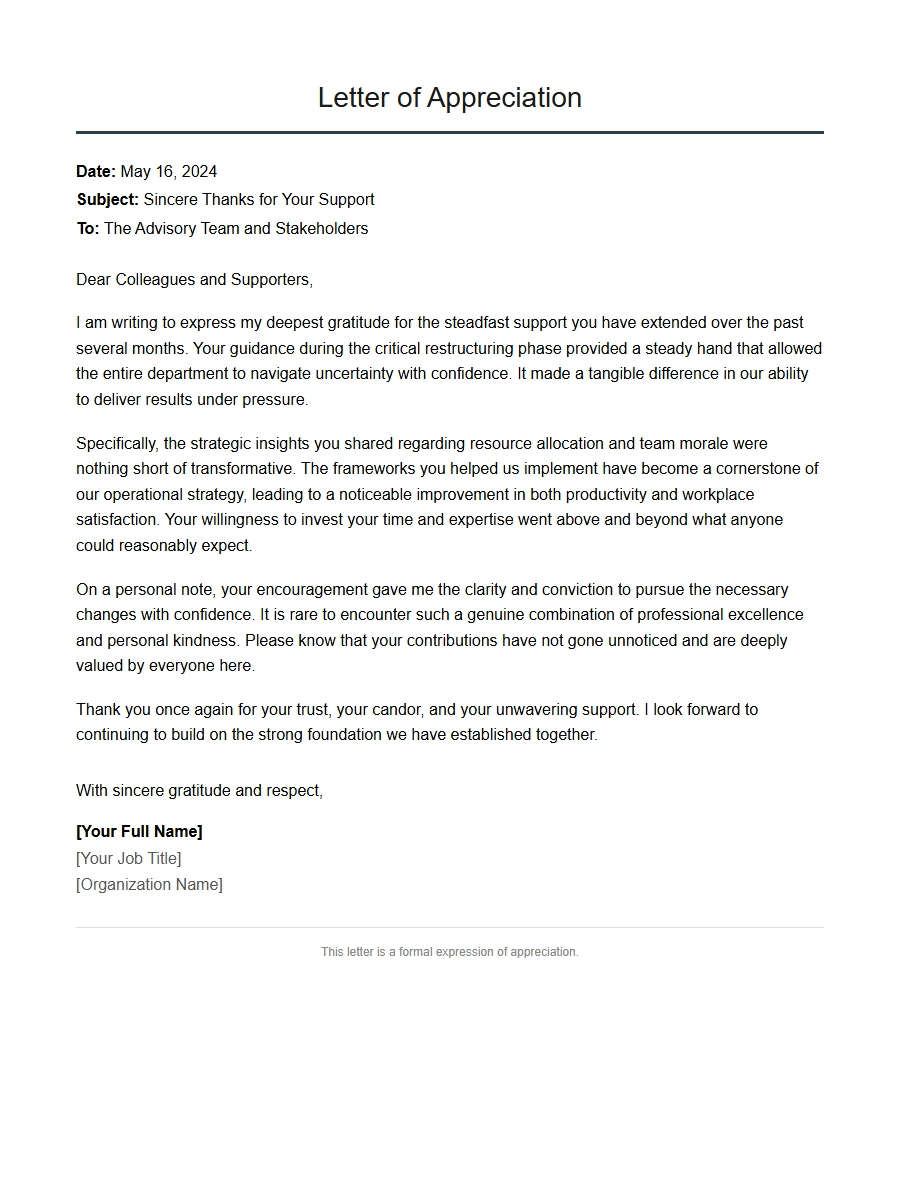 Sample Thank You Letter for Support
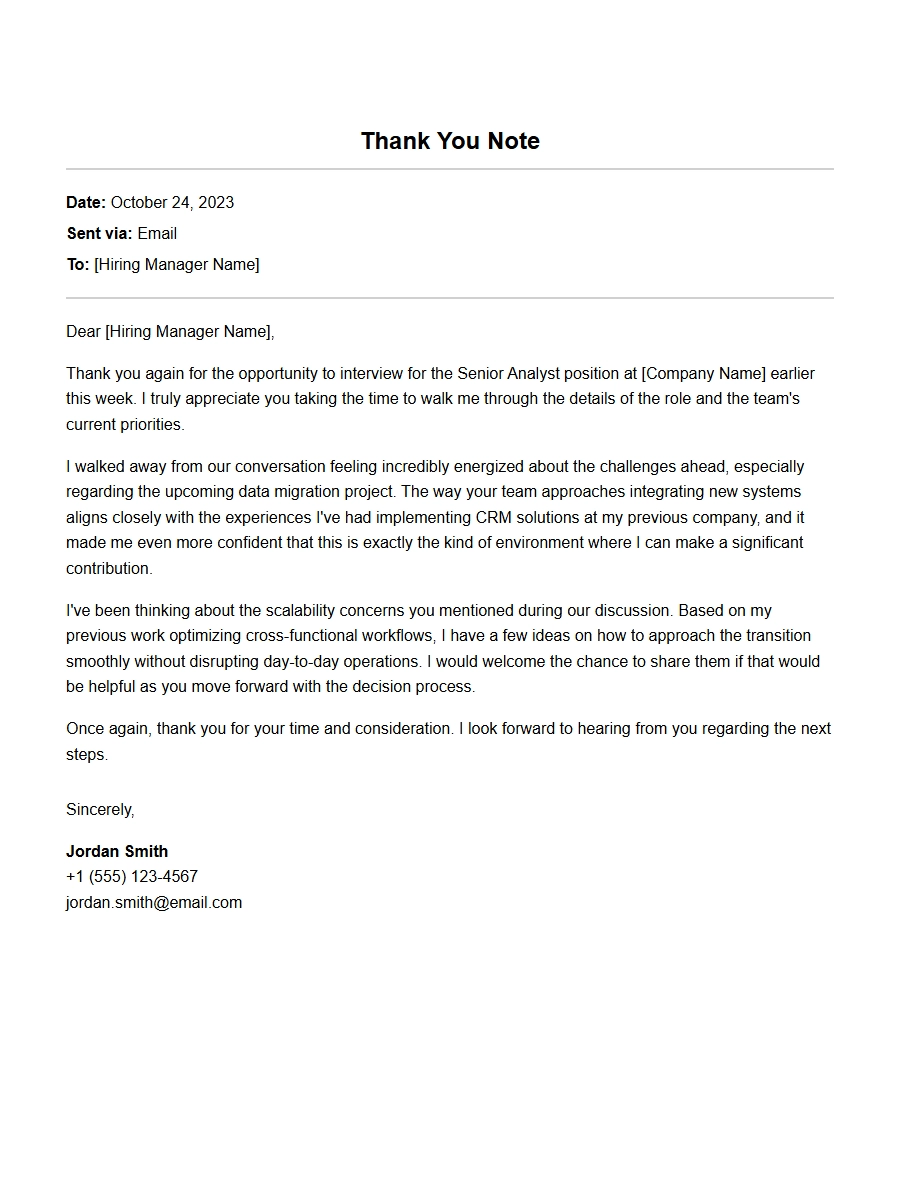 How to Write a Personal Thank-You Note After an Interview