informing neighbors of upcoming construction noise - Personal Letters
You’re about to start a home renovation or construction project. The last thing you want is to upset your neighbors before the first hammer swings. But writing a letter to explain the noise, timelines, and your apology can feel awkward. You might worry it sounds too formal or too casual—or that you’ll forget something important. That blank page stares back, and you wonder where to start. It’s a common frustration, and you’re not alone.
Using a letter sample isn’t cheating. It’s a smart shortcut that gives you a proven structure, the right tone, and key phrases you can borrow. You still customize everything: your name, the dates, and the personal touch that shows you care. A good template saves time and reduces anxiety. Think of it as a coach, not a crutch.
Category: Neighbor Notification Letters
Why you need a construction noise letter
A brief, polite note avoids misunderstandings. Neighbors appreciate knowing when and why there will be noise. It shows respect and gives them time to plan around it. You might also need a record of communication if someone later complains. Professional correspondence like this—even if it’s a simple email—builds trust and keeps relationships smooth.
Whether you send a printed letter or a digital letter format, the key is clarity. Include the start and end dates, daily hours, and what kind of noise to expect (drilling, sawing, hammering). Offer an apology and a way to contact you. That small effort can turn a potential annoyance into a tolerated inconvenience.
Formal or informal? How to choose
Your tone in writing should match your relationship with the neighbors. If you know them well, a short email with friendly language works. For a whole building or a formal community, stick to a business letter format with proper salutation and closing. Remember: you can always tone down a formal template rather than trying to dress up a casual one.
A common mistake is using outdated salutations like “To Whom It May Concern” for a neighbor you’ve met. Instead, use “Dear Neighbors” or address specific names. Letter writing etiquette says to keep it warm but respectful—imagine you’re handing the notice over the fence. If you’re unsure, check out our sample for extending a welcome to new neighborhood residents; it uses a similar neighborly tone you can adapt.
Tailoring a template without losing your voice
Start with a good letter template. The structure is usually: salutation, explanation, apology, details, contact info, and closing. But don’t copy it word for word. Replace generic phrases with your own words. For example, instead of “We regret to inform you,” try “I wanted to let you know ahead of time.” That makes it sound like you, not a robot.
Customizable letter samples let you adjust the tone while keeping the order. If you feel the opening is too stiff, rewrite it with a friendly line about hoping to keep things peaceful. Many people overlook the power of the first sentence. A good opener grabs attention and shows consideration: “I’m writing because our construction project is set to begin next week, and I want to give you a heads-up.”
Mistakes that hurt your letter
Even with a great sample, a few errors can weaken your message. The biggest one is ignoring proofreading. A typo in the date or an unclear timeline can cause confusion. Another mistake is neglecting letterhead design. If you print the letter, use a clean font and include your name, address, and phone number at the top—that’s part of professional correspondence. For emails, a clear subject line (e.g., “Construction noise update from [Your Name]”) is your virtual letterhead.
Also, avoid making promises you can’t keep. Don’t say “no noise after 5 PM” if you might run late. Be realistic. And if you need to introduce yourself to a neighbor you don’t know well, the same advice applies. Our introducing yourself to a new business contact guide offers tips on first impressions that work for neighbors too.
When to use a printed letter vs. email
For a short construction period (one or two days), an email or a quick note taped to doors is fine. For weeks of work, a printed letter feels more formal and considerate. You can also pair it with a in-person chat. The digital letter format is best for speed, but a physical note shows extra effort. Either way, maintain your tone in writing—friendly but clear.
If you’re writing to a landlord or property manager along with neighbors, you might need to adjust the salutation and closing. That’s where letter structure matters. A good template will have placeholders for both. If you ever need to write a similar courteous notice about moving out or returning keys, check out our returning security deposit request letter example for another neighborly communication style.
Make it personal, not robotic
The best construction noise letters feel both professional and personal. They acknowledge the inconvenience without over-apologizing. They give concrete facts and a human touch. Think of it as a conversation, not a filing. You’ll get faster with practice—your first draft might take twenty minutes, but the next one only ten.
Remember, you can always adapt a sample for other situations. Need to thank a neighbor for being patient? Our writing to a long lost friend template shows how to keep warmth in a short note. Or if you’re welcoming a new tenant into an apartment complex, a similar polite structure works; we have a template for welcoming a new tenant that shares the same letter writing etiquette.
So don’t stare at that blank page anymore. Grab a sample, tweak it to sound like you, and send it. Your neighbors will appreciate the heads-up—and you’ll have one less thing to worry about while the saws are running.
Simple Examples
informing neighbors of upcoming construction noise - Personal Letters
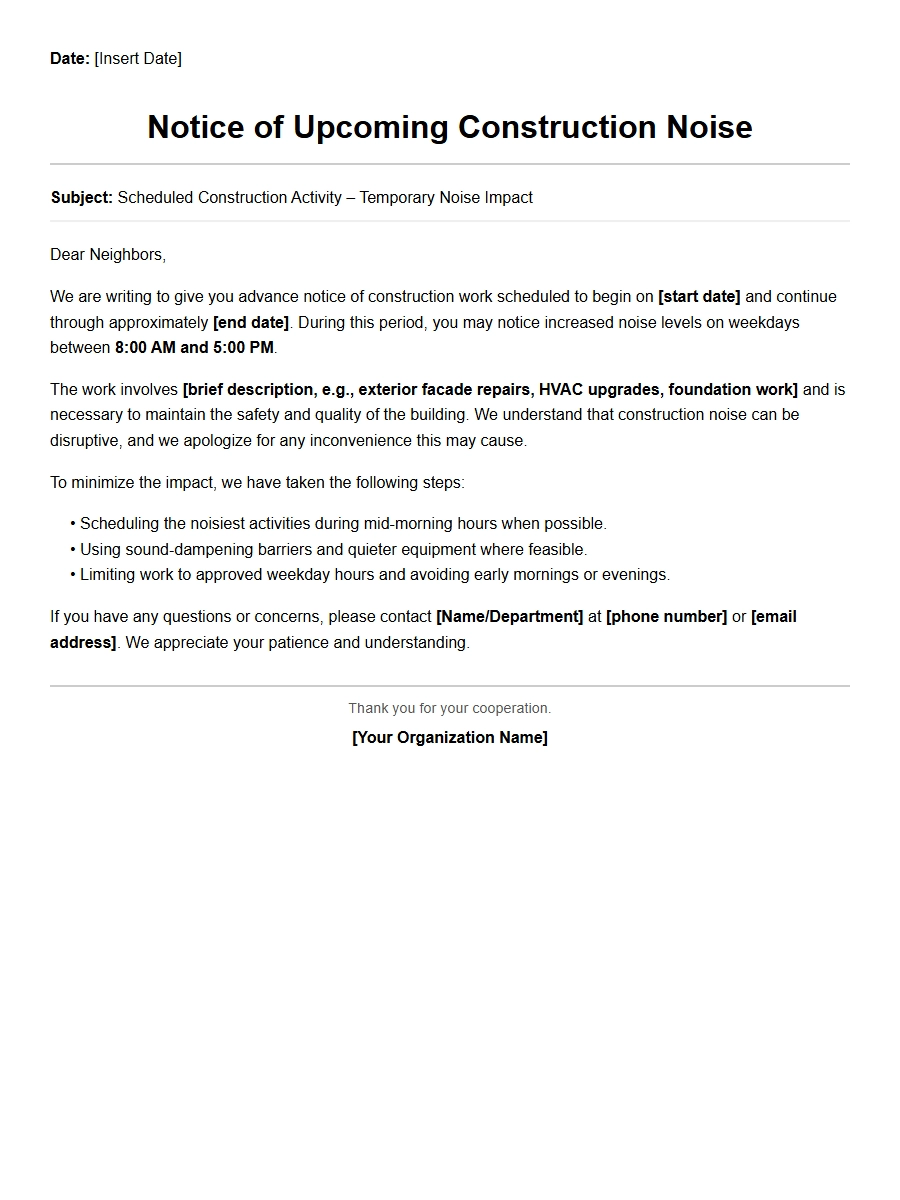
General Construction Noise Notice
Dear Neighbors,
I want to let you know that I will be starting some construction on my home beginning Monday, March 10. The work will involve exterior wall repairs and new window installation, which will require some drilling and hammering. I expect the noisy work to take place between 8:00 AM and 5:00 PM, Monday through Friday, for approximately two weeks.
I understand this may be disruptive, and I apologize in advance for any inconvenience. I will do my best to keep the noise to a minimum and ensure the work area is clean at the end of each day. If you have any concerns or need to discuss specific times, please feel free to call or text me at 555-1234.
Thank you for your understanding and patience.
Sincerely, Your Neighbor
Apology for Early Morning Work
Dear Neighbors,
I am writing to apologize for the construction noise you may have heard this morning. Our contractor was scheduled to start foundation work early due to hot weather requirements, and we failed to notify you in advance.
The early morning work will only continue for approximately three more days (Tuesday through Thursday), starting at 6:30 AM. After that, the regular schedule will resume from 8:00 AM to 4:30 PM. I deeply regret not giving you a heads-up.
As a small token of appreciation for your patience, I have placed a gift card to the local coffee shop in each of your mailboxes. Please accept it with my apologies. If you have any questions or would like to discuss further, please don’t hesitate to knock on my door.
Thank you for being such understanding neighbors.
Best regards, Your Apologetic Neighbor
Notice of Extended Work Hours
Dear Neighbors,
I wanted to inform you that due to unforeseen delays, my home renovation project will need to extend its working hours for the next two weeks. Starting this Monday, work may continue until 7:00 PM on weekdays, and we may also work on Saturdays from 9:00 AM to 5:00 PM. The noisiest activities (jackhammering and sawing) will still be limited to 9:00 AM to 5:00 PM during the week and 10:00 AM to 4:00 PM on Saturdays.
I understand this extended schedule may cause additional disturbance, and I apologize. I have asked the crew to minimize noise after 6:00 PM whenever possible. Please call me at 555-6789 if the noise becomes too much at any point, and I will ask them to pause.
Thank you for your continued patience.
Sincerely, Your Neighbor in Renovation
Demolition Stage Noise Alert
Dear Neighbors,
This is a heads-up that I will be entering the demolition phase of my kitchen remodel starting next Tuesday. This stage involves removing old cabinets, tile, and a small interior wall, so there will be significant noise from sledgehammers and a power saw. The demolition is expected to last about three days.
I have scheduled the noisiest work for late mornings to avoid interfering with your early routines. Here is the rough plan:
Tuesday: Cabinet removal and wall demolition (10 AM – 3 PM)
Wednesday: Floor tile removal (9 AM – 4 PM)
Thursday: Debris cleanup (quieter work)
Please park your cars away from my driveway on Tuesday and Wednesday, as there will be a dumpster delivered. I apologize for the disruption and appreciate your patience.
Feel free to text me at 555-2345 if you need anything.
Thank you, Your Remodeling Neighbor
Weekend Construction Notice
Dear Neighbors,
I hope this note finds you well. I am writing to let you know that I will be having some construction work done on my property this coming weekend (Saturday and Sunday, April 6–7). The contractor will be installing new siding on the front of the house, which requires nail guns and occasional sawing.
Work hours will be 10:00 AM to 6:00 PM on Saturday and 11:00 AM to 5:00 PM on Sunday. I purposely chose these later start times to minimize disturbance on the weekend mornings. The majority of the loud work will be on Saturday; Sunday should be much quieter as we will be finishing up details.
I know weekends are precious, and I apologize for the intrusion. Please let me know if you have any special events planned (like a birthday party) that would be affected—I can ask the crew to pause for a while.
Warm regards, Your Weekend Worker Neighbor
Heavy Machinery and Truck Noise
Dear Neighbors,
I am writing to give you a heads-up about significant construction activity starting next Monday. I am having a new driveway poured, which will involve heavy machinery such as an excavator and concrete trucks. The excavation work will take place on Monday and Tuesday, and the concrete pour is scheduled for Wednesday morning.
Please be aware that the trucks will need to access my property via the street, which may temporarily block traffic for a few minutes at a time. I will have flaggers to help direct vehicles. The concrete pour is the noisiest part—expect a loud mixer and pump from about 7:00 AM to 12:00 PM on Wednesday.
I will place signs at both ends of the street on Sunday evening to remind everyone. If you need to leave early Wednesday, I recommend doing so before 6:45 AM or after noon.
Thank you for your understanding. Please call me at 555-3456 if you have urgent concerns.
Sincerely, Your Driveway Renovator
Construction Noise Schedule Table
Dear Neighbors,
I am beginning a major home renovation next week, and I know the noise can be frustrating. To help you plan your days, here is the expected schedule of noisy activities. All times are approximate.
Day
Time
Noise Type
Mon
9 AM – 12 PM
Jackhammer (patio removal)
Tue
8 AM – 4 PM
Sawing (framing)
Wed
10 AM – 2 PM
Nail gun (sheathing)
Thu
9 AM – 3 PM
Roofing hammer
Fri
8 AM – 5 PM
General construction (mix)
I will do my best to keep the area clean and to minimize idle engine noise. Please feel free to contact me at 555-4567 if the schedule becomes unmanageable for you. I greatly appreciate your patience.
Thank you, Your Organized Neighbor
Temporary Driveway Blockage and Noise
Dear Neighbors,
I am writing to inform you that my contractor will be repaving my driveway on Thursday and Friday, August 15–16. This will involve removing the old asphalt and laying new pavement, which creates considerable noise from a milling machine and a roller compactor. In addition, my driveway will be completely blocked from 7 AM to 6 PM both days.
If you normally park on the street next to my driveway, please move your cars to the other side or to the next block, as the work area will need to be clear. The crews will have cones and signs out by Wednesday evening.
I know this is an inconvenience, especially for those of you who work from home. I have asked the crew to keep the loudest operation (milling) to mid-morning to reduce early morning disruption. If you need to reach me during the work, please ring my doorbell or call 555-5678.
Thank you for your cooperation and understanding.
Best, Your Driveway-Fixated Neighbor
Construction Contact and Complaint Info
Dear Neighbors,
As you may have noticed, I am having some exterior work done on my house starting next week. I wanted to provide you with all the relevant contacts in case you have any questions or complaints.
Project details:
Work: New siding and gutters
Duration: Approximately 10 working days (March 17–28)
Hours: 8 AM – 5 PM (Monday–Friday)
Noise level: Moderate to high (nail guns, saws, occasional ladder movements)
Contacts:
Me (homeowner): 555-6789 (call or text anytime)
Contractor: Mike’s Construction (on-site supervisor: 555-7890)
City noise complaint hotline: 311 (only if unresolved after contacting me)
I will try to keep the disruption as low as possible. If the noise becomes too much during your work-from-home hours, please let me know, and I can ask for a break. Thank you for your neighborly patience.
Sincerely, Your Proactive Neighbor
Thank You for Patience After Construction
Dear Neighbors,
I want to extend my heartfelt thanks for your patience and understanding during the past few weeks of construction on my home. The project is now complete, and the noisy equipment has been packed away. I know the hammering, sawing, and occasional early morning start were not easy to live with, and I truly appreciate your grace.
As a small gesture of gratitude, I have placed a $10 gift card to the local bakery in each of your mailboxes. Please enjoy a pastry on me. If you ever have any ongoing concerns about dust or debris left behind, please let me know and I will address them promptly.
Living in a neighborhood means putting up with occasional noise, but your kindness made this process much smoother. Thank you again for being wonderful neighbors.
 Thanking a Mentor for Guidance: Sample Messages
 Expressing Gratitude: Handwritten Letter Example
 Expressing Thanks in a Formal Personal Letter
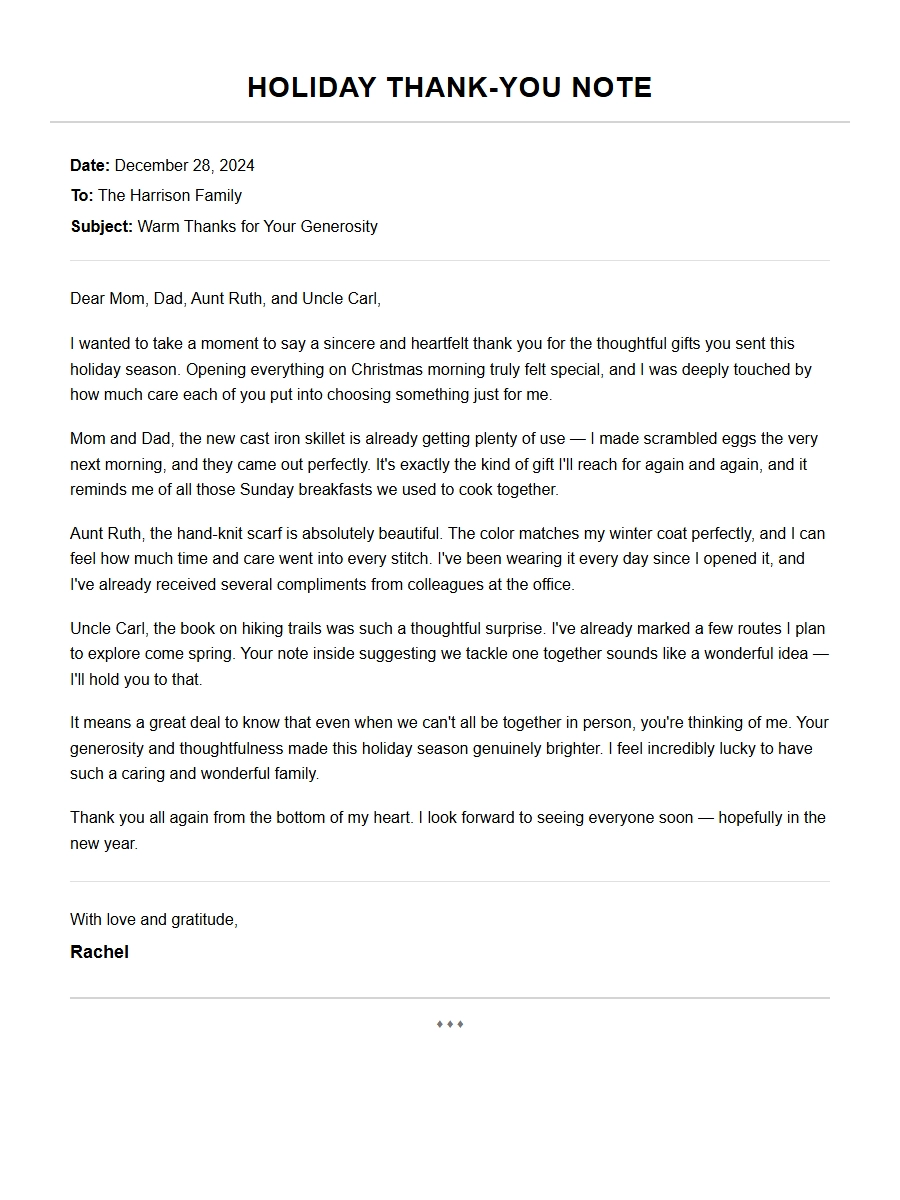 Thank You Letter Examples for Family Holiday Gifts
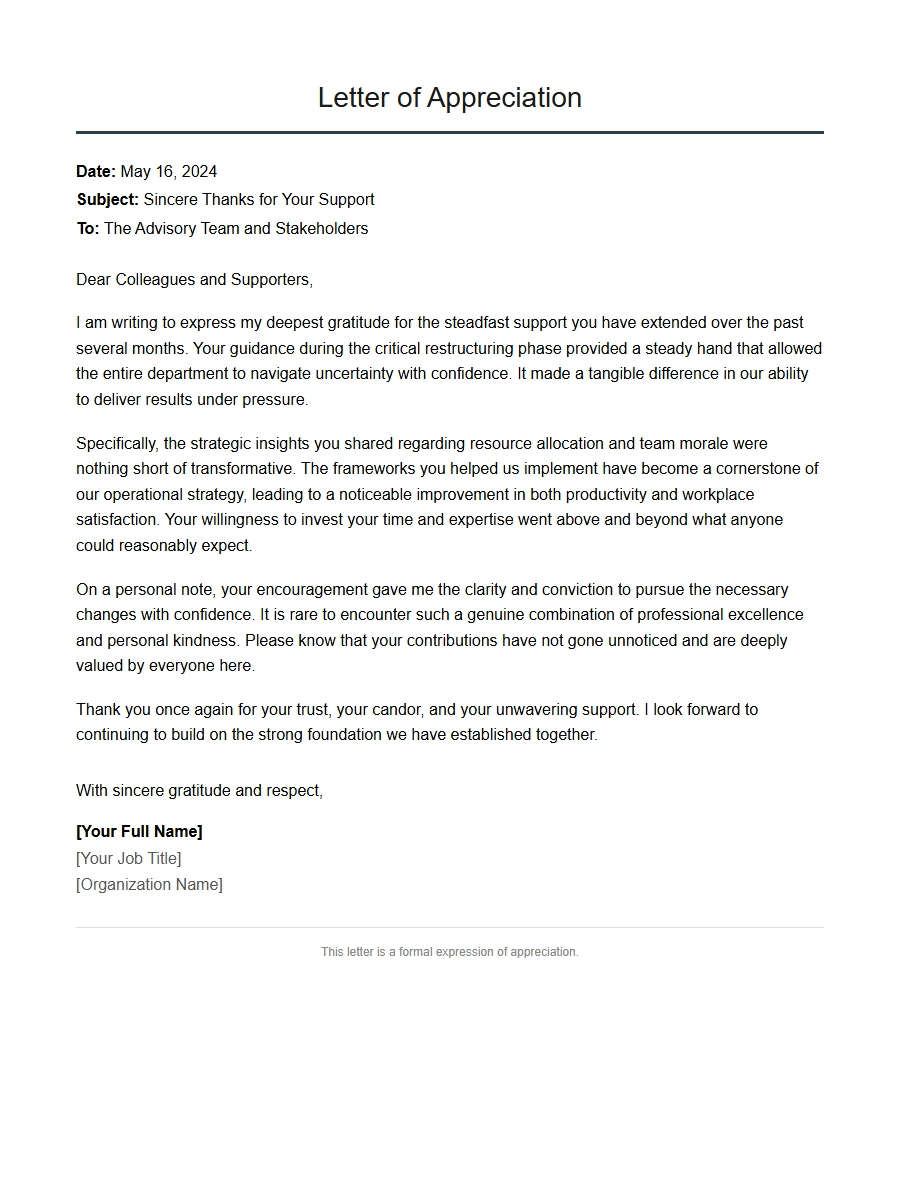 Sample Thank You Letter for Support
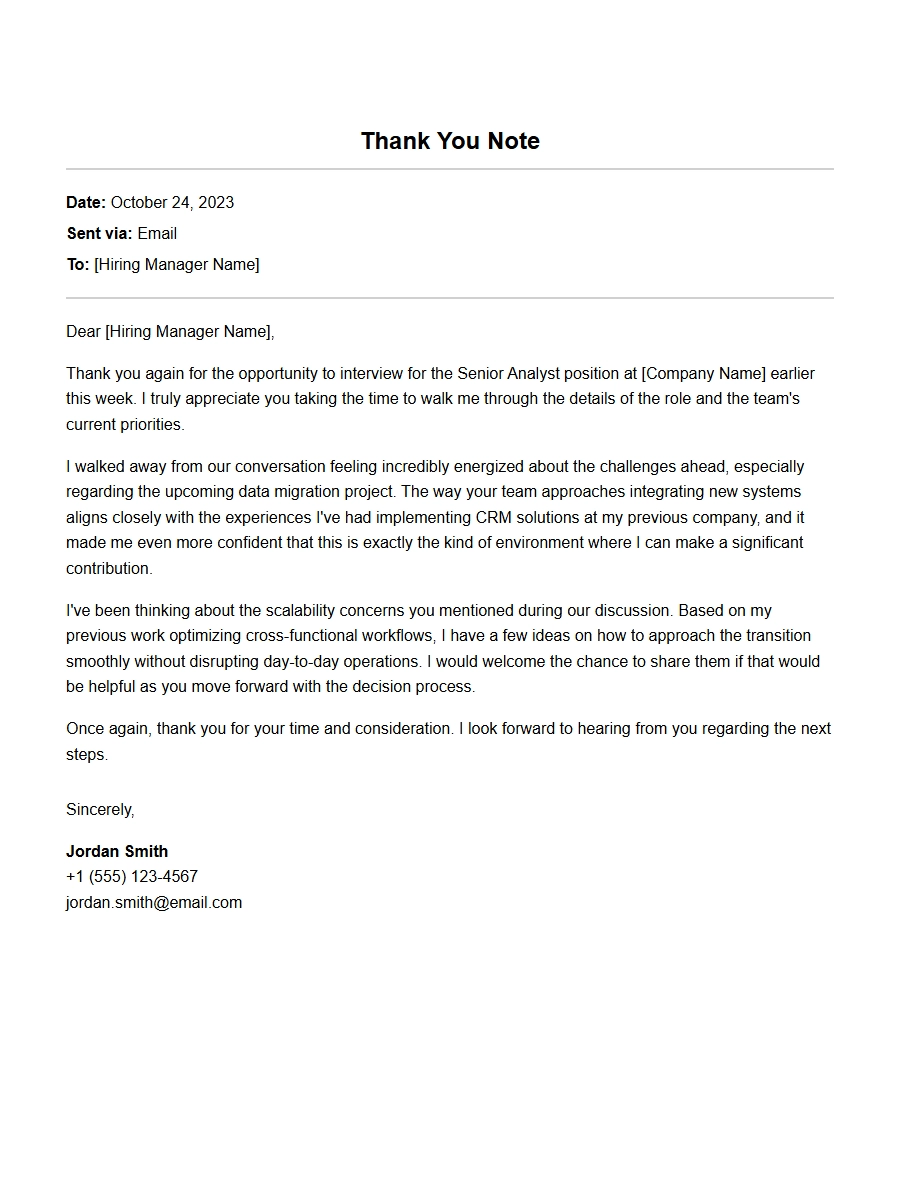 How to Write a Personal Thank-You Note After an Interview