You want to thank someone—a mentor, a friend, a colleague—but when you sit down with pen and paper, the words don't come. The blank page stares back. Suddenly a simple thank-you feels like a high-stakes essay. That’s exactly why having a handwritten letter example for expressing gratitude isn’t cheating—it’s a smart shortcut. It gives you a structure, a tone, and even a few go-to phrases, so you can focus on making the message personal.
Why a sample letter works (and doesn’t make you less genuine)
Using a letter template or sample is like using a recipe when you bake. You still choose the ingredients, adjust the sweetness, and add your own touch. The sample handles the letter structure, the salutation and closing, and the basic flow of professional correspondence. What’s left for you is the real gratitude—the specific memory, the detail that only you know. That’s where the authenticity lives.
Category: Personal Letters
How to pick the right handwritten letter example for your situation
Not every thank-you note calls for the same tone. If you’re writing to a former boss for a letter of recommendation they wrote, you’ll want a formal but warm style. If you’re thanking a relative for a thoughtful gift, you can be more casual. Start by matching the sample’s tone in writing to your relationship. A good cover letter examples resource won’t help here—you need a gratitude-specific sample.
Look for examples that include a clear opening (what you’re thankful for), a middle paragraph (why it mattered), and a closing that looks ahead. That business letter format is adaptable, even for a personal note. Just skip the formal “To whom it may concern” and go straight to their name.
Adapting a sample without losing your voice
Once you have a sample, read it aloud. Does it sound like you? Probably not yet. That’s fine. Change the words that feel stiff. Replace “I am writing to express my profound appreciation” with “I wanted to say thank you for…” The letter writing etiquette here is simple: sincerity beats flourish. If you’re struggling with the opening, try starting with a specific line: “I still think about the afternoon you helped me sort out that presentation.” That grabs attention and sets a natural tone.
Common mistakes to avoid when using a gratitude letter sample
One big error: copying the sample word for word and forgetting to personalize. Another: using an outdated salutation and closing like “Dear Sir” or “Sincerely yours” when a simple “Best wishes” or “With gratitude” fits better. Also, don’t ignore the format. A handwritten letter on good paper feels different from a typed one. If you’re sending it via email (a digital letter format), keep the same warm tone but adjust the layout—no need for a letterhead design unless you’re writing on behalf of an organization.
Always proofread letter before you send. Even a handwritten note deserves a quick check for typos. One trick: read it backwards, word by word, to catch errors you’d otherwise skip.
Hands-on tips to make your gratitude letter feel real
Start with the reason for your thanks. Be specific. Instead of “thank you for your support,” say “thank you for staying late that Tuesday to review my draft.” Then explain the impact—how it changed something for you. Keep sentences short. Use contractions. End with a forward-looking line, like “I hope we can catch up soon.” That closes the loop naturally.
If you’re nervous about the handwriting, don’t worry. Neatness matters more than perfect penmanship. Write slowly, on unlined paper if you want, and leave room for your signature. A handwritten note is personal because of the effort, not the calligraphy.
Let the sample be your springboard, not your script
The best expressing gratitude in a handwritten letter example is one you make your own. Once you’ve written a few, it gets easier. You’ll find your rhythm. You’ll know what to keep and what to toss. Eventually you won’t need the sample at all—but it’s always nice to have one in your back pocket. So grab a pen, pick a quiet moment, and write that note. The person on the other end will appreciate the gesture far more than the perfection of the words.
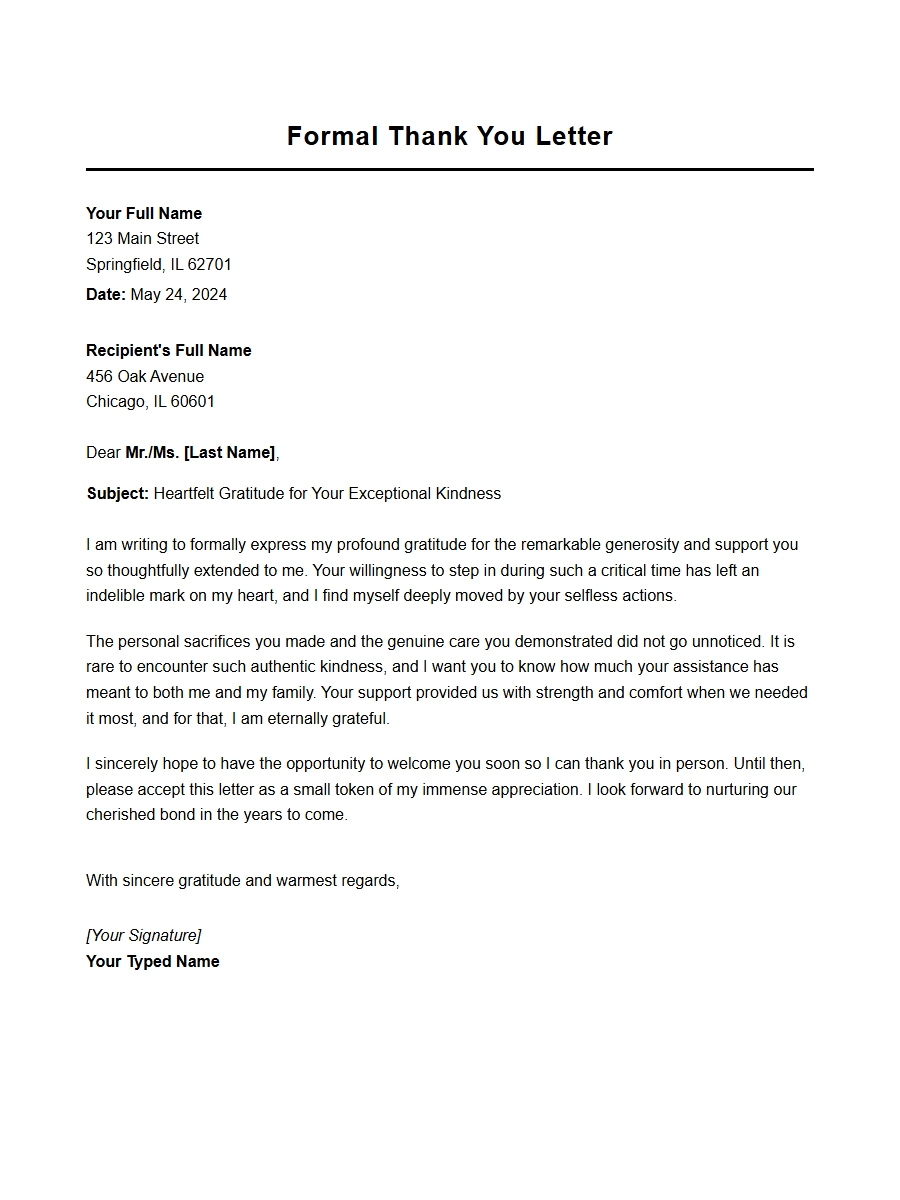
I wanted to write you a proper letter to say how much your help during my mother’s illness meant to me. Those meals you dropped off, the rides to the hospital, and just sitting with me when I needed to talk — you showed up in ways I can’t ever repay.
I remember the Sunday you brought homemade soup and stayed to watch a ridiculous movie with me. That little moment of normalcy made everything feel less heavy. You didn’t have to do any of it, but you did, and I am so grateful.
Please know that I see your kindness and I carry it with me. Let’s plan a proper get-together soon — my treat this time.
With deep gratitude,
Emily
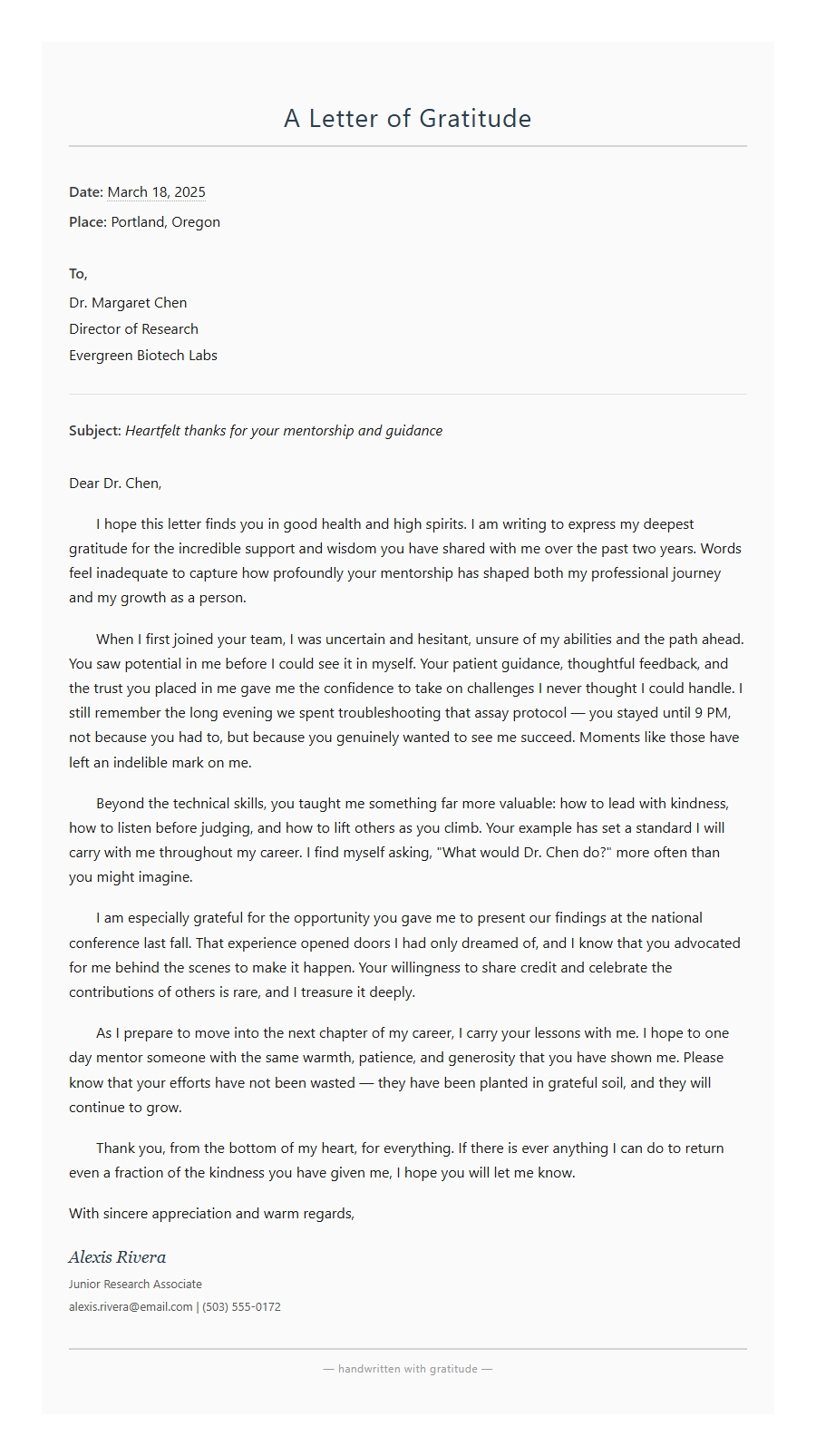
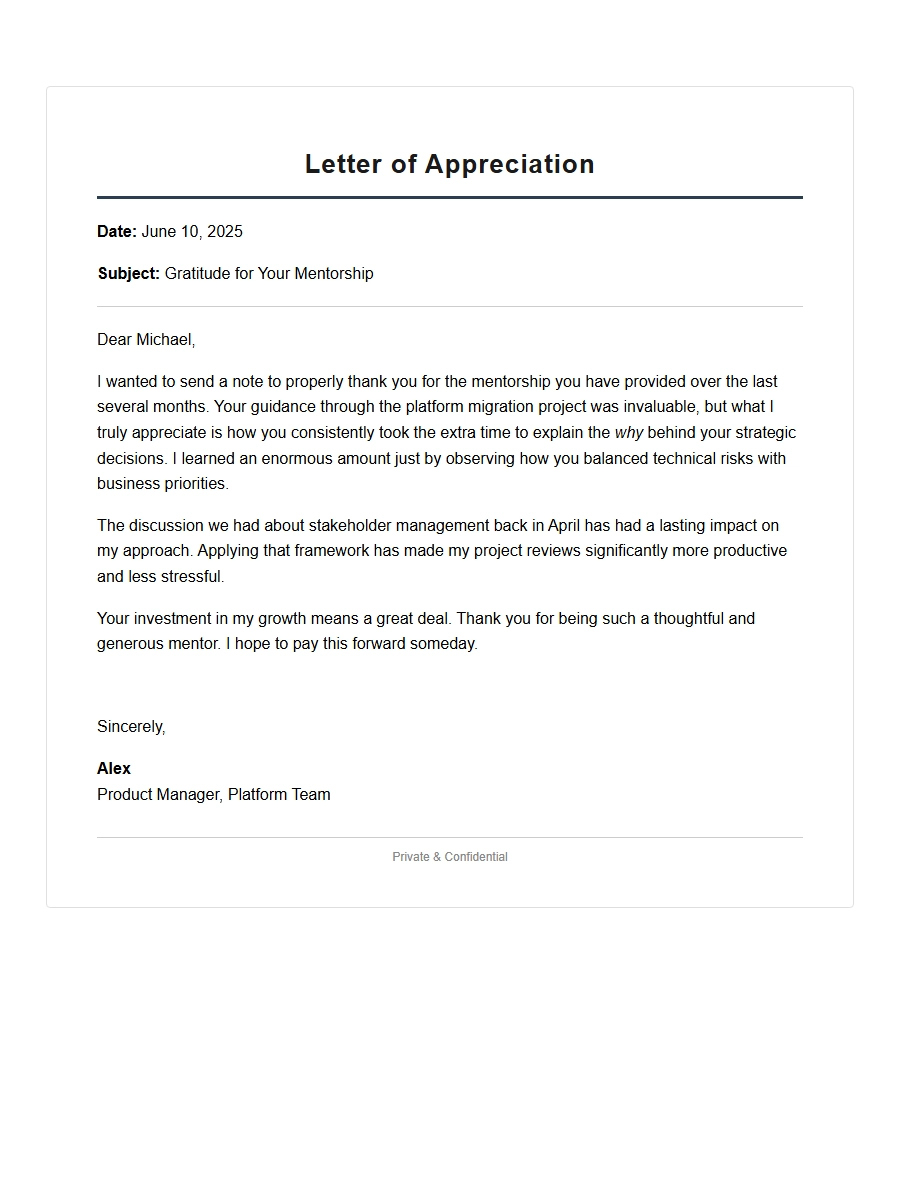
Thank-You Letter to a Mentor for Career Guidance
Dear Mr. Thompson,
I am writing this letter by hand because I want to express my sincere gratitude for the time you spent coaching me through my job search. Your advice on tailoring my resume and practicing interview answers gave me confidence I didn’t have before.
That mock interview we did last month — especially the way you pointed out my tendency to rush answers — was exactly what I needed. When I sat for the actual interview at BrightPath Inc., I heard your voice in my head telling me to pause and breathe. I landed the position!
I will always remember your generosity in sharing your experience. You have made a lasting impact on my professional growth. I hope to pass on the same support to someone else someday.
Thank you again.
Warmly,
David Chen
Thank-You Letter After a Job Interview
Dear Ms. Alvarez,
Thank you for taking the time to meet with me on Tuesday to discuss the marketing coordinator role. I truly appreciated learning more about your team’s upcoming campaign for the downtown revitalization project.
Our conversation confirmed that this position aligns with my skills and values, and I left even more excited about the possibility of contributing to your projects. I especially enjoyed hearing about the collaborative brainstorming sessions you described — that is exactly the kind of environment where I do my best work.
I also want to thank you for the detailed answer you gave about the company’s mentorship program. It shows how much you invest in your employees, and that means a lot to me.
Please let me know if you need any additional materials from me. I look forward to hearing from you.
Sincerely,
James Wright
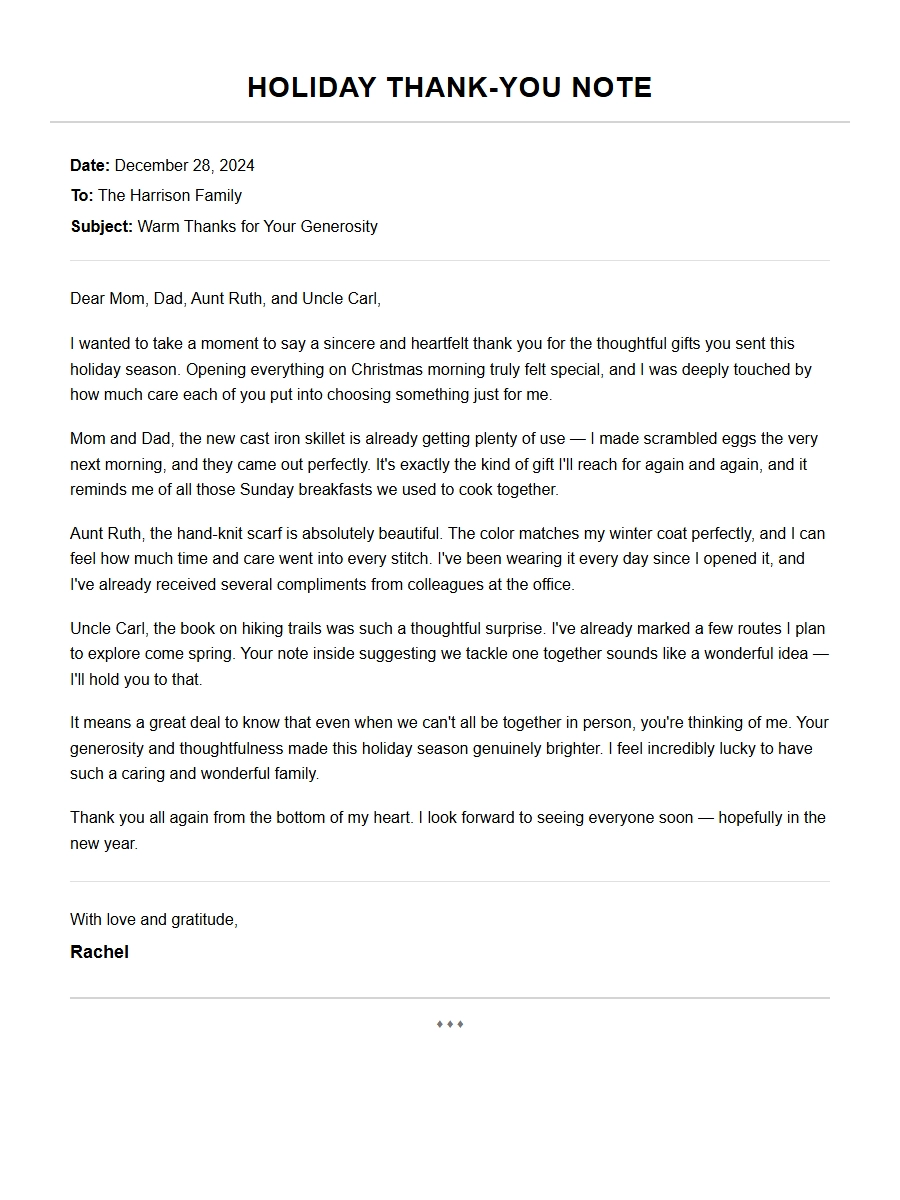
Thank-You Letter for a Thoughtful Birthday Gift
Dear Grandma,
I cannot put into words how much your gift of the antique locket touched me. When I opened the box and saw the tiny photo of you and Grandpa inside, I actually teared up. That you would pass down something so personal to me — it’s more than a gift, it’s a piece of our family history.
I have worn it every day since my birthday, and each time I touch it I think of your stories about growing up on the farm. Thank you for trusting me with such a treasure.
I also loved the handwritten note you tucked inside. Your words mean the world to me. I am so lucky to have you as my grandmother.
All my love,
Lily
Thank-You Letter to Parents for Their Unwavering Support
Dear Mom and Dad,
I’m sitting here with a cup of coffee, thinking about everything you have done for me, and I realized I don’t say it enough — thank you. Thank you for the late nights you stayed up helping me study for exams, for the countless rides to practice, and for believing in me even when I doubted myself.
I remember when I failed my driver’s test the first time. You didn’t scold me; you took me out for ice cream and told me I’d get it next time. That kind of unconditional love has shaped who I am.
I know I don’t always show it, but I appreciate every sacrifice you’ve made. I hope to make you proud in everything I do.
With all my heart,
Your son, Daniel
Thank-You Letter to a Teacher for Going the Extra Mile
Dear Mrs. Patel,
I am writing this letter because I want you to know how much your extra help with my algebra grade meant to me last semester. I was ready to give up, but you stayed after school three times a week to work through equations with me until they finally made sense.
I scored an 87 on the final exam — something I never thought possible. More than the grade, though, you taught me that struggling doesn’t mean failing. You made learning fun by using real-world examples like the budget for your class trip.
Because of you, I am actually considering majoring in math next year. Thank you for seeing potential in me when I couldn’t see it myself.
With gratitude,
Ethan Rivera
Thank-You Letter to a Neighbor for Help During an Emergency
Dear Mr. and Mrs. O’Brien,
I can’t thank you enough for jumping into action when our basement flooded last Saturday. While my wife and I were panicking, you both appeared with a shop vac and buckets, and worked alongside us for hours to save our belongings.
Mr. O’Brien, your quick thinking to shut off the main water valve prevented the damage from spreading. And Mrs. O’Brien, the thermos of hot coffee you brought kept us going through the cold afternoon.
We’ve had many conversations over the fence, but that night we truly realized what it means to have neighbors who care. Please let us treat you to dinner at Luigi’s next weekend.
With heartfelt thanks,
Carlos and Maria
Thank-You Letter to a Volunteer for Community Service
Dear Anita,
On behalf of the entire food pantry team, I want to thank you for the incredible dedication you showed during our holiday drive. You organized the donation sorting system single-handedly, and because of you we were able to serve 150 families in one day — a new record for us.
I remember you staying late to reorganize the shelves after a shipment arrived damaged. You didn’t complain; you just rolled up your sleeves and got to work. That kind of selflessness inspires everyone around you.
We are also grateful for the way you trained new volunteers with such patience. One of them told me you made her feel welcome and capable from the first moment.
You are truly the heart of this program. Thank you for everything.
Warmly,
Karen Reeves
Thank-You Letter to a Wedding Host or Hosts
Dear Aunt Helen and Uncle Bob,
We are still floating from our wedding day, and a huge part of that happiness comes from the beautiful reception you hosted at your home. The garden looked like a fairy tale — every lantern and flower arrangement made the evening magical.
We loved that you personally greeted each guest at the gate, and the buffet you arranged with local dishes was a huge hit. Our friends are still raving about the lemon cake!
But what touched us most was the speech Uncle Bob gave. Sharing stories from your own marriage reminded us what we are building together. We will treasure that memory forever.
Thank you for opening your home and your hearts to us. We are so lucky to have you in our lives.
With love,
Michael and Jenna
Thank-You Letter for a Generous Donation to a Cause
Dear Mr. Harrison,
I am writing to express my profound gratitude for your generous $500 donation to the Maplewood Library Youth Program. Your contribution will directly fund our summer reading initiative, which serves over 200 children from low-income families.
Because of your support, we have purchased:
50 new books for the elementary reading list
20 art supplies kits for the creative writing workshops
A professional storyteller for our end-of-summer celebration
Your gift ensures that every child can participate regardless of their family’s financial situation. I hope you will come visit us in August to see the joy your kindness creates.
Thank you for believing in our mission and investing in the next generation of readers.
 Thanking a Mentor for Guidance: Sample Messages
 Expressing Thanks in a Formal Personal Letter
 Thank You Letter Examples for Family Holiday Gifts
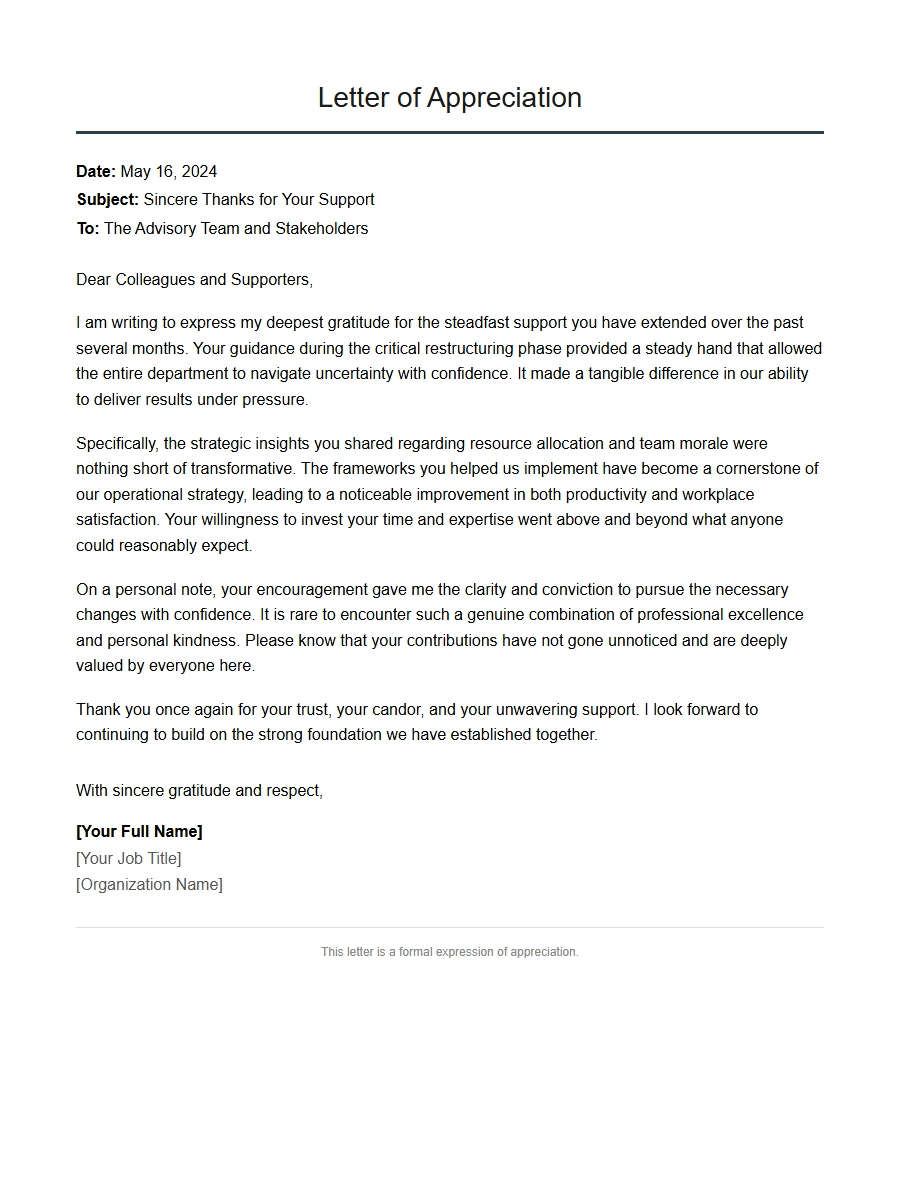 Sample Thank You Letter for Support
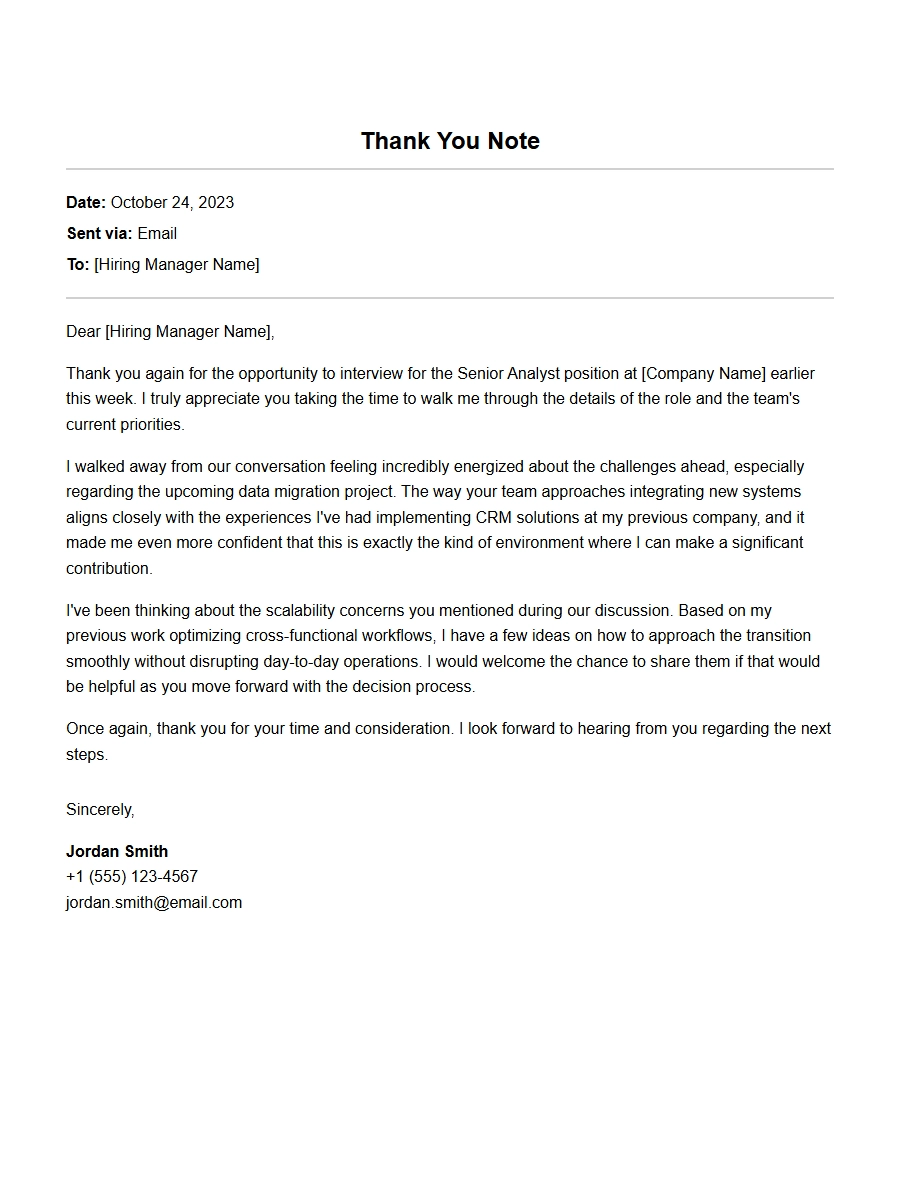 How to Write a Personal Thank-You Note After an Interview
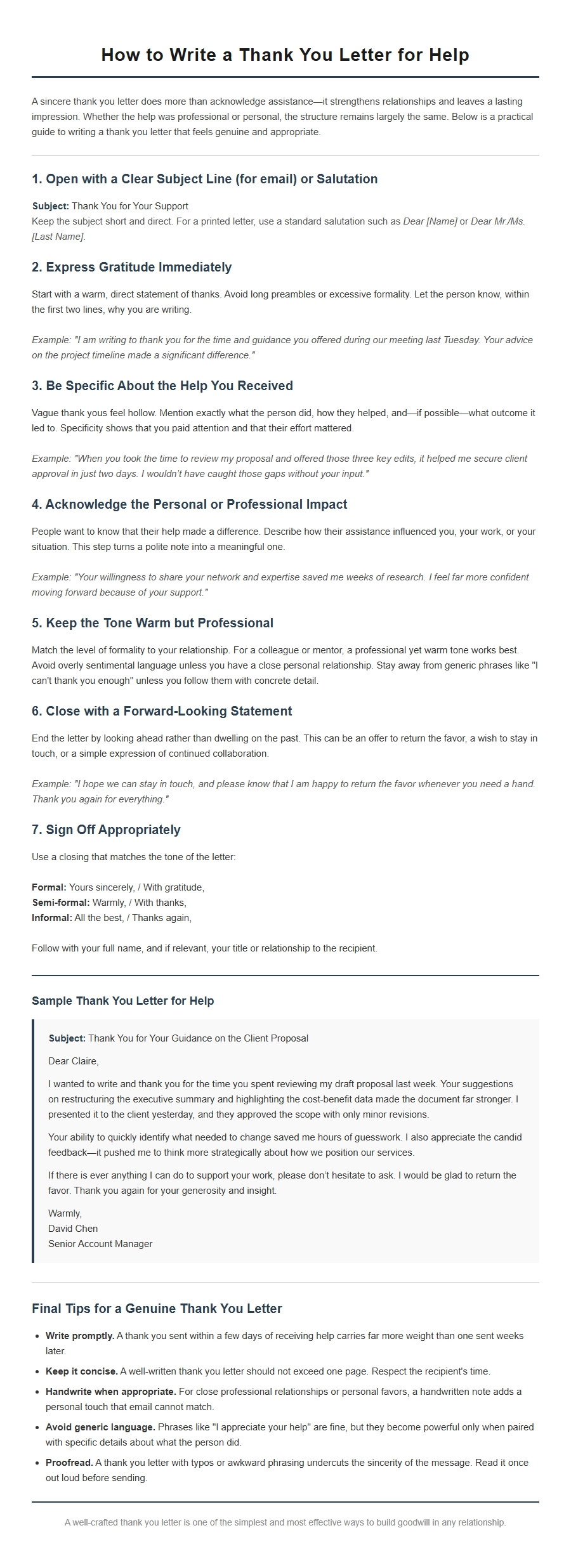 How to Write a Thank You Letter for Help