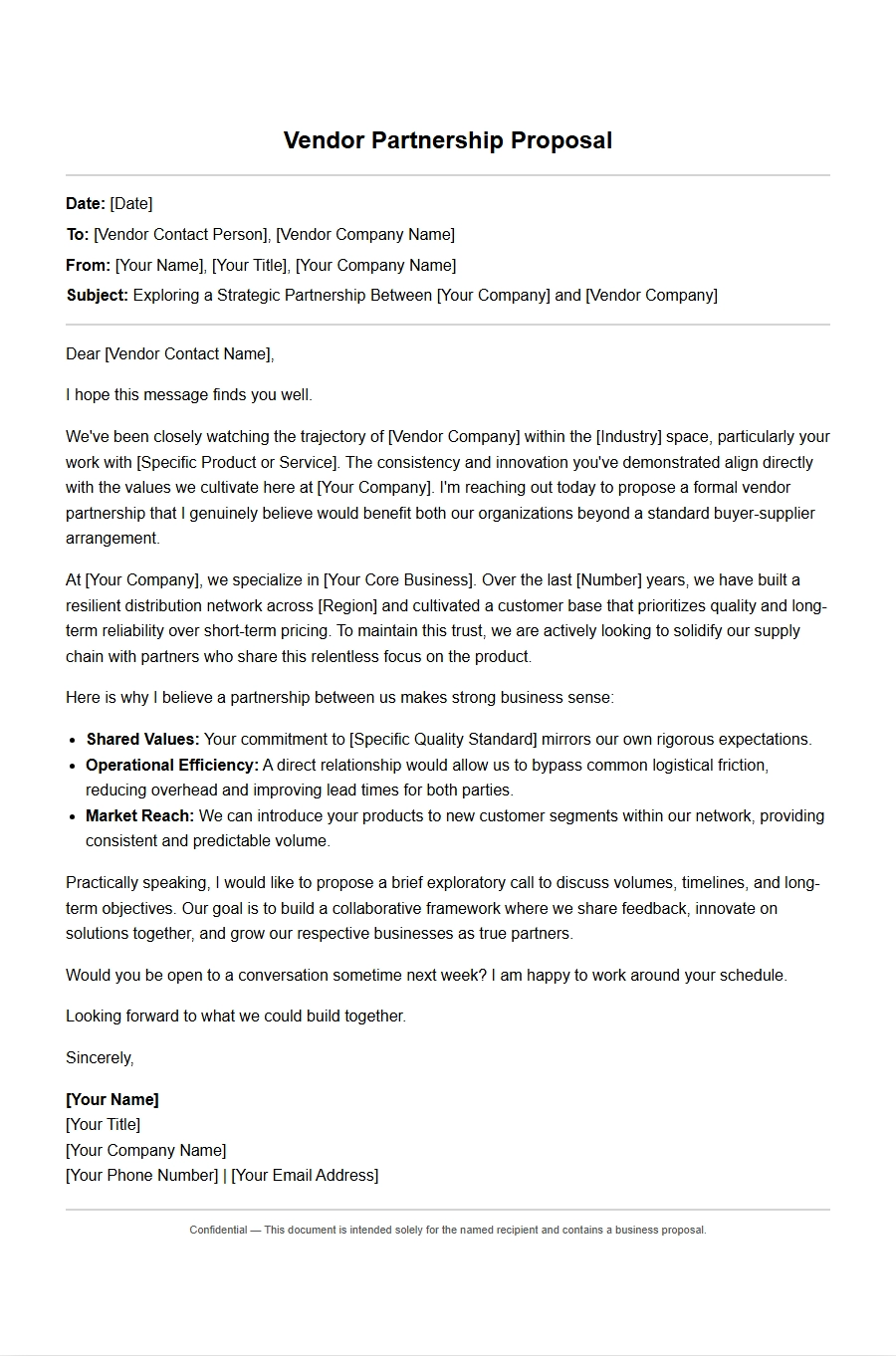
You’ve identified a potential partner who could help your business grow. Maybe they offer a service you consistently outsource, or their product fills a gap in your own line. Now you need to write a vendor partnership proposal letter—and even if you’ve done this before, the blank page can still feel intimidating. The pressure to get the tone right, to sound professional yet approachable, is real. But you don’t have to start from scratch.
Why a sample is your smartest shortcut
Using a letter template isn’t cheating. It’s a time‑saving strategy that gives you a solid structure, a proven tone, and key phrases you can adapt. A good sample shows you the business letter format that works for proposal letters—where to place your contact details, how to address the recipient, and when to get straight to the point. What the sample doesn’t do is write your unique value proposition for you. That’s where your personal touch comes in. Think of the sample as the scaffolding; you bring the building materials.
The core need here is simple: you want to propose a partnership that benefits both sides, and you need the letter to feel both warm and credible. A vendor partnership proposal letter is different from a sales pitch. It’s a conversation starter, not a hard close. That’s why the tone in writing matters so much. Too formal and you sound distant. Too casual and you risk not being taken seriously.
Category: Business Proposal Letters
Choosing the right framework for your proposal
Before you start writing, decide which format fits the situation. Are you emailing this to someone you’ve already met? Then a digital letter format with a clear subject line and a friendly salutation works best. Sending a printed version? You’ll want letterhead design that matches your company’s brand. The choice affects how you structure the opening and the closing.
For a vendor partnership proposal, the standard business letter format includes a subject line (e.g., “Proposal for Strategic Partnership Between [Your Company] and [Vendor]”), an introductory paragraph that reminds the reader of any prior conversations, a clear value proposition, and a call to action. That’s the skeleton. Where many people trip up is the salutation and closing. “To Whom It May Concern” will kill the warmth. Use a specific name if you have it. If you don’t, “Dear [Company Name] Team” is better than a generic placeholder.
The opening paragraph needs to grab attention quickly. Instead of starting with “I am writing to propose…” try something like: “After our last conversation about [topic], I’ve been thinking about how our companies could achieve more together.” That feels human and shows you’ve already done some thinking. Professional correspondence at its best reads like a thoughtful conversation, not a script.
Adapting the sample without losing your voice
Once you pick a sample, resist the urge to fill in the blanks robotically. Read it aloud. Does it sound like you? If not, rewrite sentences to match how you actually speak. For example, if the sample says “We envision a synergistic collaboration,” and you’d never say that in a meeting, change it to “We see a lot of potential in working together.” Authenticity builds trust.
One common mistake is copying the sample’s letter structure exactly without considering the recipient’s perspective. A vendor partnership proposal letter works best when it shows you understand their business, not just yours. Include a sentence or two that demonstrates you’ve researched their goals. For instance, “I noticed your recent expansion into [X market]—our logistics network could help you scale that faster.” That kind of specificity signals that this isn’t a mass‑mailed template.
Practical tips for polishing your draft
After you’ve written your version, set it aside for a few hours. Then come back and do a proofreading letter check. Look for outdated salutations (avoid “Dear Sir” unless you’re sure), inconsistent formatting (especially if you’re switching between print and email), and any sentences that feel overly long or vague. Formal writing tips often suggest keeping paragraphs under four sentences—easier to scan, especially when the recipient is busy.
If you’re including any financial terms, make sure they’re clear. Ambiguity in a partnership letter can lead to months of back‑and‑forth later. And if you’re referencing past work together, include specific numbers or outcomes. That’s stronger than generic claims like “we’ve always enjoyed working with you.”
When you’re ready to share the draft, consider asking a colleague to read it cold. Ask them: “Does this make you want to say yes?” If they hesitate, you might need to tighten the value proposition or soften the ask.
Let the sample be your starting line, not your finish
Using a vendor partnership proposal letter sample is about saving time on structure so you can spend energy on substance. The best letters feel both professional and personal—they convey competence without being stiff. Over time, you’ll get faster at adapting samples, and eventually you’ll develop your own go‑to phrases. But even experienced professionals lean on good examples now and then. There’s no shame in that.
We propose a strategic partnership between TechCorp Solutions and InnoSoft Inc. to deliver integrated ERP solutions to mid‑market enterprises. Our goal is to combine your CRM expertise with our supply chain modules, creating a seamless end‑to‑end offering.
Service Component
Responsible Party
Revenue Split
CRM Implementation
InnoSoft Inc.
60%
Supply Chain Module
TechCorp Solutions
40%
Ongoing Support
Shared (50/50)
Shared
Next Steps: We request a joint workshop to define integration APIs and a pilot timeline. A draft Memorandum of Understanding (MOU) will formalize terms. Please review the attached partnership framework and contact our VP of Alliances, Jane Doe, at j.doe@techcorp.com.
Logistics Vendor Partnership for E‑Commerce
We invite ShipFast Logistics to become our preferred delivery partner for the upcoming fiscal year. Our e‑commerce platform, ShopGlobal.com, anticipates a 40% increase in orders. Standard ground shipping is our core need, but we also require express options for premium customers.
Service Level: 2‑day ground (standard), next‑day air (expedited)
Volume Discount: 15% off all shipments exceeding 10,000 units per month
We propose a one‑year renewable contract with quarterly performance reviews. Our current carrier handles 8,000 packages monthly; we expect to ramp to 12,000 within 6 months. Please confirm rates by return email and assign a dedicated account manager.
Raw Materials Supplier Partnership – Manufacturing
GreenBuild Materials Co. seeks a long‑term vendor partnership with EcoMine Resources for recycled steel and aluminum supply. With our new eco‑construction line, we require consistent quality and volume.
Material
Monthly Volume (tons)
Target Price/ton
Recycled Steel
200
$450
Recycled Aluminum
80
$1,200
We suggest a 24‑month contract with a volume‑based price adjustment clause. Lead time not to exceed 10 days. A joint quality audit will be conducted before signing. We are ready to start discussions immediately.
Consulting Services Vendor Partnership
We propose a referral based partnership between McKinley Strategy and DataDriven Analytics. Our clients often need advanced data modeling; your firm can fill that gap. In return, we will refer your consulting services for all digital transformation projects.
Referral Fee: 12% of project value for the first 12 months
Co‑branded Whitepapers: 2 joint publications per year
Exclusivity: DataDriven Analytics becomes our preferred data partner
We propose a one‑year agreement, renewable. Let’s set a meeting to discuss integration of your methodologies into our assessment frameworks. Contact Sarah Lee at s.lee@mckinleystrategy.com.
Marketing Agency Vendor Partnership
BrandWave Creative is excited to propose a co‑vendor partnership with SocialPulse Media for integrated campaign management. You handle paid media; we handle content and creative. Together we can offer a full 360° solution.
Service
BrandWave
SocialPulse
Creative & Copywriting
Yes
–
Media Buying (Social)
–
Yes
Reporting & Analytics
Shared
Shared
We propose a revenue share of 50/50 for any joint client. A pilot campaign with a shared client will start next quarter. We need your standard media buying rates and a list of managed platforms.
IT Hardware Vendor Partnership – Office Equipment
We request a partnership with OfficeTech Distributors to supply hardware for our corporate clients under the BusinessReady program. Our clients need desktop bundles (monitor, CPU, keyboard) and network equipment.
We anticipate ordering 500 bundles and 50 switches in the first year. Please provide a volume discount schedule and estimated delivery lead times. A trial order of 20 units will test logistics.
Food Supplier Partnership – Restaurant Chain
Bella Vista Italian Restaurants seeks a vendor partnership with FreshFarm Produce for organic vegetables and dairy. With 12 locations, we need consistent, timely deliveries three times per week.
Product
Weekly Quantity
Unit Price (target)
Organic Roma Tomatoes
500 lbs
$1.20/lb
Fresh Mozzarella
200 lbs
$3.50/lb
Basil (bunched)
300 bunches
$0.50 each
We propose a 12‑month exclusive contract for these items. Your ability to supply year‑round is critical. Please send your quality certifications and a sample delivery schedule. Let’s schedule a tasting and kitchen trial.
Event Planning Vendor Partnership
Grand Occasions Event Planners would like to formalize a vendor partnership with Luxury Tents & Linens. You provide high‑end tenting, furniture rentals, and linen services – a perfect complement to our corporate and wedding events.
Commission Structure: 10% referral fee on all bookings originated by us
Exclusive Inventory: Access to your premium collection for our events
Emergency Backup: 24‑hour replacement for damaged items
We manage over 80 events annually. Your inventory catalog and price list should be shared. A joint portfolio section on each other’s websites is proposed. Please respond with your preferred contract terms.
We, UrbanNest Property Management, manage 25 residential and 10 commercial properties. We seek a vendor partnership with SparkleClean Services for recurring janitorial work.
Property Type
Frequency
Estimated Monthly Cost
Residential common areas
Twice weekly
$2,500
Commercial offices
Daily
$4,200
Deep cleaning (quarterly)
Per request
$800/session
We request a 12‑month contract with the option to extend. Please provide a list of cleaning products used (eco‑friendly preferred), employee background check policy, and insurance certificates. A trial month for two buildings will confirm quality.
PrintHub Inc. proposes a vendor partnership with DesignDirect to offer a one‑stop solution for corporate marketing collateral. DesignDirect handles creative; we handle print & fulfillment.
Service Offerings: Brochures, business cards, banners, trade show displays
Turnaround: Standard 5 business days, rush 2 days
Profit Split: 50/50 for projects sourced through each other
We have capacity for 100,000+ pieces monthly. A combined portfolio page will showcase both firms. We suggest a 6‑month trial partnership. Please send your design pricing guidelines so we can create bundled quotes.
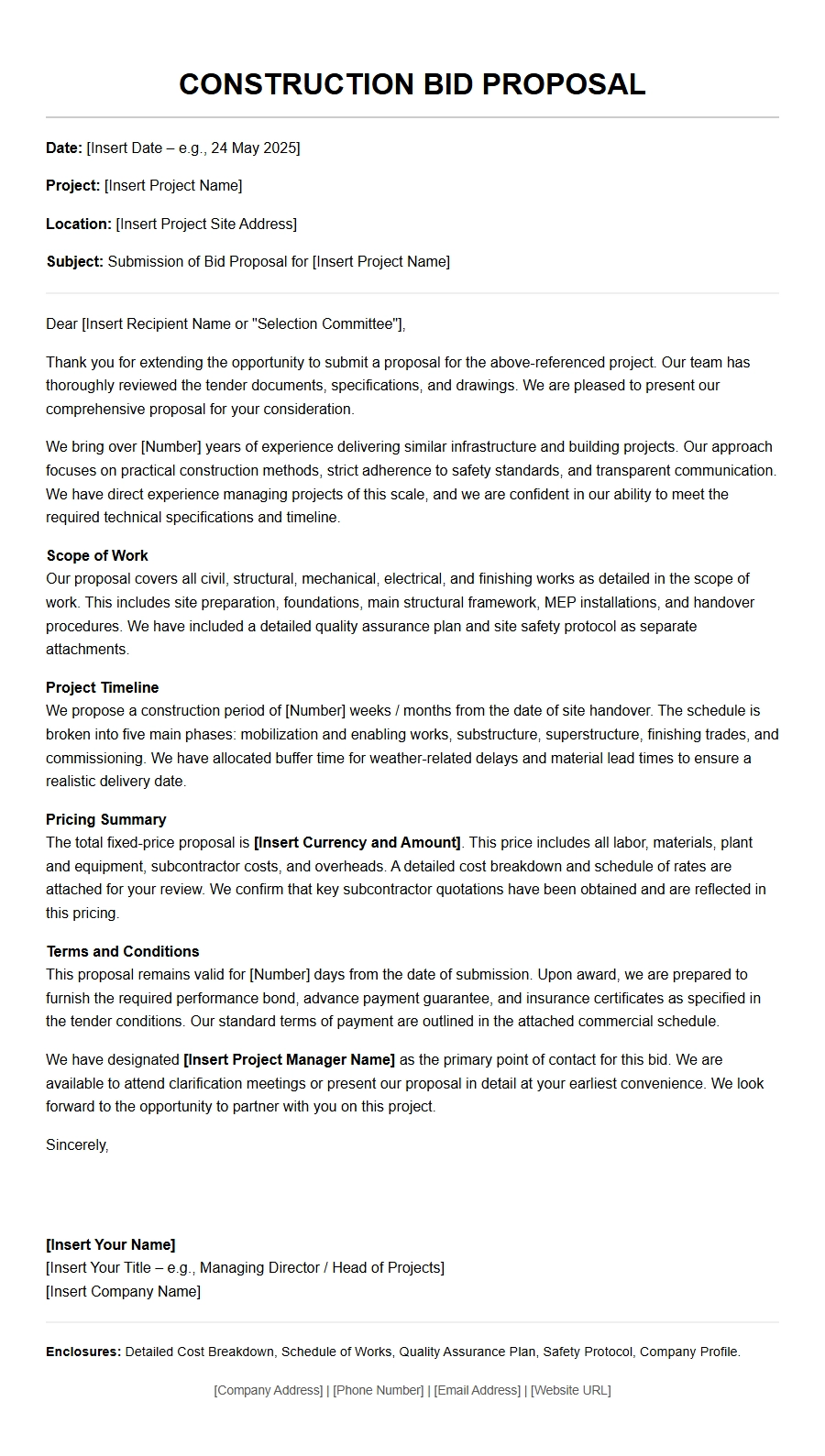 Sample Construction Bid Proposal Letter
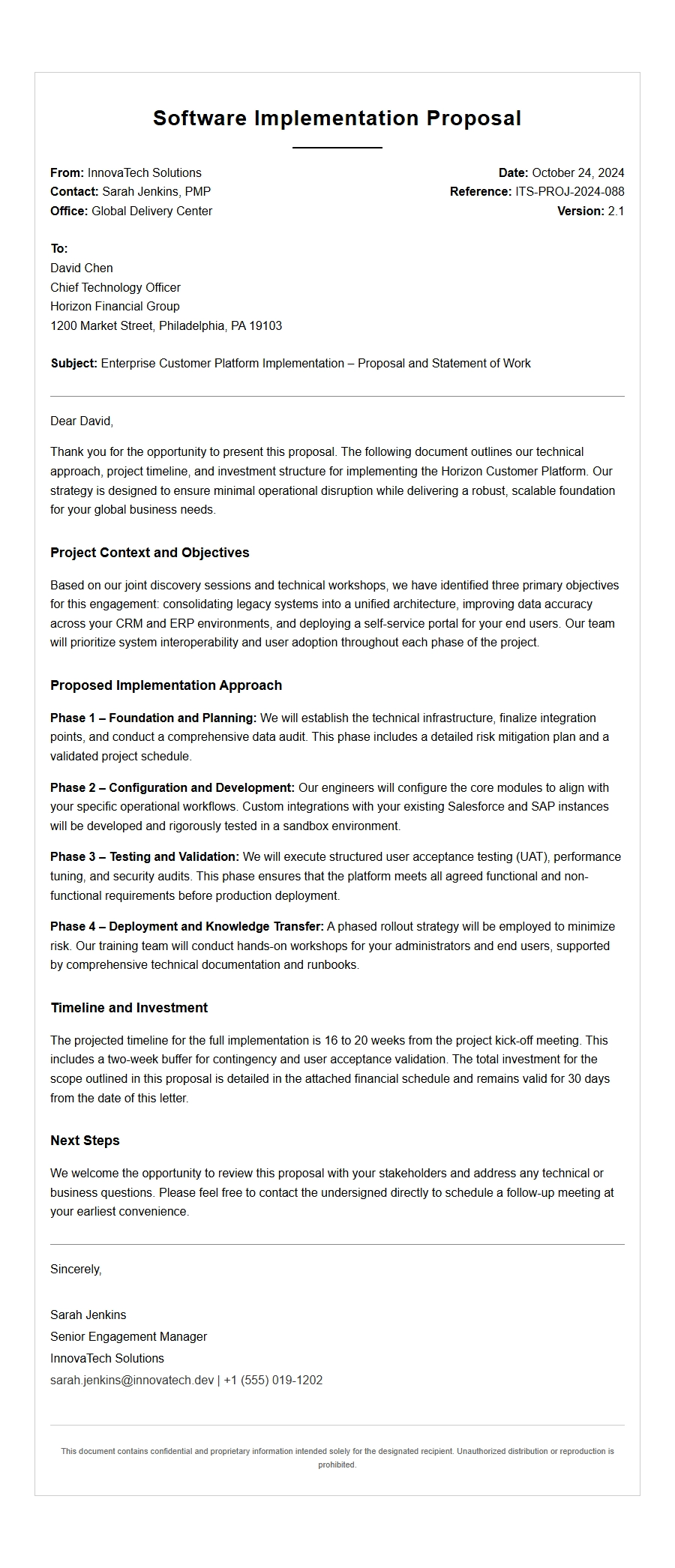 Enterprise Software Implementation Proposal Letter Example
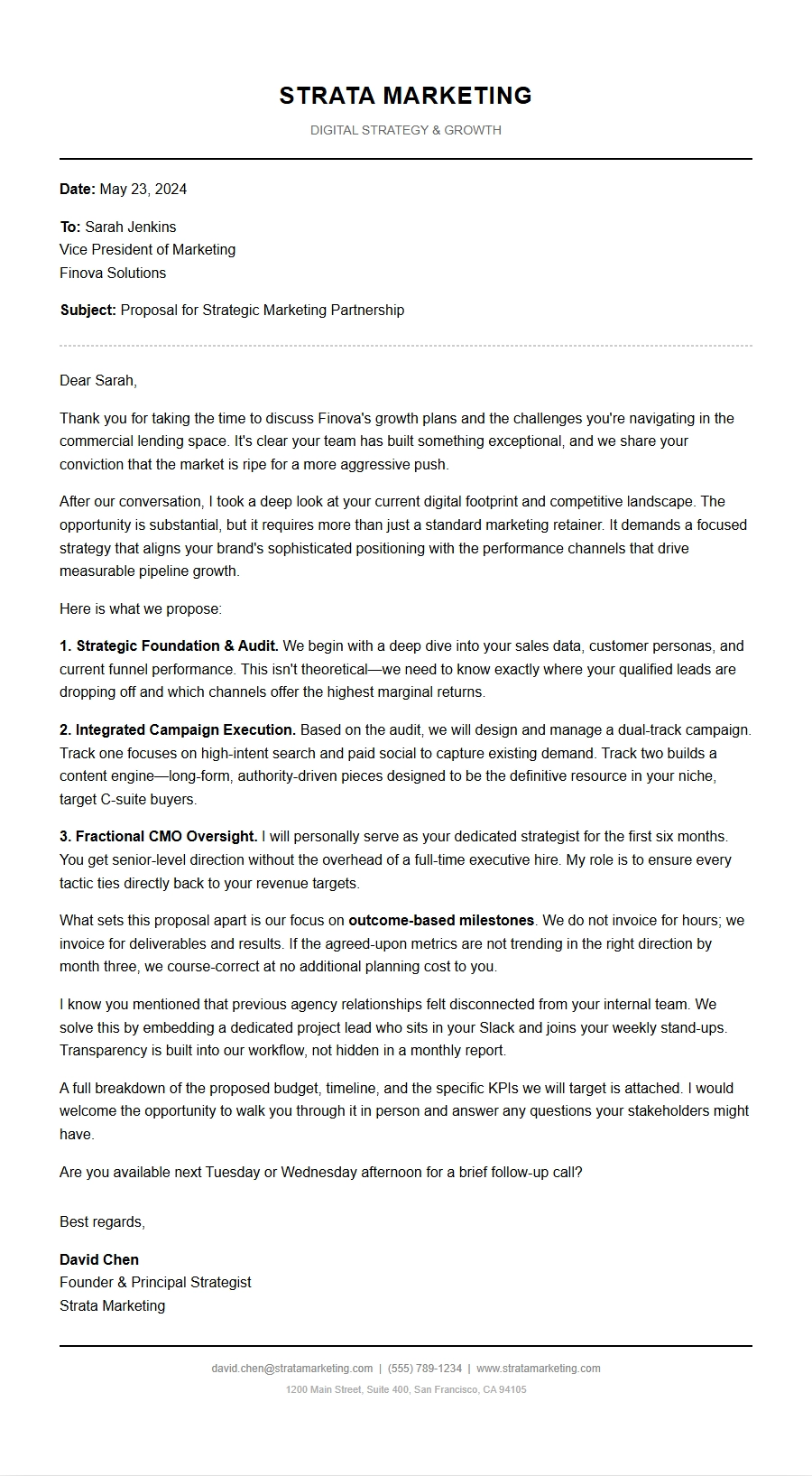 Marketing Agency Service Proposal Letter Template
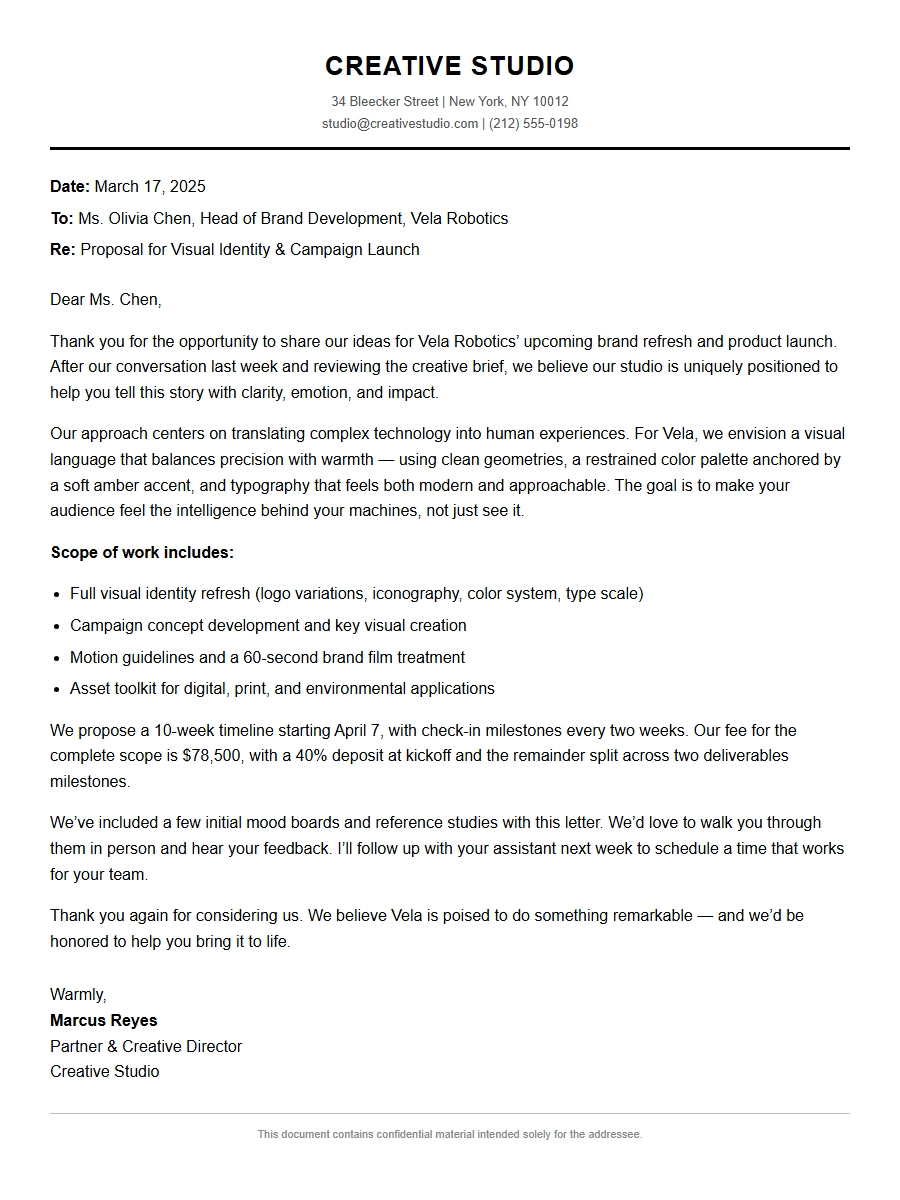 Creative Studio Project Proposal Letter
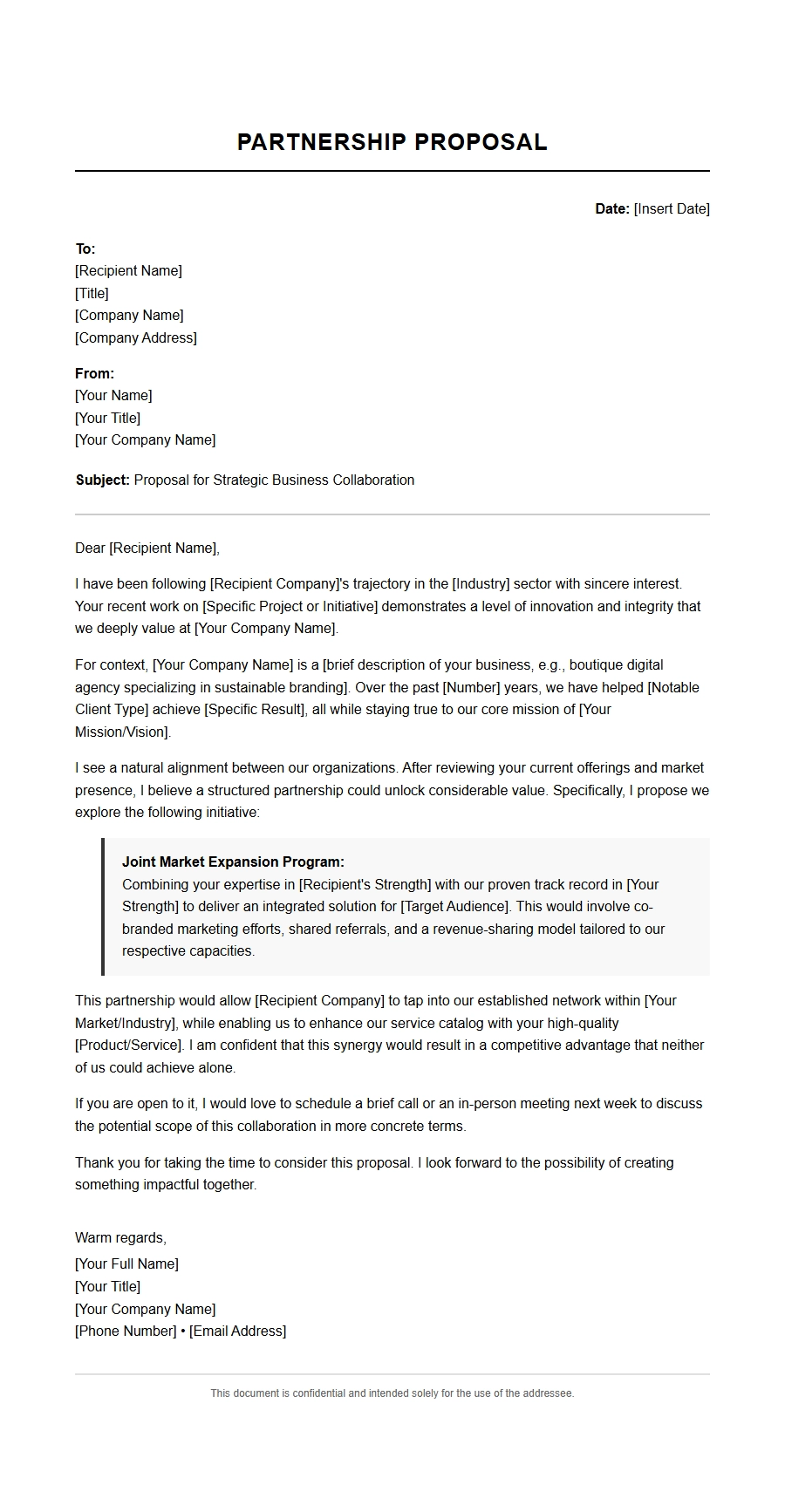 Small Business Partnership Proposal Letter Template
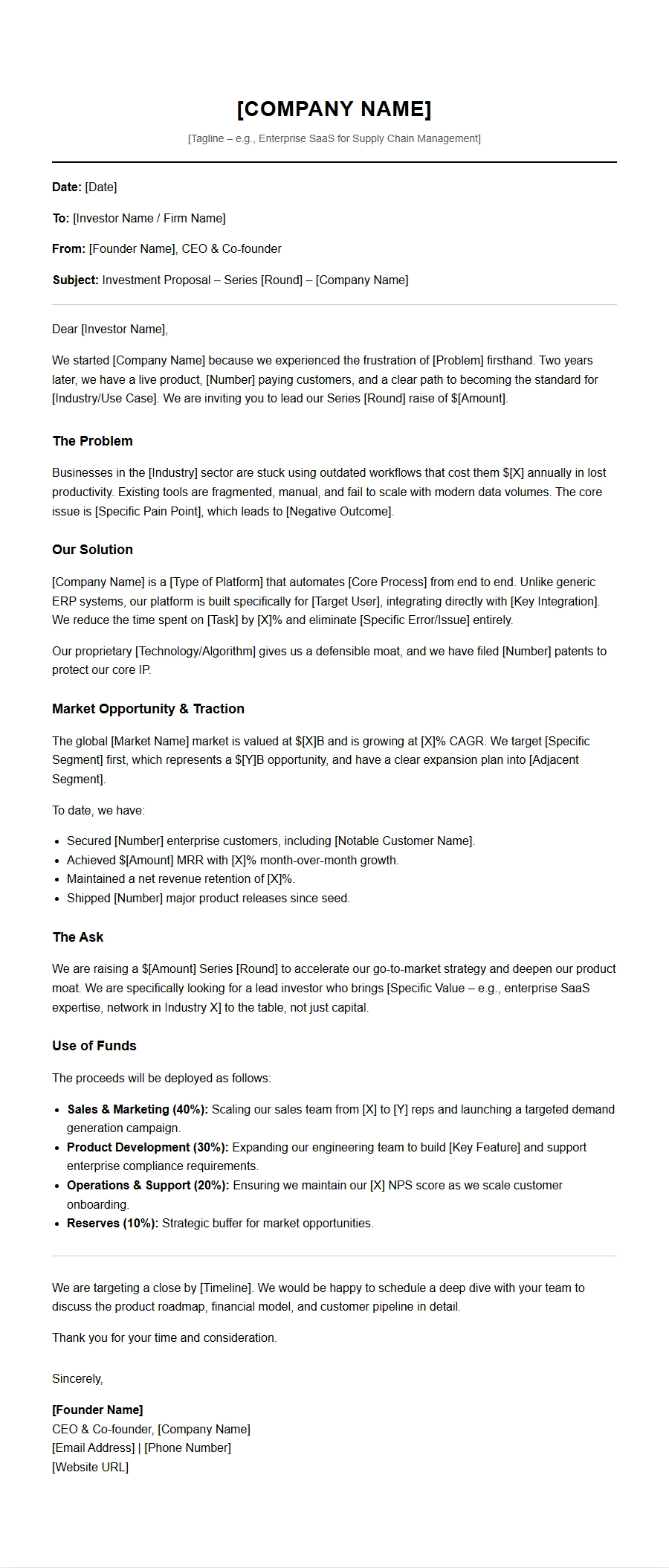 Startup Investment Proposal Letter Template