You open a package, excited for your new purchase. Instead of a pristine item, you find a cracked screen, a dented corner, or water damage. That sinking feeling is familiar. Now you need a return request letter for damaged goods received, and you need it fast. The frustration is real, but the fix doesn't have to be complicated.
Using a sample letter for this situation isn't cheating. It's a smart starting point. A good template gives you the structure, the right tone, and the key phrases you need. It saves you from staring at a blank screen. The trick is knowing how to personalize it so it sounds like you, not a robot.
What makes a good damaged goods letter?
Your goal is clear: you want a replacement, a refund, or a credit. The company needs to know exactly what happened and what you expect. A strong letter includes the order number, the date of delivery, a clear description of the damage, and the action you want them to take.
Don't assume they know what you mean by "damaged." Be specific. Did the box look crushed before you opened it? Was the item wrapped in bubble wrap that did nothing? Attach a photo if you can. This isn't about being dramatic. It's about being clear.
Choosing the right tone for your situation
Your tone in writing matters. If you're emailing a small Etsy seller, you might be more conversational. If you're filing a formal complaint with a large corporation, stick to a standard business letter format. Both can work. The key is matching your tone to the company's size and your relationship with them.
For most situations, a professional correspondence tone is best. You're polite but firm. You state the facts without getting emotional. Think of it as a calm, clear record of what went wrong. That's what a return request letter for damaged goods received should feel like.
How to adapt a sample without losing your voice
Start with a letter template that matches your situation. Maybe you need a formal complaint. Maybe you just want a quick email. The salutation and closing are the first things to adjust. A simple "Dear Customer Service Team" works. "To Whom It May Concern" feels outdated unless you have no contact name.
Your opening paragraph should grab attention immediately. State your purpose in the first sentence. "I am writing to request a return for a damaged item I received on [date]." That's it. No long story about how excited you were. Get to the point.
Common mistakes to avoid? Using an outdated salutation like "Dear Sir or Madam" when you have a contact name. Ignoring the difference between an email and a printed letter. If you send it by email, skip the letterhead design. If you print it, make sure you have your address and the company's address at the top. That's basic letter writing etiquette.
The structure of an effective damage report letter
Here's a simple flow that works for most situations:
Opening line: State your purpose clearly.
Order details: Order number, item name, date received.
Damage description: What you saw, when you saw it, how it was packed.
Desired resolution: Refund, replacement, or store credit.
Attachments: Mention photos or other evidence.
Closing: Polite request for confirmation and action.
This letter structure works because it's logical and easy for the reader to follow. It also protects you if the company tries to claim you didn't report the damage in time.
Adapting for email versus printed mail
If you're sending a digital letter format by email, keep it short. Use a clear subject line like "Return Request – Damaged Item – Order #[number]". Attach your photos. Use your signature block instead of a full address header. That's the modern way.
For printed mail, include your return address and the company's address. Use a standard font. Stick to one page. Nobody wants to read a multi-page complaint about a broken item.
Ever received a letter that felt too stiff or too casual? You want your return request letter for damaged goods received to land right in the middle. Friendly enough to get a human response, professional enough to be taken seriously.
Proofreading and sending
Before you hit send or drop it in the mail, proofreading your letter is essential. Read it out loud. Does it sound like you? Is every detail correct? A typo in your order number can delay everything. Check the date, your address, and the company's address.
If you're unsure about your tone, have a friend read it. Ask them: "Does this sound reasonable?" If they say yes, you're good to go.
When a simple letter isn't enough
Sometimes a letter won't resolve the issue. If the damage is severe or the company refuses to help, you may need to escalate. That's where understanding the difference between complaint letters and demand letters becomes useful. Your initial return request may lead to a formal complaint if ignored.
The best return request letter for damaged goods received feels both professional and personal. It's clear, polite, and gets you what you want. Use a sample to start, but make it yours. Add your voice. Remove the fluff.
Practice makes this faster. The next time a package arrives damaged, you'll know exactly what to write. You'll spend less time stressing and more time getting the issue resolved. That's the goal. A simple, effective letter that works.
Simple Examples
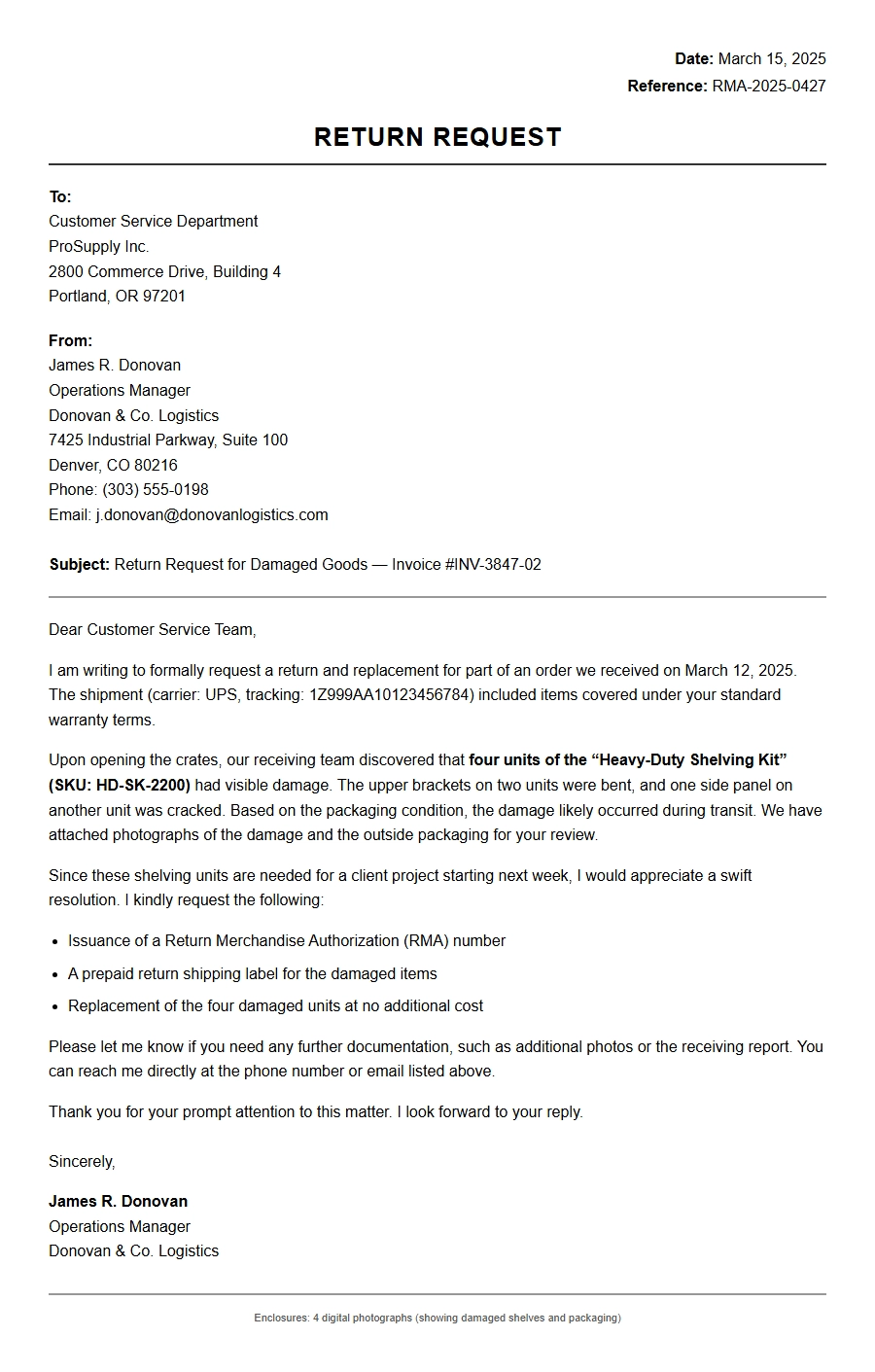
Return Request Letter for Damaged Goods Received
Formal Return Request for Damaged Laptop
Date: March 15, 2025
Order Reference: ORD-8932-AB
Customer: Jane Miller, 42 Oak Avenue, Springfield
Dear Customer Service Team,
I am writing to request a return and full refund for the laptop I received yesterday (Model: TechPro X15, Serial: TPX150029). Upon unboxing, I discovered visible damage on the screen and a crack in the casing. The damage was not present during delivery as the box appeared intact, but after opening, the following issues were noted:
A 2-inch vertical crack on the lower left of the display
Scratches on the top casing near the hinge
The keyboard has two missing keys (R and T)
As this product is unusable, I am requesting a full refund including the original shipping cost. I have attached photographs of the damage as evidence. Please provide instructions for the return shipment and a prepaid return label. I expect the refund to be processed within 14 business days upon your receipt of the item.
Thank you for your prompt attention to this matter.
Sincerely, Jane Miller
Replacement Request for Broken Glass Table
Date: March 14, 2025
Order No: FURN-4591
Customer: Robert Lee, 7 Pine Street, Riverside
To the Returns Department,
I received my order of a glass dining table (SKU: GT-800) today, but the tabletop is shattered. The box had clear signs of mishandling with a large dent on one side. I want a replacement sent as soon as possible, not a refund.
Damage Details:
The tempered glass top is broken into multiple pieces
Metal frame has minor scratches on the left leg
Packaging peanuts were insufficient to protect the glass
Please arrange for a pickup of the damaged table at your earliest convenience. I expect the replacement to be shipped within 3 business days with proper packaging. I am available for pickup between 9 AM and 5 PM on weekdays. If the replacement cannot be sent immediately, I would appreciate a discount on the original purchase. Attached are photos of the damage and the shipping label.
I look forward to your confirmation and tracking number.
Regards, Robert Lee
Refund Request for Defective Headphones
Date: March 13, 2025
Order ID: AU-6742-CD
Customer: Maria Gomez, 23 Harbor Blvd, Baytown
Dear Support Team,
I purchased the SoundMax Noise Canceling Headphones (Model SM-200) on March 1, and they arrived on March 10. Unfortunately, the product is defective. The left earbud produces no sound, and the Bluetooth connection drops every few minutes. Here is a summary of the issues:
Issue
Description
Left earbud silent
No audio output even after reset
Unstable Bluetooth
Disconnects every 2-3 minutes
Charging port
USB-C cable fits loosely
I request a full refund of $89.99 plus applicable tax. I have attempted troubleshooting by resetting the device and re-pairing with two different phones, but the problems persist. Please issue a prepaid return label and confirm the refund timeline. I will return the headphones and all original accessories once I receive the label.
Thank you for resolving this quickly.
Sincerely, Maria Gomez
Return Request for Damaged Clothing with Stains
Date: March 12, 2025
Order Number: CL-9283
Customer: Sarah Kline, 14 Elm Court, Greenfield
Dear Fashion Store Support,
I received my order containing a women's wool coat (size M, black, SKU WC-BLK) and a silk blouse (size S, ivory, SKU SB-ILV) on March 11. Upon inspection, I found that the coat has several grease stains on the right sleeve and the blouse has a small tear at the seam near the collar. These defects are not from normal wear but were present at arrival.
Damaged Items:
Wool coat: Grease spots (approx. 3 cm each) on sleeve and back
Silk blouse: 1 cm tear at collar seam, stitching loose
I would like to return both items for a full refund. The coat was originally $120 and the blouse $55. I have kept the tags attached and the original packaging. Please send me a return authorization and a pre-addressed shipping label. I prefer to drop the package at a nearby UPS location. Kindly process the refund to my original payment method within 10 business days.
I expect to hear from you within 48 hours.
Best, Sarah Kline
Complaint and Return for Damaged Smartphone Screen
Date: March 11, 2025
Order Ref: PH-5623-TY
Customer: David Tran, 88 Maple Drive, Hillcrest
To Whom It May Concern,
I am writing with urgency regarding the Samsung Galaxy S25 (256GB, Phantom Black) I ordered on February 28. The package arrived this morning, and when I removed the phone from the box, I noticed a spiderweb crack across the entire screen. The damage is severe enough that the phone will not turn on.
Key Points:
The outer box appeared undamaged, but the inner foam padding was missing on two sides
The screen is non-functional due to the crack
I have video evidence of unboxing
I demand an immediate replacement unit, shipped via overnight delivery at your cost. If a replacement is unavailable, I require a full refund of $799.99 plus a $25 inconvenience fee. Please also arrange a pickup of the damaged phone. I refuse to pay any return shipping charges as the damage is clearly due to inadequate packaging. Contact me at david.tran@email.com or 555-0192 to confirm the next steps.
I expect a response today.
Regards, David Tran
Urgent Return Request for Damaged Food Package
Date: March 10, 2025
Order ID: GR-1122
Customer: Anna Park, 56 Cedar Lane, Brookside
Dear Grocery Support,
I received my grocery delivery earlier today (Order #GR-1122), and several items were damaged due to improper packing. The box was wet on arrival, and the following products are affected:
Organic milk (gallon) – container leaking, milk spilled in box
Glass jar of pasta sauce – shattered, sauce everywhere
Bag of flour – flour packet burst, contents contaminated
Dozen eggs – six eggs cracked and oozing
This is a health hazard and I cannot use any of the damaged items. Total value of the ruined products is $32.15. Please issue a full refund for these items and a small compensation for the inconvenience ($10). Moreover, I expect the delivery fee to be waived for this order. Attached are photos of the damaged packages and the wet box. I would like the refund processed within 2 business days. If you need the damaged items returned, inform me of the procedure, but most items were thrown away due to spillage.
Trusting this will be resolved promptly.
Sincerely, Anna Park
Return Request for Furniture with Missing Parts
Date: March 9, 2025
Order: HF-7894
Customer: James Wong, 29 Birch Path, Oakwood
Dear Home Furniture Team,
I received my order for the Bergen Bookshelf (SKU: BK-350) on March 8. However, upon opening the box, I found several items missing, making assembly impossible. The damage and shortage details are as follows:
Part Description
Status
Left side panel (wood)
Broken in half
Back panel (hardboard)
Missing entirely
Screw pack (50 pieces)
Only 12 screws present
Assembly manual
Damaged, pages torn
I need a replacement for all missing and broken parts. Alternatively, I can return the entire bookshelf for a full refund. Please advise on the best course. I have kept the box and all parts. I expect you to cover return shipping if I choose a refund. If you send replacement parts, please include a complete screw set and a new back panel. I can provide photos of the damaged panel and the inventory.
I would appreciate a quick resolution as I need this furniture for my home office.
Thank you, James Wong
Request for Pickup of Damaged TV
Date: March 8, 2025
Order No: TV-4520-LC
Customer: Elena Rossi, 121 Ocean View Road, Seaville
Dear Electronics Returns,
I am requesting a pickup and return for the 65-inch UltraHD TV (Model: UHD65H) that arrived damaged on March 7. The screen has a large crack across the center, and the bezel is bent on the bottom right corner. This product is too heavy for me to ship, so I need your courier to collect it from my home. Below is the summary:
Damage observed: Cracked screen (visible even when powered off), bent bezel
Packaging condition: Box had crush marks on bottom, foam inserts were displaced
Preferred action: Full refund including original delivery charges
Please schedule a pickup for next Tuesday or Wednesday between 10 AM and 2 PM. You can contact me at (555) 483-2912. I will not accept any partial refund or store credit; I want the money returned to my credit card. Additionally, I expect you to provide a prepaid return label and arrange for the pickup at no cost to me. I have already taken photographs of the damage and the box.
I hope to receive your confirmation within 24 hours.
Regards, Elena Rossi
Return Request for Incorrectly Shipped Damaged Item
I ordered a set of 4 ceramic mugs (design: blue floral, SKU MUG-BF) but received a box of 4 plastic tumblers (clear, SKU TUM-PC) instead. On top of the wrong item, one of the tumblers is cracked at the rim. This is a double error that needs immediate rectification.
Issue Summary:
Expected: 4 ceramic mugs (blue floral)
Received: 4 plastic tumblers (clear) – one with a crack
Invoice/printer slip inside box shows correct SKU but bar code on box matches the tumblers
I request you to send the correct item (ceramic mugs) via expedited shipping. I will keep the damaged tumbler if you allow me, otherwise I can return it. Additionally, I expect a partial refund of 20% for the inconvenience, or a full refund including the return of the wrong item. Please provide instructions for returning the incorrect set if needed. I have attached photos of the box barcode, the damaged tumbler, and the packing slip.
Looking forward to your resolution within 48 hours.
This is my third request regarding a return for damaged goods. I previously emailed on March 1 and March 3 about the ceramic vase set (order LB-3481) that arrived with a broken vase and chipped edges on two others. Despite my earlier communications, I have received no response or solution. I am now issuing a final notice before I file a dispute with my credit card company and the Better Business Bureau.
Details of the Damaged Item:
Item
Damage
Value
Ceramic vase (large)
Broken into three pieces
$45.00
Ceramic vase (medium)
Chip on rim
$30.00
Ceramic vase (small)
Small crack near base
$25.00
I demand a full refund of $100 plus $15 shipping, and a prepaid return label for the entire set. If I do not receive a satisfactory response within 5 business days, I will escalate this matter externally. Please prioritize this case.
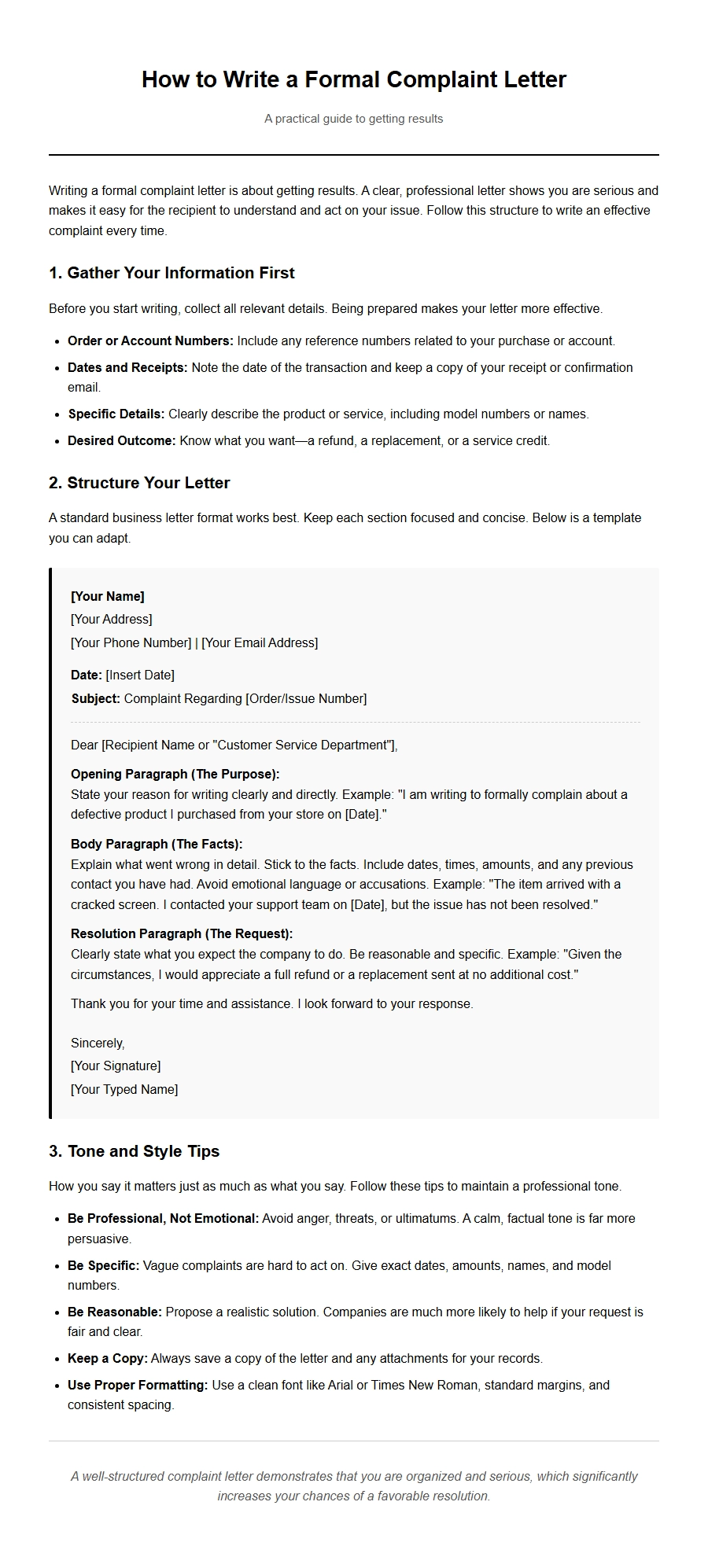 How to Write a Formal Complaint Letter
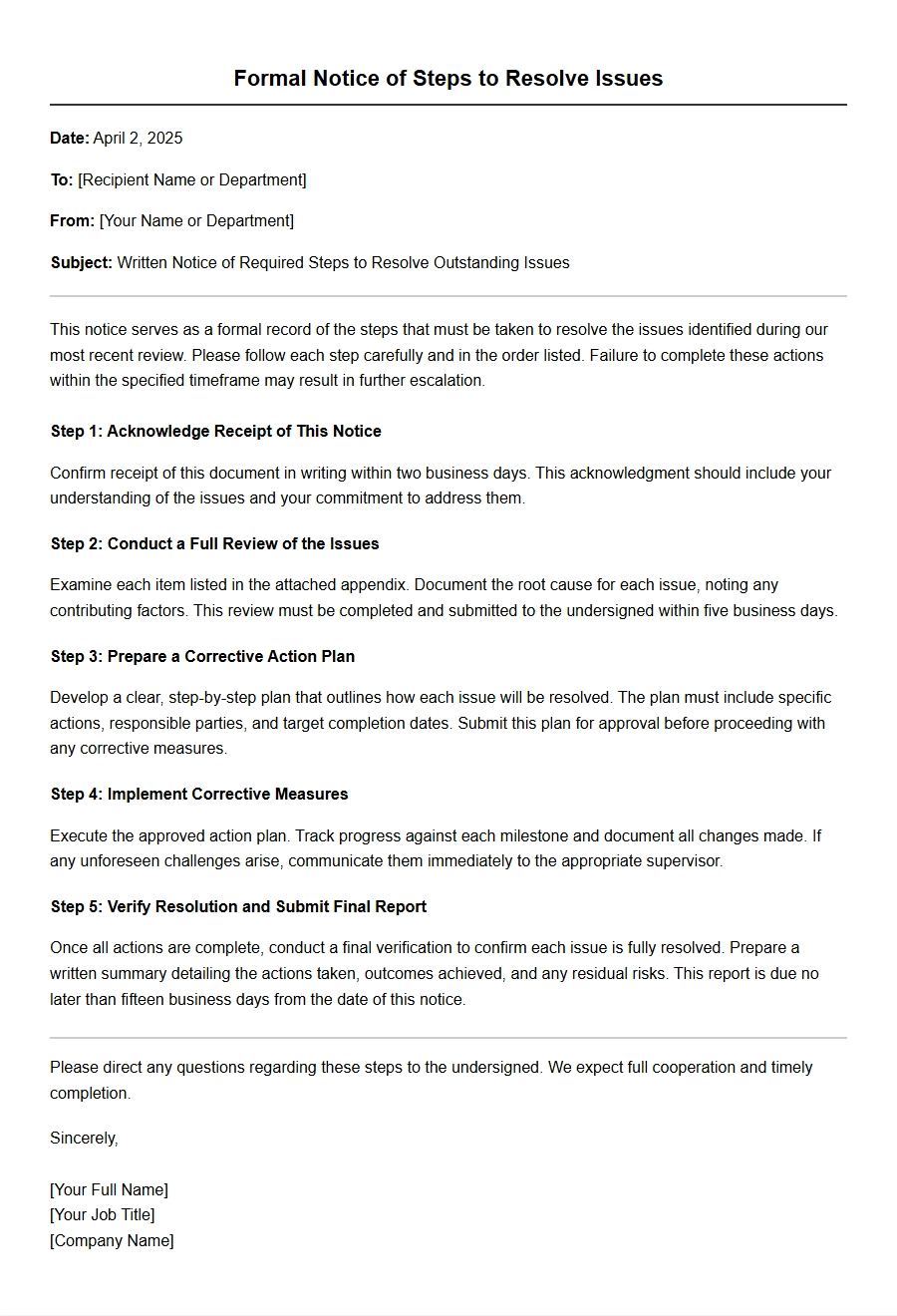 Steps to Resolve Issues via Written Notice
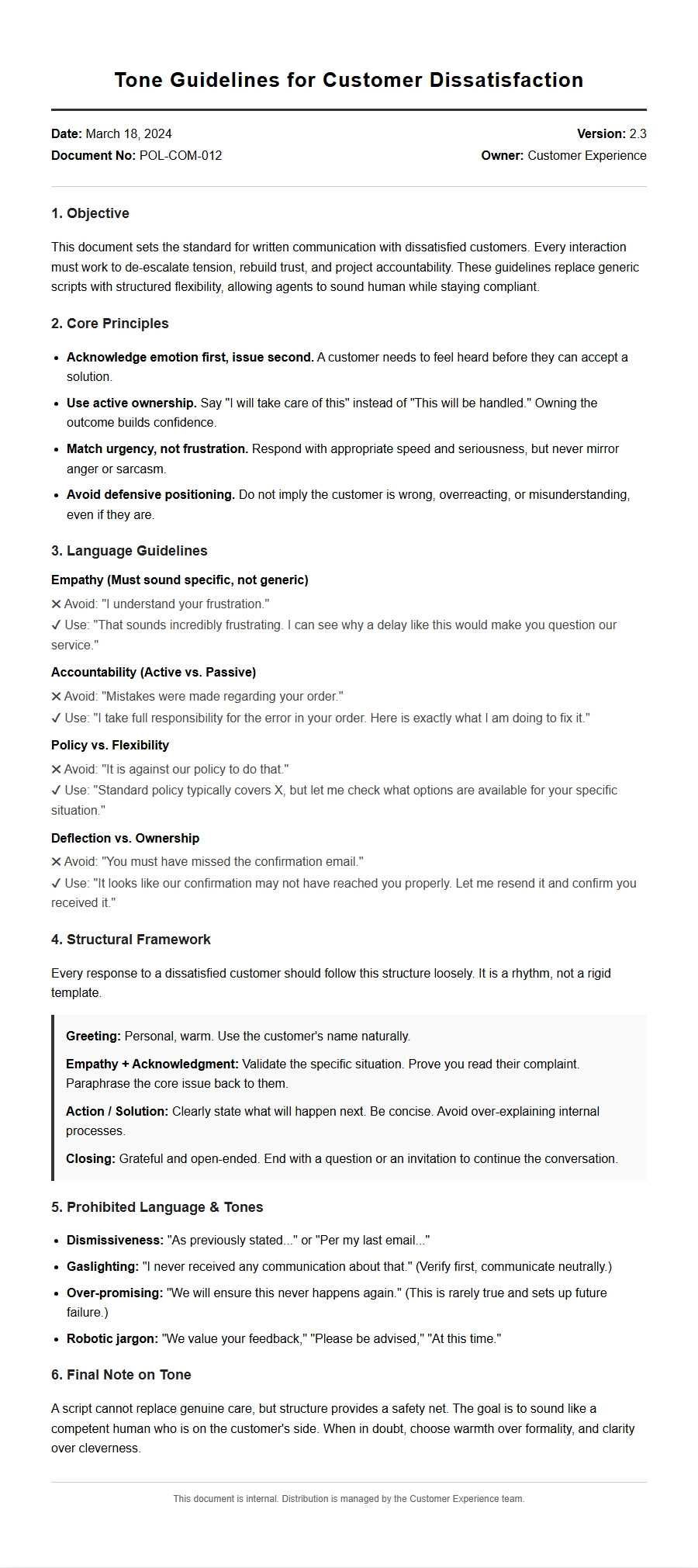 Tone Guidelines for Dissatisfied Customer Letters
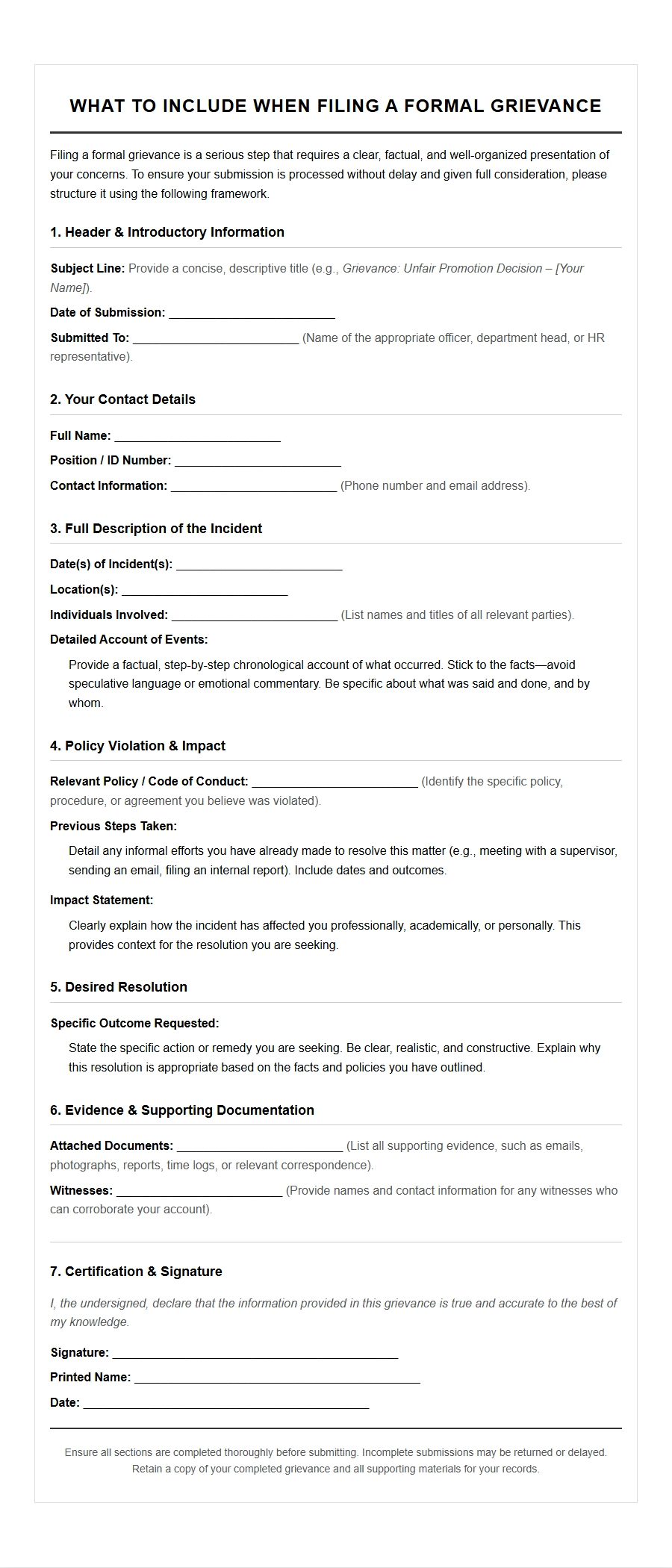 What to Include in a Formal Grievance Letter
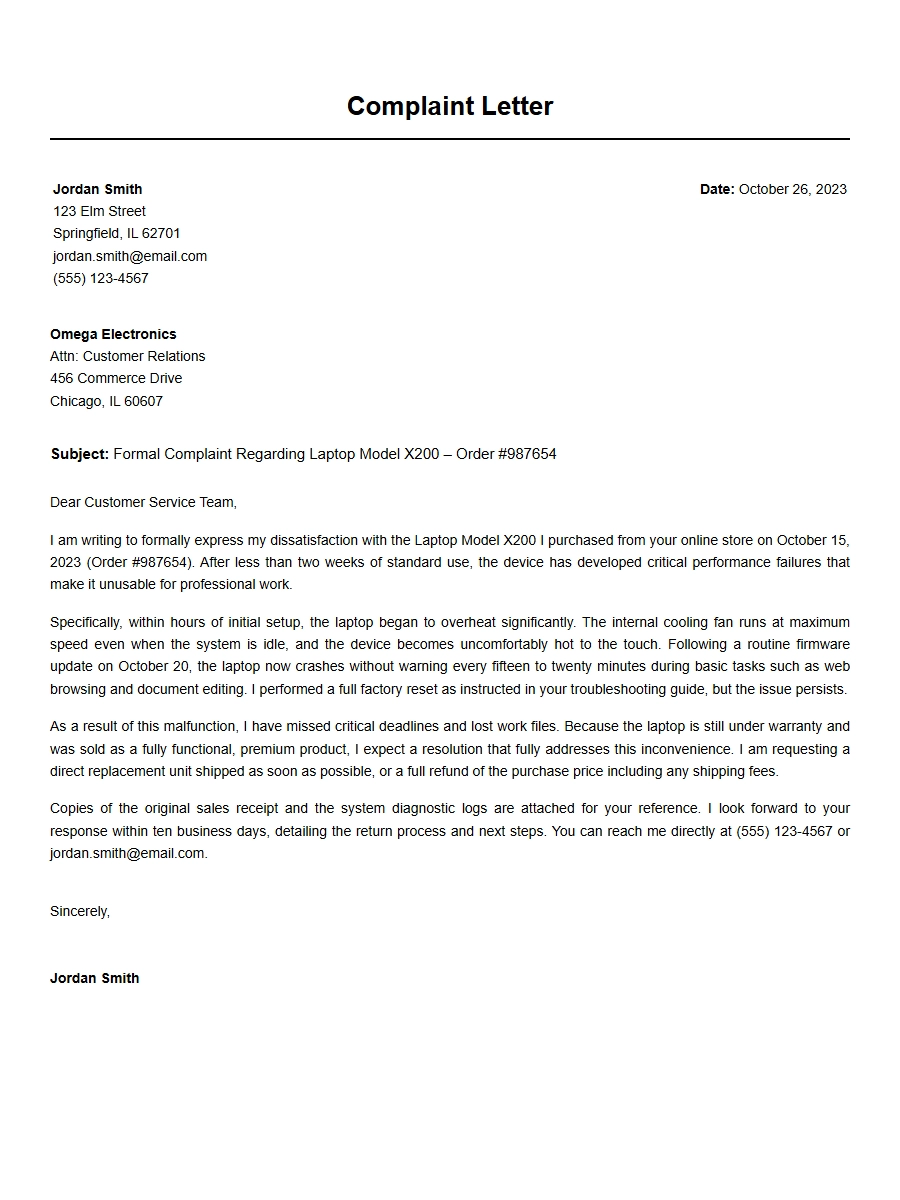 Structure of an Effective Complaint Letter
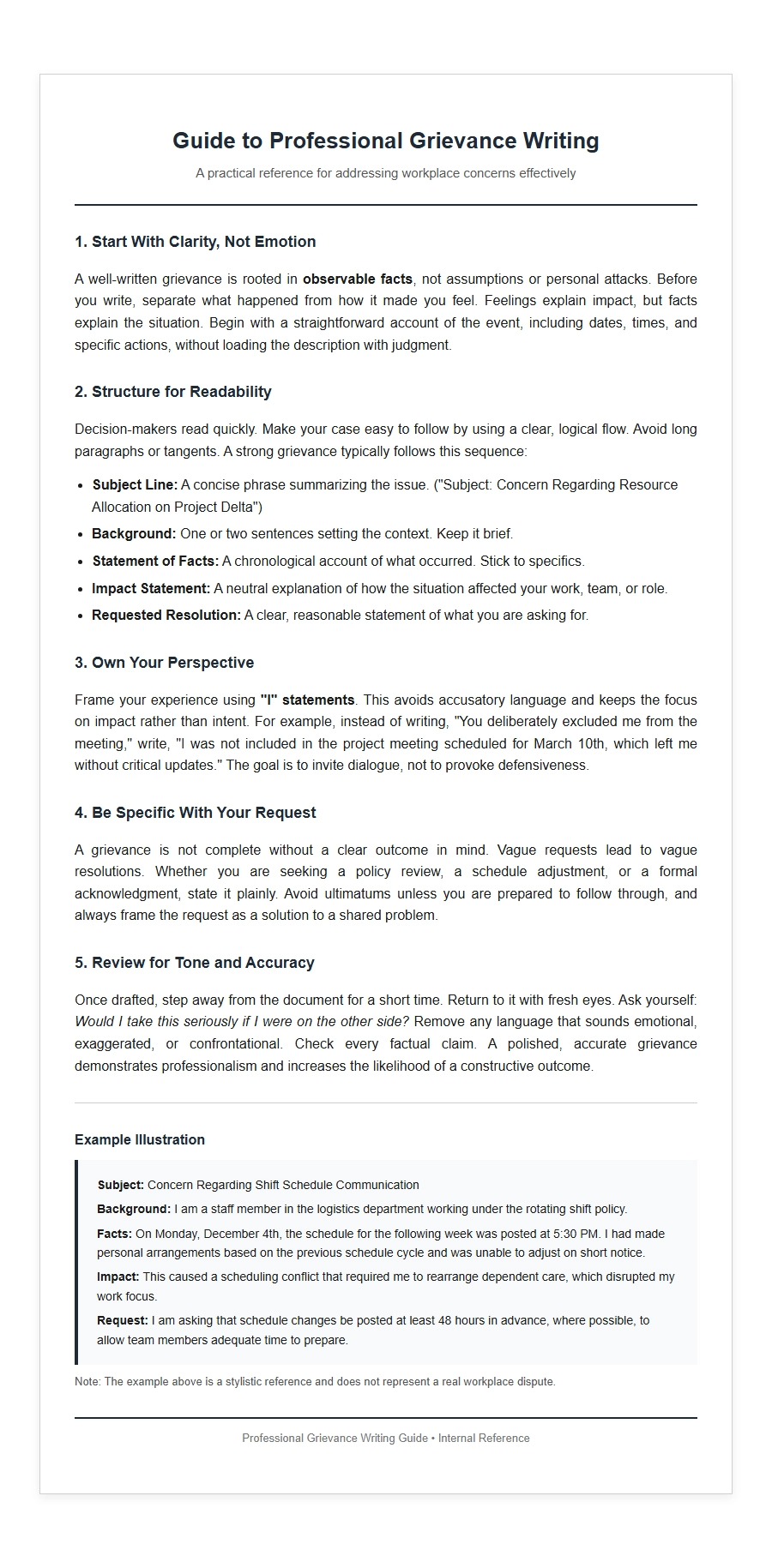 Best Practices for Writing Professional Grievance Letters