You bought something that didn't live up to the hype. Maybe it arrived broken, the service was poor, or it just wasn't what they promised. Now you have to ask for your money back. For most of us, that feeling of disappointment quickly turns into anxiety. You don't want to sound angry or demanding, but you also don't want to be ignored. A good refund request letter helps you strike that balance.
Why Starting With a Letter Template Makes Sense
Using a refund request letter template isn't cheating. It's smart. When you're frustrated, it's hard to think clearly. A template gives you a solid structure. You don't have to worry about the business letter format or the right salutation and closing. You can focus entirely on explaining why you're dissatisfied and what you want the company to do.
Think of it as a roadmap. It shows you the destination (a clear, polite request), but you still get to choose the path (your specific story and details).
Category: Personal Letters & Professional Requests
How to Choose the Right Sample for Your Situation
Not all refund requests are the same. Writing to a huge online retailer is different from contacting a small local business. If you're dealing with a large corporation, a formal, structured letter with order numbers and dates works best. It signals that you're serious and organized.
If you're writing to a smaller shop or an individual seller (like on Etsy), a semi-formal, friendly tone often gets better results. The key is matching the tone in writing to the relationship you have with the seller. A customizable letter allows you to adjust this tone without rebuilding the entire structure.
Adapting a Sample Without Losing Your Voice
Here's where most people go wrong. They copy a sample word-for-word, and it sounds robotic. The company reads hundreds of those. Yours gets ignored. Instead, use the sample for the skeleton and fill in the muscles with your own words.
Start with the facts: your name, order number, and the date of purchase. Then, explain the dissatisfaction simply. Instead of "I am writing to express my profound dissatisfaction," which sounds like a form letter, try "I ordered the blue lamp, but it arrived with a cracked base. I was really looking forward to it, so this was a letdown."
It's direct, honest, and human. That's the letter writing etiquette that actually gets responses. The same principle applies when you're writing a letter of recommendation or inviting friends to a birthday party—your authentic voice makes the message work.
Common Mistakes People Make (And How to Avoid Them)
Being too vague. "This product is bad" doesn't help anyone. What was bad? Did it stop working? Did it not fit? Be specific. Attach photos if you can.
Forgetting the ask. Do you want a full refund, a replacement, or a store credit? State it clearly in your closing paragraph. Don't make the reader guess what you want.
Poor proofreading. A messy letter with typos makes you look careless. It undermines your case. Take two minutes to proofread your letter before hitting send. Reading it out loud helps catch awkward phrases.
Using the wrong format. If you're sending a physical letter, use a clean letterhead design if you have one. If it's an email (a digital letter format), make sure your subject line is clear: "Refund Request – Order #12345 – Damaged Item."
A strong refund request has three parts. First, the facts (who you are, what you bought, when). Second, the problem (what went wrong and how it made you feel). Third, the solution (what you want the company to do).
Your opening paragraph should state the request directly. "I am writing to request a refund for order #67890. The item arrived significantly later than the promised delivery date." This grabs attention. It's respectful but firm.
Your middle paragraph adds the context. "I chose your service specifically because of the guaranteed delivery time. Since it didn't arrive in time for the event it was needed for, I can no longer use it."
Your closing should be polite but clear. "I have attached a copy of the receipt and the shipping confirmation. I look forward to your confirmation of the refund. Thank you for your time."
Don't Let Bad Experiences Keep You Silent
Writing a refund request gets easier the more you do it. You start to realize that companies expect these requests. A well-written letter actually helps them process your case faster. You're not being a nuisance; you're providing clear letter structure for them to follow.
Think of it as expressing interest in a volunteer position. You have a goal, and you communicate it clearly and politely to get a result. The same logic applies: you're presenting your case in the best possible light.
So use the template as your starting point. Fill it with your specific details. Read it once to check the tone. Then send it off with confidence. You've earned the right to ask for a product or service that works. A simple, well-structured letter is the most effective way to make that happen.
Useful Writing Samples
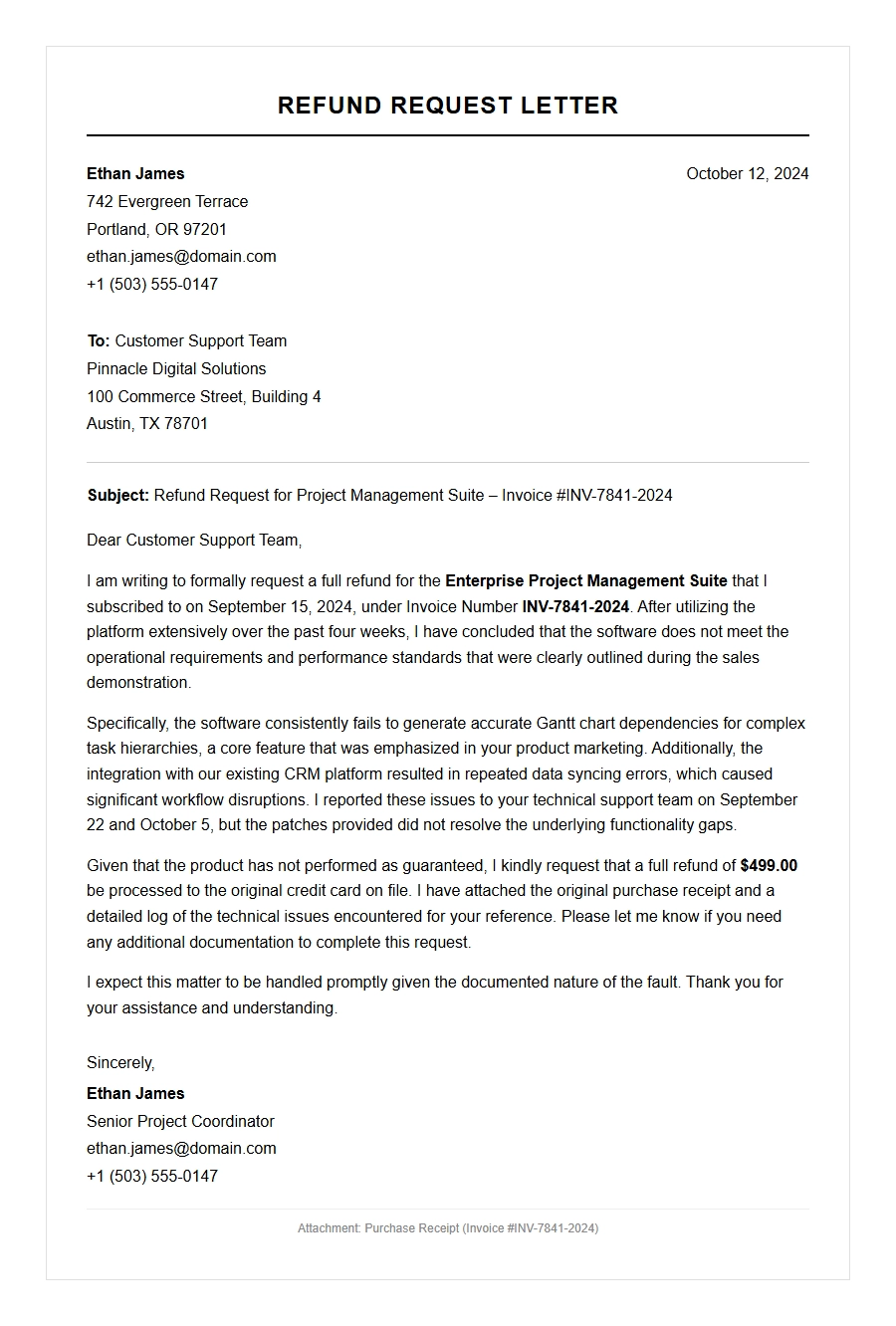
Refund Request Letter for Dissatisfaction
Refund Request for Defective Laptop
Dear Customer Service,
I am writing to request a full refund for the laptop I purchased on March 22, 2025 (Order #LAP98765). The product has been unsatisfactory due to the following defects:
Screen flickering intermittently from day one.
Battery drains within 45 minutes under normal use.
Keyboard keys (A, S, D) are unresponsive.
I contacted your technical support on March 25, and after troubleshooting, they confirmed the unit is faulty. Since the laptop is still under the 30-day return policy and does not meet my expectations, I kindly ask you to process a refund to my original payment method. I have attached photos and the support ticket #TKT1024. Please let me know if you need the item shipped back.
Thank you for your prompt assistance.
Sincerely, Alex Thompson
Refund Request for Poor-Quality Jacket
To the Returns Department,
I am requesting a refund for order #JW-4456, a “WinterProof Ultra Jacket” received on April 5. The jacket does not match the advertised quality:
Aspect
Advertised
Actual
Waterproof rating
10,000 mm
Leaks after 10 min
Zipper
YKK heavy-duty
Cheap plastic, stuck
Lining
Fleece
Thin polyester
I wore it only once and followed the care instructions. This is a clear case of misrepresentation. I expect a full refund of $149.99 plus original shipping. Please send return instructions and a prepaid label.
Regards, Maria Gonzalez
Refund Request for Unsatisfactory Haircut Service
Hi,
I visited your salon on April 12, 2025, for a ladies’ cut and blow-dry (appointment #A-2301). The stylist did not follow the reference photo I provided, leaving the left side noticeably uneven. The blow-dry was rushed and my hair was still damp when I left.
I called your manager on the same day and sent photos; she agreed the work was substandard. Per your posted satisfaction guarantee, I am requesting a full refund of $65. I would prefer the refund to be credited back to my credit card (last 4 digits 4523). If a store credit is the only option, please confirm the amount.
Thank you for understanding. I look forward to your response.
Best, Priya Sharma
Refund Request for Dissatisfying Magazine Subscription
To the Subscription Team,
I subscribed to “Tech Monthly” in January 2025 (subscription ID SUB-8771). After receiving four issues, I am deeply dissatisfied. The content promised in-depth product reviews, but each issue contains mostly advertisements and rehashed press releases.
Issue #2 had 18 out of 48 pages as full-page ads.
Issue #3 featured a cover story that was only 600 words.
No exclusive online access was provided despite it being listed as a benefit.
I request a refund for the remaining eight months ($79.96). I have already canceled auto-renewal. Please process the refund to the card used for purchase (ending in 2091) and confirm by email.
Yours faithfully, James Okafor
Refund Request for Unacceptable Hotel Stay
Dear Hotel Manager,
I stayed at your property from April 8–10, 2025 (reservation #HT-76432). The experience was far below what was advertised as a “luxury suite.” Key problems:
Air conditioning did not work; room temperature reached 84°F.
Bathroom had mold on the shower curtain and a leaking faucet.
Noise from the bar downstairs continued until 2 a.m.
I reported these issues to the front desk on the first night, but only a small fan was provided. I asked for a room change but was told none were available. I believe a full refund of $480.24 is appropriate. I will be filing a review on TravelAdvisor, and I hope you can rectify this with a prompt refund.
Sincerely, Liam Chen
Refund Request for Misleading Online Course
Dear Support,
I enrolled in “Python for Data Science – Advanced” (cohort #PDSA-403) on March 15. The course description said “lifetime access to interactive labs and real-world projects.” However:
Feature
Promised
Delivered
Labs
20+ hands-on
Only 6, with broken environments
Project feedback
Within 48 hours
No response after 14 days
Certificate
Upon completion
Not issued yet
I completed 90% of the modules but feel misled. I request a full refund of $299. I have contacted the instructor twice with no resolution. Please escalate this.
Thank you, Diana Foster
Refund Request for Poor Restaurant Experience
To the Manager,
I dined at your restaurant on April 13, 2025 at 7:30 p.m. (table 12, check #C-9843). The meal was extremely disappointing. My order of grilled salmon was overcooked and dry; my partner’s steak was ordered medium-rare but arrived well-done. When we alerted our server, we were met with a dismissive attitude. The manager eventually offered a 10% discount, but given that both entrees were inedible, I believe a full refund is justified.
For reference, here is a breakdown of our bill:
Appetizers: $18.00 (acceptable)
Grilled salmon: $32.00 (returned uneaten)
Steak: $38.00 (returned half-eaten)
Drinks: $14.00
Total: $102.00
I request that the $70 for the two main courses be refunded. I will not be returning unless the kitchen and service improve.
Respectfully, Yuki Tanaka
Refund Request for Non-Functional Software
Dear Customer Support,
I purchased “ProEdit Suite v5” (license key PRO-ED5-8873) on April 1, 2025. The software fails to perform as advertised:
Crashes every 15 minutes on my Windows 11 PC (16GB RAM, SSD).
The “batch convert” feature does not work – it hangs after the first file.
Purchased add-on filters are missing from the interface.
I have submitted three support tickets (tickets #435, #436, #437) with logs and screenshots, but only received automated replies. The 30-day money-back guarantee was a deciding factor in my purchase. I expect a full refund of $199.00. Please provide return instructions if I need to deactivate the license.
Lost time and trust, Rachel Moore
Refund Request for Damaged/Misrepresented Book
To Whom It May Concern,
I ordered “The Art of Watercolor” (ISBN 978-0-13-123456-7) from your store on March 30. The product arrived on April 5 with a torn cover and water stains on the first 30 pages. Additionally, the listing stated “full-color illustrations throughout,” but 40% of the images are black and white.
I would like a full refund of $45.99 plus $5.99 shipping. I will return the book in its damaged condition. I can be reached at the email below. Please issue a prepaid return label and confirm the amount and processing timeline.
Disappointed, Omar Hassan
Refund Request for Incomplete Home Repair
Dear Manager,
I hired your company to repair my bathroom (contract #BATH-2025-03, dated March 10). The work was scheduled for April 7-9 but was left unfinished. Specifically:
Tiling around the shower is missing grout in three areas.
The new vanity was installed crooked – the left door does not close.
Paint on the ceiling is streaky and a different shade.
All debris was left in my garage.
I paid a deposit of $1,500. The contractor promised to return on April 10 but never showed. I called and emailed multiple times with no response. Since the job is only 60% complete and the quality is poor, I request a full refund of the deposit. I have photos and the signed contract.
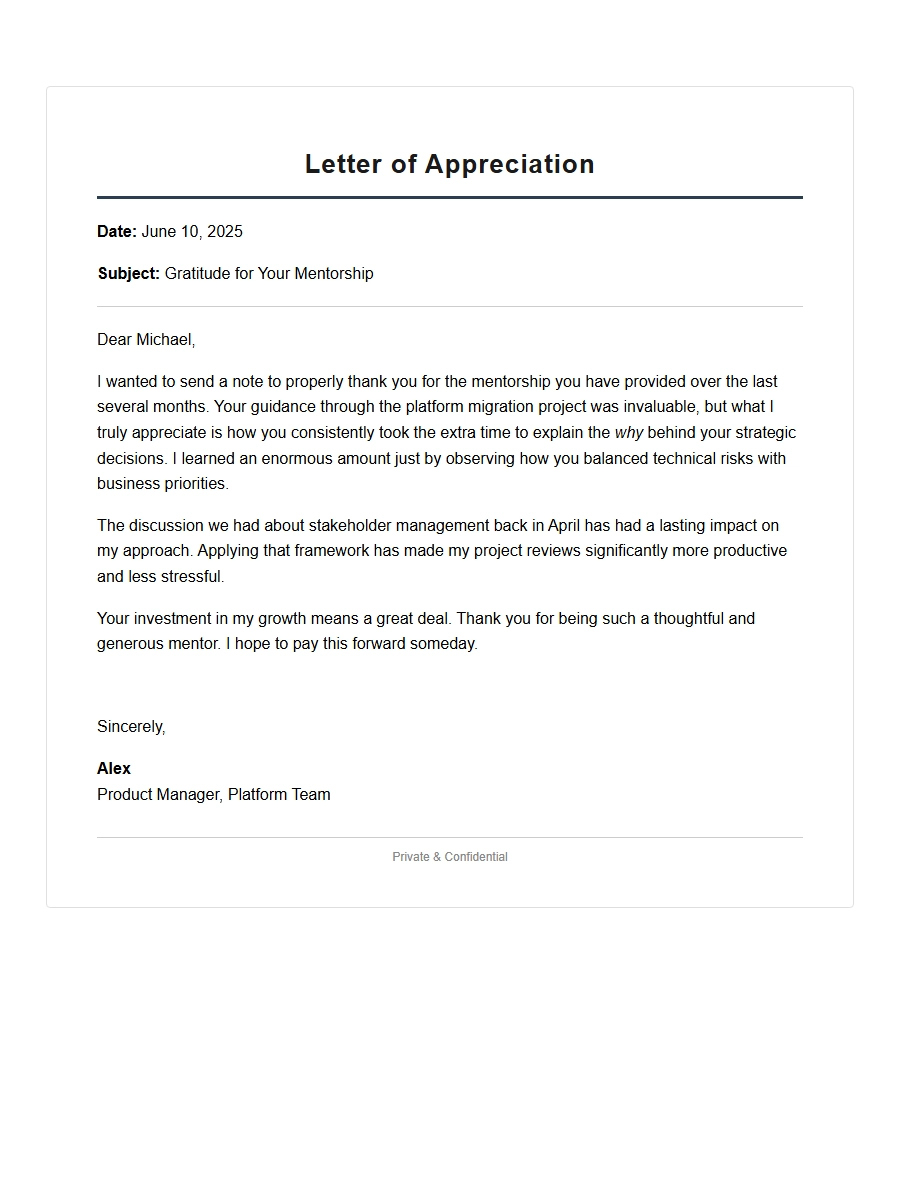 Thanking a Mentor for Guidance: Sample Messages
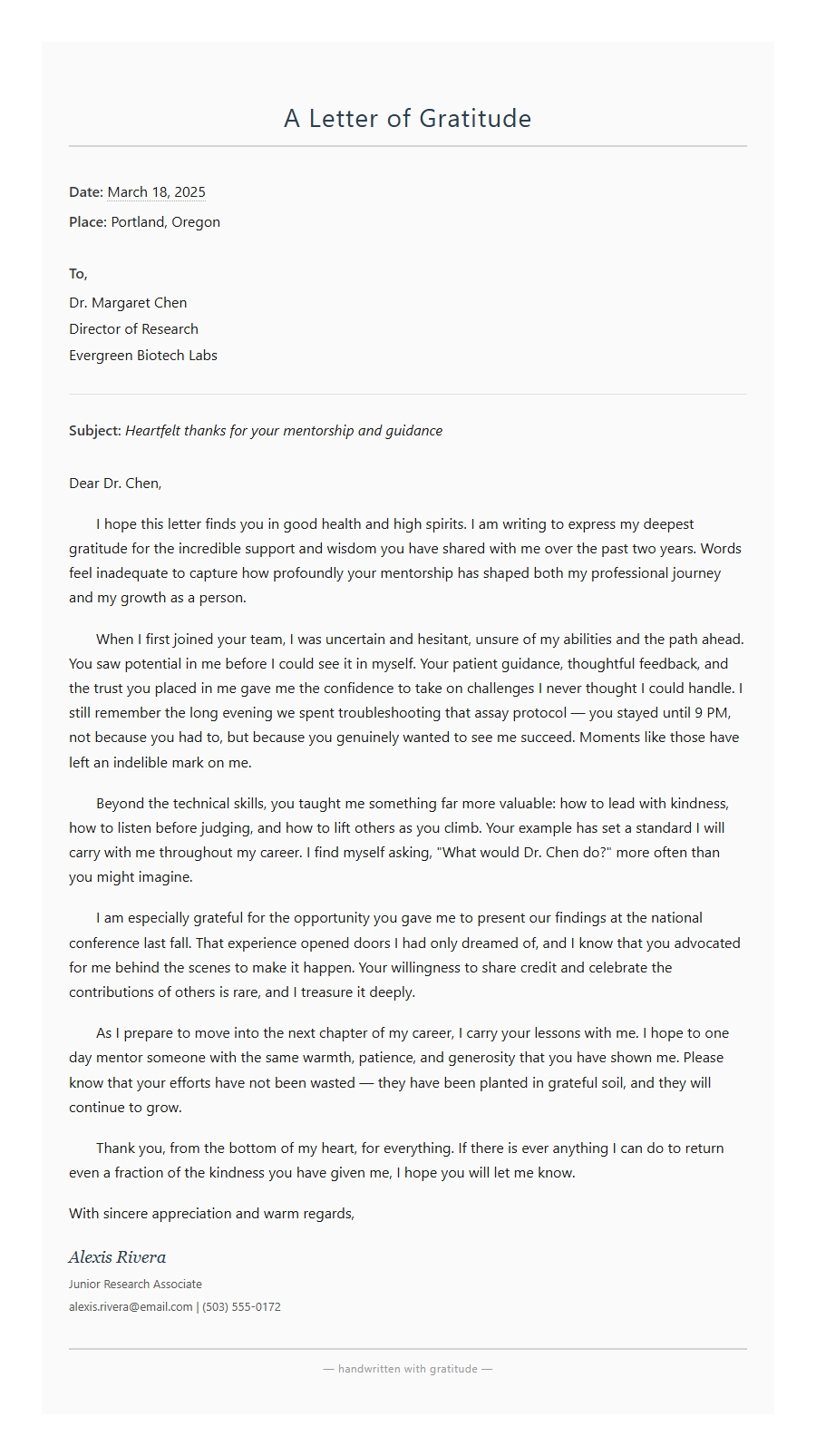 Expressing Gratitude: Handwritten Letter Example
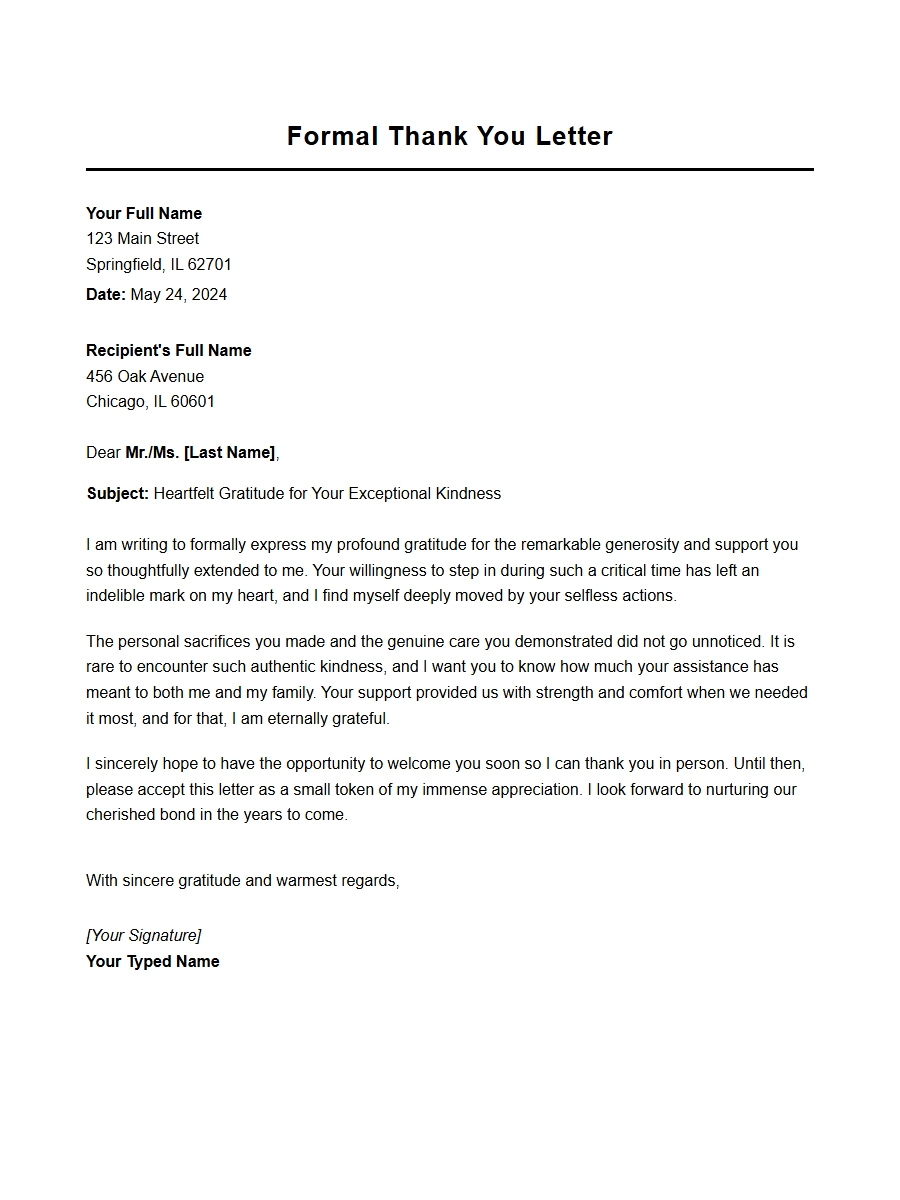 Expressing Thanks in a Formal Personal Letter
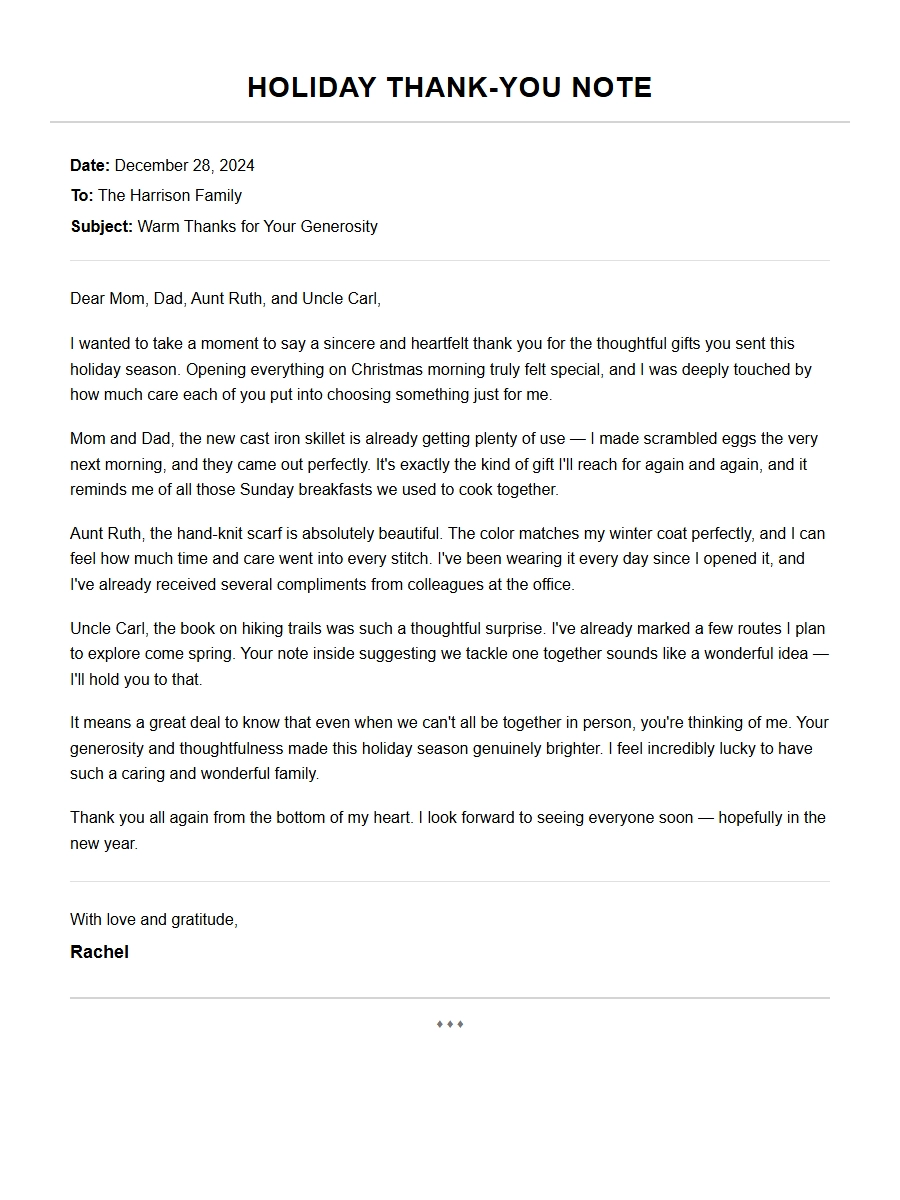 Thank You Letter Examples for Family Holiday Gifts
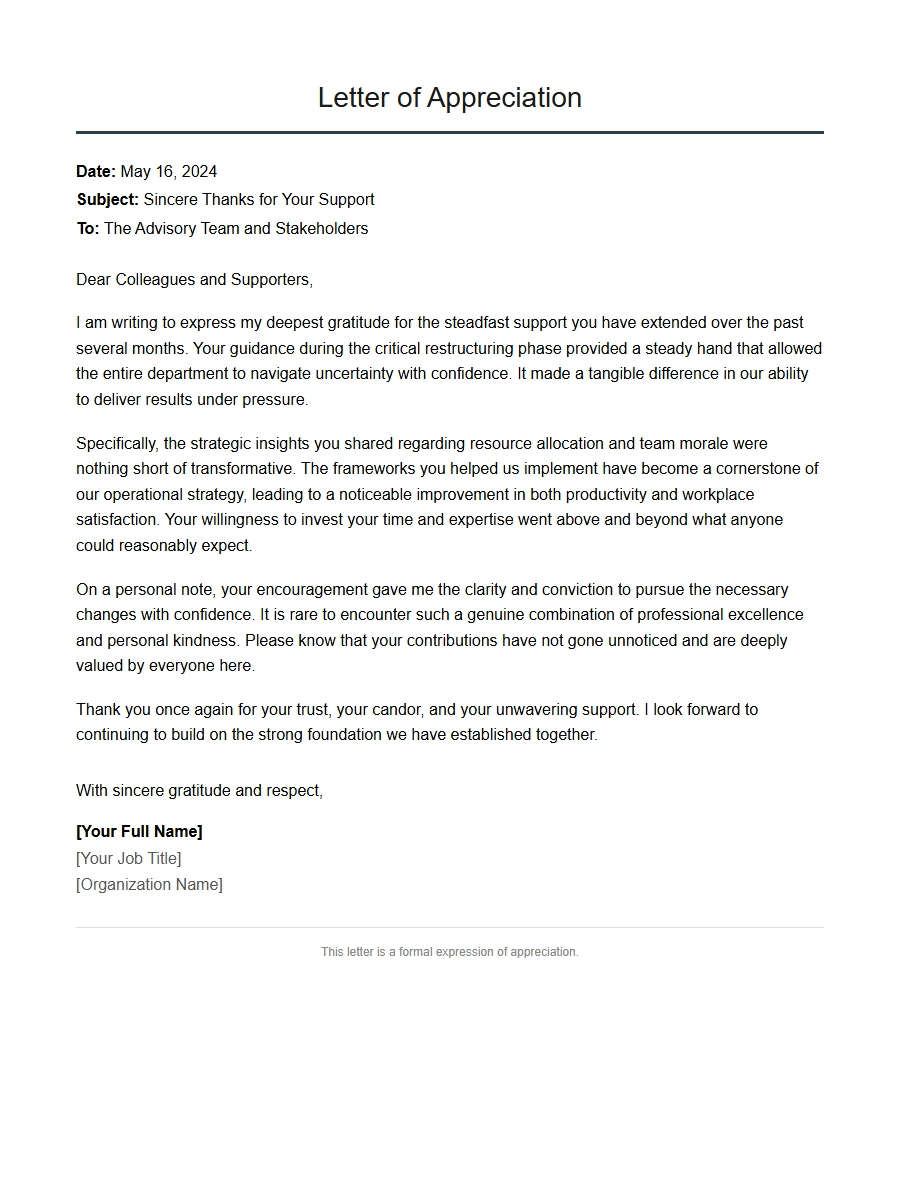 Sample Thank You Letter for Support
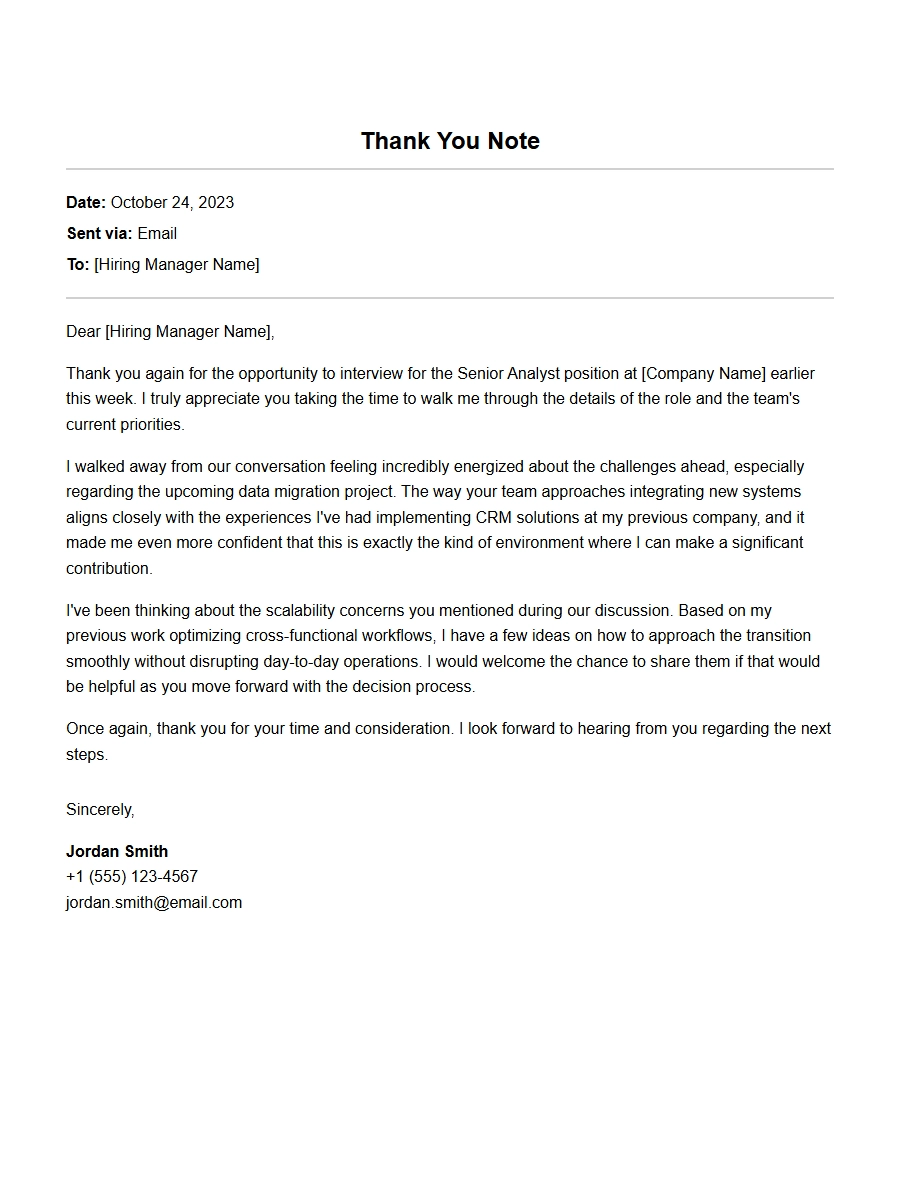 How to Write a Personal Thank-You Note After an Interview