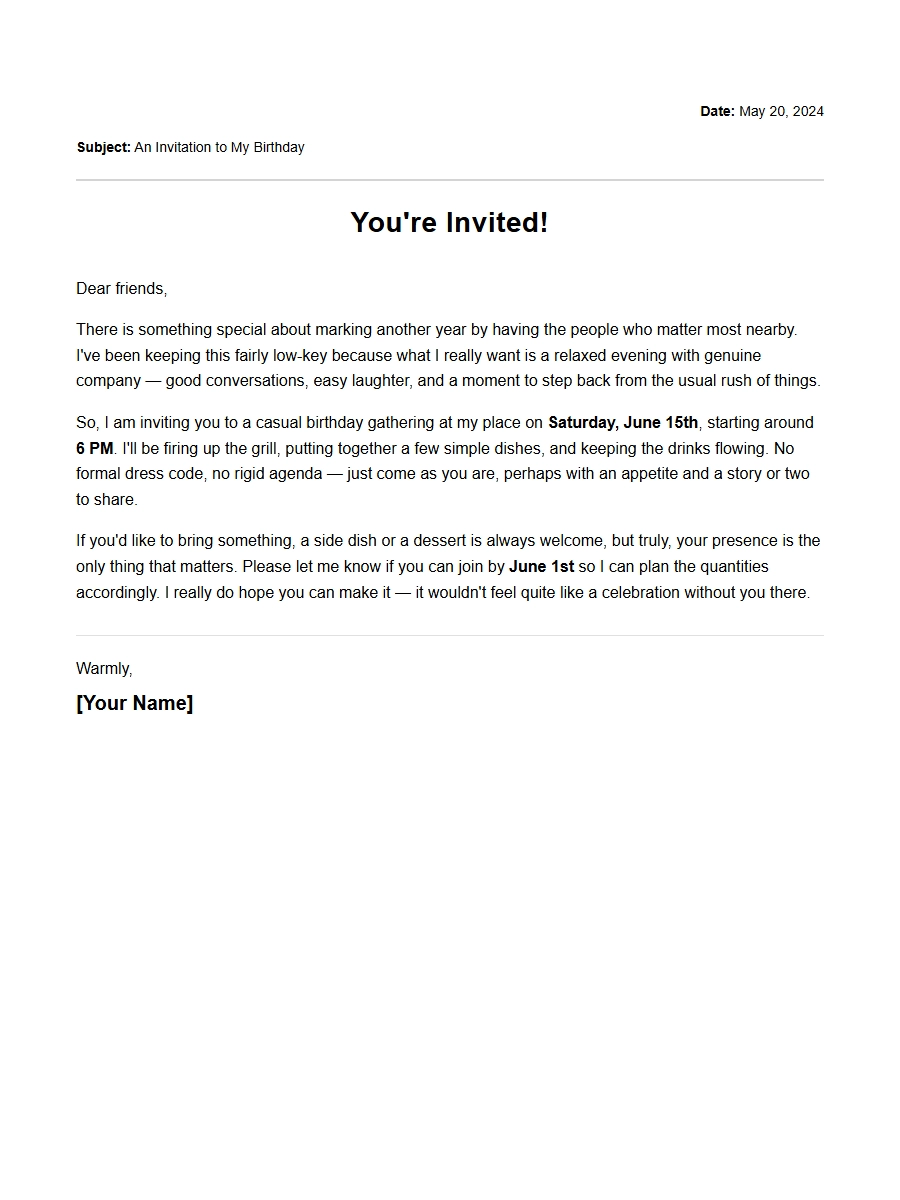
Personal Letter: Inviting Friends to a Birthday Party
You’ve decided on the date, picked a venue, maybe even ordered a cake. Now comes the part that trips up even the most confident party planner: writing an invitation that sounds like you, not a generic template. Staring at a blank page when you need to invite friends to a birthday party can feel oddly paralyzing—especially when you want the invitation to feel warm and personal, not stiff or rushed. But here’s the thing: a good sample letter can turn that anxiety into a draft you’re proud to send, in minutes.
Using a sample isn’t cheating. It’s a smart, time-saving strategy that gives you a solid structure—the right salutation, a natural flow, a graceful closing—while leaving all the room you need to inject your own voice. Think of it as training wheels for the first draft. You’ll adapt the tone, swap in details about your party, and end up with a letter that feels both polished and unmistakably yours.
Category: Personal Letters
Why Bother With a Personal Letter When a Text Works?
Sure, a group text or a Facebook event can get the word out fast. But a personal letter—even one sent by email—signals that this party matters to you and that you value the friendship. It gives you room to explain why you want them there, to add a memory or a joke, and to set the tone for the celebration. It’s also a lot easier to make a formal request when the occasion calls for it, like a milestone birthday or a more upscale gathering.
Choosing the Right Sample for Your Party
Not all birthday parties are the same. A casual backyard barbecue calls for a different tone than a 50th birthday dinner at a restaurant. So before you pick a letter template, ask yourself: What kind of event is this?
For a laid-back get-together, your sample should be friendly and short. Open with something like, “Hey [name], I’m keeping things simple this year and would love to have you over.” For a semi-formal celebration—say, a rented venue or a sit-down meal—you’ll want a more structured letter. Start with a polite salutation like “Dear [name],” then include the party details clearly: date, time, location, and any instructions (like “please RSVP by the 10th”). The key is to match the sample’s formality to the actual vibe of your event.
Avoid These Common Tone Mistakes
Ever received an invitation that felt too stiff or too casual? That happens when the writer copied a sample without adjusting it. If your party is a costume theme, don’t use a formal close like “Sincerely.” Instead, try “Can’t wait to see your costume!” Similarly, for a printed letter, use a proper letterhead—even if it’s just your name and address at the top—to make it feel intentional. For an email, a simple subject line like “You’re invited to my birthday party!” works best.
Another mistake: using outdated salutations. “To whom it may concern” is great for a business letter, but for inviting friends, “Dear [friend’s name]” or even “Hey [first name]” is usually right. When writing a personal invitation, always aim for a tone that reflects your actual relationship. If you normally joke around, let that humor come through.
How to Adapt a Sample Without Losing Your Authentic Voice
Start by reading the sample out loud. Does it sound like something you might say? If not, change the sentences until they feel natural. Swap generic phrases for specific ones. Instead of “I hope you can join me,” try “I’d love to have you there to celebrate my 30th with terrible karaoke.” That personal detail makes the invite memorable.
Also, pay attention to the letter structure. A good sample will have an opening line, the party details in the middle, and a polite closing. Keep that framework, but fill each section with your own reasons, memories, or jokes. Don’t be afraid to add a postscript—P.S. lines feel very human and are great for extra info like “P.S. Feel free to bring a plus-one.”
Quick Tip: Tailor the Opening Paragraph to Grab Attention
Your first line sets the tone. Instead of a dry “You are cordially invited,” try something like “I’m turning [age] and I refuse to do it quietly.” That immediately makes the letter feel personal and fun. For a more formal event, you might write, “It’s a milestone year for me, and I’d be honored to have you help me celebrate.” Choose the opening that matches your party’s personality.
Proofread Before You Send
Even a short, friendly invitation deserves a quick proofread. Read it once for typos, then once to check the tone. If you’re sending a digital letter, you can even ask a friend to glance at it. And remember: for email invitations, avoid using too many formatting tricks—simple fonts and clear line breaks work best. For printed letters, consider using letterhead design software or a clean template so it looks neat.
The best invitations sound both professional and personal. They make the recipient feel valued, not like they’re just another name on a list. So take that sample, make it your own, and then send it off with confidence. The more you do it, the faster it gets. Next time you plan a party, you’ll have a personal template you can reuse—and you’ll barely need to think about it.
Useful Formats
Personal Letter: Inviting Friends to a Birthday Party
Formal Birthday Invitation
Dear Friends,
It gives me great pleasure to invite you to my 30th birthday celebration. The party will take place on Saturday, May 15th, from 7:00 PM to 11:00 PM at The Garden House, 123 Maple Street.
Please find the event details in the table below:
Item
Details
Date
May 15, 2025
Time
7:00 PM – 11:00 PM
Venue
The Garden House, 123 Maple Street
Dress Code
Smart Casual
RSVP by
May 1, 2025
There will be dinner, music, and plenty of dancing. I would be honored if you could join me on this special day. Kindly RSVP by the date above so I can finalize arrangements.
Warm regards, Alex
Casual Party Invitation to Close Friends
Hey everyone!
My birthday is coming up, and I want to celebrate with my favorite people. I'm planning a low-key backyard BBQ at my place on Saturday, June 3rd, starting at 2:00 PM. No fancy dress – just come as you are.
What to bring:
Your favorite beverage or snack to share
A good mood (mandatory!)
Swimwear if you want to use the pool
Let me know if you can make it by May 28th so I know how much food to prepare. There will be cake, games, and good company. Can't wait to see you all!
Yours, Jordan
Last-Minute Birthday Invitation
Hi friends,
I know this is super last-minute, but my birthday is this Friday and I decided to throw a small get-together at The Tipsy Tap downtown. Please join me on May 20th from 8:00 PM until late.
Here's the plan:
Where: The Tipsy Tap, 456 Elm Avenue
Why: Because turning another year older deserves a celebration!
What: Just drinks and laughs – no gifts required.
If you can come, please drop me a text before Thursday night. I need to reserve enough tables. I really hope you can make it – it wouldn't be a party without you.
Cheers, Sam
Reminder for Birthday Party
Dear friends,
This is just a friendly reminder that my birthday party is this Saturday, April 22nd, at 7:00 PM. The address is still 789 Oak Lane. Don't forget!
Here's what I've planned so far:
Time
Activity
7:00 PM
Welcome drinks & snacks
8:00 PM
Dinner buffet
9:00 PM
Birthday cake & stories
9:30 PM
Music & dancing
Please let me know if your guest count has changed. I'm really looking forward to celebrating with you all. See you Saturday!
Best, Taylor
Surprise Birthday Party Invitation
Top secret – surprise party for Jamie!
I need your help to pull off a surprise birthday party for Jamie. It's happening on June 10th at my house (321 Pine Road) from 6:00 PM. Please arrive by 5:45 PM so we can hide before Jamie arrives at 6:00.
What to do:
Keep this a secret – do not mention it to Jamie!
Bring a small gift or just yourself – your presence is enough.
If you want to help set up decorations, come at 4:00 PM.
Please RSVP by June 5th. I will send a reminder with the final plan. Let's make this birthday unforgettable!
Cheers, Morgan
Themed Birthday Party Invitation
Greetings, party people!
It's my birthday and I'm throwing a '90s Retro Theme Party! Get ready to rewind to the best decade. The party will be on July 8th from 8:00 PM to 12:00 AM at Fun Zone Hall, 555 Broadway.
Dress code: wear your best '90s outfit – think flannel, high-waisted jeans, or neon. Prizes for the best costume!
Music: All '90s hits – from Britney to Nirvana
Food: Pizza rolls, Dunkaroos, and a boom box cake
Activities: Dance contest, trivia, and photo booth
Please RSVP by July 1st and let me know your '90s character. It'll be totally rad to have you there!
Peace out, Casey
Kids Birthday Party Invitation (to Parents)
Dear Parents,
Our son Ethan is turning 5, and we would love for your child to join the celebration! The party will be on August 12th from 2:00 PM to 5:00 PM at Little Dreamers Play Center, 777 Park Avenue.
What we have planned:
Time
Activity
2:00 – 2:30
Welcome & free play
2:30 – 3:15
Magic show
3:15 – 3:45
Cake & treats
3:45 – 5:00
Bouncy castle & games
Please include your child's name and any allergies on the RSVP. We ask that one parent stays with their child. RSVP by August 5th – we need a headcount for goody bags!
Thank you, Sarah & Mike
Invitation to a Birthday Dinner
Dear friends,
Instead of a big party, I'd like to celebrate my birthday this year with an intimate dinner. Please join me on Sunday, September 10th at 7:00 PM at La Casa Ristorante, 888 River Road.
I've arranged a private room and a set menu. Here are the details:
Appetizer: Bruschetta or Caesar salad
Main course: Choices of pasta, chicken, or fish (please let me know your preference)
Dessert: Tiramisu and birthday cake
Cost is covered by me – all you need to bring is your lovely self! Kindly confirm by September 3rd so I can finalize the reservation. I look forward to sharing this evening with you.
Warmly, Riley
Virtual Birthday Party Invitation
Hi everyone,
This year I'm celebrating my birthday with a virtual party on Zoom because many of you live far away. Join me on October 5th from 7:00 PM to 9:00 PM (EST).
Here's the link and agenda:
Time
Activity
7:00 – 7:15
Welcome & catching up
7:15 – 7:45
Virtual toast & cake cutting
7:45 – 8:30
Online games (Pictionary & trivia)
8:30 – 9:00
Open chat & goodbyes
I will send the Zoom link and password two days before the event. Please RSVP by October 2nd so I can plan the games. Let's make this digital celebration feel close!
Hugs, Jordan
Invitation Requesting Help with Party Planning
Dear friends,
My birthday is coming up on November 12th, and I'd love to throw a party, but I need your help planning it! I'm inviting you not only as guests but also as co-planners. Let's make it a collaborative celebration.
Here's what I need help with:
Task
Person assigned
Deadline
Choose a venue
Taylor
Oct 20
Organize food
Jordan
Oct 25
Set up decorations
Casey
Nov 11
Playlist & music
Riley
Nov 1
If you'd like to take on a task or just come enjoy, let me know. We'll have a planning meeting via video call on October 15th. It's my birthday but I want it to be a party for all of us. Reply with your availability!
 Thanking a Mentor for Guidance: Sample Messages
 Expressing Gratitude: Handwritten Letter Example
 Expressing Thanks in a Formal Personal Letter
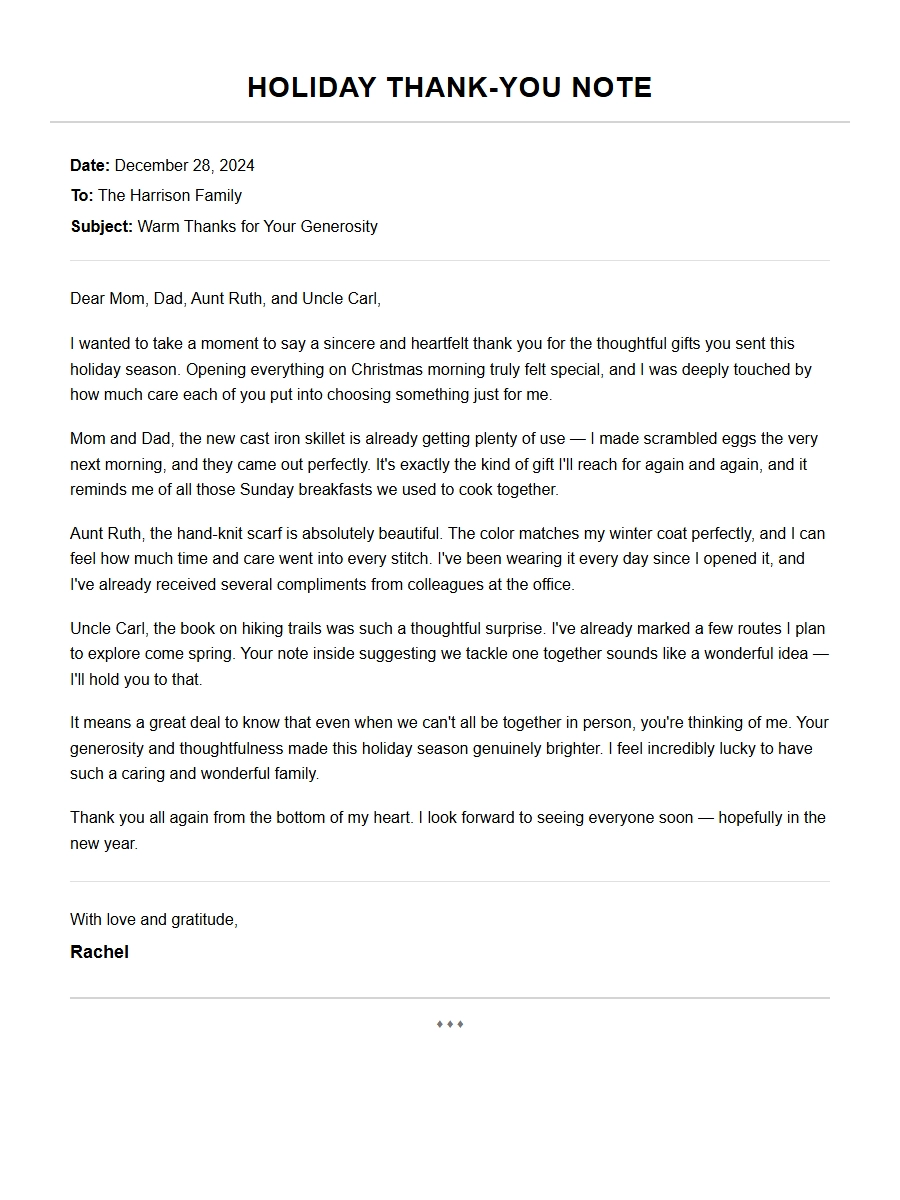 Thank You Letter Examples for Family Holiday Gifts
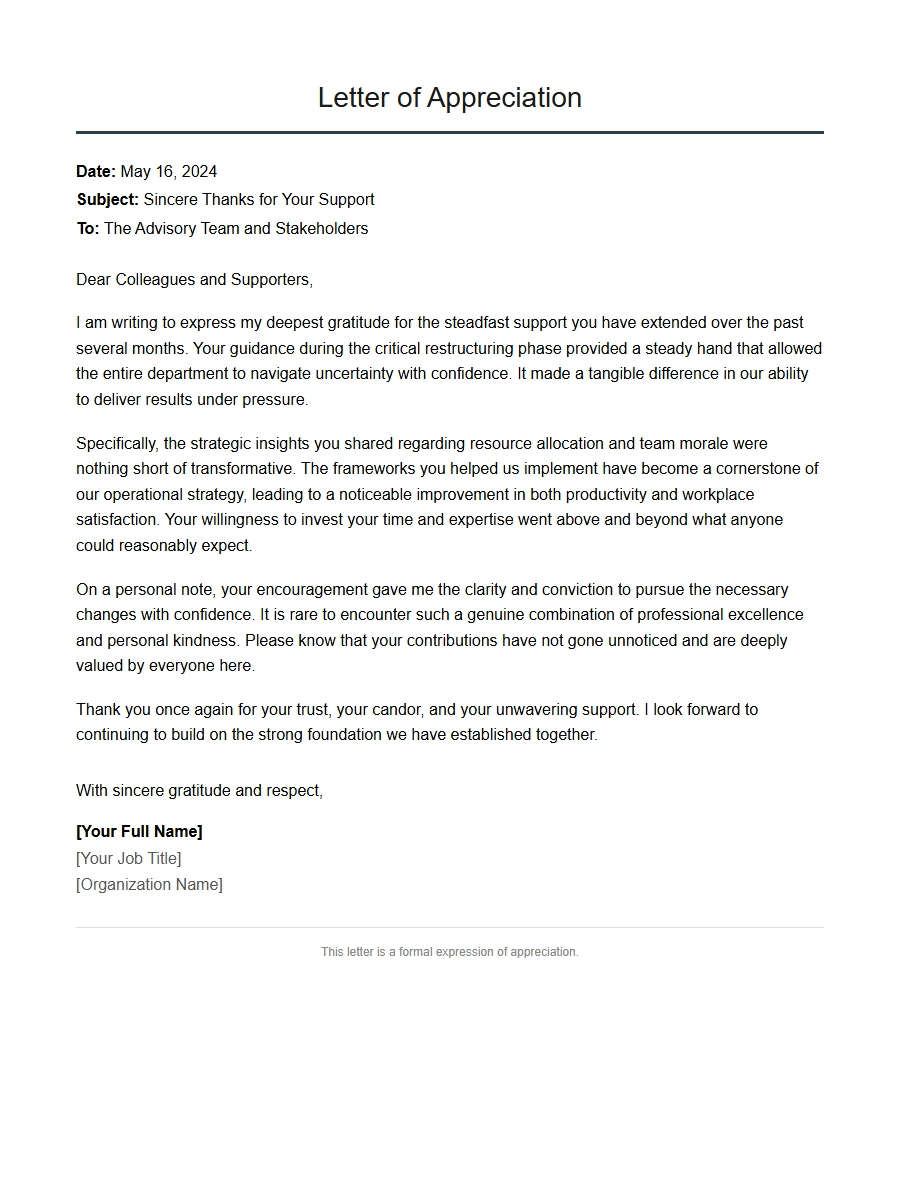 Sample Thank You Letter for Support
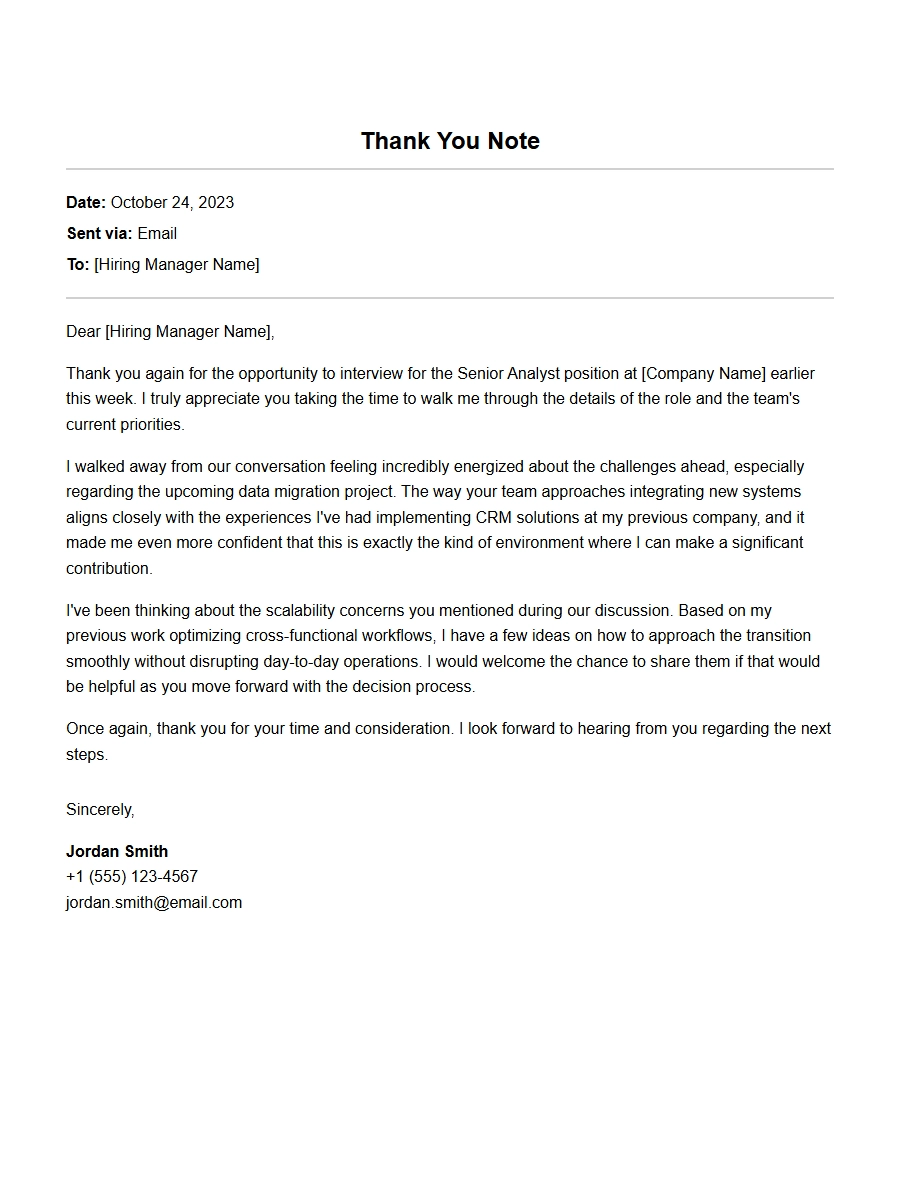 How to Write a Personal Thank-You Note After an Interview