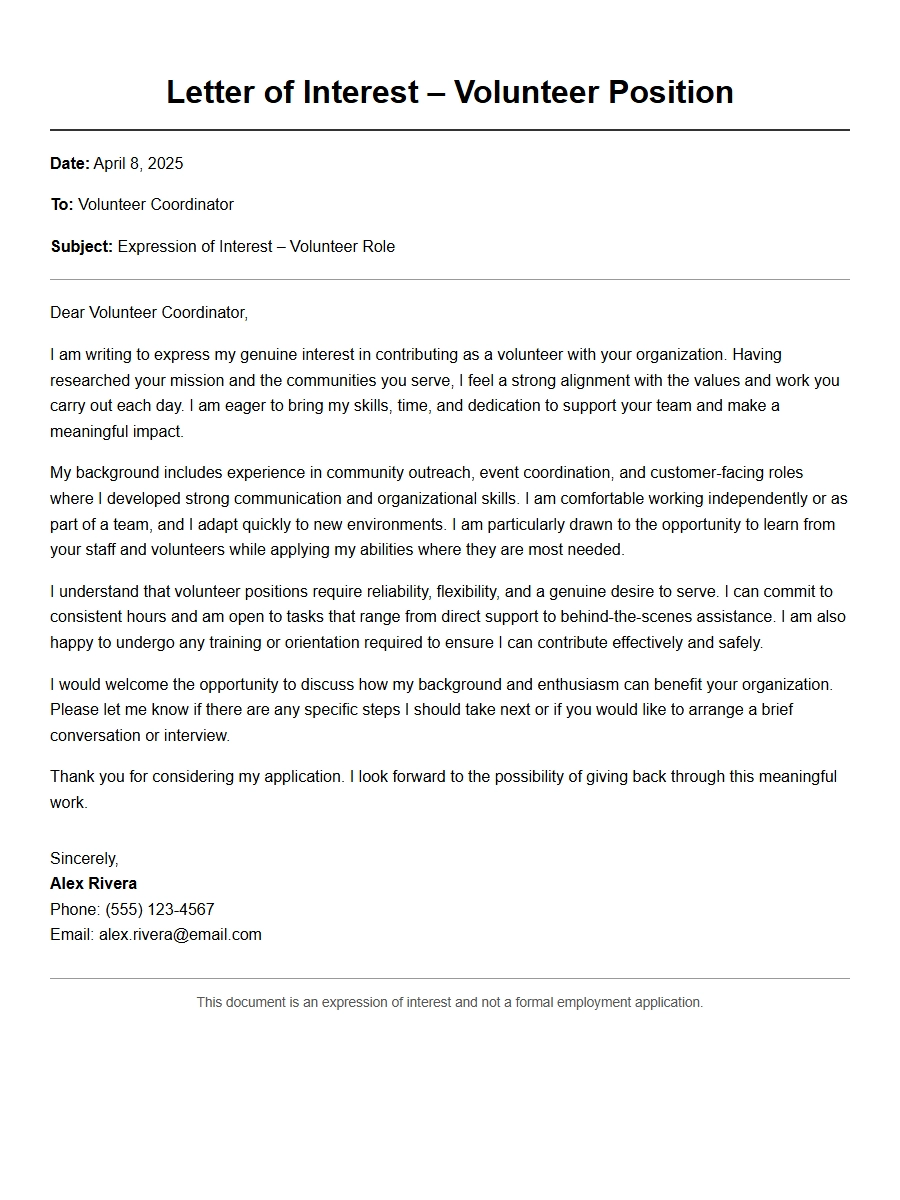
Letter Expressing Interest in a Volunteer Position
Staring at a blank page when you need to write a letter expressing interest in a volunteer position can feel paralyzing. You want to sound both eager and professional, but the words don't come. The good news is that you don't have to start from scratch. A well-chosen sample turns that anxiety into a confident, polished draft in minutes.
Using a letter template isn't cheating—it's a smart, time-saving strategy. A good sample gives you the structure, tone, and key phrases you need, while leaving plenty of room for your own personality and details. Think of it as a sturdy frame; you get to paint the picture. The trick is knowing how to pick the right example and adapt it without losing your authentic voice.
Category: Volunteer Letters
How to Choose the Right Sample for Your Situation
Not all volunteer letters are the same. Are you applying for a hands-on role at a local animal shelter? Or a board position at a nonprofit? The tone and format will differ. For a formal board role, you'll want a business letter format with a proper salutation and closing—something that mirrors professional correspondence. For a casual community garden gig, a shorter, warmer note works better.
Look for a sample that matches the organization's culture. If the group uses first names in their communications, it's fine to start with "Dear Maria" instead of "Dear Ms. Rodriguez." When in doubt, err on the side of formality for the first letter. You can always adjust later.
Adapting a Sample Without Losing Your Voice
Start by reading through your sample and highlighting the parts that feel generic. Replace those with your specific reasons for wanting to volunteer. Why this organization? What skills do you bring? For example, if the sample says "I am passionate about your mission," swap in a personal story: "I've been volunteering at food banks for three years, and your approach to addressing food insecurity really resonates with me."
Pay attention to the tone in writing. If the sample sounds too stiff or corporate, relax the wording. Use contractions like "I've" or "you're" to sound more human. A letter of interest shouldn't read like a legal document. At the same time, avoid slang or overly casual phrases—you still want to show respect for the reader's time.
Key Mistakes to Avoid
One common error is using outdated salutations like "To Whom It May Concern." That feels impersonal, and often the organization's website or social media will give you a contact name. If you genuinely can't find a name, use "Dear Volunteer Coordinator" or "Dear Hiring Team."
Another mistake is ignoring the format. If you're sending your letter via email, skip the letterhead design and use a simple subject line like "Volunteer Interest – [Your Name]." For a printed letter, use a clean business letter format with your contact info at the top. Always proofread your letter before sending. A typo in an expression of interest sends the wrong message about your attention to detail.
Also, don't confuse a letter of interest with a cover letter examples for paid jobs. Volunteer letters are often shorter and focus more on motivation than credentials. Save the long list of past jobs for your resume.
Making the Opening Paragraph Count
The first two sentences decide whether the reader keeps going. Start by mentioning the specific volunteer role and how you found out about it. Then immediately connect it to your own experience or values. For instance: "When I read about your upcoming community clean-up event, I knew I had to get involved. I've organized similar events in my neighborhood and love seeing the impact of collective effort."
This approach shows that you've done your homework and aren't just sending a generic template. That kind of personalization is what transforms a sample into a genuine letter of recommendation for yourself.
When to Use a Sample vs. Writing from Scratch
If you're short on time or feeling unsure about the format, a sample is your best friend. But if you have a strong personal connection to the organization, writing from scratch can feel more natural. The middle ground works well: take the structure from a sample but rewrite every sentence in your own words. That way you get the benefits of a proven format without sounding like a robot.
Remember that even a well-crafted personal letter benefits from a clear structure. The same principles apply here: state your intent, give your reasons, and close with a call to action (like asking for an interview or next steps).
Putting It All Together: A Simple Process
Here's a quick workflow you can follow:
Find 2–3 samples that match the tone you need (formal or casual).
Read them to understand the flow, then close the tabs.
Write your own version from memory, using the sample's structure as a guide.
Ask a friend or mentor to glance at it, especially if you're unsure about letter writing etiquette.
One more thing: if you're tempted to use a formal writing tips from a completely different context, pause. Volunteer letters have their own rhythm. Borrowing from a business complaint letter won't do you any favors.
Finally, use the sample as a springboard, not a crutch. The best volunteer letters feel both professional and personal—like a real person saying, "I care about what you do, and here's why I'd be a good fit." Practice this a few times, and the process will become quicker and more natural. Next time you need to express interest in a volunteer role, you'll know exactly where to start.
Simple Examples
Letter Expressing Interest in a Volunteer Position
Volunteer Interest - Animal Shelter Assistant
Date: February 15, 2025
To: Volunteer Coordinator Happy Paws Animal Shelter 123 Main Street, Springfield, IL 62701
Subject: Expression of Interest in Volunteer Position – Animal Shelter Assistant
Dear Volunteer Coordinator,
I am writing to express my strong interest in volunteering as an Animal Shelter Assistant at Happy Paws Animal Shelter. Having adopted my own rescue dog from your facility three years ago, I deeply admire your mission to provide compassionate care and find loving homes for animals in need.
I am available to volunteer weekday afternoons and Saturday mornings. My experience includes pet sitting for neighbors and assisting at a local veterinary clinic during high school. I am comfortable handling dogs of all sizes, cleaning kennels, and providing basic socialization.
Below is a summary of my relevant skills:
Skill
Proficiency
Animal handling
Advanced
Cleaning & sanitation
Experienced
Customer service
Intermediate
Basic first aid for pets
Certified
I would welcome the opportunity to discuss how I can contribute to your team. Please let me know if you require any additional information or if an interview is needed.
Thank you for your time and consideration.
Sincerely, Jane Doe jane.doe@email.com (555) 123-4567
Application for Volunteer Tutor at Literacy Center
Date: March 1, 2025
To: Hiring Manager Bright Futures Literacy Center 456 Oak Avenue, Centerville, OH 45459
Subject: Application for Volunteer Tutor Position
Dear Ms. Johnson,
I am excited to apply for the volunteer tutor position at Bright Futures Literacy Center. As a retired English teacher with 20 years of classroom experience, I am eager to help adult learners improve their reading and writing skills.
I understand that your program serves students from diverse backgrounds, many of whom are working toward their GED or English language proficiency. My approach is patient, encouraging, and tailored to individual learning styles.
My availability is as follows:
Mondays & Wednesdays: 5:00 PM – 8:00 PM
Saturdays: 9:00 AM – 12:00 PM
I have enclosed my resume and would be happy to provide references from my teaching career. Could we schedule a brief conversation to discuss your current needs and how I might best support your students?
Thank you for considering my application.
Warmly, Robert Williams robert.williams@email.com (937) 555-0198
Letter of Interest for Hospital Volunteer
Date: February 28, 2025
To: Volunteer Services Department St. Mary’s Medical Center 789 Health Drive, Metropolis, NY 10001
Subject: Expression of Interest – Hospital Volunteer
Dear Volunteer Coordinator,
I am writing to express my genuine interest in volunteering at St. Mary’s Medical Center. I am a pre-med student at City University, and I believe that direct exposure to the healthcare environment will complement my studies while allowing me to contribute to patient comfort and staff support.
I am particularly drawn to your hospital’s emphasis on compassionate care. I am available to commit to a minimum of 8 hours per week, primarily on weekend mornings and weekday evenings. I am comfortable with tasks such as escorting visitors, delivering flowers and mail, stocking supplies, and providing wheelchair assistance.
I have completed HIPAA training through my university and have received my flu vaccination. Additionally, I have volunteered at a local nursing home for the past two years, which taught me patience and empathy when interacting with elderly patients.
I would appreciate the opportunity to interview and learn more about the current volunteer openings. Thank you for your time.
Best regards, Emily Chen emily.chen@university.edu (212) 555-0432
Enthusiastic Expression for Community Garden Volunteer
Date: April 10, 2025
To: GreenThumb Community Garden 890 Oak Street, Portland, OR 97201
Subject: Volunteer Interest – General Garden Assistant
Dear Garden Coordinator,
I am thrilled to express my interest in volunteering with GreenThumb Community Garden. I have been a resident of the Hawthorne neighborhood for five years and have watched your garden transform the block with beauty and fresh produce. I would love to help maintain this wonderful space.
I have a background in landscaping and enjoy physical work. Over the past three summers I have maintained my own vegetable plot, so I understand seasonality, weeding, watering, and composting. I am also skilled in basic carpentry for building raised beds or trellises.
My preferred schedule is:
Saturday mornings (9:00 AM – 12:00 PM)
Tuesday evenings (5:30 PM – 7:30 PM)
I can bring my own gloves and tools. Please let me know if you accept drop-in volunteers or require a formal application. I am eager to join your next work party!
Thank you for considering my offer to help.
Yours in greenery, Michael Rivera michael.rivera@email.com (503) 555-2211
Prospective Volunteer for Youth Mentorship Program
Date: March 15, 2025
To: Youth Program Director Big Brothers Big Sisters of Greater City 123 Hope Lane, Suite 200, Cityscape, CA 90001
Subject: Expression of Interest for Volunteer Mentor
Dear Director Martinez,
I am writing to express my interest in becoming a volunteer mentor with Big Brothers Big Sisters. Your program’s mission to create one-to-one mentoring relationships resonates deeply with me, as I benefited from a similar program during my own adolescence.
I am a 32-year-old software engineer with a flexible schedule. I believe I can offer a young person stability, encouragement, and exposure to STEM fields. I am comfortable with both school-based and community-based mentoring, and I am willing to commit to at least one year.
I have completed the online orientation and attached the required background check authorization. Please find my availability below:
Day
Time
Wednesdays
3:00 PM – 6:00 PM
Saturdays
10:00 AM – 2:00 PM
Sundays
1:00 PM – 4:00 PM
I look forward to the possibility of making a lasting difference in a child’s life. Please feel free to contact me to schedule an interview.
Sincerely, David Kim david.kim@techcompany.com (213) 555-7890
Interest in Environmental Cleanup Volunteer Role
Date: May 20, 2025
To: Volunteer Coordinator Coastal Conservation Group 456 Shoreline Drive, Santa Monica, CA 90401
Subject: Expression of Interest – Beach Cleanup Volunteer
Dear Coordinator,
I am eager to join Coastal Conservation Group’s beach cleanup events this summer. As a local surfer and environmental advocate, I have witnessed firsthand the impact of plastic pollution on marine life. I want to turn my concern into action.
I am available for most weekend cleanups and can also help with sorting and recording data after events. I have experience using the Clean Swell app to document debris, and I am comfortable lifting heavy bags of trash. I can also drive a pickup truck to transport supplies if needed.
Please add me to your volunteer roster for the upcoming June 7 and July 12 cleanups. I will bring my own gloves, reusable water bottle, and sunscreen. If there are any training sessions required, I am happy to attend.
Thank you for the important work your organization does. I look forward to contributing.
To: Volunteer Manager Community Harvest Food Bank 789 Hunger Relief Way, Detroit, MI 48201
Subject: Application for Warehouse/Client Support Volunteer
Dear Ms. Davis,
I am submitting this letter to formally apply for a volunteer position at Community Harvest Food Bank. I have a strong desire to help combat food insecurity in our area. I am physically fit, reliable, and able to commit to a regular weekly shift.
I have past experience volunteering at a church pantry where I sorted donations, packed boxes, and assisted clients with dignity. I am comfortable working in a fast paced environment and can lift up to 50 pounds. I also speak basic Spanish, which might help communicate with some clients.
My preferred schedule is:
Wednesday 9 AM – 12 PM
Friday 1 PM – 4 PM
I have attached a completed volunteer application form and a copy of my ID. Please let me know if there are any upcoming orientation sessions I should attend.
Thank you for your dedication to feeding our community. I hope to join your team soon.
Respectfully, James Okafor james.okafor@email.com (313) 555-6677
Expression of Interest - Museum Docent Position
Date: April 5, 2025
To: Docent Program Coordinator City Museum of Art 100 Gallery Place, Chicago, IL 60601
Subject: Expression of Interest – Volunteer Docent
Dear Ms. Patel,
I am writing to express my strong interest in becoming a volunteer docent at the City Museum of Art. As an art history enthusiast with a master’s degree in the field, I am passionate about sharing the stories behind artworks with diverse audiences. Your museum’s collection of modern and contemporary pieces particularly excites me.
I have excellent public speaking skills and am comfortable leading groups of both children and adults. I am willing to complete the museum’s docent training program and commit to a minimum of two tours per month, with the possibility of more during peak seasons. I am available on Thursdays, Fridays, and weekends during museum hours.
I have also attached a brief list of my relevant experiences:
Experience
Duration
Volunteer tour guide at local gallery
1 year
Teaching assistant for Art 101
2 semesters
Museum studies coursework
3 courses
I would be honored to join your docent team and contribute to the museum’s educational mission. Thank you for your consideration.
Sincerely, Olivia Brown olivia.brown@email.com (312) 555-8822
Inquiry about Volunteering at Senior Care Facility
Date: June 1, 2025
To: Activities Director Sunset Valley Senior Living 234 Maple Drive, Austin, TX 78701
Subject: Volunteer Interest – Companion and Activity Assistant
Dear Director Chen,
I am writing to inquire about volunteer opportunities at Sunset Valley Senior Living. I have always enjoyed spending time with older adults; my own grandmother lived in a similar facility, and I saw how meaningful volunteer visits were to her and her friends. I would like to offer my time to bring joy and companionship to your residents.
I am available on Saturday afternoons and Sunday mornings. I can assist with group activities such as bingo, arts and crafts, or music sessions. I also play the guitar moderately well and would be happy to perform simple sing-alongs. Additionally, I am comfortable just sitting and talking with residents who may feel lonely.
I am fully vaccinated and willing to undergo any background check or health screening required. Please let me know if you have an opening for a volunteer companion, and if so, what the next steps are.
Thank you for the wonderful work you do. I hope to hear from you soon.
With gratitude, Liam Thompson liam.thompson@email.com (512) 555-3344
Seeking Volunteer Role in Disaster Relief Team
Date: July 10, 2025
To: Volunteer Coordinator American Red Cross – Gulf Coast Chapter 567 Emergency Lane, Biloxi, MS 39530
Subject: Expression of Interest – Disaster Action Team Volunteer
Dear Mr. Williams,
I am writing to express my interest in joining the Disaster Action Team (DAT) as a volunteer. Having experienced Hurricane Katrina as a child, I understand the critical importance of a swift, organized response. I now have the skills and physical stamina to give back.
I am a certified EMT (current) and have taken ICS-100 and IS-700 courses through FEMA. I am available for on-call deployments and can commit to at least two 12-hour shifts per month. I have my own vehicle and a reliable cell phone.
Please see my qualifications below:
EMT-B Certification – valid through 2026
CPR/First Aid – current
Hazmat Awareness – completed
Spanish language – conversational
I am ready to complete any additional Red Cross training required. Please send me information on the next volunteer orientation. I look forward to serving our community in times of crisis.
Thank you for your consideration.
Respectfully, Carlos Mendez carlos.mendez@email.com (228) 555-9900
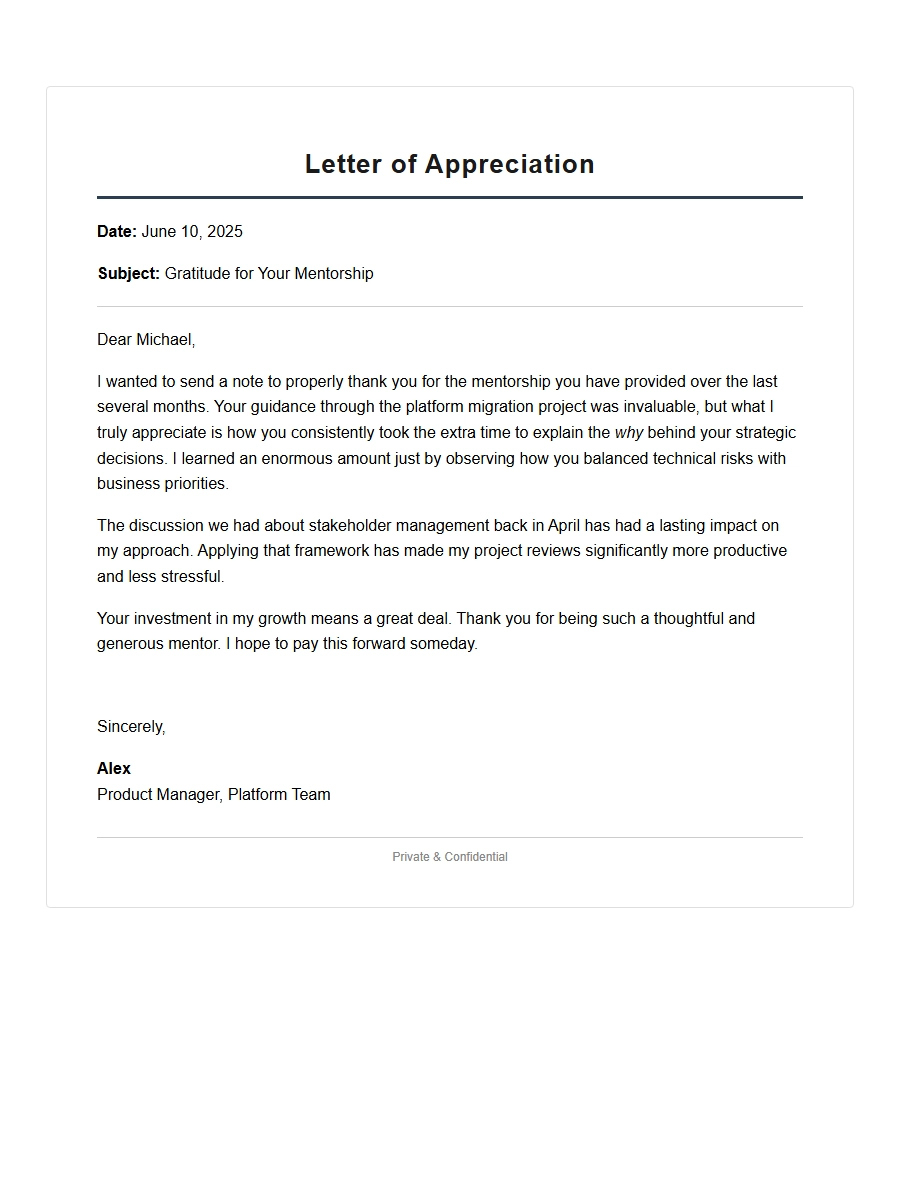 Thanking a Mentor for Guidance: Sample Messages
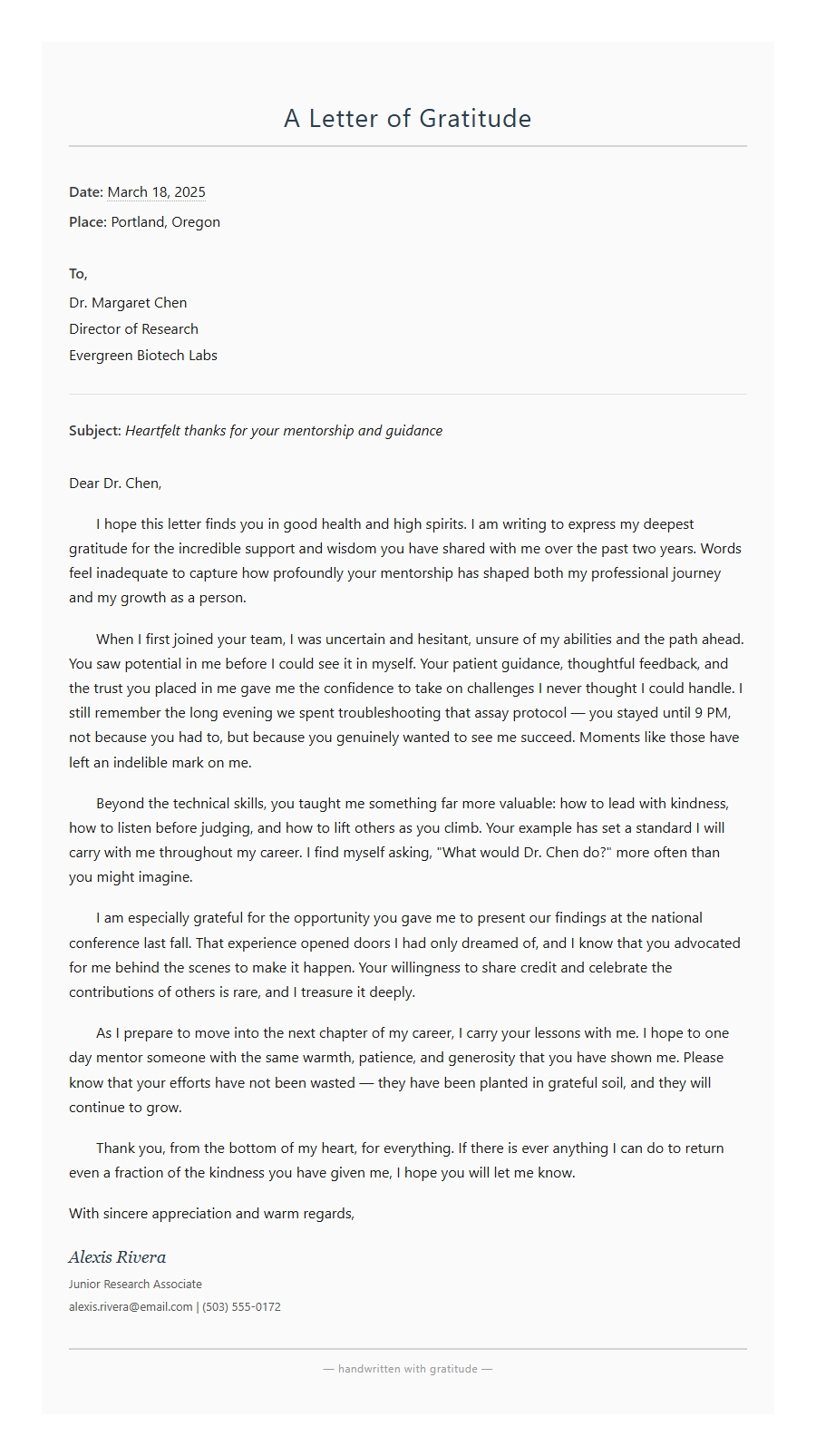 Expressing Gratitude: Handwritten Letter Example
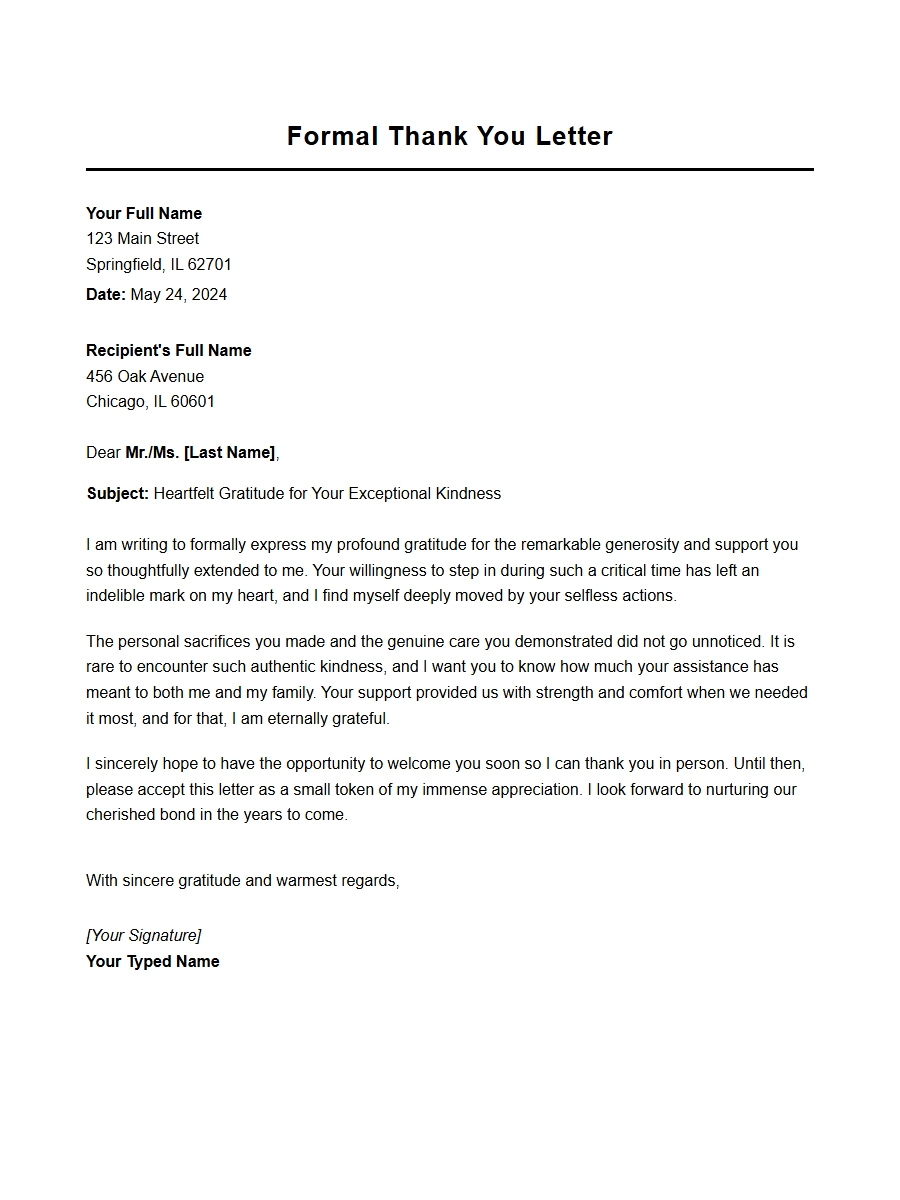 Expressing Thanks in a Formal Personal Letter
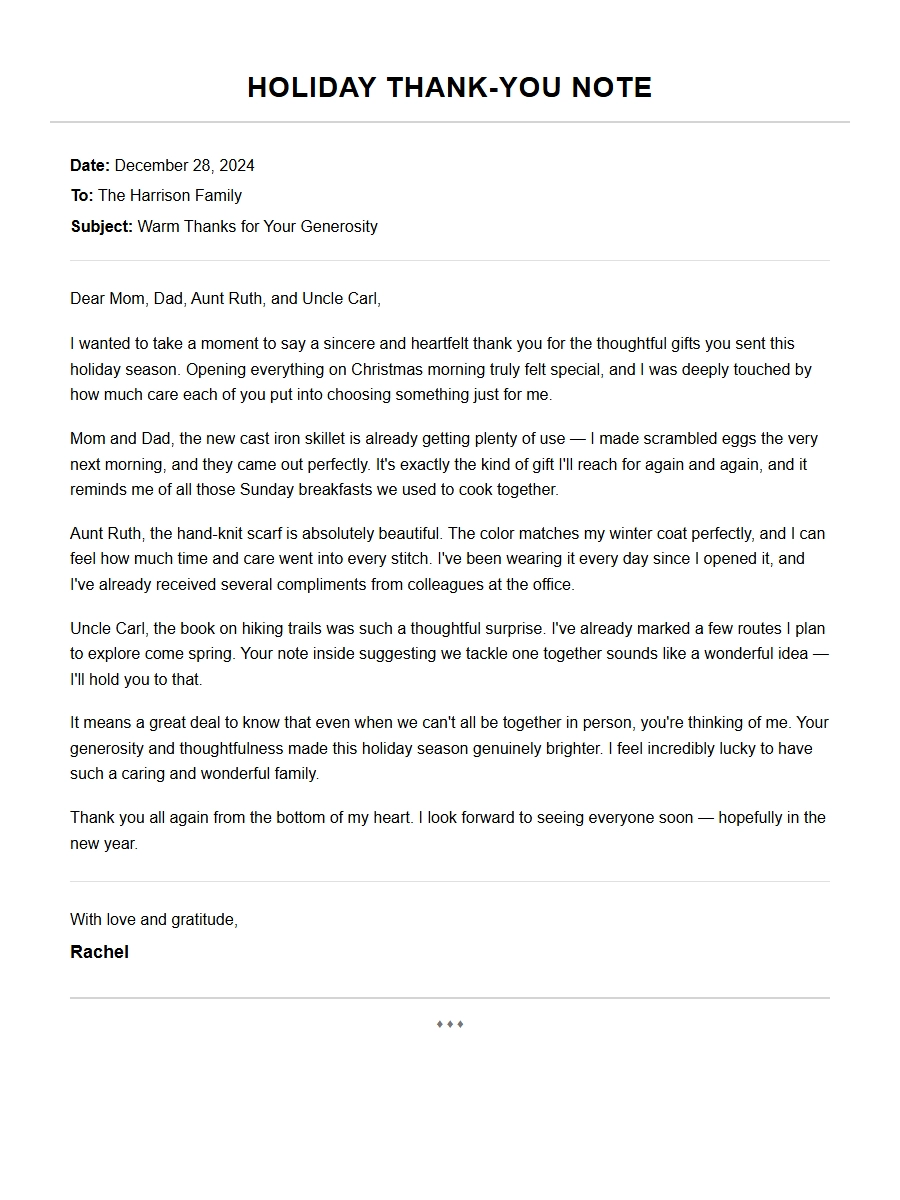 Thank You Letter Examples for Family Holiday Gifts
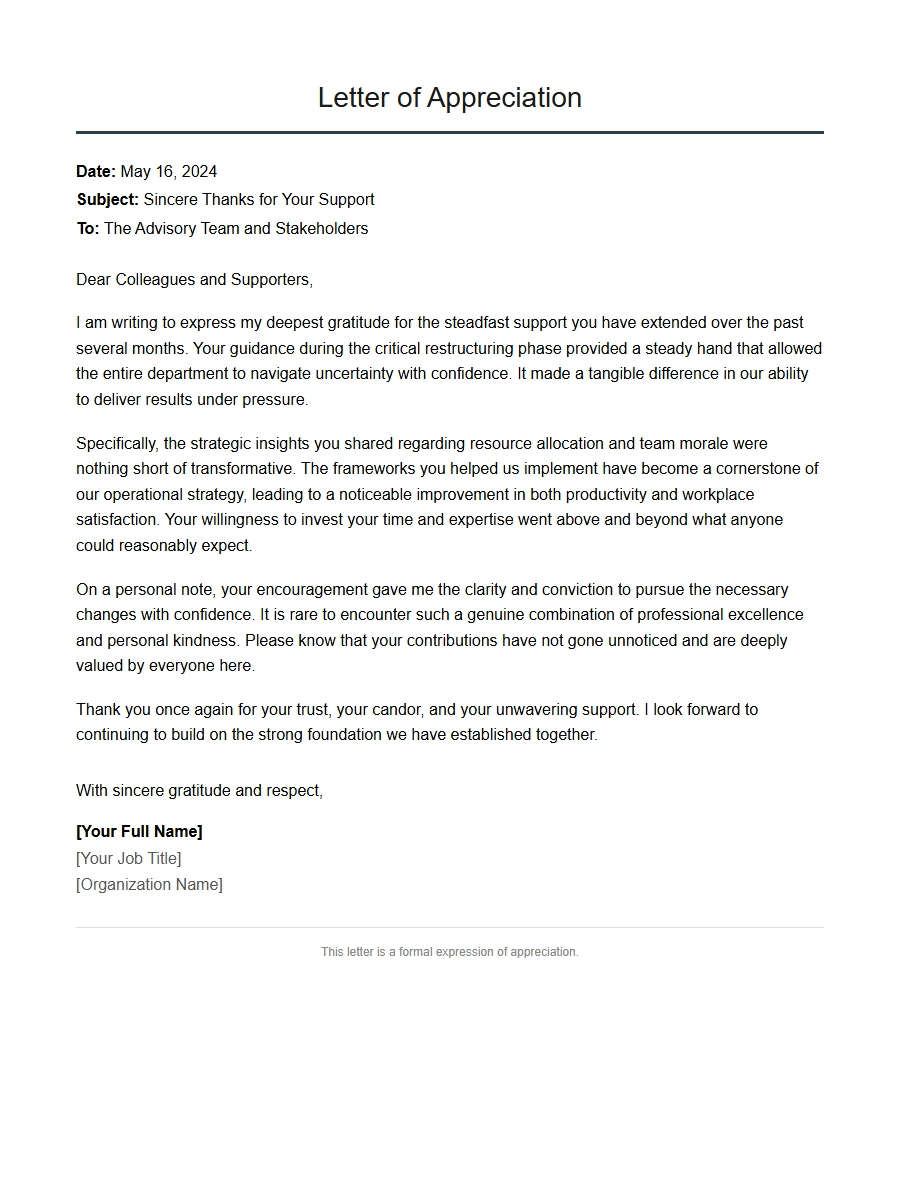 Sample Thank You Letter for Support
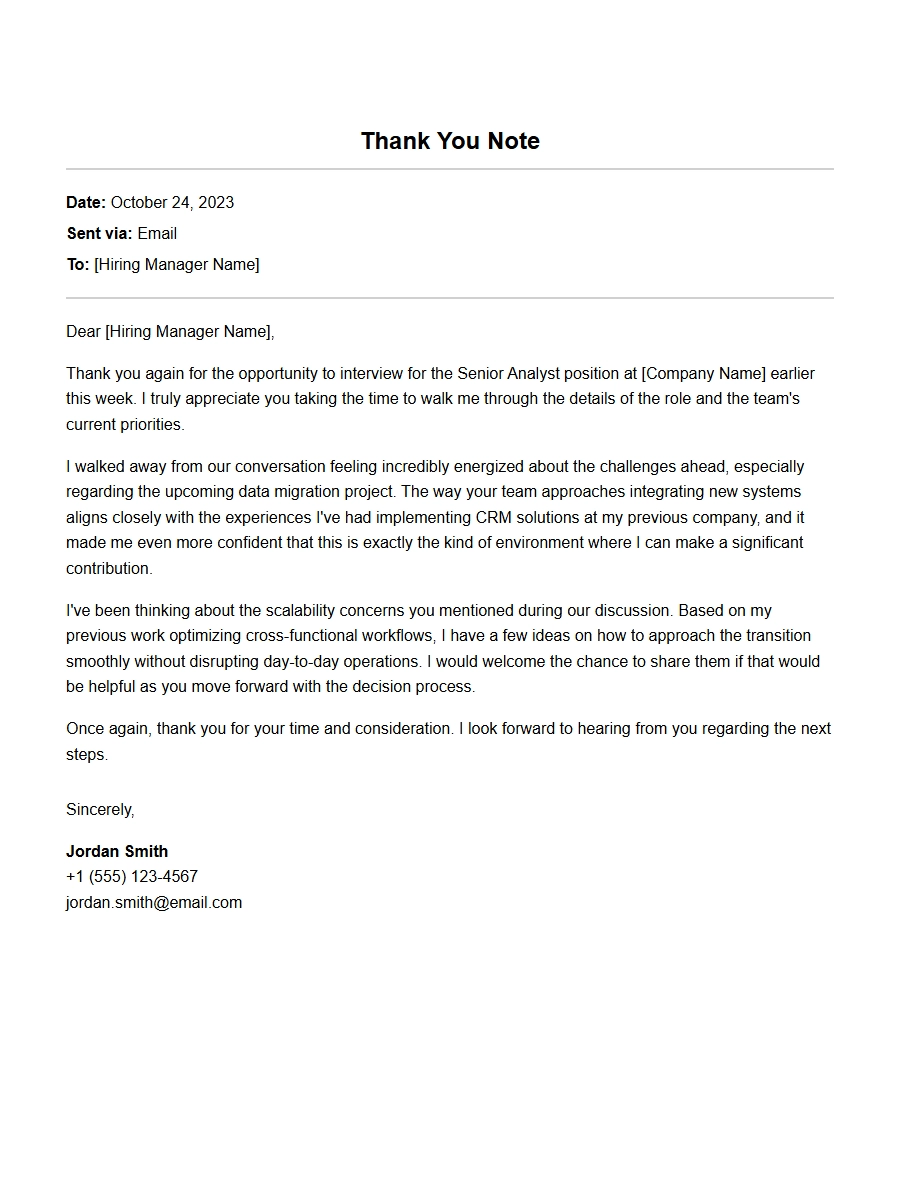 How to Write a Personal Thank-You Note After an Interview