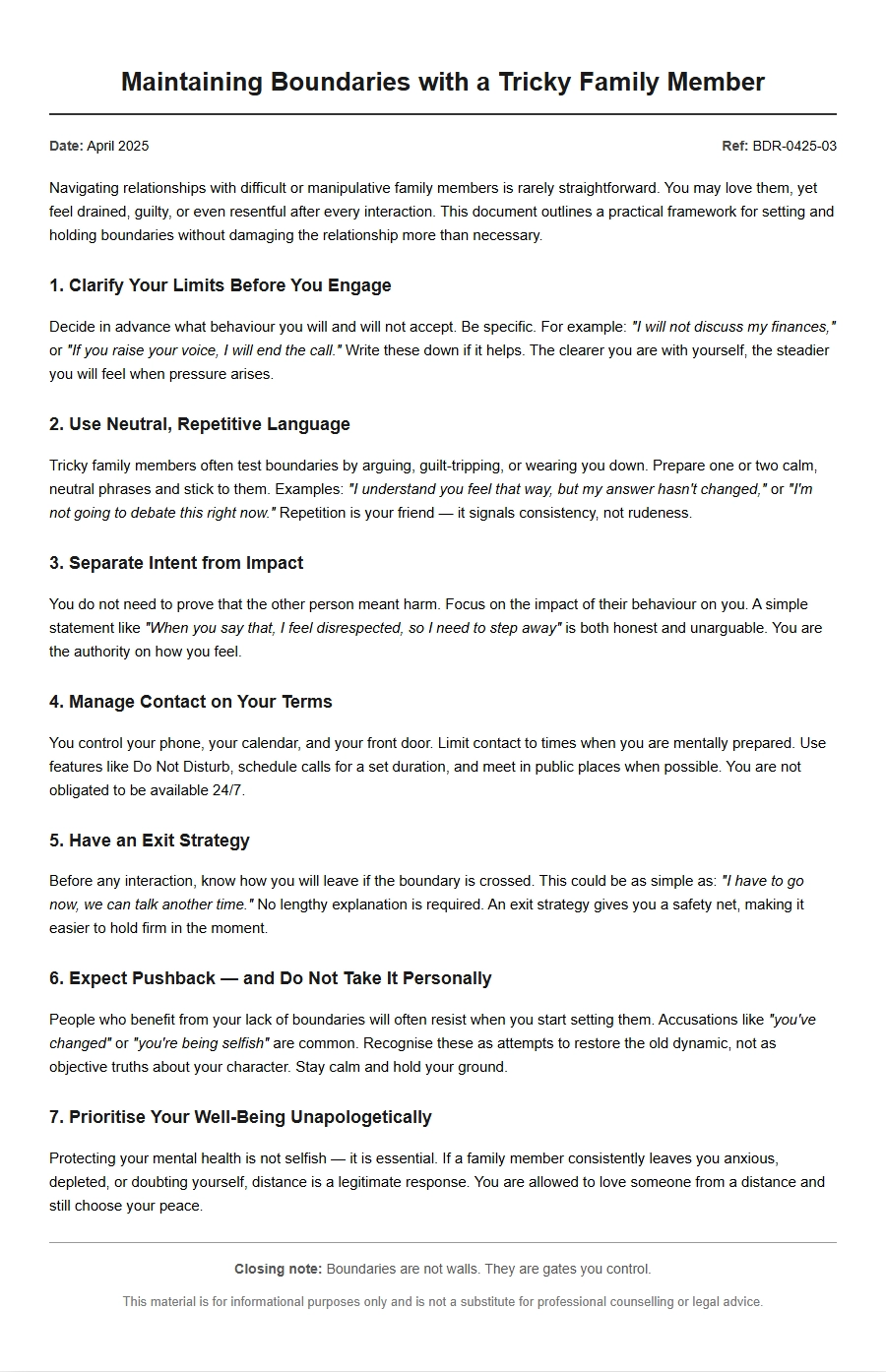
How to Maintain Boundaries With a Tricky Family Member
Setting a boundary with a tricky family member often feels harder than any professional task. You can't just hand in a resignation letter or submit a formal request. But a well-written letter or email is often the best tool for exactly this situation. It gives you space to think, removes the immediate heat from the conversation, and creates a record of what you said.
Using a letter template for this isn't cheating. It's smart. Professional correspondence relies on structure for a reason—it helps the reader understand the main point without emotional clutter. You're not writing a legal document, but treating it with that kind of care shows you're serious. A good customizable letter lets you fill in your specific situation while keeping the tone steady and clear.
Category: Personal Letters
Why a written letter works best for boundaries
A tricky family member might dominate a phone call or talk over you in person. A letter gives you control. It's similar to a resignation letter sample in that you are stating a clear end to a pattern or behavior, but in the context of a relationship. You're announcing a change, and you have the right to do that.
Choosing your format and tone
Start by deciding on the format. A quick text might feel less intimidating, but it often leads to misunderstandings. A proper digital letter format—whether email or a printed note—signals that this matters.
Your salutation and closing set the temperature. If the relationship is strained but not broken, "Dear Name" and "With love" can still work. If it's more formal, stick to "Sincerely" or "Yours truly." Getting this part wrong can make the reader defensive before they get to the point. This careful balance is similar to contacting a teacher about a child's performance—you want them to listen, not just defend themselves.
Structuring the message
Treat the body of your message like a piece of professional correspondence. It needs an opening, a clear statement, and a respectful close.
Opening: Start with something genuine. "I value our relationship, which is why I want to be honest with you."
The boundary: Be specific. Vagueness is the enemy. "I need to step back from conversations about finances" is better than "We need to stop talking about money so much." Use "I" statements to avoid sounding accusatory. The clarity you'd use when requesting an accommodation for a student disability is exactly the clarity needed here.
Close: Reiterate your care. "I hope you can understand this. I need this change to feel safe in our relationship."
Mistakes to avoid
A boundary letter is not a venting session. It's a statement of your needs. Avoid bringing up past grievances. Keep paragraphs short. Spell check. Avoid ALL CAPS.
Another common mistake is making the boundary negotiable. "Could we maybe talk less about X?" leaves the door open. "I will no longer discuss X" is clear. It's a formal request for a change in behavior, much like requesting pet permission from a property manager—it sets a clear expectation for how things will go from now on.
Adapting a sample without losing your voice
If you find a sample online, don't copy it word for word. Your voice is what makes the letter authentic. Adapt the structure, but use your own phrases. Just like cover letter examples show you how to frame your experience, a boundary letter sample shows you how to frame your needs. Take the skeleton and make it yours.
Review the basics of letter writing etiquette. Consider the delivery. If you think they might react poorly, send it via email. It gives them time to process. This seriousness mirrors the precision you'd use in a power of attorney document request letter.
Before you send it
Treat this like an important document. Carefully proofread your letter. Read it out loud. Does it sound like you? Does it feel firm but kind?
The hardest part is getting the tone in writing right. You want to be firm without being cruel. Check for passive aggression. If a sentence feels like a dig, rewrite it.
Ending with a clear confirmation of your plan can be helpful, similar to a funeral attendance confirmation letter—it sets expectations for what comes next.
The forward-looking thought
Using a sample is a springboard, not a crutch. The goal isn't to write a perfect, rigid document. It's to communicate a difficult truth in a way that protects the relationship and your own well-being.
The more you practice clear, honest communication in a safe format like a letter, the less intimidating these conversations become. You're not creating distance. You're creating a foundation for a healthier connection.
Practical Writing Samples
How to Maintain Boundaries With a Tricky Family Member
Polite Boundary Reset with a Demanding Sibling
Dear [Sibling Name],
I hope this letter finds you well. I need to share something important about our relationship to keep it healthy and respectful.
Recently, I have felt pressured to respond immediately to your requests, even when they conflict with my prior commitments. From now on, I will need at least 48 hours to consider any non-urgent requests before giving an answer. This allows me to honor my own schedule and give you thoughtful responses.
I also ask that you no longer call me after 9:00 PM unless it is an emergency. I value our conversations but need that time to unwind and rest.
I love you and want us to stay close. Setting these boundaries lets me show up as my best self for you. Thank you for understanding.
With care,
[Your Name]
Short Note Declining a Last-Minute Holiday Invitation
Hi [Name],
Thank you for the invitation to join the family celebration this Saturday. I truly appreciate being included.
After careful thought, I must decline. I have been working on maintaining healthier boundaries with my time, especially around holidays. A last-minute change like this creates stress I am not able to handle right now. I need advance notice of at least two weeks for gatherings to plan accordingly.
I hope you understand this is about my well-being, not a lack of care for you or the family. Let me know about future events early, I would love to attend when I can prepare.
Warmly,
[Your Name]
Formal Email to Stop Unsolicited Advice
Dear [Family Member],
I am writing to request a change in how we discuss my personal choices, specifically regarding my career and parenting decisions.
While I know you mean well, I have received frequent, unsolicited advice that leaves me feeling judged rather than supported. Moving forward, I ask that you refrain from offering suggestions unless I ask you directly. If I need input, I will say something like: “I would love your perspective on this.”
This boundary will help me feel more respected and less defensive in our conversations. I value your wisdom but need to trust my own decision-making process first.
Thank you for taking this request seriously. I look forward to more relaxed and positive interactions with you.
Sincerely,
[Your Name]
Boundary Letter for Financial Requests
Dear [Relative Name],
I have noticed a pattern in our recent conversations where you frequently ask me for loans or financial help. I care about you, but this has started to affect my financial stability and peace of mind.
Effective immediately, I cannot lend or give money for any purpose. I have created a firm policy for myself to protect my savings and reduce stress. Please do not ask me for financial assistance again.
Here are other ways I can support you:
Emotional support and a listening ear
Help finding local financial resources or counseling
Sharing meal planning tips or budgeting ideas, but not cash
I hope you can respect this limit. Our relationship is too valuable to lose over money.
With love,
[Your Name]
Text Message Style Note About Privacy
Hi [Name],
I need to talk about something that has been bothering me. Recently, you have shared details of my personal struggles with other family members without my permission.
Going forward, please consider anything I tell you in confidence as private. If you want to share something I said with others, you must ask me first and get a clear yes.
I understand you might share your own stories, but mine are off limits unless I give consent. This is essential for me to feel safe being open with you.
If you cannot agree to this, I will need to limit what I share in the future. I hope we can adjust and keep our closeness.
Thanks for listening.
[Your Name]
Clear Statement for a Toxic Relative
[Relative Name],
I am writing to set a clear boundary regarding our interactions. I care about you, but I must protect my mental health.
From now on, I will not engage in conversations that involve:
Criticism of my appearance or life choices
Comparing me to other family members
Bringing up past grievances or arguments
If you begin any of these topics, I will calmly say, “I am stepping away now. Let’s talk later.” Then I will leave or end the call immediately. This is not a threat but a loving limit.
I hope we can focus on positive topics like your hobbies, my work, or shared memories. I am open to rebuilding trust through respectful communication.
Thank you for understanding.
[Your Name]
Apology and Reset After Boundary Overstep
Dear [Name],
I am writing to apologize for last week when I called you multiple times about the dinner plans even though you had asked me not to. I ignored your boundary, and that was wrong.
I have reflected on why I did that. I felt anxious about the gathering, but that is my issue to manage, not yours. I commit to respecting your request for single daily communication and no follow-ups unless you initiate.
To repair trust, I will:
Wait for you to contact me first unless pre-arranged
Not re-ask a question you have already answered
Keep conversations light unless you ask for deeper talk
I value you and our relationship. Thank you for giving me a chance to do better.
With humility,
[Your Name]
Simple Directive for Unannounced Visits
Hi [Relative],
I love having you over, but recently your unannounced visits have interrupted my work and rest. I need to set a simple expectation to keep things smooth.
Please text me at least 2 hours before you plan to come. If I do not respond, assume it is not a good time. I will reply with a yes or suggest an alternative time within the same week.
I understand you like spontaneity, but this small change will help me be present and welcoming when you do arrive. If you forget and show up unannounced, I may not be able to open the door or spend time that day.
Thank you for respecting my home schedule. I look forward to more planned visits.
[Your Name]
Script for Ending Guilt-Tripping Calls
[Relative Name],
I have noticed that several of our phone calls end with you expressing disappointment because I cannot meet certain requests. This leaves me feeling guilty and drained.
To protect our relationship, I need to limit phone conversations to 15 minutes. If you start guilt-tripping me, I will say: “I hear you, but I cannot discuss this further right now. Let’s talk another day.” Then I will end the call promptly.
I am happy to hear about your life, your hobbies, or casual topics. But I will not accept emotional pressure disguised as a request. Please think about how your words affect me.
I hope we can find a new rhythm that works for both of us.
[Your Name]
Boundary for Sharing Negative Opinions
Dear [Name],
I value your honesty, but I need to set a boundary about how you share negative opinions about my partner or close friends. Over the past months, you have made several unsolicited critical remarks that hurt me.
Please stop doing this. If I want your take on a relationship, I will ask explicitly. Otherwise, refrain from commenting. If you feel compelled to share, I ask you to keep it to yourself or write it down for later reflection, but do not say it to me.
If the topic comes up again, I will change the subject or end the conversation. This is not about silencing you, it is about protecting my relationships and mental space.
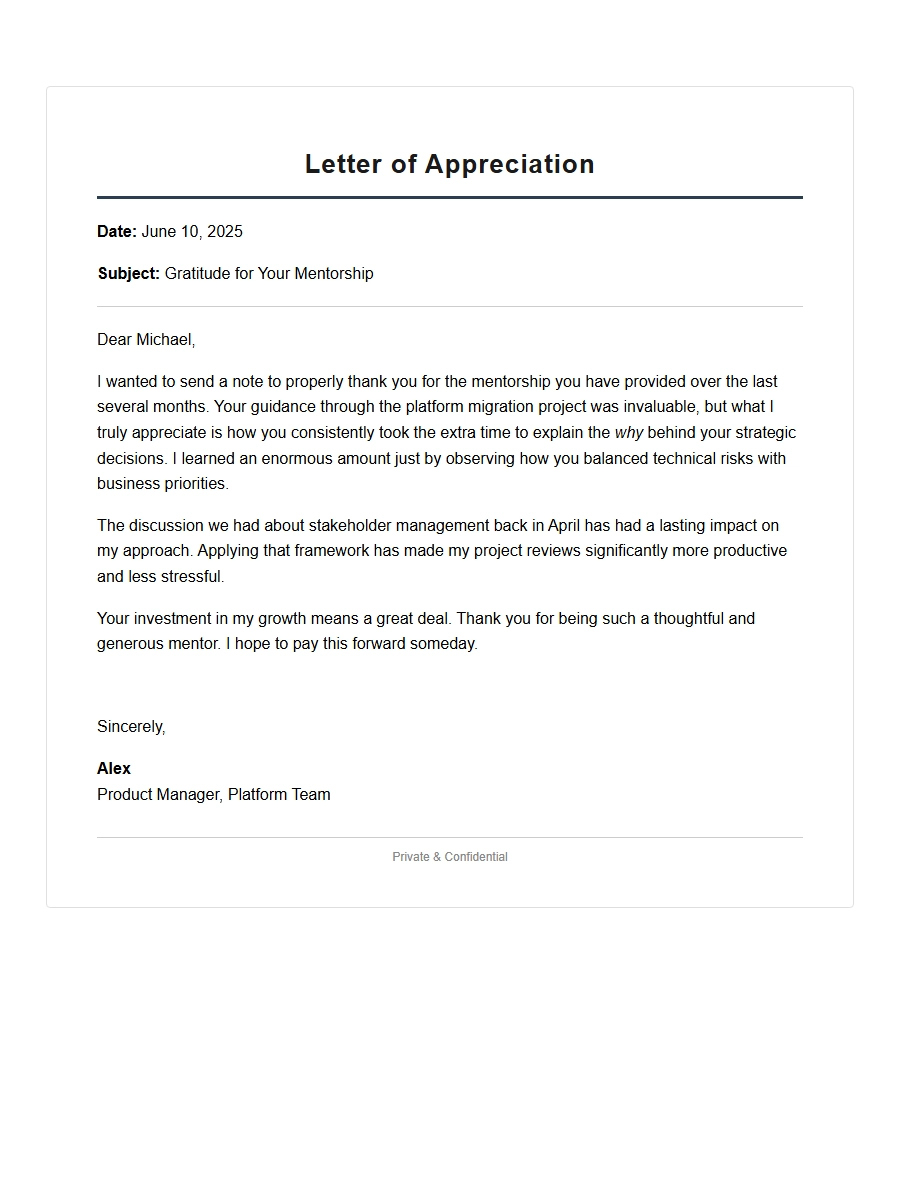 Thanking a Mentor for Guidance: Sample Messages
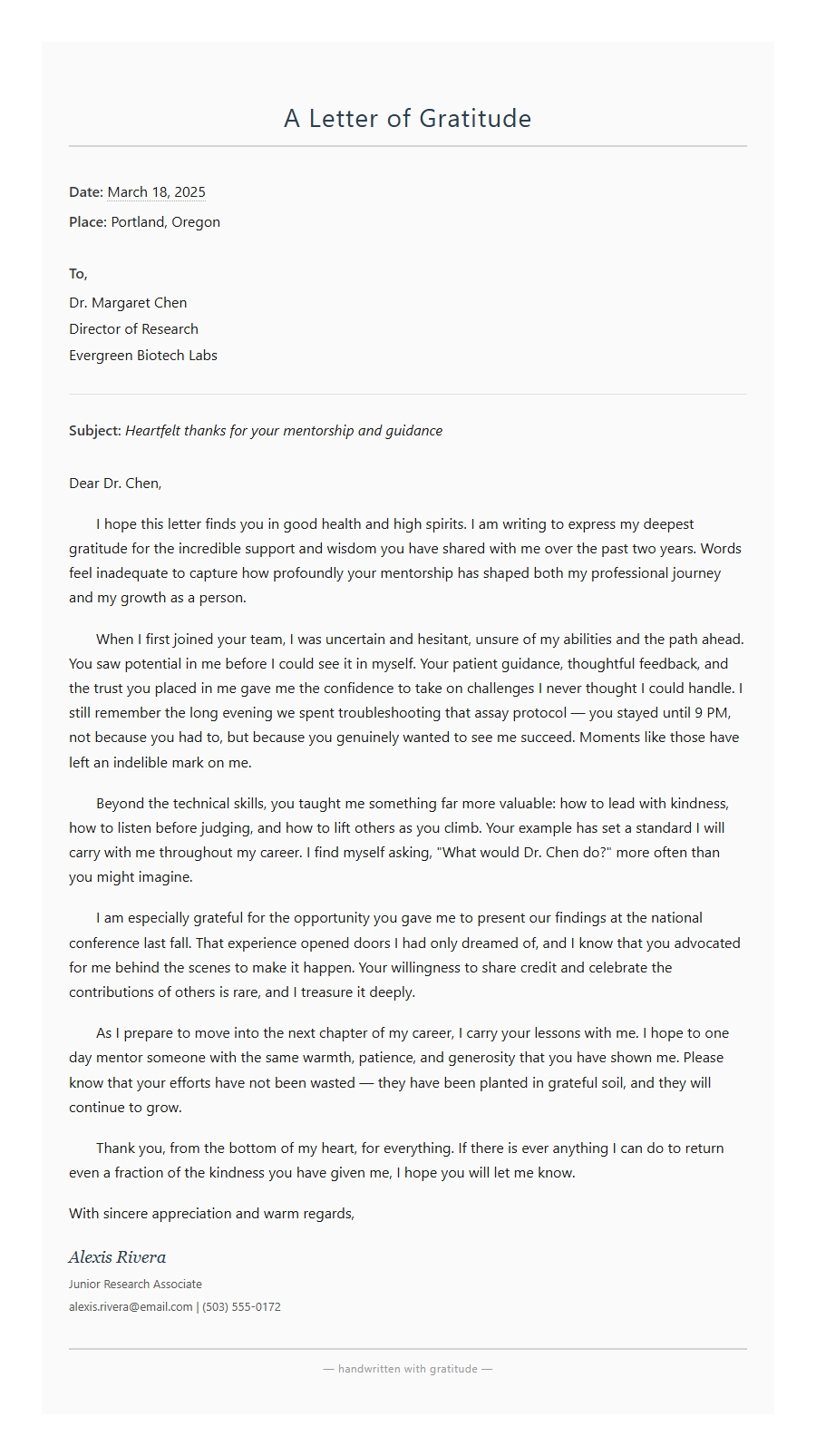 Expressing Gratitude: Handwritten Letter Example
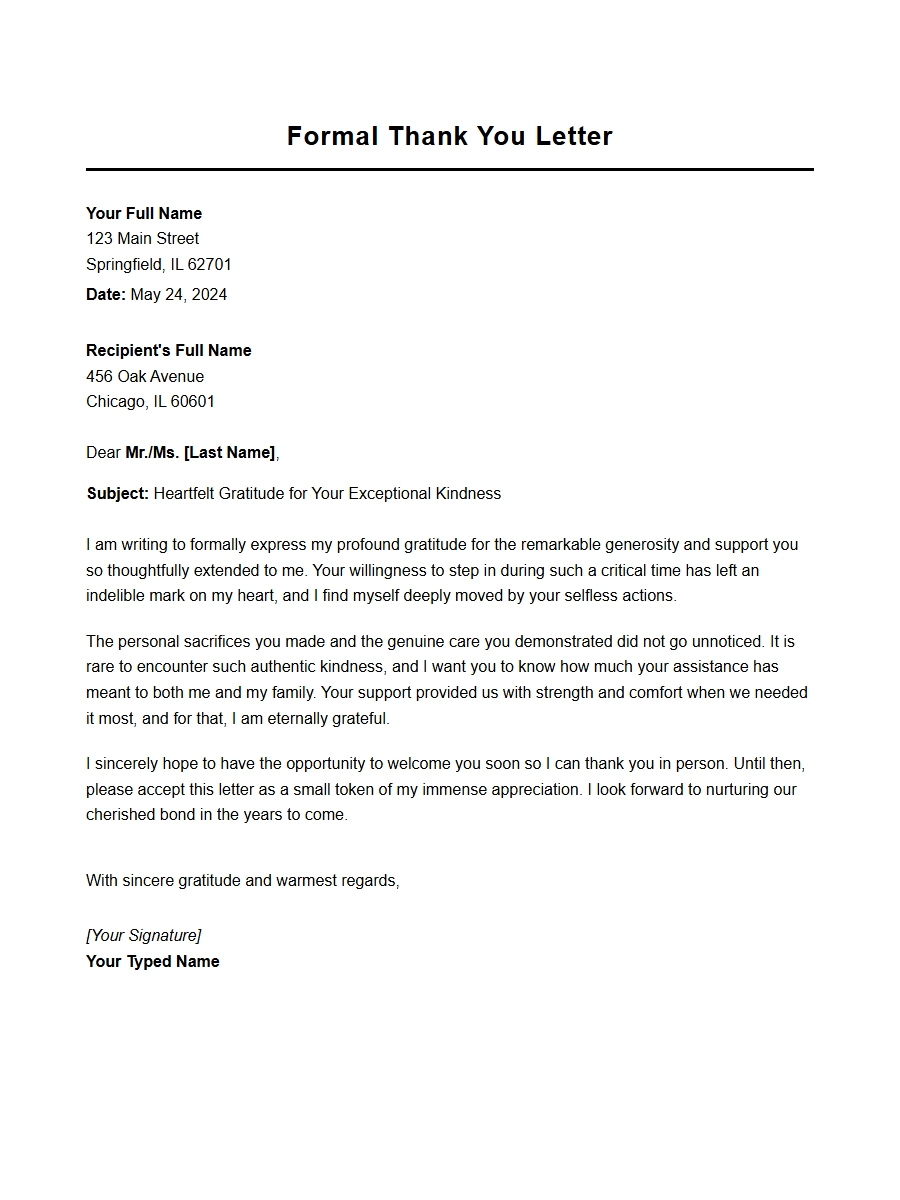 Expressing Thanks in a Formal Personal Letter
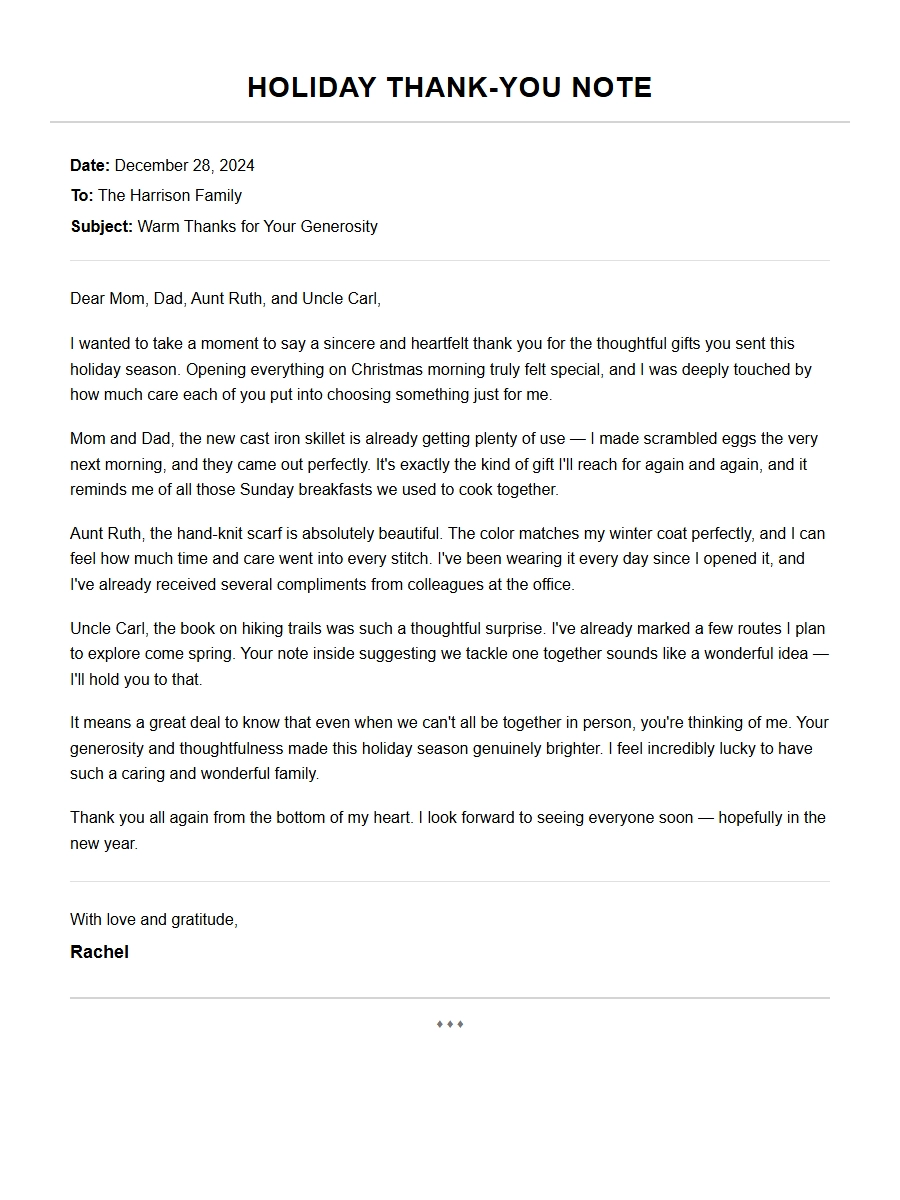 Thank You Letter Examples for Family Holiday Gifts
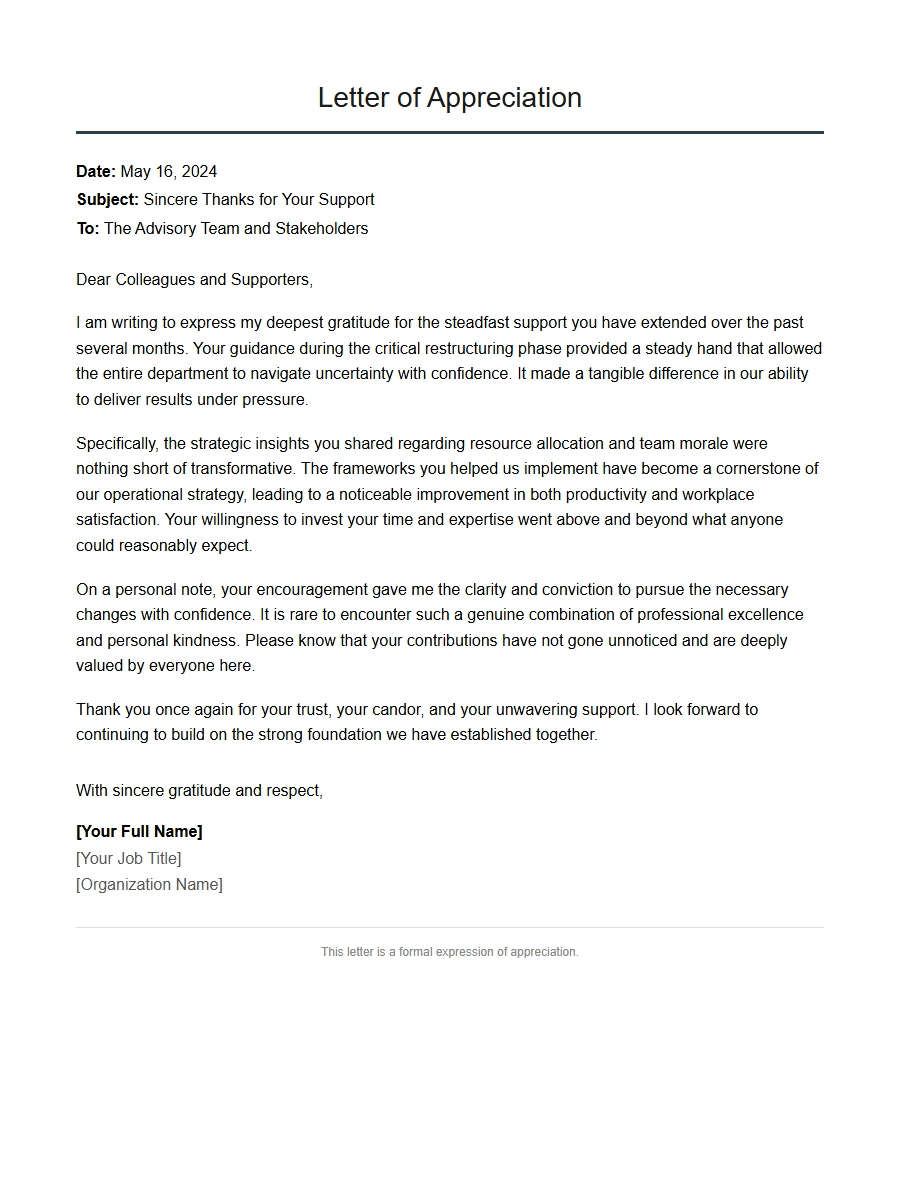 Sample Thank You Letter for Support
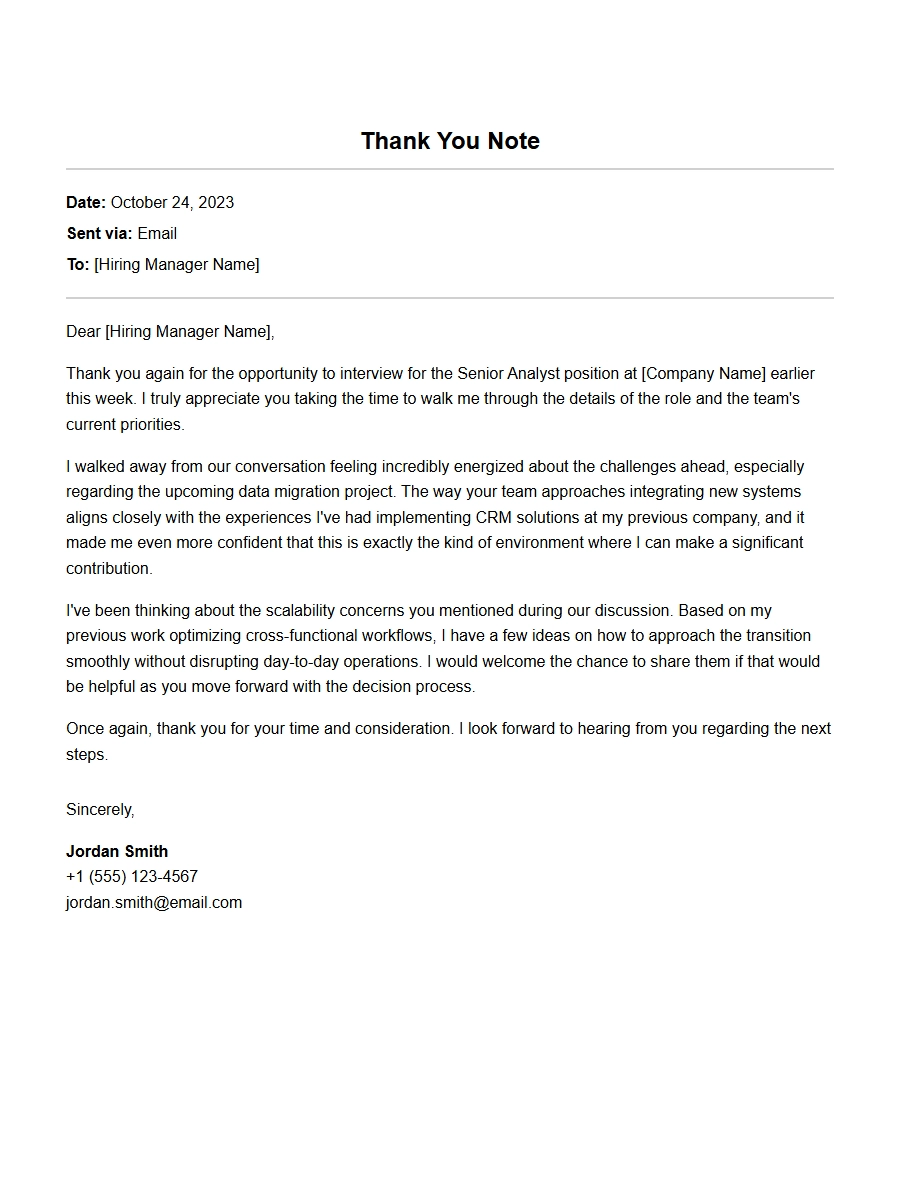 How to Write a Personal Thank-You Note After an Interview