How to Ask a Professor for a Recommendation Personally
You know that feeling. You need to ask a professor for a letter of recommendation, but every draft email sounds either too casual or too stiff. You’re not alone. Most people freeze when it’s time to write a request like this. That blank page is intimidating. But the right approach—and a good sample to work from—can turn that anxiety into a confident, polished message in minutes.
Using a letter template isn’t cheating. It’s a smart shortcut. A solid sample gives you the structure, tone, and key phrases you need. You still customize it with your personal details and voice. Think of it as a starter house: you add the furniture and paint that make it yours. The same principle applies to professional correspondence. Whether you need a formal writing tips refresher or a specific business letter format for an academic context, starting with a proven model saves time and mistakes.
Category: Personal Letters
How to choose the right tone for your professor
Professors aren’t a monolith. Some are formal and expect “Dear Dr. Smith” with a full signature block. Others are more relaxed and respond better to a friendly “Hi Professor Jones” and a conversational note. The trick is to match their communication style. If you’ve only ever seen them dress in business casual and sign emails with “Best,” aim for semi-formal. If they’ve always been “Dr. LastName” on the syllabus, lean formal.
A good letter of recommendation request adapts to this. Start by looking at how the professor addresses you. Mirror that level of formality. Your salutation and closing should reflect the relationship. “Sincerely” works for most formal letters. “With gratitude” or “Warmly” fits a closer bond. Avoid outdated salutations like “To Whom It May Concern” unless you have no name—and in this case, you do.
Customizing without losing your authentic voice
Once you’ve chosen a sample that matches the situation, don’t just fill in the blanks. Read it aloud. Does it sound like you? If not, change the sentences. For example, a sample might say “I am writing to request your endorsement for my graduate school application.” You could rewrite that as “I’m reaching out to ask if you’d feel comfortable supporting my application to the MBA program at State University.” Same meaning, more natural.
A strong opening paragraph grabs attention. Instead of a generic “I hope this email finds you well,” try a specific reference: “I really enjoyed your course on behavioral economics last semester—especially the project on consumer habits.” That shows respect and gives context. Professors get dozens of generic requests. A personalized opener makes yours stand out.
Also, remember this isn’t a resignation letter sample. You aren’t leaving—you’re asking for help. The tone should be grateful and clear, not demanding. Mention the deadline early. Professors are busy. Give them at least two weeks, and tell them exactly what you need (a PDF letter, an email submission, etc.). Offer to provide your resume, transcript, or a draft of your personal statement. That’s letter writing etiquette 101: make it easy for them to say yes.
Common mistakes to avoid
The biggest error is ignoring the format. If you’re sending an email, keep the subject line clear: “Recommendation request for [Your Name] – [Program/Job].” Use a professional email address. If you need a printed letter, use a proper letterhead design or at least your name and contact info at the top. For digital letters, a clean digital letter format works—plain black font, single spacing, standard margins.
Another mistake? Not proofreading. A letter with typos or awkward phrasing undermines your request. Run it through a spellchecker, then read it out loud. Better yet, have a friend glance at it. Proofreading your letter is non-negotiable. It shows you care about the details.
Finally, avoid the “mass email” vibe. If you’re asking multiple professors, customize each message. Don’t copy-paste a block of text. That’s what makes a letter feel robotic. Refer to specific interactions you had with each professor. That personal touch turns a template into a genuine request.
Don’t treat the template as a crutch. Use it to learn the structure, then make it your own. The best letters feel both professional and personal. They show respect for the professor’s time and gratitude for their guidance. The more you practice writing these requests—whether for grad school, scholarships, or jobs—the faster and easier it becomes.
So take that blank page. Grab a sample. Adapt it. Send it with confidence. You’ll be surprised how often a well-crafted request gets a yes.
Realistic Samples
How to Ask a Professor for a Recommendation Personally
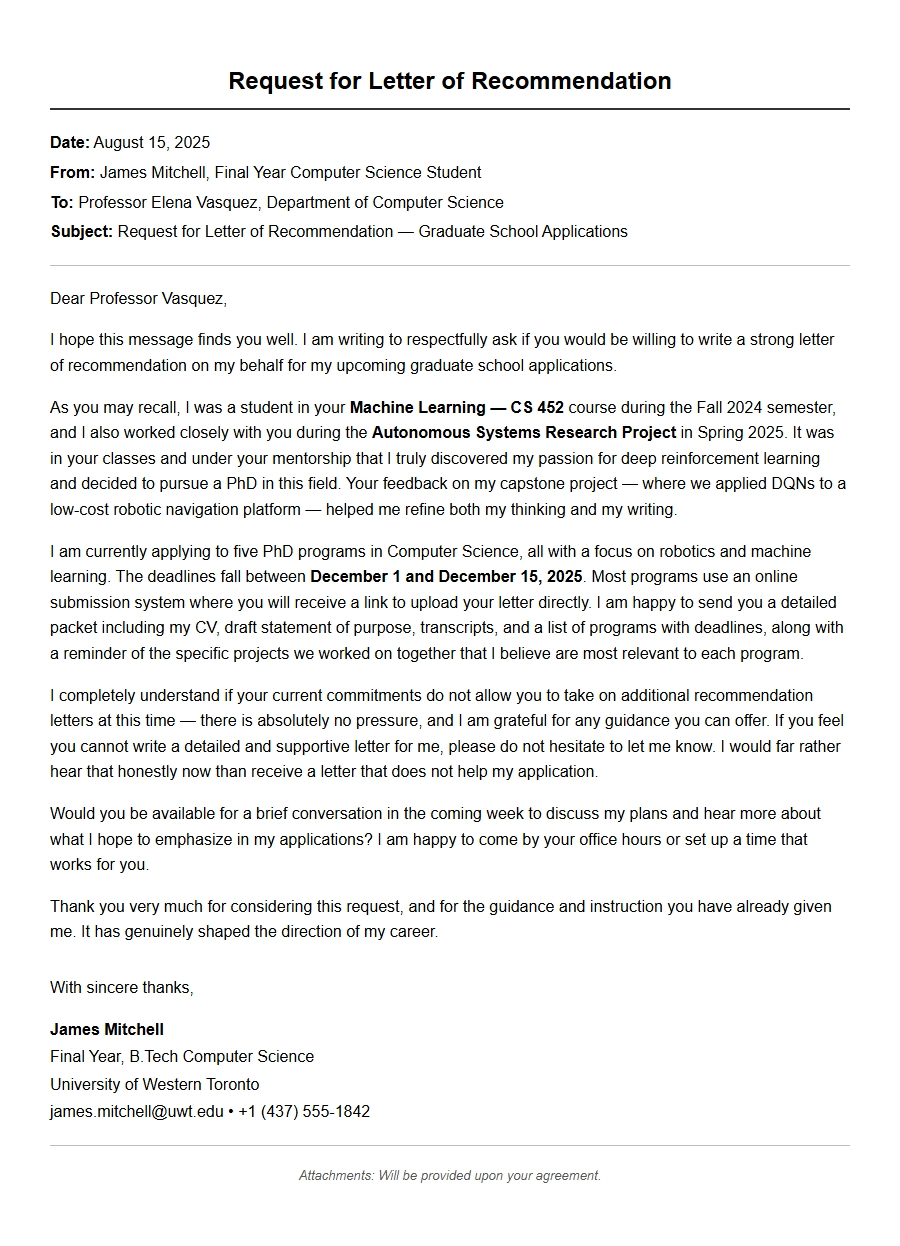
Request for Graduate School Recommendation
Dear Professor [Last Name],
I hope this email finds you well. I am writing to respectfully request a strong letter of recommendation for my application to the PhD program in Computer Science at [University Name]. Your guidance during my [Course Name] class and my independent research project on machine learning has been invaluable, and I believe your insight into my academic abilities would greatly strengthen my application.
The deadline for submission is December 1st. I have attached my CV, statement of purpose, and a brief summary of our work together for your reference. I would be happy to provide any additional information or meet during your office hours to discuss my qualifications further.
Thank you so much for considering this request. I truly appreciate your mentorship and support.
Best regards, [Your Name]
Asking for a Letter of Recommendation for Internship
Dear Dr. [Last Name],
I am reaching out to ask if you would be willing to write a recommendation letter for me as I apply for a software engineering internship at [Company Name]. I thoroughly enjoyed your data structures course last semester, and I believe your perspective on my problem-solving skills and dedication would be valuable.
The deadline is November 15th, and the submission is through an online portal. I have listed a few key projects I completed in your class below for quick reference:
Designed a hash table implementation with 95% efficiency
Led a team in developing a graph traversal algorithm
Consistently earned top scores on coding assignments
Please let me know if you need my resume or a draft of the recommendation. Thank you for your consideration.
Sincerely, [Your Name]
Follow-Up on Recommendation Request
Dear Professor [Last Name],
I hope you are doing well. I am writing to follow up on my previous request for a recommendation letter for the [Scholarship Name]. The application deadline is approaching on next Tuesday, and I wanted to check if you need any additional materials from me to complete the letter.
I have attached a reminder document with my updated CV and the specific criteria for the scholarship. The submission is via email to scholarships@university.edu. Please let me know if there are any questions or if you would prefer to discuss in person.
Thank you again for your support. I am truly grateful for your time and effort.
Best regards, [Your Name]
Request for Recommendation for Scholarship Application
Dear Professor [Last Name],
I am applying for the [Name] Merit Scholarship, and I would be honored if you could write a recommendation highlighting my academic performance and research potential. Your course on [Subject] was where I discovered my passion for the field, and your feedback on my final paper encouraged me to pursue further studies.
The recommendation should be submitted by March 1st through the scholarship portal. I have prepared a short list of my relevant achievements:
Category
Details
GPA
3.9/4.0 (Major)
Research
Undergraduate thesis on [Topic]
Leadership
President of [Club]
Thank you for considering my request. I greatly appreciate your mentorship.
Sincerely, [Your Name]
Informal Request for Reference Letter
Hi Professor [Last Name],
I hope you’re having a good semester. I’m writing to ask a favor: could you write a reference letter for my application to the [Job Title] position at [Company]? I remember many great discussions in your office hours about industry trends, and your opinion means a lot to me.
The company only needs a brief email reference – no formal forms. I would send them your contact info. If you’re comfortable, I can also draft a starting point for you to edit.
No rush at all – the deadline is flexible until early next month. Let me know if you need more details about the role. Thanks so much!
Best, [Your Name]
Request for Recommendation for Fellowship
Dear Professor [Last Name],
I am applying for the [Fellowship Name] fellowship, which supports graduate research in [Field]. Given your expertise and my work as your research assistant, I believe you can provide an excellent account of my skills and dedication.
The fellowship requires a letter addressing my research potential and character. Submission is online by April 15th. I have outlined the key points the committee looks for:
Originality of research ideas
Ability to work independently
Collaborative spirit in lab settings
I can share my research proposal and a summary of our work together. Thank you for your continued guidance.
Warm regards, [Your Name]
Reminder and Gratitude for Pending Recommendation
Dear Professor [Last Name],
I just wanted to send a gentle reminder about the recommendation letter for my graduate school application. The first deadline is this Friday, and I am so grateful that you agreed to write on my behalf.
Please let me know if you have any trouble accessing the submission link I sent earlier. I have also attached a quick reference list of my key courses with you:
Advanced Calculus (Fall 2022) – Grade A
Linear Algebra II (Spring 2023) – Grade A
Independent Study on Differential Equations (Summer 2023)
Thank you again for your time and support. I truly appreciate it.
Sincerely, [Your Name]
Request for Recommendation for Job Application
Dear Professor [Last Name],
I hope this message finds you well. I am applying for a data analyst position at [Company], and I would be honored if you could provide a recommendation. Your course on statistics thoroughly prepared me for real-world data challenges.
The application portal will email you a form to fill out – the deadline is December 20th. I have listed below the skills I emphasized on my resume that you might reference:
Experience with large datasets from class projects
Please let me know if you need my resume or a list of projects. Thank you so much!
Best regards, [Your Name]
Thanking Professor and Submitting Additional Materials
Dear Professor [Last Name],
Thank you again for agreeing to write a recommendation for my [Program Name] application. I wanted to follow up with additional materials you requested – my statement of purpose and a brief summary of my extracurricular involvement.
I’ve also included a timeline:
Item
Deadline
Recommendation submission
January 30
Final transcripts
February 1
Please let me know if you need anything else. I am so grateful for your belief in my potential.
With appreciation, [Your Name]
Request for Recommendation for Study Abroad Program
Dear Professor [Last Name],
I am applying for a semester exchange program at [University Abroad], and I need a recommendation letter from a faculty member who knows my language and cultural studies background. Your classes have sparked my interest in cross-cultural communication, and I believe your endorsement would be strong.
The application requires two paragraphs about my adaptability and academic readiness. The deadline is February 15. I have prepared a list of relevant courses and activities:
[Course Name] – Focused on intercultural dialogue
Volunteer teaching English to international students
Language proficiency: Spanish (Advanced)
Thank you for your time and for encouraging my global perspective.
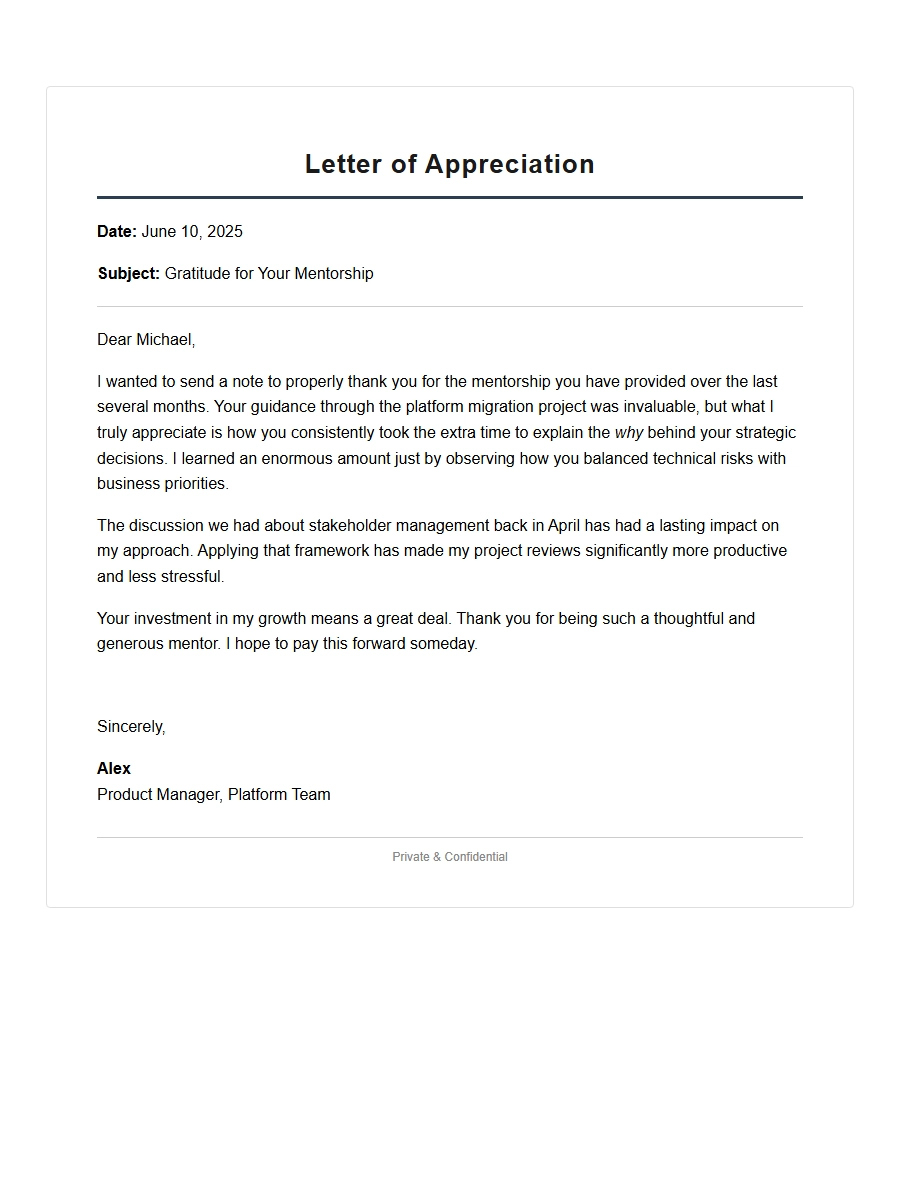 Thanking a Mentor for Guidance: Sample Messages
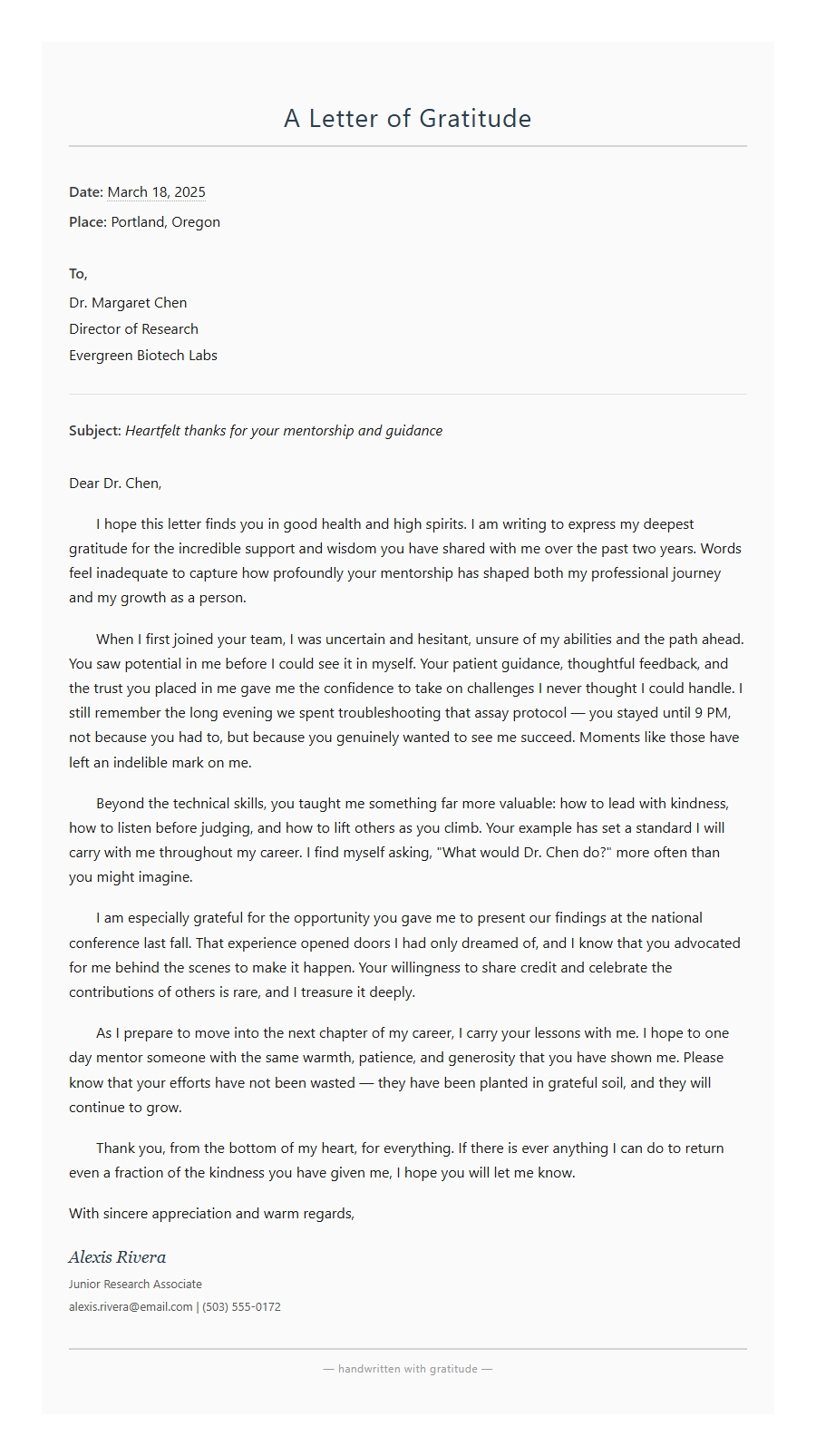 Expressing Gratitude: Handwritten Letter Example
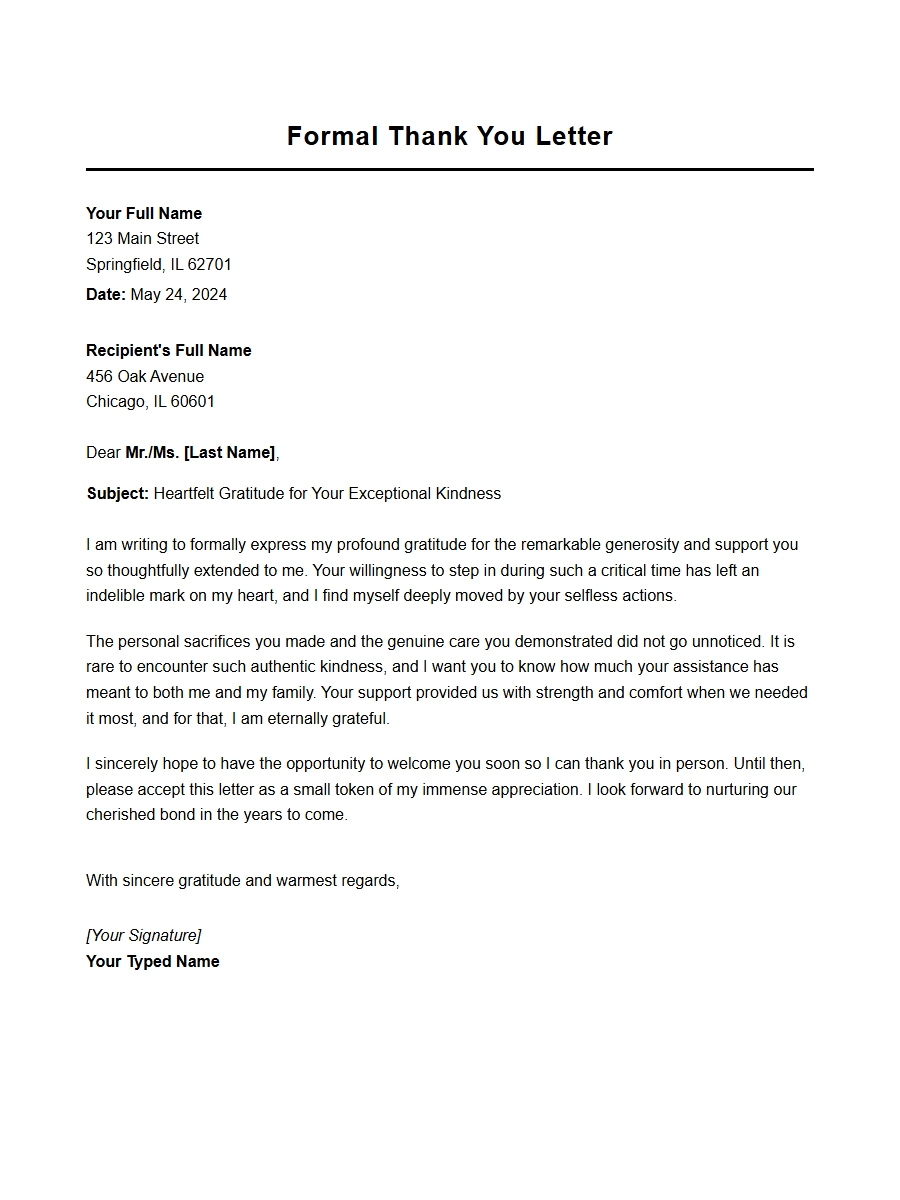 Expressing Thanks in a Formal Personal Letter
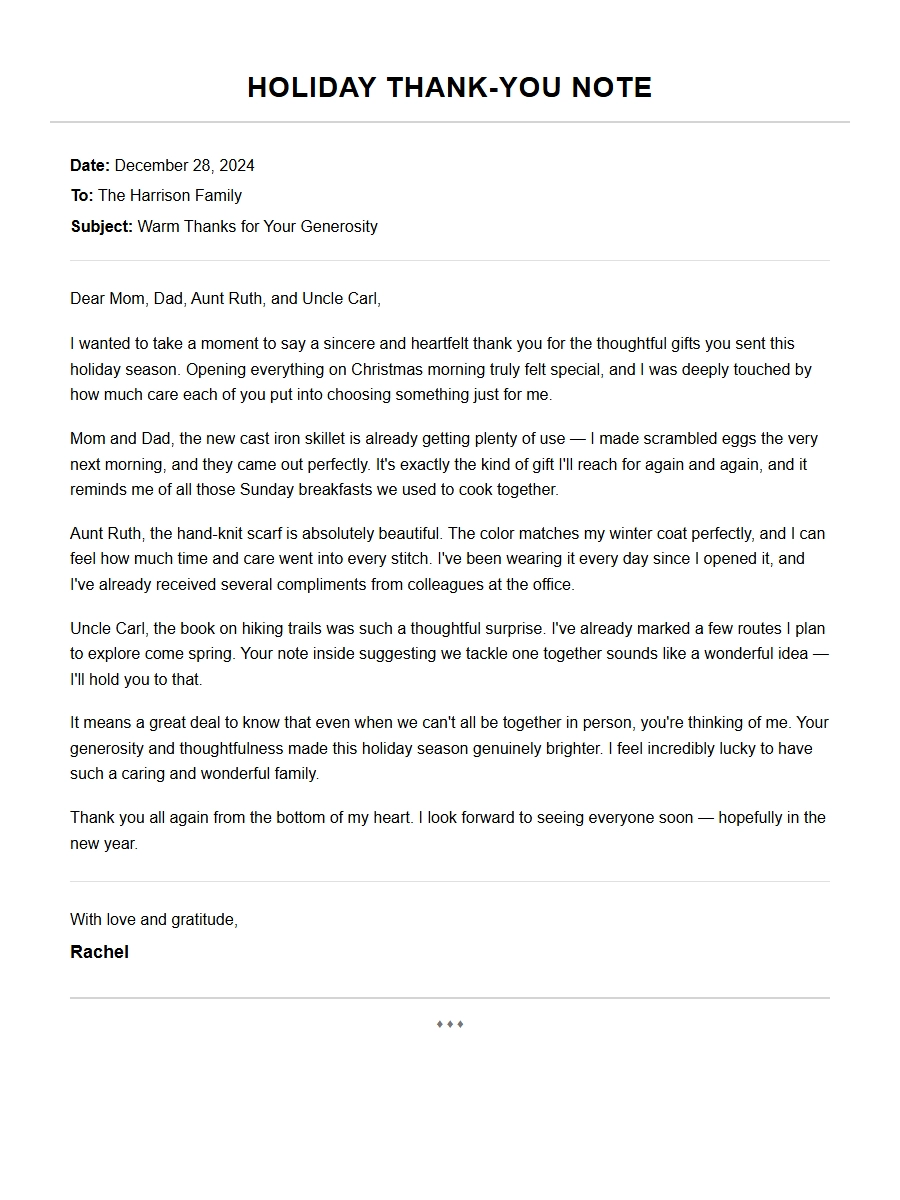 Thank You Letter Examples for Family Holiday Gifts
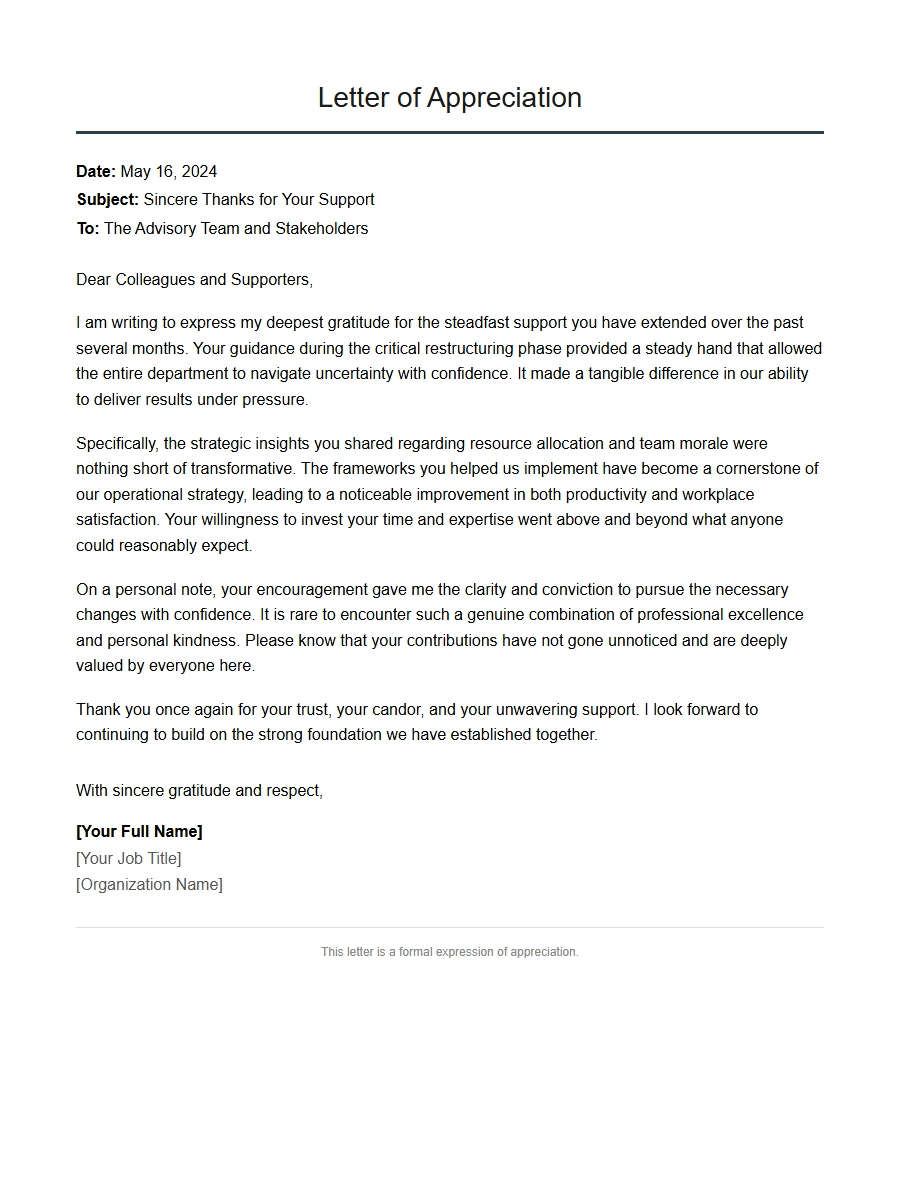 Sample Thank You Letter for Support
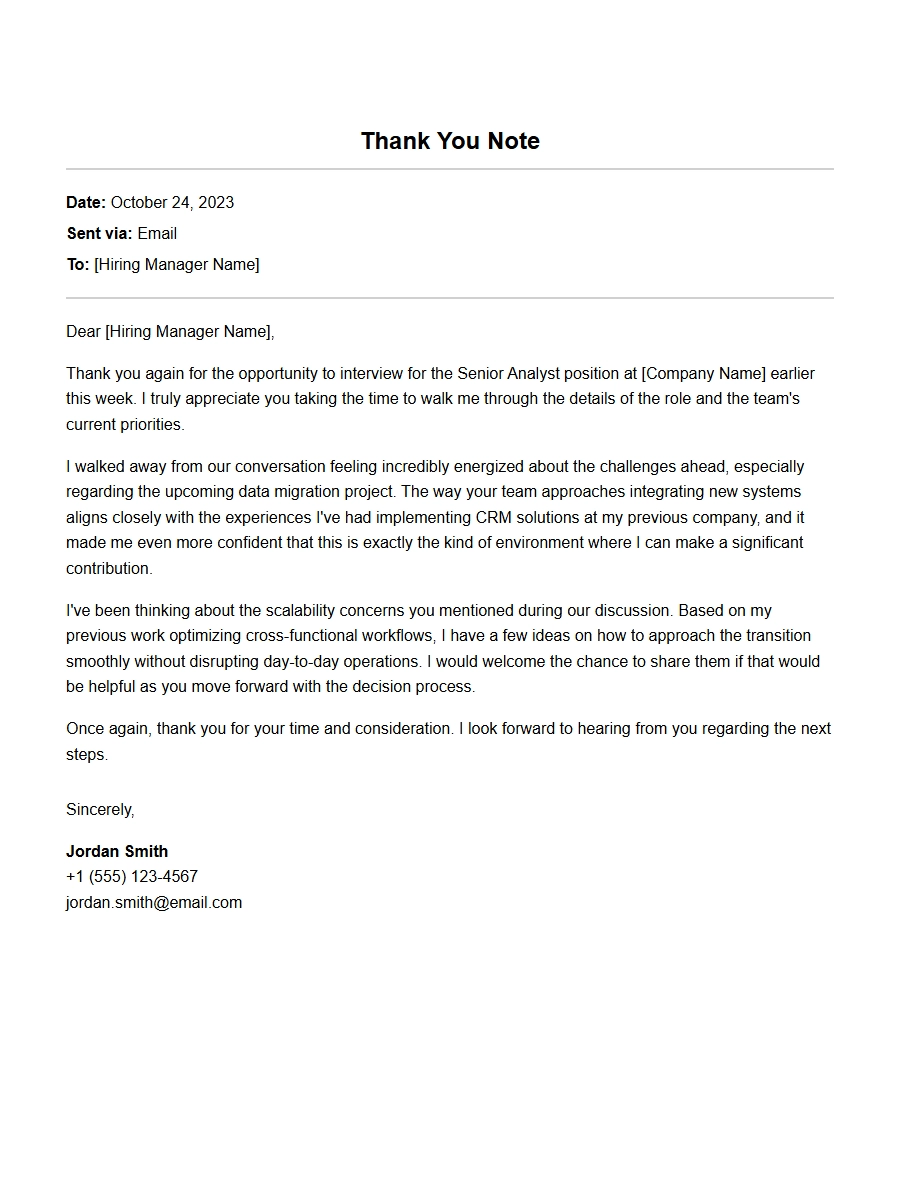 How to Write a Personal Thank-You Note After an Interview