complaining about noise disturbance politely - Personal Letters
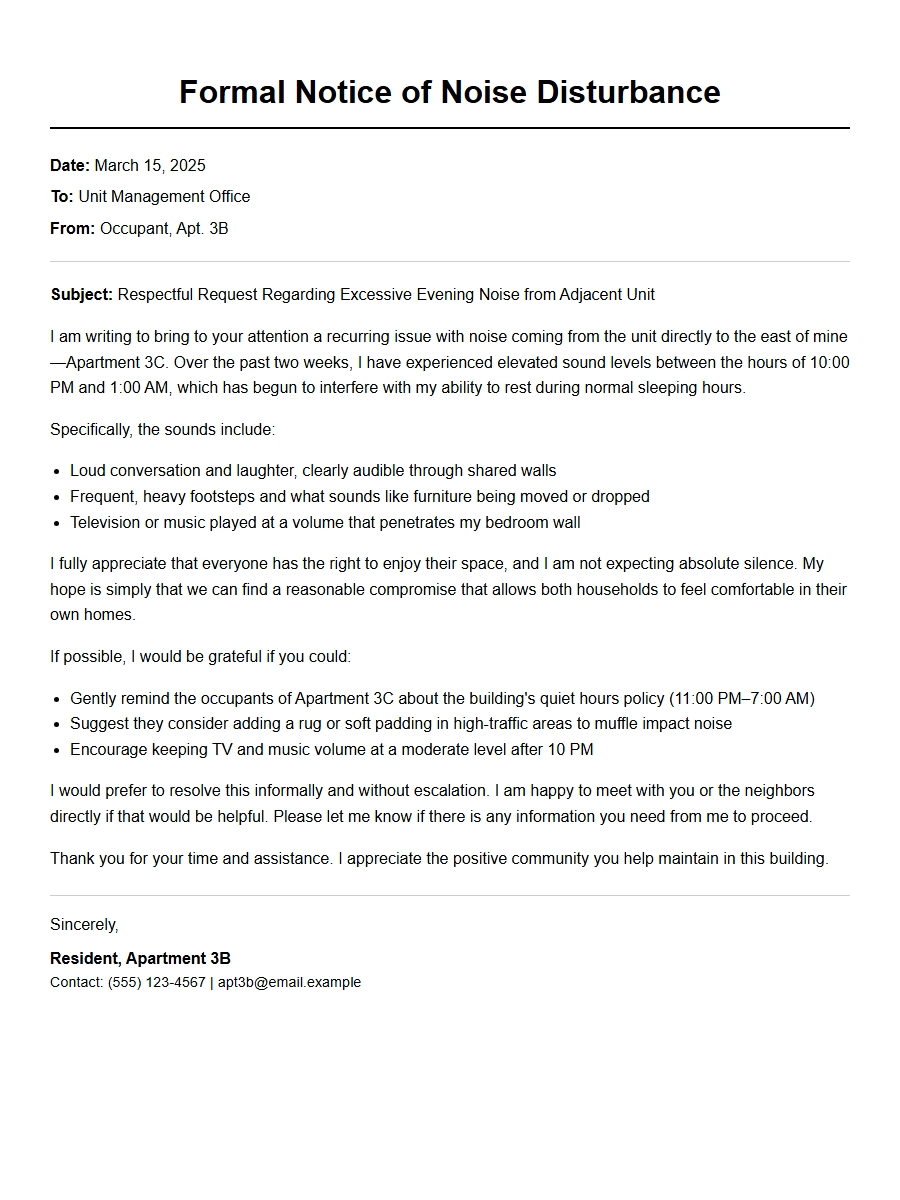
You're lying awake at 2 a.m. because your neighbor's bass is vibrating through the wall—again. By morning, you're torn between saying nothing and saying something you'll regret. That's exactly why learning how to complain about noise disturbance politely matters. A well-written letter can solve the problem without ruining the relationship.
Why a letter works better than a knock on the door
Face-to-face confrontations about noise often go wrong. Emotions flare, words get twisted, and suddenly you're the bad guy for wanting to sleep. A letter gives you time to choose your words carefully. It lets the recipient read your message without feeling cornered. And it creates a written record if the problem doesn't stop.
Using a letter template for this isn't cheating—it's smart. Samples give you a proven letter structure and the right tone while leaving room for your personal situation. You get the business letter format right without guessing whether to use "Dear Sir" or "Hello."
What makes a noise complaint feel respectful
The difference between a polite complaint and an angry rant comes down to how you frame the problem. Instead of "You're too loud," try "I'm sensitive to noise during late hours." That small shift keeps tone in writing from sounding accusatory. You're describing your experience, not attacking theirs.
Start with a friendly salutation and closing—something like "Dear Neighbor" and "Thank you for understanding." State the issue clearly but briefly: "I've noticed music coming through our shared wall after midnight most weeknights." Then explain the impact: "I have trouble falling back asleep once I'm woken up." End with a reasonable request and an open door for conversation.
How to adapt a sample without sounding fake
Every customizable letter needs your voice to feel real. Take a cover letter example or resignation letter sample you've used before—notice how they open with a clear subject line and a polite greeting. Apply the same logic here. If the sample says "I wish to bring to your attention," and you never talk that way, change it to "I wanted to let you know." Letter writing etiquette matters, but authenticity matters more.
One quick tip: tailor your opening paragraph to the specific situation. If you've never met this neighbor, start with a brief introduction. If you've been friendly before, mention that. The goal is to remind them you're a person, not just a complaint.
Common mistakes that make things worse
Ever received a letter that felt too stiff or too casual? That's the balance you need to find. Using an outdated salutation like "To Whom It May Concern" for a next-door neighbor is a mistake. So is skipping the date or forgetting to include your apartment number.
Another big one: ignoring digital letter format vs. printed format. If you're sending an email, keep the subject line clear: "Noise concern from Apt 3B." If you're printing it, use proper letterhead design or at least include your address at the top. And always proofreading letter before sending—a typo undermines your seriousness.
A practical structure you can follow
Here's a simple framework that works for most noise complaints:
This professional correspondence structure keeps the focus on solving the problem, not blaming anyone. It also makes it easier to write quickly when you're tired and frustrated.
When to escalate and how to say it
Sometimes a polite letter to your neighbor doesn't work. If the noise continues, you may need to write to a landlord or property manager. Keep the same respectful tone, but include dates, times, and any previous attempts you've made. Attach a copy of your original letter if you have it.
If you're writing to a landlord, use a more formal business letter format and reference your lease agreement if it includes quiet hours. The same formal writing tips apply: be clear, be specific, and be reasonable. You're not demanding—you're requesting enforcement of existing rules.
Category: Personal Letters
Let the sample do the heavy lifting
A good sample gives you the skeleton. You add the flesh and blood—your specific words, your honest feelings, your actual situation. That's how you end up with a letter that feels both professional and personal.
Think of a letter sample as training wheels. Use it to build confidence, then take it off when you're ready. The more you write these letters, the faster they come. Each one teaches you something about tone, timing, and how much detail to include.
Your noise complaint letter doesn't need to be perfect. It just needs to be clear, respectful, and honest. Write it, send it, and give yourself credit for handling a tough situation with grace. Then—hopefully—get some sleep.
Simple Examples
complaining about noise disturbance politely - Personal Letters
Respectful Request to Reduce Evening Noise
Dear Neighbor,
I hope this message finds you well. I am writing to kindly bring up a matter regarding noise levels in the evenings, specifically after 10 PM. I understand that some sounds are unavoidable, but recently the volume of music and conversations from your unit has made it difficult for my family to get restful sleep.
Issue Observed: Loud music and voices after 10 PM on weeknights
Impact: Disruption of sleep and early morning routines
Request: A gentle lowering of volume during late hours
I fully respect your right to enjoy your home, and I apologize for any inconvenience this note may cause. If there is a specific time or arrangement that works better for you, please let me know. I value our relationship as neighbors and hope we can find a solution together.
Thank you for your understanding and consideration.
Warmly, [Your Name]
Polite Note About Loud Party Noise Next Door
Dear Neighbor,
I hope you are having a wonderful evening. I am writing to politely mention that the noise from your party is currently quite loud in my apartment. While I completely understand celebrating with friends, the bass and shouting are carrying through the walls.
Time
Noise Type
Duration
10:15 PM
Loud music with bass
Ongoing for 1 hour
10:30 PM
Shouting and laughter
Intermittent
Would it be possible to lower the volume slightly or move the gathering to a quieter area of your home? I work early tomorrow and would greatly appreciate your help. Please feel free to come by if you would like to discuss this further.
Thank you for your consideration. I hope you enjoy the rest of your celebration.
Sincerely, [Your Name]
Appeal to Landlord About Noisy Upstairs Tenant
Dear [Landlord's Name],
I hope you are doing well. I am writing to respectfully report ongoing noise disturbances from the tenant above me. The issue has persisted for several weeks and is affecting my daily life.
Nature of Noise: Heavy stomping, furniture dragging, and loud television after 11 PM
Frequency: Almost every night since [Date]
Previous Attempts: I have spoken with the tenant twice, but the situation remains unchanged
I understand that some noise is normal in shared buildings, but this has become excessive. Could you kindly remind the upstairs tenant of the building's quiet hours or suggest a mediation? I truly value my home here and hope we can resolve this amicably.
Thank you for your time and effort. I look forward to your response.
Best regards, [Your Name] [Apartment Number]
Gentle Complaint About Noisy Children in Hallway
Dear Neighbor,
I hope this note finds you well. I am writing to kindly mention that the children's play in the hallway has become quite loud during afternoon hours. The running and shouting echo through my apartment, making it hard to focus on work.
Details of Concern:
Hallway noise occurs daily between 3 PM and 5 PM
Sounds include running, shouting, and toy impacts
Work from home requires a quiet environment
I completely understand that children need to play and have fun. Would it be possible to encourage them to keep the play in your unit or the courtyard instead? I would be happy to discuss alternative times if helpful.
Thank you for your understanding. I deeply appreciate living in this community.
Warmly, [Your Name]
Polite Request to Quiet Home Renovation Work
Dear Neighbor,
I hope you are doing well. I am writing to kindly address the noise from your recent renovation projects. The hammering and drilling have been quite loud, especially during the early morning hours.
Date
Noise Start Time
Duration
[Date]
7:00 AM
3 hours
[Date]
6:45 AM
2.5 hours
I understand that renovations are necessary and respect your right to improve your home. However, could you please schedule the loudest work after 8 AM or provide advance notice of future noisy sessions? This would help me plan accordingly for my own peace.
Thank you for your consideration. I look forward to a quieter neighborhood soon.
Sincerely, [Your Name]
Considerate Note About Barking Dog
Dear Neighbor,
I hope you are having a pleasant day. I am writing to politely mention that your dog's barking has been causing some disturbance. The barking occurs for extended periods, especially when you are away.
Observations:
Barking starts around 9 AM and continues intermittently until 6 PM
Loud and persistent, often for 30 minutes or more
Disturbs my work-from-home schedule and my own pet's rest
I understand that dogs can be protective or anxious. Have you considered a bark collar or leaving a radio on for comfort? I would be happy to help by checking on your pet occasionally if that would ease the issue.
Thank you for being a caring pet owner. I appreciate your attention to this.
Best regards, [Your Name]
Friendly Appeal to Reduce Nighttime TV Volume
Dear Neighbor,
I hope you are doing well. I am writing to gently bring up the volume of your television at night. The sound travels through my bedroom wall, and it has been keeping me awake.
Time
Duration
Level
11 PM to 1 AM
2 hours
Loud dialogue and explosions
I respect your right to enjoy your shows, and I am sorry for any inconvenience this request may cause. Could you please lower the volume after 10 PM, or use headphones? It would make a significant difference for my sleep.
Thank you very much for your understanding. I value being a good neighbor.
Warmly, [Your Name]
Respectful Complaint About Street Noise from Traffic
To Whom It May Concern,
I hope this message is received in the spirit of cooperation. I am writing to respectfully complain about the excessive noise from street traffic on [Street Name]. The issue has escalated recently due to increased vehicle flow and honking, especially during morning and evening rush hours.
Peak Times: 7:30–9 AM and 5–7 PM
Noise Sources: Honking, engine revving, and loud exhaust systems
Impact: Disruption of sleep, work, and general tranquility
I understand that traffic is a normal part of city life, but could the relevant authorities consider installing noise barriers or enforcing quiet zone regulations? My family and I would greatly appreciate any measures taken to reduce this disturbance.
Thank you for your attention to this matter. I look forward to a positive resolution.
Sincerely, [Your Name] [Address]
Polite Request to End Late-Night Music from Car
Dear Neighbor,
I hope you are enjoying your evening. I am writing to kindly request that you reduce the volume of music coming from your car in the parking lot after 11 PM. The bass reverberates through my apartment and makes it hard to sleep.
Frequency of Occurrence:
Weekday nights, especially Fridays and Saturdays
Music plays for 30–60 minutes at a time
Often ends around midnight or later
I understand the desire to enjoy music, but the late hour amplifies its impact. Could you please consider keeping the volume lower or using headphones? I would be happy to discuss alternative arrangements if this is a regular social gathering.
Thank you for your understanding. I appreciate your cooperation.
Warm regards, [Your Name]
Gentle Reminder About Noise from Shared Wall
Dear Neighbor,
I hope this note finds you in good spirits. I am writing to politely remind you about the noise that carries through our shared wall. Recently, late-night arguments and loud phone calls have been clearly audible in my unit.
Day
Time
Noise Type
Monday
12:30 AM
Loud argument
Wednesday
11:45 PM
Phone call yelling
Friday
1:15 AM
TV and shouting
I understand that emotions can run high, and I do not wish to intrude on your privacy. However, if you could lower your voices after 11 PM, it would truly help us both enjoy a peaceful home. Please know I am open to resolving this amicably.
 Thanking a Mentor for Guidance: Sample Messages
 Expressing Gratitude: Handwritten Letter Example
 Expressing Thanks in a Formal Personal Letter
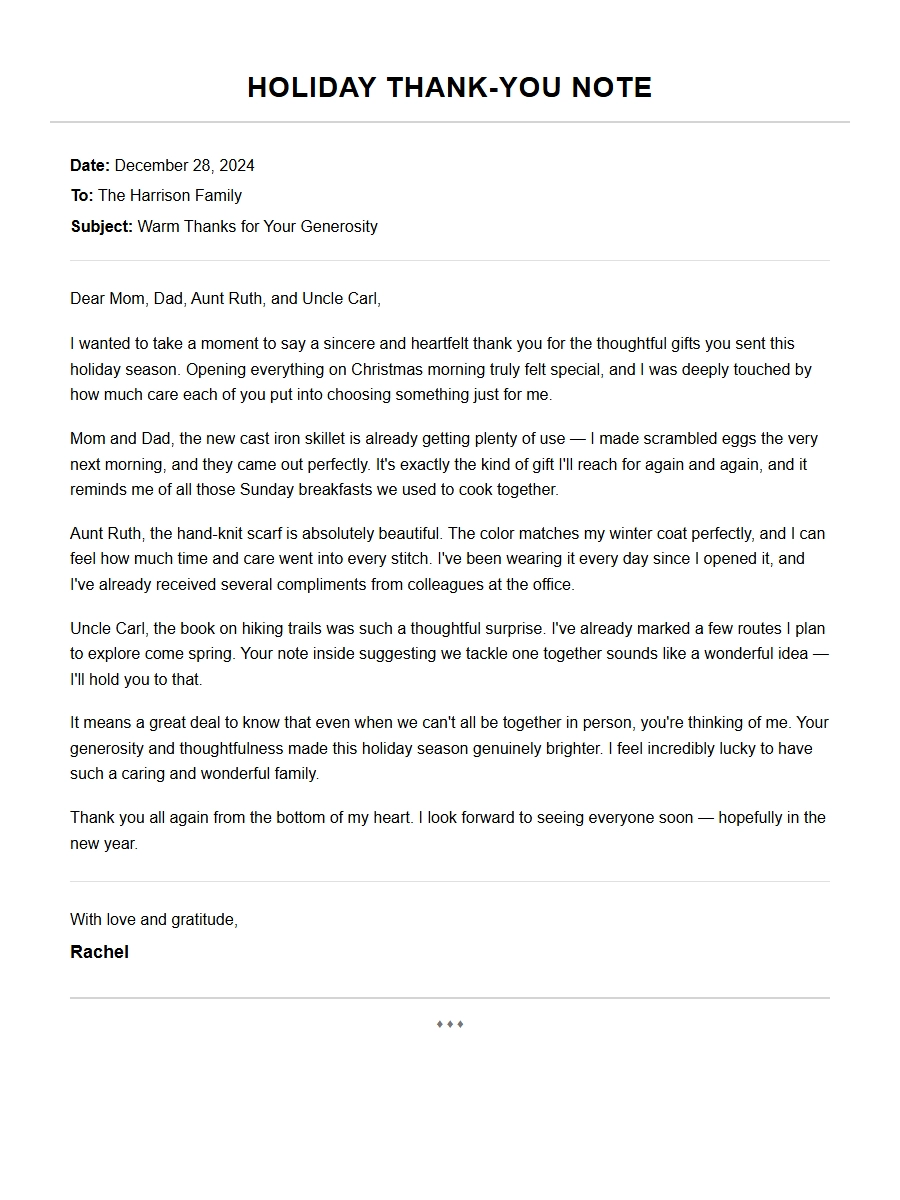 Thank You Letter Examples for Family Holiday Gifts
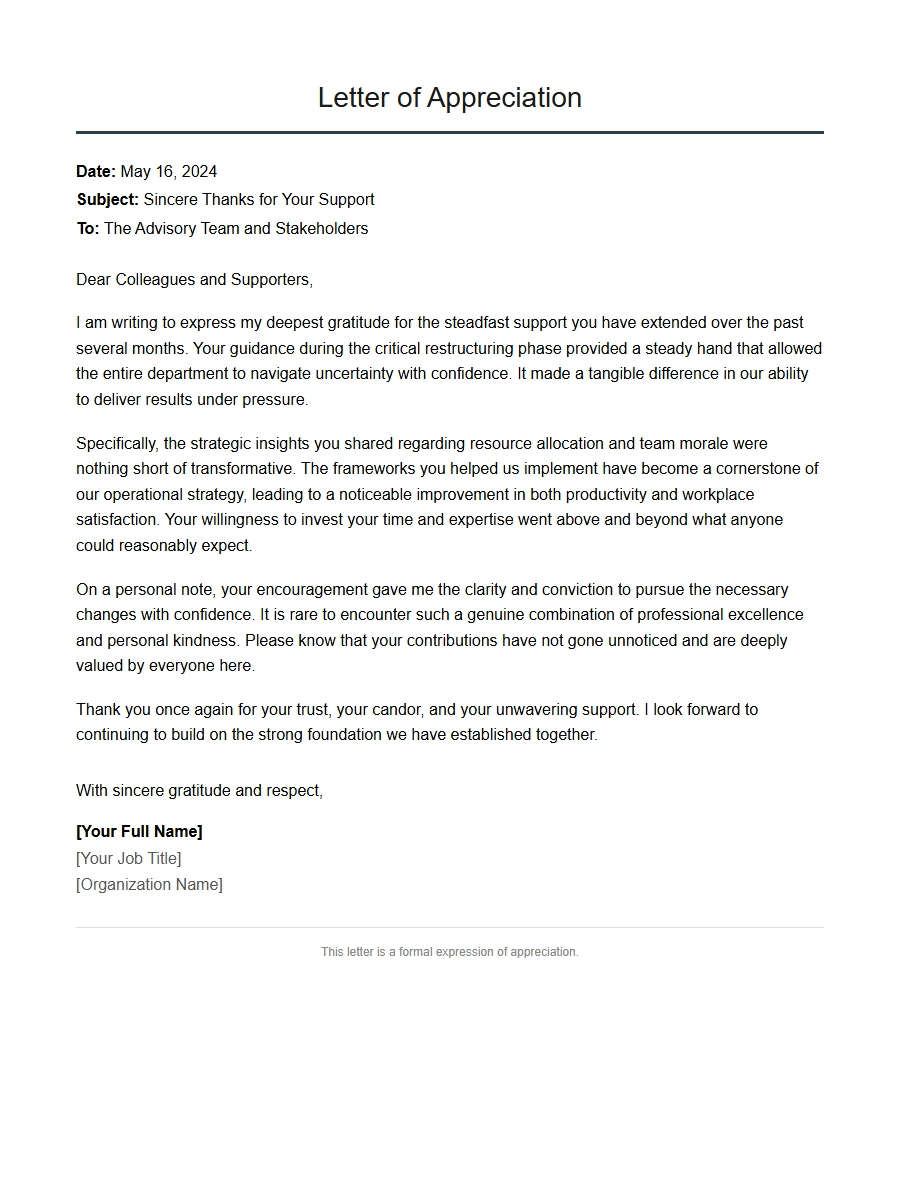 Sample Thank You Letter for Support
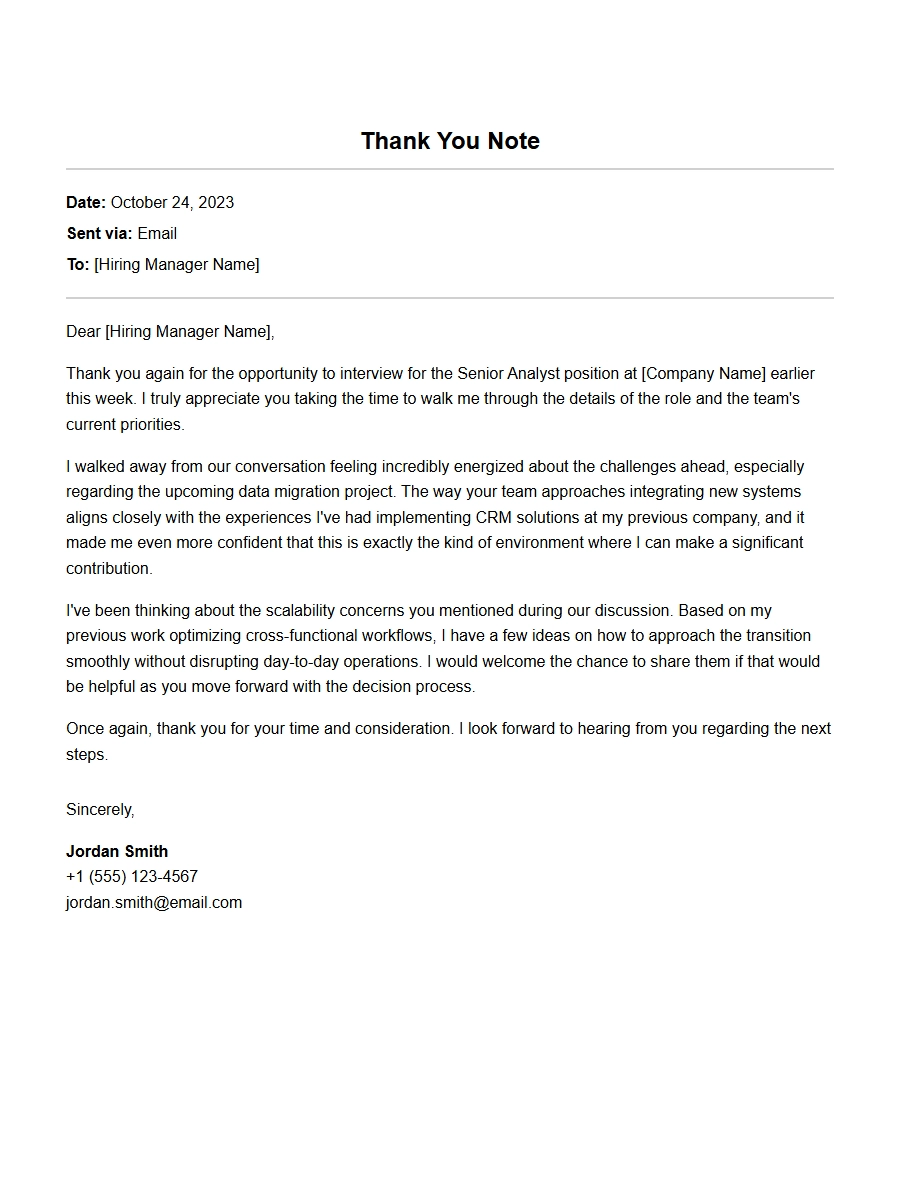 How to Write a Personal Thank-You Note After an Interview