Complaint Letter to School Board About Safety Hazards
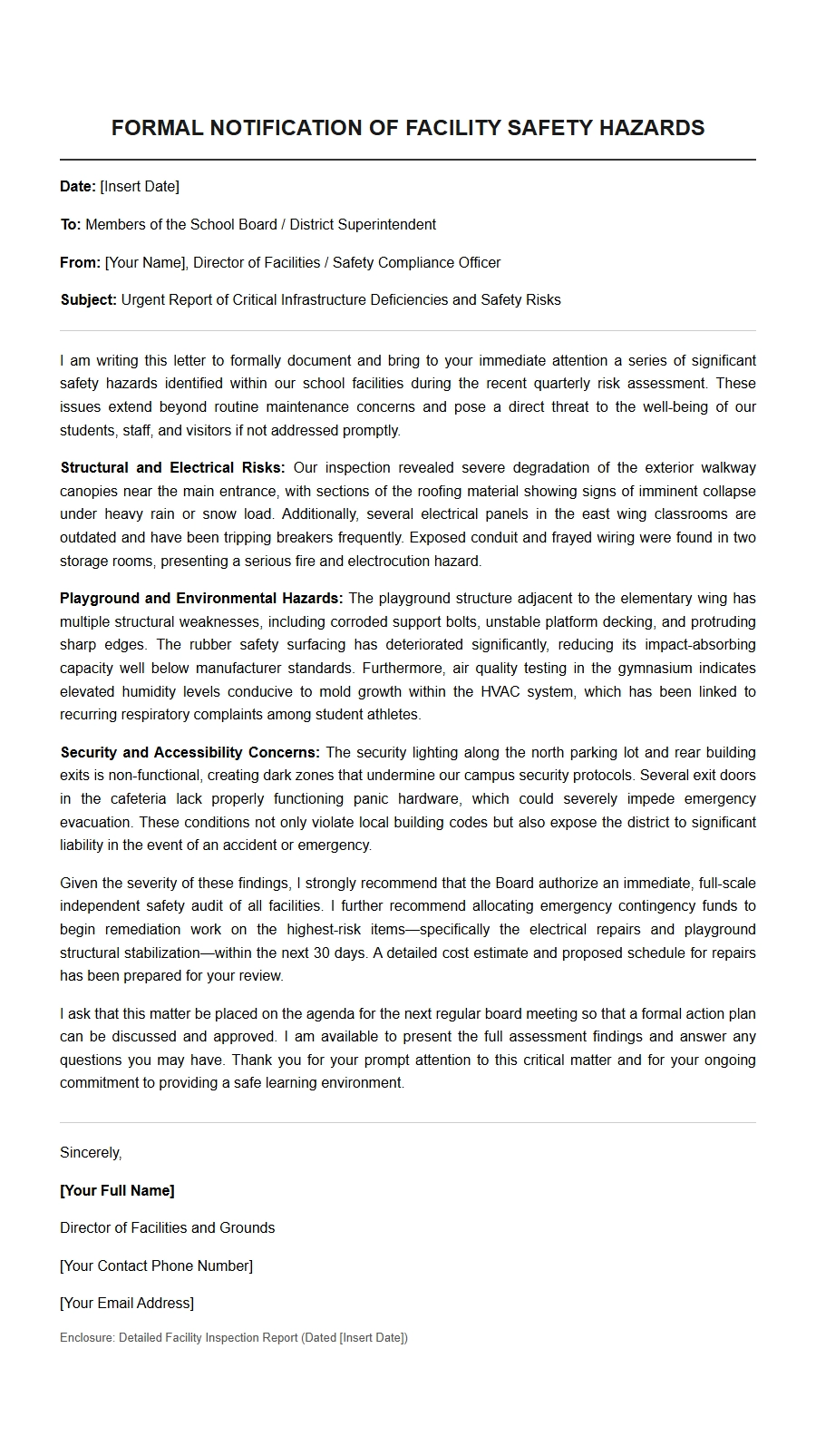
You spotted a broken latch on a second-floor window. Or maybe it’s peeling paint in the kindergarten hallway or a strange smell coming from the boiler room. You know it’s a safety hazard, but putting that concern in writing to the school board can feel intimidating. You want it fixed, but you don’t want to sound like you’re attacking anyone. The hardest part is often staring at a blank screen, wondering how formal you need to be.
Using a letter template isn’t cheating—it’s a smart, time-saving strategy. A good sample gives you the professional structure, the right tone, and the key phrases you might not think of on your own. It handles the boring parts so you can focus on what truly matters: clearly describing the hazard and why it needs immediate attention. A template leaves you plenty of room to personalize every detail.
Category: School Safety & Facility Complaints
How do you choose the right format for your complaint?
The right format depends on the severity of the hazard. Is it a chipped tile in the gym, or exposed wiring near a water fountain? For urgent dangers, your professional correspondence will need a more direct, firm tone. For ongoing maintenance issues, a collaborative, problem-solving tone works better. Most school board complaints follow a standard business letter format. You’ll want a clear salutation and closing, along with a factual, chronological account of the issue you’re reporting.
Think of a letter sample as scaffolding. It holds up the structure while you build the house. Use the template for the framework—sender info, date, subject line. But swap the generic language for your specific observations. Instead of writing “I am writing to bring a matter to your attention,” try “I’m writing to report a specific safety hazard in the cafeteria that I noticed on Tuesday.” The second version sounds like you. It’s direct, clear, and honest. Adding these specific details is what makes a customizable letter truly effective.
This process is different from filing a grievance regarding a bullying incident, but the need for clear, formal language is the same. You’re asking for action, and the tone you use in writing will heavily influence how your request is received.
What if the school board doesn’t respond?
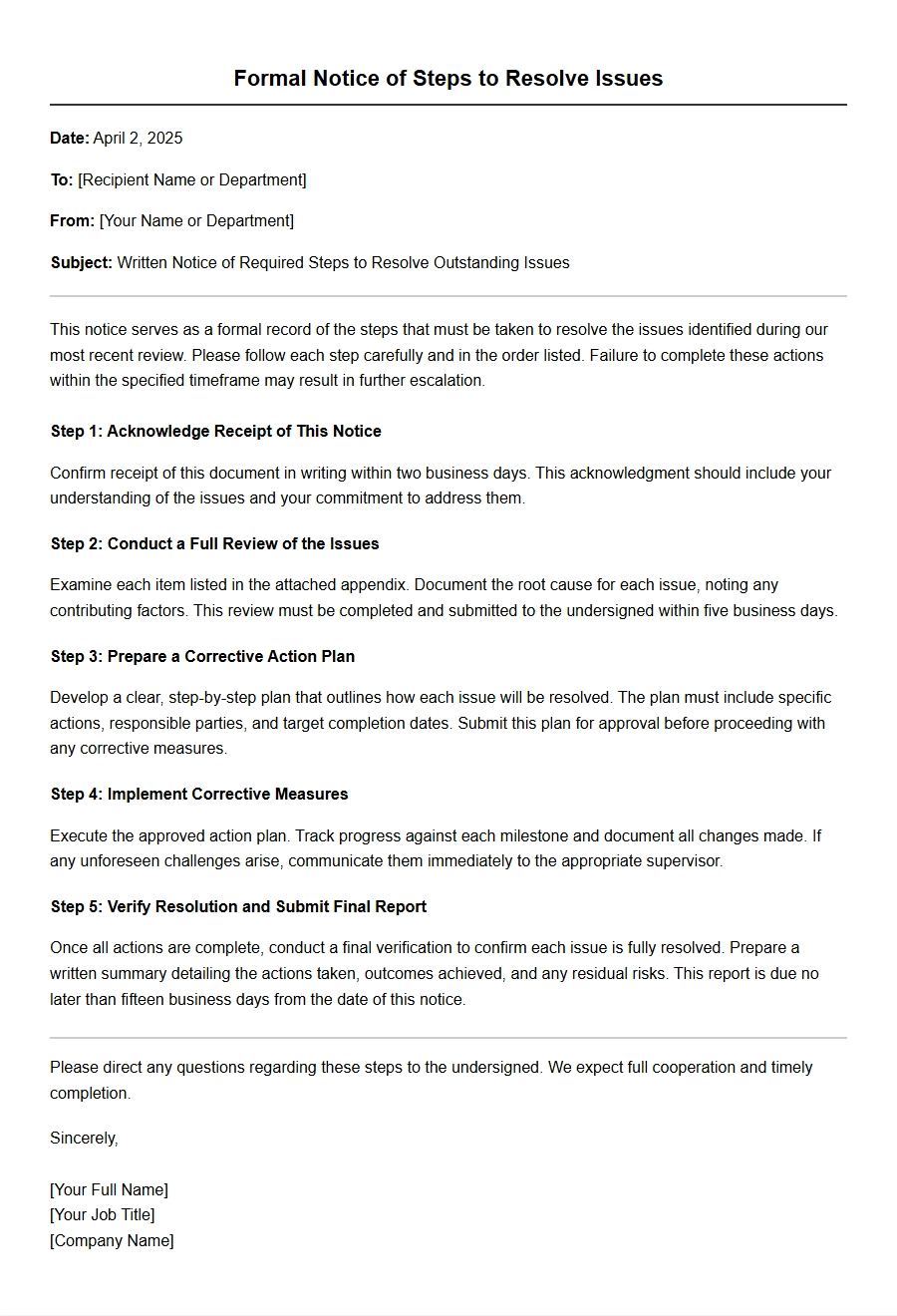
This is where professional correspondence really shines. A well-documented letter creates a paper trail. If you don’t get a response, you have a record to follow up on. This is also where understanding the legal requirements for sending official notice becomes important. A clear, professional letter carries weight when you need to escalate the issue. Just as you would when notifying the school district of transportation scheduling errors, you need to be specific and professional to get results.
Common mistakes to avoid when writing your complaint
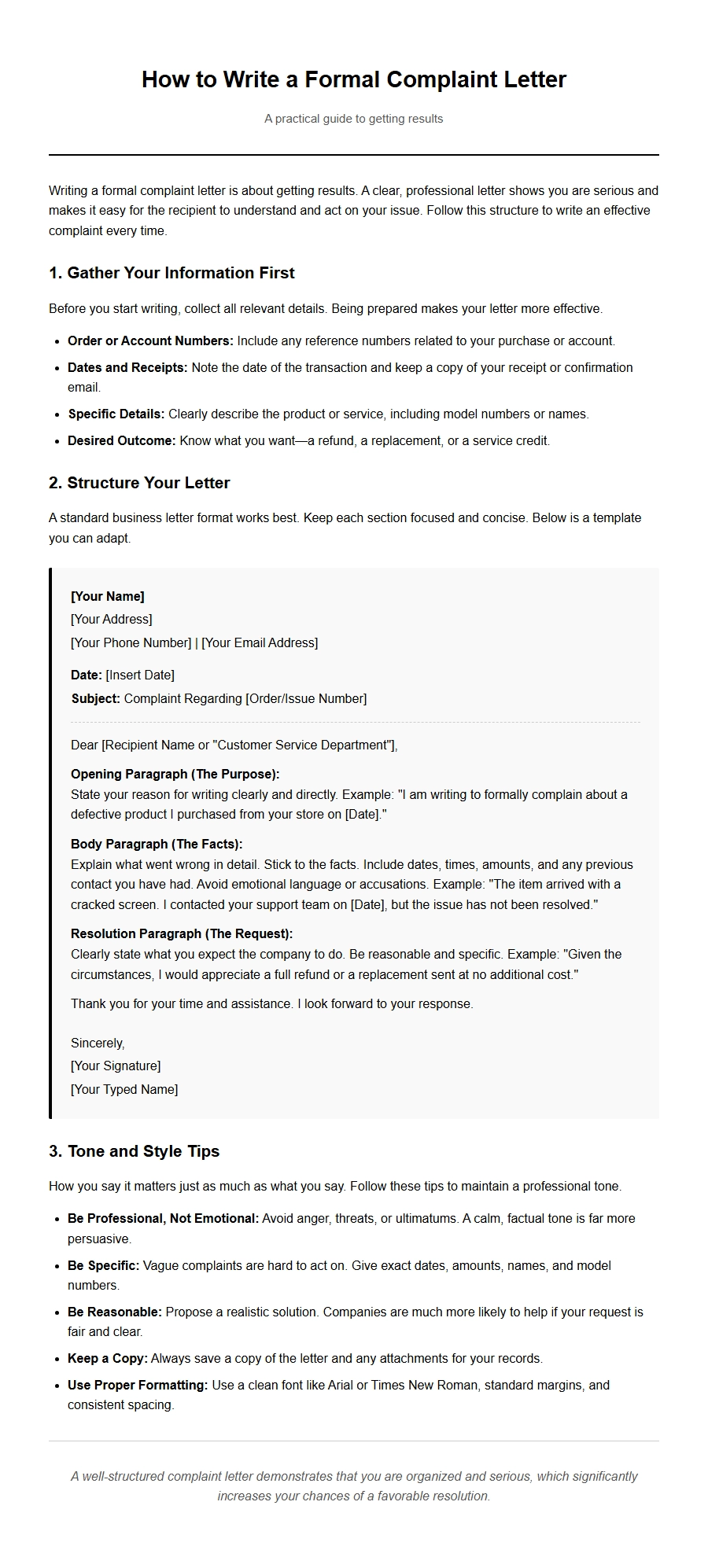
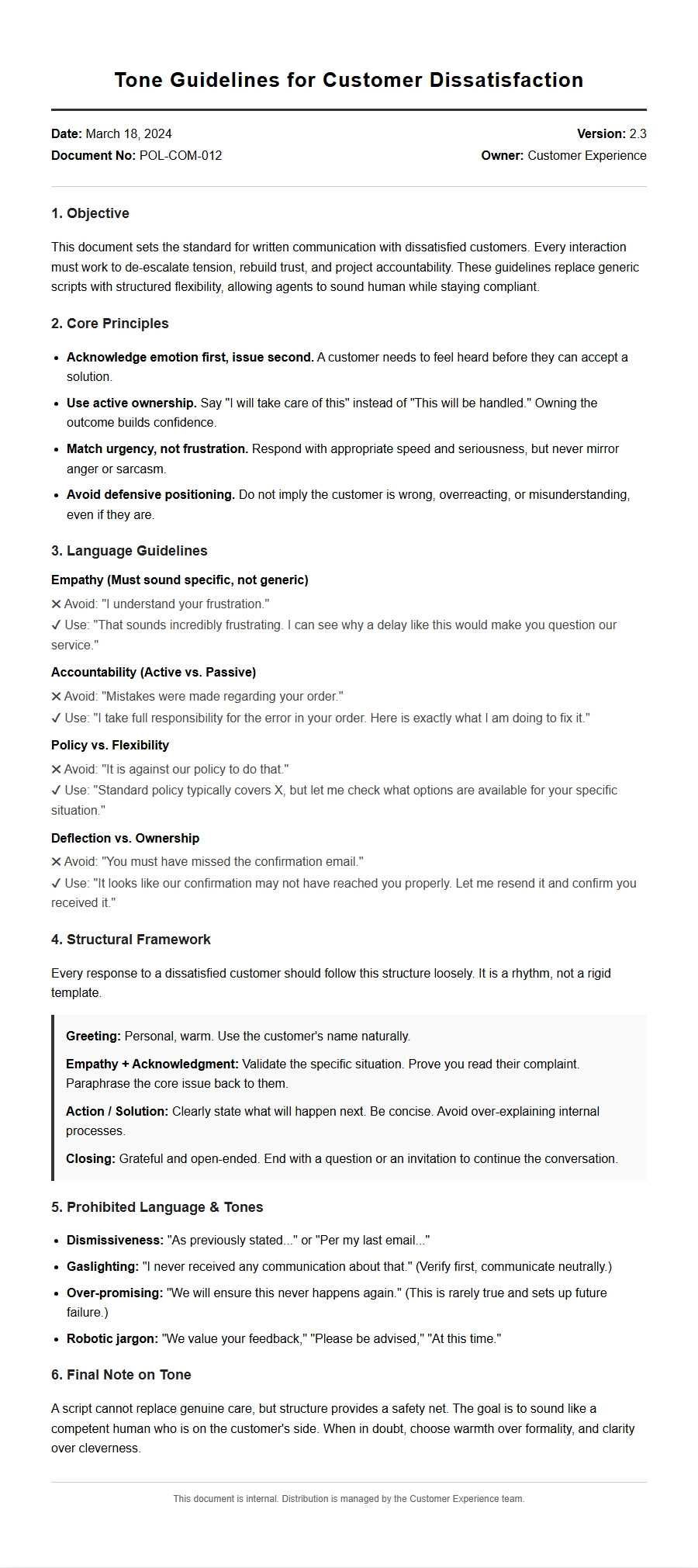
One of the biggest mistakes is ignoring the tone in writing. It’s easy to sound angry or accusatory, especially when kids are involved. But the most effective letters stick to the facts. Describe the hazard, the exact location, the date you saw it, and any previous attempts to report it. Stick to a respectful, professional tone.
Another common mistake is skipping the proofreading step before hitting send. A letter full of typos can distract from your very real concern. Show that you care by double-checking your work. Also, think about digital letter format versus a printed one. An email is fine for initial contact, but a PDF attachment of a formal letter on a simple letterhead design looks more official and is harder to ignore. Always save a copy for your records.
If the board is unresponsive to your initial complaint, you might find yourself needing to understand the legal requirements for sending a pre-litigation complaint notice. A well-written initial letter makes that step much smoother if it becomes necessary.
Use the sample as a springboard, not a crutch
The goal isn’t to write a perfect letter on the first try. It’s to get your concern documented and taken seriously. Every letter you write gets a little easier. You’ll start to recognize the patterns of effective professional correspondence, from the correct salutation to the appropriate level of detail. The more you practice, the more confident you’ll feel raising your concerns to keep the school safe for everyone.
Helpful Examples
Complaint Letter to School Board About Safety Hazards
[
{
"title"
"Mold Infestation in Classroom 204",
"body"
"
Dear Board Members,
I am writing to urgently report a mold infestation in Classroom 204, which poses a serious health hazard to students and staff. The mold has spread across ceiling tiles and walls near the HVAC vent, and several students have developed respiratory symptoms. Despite previous maintenance requests, the issue has not been resolved.
Key details:
First reported: October 10, 2024
Affected area: Room 204, East Wing
Health incidents: 5 students with asthma flare-ups, 2 staff with persistent cough
We request an immediate environmental inspection and professional remediation. Please prioritize this to ensure a safe learning environment.
"
},
{
"title"
"Broken Playground Equipment at Elementary School",
"body"
"
To the School Board,
As a concerned parent, I must notify you of dangerous conditions on the main playground. The slide’s support bolts are severely rusted, and the merry-go-round has a broken handlebar. These issues have been present for over a month and are now causing sharp edges that could injure children.
Observed hazards:
Equipment
Issue
Risk
Slide
Rusted bolts, loose platform
Collapse potential
Merry-go-round
Broken handle, exposed metal
Cuts and falls
Please arrange for a certified inspector and complete repairs before recess resumes. Our children’s safety must not be compromised.
"
},
{
"title"
"Faulty Electrical Wiring in Science Lab",
"body"
"
Dear Board Members,
This letter is to formally report recurring electrical hazards in the high school chemistry lab. Over the past two weeks, we have experienced three power surges that tripped the circuit breaker, and one outlet emitted smoke when a Bunsen burner was plugged in. Such conditions risk fire and electrocution.
Incident log:
10/14/24 – Breaker tripped during distillation lab
10/18/24 – Outlet sparked while connecting a hot plate
10/21/24 – Burning smell from wall socket near sink
We request an emergency electrical inspection and rewiring of the lab’s outdated circuits. Please respond with a timeline for this critical safety upgrade.
"
},
{
"title"
"Asbestos Concerns in Older Building Wing",
"body"
"
To the School Board,
I am writing on behalf of several staff members to express serious concerns about potential asbestos exposure in the 1950s wing of our middle school. During recent renovations to the staff lounge, ceiling tiles were damaged, and we noticed white fibrous dust falling. No asbestos abatement team was visible.
Affected areas: Room 101, Room 103, and the east corridor ceiling.
We request that you:
Immediately cordon off the affected area
Conduct a certified asbestos survey
Provide staff and students with health briefing if exposure is confirmed
Neglecting this hazard could lead to long-term health liabilities. Please act swiftly.
"
},
{
"title"
"Unsafe Stairwell Railing in Main Building",
"body"
"
Dear Board of Education,
I am a parent of two students and wish to report a deteriorating stairway railing in the main building’s west stairwell. The metal handrail is loose from many anchor points, and a section near the second-floor landing is completely detached. Students constantly lean on it, risking a fall down 15 steps.
Location: West stairwell, between first and third floors. First reported: October 5, 2024 (work order #2045, still unaddressed).
I urge you to prioritize this repair. A simple weld could prevent a serious injury. Please inform me of the scheduled fix date.
"
},
{
"title"
"Malfunctioning HVAC System Causing Health Issues",
"body"
"
To the School Board,
As the school nurse, I am compelled to report that the severely malfunctioning HVAC system in the east wing is creating unsafe indoor air quality. The system fails to filter properly, leading to high carbon dioxide levels, excessive humidity, and mold spore presence. Over the past month, I have treated 18 students for headaches, dizziness, and asthma attacks that correlate directly with time spent in these rooms.
Rooms affected: 112, 114, 116, library.
I recommend immediate ventilation assessment and temporary relocation of classes until the system is repaired or replaced. The health of our school community is at stake.
"
},
{
"title"
"Rodent Infestation in School Cafeteria",
"body"
"
Dear Board Members,
I am a cafeteria worker and must report a worsening rodent problem in the kitchen and dining area. Droppings have been found on counters, food packaging has been gnawed, and one worker saw a rat near the dishwashing station yesterday. This is a direct health code violation and risks food contamination.
Evidence collected:
Date
Sign
Location
10/20
Droppings
Under sink
10/22
Gnawed bread bags
Dry storage
10/24
Rat sighting
Dishwasher area
We need an immediate professional pest control service and a review of our food storage protocols. Students deserve a sanitary cafeteria.
"
},
{
"title"
"Lead Contamination in School Drinking Water",
"body"
"
To the School Board,
Our parent-teacher group has serious concerns about lead levels in the school’s drinking water. Independent tests of water fountains in the primary wing showed lead concentrations of 22 ppb—well above the EPA action level of 15 ppb. Children under age 6 are especially vulnerable to lead poisoning.
Affected fountains:
Fountain A (near Room 101): 28 ppb
Fountain B (near Room 103): 22 ppb
Boiler room sink: 18 ppb
We demand immediate shut-off of these fountains, provision of bottled water, and a full district-wide water testing program. Please present a remediation plan at the next board meeting.
"
},
{
"title"
"Structural Cracks in Gymnasium Walls",
"body"
"
Dear Board Members,
I am the physical education teacher and have noticed significant structural cracks in the gymnasium’s east and north walls. One crack near the basketball hoop is now 1/4 inch wide, and a horizontal crack along the ceiling line suggests possible foundation movement. These cracks have widened over the past three months.
Observations:
Location
Crack width
Length
Date noted
East wall
1/4\”
6 ft
10/15
North wall
3/16\”
4 ft
10/18
Ceiling line
1/8\”
12 ft
10/20
Please hire a structural engineer to assess the gym’s safety before students use it for assemblies or sports. I recommend temporary closure until a full inspection is completed.
"
},
{
"title"
"Blocked Fire Exits and Missing Extinguishers",
"body"
"
To the School Board,
As a member of the safety committee, I must formally report multiple fire safety violations discovered during our monthly walkthrough. Two emergency exit doors in the south wing are blocked by stored furniture, and one fire extinguisher cabinet is empty. Additionally, the exit sign above door 3B is non‑illuminated.
Findings:
South exit (near room 201): blocked by stacked chairs and boxes
South exit (near room 204): blocked by a filing cabinet
Fire extinguisher at hallway junction: missing
Exit sign above door 3B: burned out
We request immediate removal of obstructions, replacement of the extinguisher, and repair of the exit sign. A follow-up inspection should be conducted within two weeks. These issues jeopardize everyone’s safety in an emergency.
 How to Write a Formal Complaint Letter
 Steps to Resolve Issues via Written Notice
 Tone Guidelines for Dissatisfied Customer Letters
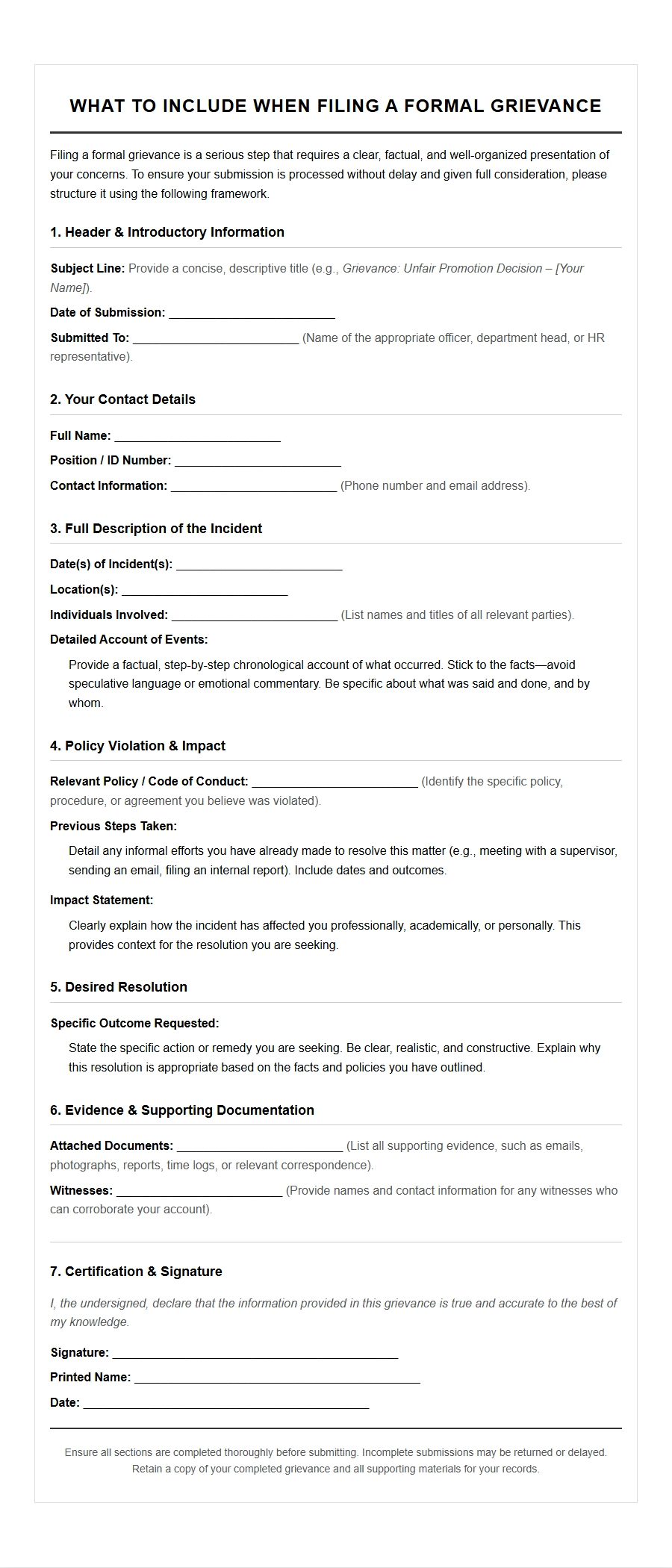 What to Include in a Formal Grievance Letter
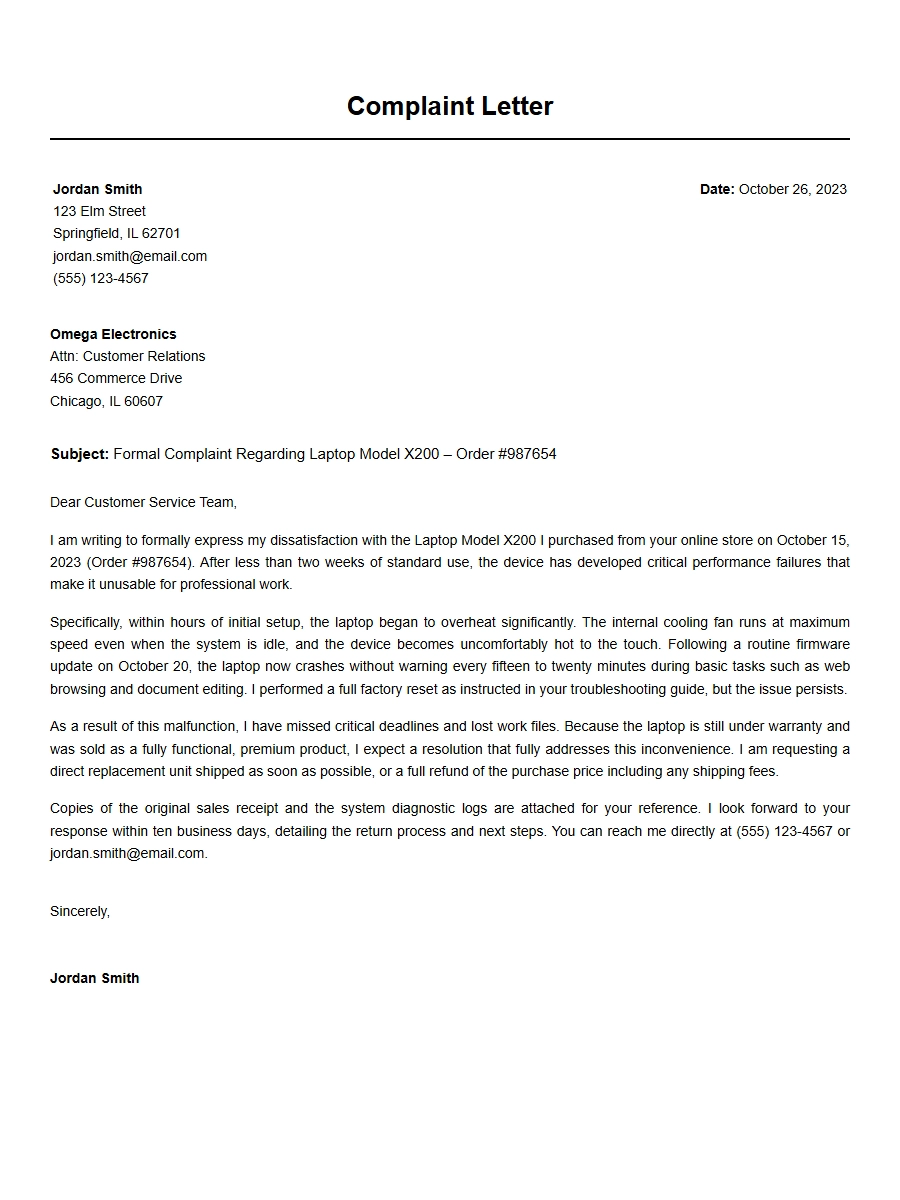 Structure of an Effective Complaint Letter
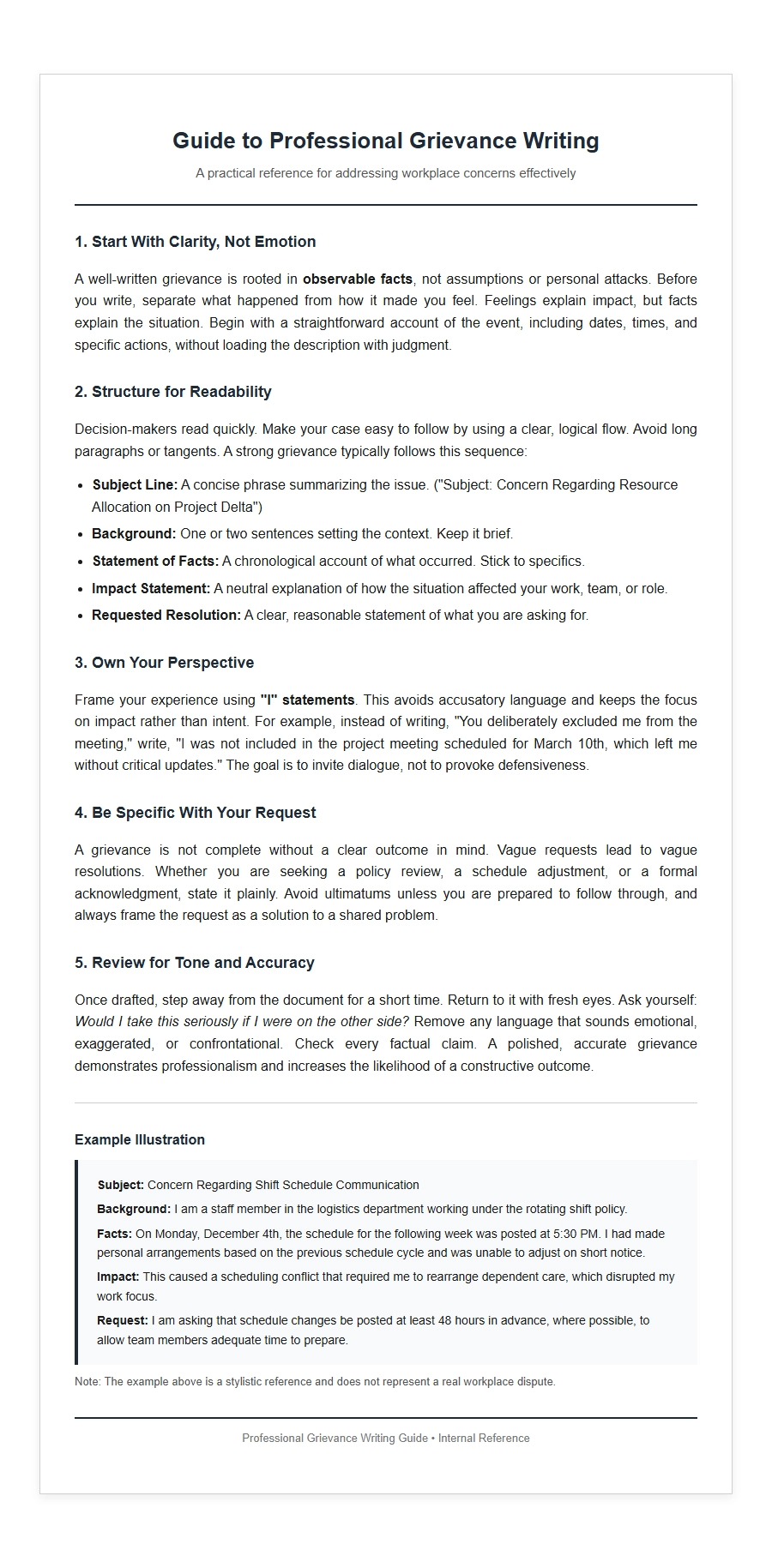 Best Practices for Writing Professional Grievance Letters