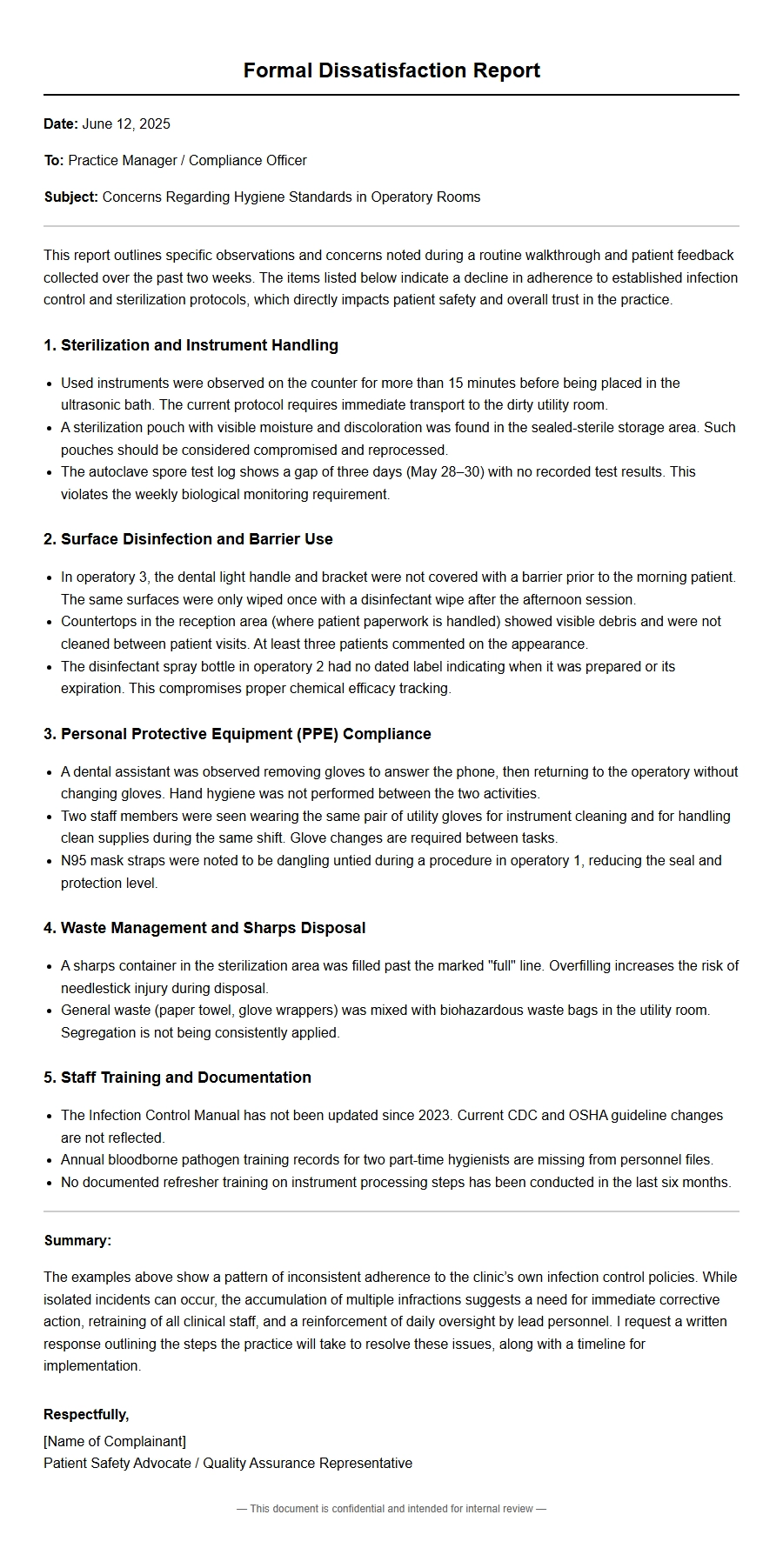
Complaint Letter for Dental Office Hygiene Standards
You walk into your dental office for a routine cleaning and notice the assistant doesn't change gloves between patients. Or the sterilized instrument pouches look dusty and opened. That sinking feeling is hard to ignore—and writing a dissatisfaction report about dental office hygiene standards can feel awkward, even confrontational. But you have every right to expect clean, safe equipment and proper infection control. A well-written complaint letter isn't about being difficult; it’s about protecting your health and making sure the office corrects a serious issue.
Using a sample letter or template isn't cheating. It’s a smart shortcut. Samples give you the right structure, professional tone, and essential phrases so you don't have to start from scratch. The trick is picking one that fits your situation and then customizing it without losing your own voice. Let’s walk through how to do that, step by step.
<-- Category: Formal Complaint Letters -->
What makes a hygiene complaint letter effective?
First, know the goal. You're not venting; you're documenting a specific problem and asking for a specific fix. The best letters include exactly what you saw (date, procedure, what was unhygienic), how it made you feel (worried, unsafe), and what you want the office to do (retrain staff, explain their protocols, or offer a refund for the visit). Keep the tone firm but not angry. A cool-headed letter is taken more seriously than a rant.
When you choose a letter template, look for one that matches the level of formality you need. A formal written complaint sent by mail or through a patient portal should follow standard business letter format—your address, date, office address, a clear subject line, and a proper salutation and closing. "Dear Dr. Smith" is appropriate; "To Whom It May Concern" feels outdated and vague. For email, you can be slightly less formal but still professional.
Choosing the right sample for your situation
Not all complaint letters are the same. If you’re reporting a one-time lapse in hygiene (e.g., a nurse didn't wash hands), a simple note might suffice. But if you suspect ongoing problems—like reused needles or unsterilized tools—you should escalate. That’s where a more detailed dispute letter or grievance letter comes in. For example, if the office also mishandled billing or records, you might need a grievance letter for medical bill coding error alongside the hygiene complaint. Knowing the difference between a complaint letter and a demand letter can affect your outcome—link here for more on that difference.
Once you have a sample, adapt it. Replace generic phrases like "I am writing to express my dissatisfaction" with something specific: "On March 10, during my 9:00 a.m. cleaning, I noticed the tray of instruments was not covered and appeared to have dried residue." That detail gives the office no room to deny the issue.
Tips for tailoring your complaint without sounding robotic
The most common mistake is copying a sample word for word. Your letter should sound like you, not a form letter. Use short sentences and natural language. Instead of "I hereby request that you take corrective action," try "Please let me know what steps you're taking to fix this." You can keep the structure from the sample but rewrite the opening paragraph to grab attention. Start with the incident, not with a long preamble.
Another pitfall: ignoring formatting for email versus printed letter. For a digital letter, you don't need a letterhead design unless you're attaching a PDF. Use a clear subject line like "Complaint about hygiene standards – March 10 visit." And always proofread the letter before sending. A typo in a complaint can make you look careless, which weakens your credibility. Proofreading letter tips apply here: read it out loud, check for spelling errors, and ensure the tone stays professional.
When a complaint isn’t enough—next steps
Sometimes the office dismisses your concern. If that happens, you may need to escalate to the state dental board or a patient advocacy group. In those cases, a more formal escalation note for order fulfillment error style (adapted for healthcare) can help. For example, if you're also dealing with a collection agency over a bill related to that visit, you might combine the hygiene complaint with a dispute letter for collection agency debt validation. Always keep copies of everything you send.
And if the issue involves lost X-rays or damaged equipment that affected your treatment, you can look at complaint letters for other industries, like a complaint letter for airline baggage loss or damage, to see how they frame liability. The principles—clear documentation, reasonable request, professional tone—are the same.
Avoiding outdated language and tone mistakes
Ever received a letter that felt too stiff or too casual? Striking the right balance is key. Avoid old-fashioned salutations like "Dear Sir or Madam" or "To Whom It May Concern." Instead, use the dentist's name or "Office Manager." In the body, don't over-explain or apologize. You're not asking for a favor; you're reporting a safety concern. Keep your tone in check: assertive but not aggressive.
Also be mindful of the closing. Formal closings like "Sincerely" or "Yours truly" are safe. Skip "Best regards" if the issue is serious. And always sign with your full name and contact info.
Use the sample as a springboard, not a crutch
The best letters feel both professional and personal. A sample gives you the scaffolding—you fill in the walls, windows, and door. Over time, writing these letters gets easier. The first one might take twenty minutes, but the next will take ten. Your voice will emerge, and you'll learn which details matter most. So go ahead, pick a template, tweak it to your story, and send it. You're not just complaining—you're helping that office (and maybe other patients) stay safe.
Samples You Can Use
Complaint Letter for Dental Office Hygiene Standards
Disappointment Regarding Sterilization Practices
Dear Dr. Chen,
I am writing to formally express my dissatisfaction with the hygiene standards observed during my recent visit on March 10, 2024. Specifically, I noticed that the dental assistant did not change gloves after handling the computer keyboard before examining my mouth. Additionally, the instrument tray appeared to have a visible residue on one of the mirrors.
My concerns include:
Lack of visible glove changes between surfaces and patient contact.
Unclean instruments presented for my procedure.
No handwashing observed before the exam.
I expect a full review of your sterilization protocols and a written assurance that such lapses will not recur. Patient safety must be paramount.
Sincerely, Jane Morrison Account #: 4582
Formal Complaint: Dirty Treatment Room
To the Office Manager,
I visited your clinic on March 12, 2024, for a routine cleaning. I was shocked to find the treatment room in an unsanitary condition. The following issues were present:
Issue
Details
Floor
Visible dust and debris under the chair.
Counter
Sticky residue and scattered paper wrappers.
Spittoon
Left unclean from previous patient with dried saliva.
Furthermore, the suction tube had a crack that appeared to harbor old residue. This is unacceptable for a healthcare provider. I request a refund for the cleaning fee ($95) and a commitment to higher cleanliness standards.
Regards, Mark Sullivan
Concern Over Reused Glove Policy
Dear Practice Manager,
On April 2, 2024, I observed the hygienist remove her gloves between patients but then place them back on after adjusting the light. This violated basic infection control. When I asked, she stated, “They were only on for a minute.”
I am alarmed by this casual attitude. The following should be strictly followed:
New gloves for each patient after handwashing.
No touching non-sterile surfaces with gloved hands.
Disposable barriers on all high-touch equipment.
I expect a corrective action plan and training records within 10 days. Otherwise, I will report this to the health department.
Yours, Linda Park Patient ID: P-8823
Unhygienic Instrument Storage Complaint
To Dr. Rodriguez,
During my appointment on March 28, 2024, I noticed that sterilized instruments were stored in an open drawer adjacent to a waste bin. This poses a contamination risk. I also saw the assistant wipe a probe with a dry paper towel before use, which is insufficient for sterilization.
I have compiled my observations:
Drawers without seals or UV protection.
Instruments exposed to airborne particles from the bin.
No autoclave tape visible on any packs.
I request an explanation and written protocol for instrument storage. If not addressed, I will seek care elsewhere.
Sincerely, Tom Baker Phone: 555-0199
Report of Mold and Mildew in Exam Room
Dear Dr. Adams,
I visited your office on April 5, 2024, and was immediately concerned by a musty odor in Room 3. Upon closer look, I spotted black mold around the sink caulking and mildew on the curtain. This is hazardous for patients with respiratory issues.
Specific issues:
Area
Condition
Sink caulking
Black mold growth, peeling.
Privacy curtain
Visible mildew spots, stains.
Ventilation
Weak airflow, stale smell.
I expect immediate remediation and a follow-up letter confirming the cleaning. This affects my trust in your practice.
Best, Angela White
Complaint: Uncovered Suction Tips
To the Dental Team,
On March 15, 2024, the suction tip used during my procedure was previously unwrapped and lying openly on a tray next to used instruments. I questioned the assistant, who said it was “still clean.” This is not acceptable.
I had to stop the treatment. Below is a list of my demands:
Full refund for the aborted procedure ($150).
Signed statement that all single-use items are individually wrapped.
Staff retraining on sterile field maintenance.
I trust you will take this seriously to prevent infection risks.
Regards, David Kim Insurance ID: 7734
Feedback on Lax Hand Hygiene Compliance
Dear Manager,
During my visit on April 8, 2024, I observed that the dentist did not wash hands before putting on gloves. He only used hand sanitizer, which is insufficient after touching his face mask. I also noticed the same gloves were used to adjust my chair and then my mouth.
My observations in order:
No soap and water wash before gloving.
Gloves touched multiple non-clinical surfaces.
No change of gloves when asked.
I am filing this formal complaint to request a hygiene audit. Please respond within 14 days.
Sincerely, Sophia Martinez Patient Since 2021
Unsatisfactory Sterilization Log Review
To the Office Manager,
I requested to see your sterilization logs on April 12, 2024, after feeling uneasy about the office’s cleanliness. The staff refused, citing “privacy.” This is a red flag for any patient.
I expect a transparent policy. Below are the minimum records that should be available:
Required Record
Status
Autoclave spore test results
Not shown
Daily temperature logs
Refused
Instrument cycle dates
Unavailable
If these are not provided within 7 days, I will contact the dental board. Trust cannot exist without proof.
Yours, Ethan Brooks Email: ethan.b@email.com
Complaint Over Dirty Waiting Area Hygiene
Dear Dr. Lee,
I have been a patient for three years but am now reconsidering due to declining hygiene in your waiting area. On April 1, 2024, I found used tissues, a half-eaten snack, and sticky floors near the children’s corner. The receptionist ignored it.
Specifically:
Trash can overflowing from the previous day.
Magazines visibly soiled with old stains.
No hand sanitizer available at the entrance.
This sets a poor tone for the clinical environment. I request a cleaning schedule review and replacement of disposable items daily.
Awaiting your action, Rachel Green Appointment #: 2304
Report: Cross-Contamination Risk During Filling
To the Practice Manager,
I had a filling on March 22, 2024, and was disturbed by multiple hygiene failures. The assistant used the same cotton roll container with ungloved hands after handling money. She then placed fresh rolls on the tray using the same hand.
Incident breakdown:
Handled cash at front desk without gloves.
Opened sterile cotton roll container bare-handed.
Placed rolls directly onto clean tray.
This is a clear cross-contamination event. I want confirmation that staff have updated infection control training and that a written apology is issued.
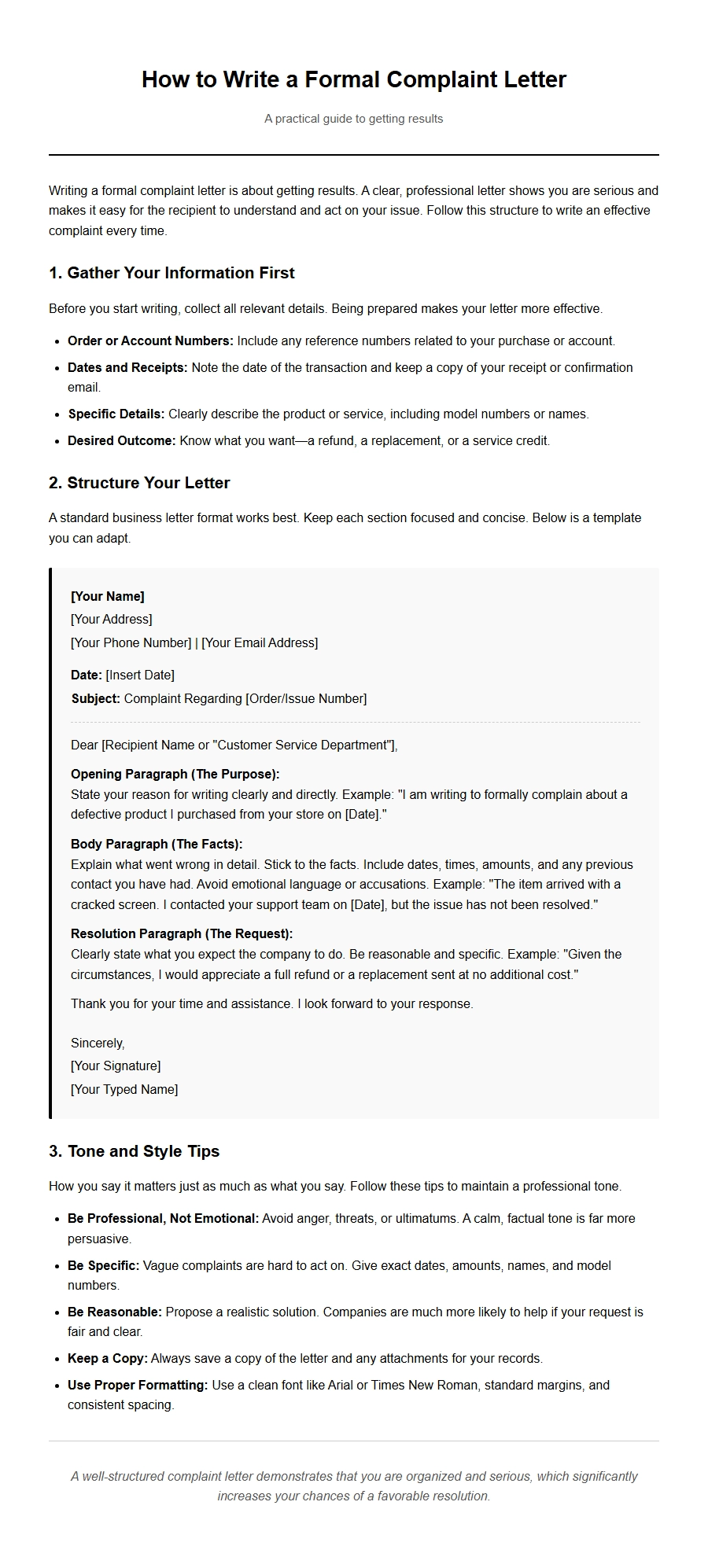 How to Write a Formal Complaint Letter
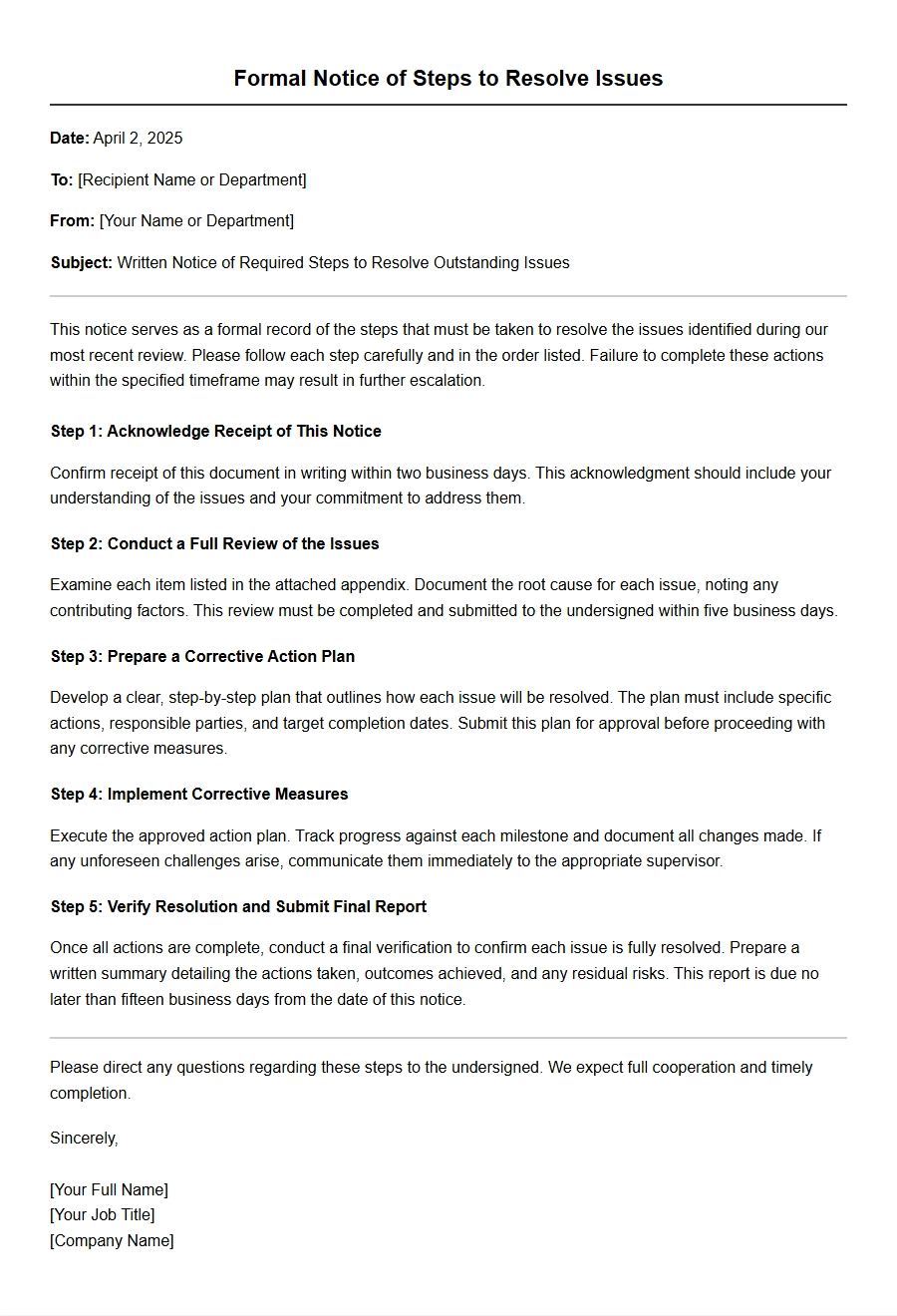 Steps to Resolve Issues via Written Notice
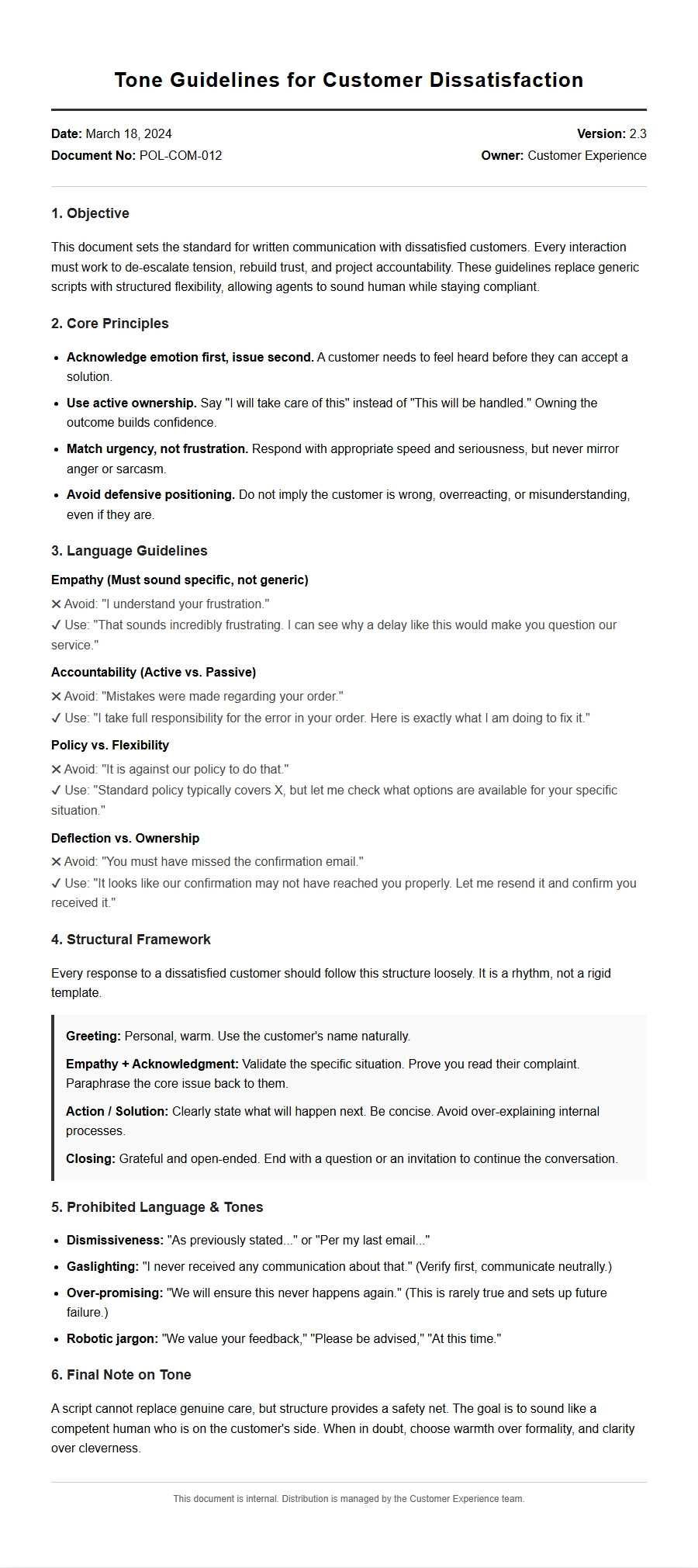 Tone Guidelines for Dissatisfied Customer Letters
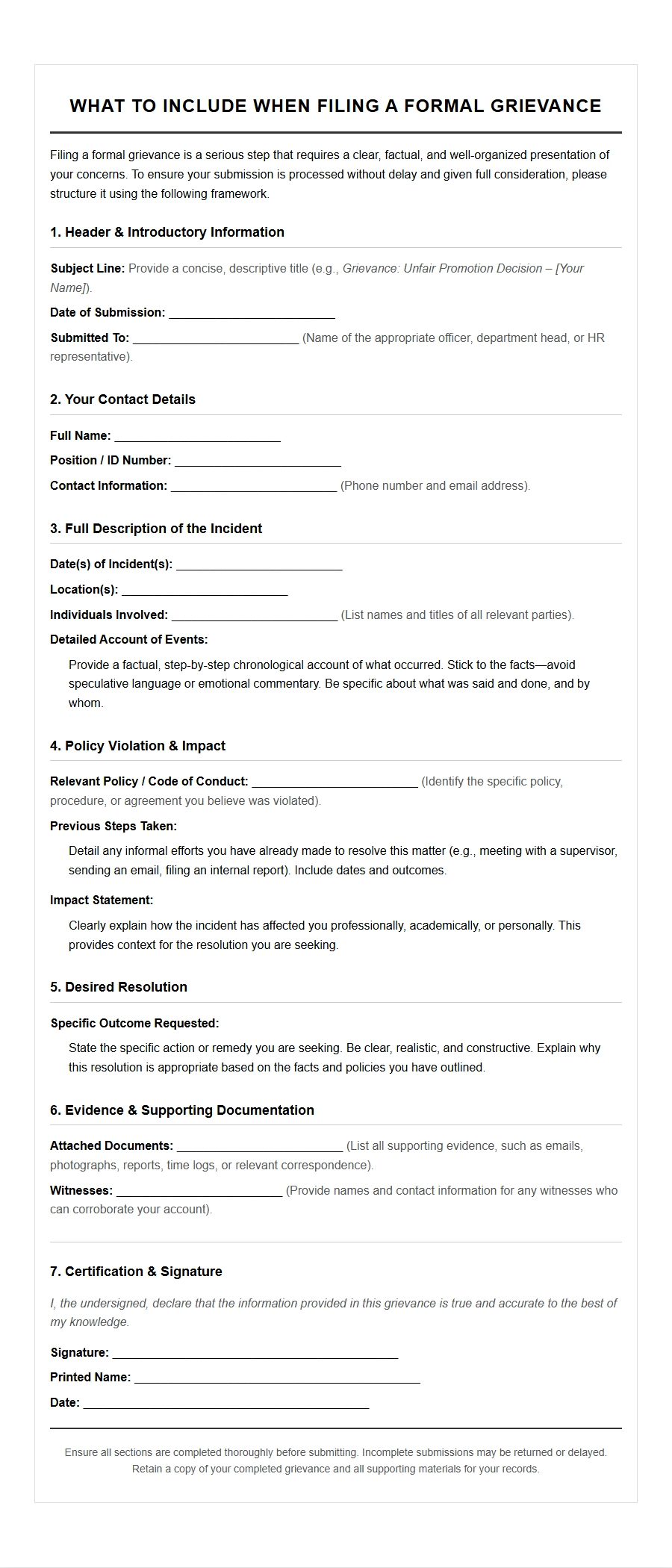 What to Include in a Formal Grievance Letter
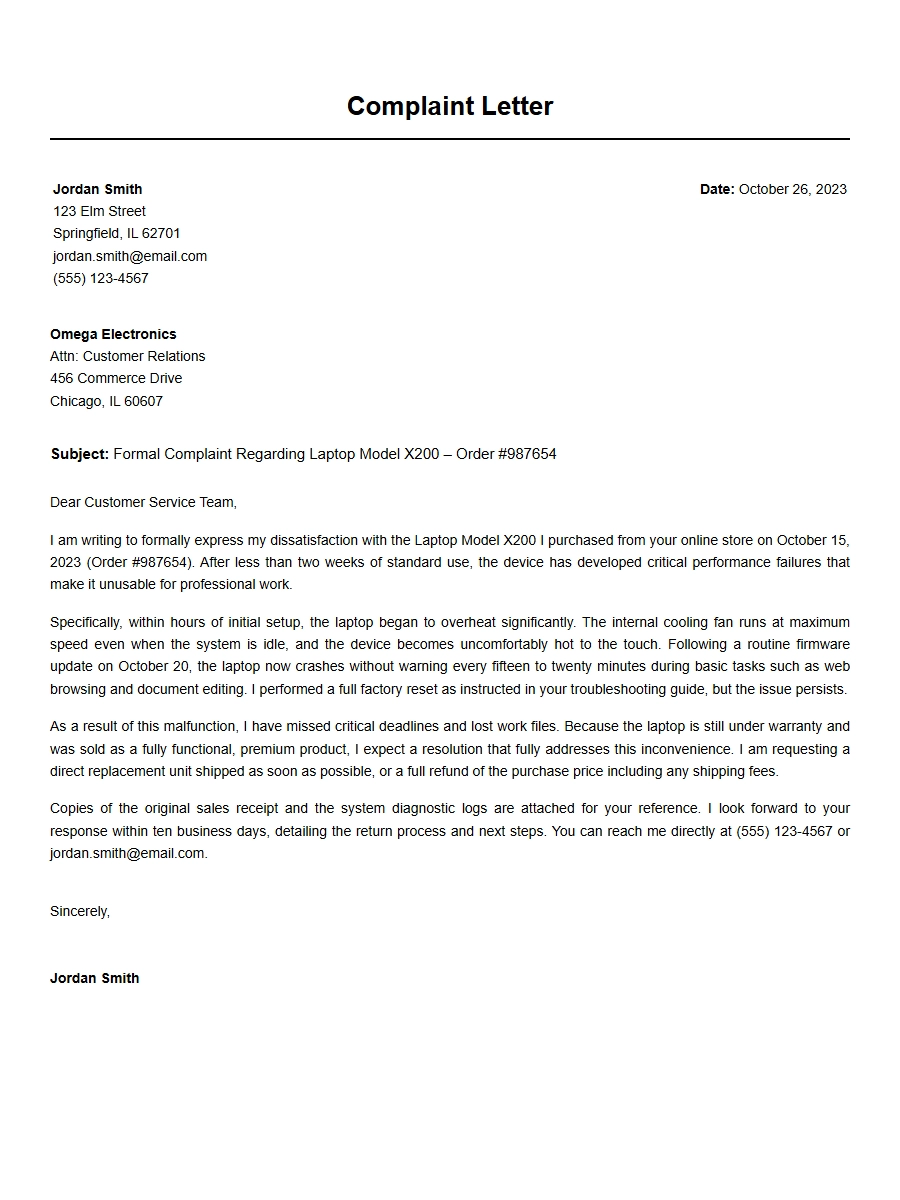 Structure of an Effective Complaint Letter
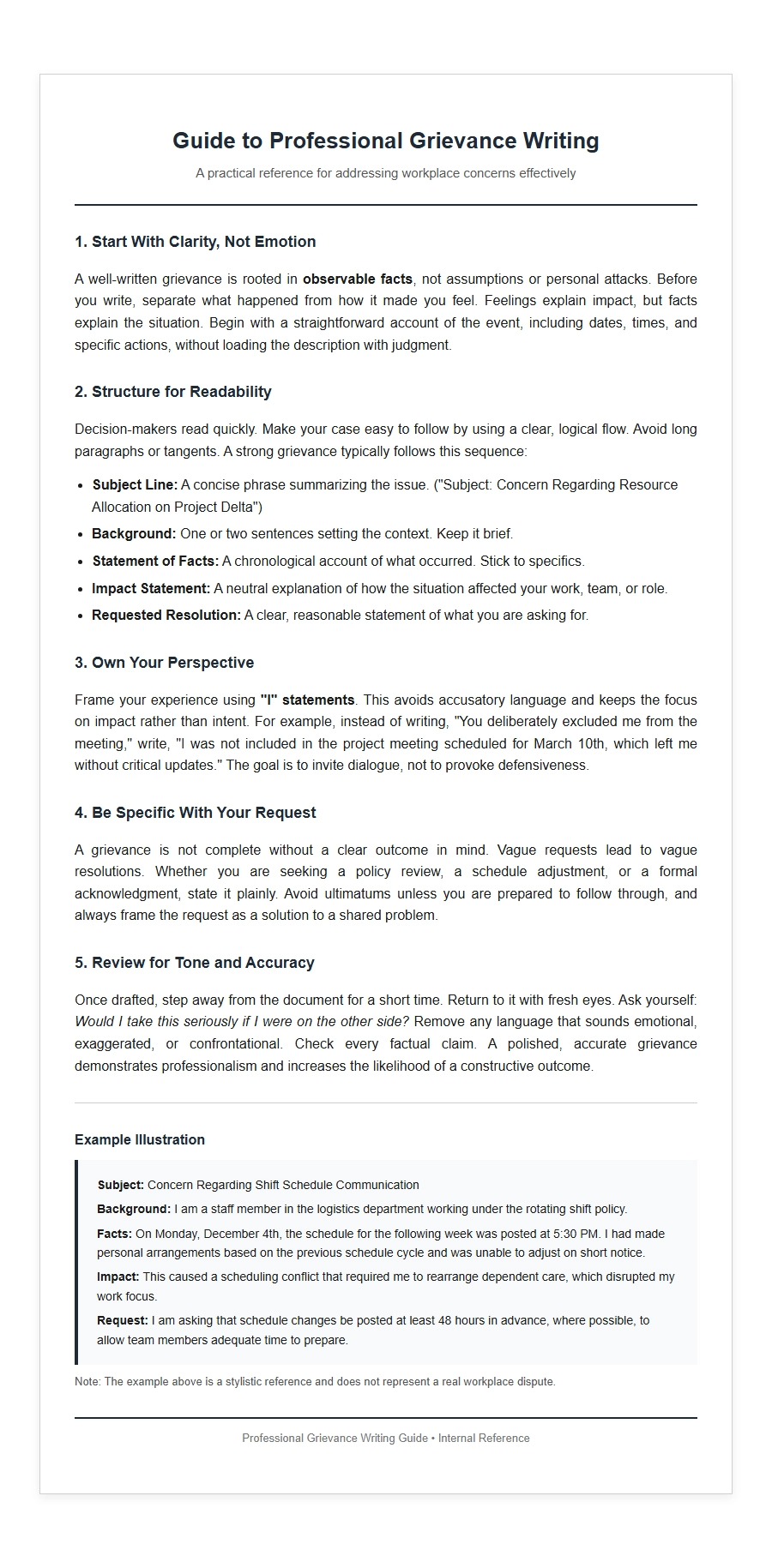 Best Practices for Writing Professional Grievance Letters