How to Write a Detailed Scope of Work Proposal Letter
You need to write a detailed scope of work proposal letter for a client, but you’re stuck on where to start. The blank page feels like a wall—and every minute you spend guessing the right structure is a minute you could have spent refining your actual pitch. That’s frustrating, and it’s also completely normal.
Using a sample isn’t cheating. It’s a smart shortcut. A well-written detailed scope of work proposal letter gives you a proven framework: the right salutation and closing, a logical flow from overview to deliverables, and professional tone cues. You just need to pour your specific project details into that container. Think of it as a letter template that saves you from reinventing format so you can focus on content.
Category: Business Proposals
Before you grab any random sample, ask yourself: Is this for a formal printed document or a digital letter format sent via email? That choice changes everything—from business letter format (full address block, letterhead design) to how you handle attachments. A physical proposal might need a formal cover page; an email version should lead with a concise subject line and a brief context paragraph before the scope details.
How to pick the right sample for your situation
Look for a sample that matches your industry and the level of formality your client expects. A construction contractor’s scope of work will read differently than a freelance marketing proposal. The core structure stays similar—introduction, objectives, deliverables, timeline, payment terms—but the language and level of detail shift. If you’re in hospitality, reviewing a housekeeping service proposal can show you how to list recurring tasks without sounding vague. For larger strategic projects, an executive overview proposal helps you frame the big picture first.
Once you’ve found a solid letter structure, don’t copy it word for word. Read it aloud. If a sentence feels stiff or formal for your relationship with the client, rewrite it in your natural speaking voice. The best letter writing etiquette balances professionalism with authenticity. A colleague who knows you shouldn’t receive a robotic note.
Tailoring the opening to grab attention (and get to the point)
The first paragraph is where most people waste space. Skip the vague pleasantries. Instead, state why you’re writing and what problem this scope of work solves. For example: “This proposal outlines the website redesign we discussed on March 3rd, including the timeline for content migration and user testing.” That’s direct, respectful of the reader’s time, and signals that you listened during the conversation.
If you’re writing a cover letter that accompanies the scope of work, keep it brief. The scope document itself is the meat. The cover letter should simply say “here’s what’s enclosed” and set the stage for review. Similarly, a letter of recommendation or a resignation letter sample has a different purpose—don’t confuse those tones with a business proposal’s confident yet collaborative voice.
Common mistakes that kill credibility
One of the biggest errors is using outdated salutations like “To Whom It May Concern” when you know the person’s name. Or writing a closing that feels too casual (“Best,” when they expect “Sincerely,”). Another slip: ignoring email formatting. If you paste a formal printed letter into an email without trimming the address block, it looks messy.
Also, avoid assuming the client knows your jargon. You might use “deliverable” or “milestone” in your payment terms proposal, but define them briefly if you’re working with someone outside your field. And always proofread the letter—one typo in a scope of work can make you look careless about the project itself.
Making the scope section bulletproof
Your detailed scope of work proposal letter lives or dies on specificity. Instead of “We will update your website,” write “We will revise the homepage layout, add a contact form, and migrate 20 blog posts to the new CMS.” Use plain language. If the client can’t picture what they’re paying for, they won’t sign. This is where good professional correspondence separates itself from fluff.
For complex international deals, consider a format like an international trade agreement proposal that explicitly handles currency, shipping terms, and compliance. The structure doesn’t have to be scary—it just needs clear sections.
Using the sample as a springboard, not a crutch
After you’ve adapted the sample, step back. Read the whole letter from the client’s perspective. Does it answer their unspoken questions? Does the tone feel like a conversation with someone who truly understands their business? If it reads like a generic template, personalize it again until it sounds like you.
The first time you write a detailed scope of work this way, it may take an hour. The second time, half that. By the fifth time, you’ll only need the sample for a quick format reminder. That’s the goal: build your own mental library of letter structure and tone in writing so you can produce polished drafts in minutes. And if you’re ever in doubt, lean on a catering business contract proposal or another industry-specific example to refresh your approach.
Start with a sample, but end with a letter that feels both professional and personal. That’s what wins clients—and makes the writing process a lot less painful.
Samples for Inspiration
How to Write a Detailed Scope of Work Proposal Letter
Website Development Scope of Work
Project Overview: This proposal outlines the detailed scope of work for developing a responsive corporate website for ABC Corp. The site will include up to 15 pages, a blog section, and a contact form.
Exclusions: Content writing, stock photography, ongoing maintenance. Please review and confirm acceptance by March 15, 2025.
Marketing Campaign Scope Proposal
Objective: This letter details the scope of work for a 3-month digital marketing campaign targeting small business owners. The campaign will run on Google Ads, LinkedIn, and email.
Services Included:
Audience research and persona development
Ad copy creation (5 variations per platform)
A/B testing of landing pages
Monthly performance reports
Budget Breakdown:
Item
Monthly Cost
Total (3 months)
Ad spend (Google + LinkedIn)
2,000
6,000
Management fee
1,500
4,500
Creative & copy
800
2,400
Reporting software
200
600
Grand Total
4,500
13,500
Schedule: Campaign kicks off April 1, 2025. We require all assets from your team by March 20. Please sign this scope to proceed.
IT Infrastructure Upgrade Scope
Purpose: This proposal defines the scope for upgrading XYZ Company’s server infrastructure to a hybrid cloud environment. The project will improve security, scalability, and disaster recovery.
Scope Items:
Assessment of current on-premise servers and network
Migration of critical workloads to AWS
Installation of firewall and intrusion detection system
Configuration of automated backups (daily/weekly)
Project Phases & Costs:
Phase
Description
Cost (USD)
Phase 1
Assessment & Plan
3,000
Phase 2
Cloud Migration
12,000
Phase 3
Security Implementation
5,000
Phase 4
Testing & Training
2,000
Total
22,000
Key Assumptions: Client provides existing server credentials and remote access. Any additional hardware is billed extra. Estimated completion: 10 weeks from contract signing.
Full Renovation Scope of Work
Project: Detailed scope for renovating a 1,200 sq ft residential apartment — living room, kitchen, and two bathrooms.
Bathrooms: new vanity, toilet, shower glass enclosure
Painting walls and ceiling (one coat primer + two coats paint)
Schedule & Payment:
Milestone
Date
Amount Due
Contract Signing
Upon approval
$5,000
Demolition Complete
Week 2
$8,000
Rough-in Complete
Week 4
$8,000
Final Walkthrough
Week 8
$9,000
Total
$30,000
Exclusions: Appliances, light fixtures, window treatments. All work is performed by licensed contractors. Scope valid for 60 days.
Software Integration Scope Letter
Overview: This proposal covers the scope to integrate Shopify with QuickBooks Online for client “Style & Co.” The goal is to automate invoice creation, inventory sync, and payment reconciliation.
Detailed Deliverables:
API connection between Shopify and QuickBooks
Mapping of product categories to QuickBooks items
Automated order-to-invoice flow
Two-way inventory quantity updates
Error logging and notification system
Cost & Milestones:
Milestone
Deliverable
Amount
1
API Setup & Authentication
$1,000
2
Data Mapping & Testing
$2,500
3
Deployment & User Training
$1,500
Total
$5,000
Timeline: 4 weeks from data access. Ongoing support post-launch at $150/hour. Please indicate acceptance by March 1.
Content Creation Scope Proposal
Scope: This letter defines the work for producing 12 blog posts, 4 whitepapers, and 20 social media graphics for GreenTech Solutions over 3 months.
Content Types & Quantity:
Content Type
Number
Length/Format
Blog posts
12
800-1000 words each
Whitepapers
4
2000-3000 words each
Social graphics
20
1080x1080 px, .png
Included Services:
Topic research and keyword analysis
Writing and editing (two rounds)
Basic SEO optimization
Graphic design with brand guidelines
Pricing: Blog posts: $150 each ($1,800 total). Whitepapers: $500 each ($2,000 total). Graphics: $75 each ($1,500 total). Total: $5,300. Payment upon delivery of each batch. Timeline: Bulk delivery every 4 weeks.
Consulting Services Scope of Work
Engagement: This proposal outlines a 6-month consulting engagement for Acme Corp to improve operational efficiency and reduce costs in their supply chain department.
Scope of Services:
Process mapping and bottleneck analysis
Vendor performance review (top 10 suppliers)
Recommendations for automation tools
Monthly progress meetings and reports
Final presentation with implementation roadmap
Fee Structure:
Item
Frequency
Cost
Retainer (on-site + remote)
Monthly
$8,000
Travel & expenses (estimated)
As incurred
$500/month max
Deliverable fee (final report)
One-time
$2,000
Total Estimated
6 months
$50,000
Assumptions: Client provides access to data and key personnel. This scope is valid for 30 days. Acceptance required by April 1, 2025 to secure start date in April.
Event Management Scope Letter
Event: This scope covers planning and execution of a 2-day conference for 500 attendees in Chicago, August 2025 — client is TechConnect.
Services Included:
Venue selection and contract negotiation
Speaker coordination and scheduling
Registration system setup
On-site staffing (10 crew members)
Post-event attendee survey
Budget Allocation:
Category
Description
Estimated Cost
Venue & AV
Main hall, breakout rooms, tech
$45,000
Catering
Lunch & breaks for 2 days
$25,000
Marketing & Materials
Print, signage, swag
$8,000
Management Fee
Planning & oversight
$15,000
Total
$93,000
Payment Terms: 50% upon signing, 30% 30 days prior, 20% post-event. Full scope review meeting scheduled for March 10.
Training Program Scope Proposal
Program: This proposal defines a 12-week corporate training program on data analytics for 20 employees at FinServ Ltd. Sessions will be a mix of live virtual and self-paced modules.
Curriculum Outline:
Excel & SQL basics (3 weeks)
Data visualization with Tableau (4 weeks)
Intro to Python for analysis (3 weeks)
Capstone project (2 weeks)
Deliverables:
Live weekly instructor-led sessions (2 hours each)
Recordings and materials
Hands-on exercises and quizzes
Certificate of completion
Pricing & Schedule:
Component
Cost
Start Date
Training delivery (20 participants)
$18,000
Learning platform license (12 weeks)
$3,000
Custom exercises & assessment
$2,000
Total
$23,000
Program starts May 5, 2025, contingent on a minimum of 15 participants. Please confirm by April 15.
Security Audit Scope of Work
Audit Objective: This letter details a comprehensive security audit for HealthData Inc.’s cloud infrastructure and web applications, focusing on HIPAA compliance.
Scope of Assessment:
Vulnerability scanning of 50 public-facing IPs
Penetration testing (web app, API, network)
Review of access control and authentication
Log analysis and incident response plan review
Deliverables Timeline:
Phase
Duration
Output
Reconnaissance & Scanning
1 week
Automated scan report
Manual Testing & Exploitation
2 weeks
Detailed findings with POCs
Reporting & Remediation Plan
1 week
Executive summary + technical report
Pricing: Fixed fee of $12,000. Includes one remediation guidance call (up to 2 hours). Additional retesting at $2,500. Work begins within 5 business days of signed scope. Valid until March 31, 2025.
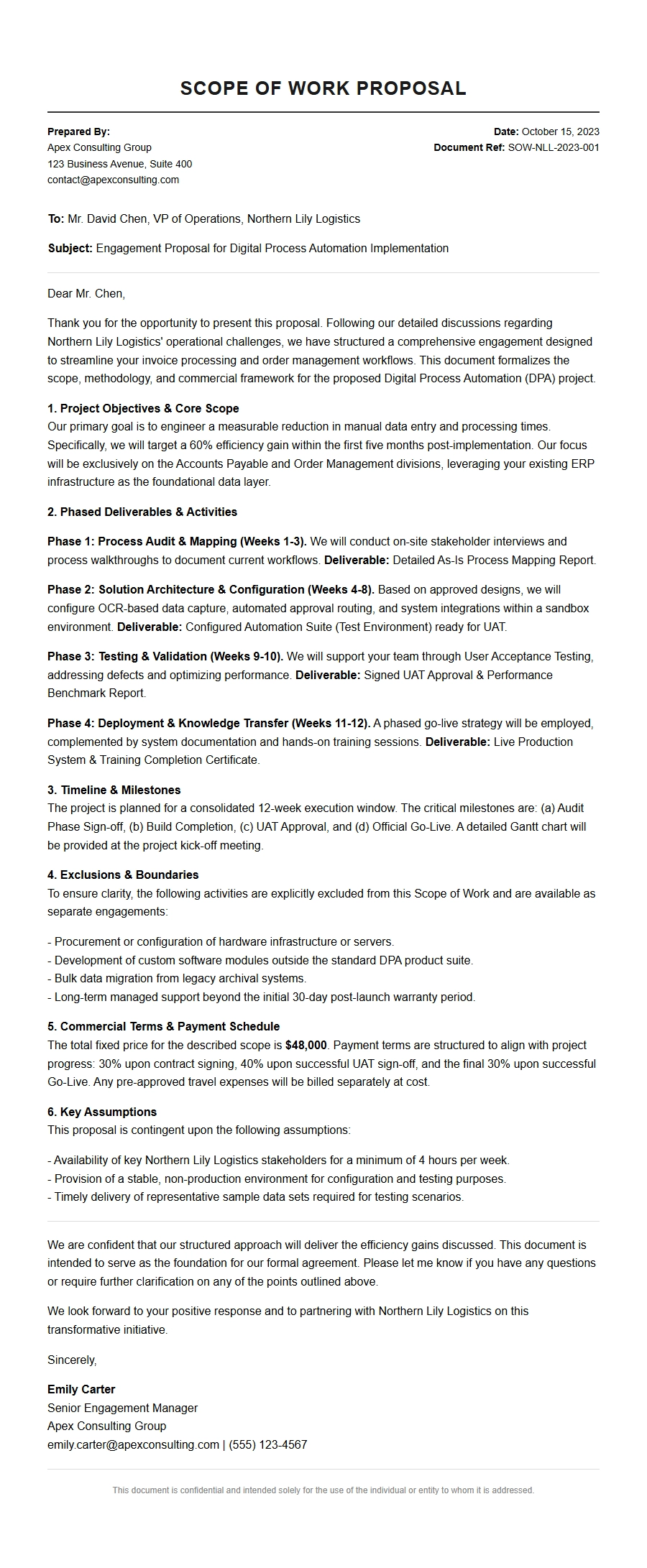
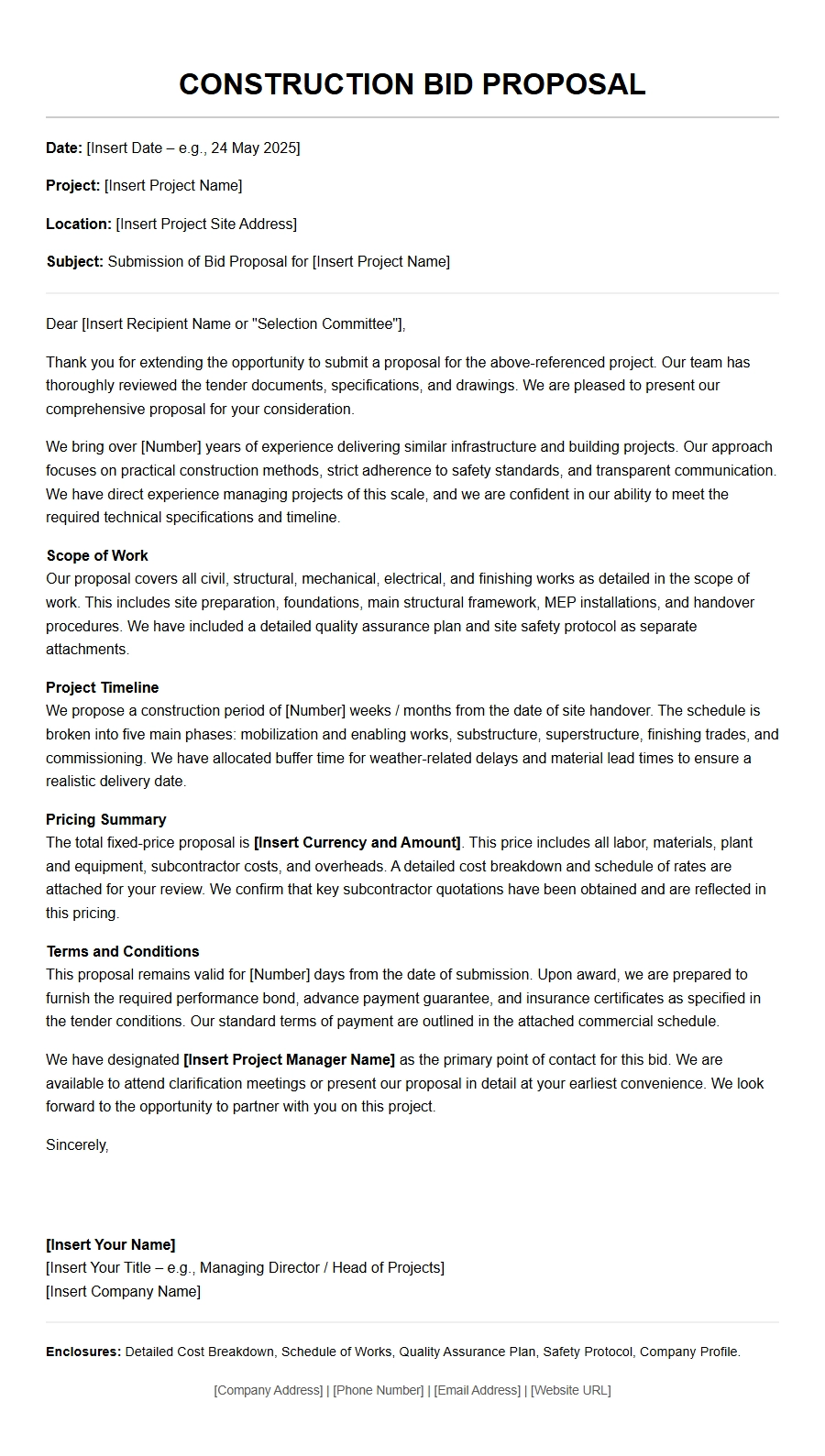 Sample Construction Bid Proposal Letter
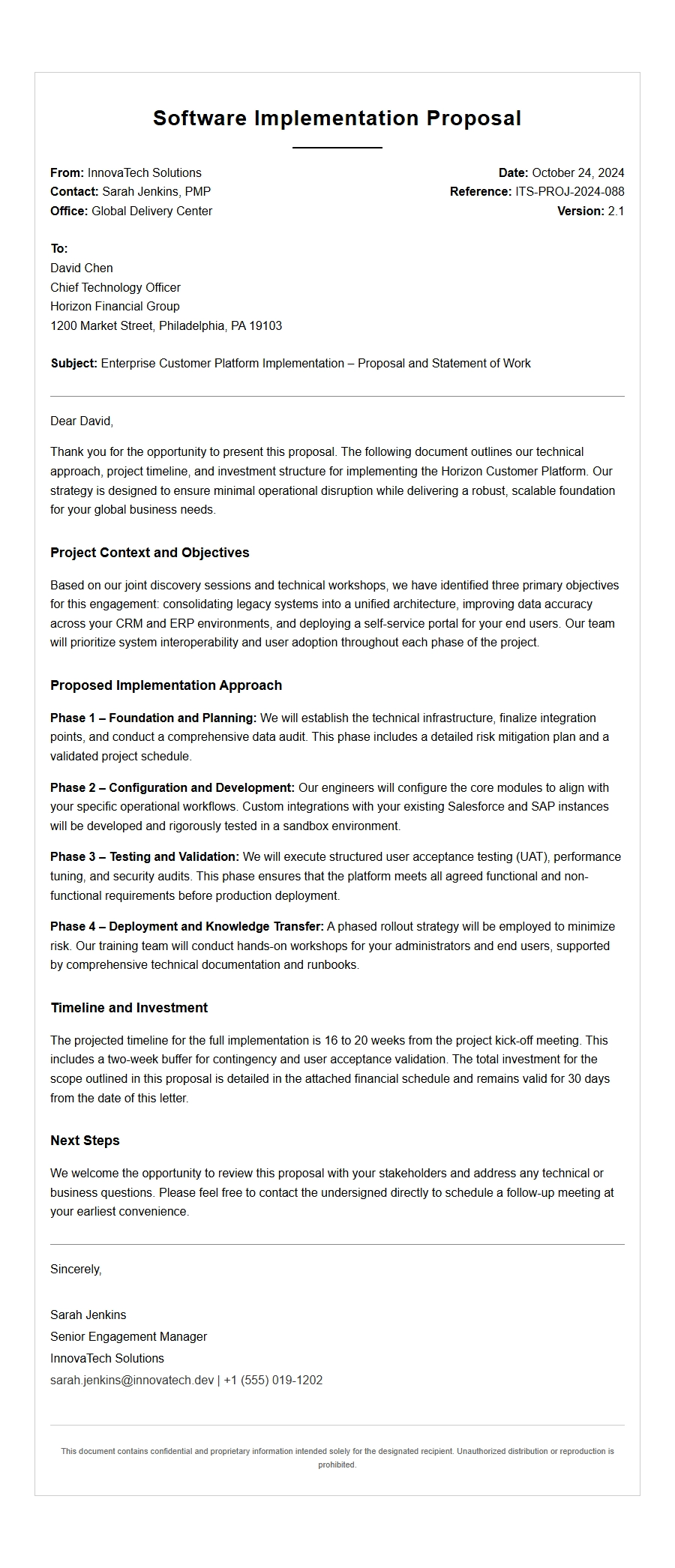 Enterprise Software Implementation Proposal Letter Example
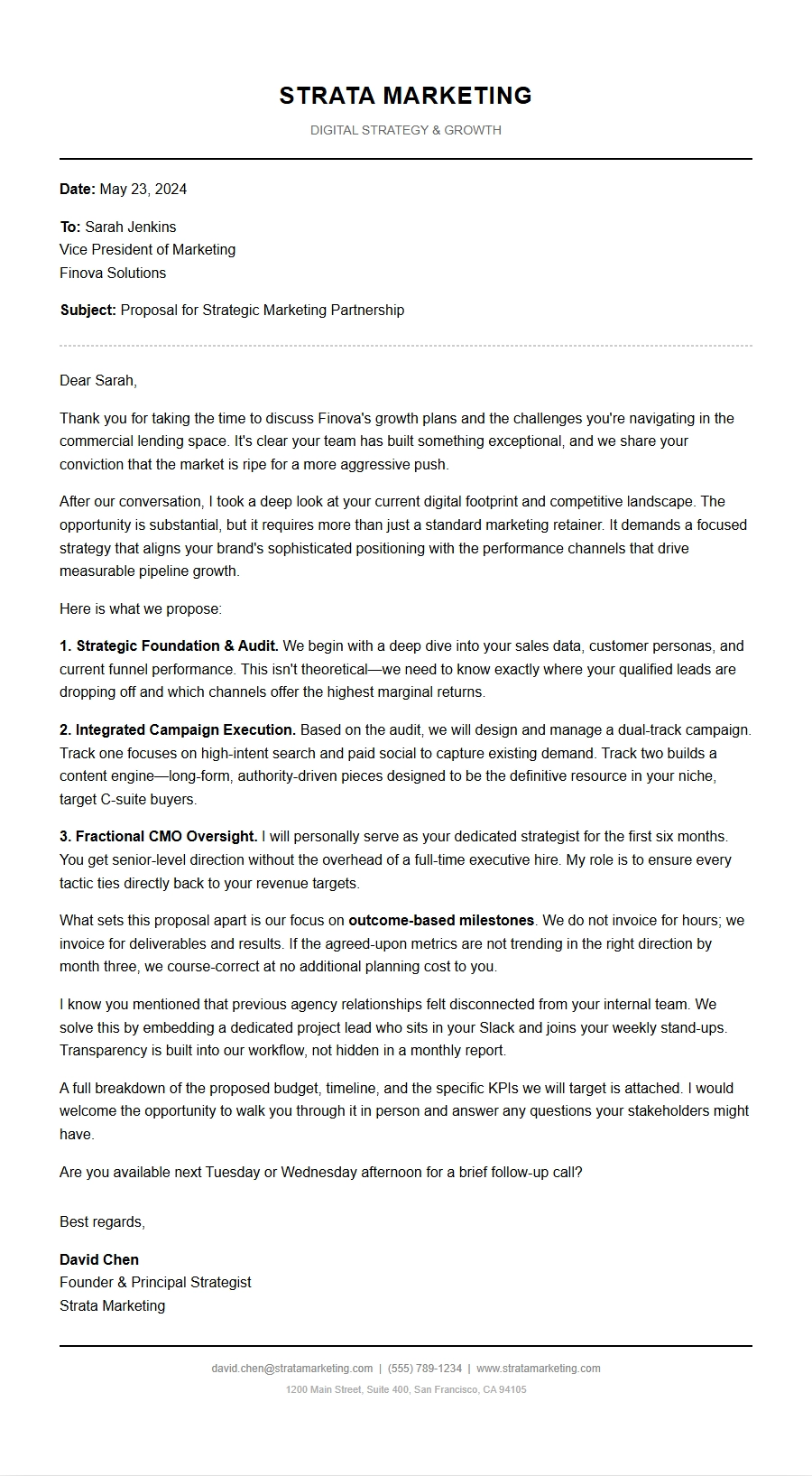 Marketing Agency Service Proposal Letter Template
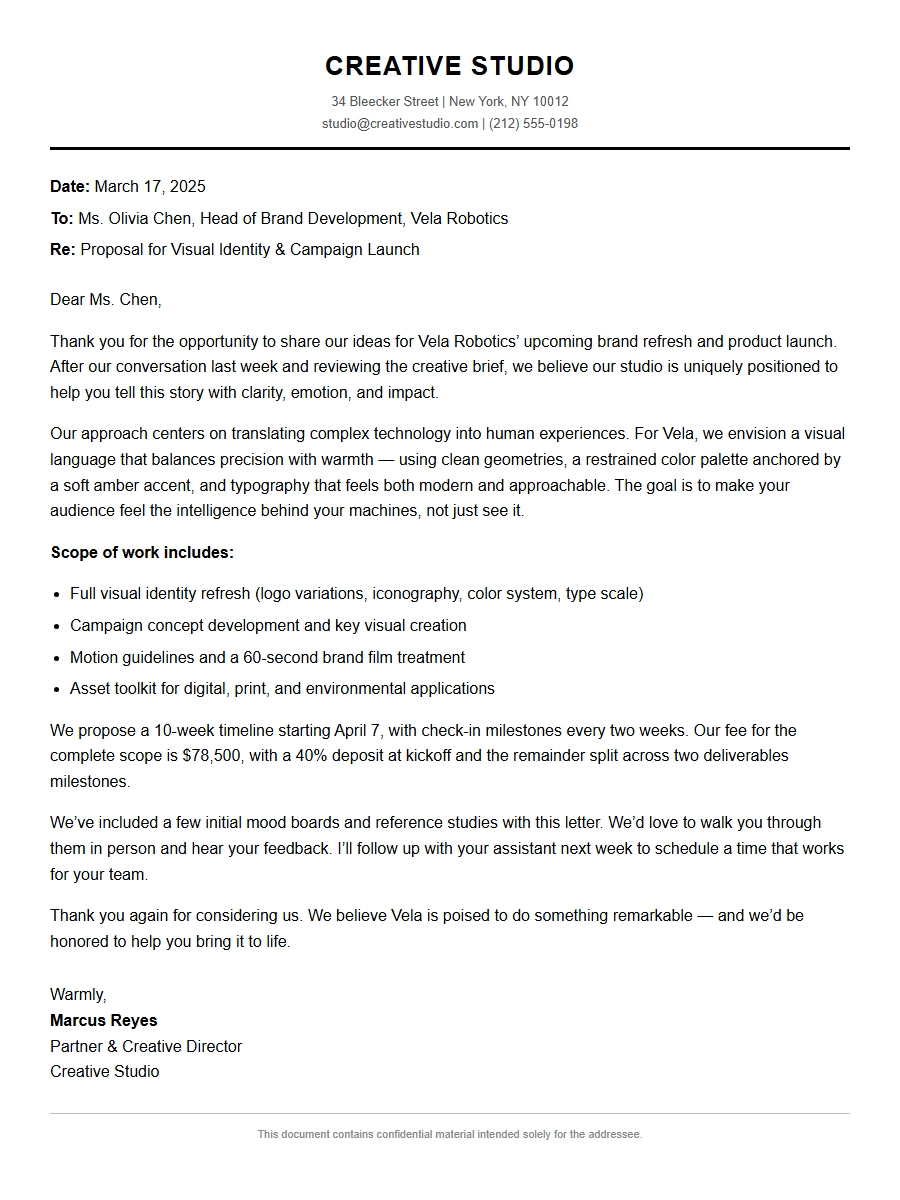 Creative Studio Project Proposal Letter
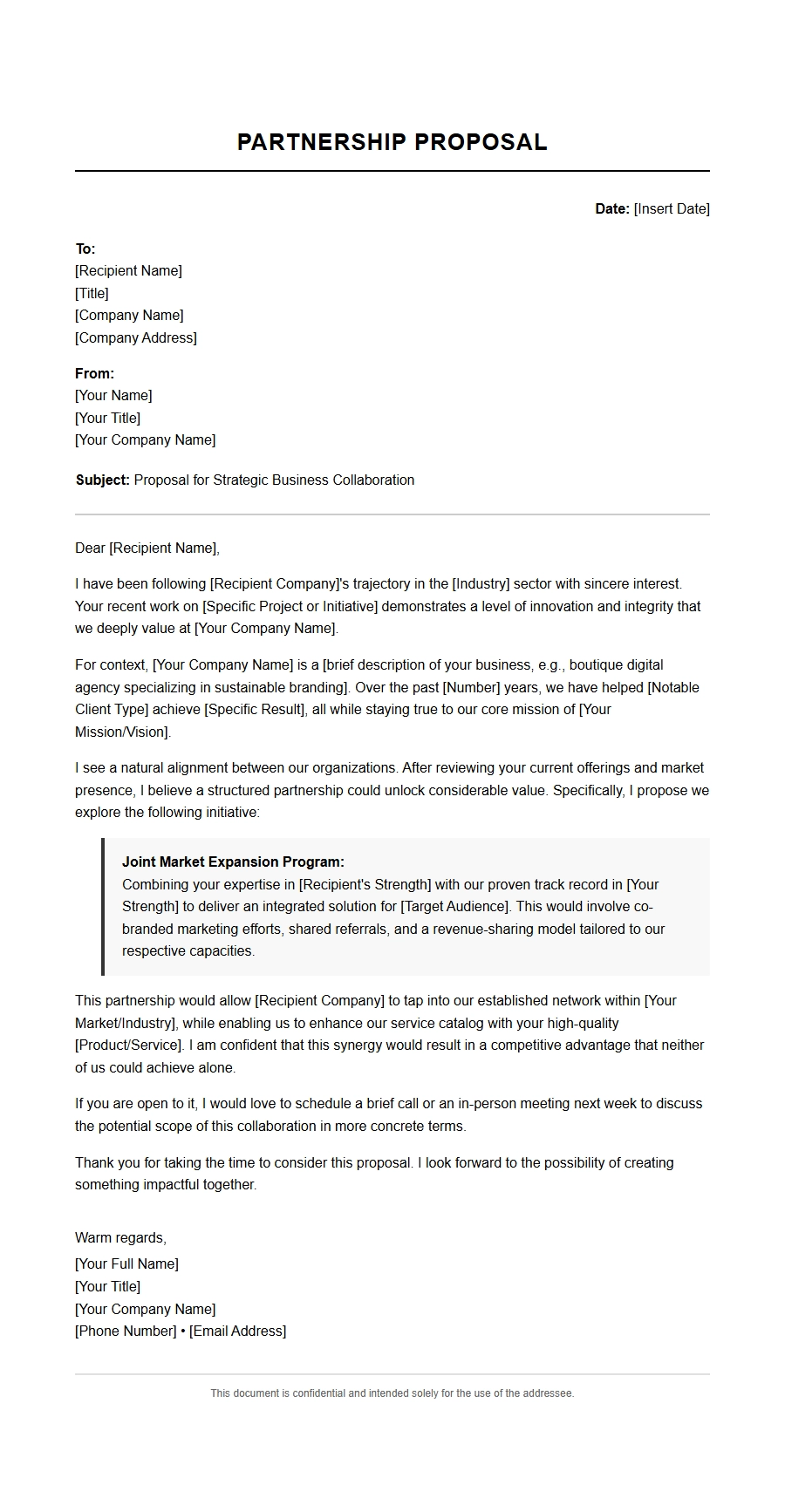 Small Business Partnership Proposal Letter Template
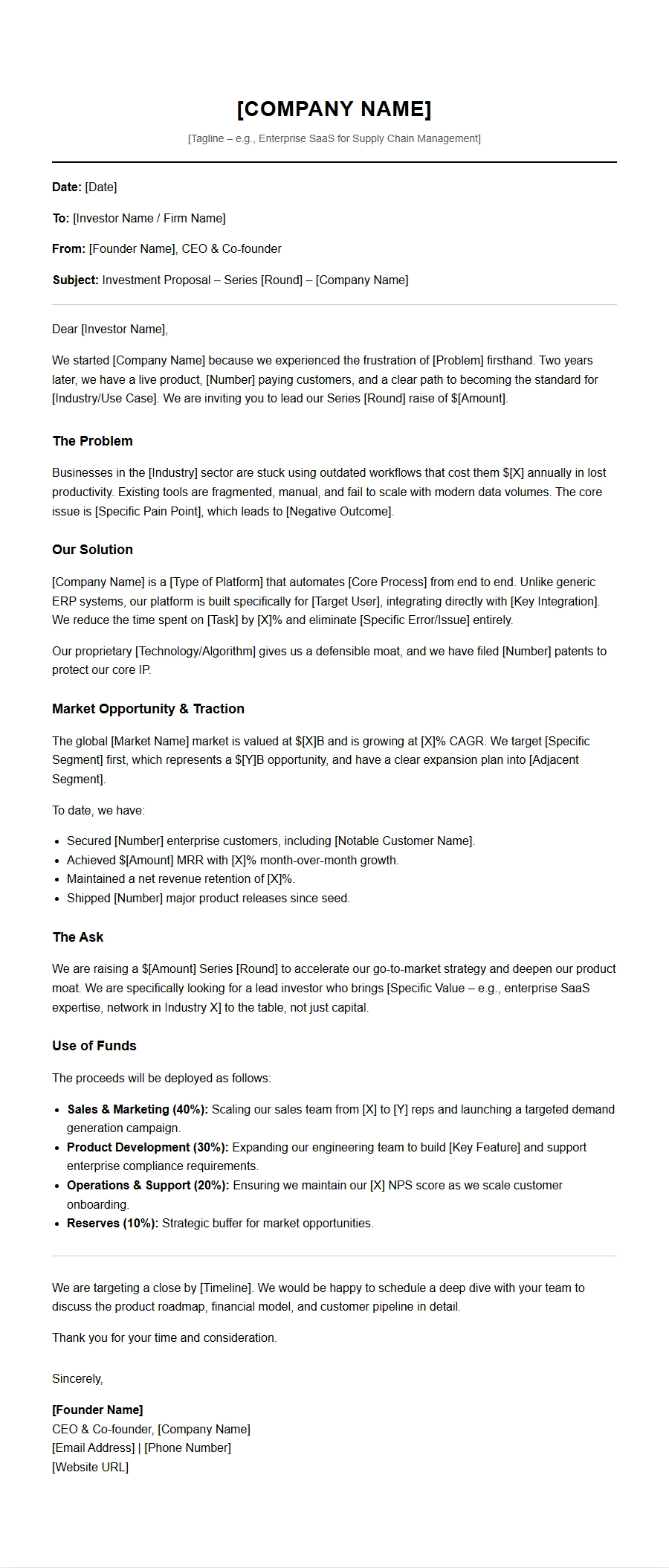 Startup Investment Proposal Letter Template