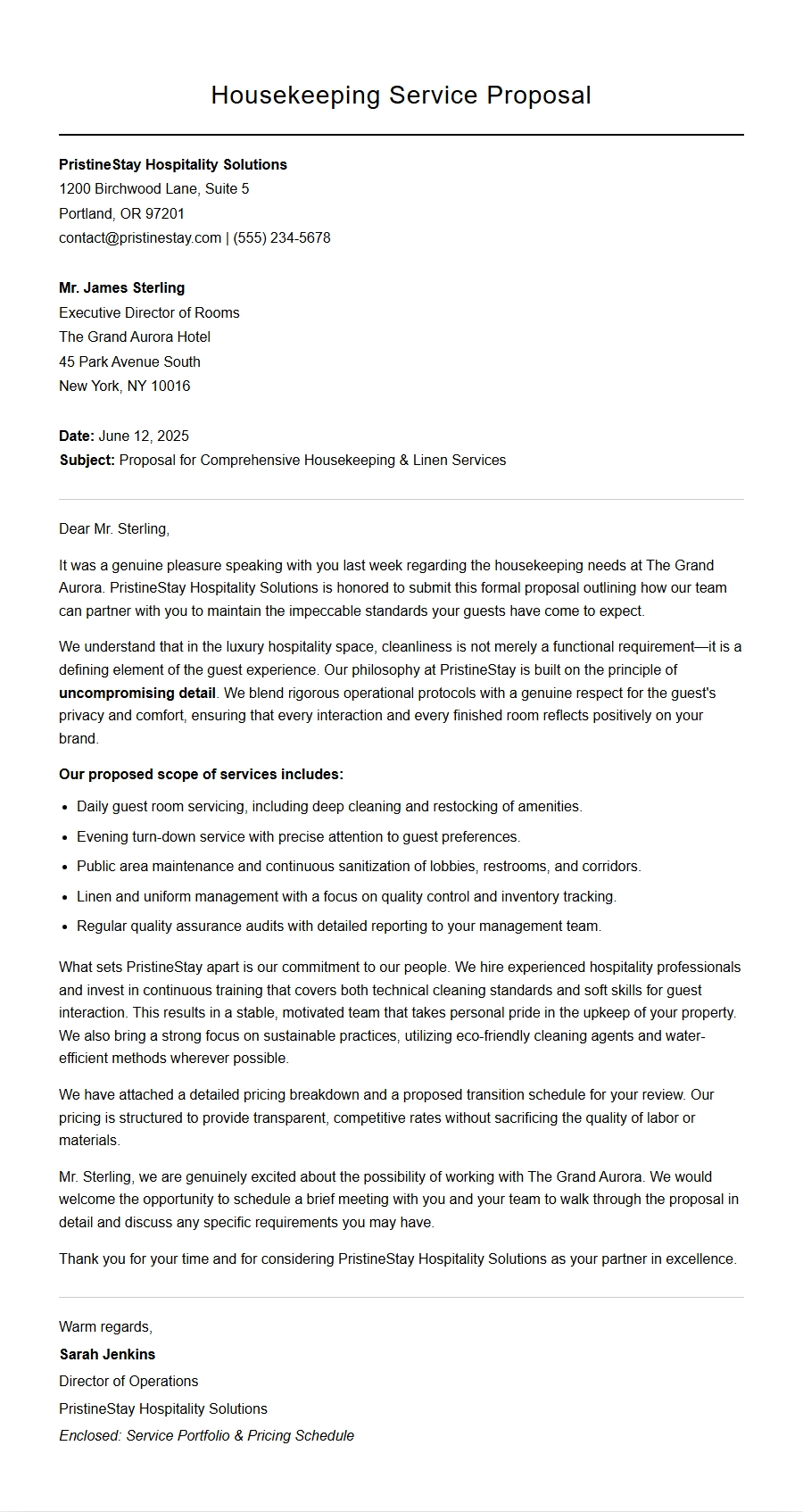
You’ve got a potential client who needs convincing, and the first thing you send is a letter. That’s a lot of pressure on a single page. A hospitality housekeeping service proposal letter is your chance to show a hotel manager or property owner that you understand their world—clean rooms, guest satisfaction, and tight schedules. Getting the tone right matters, because this isn’t a generic sales pitch. It’s a professional correspondence that says, “I’ve done this before, and I can solve your specific problem.”
Why using a sample makes you smarter, not lazy
Using a letter template doesn’t mean copying someone else’s work. It means starting with a structure that’s been tested. A good sample saves you from staring at a blank screen. It gives you a proven business letter format, the right salutation and closing, and a flow that feels natural. You get to focus on the details that make your offer unique—your pricing, your experience, and the specific services you provide.
Think of it like a recipe. You follow the method, but you adjust the seasoning. The best customizable letter starts with a solid base, then you swap in your own story. That’s not cheating. That’s working smarter.
Choosing the right sample for your situation
Not all proposal letters look the same. If you’re pitching to a small boutique hotel, your tone can be warmer and more direct. A large chain might expect a more formal writing style with clear sections and hard numbers. Before you start, know who’s reading. That decision shapes everything from the letterhead design to the way you describe your team’s reliability.
If you’re sending the proposal by email, keep the format simple. No fancy headers that break on mobile. Use a clean digital letter format with short paragraphs. If you’re printing it, invest in a professional layout. First impressions start with how the page looks.
How to adapt a sample without losing your voice
The mistake most people make is leaving the sample untouched. Don’t do that. The sample is a skeleton. Your job is to add the muscle and skin. Start by rewriting the opening paragraph to address the reader’s specific pain point. Instead of “We offer cleaning services,” try “We know your guests expect spotless rooms at 3 PM check-in, and we have the team to deliver that consistently.”
That simple shift changes the tone in writing from generic to personal. It shows you understand their daily reality. It also signals that you’re not just sending out mass emails. You’ve thought about their operation.
Category: Housekeeping service proposals
Common mistakes that kill your credibility
You’d be surprised how many proposal letters start with “To Whom It May Concern.” That phrase tells the reader you didn’t bother to learn their name. Spend two minutes finding the right contact person. It makes a difference.
Another trap is ignoring the format. A printed letter with typos or uneven margins looks careless. An email with no subject line or a generic “Proposal” gets ignored. Treat every detail like it matters, because it does. Letter writing etiquette isn’t old-fashioned. It’s a sign of respect. Small things like proofreading the letter twice, checking the date, and using a proper closing show that you pay attention to detail—exactly what a housekeeping service should do.
Tailoring the opening to grab attention fast
Your first two sentences decide if they keep reading. Don’t waste that space on pleasantries. Start with a statement that connects to their biggest concern. For example: “In the last month, your online reviews mentioned room cleanliness three times. We can help fix that.”
That’s specific. It shows you did your homework. It also makes the rest of the letter feel urgent and relevant. If you’re looking for more ideas on how to structure this, our brand awareness campaign proposal examples can give you a sense of how to frame your offer around their reputation.
Step-by-step: writing a proposal letter that works
Start with a clear subject line or header. Something like “Housekeeping Services Proposal for [Property Name]” tells them exactly what this is.
Then write a short introduction. State who you are and why you’re writing. Keep it to three sentences. For example: “We provide housekeeping services to hotels in the downtown area. We saw that you’re expanding your rooms, and we want to show you how we can keep your standards high without increasing your overhead.”
Next, explain what you offer. Be specific. Don’t say “We clean rooms.” Say “We provide daily room cleaning, deep cleaning every two weeks, and laundry management. Our team uses eco-friendly products and follows your checklist.” The more detail you give, the less they have to guess. This is where you can reference our operational efficiency improvement proposal to show you also think about their workflow, not just the cleaning itself.
Making your letter feel professional but human
You don’t have to sound like a lawyer. Write like a competent person who enjoys their job. Use short sentences. Vary your rhythm. Ask yourself: would I trust this person to clean my hotel rooms? If the letter feels stiff or overly salesy, the answer is probably no.
A good cover letter examples for housekeeping proposals show warmth without losing professionalism. Use “you” more than “we.” Talk about their guests, their reviews, and their reputation. Make it about them.
What to include before you hit send
Before you send that professional correspondence, check these things:
Is the recipient’s name spelled correctly and the title right?
Did you include your contact information and a call to action?
Is the letter structure easy to follow? Short paragraphs, clear breaks, no walls of text.
Have you removed any placeholders or leftover text from the sample?
Did you check the tone? Read it out loud. Does it sound like you?
If you’re proposing a timeline, include a simple schedule. Our timeline schedule proposal examples can help you outline when you’ll start, how often you’ll clean, and how you’ll handle emergencies. That kind of clarity builds trust.
Thinking beyond the letter
Once you send the proposal, you might need to follow up. That’s normal. A short email or a phone call a few days later shows you’re serious. If the client wants adjustments, don’t hesitate to rewrite parts of the letter. The goal is a partnership, not a one-time sale. Some clients might also want a distributor agreement proposal if you’re sourcing cleaning supplies through them, or a closing deal proposal to finalize terms. Be ready to adapt.
A good proposal letter is the start of a conversation. It’s not the last word. Make it easy for them to say yes, and make it clear you’re open to questions. That’s how trust gets built.
So go ahead. Grab a sample. Make it yours. Write like you’re talking to a colleague who needs a hand. That’s the letter that wins contracts.
Realistic Samples
Hospitality Housekeeping Proposal Letter
Standard Housekeeping Service Proposal for Boutique Hotel
Proposal for: Azure Boutique Hotel Prepared by: CleanStay Hospitality Services Date: October 15, 2023
We are pleased to submit this proposal for daily housekeeping services tailored to your 45-room boutique hotel. Our team will ensure spotless rooms, fresh linens, and meticulous common area maintenance.
Service Scope:
Daily guest room cleaning: includes making beds, dusting, vacuuming, bathroom sanitation, and replenishing amenities.
Linen change every third day or upon request.
Common area cleaning: lobby, hallways, restrooms, and breakfast area (twice daily).
Weekly deep cleaning of all rooms on rotation.
Pricing (Monthly):
Service
Quantity
Rate per Room
Total
Daily room cleaning
45 rooms x 30 days
$8.50
$11,475.00
Common area cleaning
1 service
$4,200.00
$4,200.00
Deep cleaning (weekly rotation)
180 rooms/month
$5.00
$900.00
Total Monthly Fee: $16,575.00 (includes eco-friendly cleaning supplies and insurance). We propose a 3-month trial at 10% discount. We look forward to your positive response.
Eco-Friendly Housekeeping Service Proposal for Resort
To: GreenLeaf Resort Management From: EcoClean Hospitality Partners Date: October 15, 2023
GreenLeaf Resort’s commitment to sustainability aligns perfectly with our eco-friendly housekeeping services. We propose a full-service program using non-toxic, biodegradable products and water-saving techniques.
Key Features:
Use of EPA Safer Choice certified cleaning agents.
Microfiber cloths to reduce waste and water usage.
Linen reuse program with guest opt-in cards.
Recyclable amenity dispensers instead of single-use bottles.
Service Breakdown for 120 Cottages:
Component
Frequency
Monthly Cost
Daily cottage cleaning
Daily
$18,000.00
Common area (pool, gym, lobby)
Twice daily
$6,500.00
Deep cleaning & occasional carpet shampoo
Monthly
$2,400.00
Sustainability reporting & audit
Quarterly
$1,200.00
Total monthly investment: $28,100.00. This includes all supplies, training, and a dedicated supervisor. We also offer a 5% discount for an annual contract. Let us help you achieve your green certification goals.
Premium VIP Floor Housekeeping Service Proposal
To: The Grand Regency Hotel – Executive Office From: Prestige Cleaning Solutions Date: October 15, 2023
We propose an exclusive housekeeping service for your VIP suites and executive floor (12 suites). Our concierge-level cleaning ensures impeccable presentation for your most discerning guests.
Service Inclusions:
Twice-daily turndown service with aromatherapy mist.
Personalized amenity stocking based on guest preferences (e.g., pillow menu, bath salts).
24-hour on-call housekeeper for urgent requests.
Weekly deep cleaning including upholstery steaming and marble polishing.
Cost Structure (per suite per month):
Item
Daily Rate
Monthly Total (12 suites)
Standard cleaning + turndown
$45.00
$16,200.00
On-call service (24/7)
$50 per call (avg 10 calls)
$500.00
Weekly deep cleaning
$80 per suite
$960.00
Luxury amenities restocking
$15 per suite per day
$5,400.00
Estimated Total: $23,060.00/month. We include a dedicated supervisor and monthly quality reports. This service will enhance your guest satisfaction scores.
Proposal for Daily Housekeeping and Laundry Services
To: Harbor View Inn From: FreshLinen Services Inc. Date: October 15, 2023
We propose a comprehensive housekeeping and laundry solution for your 80-room inn. Our team will handle all cleaning tasks plus on-site linen and towel laundry, reducing your operational burden.
Housekeeping Tasks:
Daily guest room cleaning (full service).
Public area maintenance (lobby, restaurant, restrooms).
Weekly window cleaning and carpet vacuuming.
Laundry Services:
Guest linens: sheets, pillowcases, duvet covers.
Towels: bath, hand, pool towels.
Staff uniforms (if required).
Pricing Estimate (monthly):
Service
Volume
Cost
Housekeeping (80 rooms + common)
30 days
$14,200.00
Laundry – 1,200 lbs/day avg
Per pound: $1.80
$64,800.00
Supplies & consumables
Included
$0.00
Total Monthly: $79,000.00. We offer a 7% discount if laundry volume exceeds 1,500 lbs/day. Please see attached equipment list for our state-of-the-art washers.
Seasonal Deep Cleaning Housekeeping Service Proposal
To: Mountain Peak Resort From: Sparkle Seasonal Services Date: October 15, 2023
As your peak winter season approaches, we propose a specialized deep cleaning program to prepare and maintain your 150-room property. This one-time deep clean followed by weekly maintenance will ensure a pristine environment.
Deep Cleaning Package (One-Time):
Carpet shampooing (all rooms and corridors).
Upholstery cleaning in lounge and restaurant.
Kitchen exhaust hood degreasing.
Window washing (interior).
Mattress sanitization.
Schedule & Cost:
Task
Timeline
Price
Initial deep clean (150 rooms + public)
5 days (Oct 25-29)
$24,500.00
Weekly maintenance deep clean (rotating zones)
Every Saturday (Oct – Mar)
$4,200.00/visit
Full Season Estimate (Oct – Mar): $24,500 + 24 visits × $4,200 = $125,300.00. We provide all equipment and eco-friendly chemicals. A 10% early booking discount applies if signed by Oct 20.
Housekeeping Staff Outsourcing Proposal for Hotel Chain
To: Continental Hotels Corp. – Operations Dept From: StaffPro Hospitality Solutions Date: October 15, 2023
We offer a complete staff outsourcing solution for your three hotel properties (total 350 rooms). Our trained housekeepers, supervisors, and trainers will work under your brand standards, while we handle recruitment, payroll, and HR compliance.
Staffing Model:
1 housekeeper per 15 rooms (23 housekeepers needed).
2 floor supervisors per property.
1 regional manager (oversees all three).
Cost Breakdown (per month per property):
Item
Property A (120 rooms)
Property B (100 rooms)
Property C (130 rooms)
Labor (wages + benefits)
$48,000.00
$40,000.00
$52,000.00
Supervisory staff
$8,500.00
$8,500.00
$8,500.00
Management fee (10% of labor)
$5,650.00
$4,850.00
$6,050.00
Total per month: $182,050.00 across all properties. This includes uniforms, training, and turnover coverage. We guarantee 98% staffing reliability. Contact us for a site assessment.
Comprehensive Housekeeping and Linen Management Proposal
To: Seaside Resort & Spa From: TotalCare Hospitality Services Date: October 15, 2023
We propose an integrated housekeeping and linen management program covering all guest rooms (200), spa facilities, and dining areas. Our system tracks linen inventory, reduces loss, and optimizes cleaning efficiency.
Key Services:
Daily housekeeping (all zones).
Linen rental and laundering: 3,000 sets of sheets, 5,000 towels, robes, etc.
Inventory management with RFID tagging.
Monthly linen quality reports and par level adjustments.
Monthly Pricing:
Component
Detail
Cost
Housekeeping labor
40 housekeepers, 4 supervisors
$68,000.00
Linen rental & laundry
Per piece pricing (avg $1.20)
$36,000.00
Management & RFID system
Flat fee
$5,500.00
Cleaning supplies & chemicals
Included
$0.00
Total Monthly: $109,500.00. We promise a 5% reduction in linen loss within three months. A 12-month contract qualifies for a 3% discount. Let’s discuss how we can streamline your operations.
Tailored Housekeeping Service Proposal for Extended Stay Hotel
To: HomeAway Suites Management From: CleanCorp Extended Stay Specialists Date: October 15, 2023
Extended stay guests require flexible cleaning schedules. Our proposal offers weekly full cleans with optional mid-week refreshes, plus common area upkeep for your 65-suite property.
Service Options:
Weekly Premium: Full cleaning every 7 days (linen change, vacuum, bathroom scrub, kitchen wipe-down).
Common Areas: Lobby, laundry room, fitness center, hallway vacuuming (daily).
Pricing Structure:
Package
Per Suite Cost
Monthly Total (65 suites)
Weekly Premium only
$35.00 per visit
$9,100.00 (4 visits)
Mid-week Refresh (estimated 40% uptake)
$18.00 per visit
$1,872.00 (approx.)
Common area cleaning
$3,800.00 monthly
$3,800.00
Best Estimate: $14,772.00/month. We can adjust based on actual occupancy. Includes supplies and a dedicated point of contact. Perfect for your extended stay model.
Green Cleaning Housekeeping Proposal with Cost Breakdown
To: EcoLodge & Conference Center From: GreenGuard Hospitality Cleaning Date: October 15, 2023
We present a green cleaning program that meets LEED certification criteria. Our proposal covers 80 guest rooms and conference facilities using third-party certified green products and methods that reduce indoor air contaminants.
Green Initiatives:
All cleaning agents are Green Seal certified.
HEPA-filtered vacuums for improved air quality.
Water-conserving mopping systems (reduce water usage by 60%).
Recycling and compostable waste bags in all rooms.
Detailed Monthly Cost:
Service
Frequency
Cost
Guest room cleaning (80 rooms daily)
30 days
$10,800.00
Conference rooms & public areas (daily)
30 days
$5,200.00
Weekly deep cleaning (all areas)
4 weeks
$2,800.00
Green product surcharge – waived
—
$0.00
Total: $18,800.00/month. We provide quarterly sustainability reports tracking chemical usage, water consumption, and recyclables diverted. This service supports your green brand image.
Emergency Housekeeping Service Proposal for Hotel Renovation
To: City Tower Hotel – Post-Renovation Team From: RapidClean Emergency Services Date: October 15, 2023
Following your recent renovation of 50 guest rooms and the lobby, we propose an emergency intensive cleaning service to remove construction dust, debris, and finalize the spaces for reopening within 72 hours.
Scope of Work:
Construction dust removal from all surfaces (walls, floors, ceilings, vents).
Window and mirror polishing.
Vacuuming & HEPA filtration of carpets and upholstery.
Disinfection of bathrooms and kitchenettes.
Trash and debris haul-off (up to 5 cubic yards).
Timeline & Cost:
Area
Estimated Hours
Rate
Total
50 guest rooms
250 hours (5 crews x 10hrs)
$45.00/hr
$11,250.00
Lobby & public spaces
80 hours
$45.00/hr
$3,600.00
Debris removal & disposal
Lump sum
$1,500.00
$1,500.00
Total Emergency Clean: $16,350.00. We can start within 4 hours of approval and guarantee completion in 48–72 hours. Includes all equipment and supplies. Let’s get your hotel ready for guests.
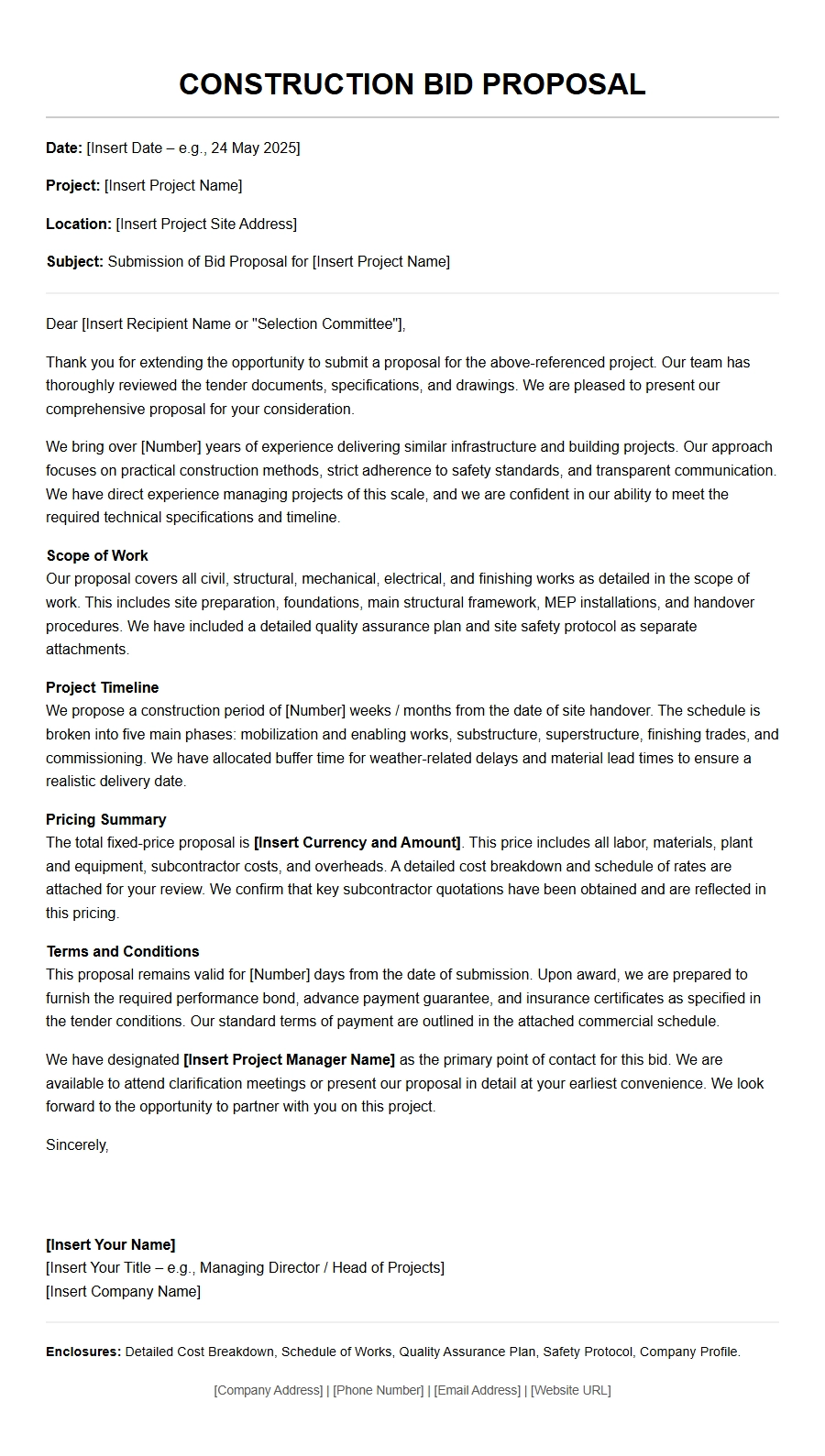 Sample Construction Bid Proposal Letter
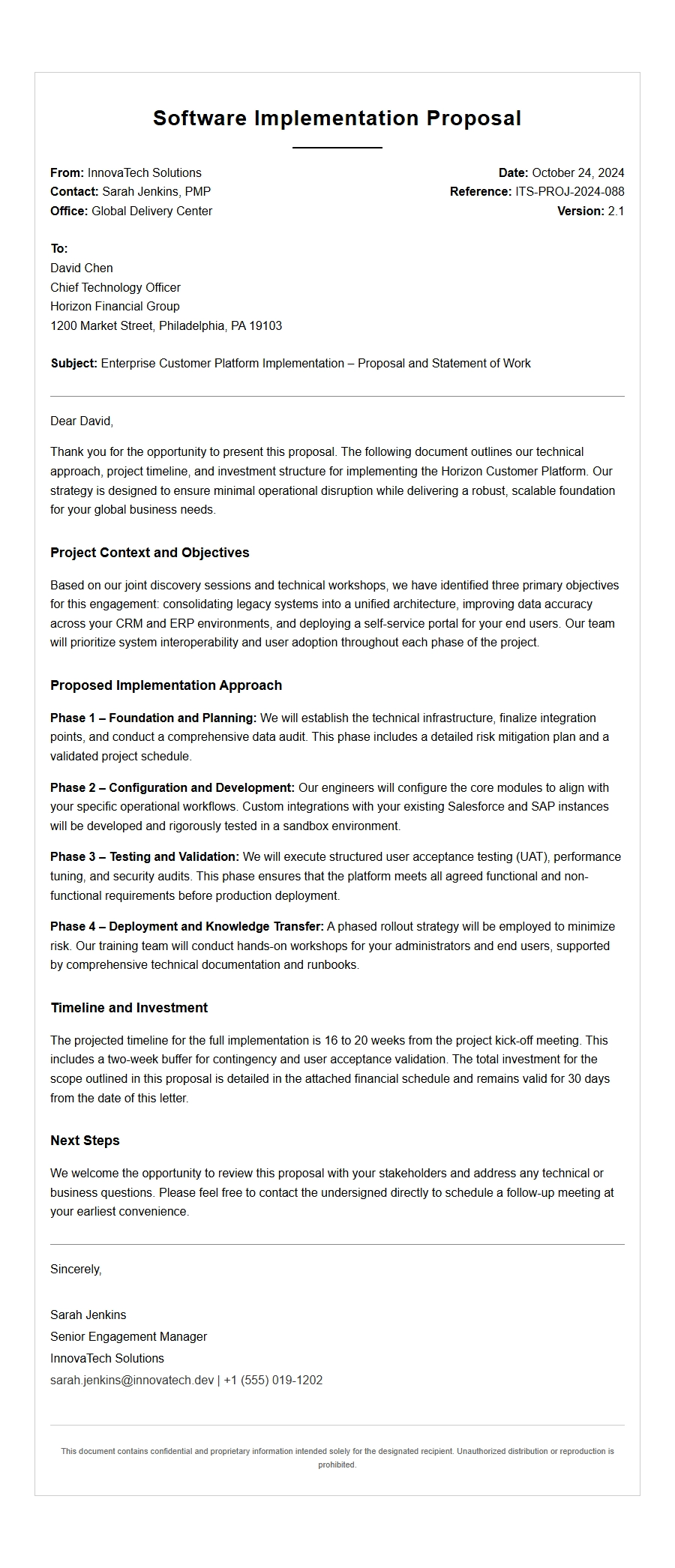 Enterprise Software Implementation Proposal Letter Example
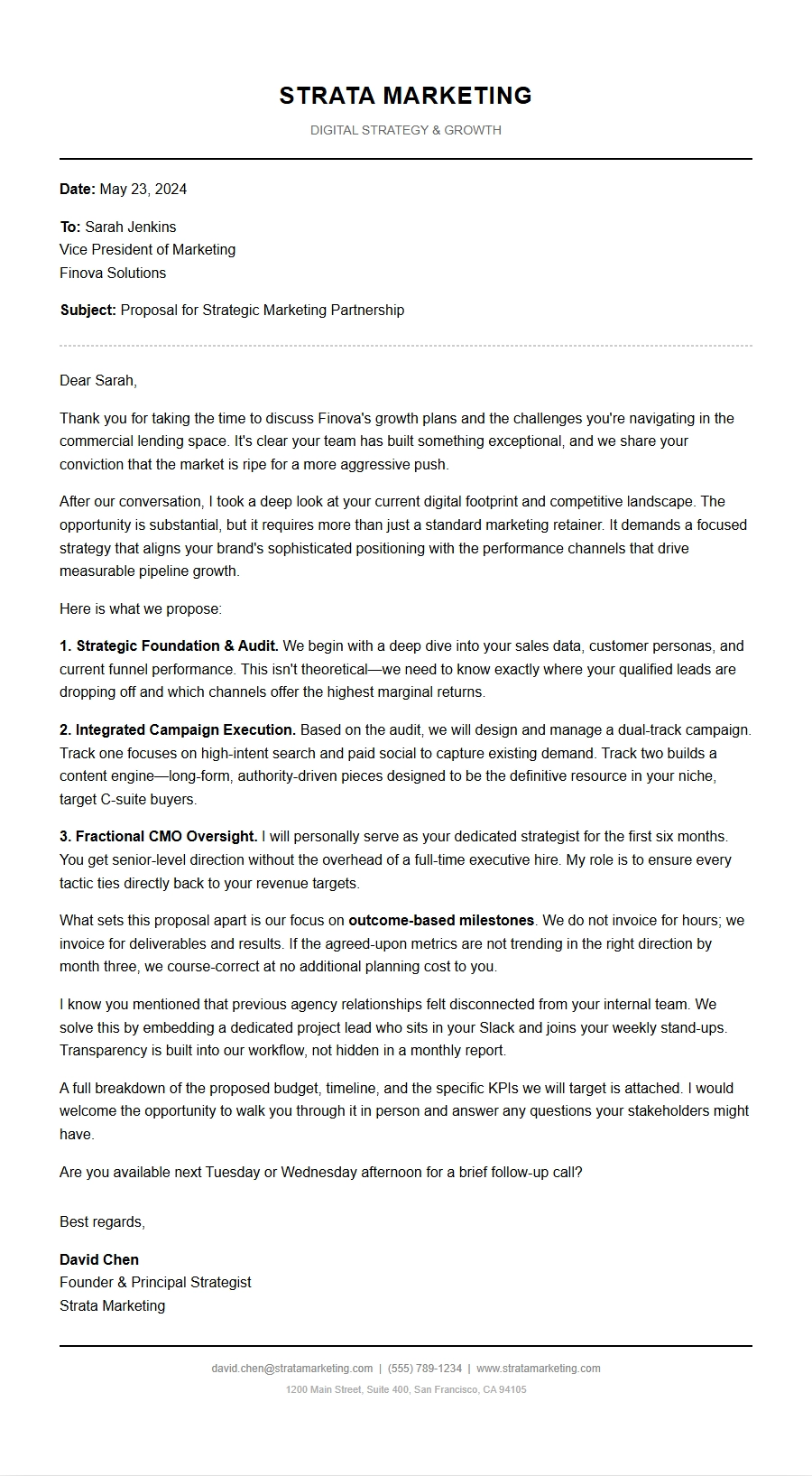 Marketing Agency Service Proposal Letter Template
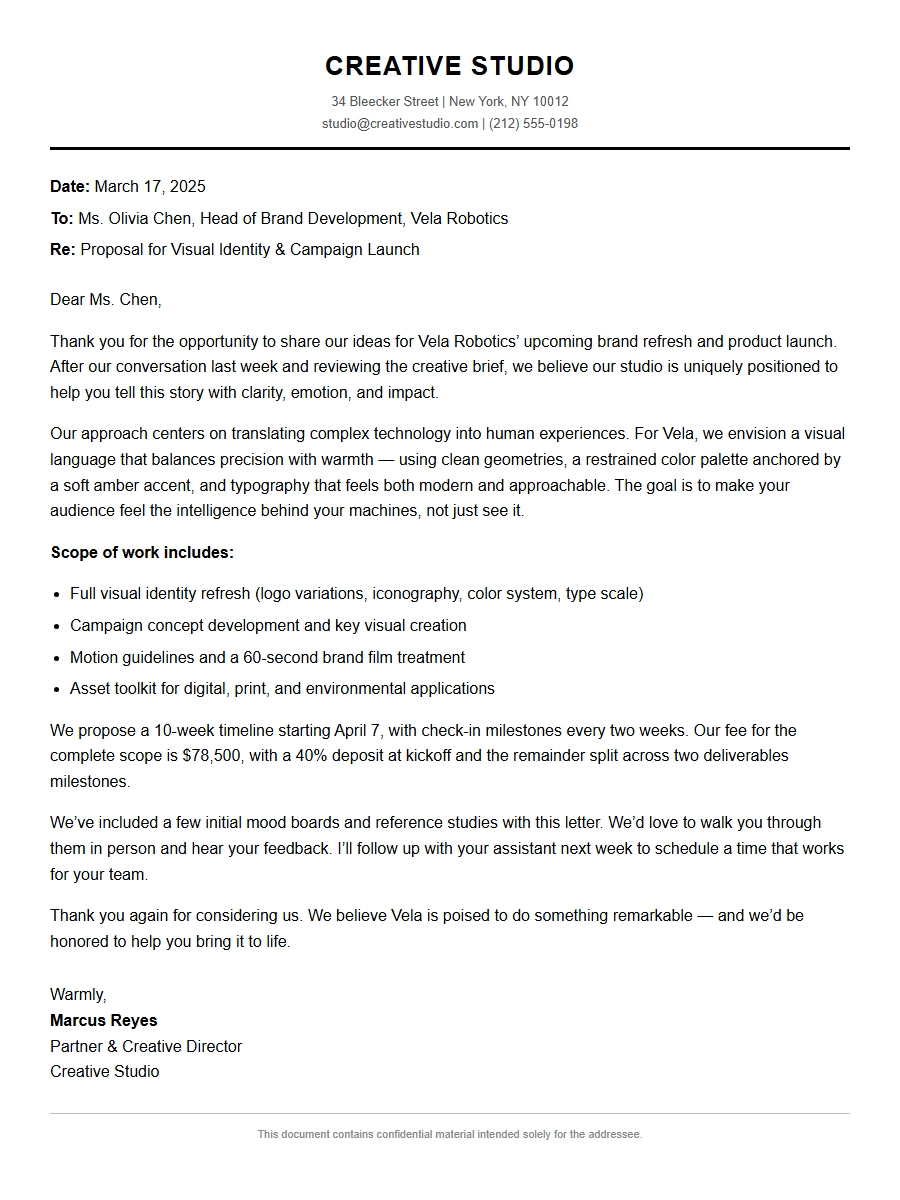 Creative Studio Project Proposal Letter
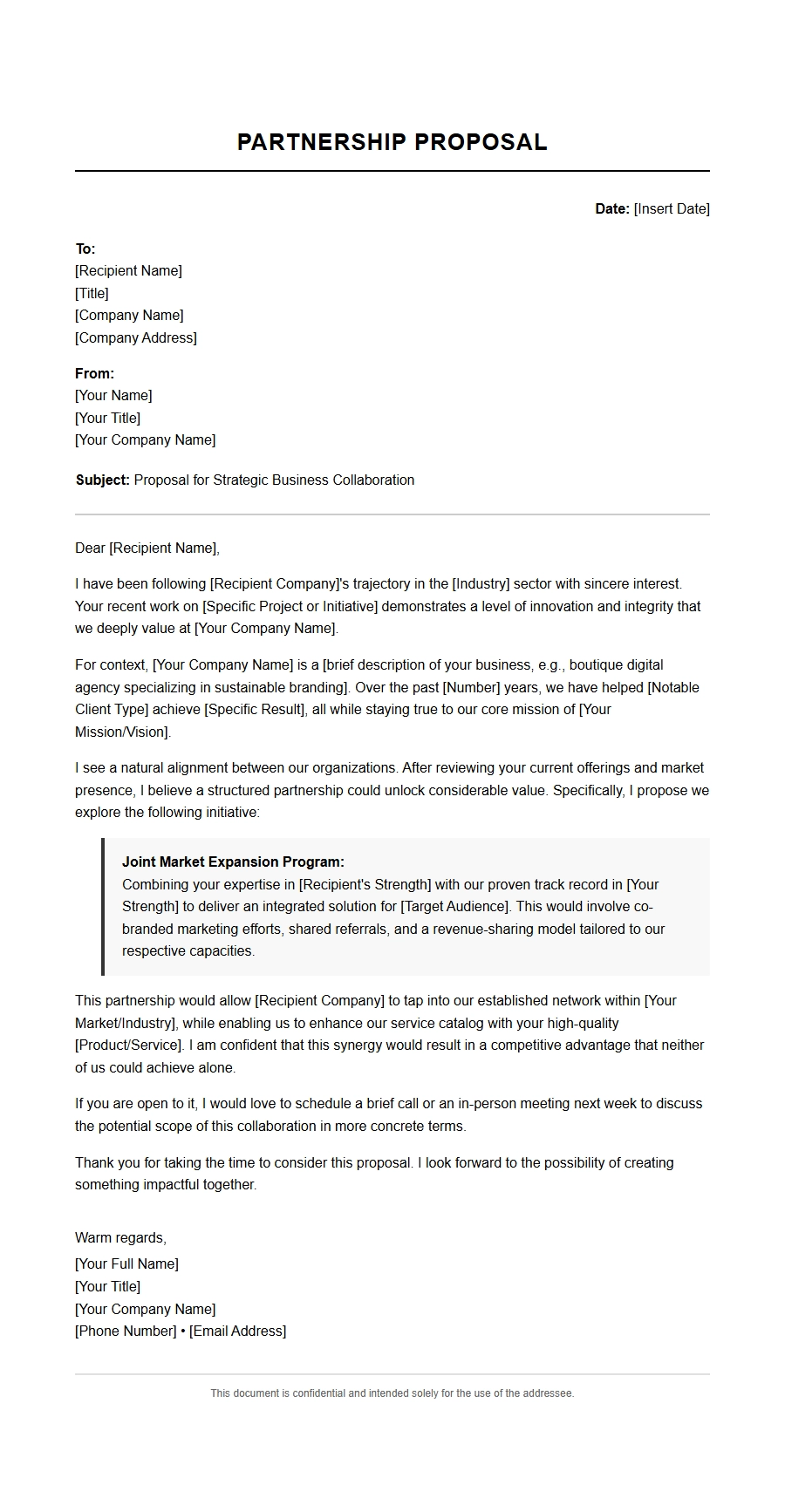 Small Business Partnership Proposal Letter Template
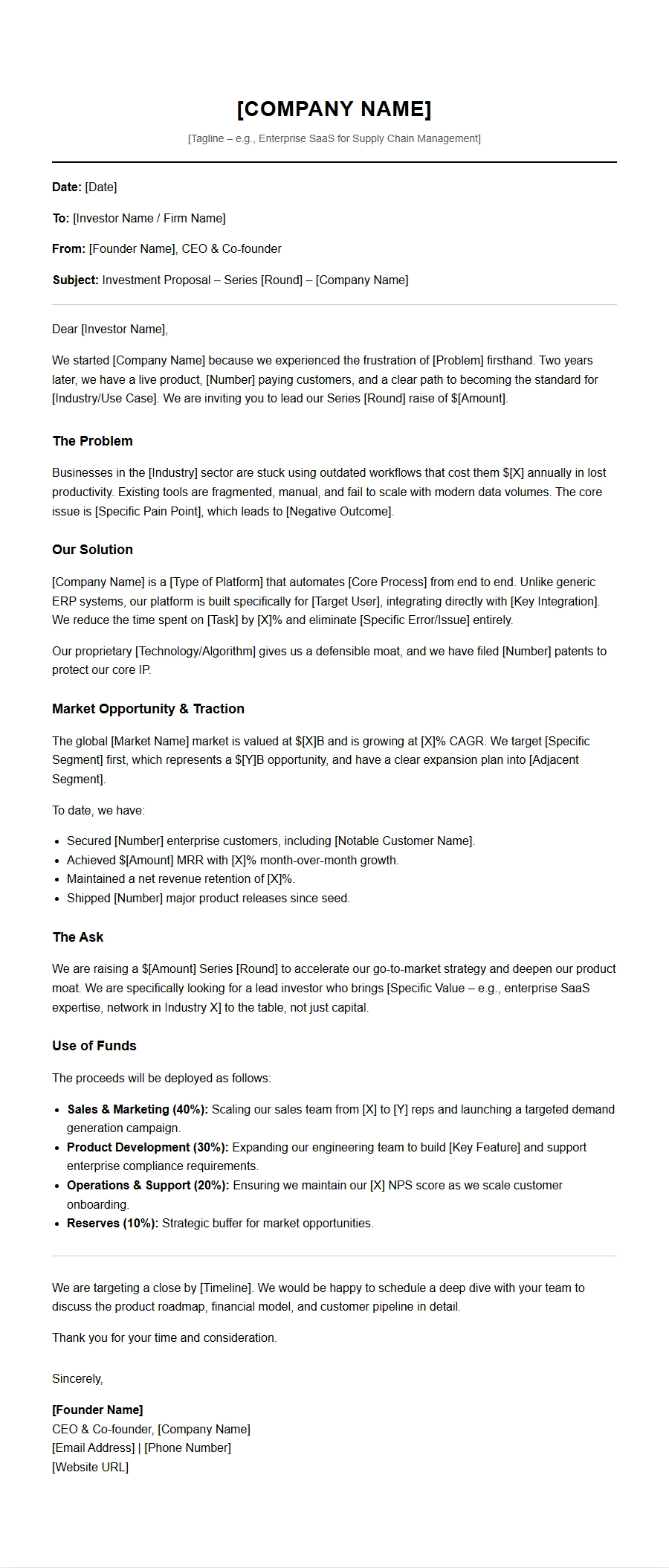 Startup Investment Proposal Letter Template