How to Write a Sympathy Letter to a Grieving Family
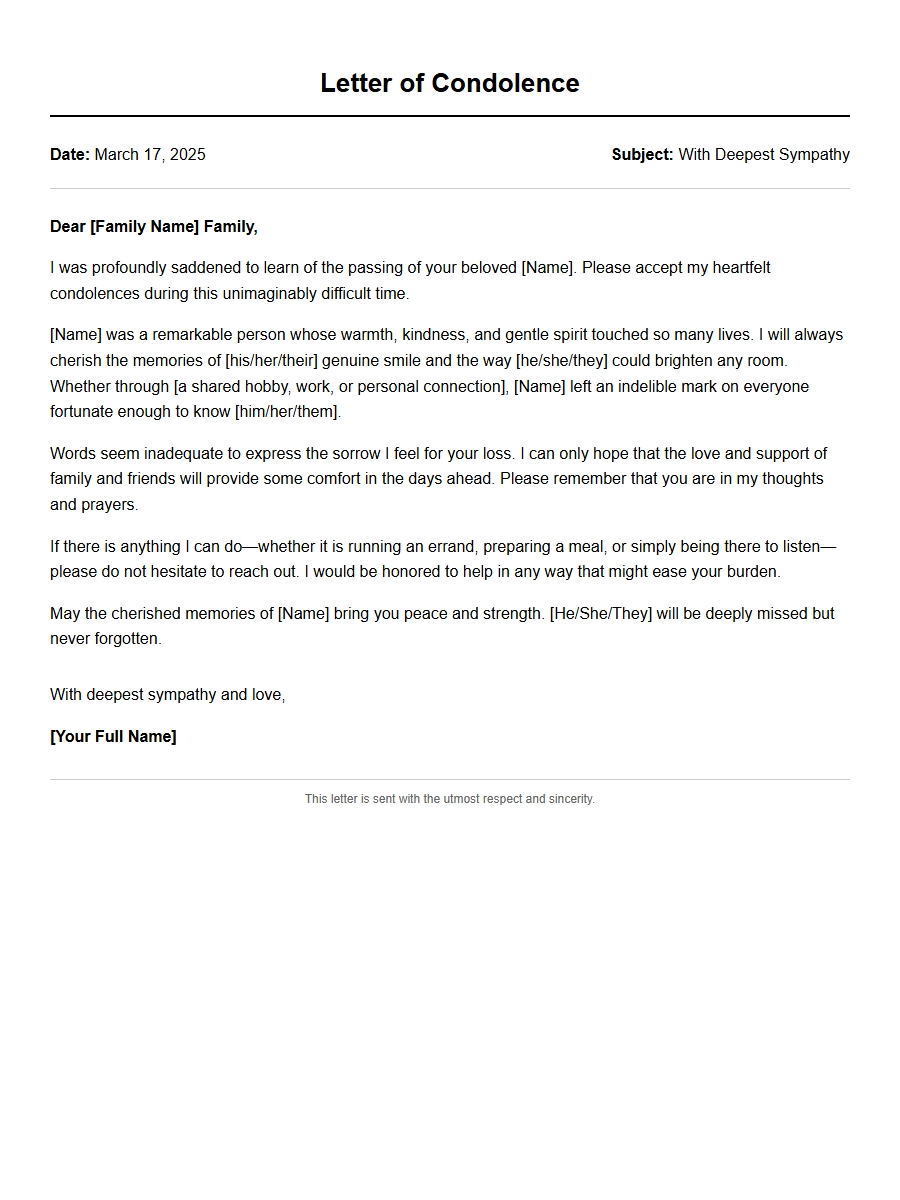
Sitting down to write to someone who has just lost a family member is one of the hardest writing tasks there is. The fear of saying the wrong thing, or not enough, often leads to staring at a blank page. It doesn't have to be that way. A thoughtful letter sample gives you a framework to hold onto, so you can focus on the one thing that matters: your genuine message of sympathy.
Using a sample isn't about copying someone else's words. It's about learning effective letter structure and understanding the right tone in writing for such a sensitive moment. A good letter template handles the mechanics—the salutation and closing, the flow from opening to offer of help—so you can put your energy into being personal and sincere.
[[Category: Personal Letters]]
Why a Good Structure Matters So Much Here
A sympathy letter has a unique job. It needs to acknowledge a deep loss, express your sorrow, offer comfort, and share a positive memory or offer practical help—all without feeling scripted. A well-designed sample guides you through this. It prevents you from accidentally overlooking a key element because you were worried about how to start.
This isn't like catching up with an old friend or writing to a long-lost friend, where the tone can be light and newsy. The structure needs to be respectful and focused entirely on the recipient. The template gives you that respectful skeleton.
How to Choose and Personalize Your Sample
Not all sympathy letter samples are the same. For a close friend, you can choose a warmer, more personal structure. For a colleague or an acquaintance, you'll want a slightly more reserved customizable letter that still feels warm. The key is to match the sample's formality to your specific relationship.
Once you have the right sample, adapt it ruthlessly. The structure is just the container. Your specific memories and your authentic voice are the content. The goal is the opposite of asking a favor from a close friend; here, you are giving your presence and support through words. Replace generic lines with specific details. Instead of "I have fond memories," write "I'll never forget the time your dad helped me fix my car."
Key Elements of Effective Sympathy Letters
A strong opening is direct but gentle. "I was so deeply saddened to learn of [Name]'s passing." This immediately shows you know what happened and you care. The body can include a brief, positive memory and a concrete offer of help ("I'm bringing dinner on Thursday" rather than "Let me know if you need anything").
The closing should be simple and heartfelt. "With deepest sympathy" or "Thinking of you and your family" work perfectly. Pay attention to letter writing etiquette. If you are sending a physical card, neat handwriting or a clean print is a sign of respect. If you are emailing, follow standard digital letter format with a clear subject line like "Thinking of you and your family." Just as you'd carefully word a note to inform neighbors of upcoming construction noise to manage the reaction, a sympathy letter requires thoughtful wording to bring comfort.
Common Mistakes to Avoid
The biggest mistake is letting the fear of imperfection stop you from sending anything at all. Another is relying too heavily on clichés. Phrases like "He's in a better place" or "It was God's will" can be deeply personal and might not align with the recipient's beliefs. Stick to your own sorrow and your support for them.
Never skip proofreading your letter. A typo in a sympathy letter can feel disrespectful, even if it's an accident. Read it out loud to catch awkward phrasing. Make sure the recipient's name and the deceased's name are spelled correctly. The tone is critical when complaining about a noise disturbance politely, but it is arguably even more important here, where your words will be read during a time of heightened vulnerability.
Let the Sample Be Your Springboard
A sample gets you past the blank page. It shows you a proven path. Your job is to walk that path with your own heart. Unlike ending a contract relationship via a formal letter, this letter is about strengthening a human bond during a difficult time. Don't aim for perfection. Aim for sincerity. Write the letter, seal it with compassion, and send it. Your words will mean more than you know.
Examples for Different Needs
How to Write a Sympathy Letter to a Grieving Family
Condolence Letter for Loss of Spouse
Dear [Recipient's Name],
I was deeply saddened to hear of the passing of your beloved [spouse's name]. Please accept my heartfelt condolences during this incredibly difficult time. [Spouse's name] was a wonderful person, and I will always cherish the memories of [his/her/their] kindness and warm smile.
I remember how [he/she/they] would always take time to help others. The community has lost a true gem. I know that nothing can ease the pain you are feeling right now, but please know that I am thinking of you and your family.
If there is anything I can do to help—whether it's running errands, preparing meals, or simply sitting with you—please don't hesitate to call. I am here for you.
With deepest sympathy, [Your Name]
Sympathy Letter for Loss of a Parent
Dear [Name],
I was so sorry to learn about your father's/mother's passing. Your [parent] was a remarkable person, and their kindness and wisdom touched so many lives, including mine. I will never forget the advice [he/she/they] gave me years ago—it still guides me today.
Losing a parent is one of the hardest things we go through. I hope you find comfort in the beautiful memories you shared. I recall how you and your [parent] used to spend weekends gardening together; that image of joy and love will stay with me.
Please know that my thoughts are with you and your family. I would like to help in any way I can. Below are a few things I can assist with:
Preparing meals for the family
Helping with funeral arrangements or paperwork
Walking your dog during this busy time
Do not hesitate to reach out. You are in my heart.
With love, [Your Name]
Letter of Sympathy for Loss of a Child
My dearest [Name],
Words cannot express the sorrow I feel for you and your family upon the loss of your precious [child's name]. This is a pain no parent should ever endure. Please know that I am holding you close in my thoughts and heart.
[Child's name] brought so much light and laughter into the world. I remember [his/her/their] infectious giggles during our summer picnics and the way [he/she/they] loved to draw. That spirit will live on in everyone who knew [him/her/them].
Grief is a journey, and there is no right or wrong way to feel. Allow yourself to lean on those who care about you. I am here to listen, to cry with you, or to sit in silence if that is what you need.
I have arranged a small meal delivery schedule to ease your burden this week:
Day
Meal
Delivery Time
Monday
Lasagna & Salad
5 PM
Wednesday
Chicken Soup & Bread
4 PM
Friday
Vegetable Pasta
6 PM
You are not alone. With all my love, [Your Name]
Sympathy Note for Loss of a Friend
Dear [Name],
I was heartbroken to hear that your dear friend [friend's name] has passed away. Though I only met [them] a few times, I could see how much [he/she/they] meant to you. Your friendship was a beautiful thing.
I know you two shared an incredible bond—the countless road trips, late-night talks, and shared dreams. Those memories are a treasure that will never fade. Please take comfort in knowing that [friend's name] is at peace.
If you would like to talk about [friend's name] and celebrate [his/her/their] life, I would love to listen. Sometimes the best way to honor a friend is to share stories. I would also be happy to accompany you to the memorial service.
You are in my thoughts.
Warmly, [Your Name]
Condolence Letter with Memorial Donation Offer
Dear [Family Name] Family,
It is with great sadness that I learned of the passing of your beloved [deceased's name]. [He/She/They] was an extraordinary individual who dedicated so much to our community.
I remember [his/her/their] tireless work with the local food bank and the countless lives [he/she/they] touched. In honor of [deceased's name]'s legacy, my family and I would like to make a donation to a cause that was close to [his/her/their] heart.
Please let us know your preferred charity. We have outlined a few options based on [his/her/their] interests:
Organization
Focus Area
Donation Amount
Community Food Bank
Hunger Relief
$100
Animal Rescue League
Animal Welfare
$50
Scholarship Fund
Education
$75
Alternatively, if you prefer flowers or a different gesture, please let me know. My thoughts are with you all during this difficult time.
With deepest sympathy, [Your Name]
Sympathy Letter from a Distant Relative
Dearest [Name],
Though we are separated by miles, my heart aches for you upon the loss of our dear [deceased's name]. I wish I could be there to hug you and share in the grief, but please know that I am with you in spirit.
[Deceased's name] was a pillar of our family—the one who hosted every holiday gathering and kept us all connected. I will miss [his/her/their] stories and laughter. I still have the quilt [he/she/they] made for my wedding; it is a constant reminder of [his/her/their] love.
I have been reflecting on all the good times, and I would love to compile a memory book for the family. If you would like, I can gather photos and anecdotes from relatives near and far. Please let me know if that would be helpful.
I am also sending a care package with some of [deceased's name]'s favorite treats and a handwritten letter for you. Look for it in the mail soon.
Thinking of you always, [Your Name]
Sympathy Letter Offering Practical Help
Dear [Name],
I was deeply sorry to hear about the loss of your [relationship]. Grieving is exhausting, and the last thing you need to worry about is day-to-day tasks. Please allow me to help in practical ways.
I have prepared a list of services I can provide during this time. Just mark what you need, and I will take care of it:
Childcare for [children's names] on [days/times]
Grocery shopping and meal prep
House cleaning and laundry
Pet care (feeding, walking, vet visits)
Handling phone calls and messages
I am free on the following days next week, but I can adjust if needed:
Day
Available Hours
Notes
Monday
9 AM - 12 PM
Can do errands
Wednesday
2 PM - 6 PM
Can cook
Friday
All day
Flexible
Do not hesitate to ask. I want to ease your burden in whatever little way I can.
With heartfelt sympathy, [Your Name]
Condolence Letter for Loss of a Sibling
Dear [Name],
I am so sorry to learn of the passing of your brother/sister, [name]. A sibling is a part of your soul, and losing that bond is devastating. Please accept my deepest condolences.
I remember how you and [sibling's name] would laugh together at family gatherings—[he/she/they] always brought out the best in you. Those memories of shared joy are precious. I hope they bring you some comfort.
If you need someone to talk to—about the good times or just to be present—I am here. I can also help with practical matters like coordinating with relatives or organizing the memorial service. Let me know what you need.
You and your family are in my prayers.
With love, [Your Name]
Sympathy Letter for a Co-worker's Family Loss
Dear [Name],
The entire team at [Company Name] was deeply saddened to hear about the passing of your [relationship]. [Deceased's name] was often spoken of with such warmth by you, and we feel like we knew [him/her/them] too.
Please accept our sincere sympathy. We have arranged a few things to support you during this time:
A card signed by your colleagues with personal messages
A gift card to a local restaurant to ease meal planning
Time off covered by the team while you grieve
We have also set up a group to help with any immediate needs. Here is a list of volunteers and their contact information (available upon request).
Please do not worry about work right now. Focus on yourself and your family. We are thinking of you.
With heartfelt condolences, [Your Name] on behalf of the [Company Name] Team
Short Sympathy Letter with Memory Sharing
Dear [Name],
I was so sorry to hear of the loss of your [relationship's name]. [He/She/They] was a special person, and I will always remember [his/her/their] wonderful sense of humor and generous spirit.
One memory that stays with me is the time [deceased's name] helped me fix my car in the rain without complaining. That was [him/her/them]—always ready to lend a hand. I know you have countless similar stories.
I hope that the love of family and friends surrounds you and brings you strength. I am here for you if you need anything at all—even just a quiet cup of coffee.
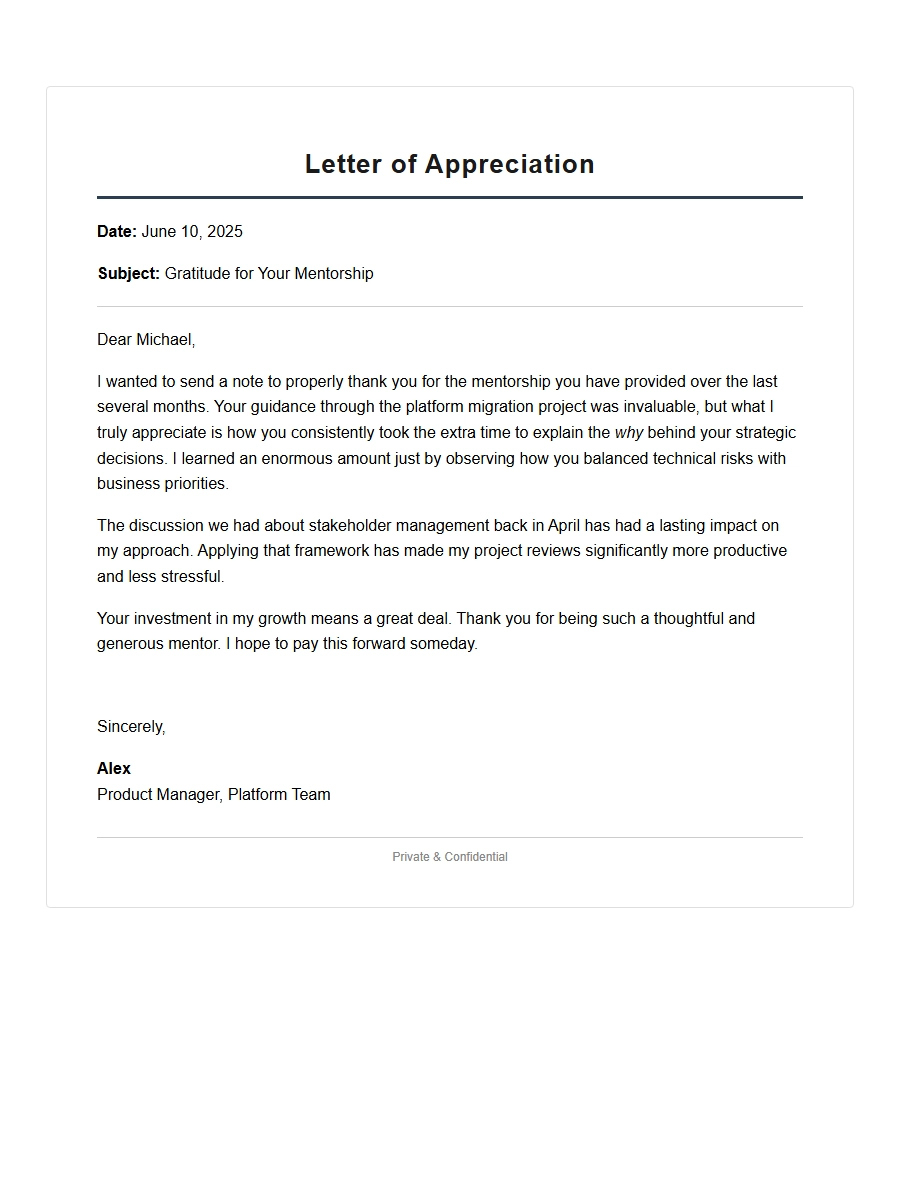 Thanking a Mentor for Guidance: Sample Messages
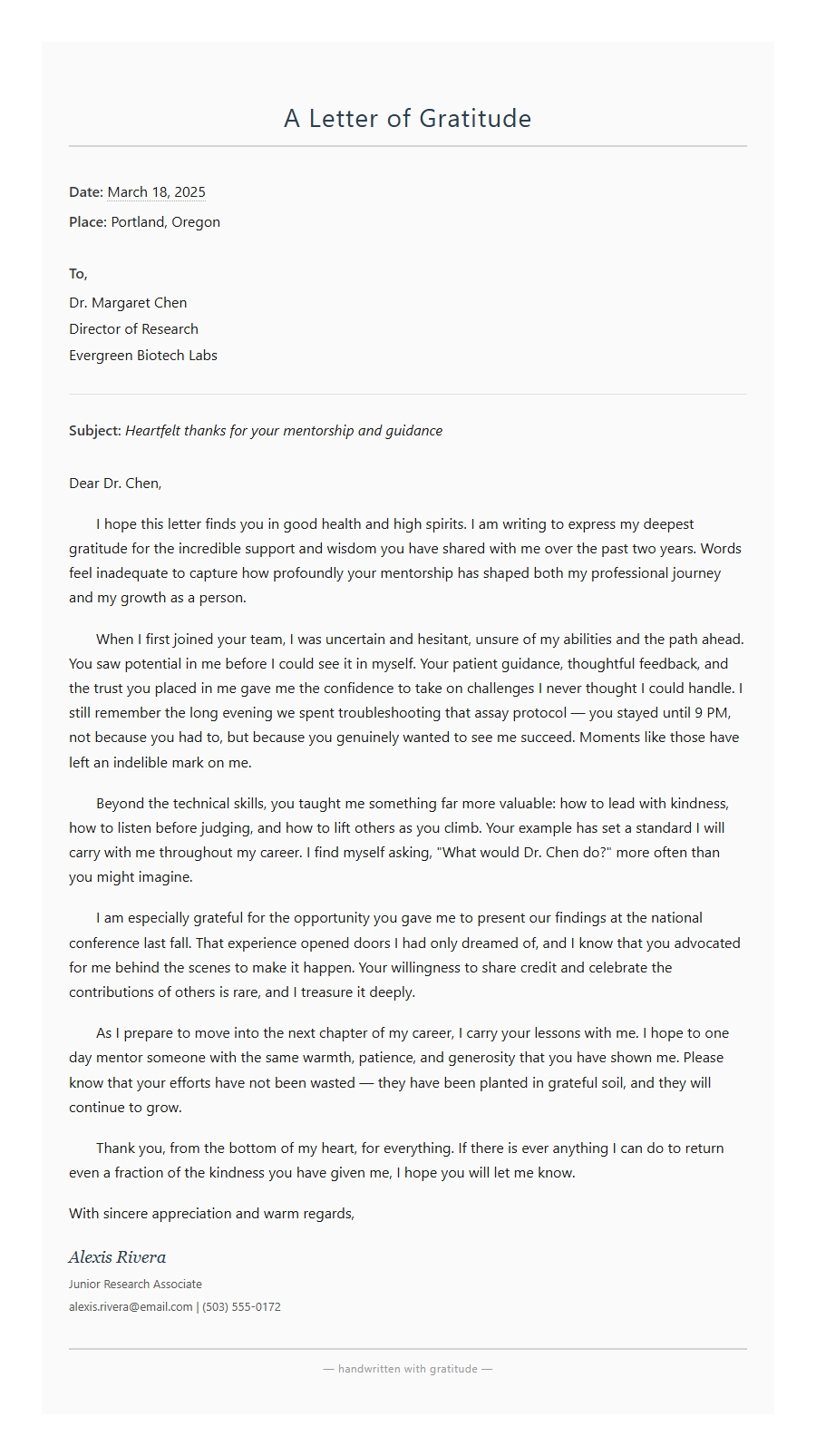 Expressing Gratitude: Handwritten Letter Example
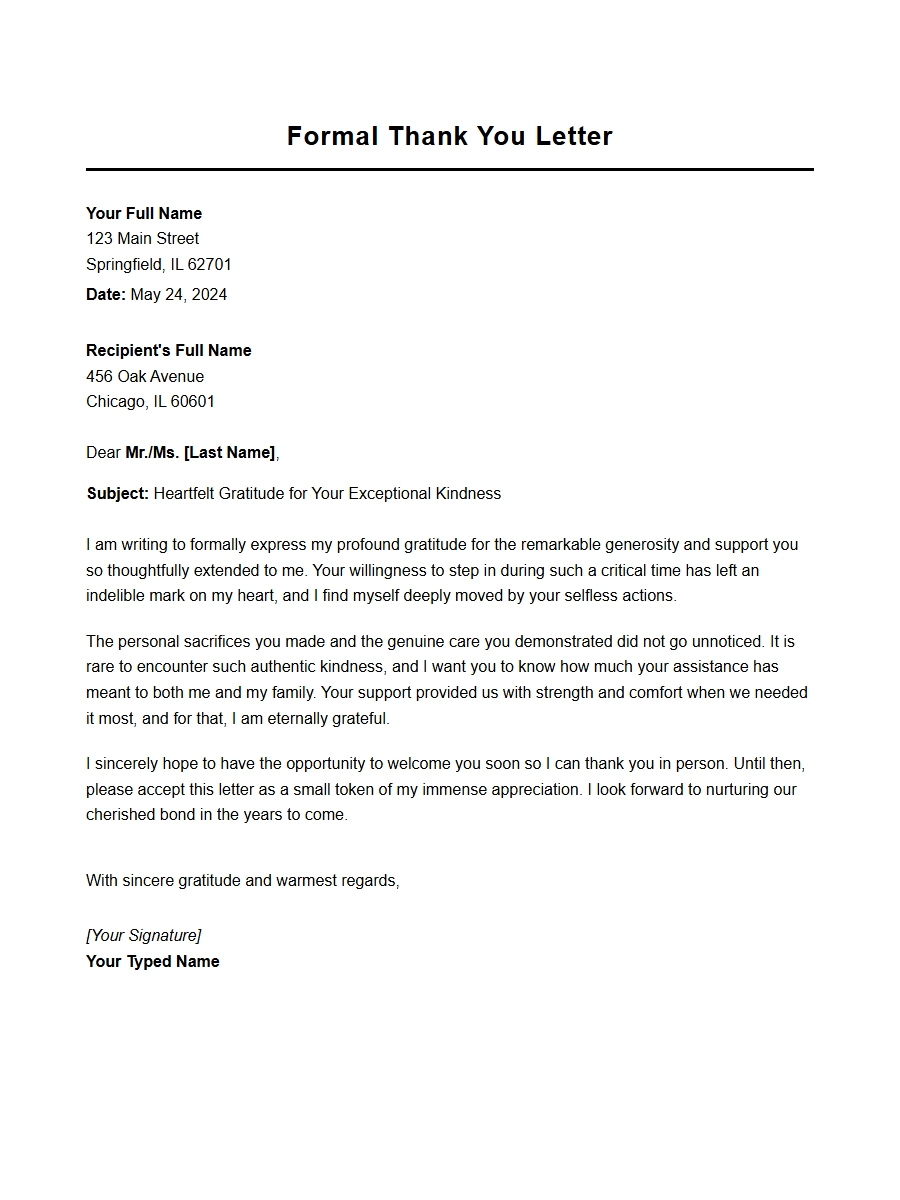 Expressing Thanks in a Formal Personal Letter
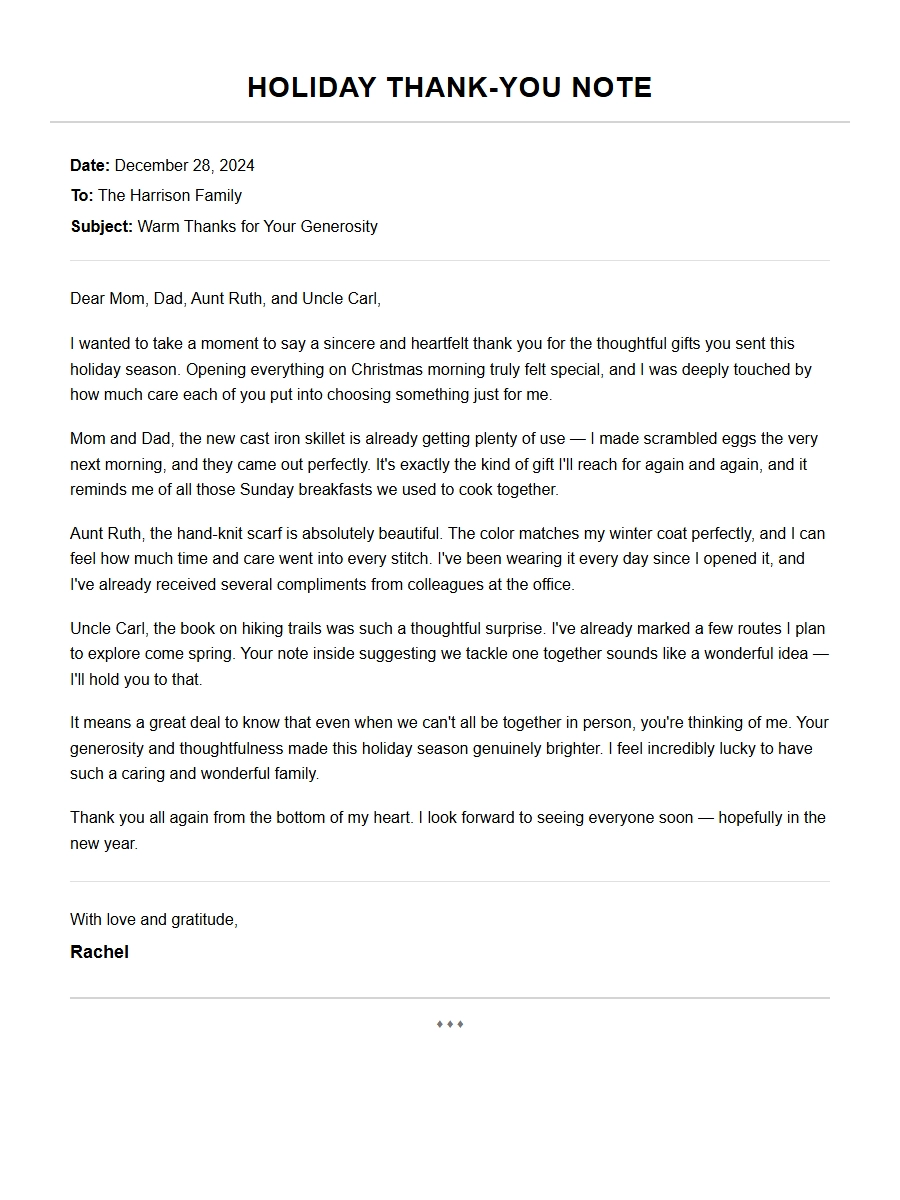 Thank You Letter Examples for Family Holiday Gifts
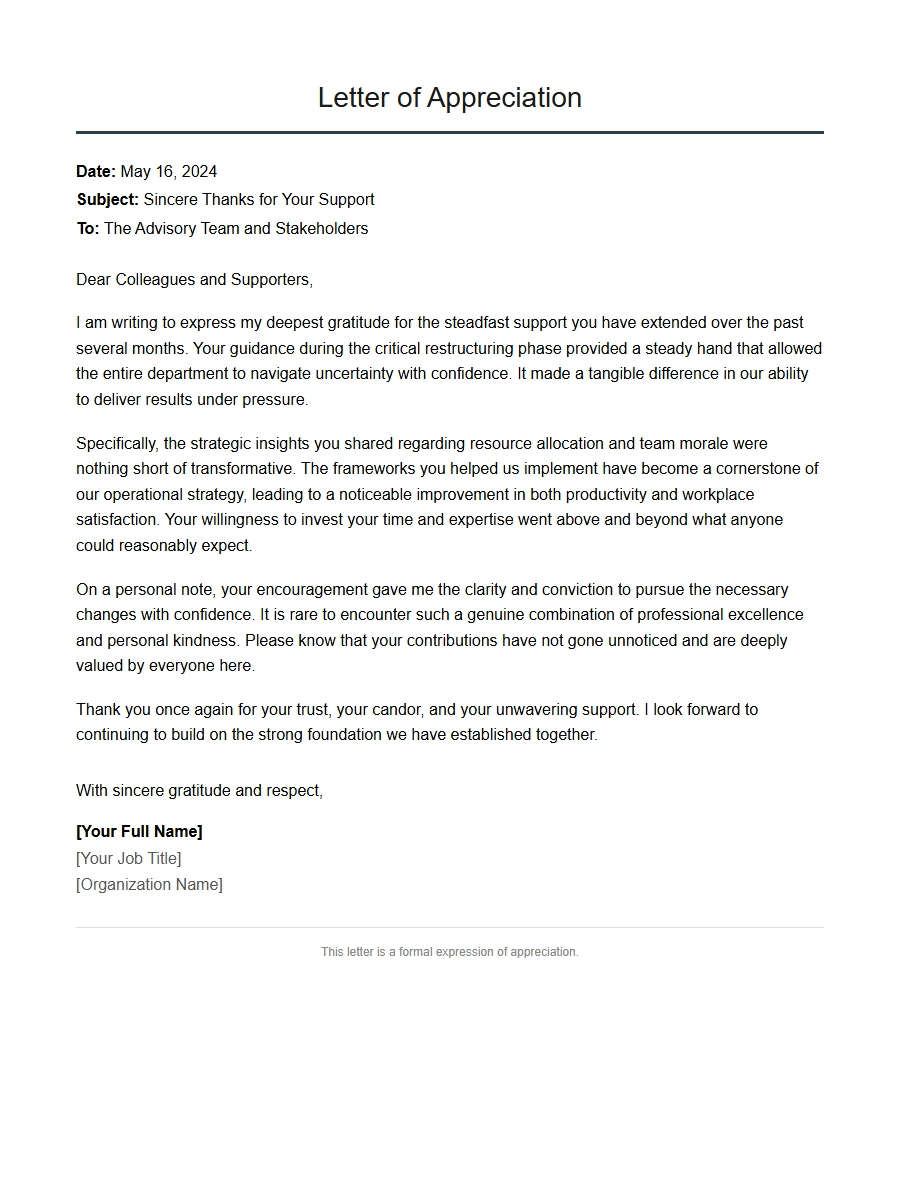 Sample Thank You Letter for Support
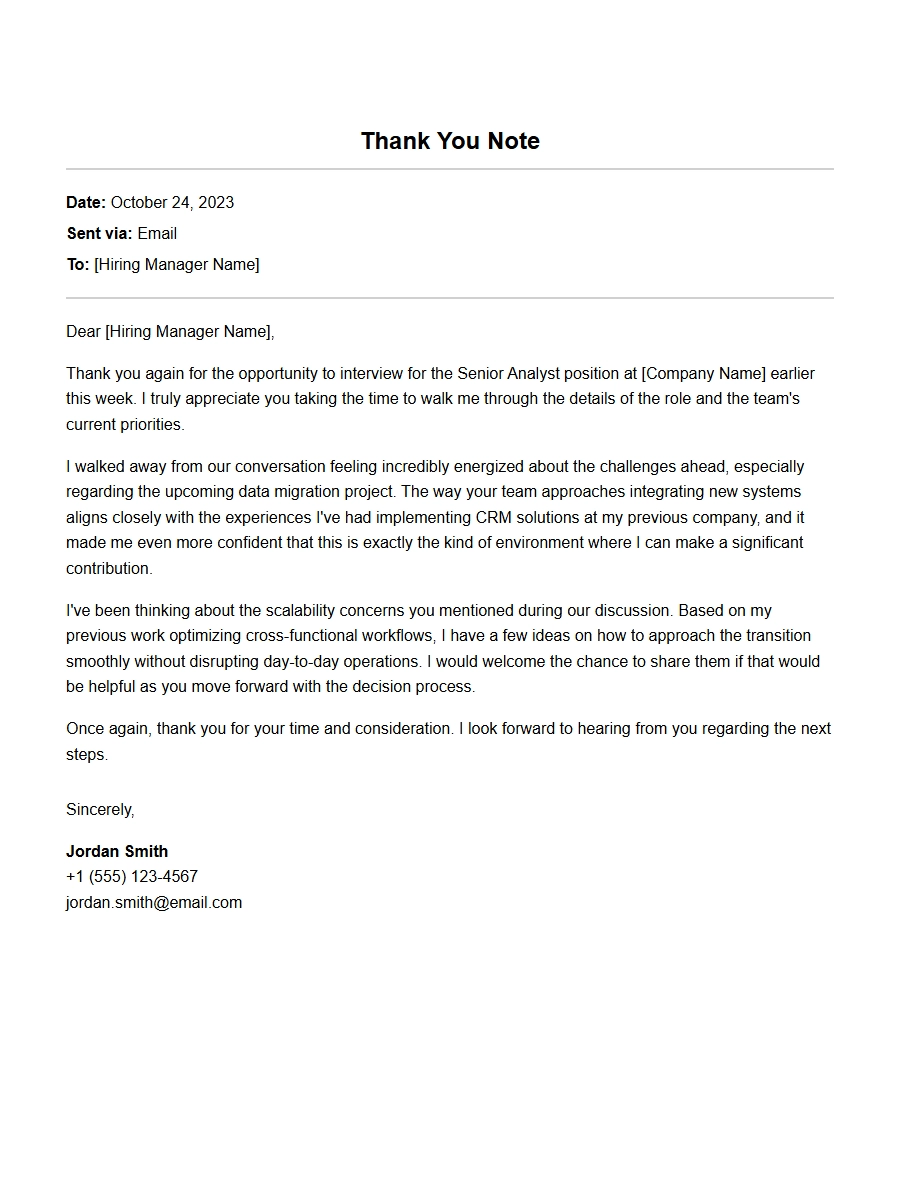 How to Write a Personal Thank-You Note After an Interview