You’ve found an old friend online or dug out their address from a memory box. Your heart says reach out, but your hands freeze over the keyboard. What do you say after years of silence? How do you bridge the gap without sounding awkward or insincere? A well-chosen sample can turn that anxious hesitation into a warm, genuine letter in minutes.
Using a letter template for a personal letter isn't cheating. It’s a smart way to focus your energy on what actually matters: the emotional content. A good sample provides a clear letter structure, so you don’t have to reinvent the wheel. You can pay attention to the heartfelt details instead of worrying about the format. Think of it as a roadmap for your professional correspondence or personal messages—it shows you the way, but you get to choose the scenery. Even basic formal writing tips can help here, giving your thoughts a clear frame without making the letter sound stiff.
Picking the Right Sample for Your Friendship
Not all samples are created equal. Choosing the right one depends entirely on your friend and your shared history. The tone in writing is everything in a letter like this. Was your friendship full of inside jokes and sarcasm, or was it more thoughtful and deep? Look for a sample that matches that vibe. Pay close attention to the salutation and closing in your sample. "Dear old friend" feels different than "Hey stranger!" Getting this right sets the emotional stage. Remembering basic letter writing etiquette ensures you show respect for the friendship, even if you're feeling nervous about the silence.
How to Adapt a Sample Without Losing Your Voice
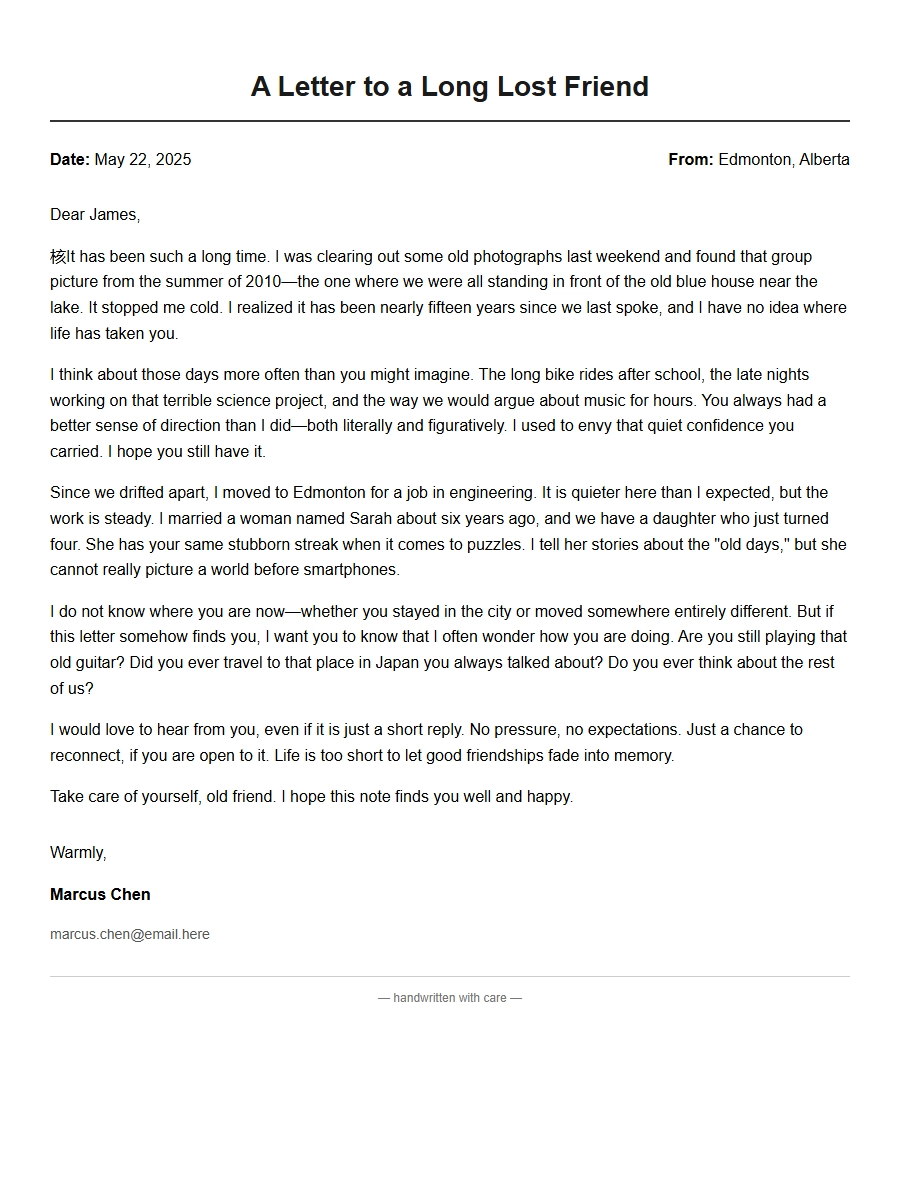
Once you have a sample that feels right, make it your own. A customizable letter is what you need. Change the shared memories to real ones you experienced together. Adjust the updates to fit your life. If the sample asks a generic question, replace it with something specific. "How have you been?" is fine, but "Do you still play guitar?" is better. Just like you wouldn't submit generic cover letter examples for a dream job, don't send a generic letter to a dear friend. Authenticity is what rebuilds the bridge.
Common Formatting Mistakes to Avoid
A common mistake is using an outdated or overly formal salutation. "To whom it may concern" has no place here. Similarly, ignoring the format can create distance. If you're emailing, a friendly subject line and a digital letter format work well. If you're mailing it, a simple, personal design on nice paper can mean a lot. Skip the formal letterhead design unless it's a shared business context. Always spend time proofreading letter drafts. A small typo feels careless, but a well-written letter shows you cared enough to check. Unlike the rigid structure of a business letter format, this note should feel human.
A Simple Step-by-Step to Reconnect
Let’s break down the process. First, decide on your medium. A handwritten letter feels incredibly personal for a long lost friend, but email is immediate. Second, write a warm opening that acknowledges the time gap. Instead of a formal introduction, try something like, "I was driving past the old park and thought of you instantly." Third, share a brief update on your life and ask a genuine question about theirs. Finally, close with a soft landing—an invitation to reply without pressure. This structure works whether you're writing a resignation letter sample or building a personal one, though the warmth differs vastly. Just as you would carefully tailor a request for an RSVP response for a home gathering, your letter to a friend needs a clear purpose and a polite request for a reply.
Use your sample as a springboard, not a crutch. The goal isn't a perfectly formatted letter but a perfectly human one. Your friend isn't grading your grammar; they're looking for a piece of you. The more you practice reaching out, the easier it becomes. Your next letter will be even better. Take a deep breath, pick a sample that speaks to you, and start writing. You've got this.
Examples You Can Adapt
Writing to a Long Lost Friend: Sample
Letter of Apology for Lost Time
Dear Marcus,
It has been nearly a decade since we last spoke, and I carry the weight of that silence with me. I know life pulled us in different directions after college, and I regret not reaching out sooner. You were the one who always kept our group together, and I let that slip away.
I want to apologize for the way I handled things before we lost touch. I was stubborn and proud, and I should have been more understanding. You deserved better from a friend.
Since then, I have often thought of our late-night conversations and how we could talk about anything. I would love nothing more than to catch up, even if it means starting from where we left off. Please consider writing back when you have a moment.
With hope, Alex
Catching Up After 15 Years
Hi Samira,
I was cleaning out old boxes yesterday and found a photo from our senior year trip. You, me, and that ridiculous hat you wore for a whole week. It made me smile and then sad, because we haven’t talked in so long.
So much has changed: I moved to Portland, got married, and have two kids who keep me on my toes. What about you? I remember you wanted to travel the world. Did you ever make it to Japan?
Here are a few highlights from my life since we last spoke:
Started a small graphic design business in 2019
Adopted a rescue dog named Biscuit
Finally learned to cook something besides pasta
I would love to hear your story. No pressure, just a reply when you can.
Yours, Jordan
Reconnecting After a Move
Dear Priya,
It’s been seven years since I moved across the country, and I still remember our last coffee together before I left. I promised I would write, and I am ashamed it took me so long. Life got busy, but that’s no excuse.
I often wonder how you are doing. Did you finish your nursing degree? How is your family? I still think about the summer we spent volunteering at the animal shelter — you were always so patient with the scared ones.
I have enclosed a small list of memories that still make me laugh:
Memory
Year
Getting lost on the hiking trail
2013
Your birthday surprise party
2014
The great pancake disaster
2015
I hope this letter finds you well. Please write back when you have time.
Warmly, Kiran
Letter to a Childhood Best Friend
Hey Leo,
Do you remember the old treehouse in your backyard? I drove past your parents’ house last week, and the tree is still there. That spot held so many of our adventures. I don’t think I ever properly thanked you for being such a great friend when we were kids.
I moved to Chicago after college and work as a teacher now. Some days, I tell my students stories about our imaginary treasure hunts. They love them. I often wonder if you still have that lucky rock we buried under the oak tree.
If you are reading this, I would love to know what you’re up to. My number is still the same. No need to call if you’re busy — a text is fine. But I hope we can find time to catch up properly.
Take care, Maya
Hard Truths and an Olive Branch
Dear Chen,
I am writing this with a heavy heart, but I believe it is long overdue. After our falling out five years ago, I told myself I was better off. But lately, I have realized how much I miss your honesty and your dry humor.
I was wrong in how I handled our disagreement. I should have listened rather than raised my voice. You were always the one who told me the truth, and that is a rare gift.
Here is what I have learned since then:
Being right is less important than being kind
Friendship requires effort from both sides
Pride keeps us apart longer than we deserve
I am not asking for an immediate reply. I just want you to know that the door is open. If you ever want to talk, I will be here.
Sincerely, Hana
A Note After Many Years of Silence
Hi Nate,
I have no idea if this address is still current. We last spoke in 2016, right after you moved to Seattle. I remember you were excited about the new job. Did it work out?
Since then, I finished my degree, traveled to three countries, and started a small bakery. The bakery is called “Sweet Reminders” — a name that fits this letter perfectly.
I have often thought about our road trips. You were the best navigator, even if you refused to admit we were lost. I miss those easy conversations.
If you get this, please know that I think of you fondly. My contact info is below. I hope life has been good to you.
Best, Olivia
Grateful Letter to an Old Mentor-Friend
Dear Mrs. Alvarez,
You may not remember me, but I was a student in your Sunday art class fifteen years ago. Your encouragement changed my life. I recently opened my own gallery, and I credit you for giving me the courage to pursue art seriously.
I lost touch after I moved away for college, but I have never forgotten the way you taught us to see beauty in everyday things. You treated each of us like we were already artists.
I wanted to share some milestones you helped inspire:
Year
Achievement
2018
First solo exhibition
2020
Published a book of sketches
2023
Opened a community studio
I would be honored if you visited the gallery someday. Thank you for everything.
With gratitude, Elena
Lighthearted Letter to an Old Roommate
Hey Daniel,
Remember when we shared that tiny apartment and you accidentally set off the fire alarm with burnt toast? I still laugh about it. Life has been quieter since then, but I miss your chaotic energy.
I am writing because I found our old playlist from 2012. It is pure gold. I still listen to it when I need a mood boost. Do you still play guitar?
Here is a quick update on me:
Still living in the same city, different apartment
Working as a freelance writer
Finally learned to cook without burning anything
I would love to know what songs you are into now. Maybe we can make a new playlist together. Drop me a line when you get this.
Cheers, Sam
Letter to a Long-Lost Pen Pal
Dear Yuki,
It has been ten years since our last exchange. I still have all your letters in a shoebox under my bed. Your stories about Japan inspired me to visit Kyoto last spring, and I thought of you the whole time.
I have often wondered what happened after you moved to Australia. Did you finish your photography course? I remember you wanted to document the Great Barrier Reef. I hope you did.
I have changed too. I switched careers twice and now work as a librarian. The quiet suits me, but I miss the excitement of reading your letters. You always had the best adventures.
If this reaches you, please reply. I would love to know what you have been doing all these years.
With warm memories, Liam
Letter of Forgiveness and Reconnection
Dear Aisha,
I am writing to say that I forgive you for what happened, and I hope you can forgive me too. We were both young and handled things poorly. I have carried anger for too long, and I am ready to let it go.
I remember the good times more than the bad. That road trip we took? The night we stayed up talking until sunrise? Those moments are precious to me, and I don’t want the past to erase them.
I have made a list of things I am grateful for about our friendship:
Your unwavering support during tough times
Your ability to make me laugh when I was sad
Your honesty, even when it hurt
I don’t know if we can go back to how things were, but I would like to try. My door is open whenever you are ready.
 Thanking a Mentor for Guidance: Sample Messages
 Expressing Gratitude: Handwritten Letter Example
 Expressing Thanks in a Formal Personal Letter
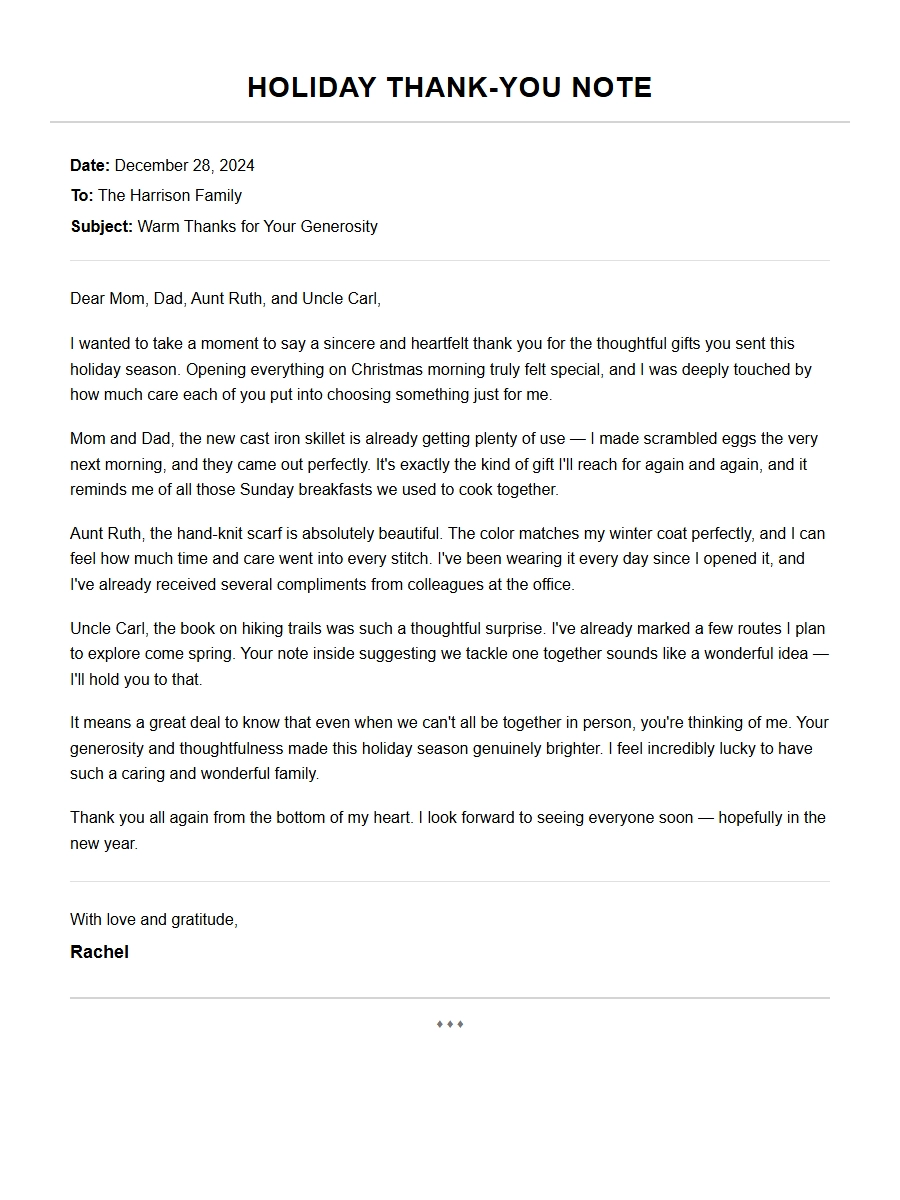 Thank You Letter Examples for Family Holiday Gifts
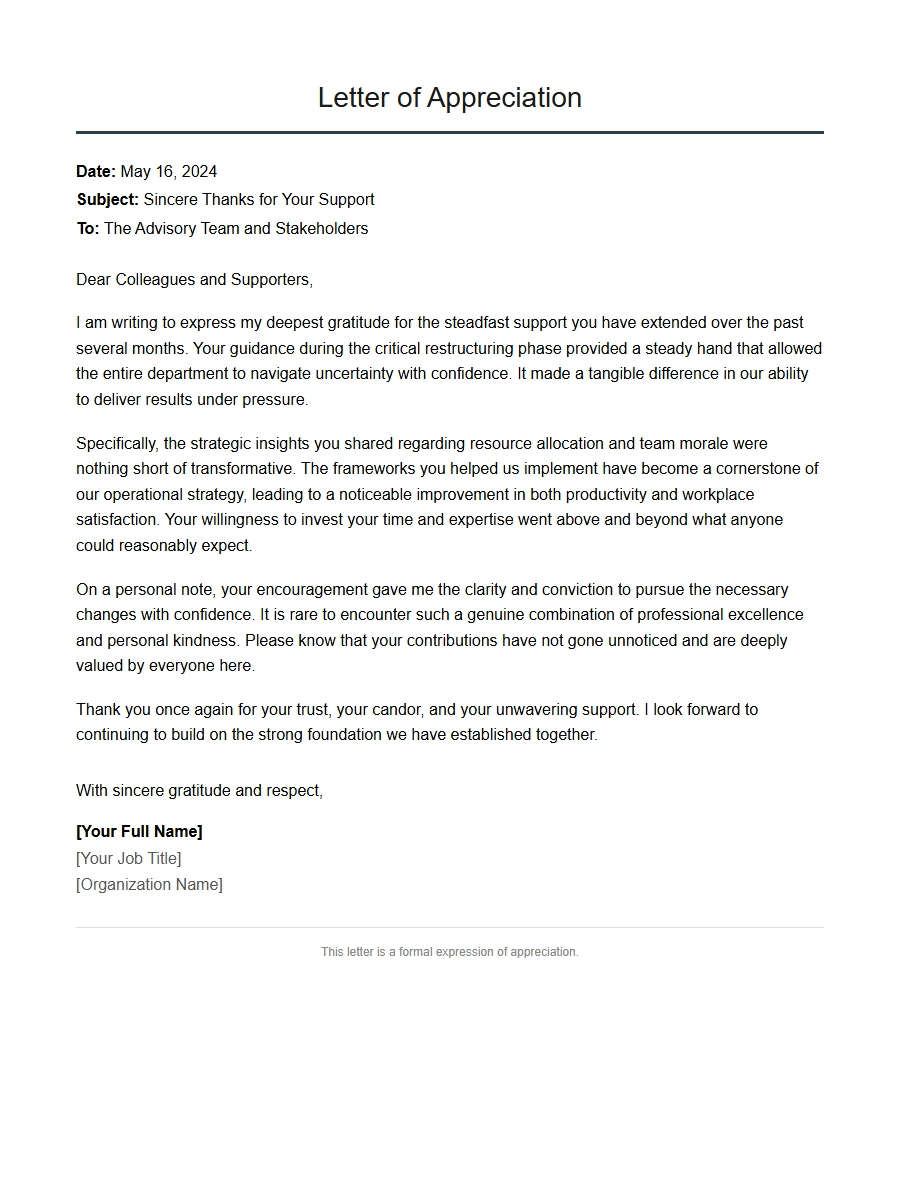 Sample Thank You Letter for Support
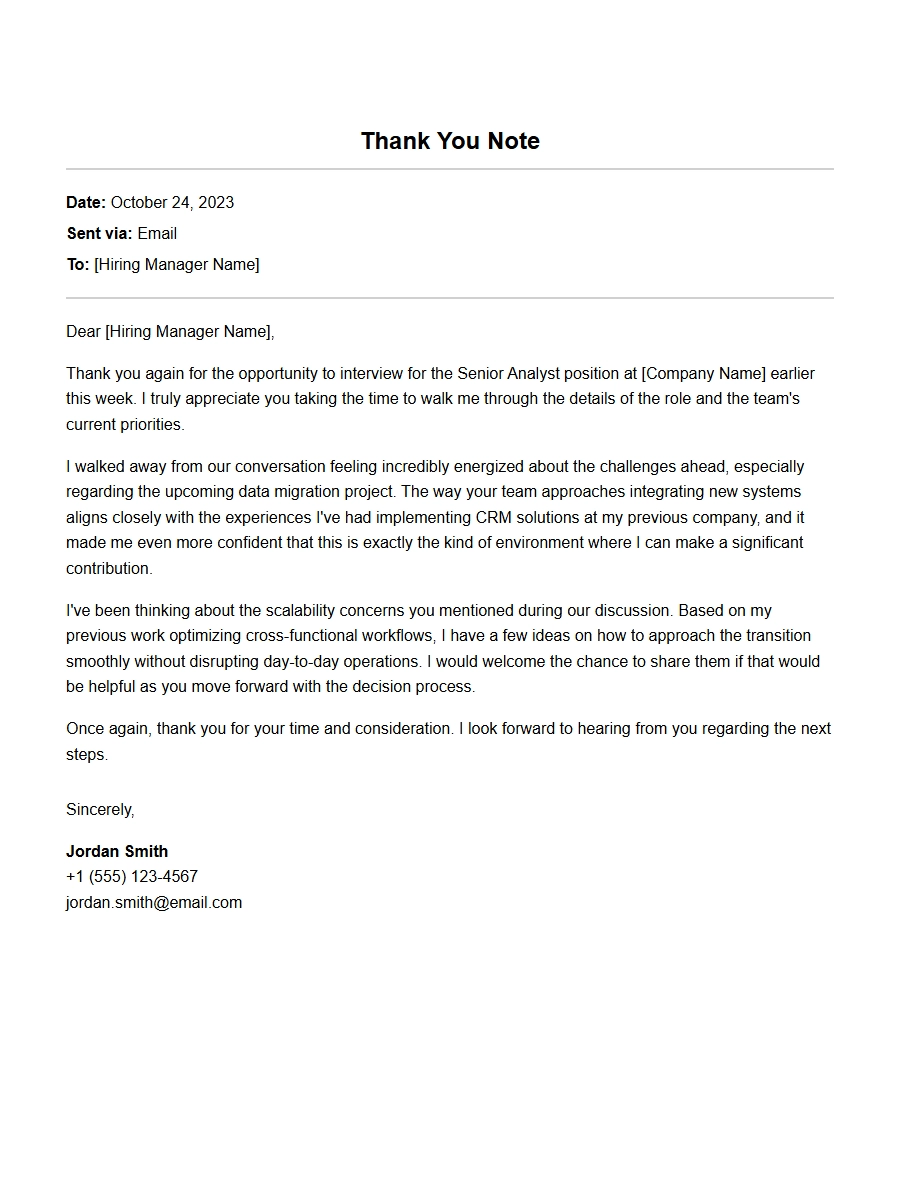 How to Write a Personal Thank-You Note After an Interview