You need to send a resignation letter today, and your mind is blank. Maybe you're leaving a job you loved, or one where safety concerns have become unbearable. Either way, staring at a blinking cursor feels like the hardest part. But it doesn't have to be.
Using a resignation letter sample isn't cheating. It's a smart shortcut that saves you from overthinking structure, tone, and phrasing. A good sample gives you a framework while leaving room for your own voice. You’re not copying — you’re adapting. And that’s exactly what professional correspondence requires.
Before you grab any template, think about your situation. Are you writing a formal letter to a traditional boss, or something more casual for a startup? The right sample depends on your industry, your relationship with your manager, and how much notice you’re giving. For example, a resignation letter for a logistics coordinator role will look different than one from a creative director. Match the sample to your context, not the other way around.
Category: Resignation Letters
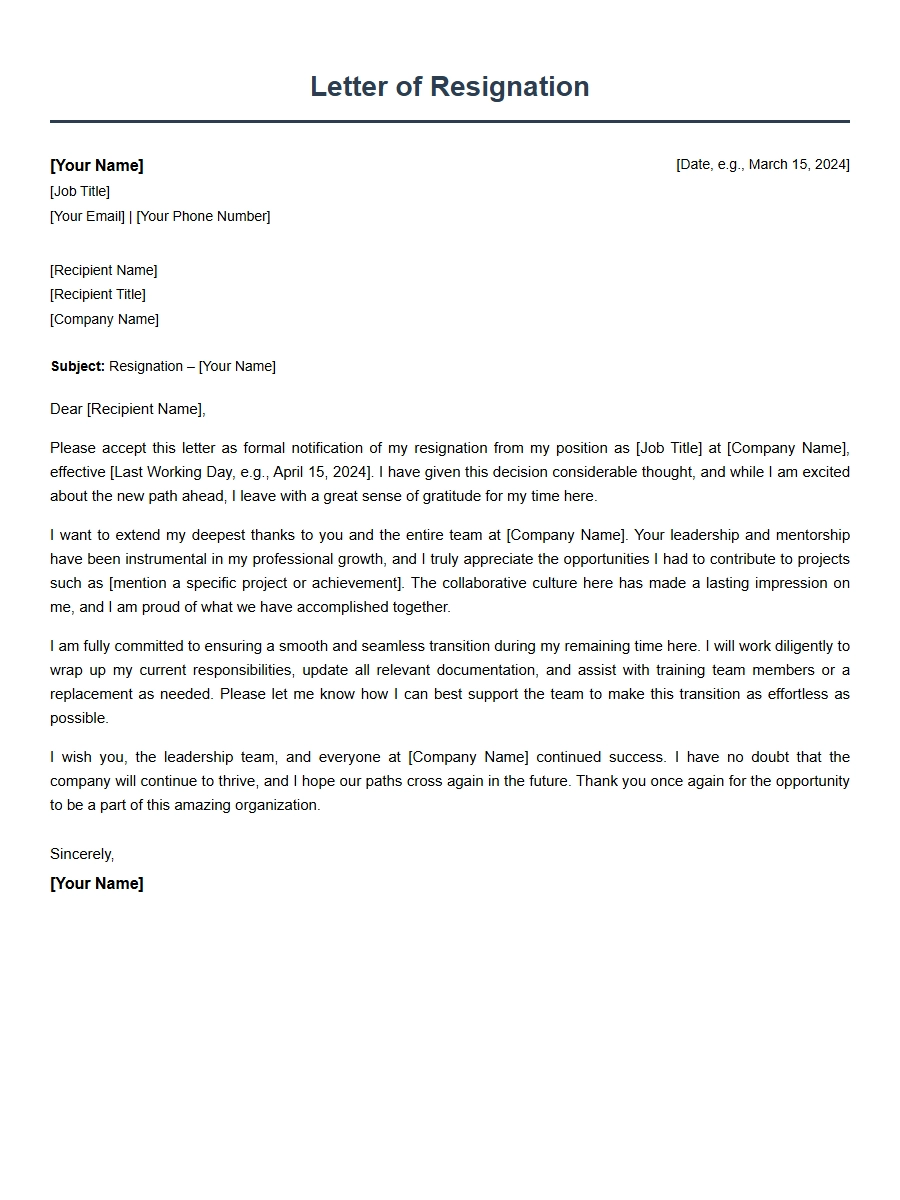
Once you’ve found a solid resignation letter sample, start with the opening paragraph. This is where you state your intention clearly and respectfully. Don’t bury the lead — say “I am resigning from my position” early. But don’t be robotic either. A simple line like “Please accept this letter as formal notification that I will be leaving my role as [title]” works. Then add a personal touch: “I’ve truly appreciated the opportunities I’ve had here, especially [specific project or growth].” That mix of business letter format and genuine tone is what makes a letter feel both professional and human.
Many people trip over the salutation and closing. “Dear [Manager’s Name]” is still the safest bet for a printed letter. For an email, “Hi [Name]” is fine if your workplace culture allows it. End with “Sincerely” or “Best regards” — not “Yours faithfully” unless it’s extremely formal. And don’t forget to include your contact info below your signature, even if it’s in your email footer. That’s a small piece of letter writing etiquette that makes follow-up easy.
The body of your letter should cover three things: your last working day, a brief reason (optional, but often helpful for goodwill), and a transition offer. You don’t need to overshare. If you’re leaving due to safety concerns, a polite “due to circumstances beyond my control” is enough. If you’re moving to another job, skip the details. Keep the tone positive and forward-looking. “I’m committed to ensuring a smooth handover” is a phrase that shows professionalism.
Common mistakes? Using outdated greetings like “To whom it may concern” when you know your boss’s name. Forgetting to proofread — a single typo in a resignation letter can feel careless. Ignoring the difference between digital letter format and printed letterhead design. For an email, keep it simple: no fancy fonts, just plain text or a clean signature block. For a printed letter, use your company letterhead if appropriate, or a clean Word document.
One more tip: tailor the opening paragraph to grab attention. If you have a good relationship with your manager, start with a short memory or thank you. “I still remember how you trusted me with the [project] — that experience shaped my career. That’s why this decision wasn’t easy.” This isn’t flattery; it’s genuine connection. Ever received a letter that felt too stiff or too cold? You know how that feels. Write the opposite.
Remember: a letter template is a springboard, not a crutch. The best letters feel both professional and personal. Practice makes the process faster — next time you resign, you’ll write it in ten minutes. For now, take a deep breath, pick a sample that fits you, and adapt it honestly. You’ve got this.
Helpful Examples
Writing a Respectful Resignation Message
Formal Resignation Letter Template
Date: May 15, 2025
To: [Manager's Name] From: [Your Name] Subject: Resignation from [Position]
Dear [Manager's Name],
Please accept this letter as formal notification that I am resigning from my position as [Position] at [Company Name]. My last day will be [Date], two weeks from today.
I have appreciated the opportunities I’ve had here, including:
Leading the [Project Name] initiative
Mentoring junior team members
Developing key client relationships
I am committed to ensuring a smooth transition. Below is a brief handover plan:
Task
Status
Handover To
Quarterly report
In progress
Alex Johnson
Client onboarding
Completed
N/A
Training documentation
Draft ready
Sarah Lee
I wish the team continued success. Thank you for your guidance.
Sincerely, [Your Name]
Short Resignation Email
Subject: Resignation – [Your Name]
Dear [Manager's Name],
Please accept this email as my formal resignation from [Position] at [Company Name]. My last working day will be [Date].
I want to thank you for the opportunity to work here. I have enjoyed my time at the company and appreciate the support I’ve received. I will do everything I can to ensure a smooth handover of my responsibilities before I leave.
Please let me know the next steps regarding the resignation process.
I am writing to formally resign from my position as [Position] at [Company Name], effective [Date]. I have accepted a new role that aligns with my long-term career goals.
This decision was not easy. I have learned a great deal during my [Length of Service] here, especially in areas such as:
Advanced data analysis
Cross-functional collaboration
Strategic project planning
I am grateful for your mentorship and the team’s camaraderie. I will ensure that all my current projects are documented and handed over to my colleague, [Colleague Name], before my departure.
I wish the company continued growth and success.
Sincerely, [Your Name]
Resignation Letter for Personal Reasons
Date: [Date]
To: [Manager's Name] From: [Your Name] Subject: Resignation due to Personal Reasons
Dear [Manager's Name],
It is with regret that I submit my resignation from [Position] at [Company Name], effective [Date]. Due to personal circumstances, I must step away from work to focus on family matters.
I have valued the time I spent here. The flexibility and understanding shown by the team have been remarkable. I would like to thank you for accommodating my needs in the past.
I am available to help with the transition during my notice period. I have prepared a list of pending tasks:
Finalize budget report – due next week
Update client contact list
Complete performance reviews
I hope to maintain contact in the future. Thank you for your support.
Best regards, [Your Name]
Resignation Letter Due to Relocation
Date: [Date]
To: [Manager's Name] From: [Your Name] Subject: Resignation due to Relocation
Dear [Manager's Name],
Please accept this letter as my formal resignation from [Position] at [Company Name], effective [Date]. My family and I are relocating to [City, State] for personal reasons, and unfortunately remote work is not feasible for my role.
I have truly enjoyed working here. Some highlights of my tenure include:
Leading the successful launch of [Product/Service]
Improving team efficiency by 18%
Building strong relationships with vendors
I am committed to handing over my responsibilities smoothly. I have attached a transition document summarizing ongoing projects. I am available to train my replacement during my final week.
Thank you for the opportunities. I hope to stay connected on LinkedIn.
Sincerely, [Your Name]
Resignation Letter with Transition Plan
Date: [Date]
To: [Manager's Name] From: [Your Name] Subject: Resignation and Transition Plan
Dear [Manager's Name],
I am writing to formally resign from my role as [Position], effective [Date]. I want to ensure a seamless handover. Below is my proposed transition plan:
Week
Focus Area
Actions
Week 1
Documentation
Update SOPs, create handover notes
Week 2
Training
Train [Colleague] on key processes
Final day
Closure
Submit final reports, return equipment
I am grateful for the trust you placed in me. I have attached a list of my current projects and their statuses. Please let me know if you would like to adjust the plan.
Thank you for the wonderful experience.
Best regards, [Your Name]
Resignation Letter for Retirement
Date: [Date]
To: [Manager's Name] From: [Your Name] Subject: Resignation – Retirement
Dear [Manager's Name],
After much reflection, I have decided to retire from my position as [Position] at [Company Name], effective [Date]. This has been a rewarding journey, and I am deeply grateful for the opportunities I’ve had here.
I have prepared a knowledge transfer document for my responsibilities. Here is a summary of completed and pending tasks:
Completed: Annual audit, team restructuring
Pending: Client contract renewal (to be handed over to [Colleague])
I am happy to assist in finding and training my replacement. My goal is to leave the team in a strong position.
Thank you for your leadership and friendship over the years. I wish the company continued success.
Sincerely, [Your Name]
Resignation Letter for Health Reasons
Date: [Date]
To: [Manager's Name] From: [Your Name] Subject: Resignation due to Health Reasons
Dear [Manager's Name],
I regret to inform you that I must resign from my position as [Position] due to ongoing health issues. My last day will be [Date], or earlier if my doctor advises.
I have appreciated the supportive work environment. I want to thank you for accommodating my medical needs in the past. To ease the transition, I have documented my current tasks:
Finish the quarterly review report
Update client project status
Provide access details for shared drives
I will do my best to complete these before leaving. I am sorry for the short notice and appreciate your understanding.
Wishing the team all the best.
Best regards, [Your Name]
Resignation Letter to Manager with Notice Details
Date: [Date]
To: [Manager's Name] From: [Your Name] Subject: Resignation and Notice Period
Dear [Manager's Name],
Please accept this letter as my formal resignation from [Position] at [Company Name]. My notice period begins today, and my final day of employment will be [Date] (30 days’ notice as per contract).
I will remain fully committed during this transition. I have outlined a schedule for handover meetings:
Date
Topic
Attendees
May 20
Project status review
You, [Colleague]
May 25
Client introductions
[Client names]
June 1
Final check-out
HR, IT
Thank you for the opportunities. I will prepare all necessary documentation for a smooth handover.
Sincerely, [Your Name]
Immediate Resignation Message (Apology)
Date: [Date]
To: [Manager's Name] From: [Your Name] Subject: Immediate Resignation
Dear [Manager's Name],
I am writing to resign from my position as [Position] effective immediately. This is due to an unforeseen personal emergency that requires my full attention.
I sincerely apologize for the short notice and any inconvenience this may cause. I appreciate the trust you placed in me. I have prepared a quick handover list:
All files are saved in the shared drive under “[Folder]”
Contact [Colleague] for urgent client matters
Pending approvals are forwarded to your inbox
I will return company property (laptop, badge) by tomorrow. Please let me know if you need any additional information.
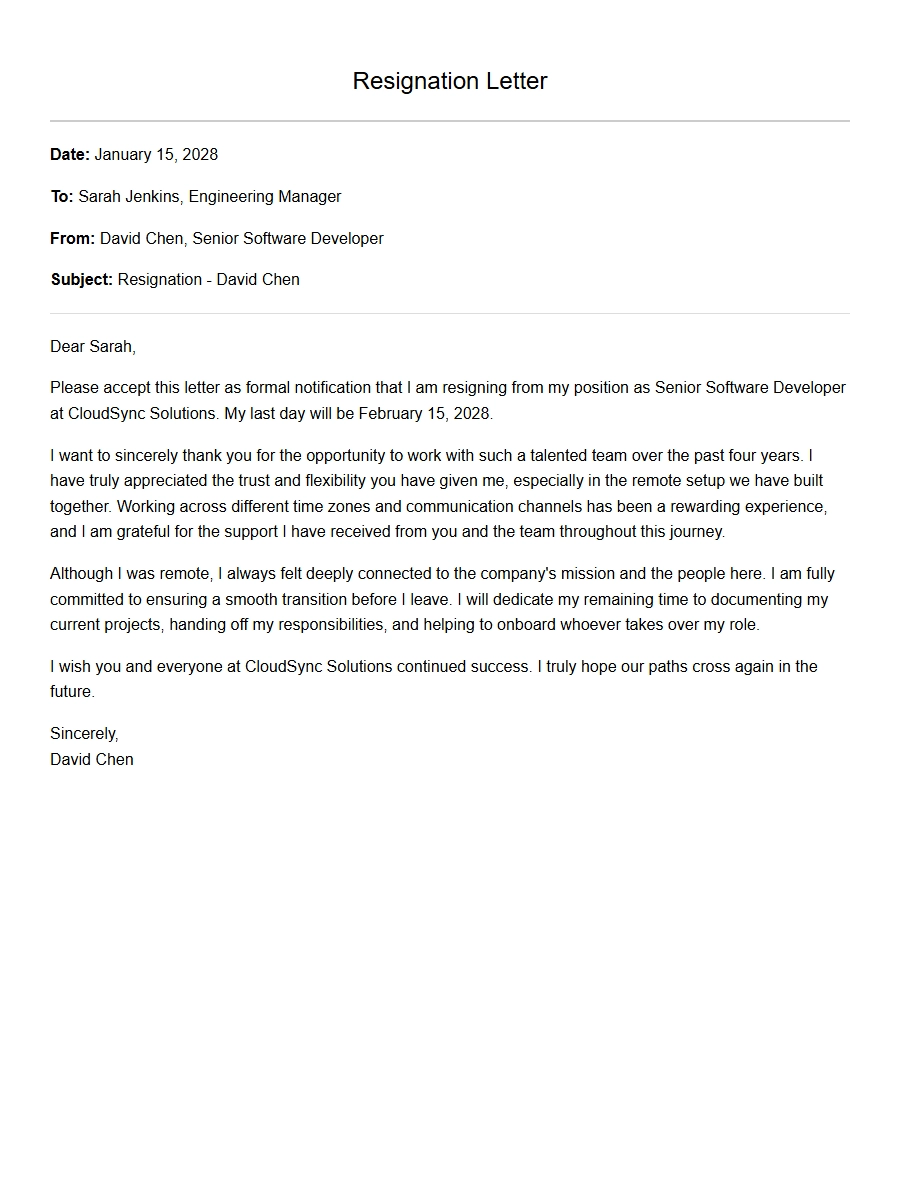 Polite Resignation Email for Remote Employees
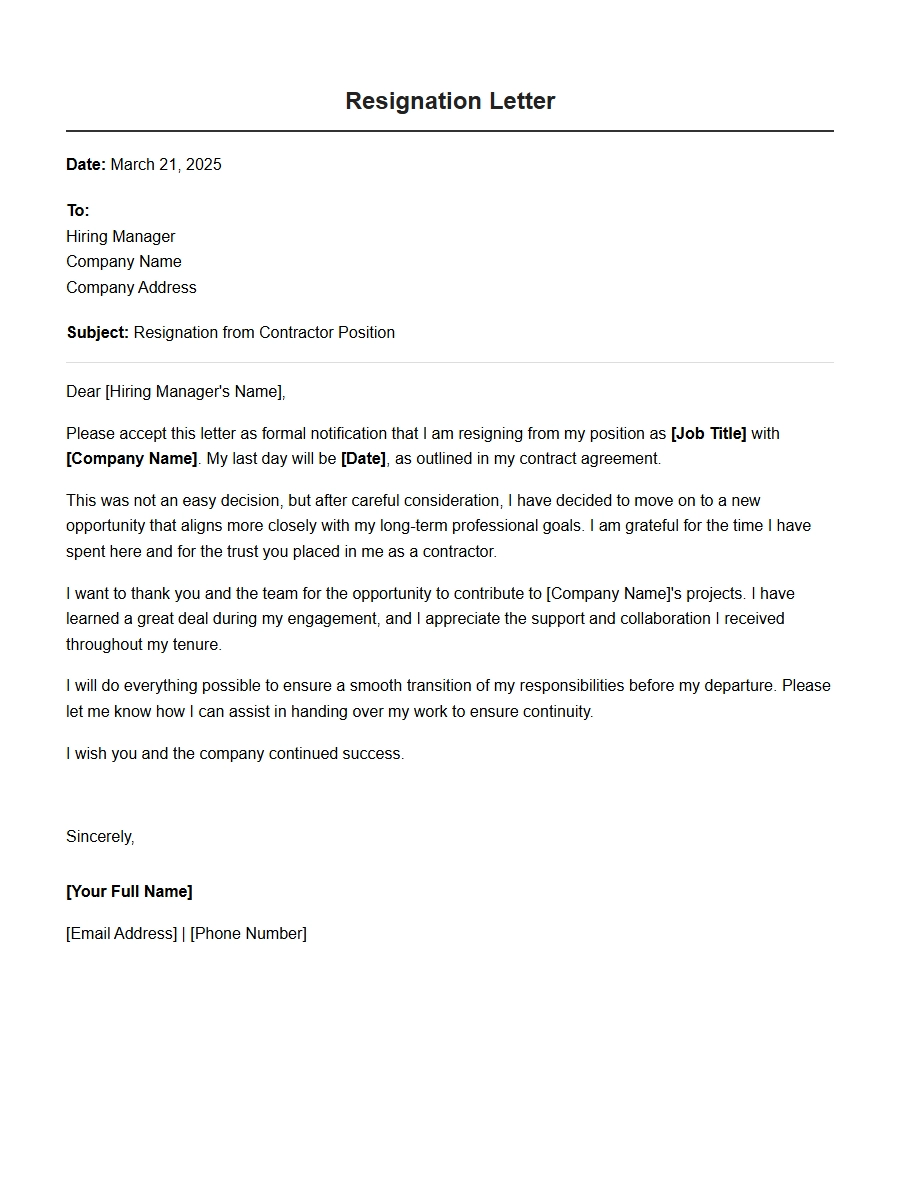 Short Resignation Letter for Contractor Position
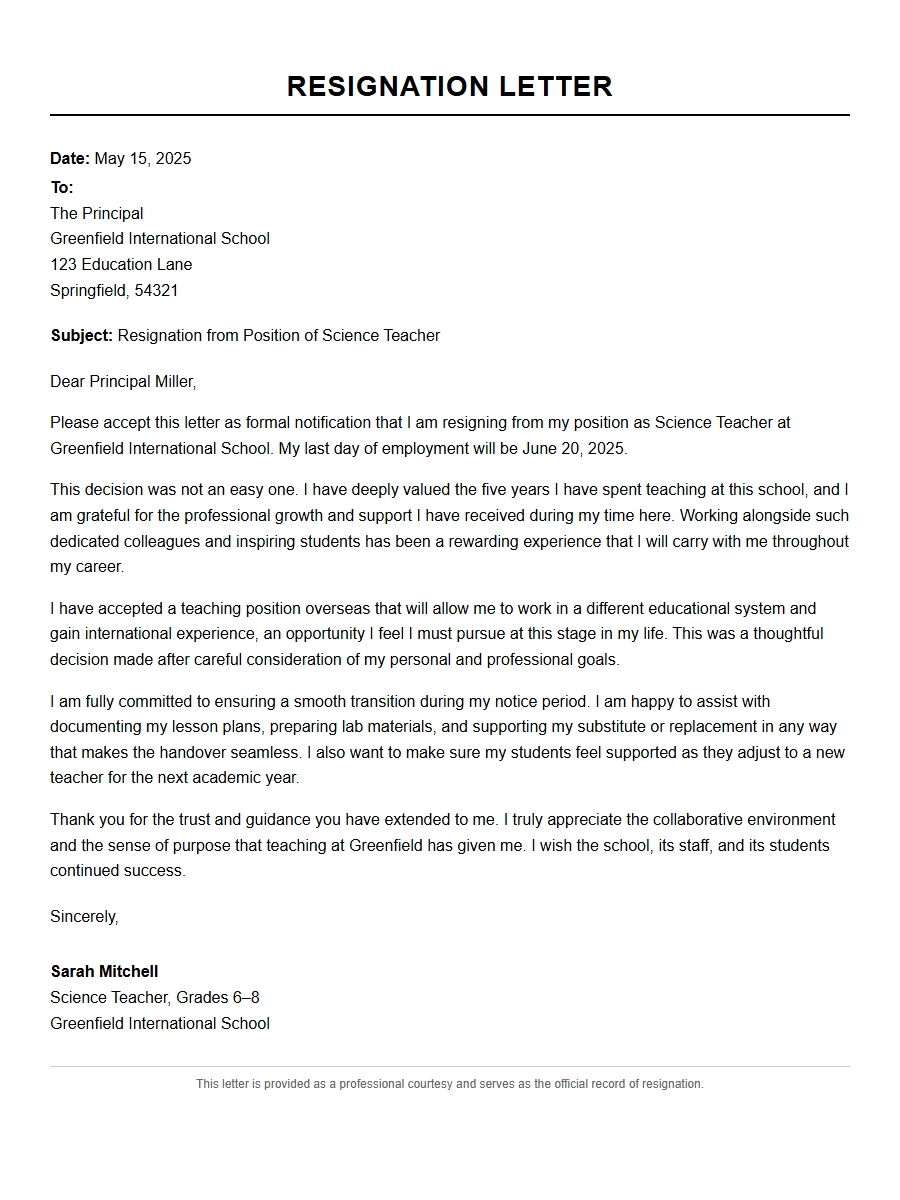 Teacher Resignation Letter Example
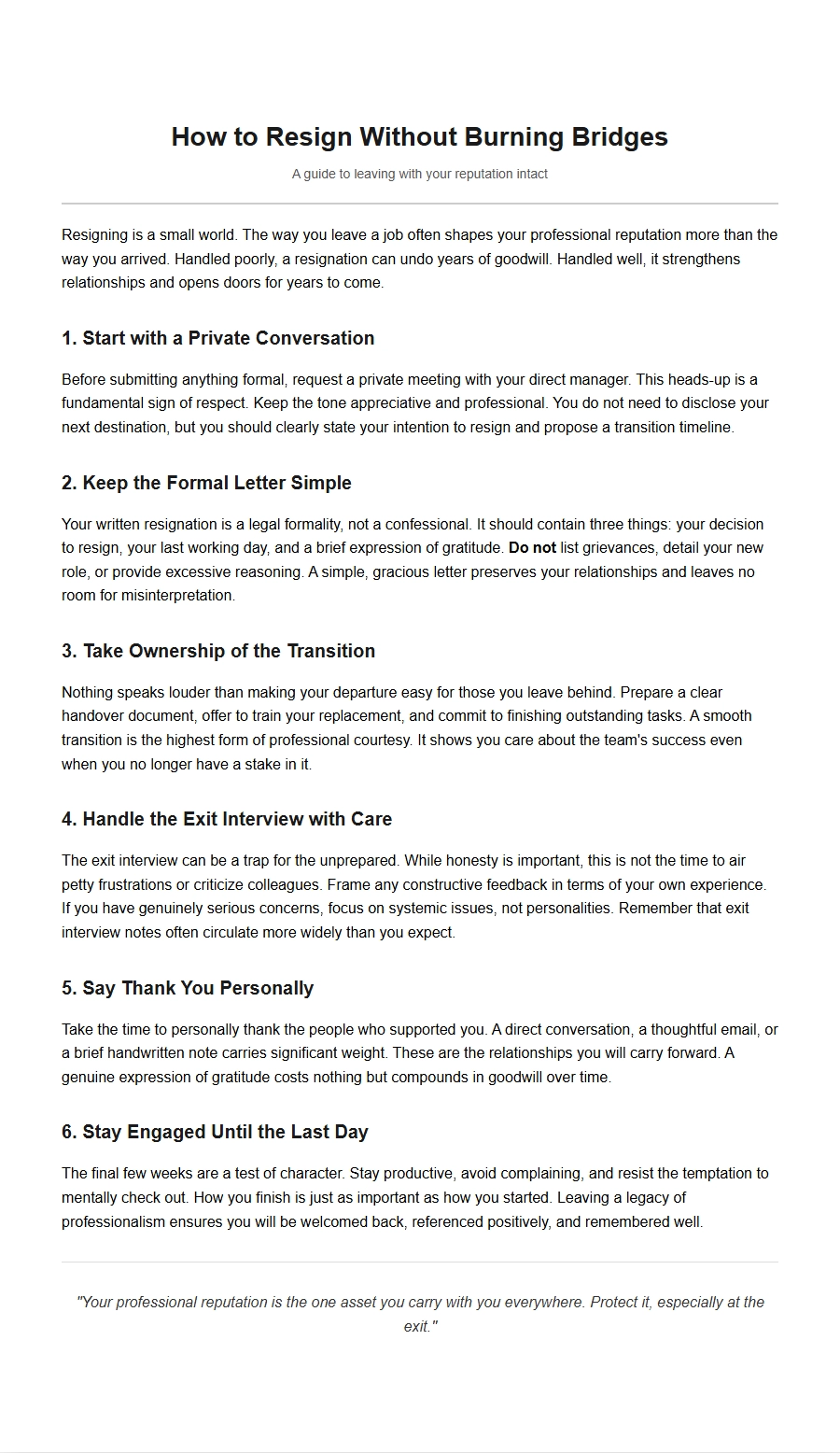 How to Resign Without Burning Bridges
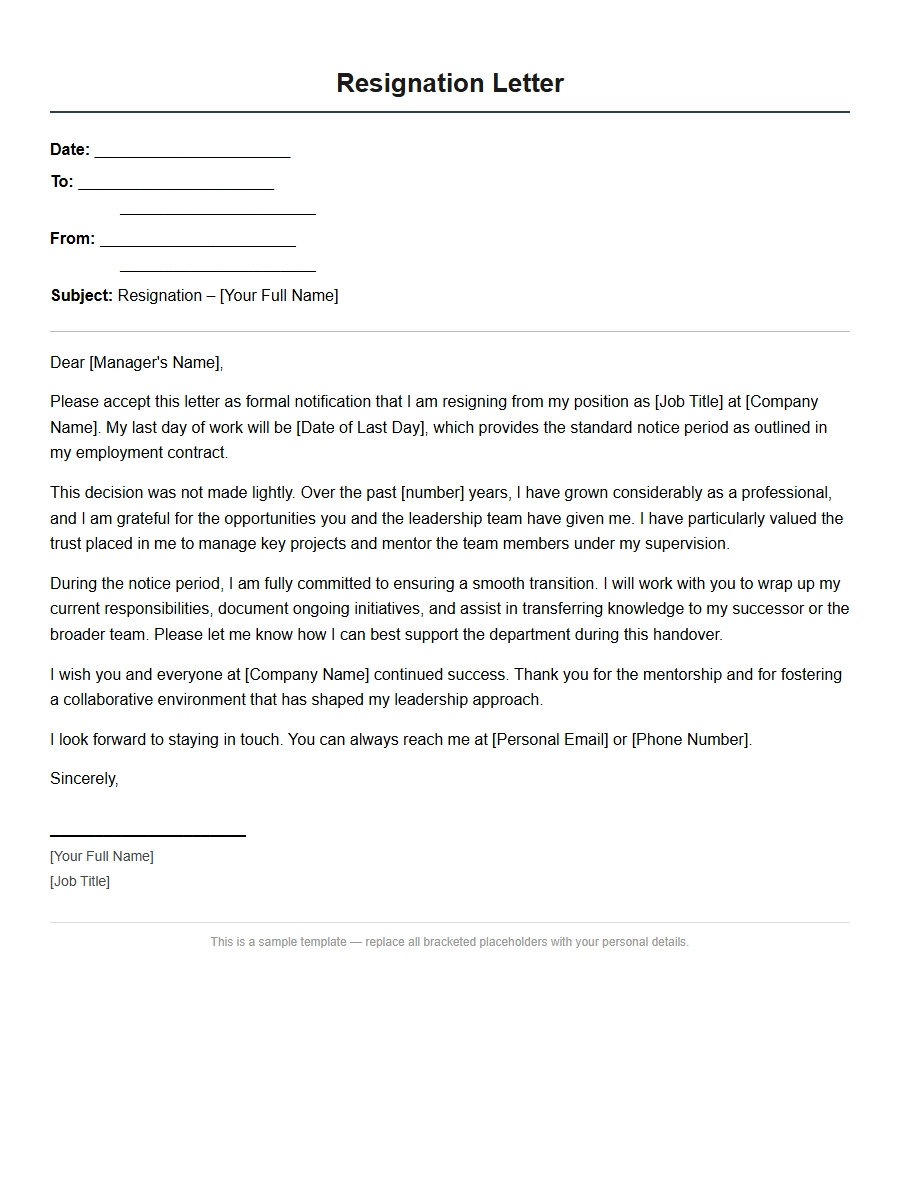 Formal Resignation Letter Sample for Manager
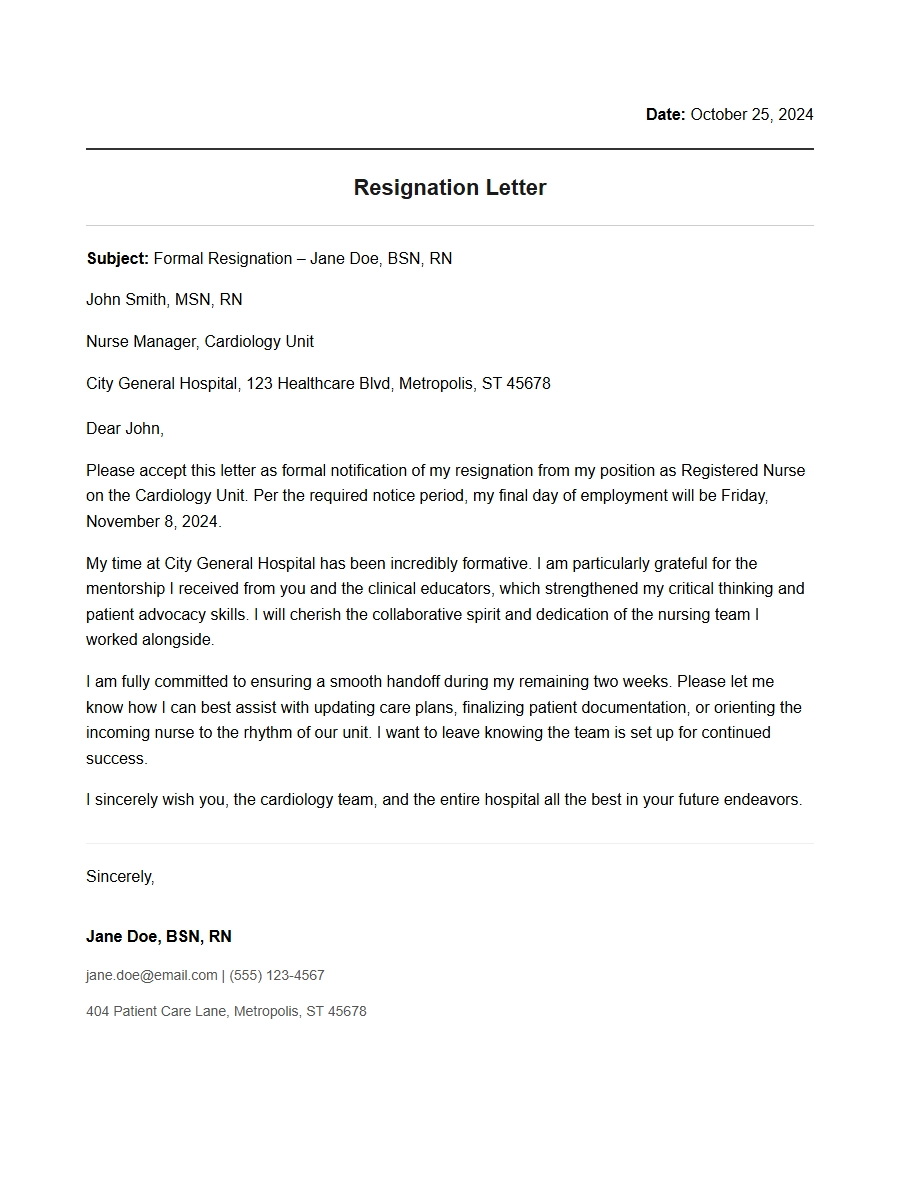 Nurse Resignation Letter with 2 Weeks Notice