You’ve decided to move on, but a non‑compete agreement sits in the back of your mind. The resignation letter you write now has to be careful—professional enough to keep the door open, specific enough to show you understand your obligations, and honest enough to feel like you. Staring at a blank page when you need to nail this balance can feel paralyzing. But the right resignation letter sample cuts that anxiety down to size and turns it into a draft you can polish in minutes.
Using a sample isn’t cheating. It’s a smart way to borrow structure, tone, and the key phrases you’ll need—especially in a non‑competitive agreement context where wording matters. A strong letter template gives you a backbone for professional correspondence while leaving room for your own voice. Think of it as a trusted starting point, not a script you copy blindly.
Category: Resignation Letters
What makes a resignation letter different when a non‑compete is involved?
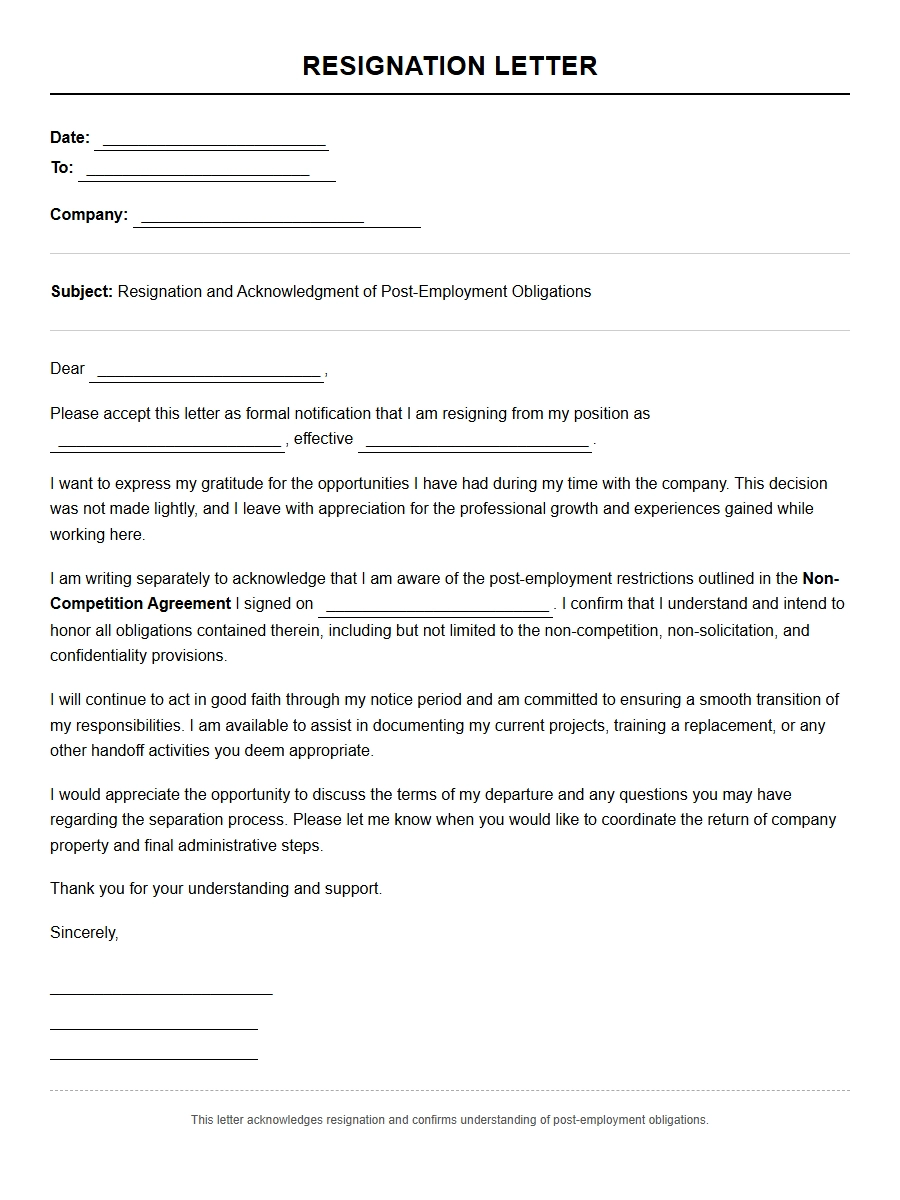
When you sign a non‑compete, your resignation letter becomes more than a farewell. It’s also a chance to acknowledge the agreement without triggering unnecessary alarm. You don’t need to spell out every clause—just a line that says you intend to honor the terms of the agreement you signed. This shows respect and reduces friction during your exit. A resignation letter sample designed for this situation will include a phrase like “I understand and will comply with the non‑compete provisions in my employment contract.” That small addition can save you from follow‑up questions or legal headaches.
How to pick the right sample for your situation
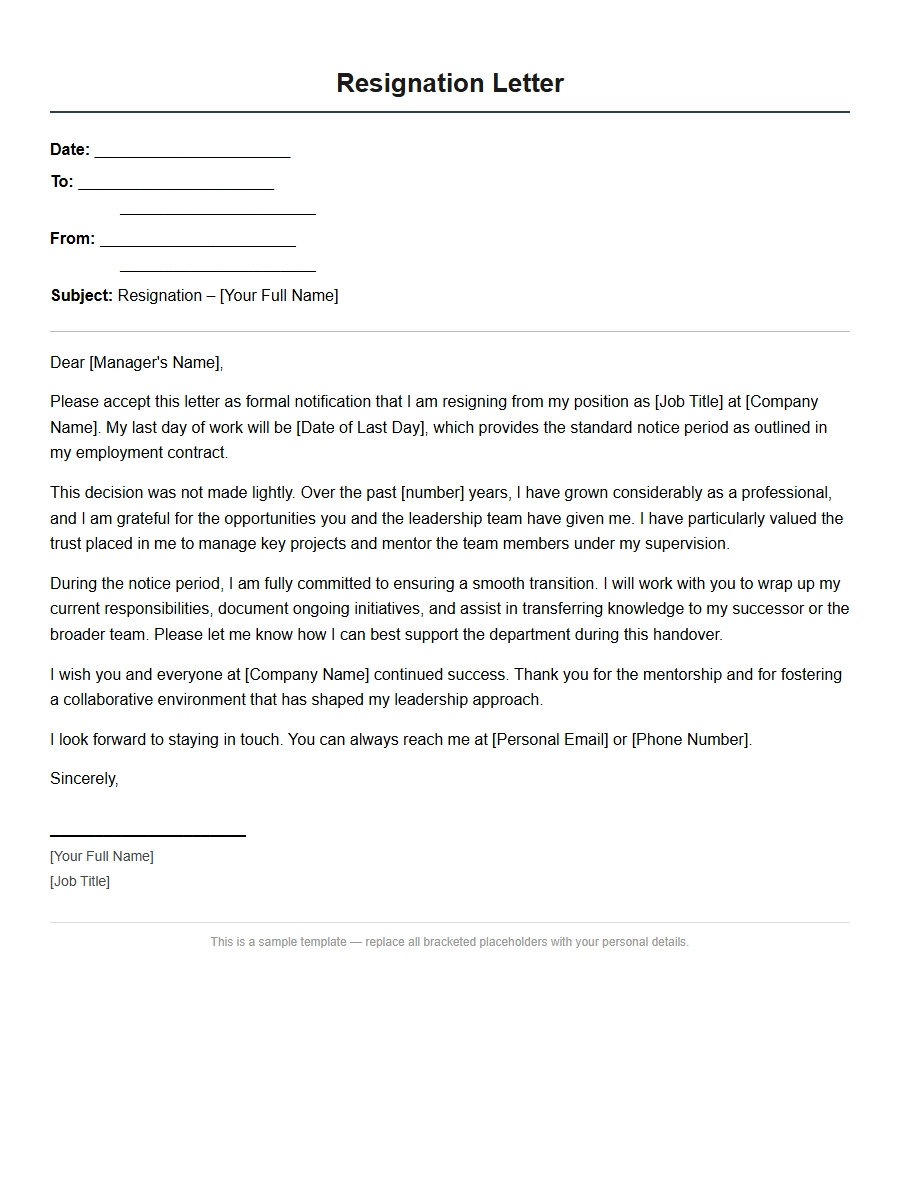
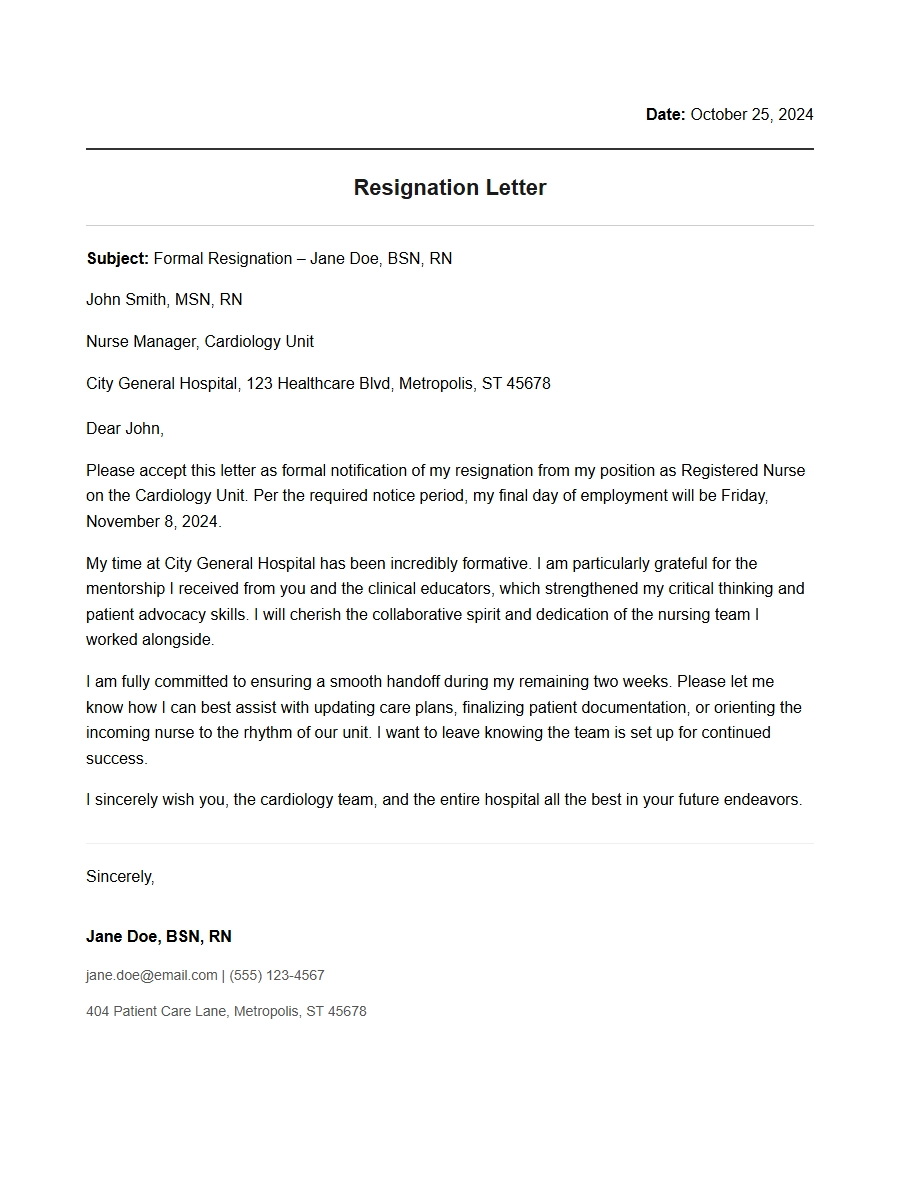
Not all resignation letters are the same. If your workplace is formal (think law firms, finance, healthcare), choose a sample with a classic business letter format—full address blocks, a formal salutation like “Dear [Manager’s Last Name],” and a standard closing. If your company is more relaxed (tech startups, creative agencies), you can use a conversational tone while keeping the non‑compete acknowledgment professional. The goal is to match the culture without sacrificing clarity. For extra guidance, check out this formal resignation letter sample for manager to see how structure plays out in a manager‑role context.
Adapt the sample without losing your authentic voice
Once you have a sample, read it through once. Then rewrite the opening with your own reason for leaving—keep it brief and positive. If you’re leaving due to a high‑stress environment, you can borrow from this resignation letter for high‑stress environments for language that stays respectful without over‑sharing. The rest of the letter (the non‑compete mention, the transition offer, the thank‑you) can stay close to the sample’s wording. Just swap in your details: manager’s name, last working date, and a short sentence about what you appreciated.
Tailor the opening paragraph to grab attention (the right way)
The first sentence should state your intent clearly: “Please accept this letter as my formal resignation from [Company Name], effective [date].” That’s non‑negotiable. Then immediately follow with your acknowledgment of the non‑compete. This upfront honesty shows you’re taking letter writing etiquette seriously and that you’ve read your contract. Avoid vague openings like “I’ve decided to pursue new opportunities” without linking it to your departure date or agreement.
Common mistakes when writing a resignation letter with a non‑compete
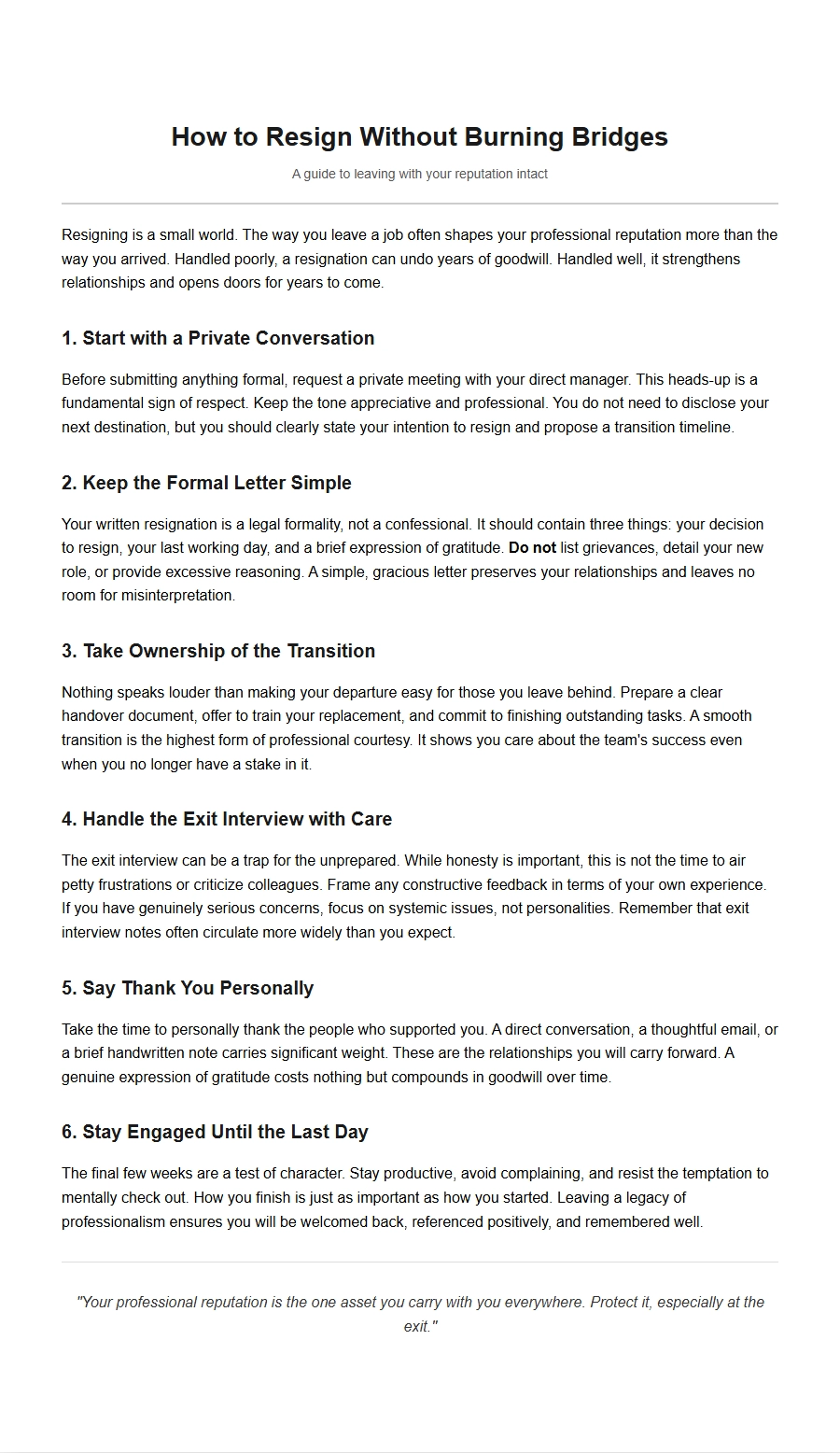
One big mistake is using outdated salutation and closing—like “To Whom It May Concern” or “Sincerely yours” when you know your manager’s name. Another is ignoring the delivery method. If you’re sending via email, you’ll want a digital letter format without a separate title page. Keep the subject line simple: “Resignation – [Your Name].” If you’re printing on company letterhead, make sure letterhead design is clean and your contact info matches. Also, always proofreading letter before sending—one typo in a legal‑sensitive context can look sloppy. For more guidance on the tone and structure of a respectful exit, see this article on writing a respectful resignation message.
What about severance or transition?
If you’re negotiating a severance package as part of your departure, you might need to address that separately. The resignation letter itself can simply state that you’re open to discussing transition details. For a deeper look at handling this, this resource on addressing a severance package in your resignation covers the key language to use.
One final thought
A good resignation letter—especially one that touches a non‑compete—feels both professional and personal. The sample gives you a scaffold; your voice gives it life. Don’t be afraid to edit and re‑read it twice. After you send it, you’ll realize the process was faster than you feared. Next time, it’ll be even easier. For a broader view of what a professional statement of leaving looks like, this professional statement of leaving an organization can serve as a reference point for tone and completeness.
Helpful Reference Samples
Resignation Letter for Non-Compete Agreement
Resignation with Non-Compete Acknowledgment
Date: January 15, 2025
To: Human Resources Department From: Jordan Lee Subject: Resignation and Non-Compete Agreement Acknowledgment
Dear HR Team,
Please accept this letter as formal notification of my resignation from the position of Senior Software Engineer, effective February 15, 2025. I am providing two-week notice as required by my employment contract.
I acknowledge that my employment agreement includes a non-competitive clause that restricts my activities for a period of twelve months following my last day of employment. I understand that I am prohibited from:
Working for a direct competitor in the same industry within a 50-mile radius
Soliciting company clients or prospective clients
Recruiting or hiring any current company employees
Using or disclosing any confidential company information
I hereby affirm that I will comply fully with the terms of the non-competitive agreement. I have no intention to violate these restrictions. Please provide me with a copy of the signed non-compete agreement along with the final settlement documents.
I appreciate the opportunities I have had at [Company Name] and I am committed to a smooth transition during my notice period.
Sincerely, Jordan Lee
Resignation Requesting Non-Compete Waiver
Date: March 3, 2025
To: Board of Directors From: Priya Sharma Subject: Resignation and Request for Non-Compete Waiver
Dear Board Members,
I am writing to resign from my role as Vice President of Marketing, effective April 3, 2025. However, I am seeking a waiver of the non-competitive agreement I signed upon employment.
My reason for leaving is to accept a position at [New Company], which operates in a different market segment and does not directly compete with [Current Company] in the geographic areas we serve. A comparison of the two businesses is provided below:
Feature
[Current Company]
[New Company]
Primary Market
Enterprise SaaS
Small Business CRM
Target Customers
Fortune 500
Startups & SMBs
Geographic Focus
North America
Europe & Asia
Because there is no competitive overlap, I respectfully request a formal waiver of the non-compete clause. I am willing to provide assurances that I will not solicit any clients or employees from [Current Company].
I would appreciate your prompt consideration so I can finalize my transition. Thank you for your support over the past five years.
Yours sincerely, Priya Sharma
Resignation Letter – Mutual Non-Compete Release
Date: June 10, 2025
To: Legal Department From: Marcus Chen Subject: Resignation and Mutual Non-Compete Release Agreement
Dear Legal Team,
I am submitting my resignation as Director of Business Development, effective July 10, 2025. As part of my separation, I propose a mutual release from the non-competitive agreement originally signed on June 1, 2020.
Over the last year, the company has undergone a strategic pivot to a new market vertical, while my new role is in an entirely unrelated sector. I believe a mutual release benefits both parties:
I will be free to pursue my career without restriction
The company avoids potential costs of enforcing the non-compete
We maintain a positive relationship for future referrals
I have prepared a draft mutual release document (attached) for your review. The key terms include a 30-day notice period during which I will assist with the transition and a release from all non-compete obligations effective on my last day. I am also willing to sign a non-disclosure agreement to protect company confidential information.
Please let me know if you would like to discuss or modify the draft. I look forward to a smooth exit.
Best regards, Marcus Chen
Resignation Citing Non-Compete Concerns
Date: September 22, 2025
To: Management Team From: Emily Torres Subject: Resignation – Non-Compete Restrictions
Dear Management,
I regret to inform you that I am resigning from my position as Sales Executive, effective October 6, 2025. My decision is due to concerns regarding the enforceability of the non-competitive agreement I signed when I was hired.
I have consulted with legal counsel and understand that under state law, non-compete clauses are not enforceable if they are overly broad or do not protect a legitimate business interest. The agreement I signed prohibits me from working for any company that “may compete” with [Company Name] for a period of two years. This indefinite restriction seems unreasonable and has limited my career opportunities.
I am willing to negotiate a reasonable non-compete term. Below is a comparison of my proposal versus the current clause:
Provision
Current Agreement
Proposed Adjustment
Duration
2 years
6 months
Geographic Scope
Any location worldwide
50-mile radius of current office
Definition of Competitor
Any company in any industry
Direct competitors in same market segment
I hope we can resolve this amicably. I am committed to honoring reasonable restrictions that protect the company while allowing me to advance my career. Thank you for your understanding.
Sincerely, Emily Torres
Resignation with Non-Compete Compliance Plan
Date: November 5, 2025
To: Human Resources From: David Kim Subject: Resignation and Compliance Plan for Non-Compete
Dear HR,
Please accept this letter as my formal resignation from the position of Product Manager, effective December 1, 2025. I have accepted a role at a company that I have verified is not a direct competitor, and I am prepared to demonstrate full compliance with my non-competitive agreement.
To ensure transparency, I have prepared a compliance plan:
I will not access or remove any confidential company data during my final weeks.
My new employer has confirmed in writing that it does not operate in the same market vertical as [Company Name].
I will not solicit any [Company Name] clients or employees for twelve months.
I will return all company property (laptop, badge, documents) on my last day.
I request a meeting with the legal team to review my plan and confirm that no violations occur. I want to part ways on good terms and avoid any misunderstandings.
I have valued my time at [Company Name] and especially the mentorship I received. I am fully dedicated to a smooth handover of my current projects.
Thank you for your cooperation.
Best regards, David Kim
Resignation – Early Termination of Non-Compete
Date: February 14, 2025
To: Chief Executive Officer From: Sarah Johnson Subject: Resignation and Request for Early Non-Compete Release
Dear Ms. CEO,
I am writing to resign from my position as Research Scientist, effective March 14, 2025. I request that the company release me from the non-competitive agreement early, given that I was a key contributor to a patented technology that is now obsolete.
Pursuant to Section 8 of my employment contract, the non-compete may be cancelled by mutual agreement if the protected business interest no longer exists. I believe this applies because:
The project I led was discontinued in Q4 2024
All related trade secrets have been publicly disclosed in a patent application
The company has exited that line of business entirely
I propose that we execute a simple release letter similar to the template below:
Party
Action
Effective Date
[Company Name]
Waives all non-compete restrictions
March 14, 2025
Sarah Johnson
Signs a non-disclosure and non-solicitation agreement
March 14, 2025
I will be happy to discuss this further. I hope we can find a solution that protects the company while enabling my next career step.
Sincerely, Sarah Johnson
Resignation – Non-Compete Negotiation Proposal
Date: April 20, 2025
To: Legal Counsel From: James Park Subject: Resignation and Negotiation of Non-Compete Terms
Dear Legal Counsel,
I am resigning from my role as Senior Consultant, effective May 20, 2025. I received an offer from a firm that, while not a direct competitor, has overlapping clients. I wish to negotiate a modification of my non-compete agreement to allow me to accept this position.
Current non-compete restrictions:
12-month duration
Prohibition on working for any consulting firm serving the same industry vertical
Client non-solicitation
Proposed modifications:
Reduce duration to 6 months
Exclude clients with whom I had no contact during my tenure
Allow work with [New Firm] provided I do not service a list of specifically named competitors
I have prepared a revised non-compete clause for your review. This adjustment protects your legitimate business interests while allowing me to progress in my career. I am also willing to provide a list of all clients I served to ensure the new restriction is narrowly tailored.
Thank you for considering my proposal. I remain committed to an ethical transition.
Best regards, James Park
Resignation – Voluntary Non-Compete Extension
Date: July 8, 2025
To: HR Director From: Linda Zhang Subject: Resignation and Voluntary Non-Compete Extension
Dear HR Director,
I am submitting my resignation as Data Analyst, effective August 8, 2025. Because I have access to highly sensitive customer data, I voluntarily offer to extend my non-competitive agreement from the standard 6 months to 12 months as a gesture of goodwill.
I understand that the company may be concerned about the protection of proprietary algorithms and customer lists. To address this, I propose the following:
Term
Current Agreement
Voluntary Extension
Non-Compete Duration
6 months
12 months
Geographic Scope
50-mile radius
Same
Non-Solicitation
12 months
12 months
I am making this offer to demonstrate my integrity and to ensure the company feels secure about my departure. In exchange, I request that the company provide a neutral reference and not contest any unemployment benefits I may claim.
I hope this extension eliminates any concerns. Please let me know if you would like to formalize this arrangement.
Sincerely, Linda Zhang
Resignation – Challenge to Non-Compete Validity
Date: October 1, 2025
To: Compliance Officer From: Robert Hayes Subject: Resignation and Formal Challenge to Non-Compete
Dear Compliance Officer,
I am resigning from my position as Junior Developer, effective October 15, 2025. I wish to formally challenge the non-competitive agreement I signed during onboarding, as I believe it is unenforceable under current state law.
According to the state’s Non-Compete Reform Act, clauses that restrict low-wage employees are void. My salary at the time of signing was $45,000 per year, which falls below the threshold of $60,000 set by the act. Additionally, the duration (18 months) exceeds the statutory maximum of 12 months.
Key points:
I was not provided with independent legal advice before signing
The clause does not specify any legitimate business interest
The geographic restriction includes the entire country, which is unreasonable for a junior role
I am requesting that the company acknowledge the invalidity of the non-compete and release me from it. I am willing to sign a standard confidentiality agreement to protect proprietary information. I hope we can resolve this without litigation.
Thank you for your prompt attention.
Yours truly, Robert Hayes
Resignation – Non-Compete Waiver for Start-up
Date: December 12, 2025
To: Board of Directors From: Anita Patel Subject: Resignation and Non-Compete Waiver for Start-up Venture
Dear Board Members,
I am resigning from my role as Head of Innovation, effective January 12, 2026, to launch my own start-up. The start-up operates in a completely different industry (clean energy vs. financial services). However, my employment contract includes a broad non-compete that may be interpreted to cover any new business venture.
Given the distinct industry, I respectfully request a waiver of the non-compete clause. To further protect the company, I propose the following binding commitments:
I will not use any company intellectual property or trade secrets
I will not hire any current employees for at least 2 years
My start-up will not target [Company Name]’s existing or potential customers
I will serve a 30-day transition period to document all ongoing projects
I have attached a business plan showing that my start-up is not a competitor. I am confident that this venture aligns with my personal goals and does not harm the company.
Please consider this request favorably. I want to maintain a positive relationship and perhaps even explore future collaboration.
 Polite Resignation Email for Remote Employees
 Short Resignation Letter for Contractor Position
 Teacher Resignation Letter Example
 How to Resign Without Burning Bridges
 Formal Resignation Letter Sample for Manager
 Nurse Resignation Letter with 2 Weeks Notice