Staring at a blank page when you need to write a resignation letter as a teacher can feel just as stressful as a noisy classroom on a Friday afternoon. You know you need to leave professionally, but the right words won’t come. The good news is that using a resignation letter sample isn’t cheating. It’s a smart way to get the structure right, then add your own voice.
Why a sample helps you write faster and better
A letter template gives you a clear skeleton: a proper salutation and closing, the right letter structure, and the professional tone you need. It’s like having a mentor who says, “Start here, then make it yours.” You still need to fill in your personal reasons and details, but the hard part—figuring out where to begin—is already done. Many teachers I’ve coached have told me that using a sample turned a two-hour struggle into a twenty-minute task.
Category: Career Transition
How to pick the right sample for your teaching situation
Not all resignation letters are the same. A teacher leaving mid-year for a different school will write differently from one retiring after thirty years. Look for a resignation letter sample that matches your scenario. If your school is very formal, choose a sample with traditional business letter format. If you’re at a smaller school with a more relaxed culture, you can adapt a semi-formal version. The key is to match the tone in writing to your workplace relationships.
When you find a sample, treat it as a starting point. Change the words to sound like you. A good customizable letter leaves room for your authentic voice. For example, if you have a close relationship with your principal, you can add a brief personal thanks. If the relationship is purely professional, stick to polite and direct language.
Quick tips for tailoring your opening paragraph
The opening paragraph is where most people trip up. Keep it simple: state your intention to resign, the effective date, and a short reason (if you want). Avoid long explanations. Something like, “Please accept this letter as formal notice that I am resigning from my position as third-grade teacher at Sunnydale Elementary, effective June 15, 2025.” That’s clear and professional. Then you can follow with a sentence about your appreciation.
If you’re moving to another teaching job, you might mention that you’re grateful for the experience. But don’t overshare. The sample will show you how much detail is appropriate.
Common mistakes teachers make (and how to avoid them)
One mistake is using outdated salutation and closing phrases like “To Whom It May Concern” or “Sincerely yours” when you know the recipient’s name. Always address the letter to your principal or HR director directly. Another issue is ignoring format. If you’re sending an email, use digital letter format with a clear subject line and no letterhead design. If you’re printing it, letterhead design matters—use your school’s or a simple professional header. Don’t forget proofreading letter mistakes: a small typo can make you look rushed. Read it aloud or ask a colleague to glance at it.
Also, remember that formal writing tips apply to the entire letter, not just the body. Keep your professional correspondence concise. Teachers often want to explain everything, but a resignation letter isn’t the place for complaints or detailed future plans.
Once you have a sample you like, adapt it step by step. Change the names and dates first. Then rewrite the middle paragraph to reflect your genuine feelings—maybe mention a favorite project or a student success story. Finally, adjust the closing sentence to match your future plans. A simple “I wish the school continued success” works well.
Remember, a good letter template leaves room for you. It should feel like your letter, not a generic form. If you’re nervous about a resignation interview discussion, prepare a short verbal summary that mirrors your letter. And if your school has an internal process for resigning from a firm (or school), check the employee handbook first.
Use the sample as a springboard, not a crutch
The best resignation letters feel both professional and personal. A sample gives you the framework; you provide the heart. Don’t worry if your first draft isn’t perfect. Write it, step away for an hour, then come back and read it with fresh eyes. You’ll likely spot small things you want to change. That’s normal. Over time, writing these letters gets faster.
You’ve spent years helping students grow. Now it’s your turn to move forward with confidence. A well-written letter is one less thing to stress about—and you’ve got this.
Practical Writing Samples
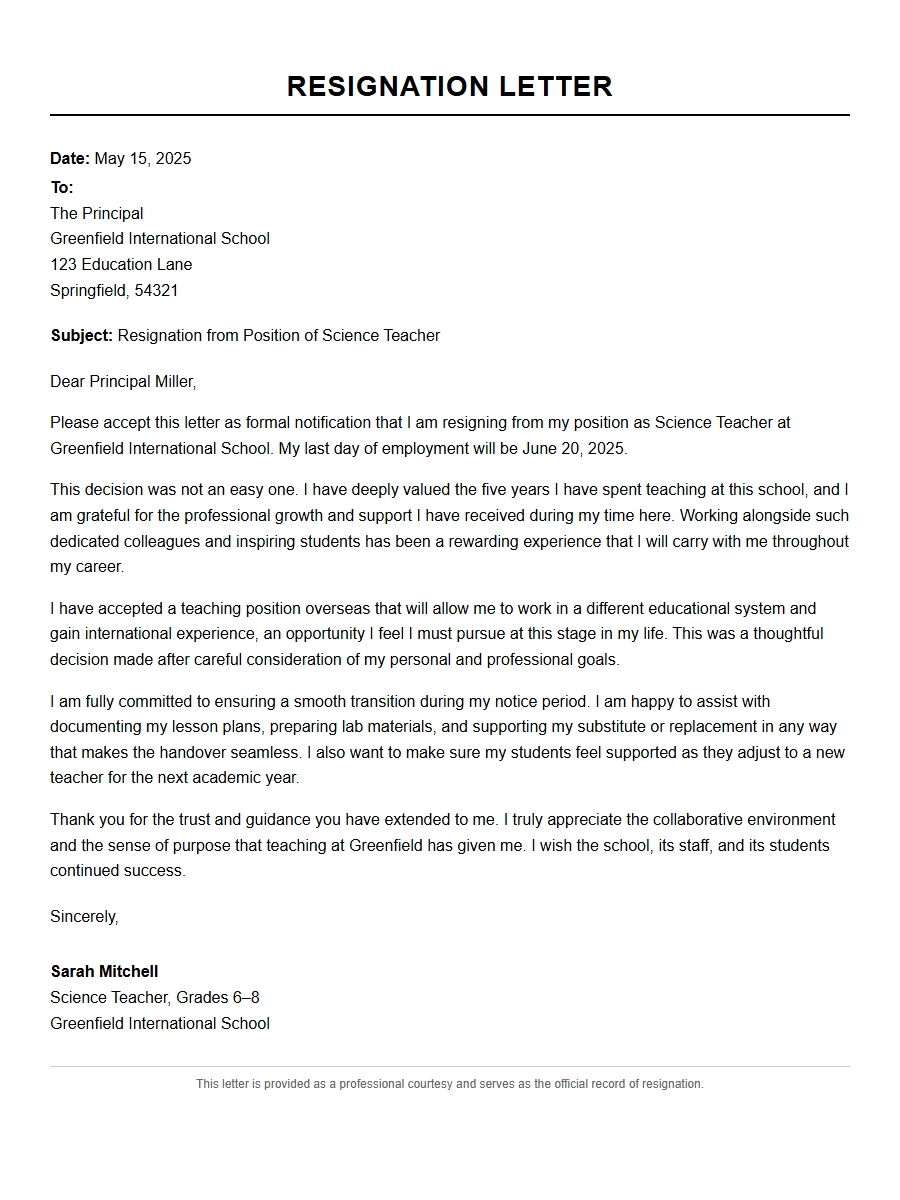
Teacher Resignation Letter Example
Standard Professional Resignation
Date: October 15, 2023
To: Principal Jane Smith School: Lincoln Elementary School
Dear Principal Smith,
Please accept this letter as formal resignation from my position as 5th Grade Teacher at Lincoln Elementary School, effective November 30, 2023. After careful consideration, I have decided to pursue a new career opportunity in educational consulting.
I am grateful for the past four years at Lincoln. The supportive faculty and enthusiastic students have made this a rewarding experience. I will ensure a smooth transition by completing all lesson plans for the remainder of the term and assisting with the handover to my replacement.
Thank you for the professional growth opportunities. I wish the school continued success.
Sincerely, Sarah Johnson
Resignation Due to Relocation
Date: March 8, 2024
To: Principal David Lee School: Westside High School
Dear Principal Lee,
I am writing to resign from my role as Biology Teacher, effective April 12, 2024. My family is relocating to Austin, Texas, due to my spouse's job transfer.
This decision was difficult as I value the science department and our students immensely. I am committed to ensuring a seamless transition. Below is a summary of my handover plan:
Complete grading for current unit by March 25
Prepare detailed lesson plans for the remainder of the semester
Organize lab equipment inventory and update materials list
Meet with substitute teacher during the first week of April
I am thankful for the support I received here. I will miss Westside High.
Best regards, Michael Torres
Resignation for Personal Health Reasons
Date: January 20, 2024
To: Principal Karen O'Brien School: Riverview Middle School
Dear Principal O'Brien,
I regret to inform you of my resignation as Middle School Math Teacher, effective February 15, 2024. After ongoing medical consultations, I must prioritize my health and recovery, which requires reduced professional commitments.
This was not an easy decision, but my doctor recommends a period of rest. I appreciate your understanding and flexibility over the past months. Below are the key tasks I will complete before my departure:
Task
Deadline
Status
Finalize quarter grades
Feb 5
In progress
Return school property
Feb 10
Pending
Document student progress
Feb 12
Not started
Thank you for the kindness shown during my tenure. I hope to return to teaching when my health allows.
Warmly, Emily Chen
Resignation to Pursue Further Studies
Date: June 1, 2024
To: Principal Robert Davis School: Oakwood Academy
Dear Principal Davis,
I am submitting my resignation as English Language Arts Teacher, effective August 15, 2024. I have been accepted into a full-time Master's program in Educational Leadership at State University, starting this fall.
I have thoroughly enjoyed my three years at Oakwood Academy. The students' growth and the collaborative culture have been inspiring. To ensure continuity, I propose the following:
Finalize summer reading lists by June 20
Share curriculum maps and assessments with department head
Provide recommendations for my replacement
I am open to mentoring a new teacher during the August transition week. Thank you for this incredible opportunity.
Sincerely, Laura Martinez
Resignation for Career Change
Date: September 12, 2023
To: Principal James Wilson School: Sunset Elementary
Dear Principal Wilson,
Please accept this letter of resignation from my position as Kindergarten Teacher, effective October 27, 2023. After ten years in education, I have decided to transition into instructional design within the corporate sector.
This was a personal and professional crossroads. I am proud of the foundation I helped build for young learners. To make this transition smooth, I will:
Complete all parent-teacher conferences scheduled for October
Prepare a detailed classroom management guide
Inventory and organize classroom supplies
I have attached a transition checklist for your reference. Thank you for your mentorship over the years.
Best, Andrew Clark
Resignation with Short Notice (Medical Emergency)
Date: November 5, 2023
To: Principal Angela Hart School: Crestview High School
Dear Principal Hart,
Due to an unforeseen family medical emergency, I must resign from my role as History Teacher effective immediately, November 5, 2023. I sincerely apologize for the short notice.
I am taking leave to care for my parent. Below are immediate steps I have taken to minimize disruption:
Actions Completed:
Emailed emergency lesson plans for the next two weeks to department head
Provided grading rubric for pending assignments
Contacted substitute teacher coordinator
I will return school keys and materials by the end of this week. I hope to return to education once my family situation stabilizes. Thank you for your understanding.
With gratitude, Jennifer Walsh
Resignation for Better Compensation
Date: February 28, 2024
To: Principal Mark Thompson School: Greenfield International School
Dear Principal Thompson,
I am writing to resign from my position as High School Physics Teacher, effective March 31, 2024. I have received an offer from another institution that provides a compensation package better aligned with my experience and qualifications.
This was a difficult choice, as I value the innovative science program here. I am committed to a professional departure. My transition plan includes:
Item
Details
Final exams
Graded by March 20
Lab equipment audit
Complete inventory by March 25
Handoff meeting
Scheduled for March 28
I appreciate the opportunities provided here and hope to remain in touch professionally.
Respectfully, Kevin Brown
Resignation Due to Retirement
Date: April 10, 2024
To: Principal Maria Garcia School: Pinecrest Elementary
Dear Principal Garcia,
After 32 years of dedicated service, I am retiring from my position as 3rd Grade Teacher at Pinecrest Elementary, effective June 15, 2024. This letter serves as my formal resignation.
Teaching has been my life's joy. I have seen generations of students grow and succeed. To honor a smooth transition, I will:
Complete final report cards by June 5
Organize decades of teaching resources for the next teacher
Offer to train my replacement for two days in late June
I will treasure the memories and friendships built here. Thank you for a wonderful career.
With deep appreciation, Patricia Miller
Resignation for Unsatisfactory Work Conditions
Date: August 20, 2023
To: Principal Steven Adams School: Northwood High School
Dear Principal Adams,
I am resigning from my role as ESL Teacher, effective September 12, 2023. Despite my efforts, the increasing class sizes and lack of administrative support have made it impossible to deliver quality instruction.
I have raised these concerns in previous meetings without resolution. For the record, here are the ongoing issues:
Issue
Impact
Class sizes exceeding 35 students
Reduced individual attention
Insufficient ESL materials
Outdated curriculum
No planning time for ELL support
Teacher burnout
I wish the students the best, but I cannot continue under these conditions. I will complete the current unit and return all school property.
Regards, Sophia Patel
Short and Simple Resignation
Date: July 5, 2024
To: Principal Lisa Wong School: Maplewood Primary School
Dear Principal Wong,
Please accept this letter as my resignation from the position of Art Teacher, effective July 31, 2024. I am leaving for personal reasons.
I have enjoyed my time at Maplewood and appreciate the support from the staff. My lesson plans for the summer term are completed and filed in the teacher's lounge. Classroom supplies are organized and labeled.
I will submit the final attendance and grade reports by July 25. Thank you for the opportunity to teach here.
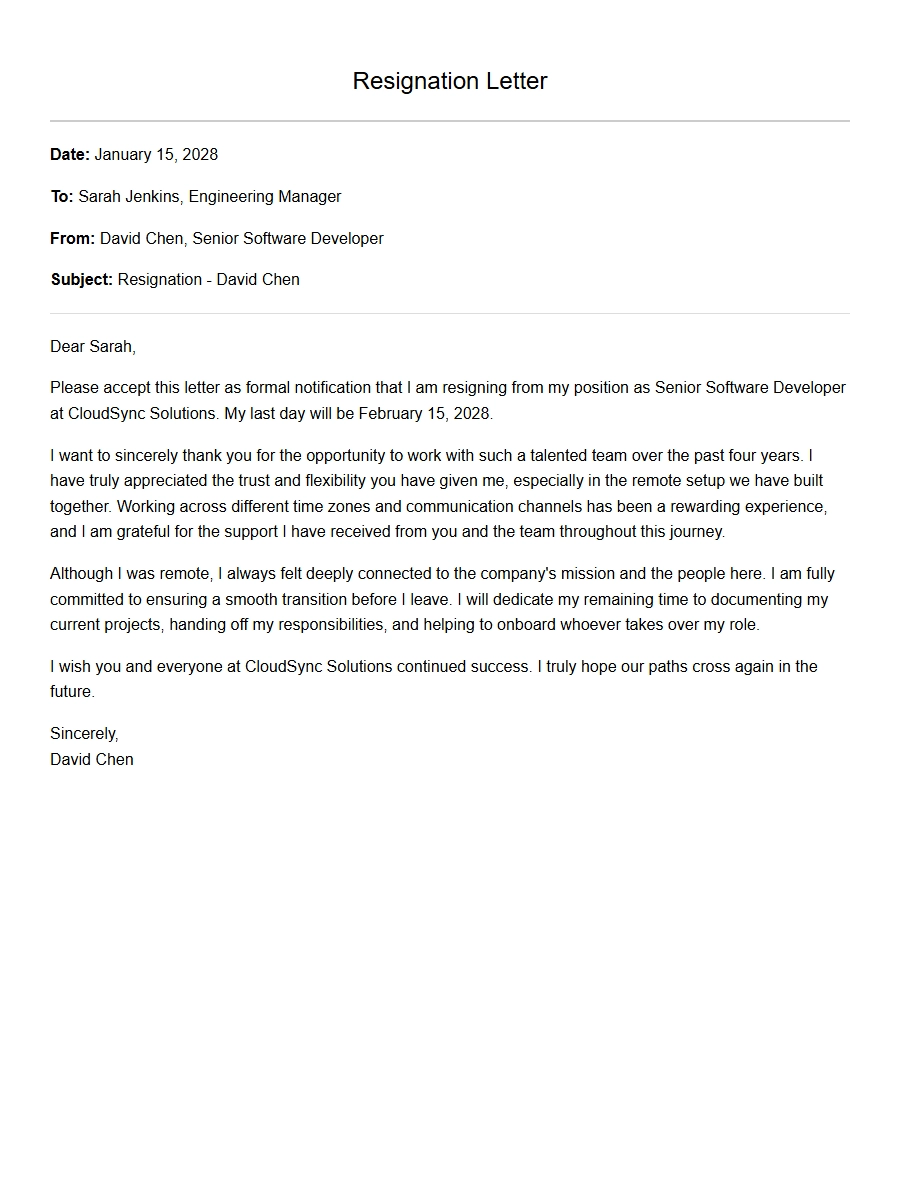 Polite Resignation Email for Remote Employees
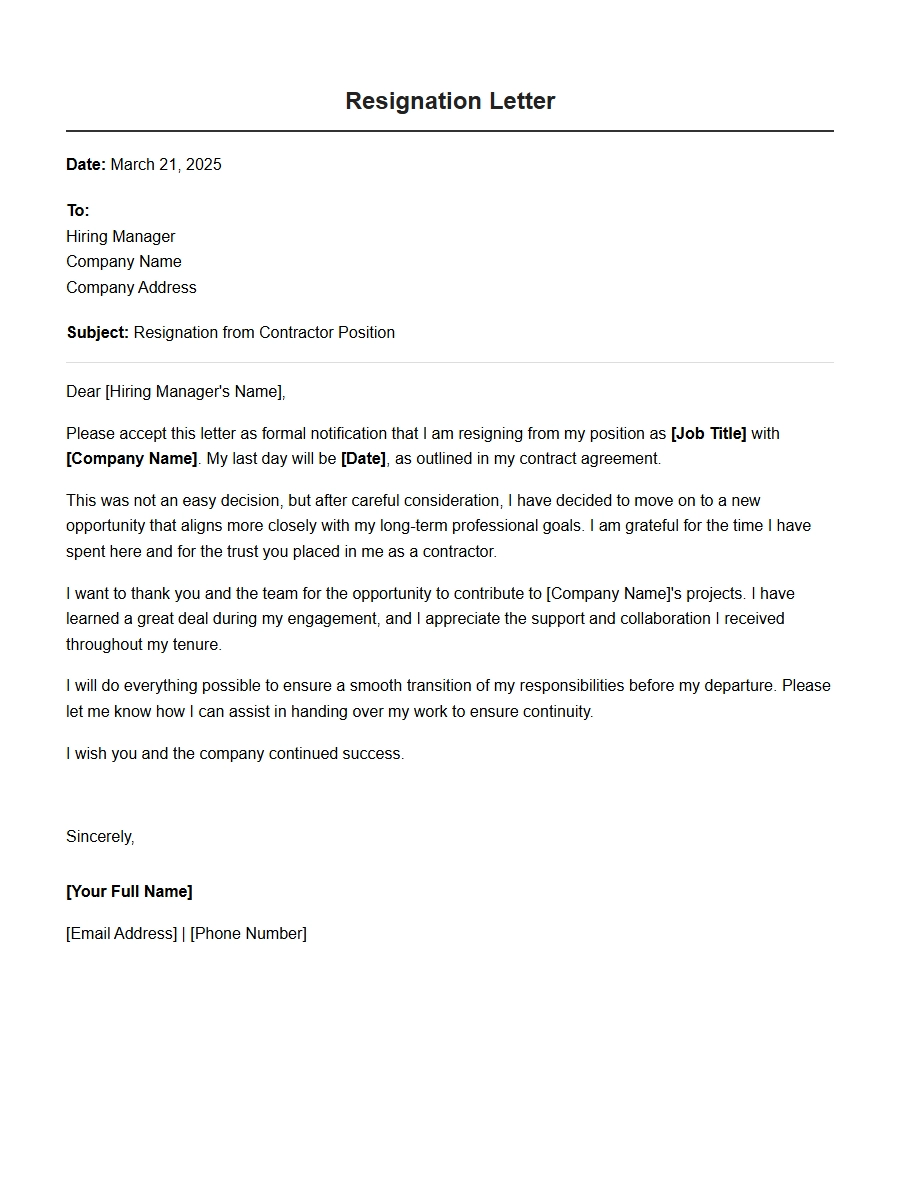 Short Resignation Letter for Contractor Position
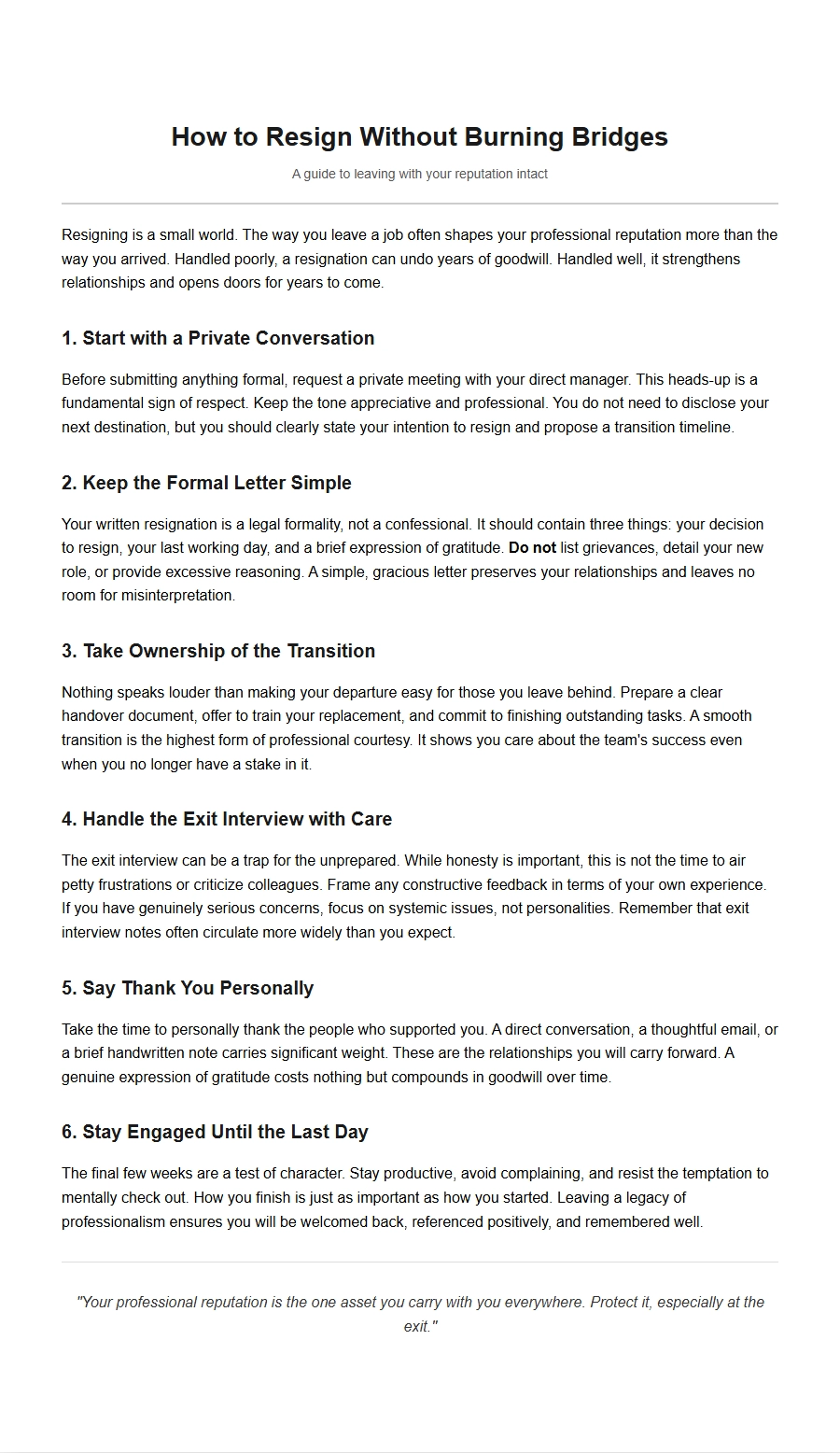 How to Resign Without Burning Bridges
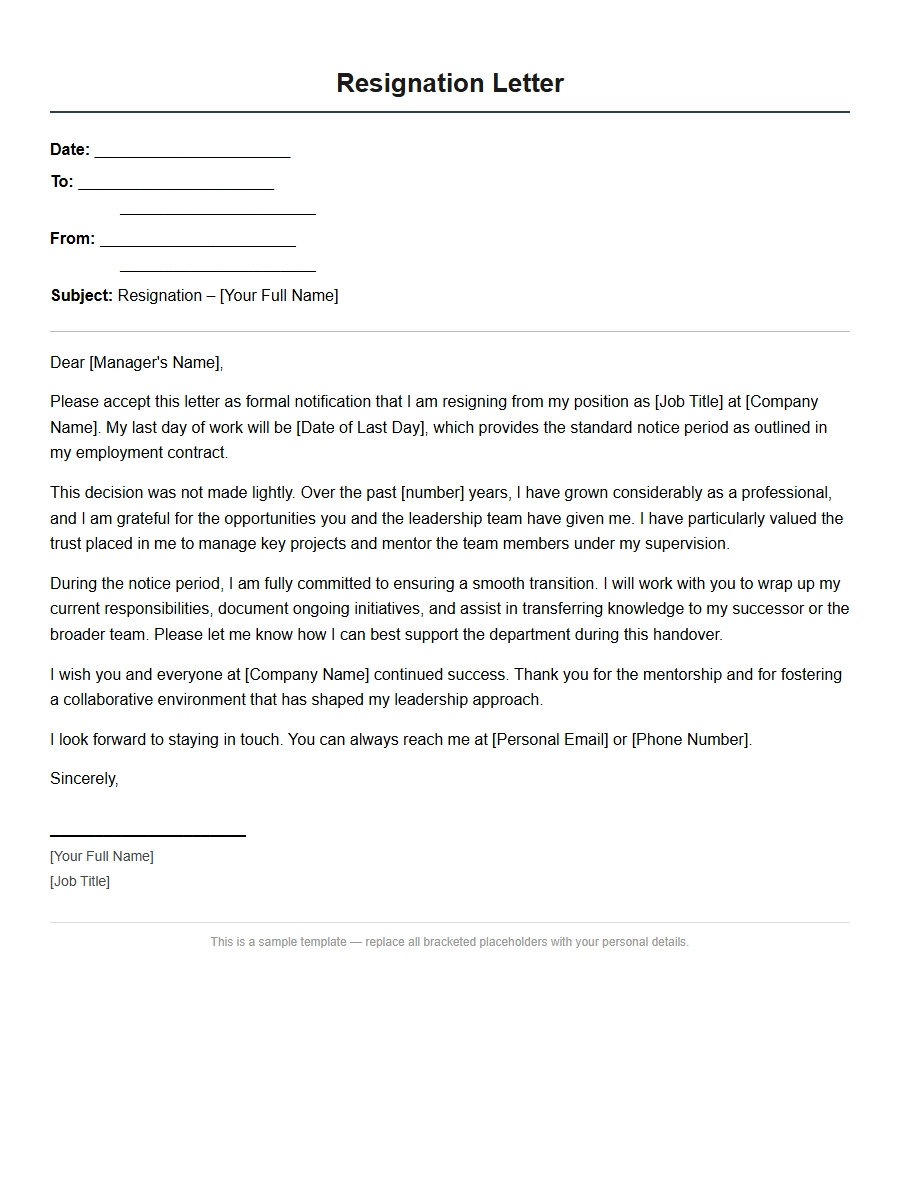 Formal Resignation Letter Sample for Manager
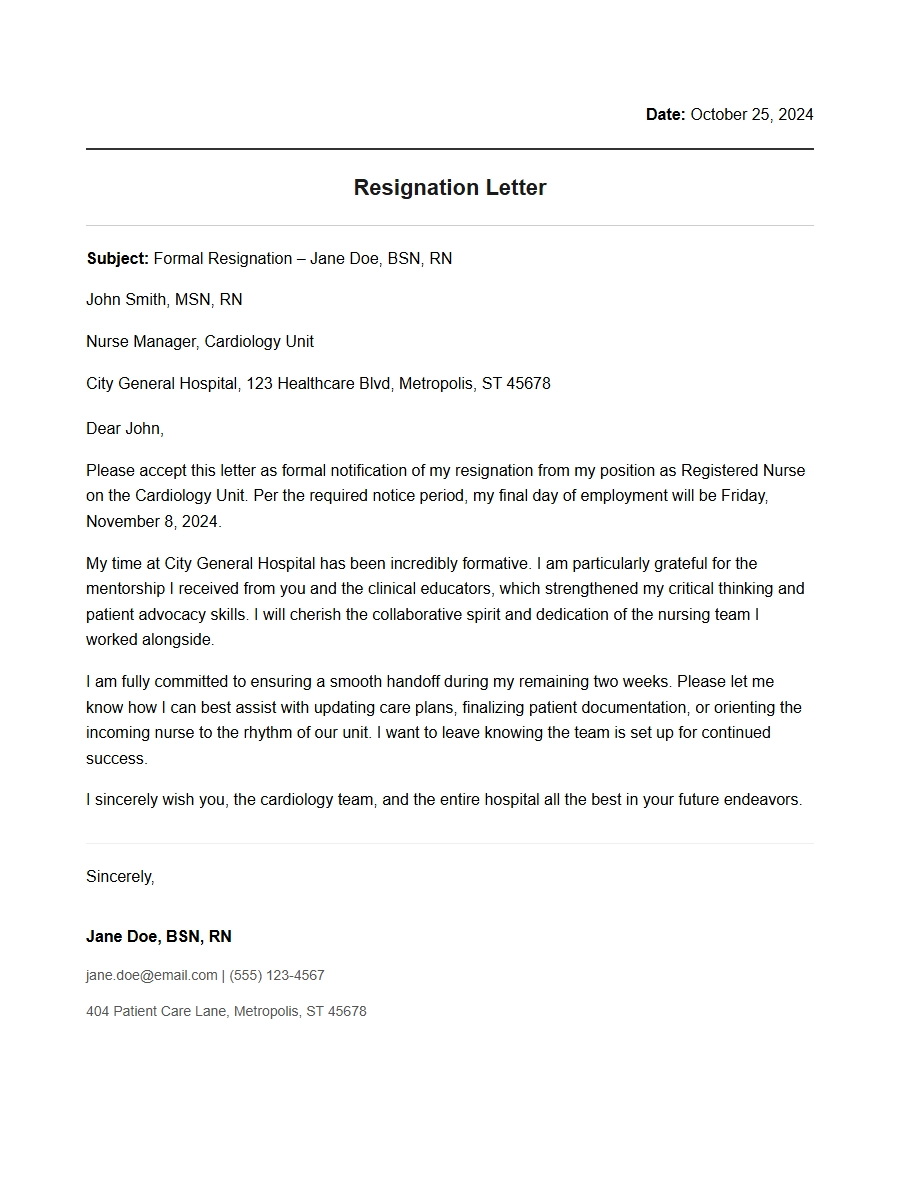 Nurse Resignation Letter with 2 Weeks Notice
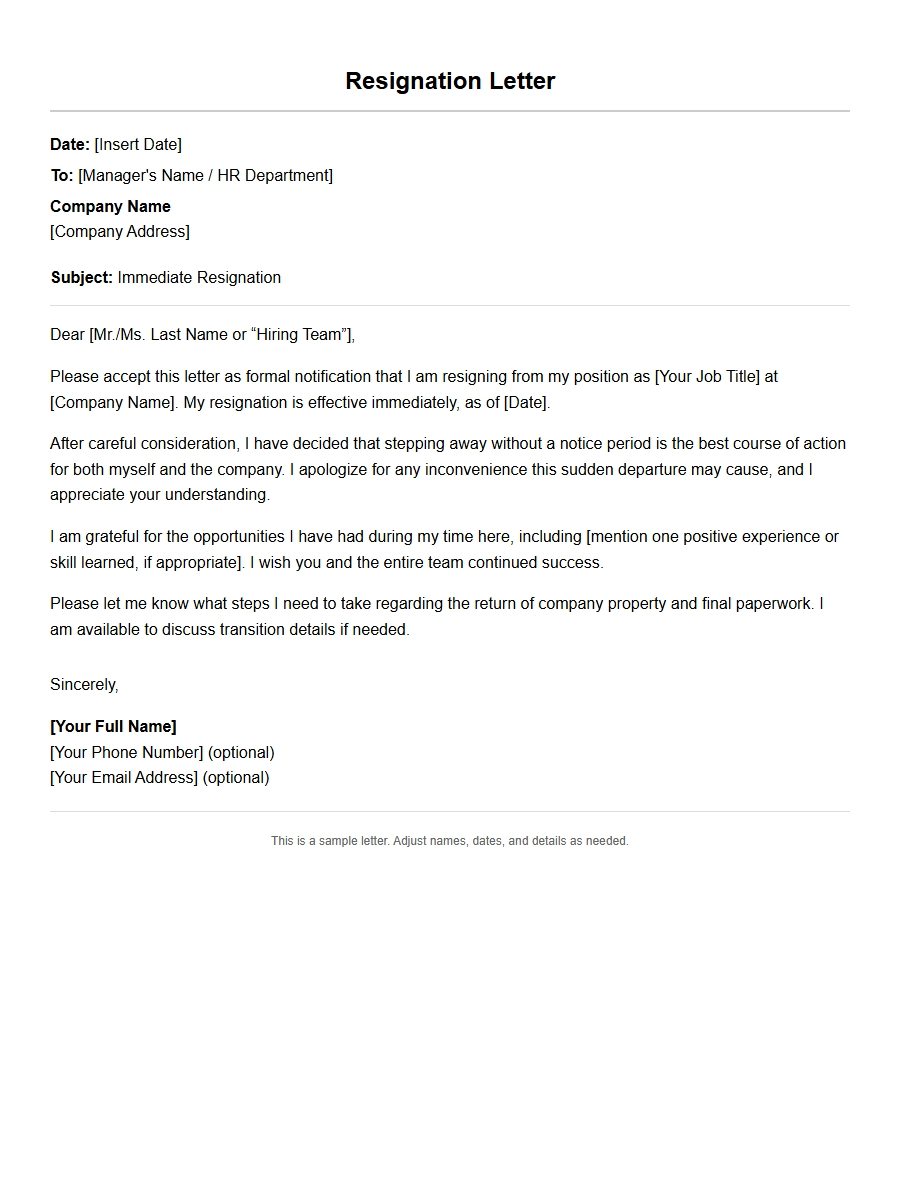 Sample Immediate Leave Resignation Letter