Resignation Letter for Sales Representative
Staring at a blank page when you need to write a professional letter can feel paralyzing—but the right sample turns that anxiety into a confident, polished draft in minutes. If you're a sales rep trying to leave on good terms, the pressure is even higher. You want to protect your relationships and your reputation. You don't want to burn a bridge.
Using a resignation letter sample isn't taking shortcuts. It's a smart way to handle professional correspondence. A good sample gives you a solid structure and the right tone. You get a framework that includes all the necessary parts, so you don't accidentally miss something important. Then you can focus on making the language feel like you.
[Category: Professional Resignation Letters]
Helpful Examples
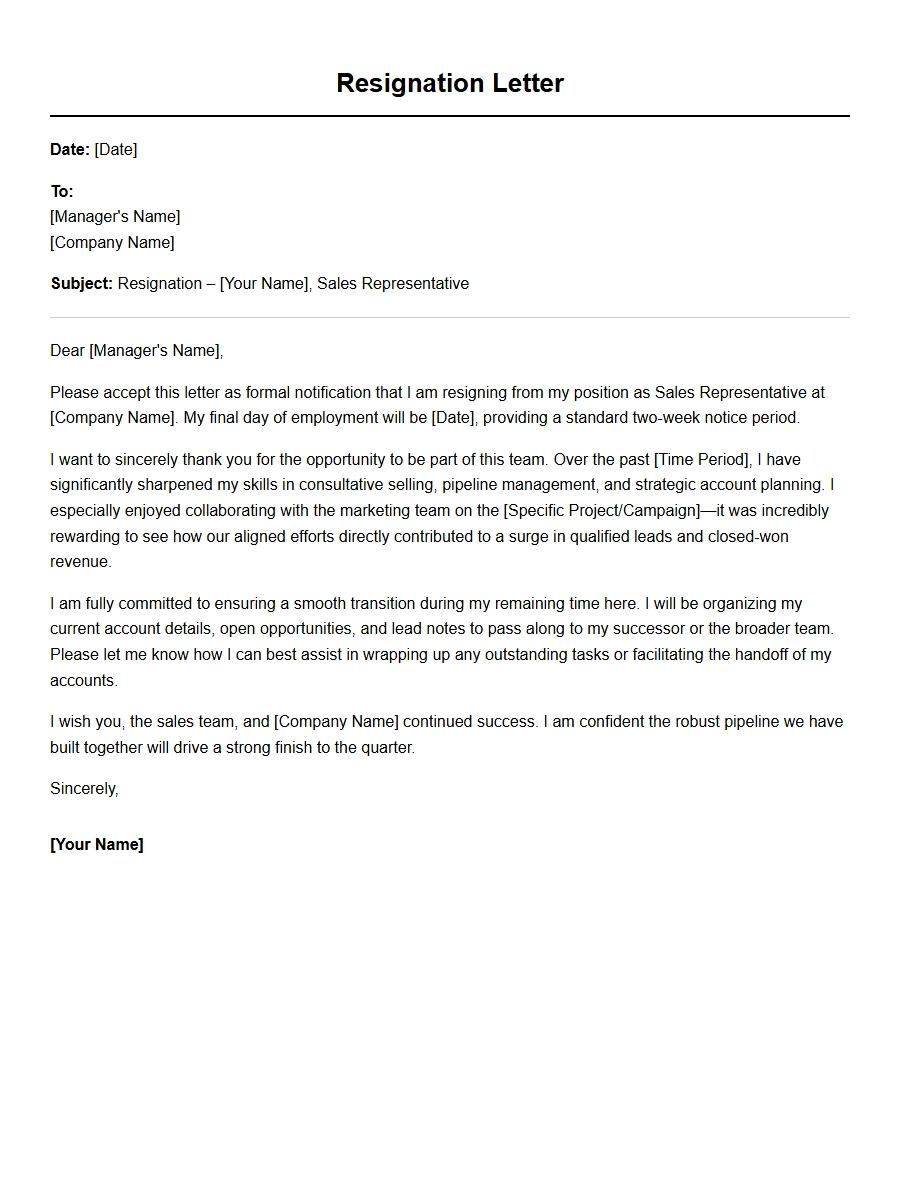
Standard Notice Period Resignation
Date: January 15, 2025
To: Human Resources Manager
Please accept this letter as formal resignation from my position as Sales Representative at [Company Name]. My last day of work will be February 15, 2025, fulfilling a 30-day notice period as per company policy.
I want to express my sincere gratitude for the opportunities I have had during my 2 years here. I have enjoyed working with the sales team and learned valuable skills in client relationship management and territory planning.
To ensure a smooth transition, I am committed to completing all pending tasks and assisting in training my replacement. I will provide a detailed handover document before my departure.
Thank you for your understanding. I wish the company continued success.
Sincerely,
John Smith
Sales Representative
Resignation for Better Opportunity
Date: March 3, 2025
To: Sales Manager
I am writing to resign from my position as Sales Representative, effective April 3, 2025. I have accepted a role that aligns more closely with my long-term career goals in account management.
This decision was not easy, as I have greatly appreciated the mentorship and support from the team. My time here has equipped me with strong negotiation and closing skills that I will carry forward.
To assist during the handover, I have prepared a list of key clients and ongoing deals:
| Client | Status | Next Action |
|---|---|---|
| ABC Corp | Proposal sent | Follow-up call on Mar 10 |
| XYZ Ltd | Contract review | Send revised terms |
I will ensure all records are updated before my last day. Thank you for the growth opportunities.
Best regards,
Emily Johnson
Resignation Due to Relocation
Date: April 12, 2025
To: Regional Sales Director
It is with regret that I submit my resignation as Sales Representative, effective May 12, 2025. My family is relocating to another state, making it necessary for me to leave this position.
I have valued my three years at [Company Name], especially the collaborative culture and the support from the sales operations team. I am proud of having exceeded my quarterly targets consistently.
Please let me know if there is anything specific you need from me during the transition. I am happy to:
- Document current pipeline and client contacts
- Introduce my replacement to key accounts
- Complete any pending reports
I hope to maintain professional connections. Thank you for the wonderful experience.
Yours sincerely,
Michael Brown
Resignation Requesting Referral
Date: May 8, 2025
To: Hiring Manager / [Company Name]
I am writing to formally resign from my role as Sales Representative, effective June 8, 2025. This decision follows a personal need to explore new challenges in the technology sector.
During my 1.5 years here, I developed strong B2B sales skills and contributed to a 20% increase in regional revenue. I am grateful for the training and the trust placed in me.
Would you be willing to provide a professional recommendation or serve as a reference? I greatly value your opinion and believe it would support my upcoming job search.
I will ensure a clean handover of all tasks and client data. Thank you for considering my request.
Warm regards,
Sarah Davis
Resignation for Career Change
Date: June 20, 2025
To: Vice President of Sales
Please accept this letter as notice of resignation from my Sales Representative position. My last day will be July 20, 2025. I have decided to pursue a career in marketing, a field I have been passionate about for some time.
My experience at [Company Name] has been enriching. I learned the importance of customer insights and persuasive communication, skills that will serve me well in my new path.
I will complete all outstanding tasks and provide a comprehensive handover document. Additionally, I can assist in recruiting and training my successor if needed.
Thank you for the opportunities and support. I am grateful for the time spent here.
Sincerely,
David Wilson
Resignation with Honest Feedback
Date: July 5, 2025
To: Sales Manager
After careful consideration, I am resigning from my role as Sales Representative, effective August 5, 2025. While I appreciate the camaraderie, I feel the current compensation structure does not align with industry standards, and the lack of growth opportunities has influenced my decision.
I hope this feedback is taken constructively. My departure is not a reflection of my respect for the team but a personal choice for professional development.
I will continue to perform my duties diligently during the notice period. I have organized my account list and pending proposals:
| Priority | Account | Action Required |
|---|---|---|
| High | Delta Inc | Send contract by Jul 10 |
| Medium | Omega Corp | Schedule demo |
Thank you for the experience.
Best regards,
Linda Martinez
Resignation With Full Handover Plan
Date: August 10, 2025
To: Sales Operations
This letter serves as my resignation from the Sales Representative position. My final day will be September 10, 2025. I have prepared a detailed handover plan to ensure no disruption.
My handover includes:
- Client transfer list – 15 active accounts with contact details and recent activity.
- Pipeline report – 10 opportunities at various stages, with next steps noted.
- Training documents – scripts, objection handling guides, and CRM tips.
I will dedicate the remaining weeks to training the new hire and conducting joint calls with key clients. I am also available for phone consultations for two weeks after departure.
Thank you for the support and professional growth. I wish the team all the best.
Sincerely,
Robert Taylor
Resignation with Fixed Last Date Request
Date: September 1, 2025
To: Human Resources
I am writing to resign from my role as Sales Representative. I kindly request that my resignation be accepted effective October 1, 2025, which is one calendar month from today.
I have already started documenting my workflow and will ensure that all monthly targets are met before my departure. My reasons are personal, and I would appreciate maintaining confidentiality.
Please let me know if there is any paperwork required for the exit process. I will cooperate fully.
Thank you for the rewarding time at [Company Name].
Yours faithfully,
Jennifer Adams
Senior Sales Representative Resignation
Date: October 15, 2025
To: Director of Sales
With mixed emotions, I submit my resignation as Senior Sales Representative, effective November 15, 2025. This role has been a significant part of my career for the last five years, and I am proud of the $2M in annual revenue I managed.
I am leaving to start my own consulting business, but I want to ensure a seamless transition. I propose the following succession plan:
- Mentor two junior representatives for the next month
- Provide access to my account relationship notes
- Share my proven sales strategies in a written guide
I am open to discussing a part-time advisory role post-resignation if that interests the company.
Thank you for the trust and opportunities that shaped my professional growth.
Best regards,
Thomas Garcia
Resignation Due to Health Reasons
Date: November 5, 2025
To: Sales Manager
I am writing to resign from my position as Sales Representative due to ongoing health concerns that require me to reduce work stress and focus on recovery. My last day will be December 5, 2025.
This decision was difficult because I truly enjoy working with the team and supporting clients. However, my doctor has advised a less demanding schedule for the foreseeable future.
To ease the transition, I will complete all pending orders and update the CRM with any outstanding follow-ups. I can also arrange a call with my top clients to introduce my successor.
I appreciate the company's support during my tenure. Thank you for understanding.
Sincerely,
Patricia Hernandez
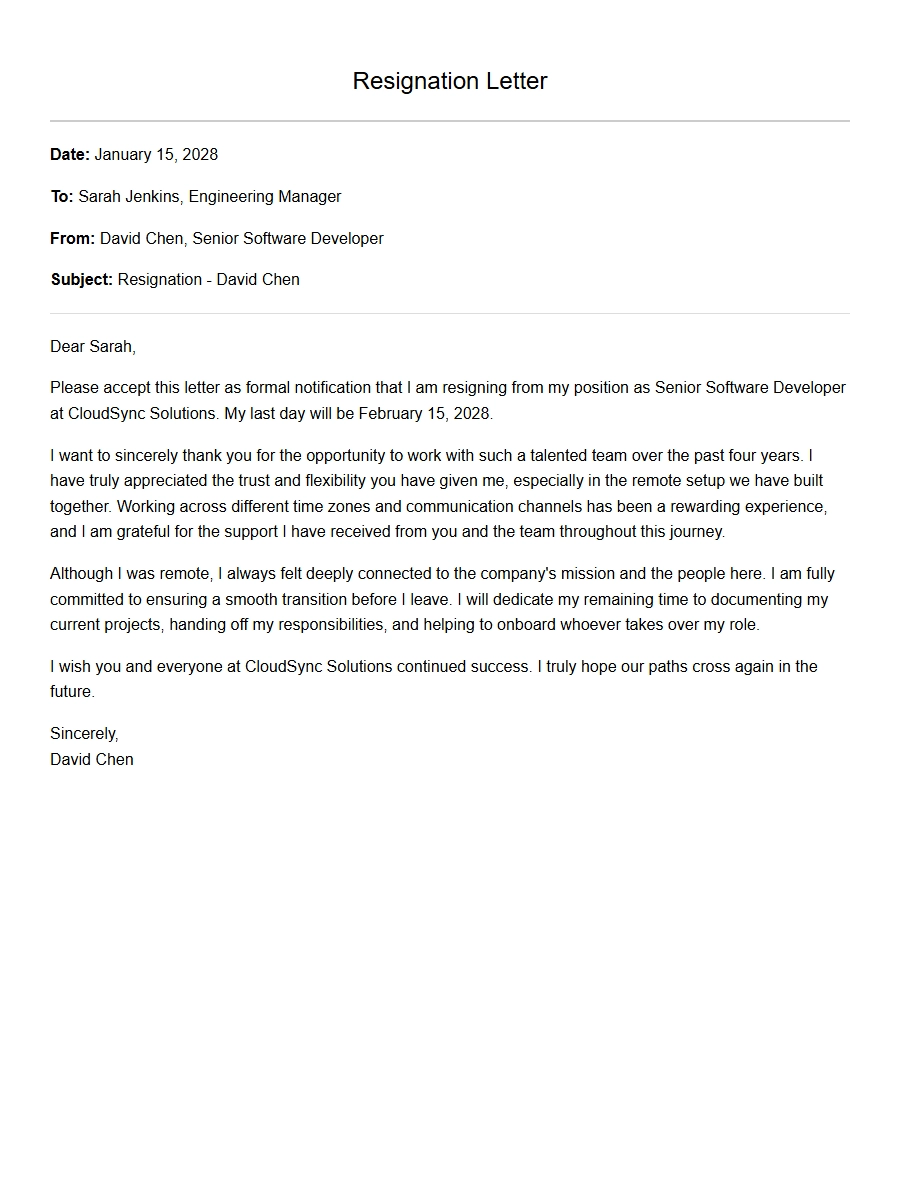 Polite Resignation Email for Remote Employees
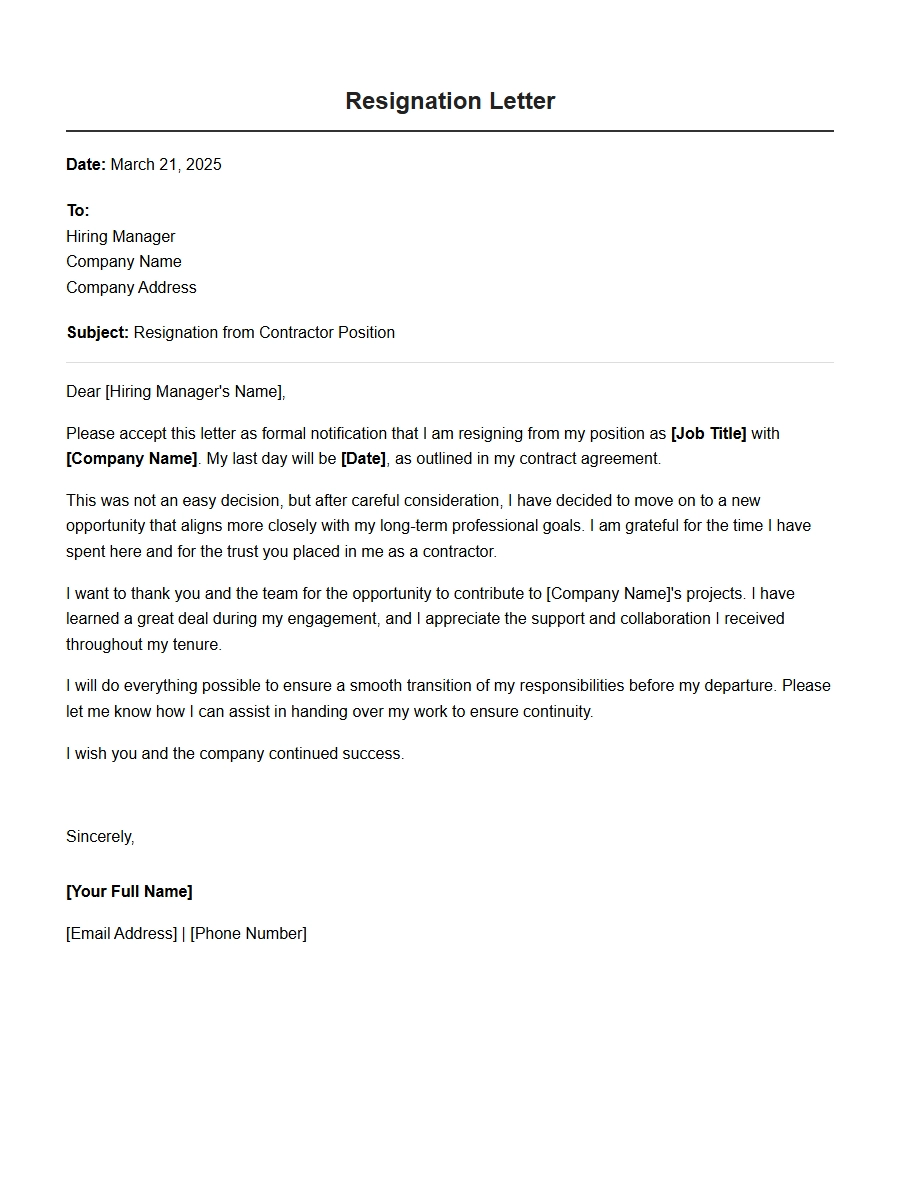 Short Resignation Letter for Contractor Position
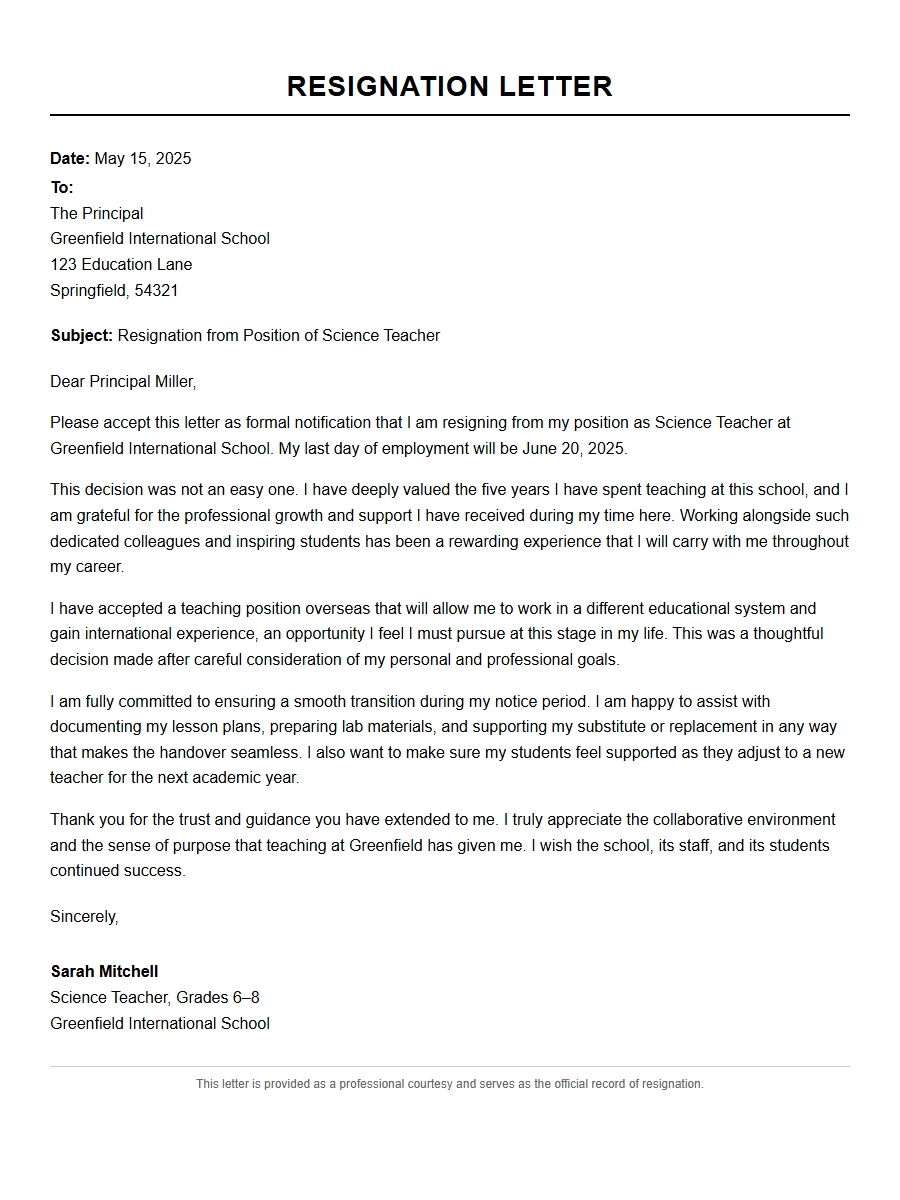 Teacher Resignation Letter Example
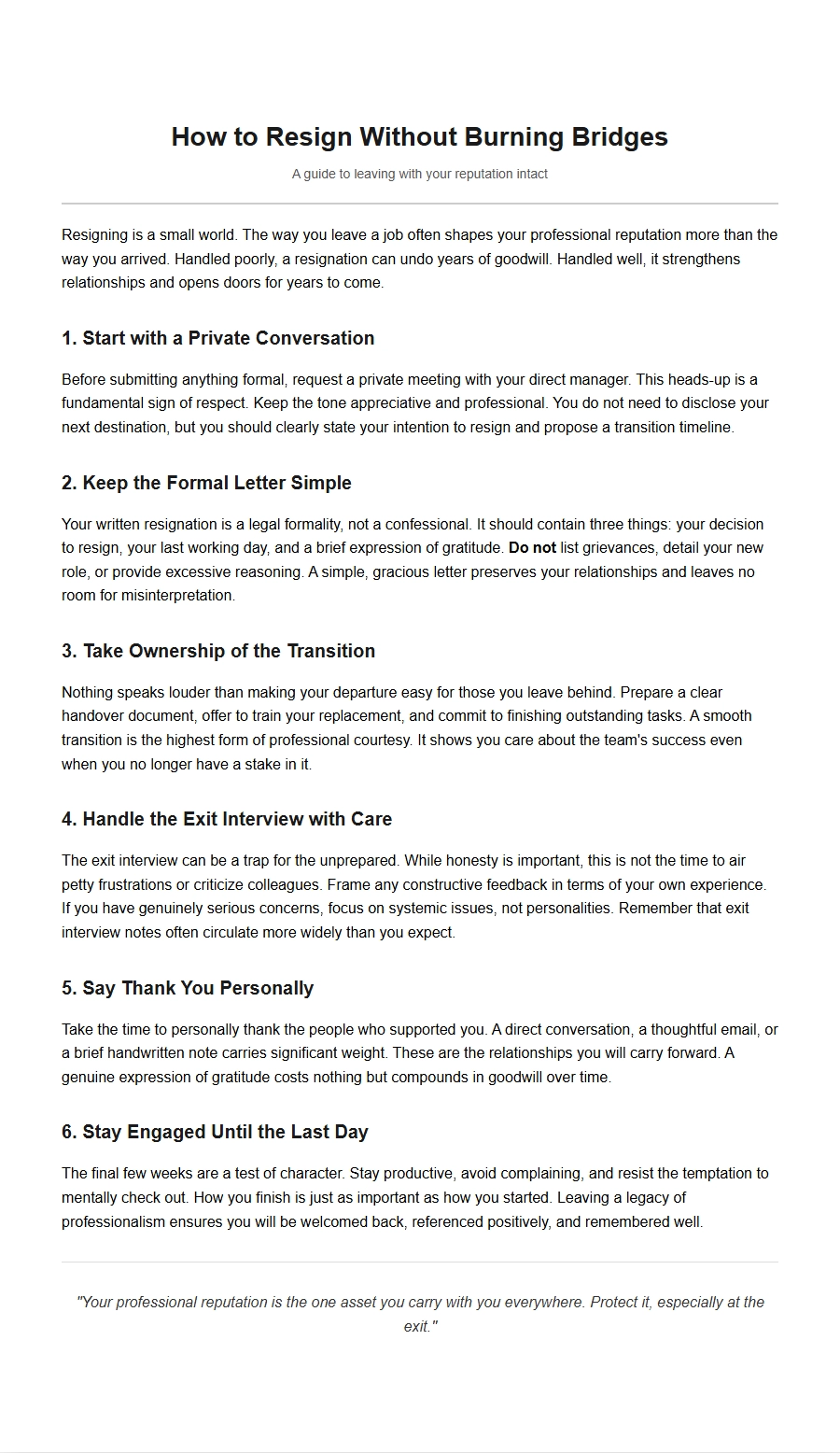 How to Resign Without Burning Bridges
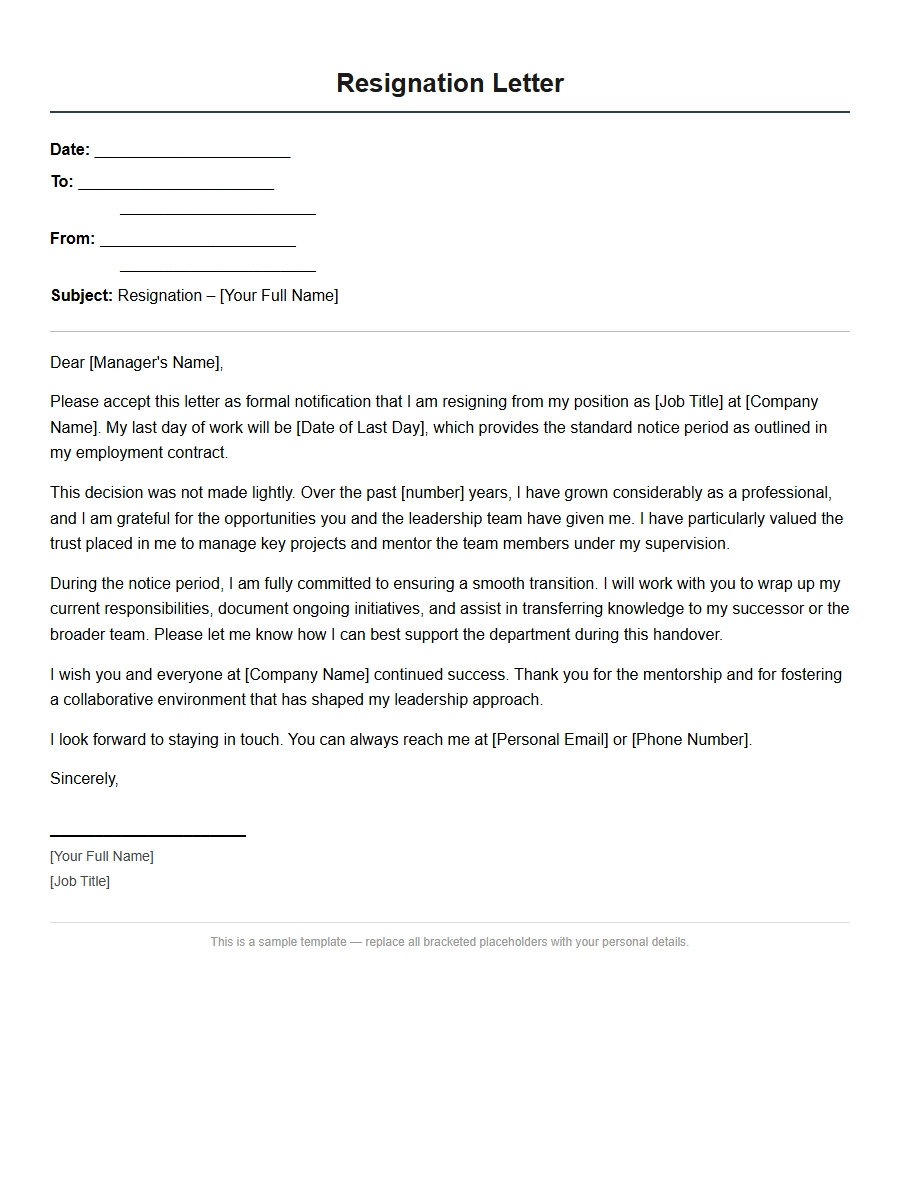 Formal Resignation Letter Sample for Manager
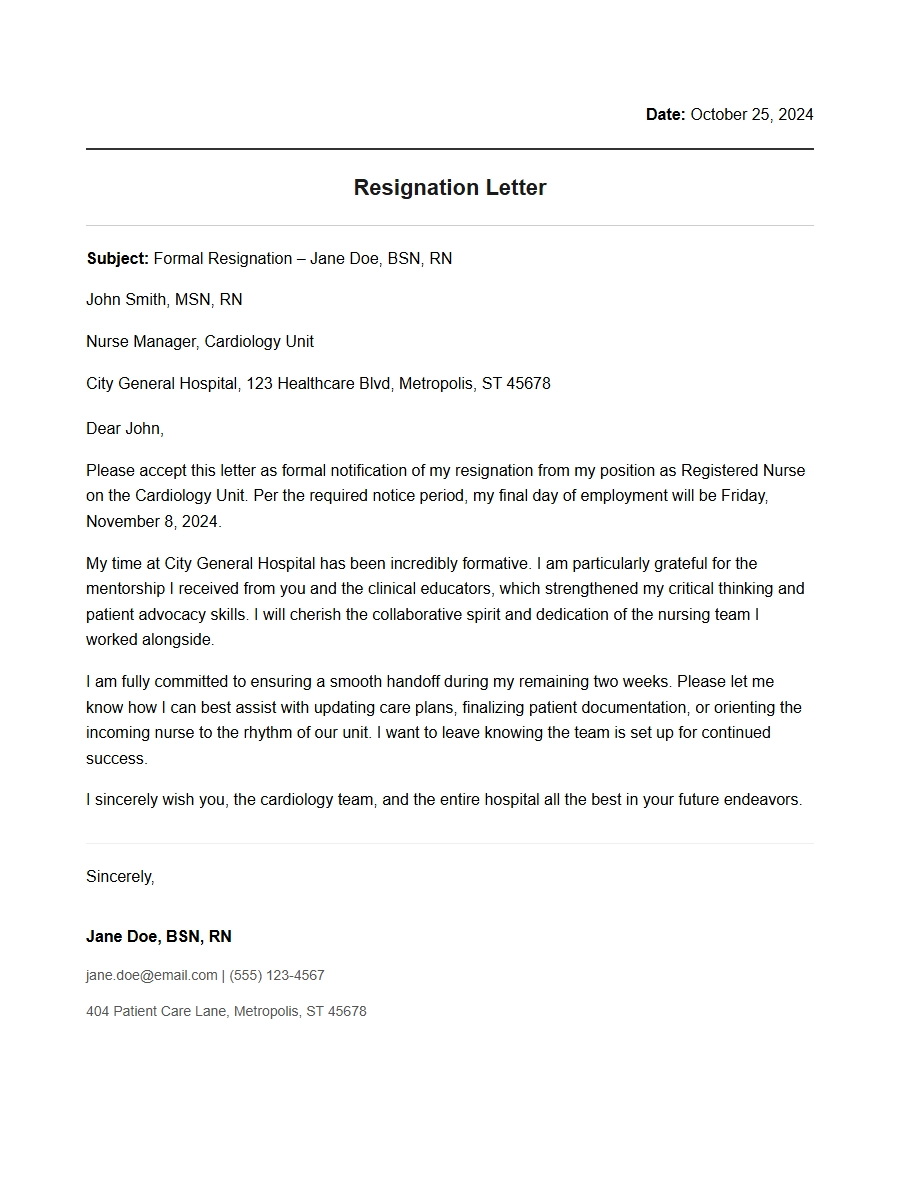 Nurse Resignation Letter with 2 Weeks Notice