Sample Resignation Letter for High Stress Environment
You need to send a resignation letter today—but your brain is fried from the very environment you’re leaving. High-stress jobs leave little energy for crafting perfect professional correspondence. You want to exit gracefully without burning bridges, but you also don’t want to spend hours staring at a blank page.
That’s where a solid resignation letter sample comes in. Using a template isn’t cheating. It’s a smart shortcut that gives you structure, tone, and key phrases. You get a framework to build on—and still personalize it so the letter sounds like you instead of a robot.
Category: Resignation Letters
What makes a resignation letter for a high-stress environment different?
When you’re leaving a job that’s been emotionally or physically draining, your letter needs to strike a careful balance. You don’t want to vent or list grievances—that can backfire. Instead, aim for a tone that’s professional, respectful, and firm. A sample tailored to high-stress environments helps you keep your cool on paper.
Think of it as formal writing tips filtered through real-world experience. The goal is to state your departure clearly, express gratitude where genuine, and avoid anything that sounds bitter. A good resignation letter sample built for these situations already accounts for that tension.
How to adapt a sample without losing your authentic voice
Start with a solid letter template. Read it over once. Then ask yourself: does this sound like me? If it feels too stiff, change the language. Swap formal phrases like “I hereby tender my resignation” for something more natural: “I’m writing to let you know I’m moving on.”
Keep the letter structure intact—that’s why you’re using a sample. But personalize the salutation and closing. Instead of “To Whom It May Concern,” use the actual name of your manager if you have a good relationship. For the closing, “Sincerely” works, but “Best regards” often feels warmer.
Your tone in writing matters most. Imagine you’re saying the words out loud to your boss. Does it match your voice? If not, adjust the sample until it does. A customizable letter is the whole point.
Tailoring the opening paragraph to grab the right kind of attention
The first few lines set the tone. For a high-stress role, you might want to acknowledge the difficulty without blaming anyone. For example: “After much reflection, I’ve decided to resign from my position as [title] to focus on my well-being.” That’s honest, professional, and hard to argue with.
If you’re comfortable, you can also thank the employer for specific opportunities—even if the stress was high. A line like “I appreciate the trust you placed in me during [project]” shows maturity. This is where letter writing etiquette kicks in: always assume your letter could be read by HR, future employers, or even in court.
Common mistakes to avoid (even with a sample)
One big one: using outdated salutations. “Dear Sir” or “To Whom It May Concern” feels antique. Check the business letter format for modern standards. Another mistake is ignoring the medium. If you’re sending an email, skip the letterhead design and use a clean digital format. For a printed letter, a simple header with your contact info is enough.
Don’t forget to proofreading letter carefully. In a stressed state, it’s easy to miss typos that change your meaning. Read it out loud or ask a friend to glance at it. A small error can make you look careless—exactly what you want to avoid during a resignation.
Also, resist the urge to explain every reason. You don’t owe a detailed breakdown. Keep it professional and brief. If you need a reference later, a clean resignation letter helps more than a long complaint.
Don’t copy-paste and call it done. The best cover letter examples or resignation samples are starting points. Mix in your own details: specific dates, a short positive memory, your willingness to help transition. That’s what makes it feel genuine.
Practice writing one or two drafts. The first might feel awkward, but the second will start to sound like you. Over time, writing professional correspondence becomes faster—you’ll know which parts to keep and which to change.
Remember, this letter is a bridge. It closes one chapter and opens the next. Keep it clean, keep it honest, and let the sample do the heavy lifting so you can focus on what comes next.
Extra Samples
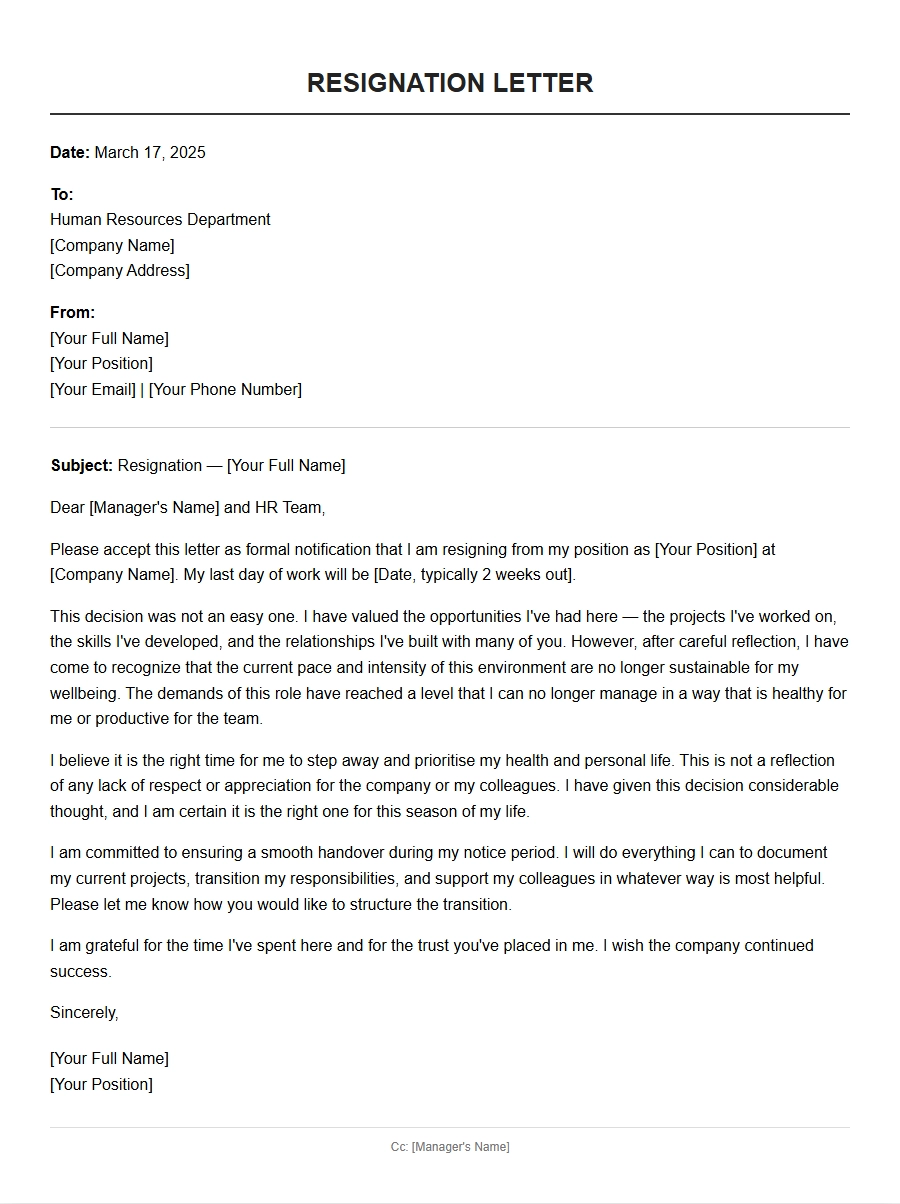
Sample Resignation Letter for High Stress Environment
Standard Resignation Letter for Stressful Workload
Date: June 1, 2025
To: Human Resources Manager
Please accept this letter as formal resignation from my position of Senior Analyst at XYZ Corp. After considerable reflection, I have determined that the sustained high-pressure environment has become untenable for my well-being.
My last working day will be June 30, 2025, providing the standard two weeks’ notice. I am grateful for the opportunities I’ve had here, but the constant overtime and unrealistic deadlines have led to significant burnout. I believe a change is necessary to preserve my health and regain balance.
During the transition period, I am committed to completing my current projects and handing over my responsibilities. Below is a summary of my remaining tasks:
Finalize Q2 financial report
Transfer client contacts to team lead
Document ongoing workflows for replacement
Thank you for understanding. I wish the company continued success.
Sincerely, Jordan Lee
Immediate Resignation Due to Burnout
Date: June 2, 2025
To: Department Director
I regret to inform you that I must resign from my role as Project Manager effective immediately. The extreme stress levels in this role have adversely affected my physical and mental health, and I can no longer continue without risk.
Working conditions have escalated to the point where I experience persistent anxiety and sleeplessness. My physician has advised me to prioritise recovery, and I therefore request a waiver of the standard notice period.
Key factors contributing to my decision:
Consistent 70‑hour work weeks
Lack of support despite repeated requests
Hostile communication from senior management
I will arrange to return company property and provide login credentials by end of day. I appreciate the professional growth I gained here but must now focus on my health.
Yours faithfully, Maria Gomez
Resignation Citing Health Reasons in High‑Stress Role
Date: June 3, 2025
To: HR Department
Please accept this letter as my resignation from the position of Sales Team Lead, effective June 17, 2025. The decision is difficult but necessary due to chronic stress‑related health issues.
My doctor has clearly linked my hypertension and anxiety to the sustained pressure in this fast‑paced environment. I have attempted to manage the workload through delegation and better time management, but the core demands remain excessive.
Below is a timeline of my handover plan:
Week
Activity
1
Complete pending client proposals
2
Train successor on reporting tools
I am thankful for the skills I have built here. I hope the organisation can address the workload distribution to protect future employees’ well‑being.
Best regards, David Chen
Resignation with Request for Part‑Time Transition
Date: June 4, 2025
To: Manager, Operations
I am writing to formally resign from my full‑time role as Operations Coordinator, effective July 1, 2025. However, I would like to propose a part‑time arrangement for an additional month to ease the transition and reduce my personal stress level.
Recent months have brought an unmanageable workload that has impacted my health. I believe moving to a 20‑hour week would allow me to train my replacement while regaining balance. If part‑time is not possible, my last day will be June 30.
Key handover items I will focus on:
Vendor contracts renewal timeline
Monthly inventory reconciliation process
Standard operating procedures documentation
I value the team I work with and want to leave on good terms. Please let me know if my proposal is acceptable.
Thank you, Priya Sharma
Resignation Suggesting Workload Reforms
Date: June 5, 2025
To: Chief Operating Officer
I tender my resignation as Lead Developer, effective June 30, 2025. I am leaving primarily because of the unsustainable high‑stress environment that has been tolerated for too long.
In the spirit of constructive feedback, I would like to highlight areas that need change to prevent future turnover:
Unrealistic sprint deadlines
Insufficient staffing to cover critical projects
Lack of mental health resources
I hope the leadership will consider these points. My notice period will be served diligently; I have prepared a detailed handover document and will assist in onboarding a successor.
Document
Status
Code repository notes
Completed
System architecture diagrams
In progress
I appreciate the opportunities I had here, but my health must come first.
Yours sincerely, Michael Brown
Resignation with Gratitude Despite Stress
Date: June 6, 2025
To: Director of Marketing
Please accept this letter as my resignation from the Marketing Manager position, effective June 20, 2025. This was not an easy decision, as I have genuinely enjoyed working with many talented colleagues.
Nevertheless, the constant high‑pressure demands have taken a toll on my mental health. I have tried to adapt, but the pace is unsustainable. I leave with gratitude for the professional development and the trust placed in me.
Key accomplishments I am proud of:
Launched three successful product campaigns
Grew social media engagement by 40%
Mentored two junior team members
I will ensure a smooth handover. Please let me know how I can best assist during the transition. I hope the organisation can find ways to reduce stress for remaining team members.
Warmly, Emily White
Resignation Due to Toxic Work Culture
Date: June 7, 2025
To: Human Resources
I am resigning from my position as Account Executive immediately, effective today. The high‑stress environment in this organisation is exacerbated by a toxic culture that I can no longer endure.
Despite reporting repeated incidents of micromanagement and public criticism, no meaningful action was taken. The constant fear of reprisal has created severe anxiety. I am exercising my right to leave without notice under these circumstances.
List of unresolved concerns (previously escalated):
Verbal aggression from supervisor
Unreasonable last‑minute deadlines
Retaliation for requesting support
I will return company laptop and badge to reception today. I hope future employees will be treated with more respect.
Regards, Carlos Rivera
Resignation Citing Mental Health Priorities
Date: June 8, 2025
To: Team Lead
I am writing to formally resign from my role as Software Engineer, effective June 22, 2025. The decision stems from the recognition that this high‑stress environment is harming my mental health.
I have consulted a therapist who has recommended reducing stress drastically. The constant pressure to deliver without adequate support has led to symptoms of depression. I need to step away to prioritise therapy and recovery.
My handover plan includes:
Task
Estimated completion
Code documentation for ongoing projects
June 15
Knowledge transfer sessions with junior developers
June 18
I am grateful for the technical growth opportunities. I hope the company will consider implementing better mental health support for staff.
Thank you, Lisa Wang
Resignation Citing Work‑Life Imbalance
Date: June 9, 2025
To: Director of Engineering
Please accept this letter as resignation from my position as Senior Developer, effective June 23, 2025. The decision is driven by a chronic lack of work‑life balance that has made this role unsustainable.
The expectation to be available evenings and weekends has eroded my personal life and health. I have communicated this concern multiple times, but the demands have not changed. I am leaving to find a position that respects boundaries.
Summary of stress factors:
Mandatory on‑call rotation every other week
Unrealistic release deadlines
No compensation for overtime
I will complete my current sprint and help transition my projects. I value the technical expertise I gained here.
Best regards, James Park
Short Notice Resignation for Personal Wellness
Date: June 10, 2025
To: HR Manager
I regret to inform you that I must resign from my position as Customer Support Lead effective immediately. The extreme stress in this role has become detrimental to my wellness, and I cannot continue.
I have already used all my sick leave due to stress‑related illnesses. My doctor has strongly advised me to remove myself from this environment without further delay.
Below are the items I am leaving behind:
Company phone and charger
Laptop and power cable
Security badge
I will email my resignation letter with supporting medical documentation separately. I appreciate your understanding.
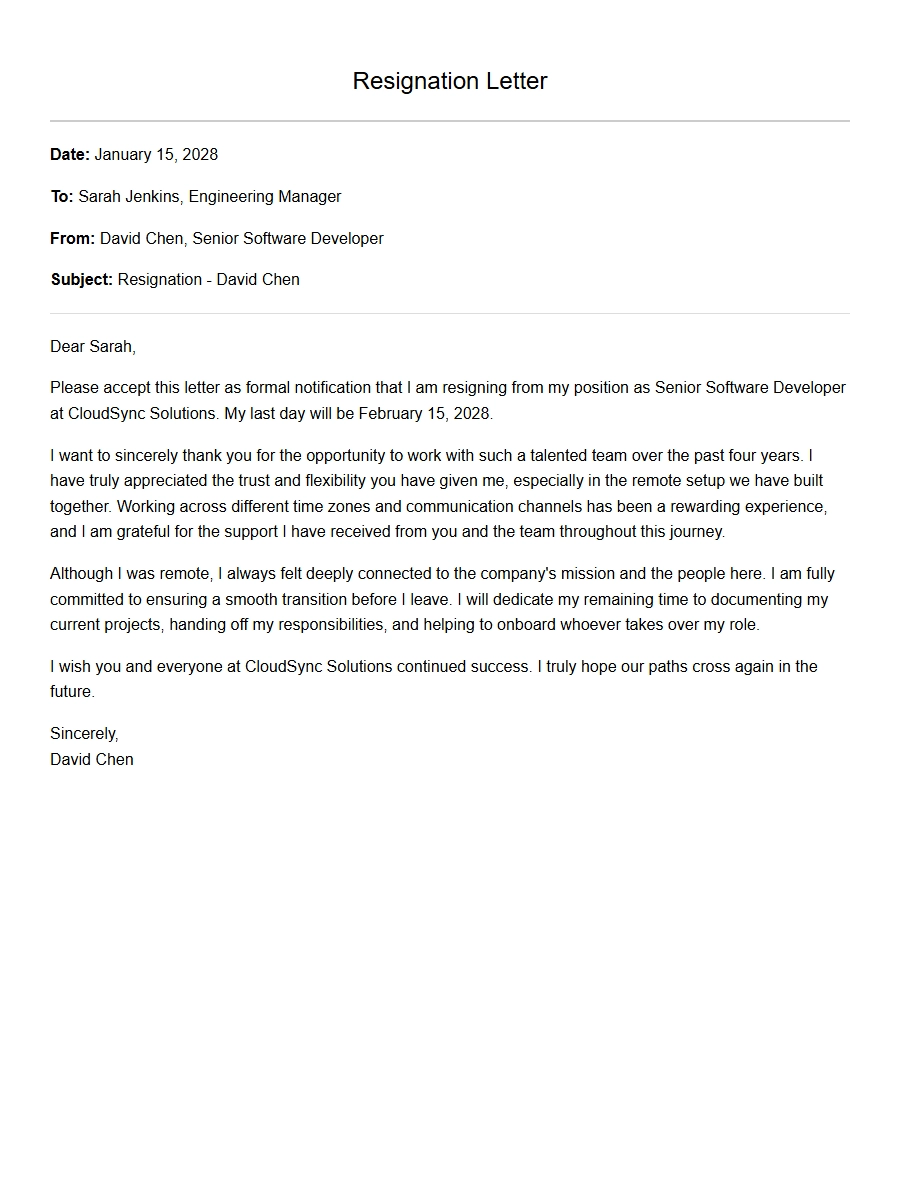 Polite Resignation Email for Remote Employees
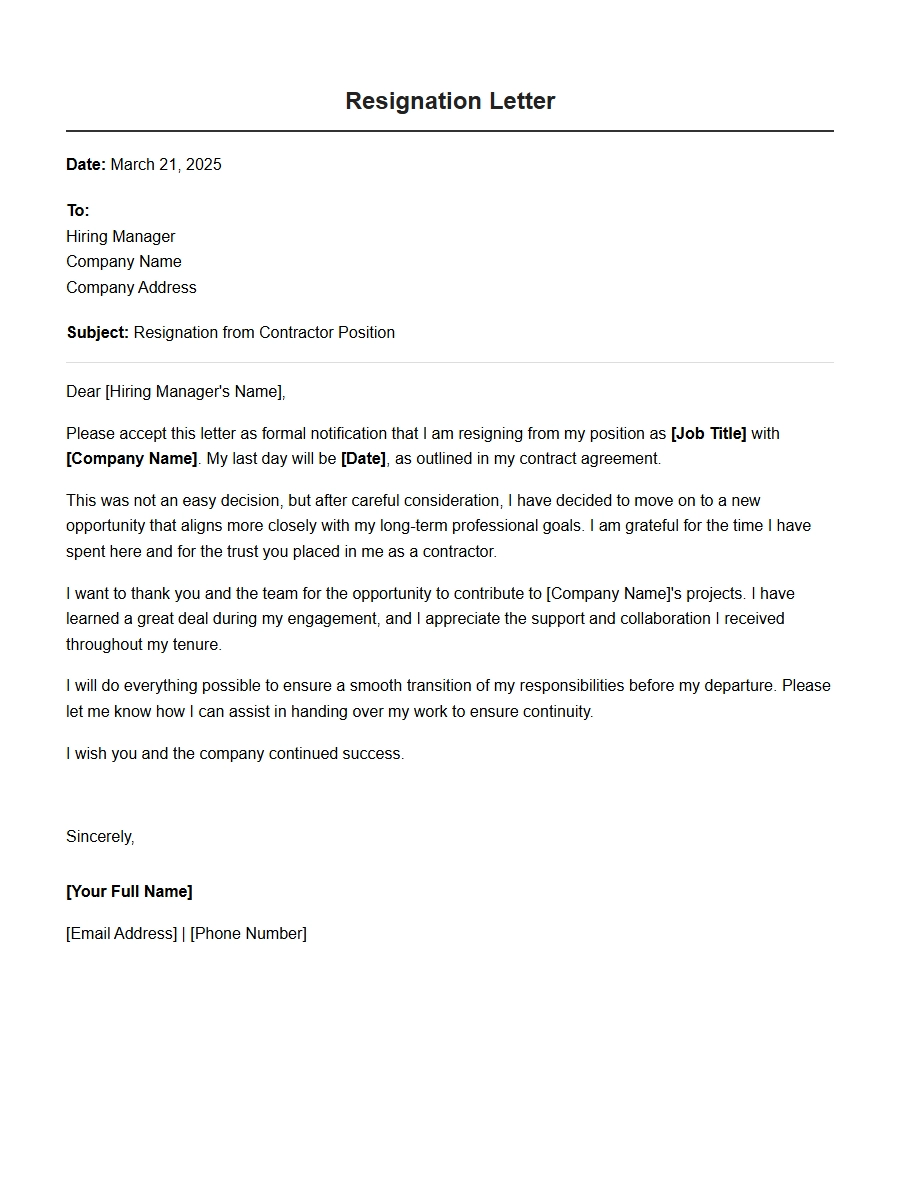 Short Resignation Letter for Contractor Position
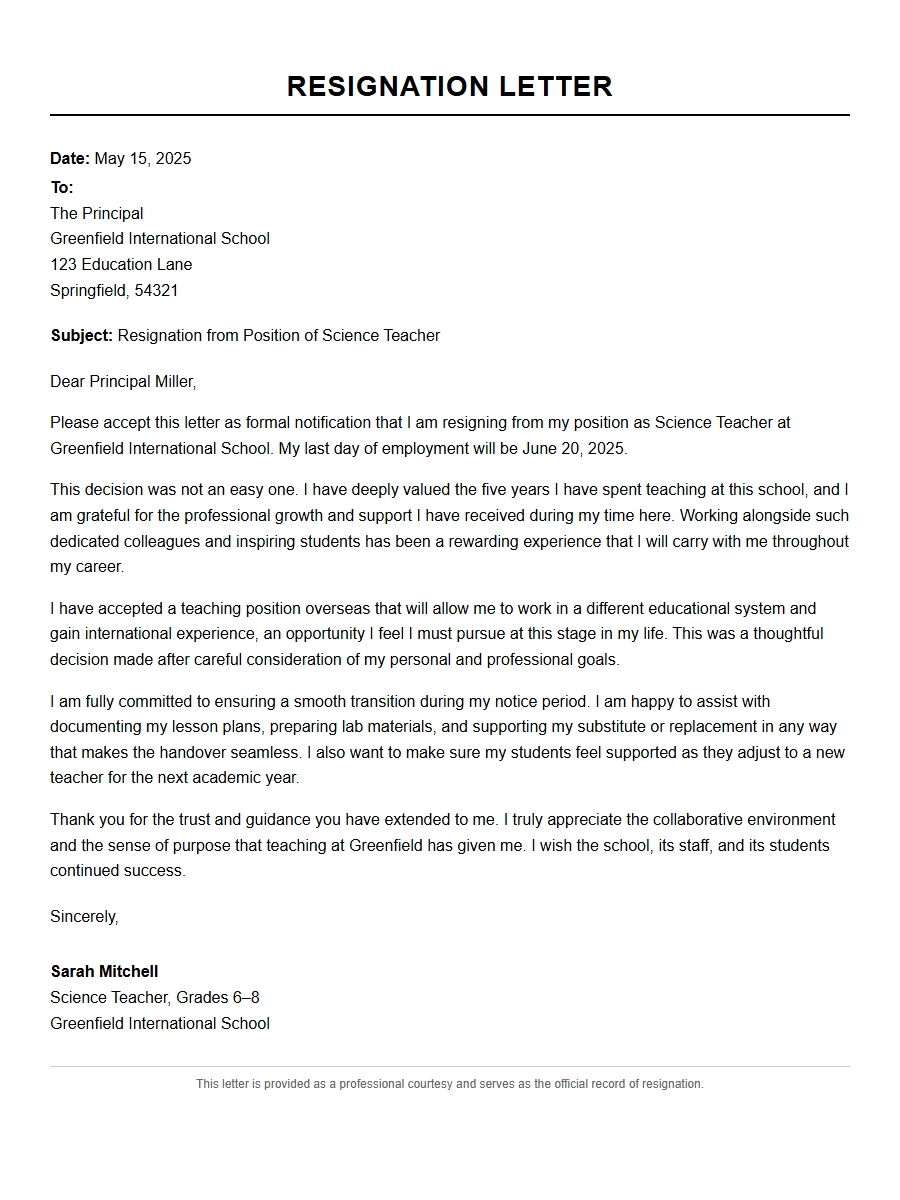 Teacher Resignation Letter Example
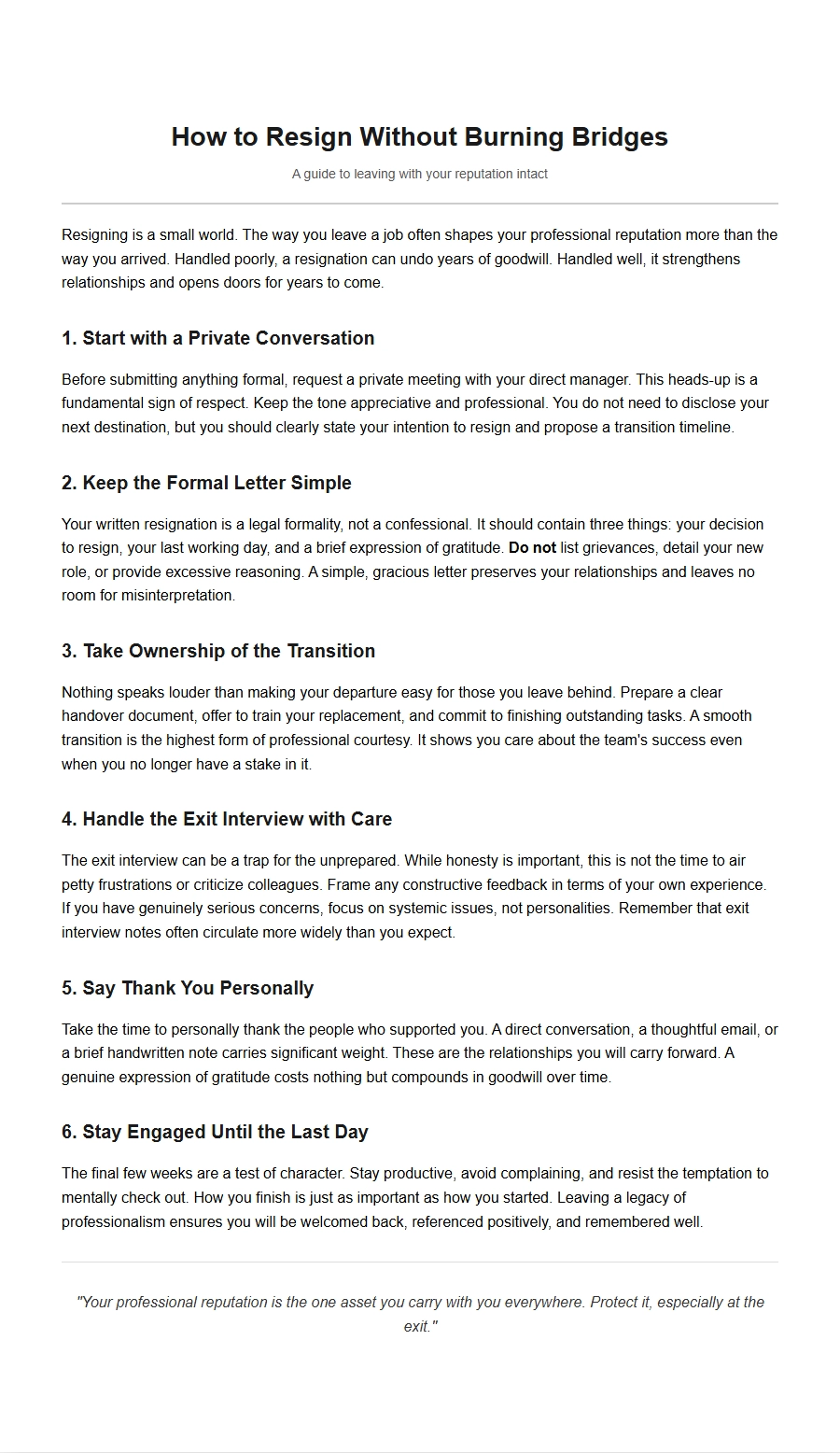 How to Resign Without Burning Bridges
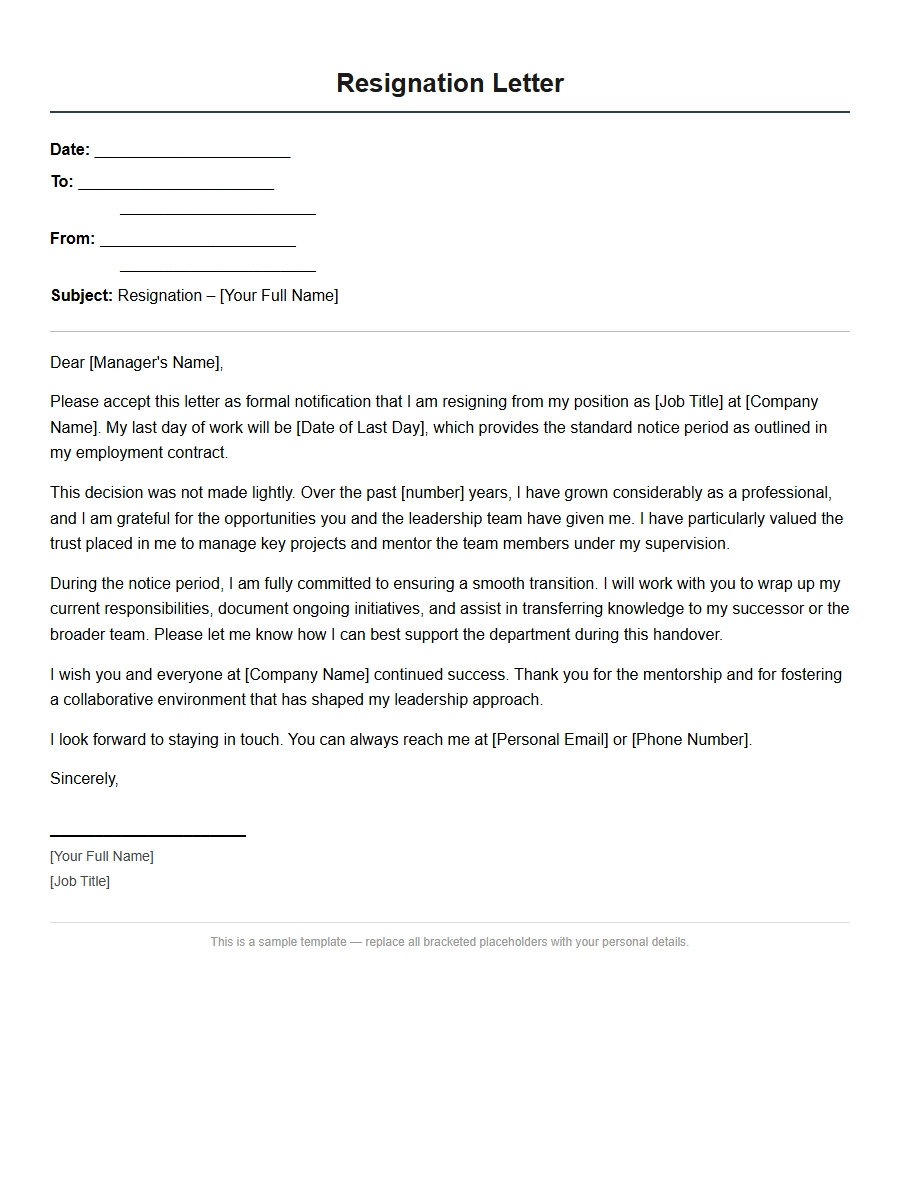 Formal Resignation Letter Sample for Manager
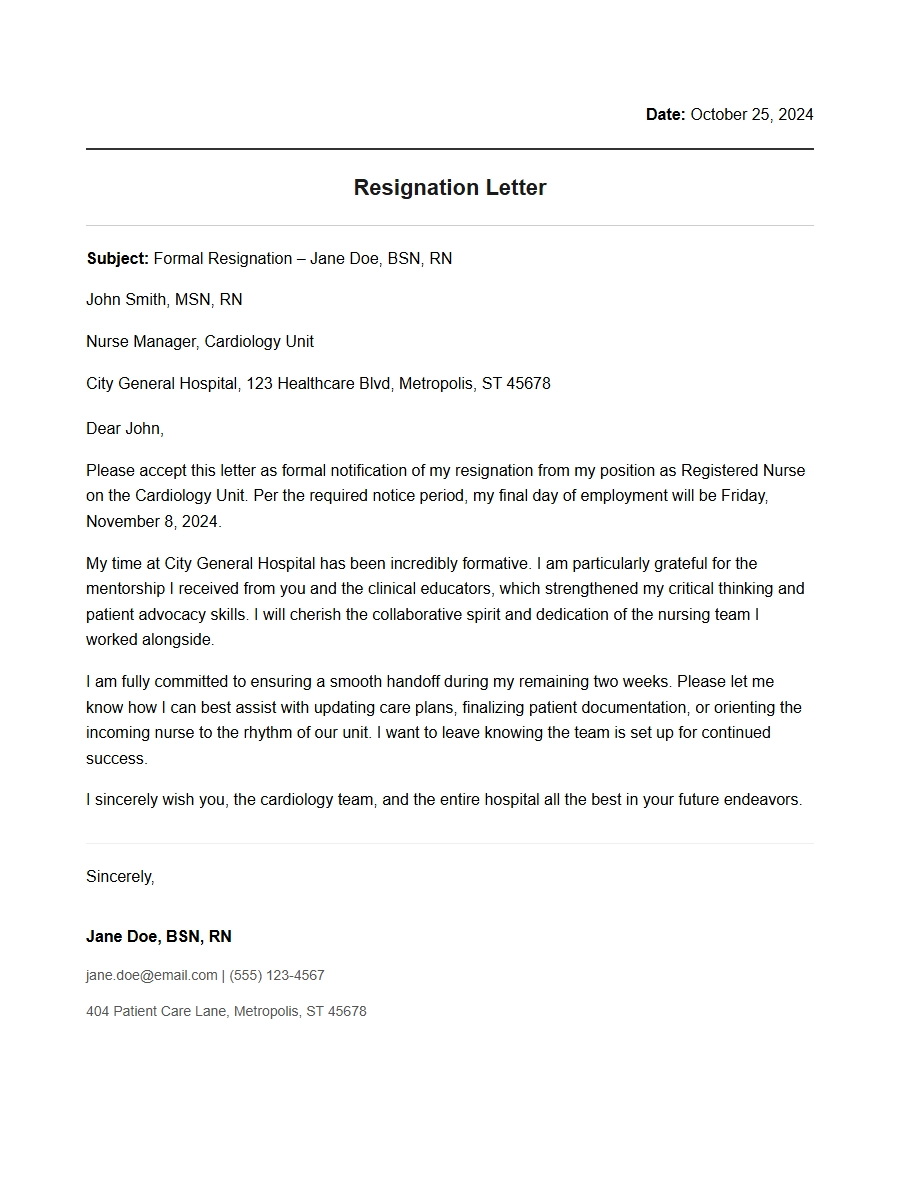 Nurse Resignation Letter with 2 Weeks Notice