You said something you regret, and now the silence between you and your friend feels heavier than the argument itself. Writing an apology letter might be the right move, but where do you even start? That blank page can make a hard situation even harder. The good news is you don’t have to guess your way through it. A well-chosen sample can give you the structure and tone you need, while leaving plenty of room for your own words.
Using a letter template isn’t cheating—it’s a smart way to make sure you don’t miss the essential parts: a sincere opening, a clear acknowledgment of what went wrong, and a genuine offer to make things right. A good sample handles the letter structure so you can focus on the honesty that matters most.
Category: Personal Letters
What makes a sincere apology letter work?
An effective apology to a friend feels personal, not canned. You want the reader to feel your regret, not your script. The sample you choose should match the situation—a casual note for a minor misunderstanding, something a bit more thoughtful for a deeper hurt. Pay attention to the tone in writing: too formal and you sound like a stranger; too casual and you risk not being taken seriously. A customizable letter lets you adjust the language to fit your friendship.
When you pick a sample, look at the salutation and closing. A “Dear [Name],” is safe, but you can soften it with “Hey [Name],” if that’s how you usually talk. The closing matters too: “Sincerely” might feel stiff for a close friend, while “With love” or “Yours” can feel more natural. Don’t be afraid to rewrite those parts entirely. The sample is a guide, not a cage.
How to adapt a sample without losing your authentic voice
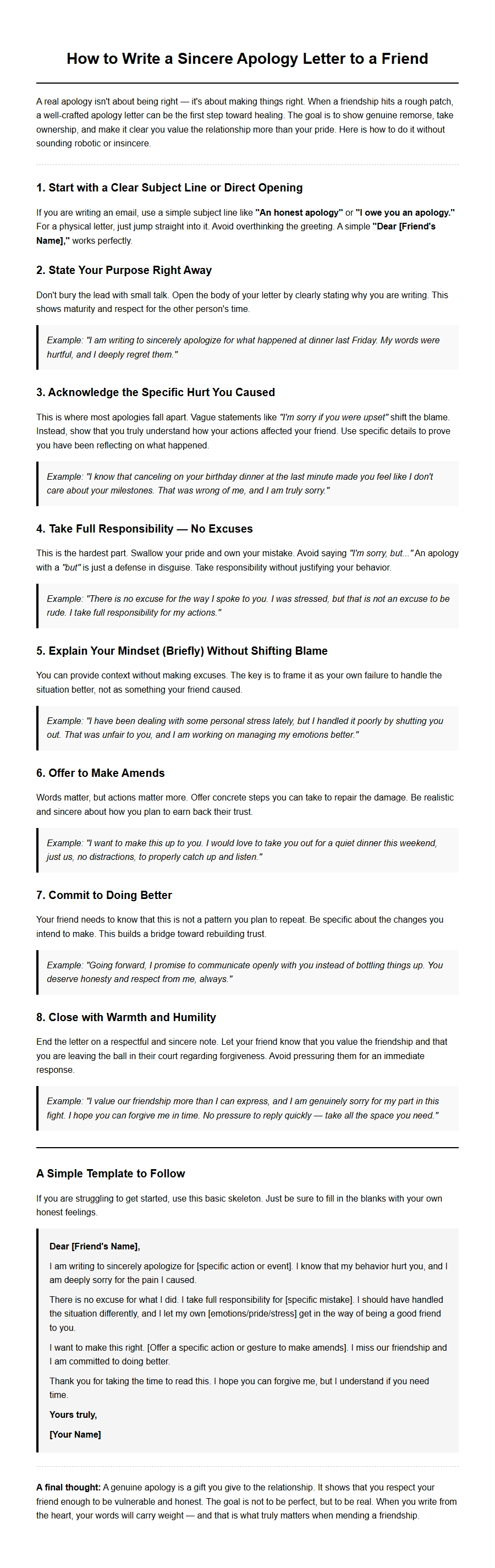
Start by reading the sample aloud. Notice where it feels right and where it sounds like someone else. Then rewrite those sentences in your own words. For instance, if the sample says “I deeply regret my actions,” but you’d actually say “I’m really sorry I snapped at you,” go with your version. The goal is a letter writing etiquette that feels respectful but true to your relationship. Keep the core structure—apology, explanation, amends, request for forgiveness—but fill it with specific details. Mention what you did, how it affected your friend, and what you’ll do differently.
One common mistake is writing a vague apology. “I’m sorry if I upset you” sounds like you’re not sure you did anything wrong. Instead, own it: “I’m sorry for what I said at dinner. It was unfair and I hurt you.” That clarity is what makes an apology work. Also avoid outdated language like “Please accept my apologies” if that’s not how you normally speak. Keep it real.
Tailoring the opening paragraph to grab attention
The first few lines set the tone. Don’t bury your apology in small talk. Start with something like “I’ve been thinking about our last conversation and I need to say I was wrong.” That gets right to the point and shows your friend you’ve been reflecting. If the hurt is older, you can acknowledge the delay: “I know it’s been a while since we talked, and that’s my fault. I want to apologize properly now.” This honest opener builds trust before you even get to the details.
Remember to consider the format: is this a handwritten note, an email, or a text? A digital letter format might call for a subject line like “An apology I owe you” to make sure your friend opens it. For a printed letter, you can use a simple letterhead design if you want it to feel a little more formal, but for a friend, plain paper or a nice card works fine. The medium affects the tone, so match it to your usual communication style.
Common mistakes to avoid in apology letters to friends
One big pitfall is over-explaining. You don’t need to walk through every detail of the argument. Focus on your part, not their reaction. Another is making excuses: “I was tired” or “You were pushing my buttons” shifts blame. A sincere apology owns the behavior without justification. Also, don’t demand forgiveness. Phrases like “I hope you can forgive me” are fine, but “Please forgive me” can feel like pressure. Let your friend take time. Finally, always proofreading letter is essential. A typo might seem minor, but in a sensitive message it can undercut your sincerity. Read it aloud or ask someone you trust to glance at it.
If you’re writing to a friend you haven’t spoken to in a while, consider looking at other personal letters for inspiration. For example, the structure used in a keeping-in-touch letter to a pen pal can help you re-establish connection. Or if you need to navigate a complicated situation, a complaint letter about poor service quality teaches you how to state a problem clearly without attacking—useful skills for any tough conversation.
Using the sample as a springboard, not a crutch
The best apology letters feel both professional and personal—even when “professional” just means thoughtful. Your goal is to show your friend you care enough to put real effort into fixing things. The sample gets you started, but your own words make it matter. Over time, you’ll get faster at writing these letters because you’ll learn what works for your friendships.
Think of this as practice. Every letter you write builds your confidence. And whether you’re following up after an interview or reaching out to a new contact, the same principles apply. A follow-up email after a job interview also needs the right mix of warmth and professionalism. Even a networking outreach cold email benefits from an honest, direct opener. So take what you learn here and apply it wherever you need a genuine human touch.
Now go write that letter. Your friend doesn’t expect perfection—they expect effort. A well-crafted apology shows you’ve thought about what you did and how to do better. That’s the strongest foundation for healing any friendship.
Templates and Samples
How to Write an Apology Letter to a Friend
Forgot Your Birthday
Dear [Friend's Name],
I am writing this with a heavy heart because I completely forgot your birthday last week. There is no excuse—I saw the date on my calendar but got caught up with work and it slipped my mind. I feel terrible for not being there to celebrate with you.
I know how much birthdays mean to you, and you deserved a proper celebration. To make it up to you, I would love to take you out for dinner this weekend—my treat. Please let me know if you are free Saturday or Sunday evening.
Again, I am truly sorry. You are an important friend to me, and I promise to do better next year. I hope you can forgive me.
With sincere apologies, [Your Name]
Hurtful Comment
Dear [Friend's Name],
I have been thinking about what I said at the party last night, and I am deeply sorry. My comment about your career choice was thoughtless and insensitive. I was trying to be funny, but it came out wrong and I hurt you instead.
You have always supported my decisions, and I should have done the same for you. There is no justification for my words, and I regret them sincerely. I value your friendship more than any joke.
If you are willing, I would like to apologize in person and listen to how you felt. Please give me a chance to make things right.
Yours, [Your Name]
Canceled Plans Repeatedly
Dear [Friend's Name],
I know I have canceled on you three times in the last month, and I am truly sorry. Each time, something came up—work deadlines, family obligations, and then a sudden cold. But I realize that keeps happening at your expense, and that is unfair.
You are a patient friend, and I do not take that for granted. I want to make it up to you by planning something together and actually showing up. Let me know what works for you, and I will block off that day completely.
I promise to communicate better in the future. Thank you for understanding.
Apologetically, [Your Name]
Not There During Hard Time
Dear [Friend's Name],
I heard from [mutual friend] that you went through a difficult breakup last month, and I was not there for you. I am so sorry. I should have noticed you were pulling away and reached out more.
You have always been my rock, and I failed to return that support when you needed it most. I wish I had called, texted, or just shown up at your door with coffee.
I cannot change the past, but I want to be here for you now. If you want to talk, vent, or just hang out, I am available any evening this week. Please let me know how you are doing. I care about you deeply.
With regret, [Your Name]
Damaged Borrowed Item
Dear [Friend's Name],
I am writing to apologize for damaging your camera lens that you lent me for my trip. I know how much you care about your photography equipment, and I feel awful that I was careless with it. The lens cap fell off and the glass got scratched despite being in the bag.
I have already contacted a repair shop, and they quoted $120 for replacement. I will cover the full cost, of course. Please let me know if you prefer to handle it differently—I can also take it to the store you trust.
I am sorry for not taking better care of your belongings. You trusted me, and I let you down. I will be more careful in the future. Thank you for your generosity.
Yours, [Your Name]
Shared a Secret
Dear [Friend's Name],
I need to confess something that has been eating me alive. Last week, when we were all hanging out, I accidentally mentioned your secret about the job interview. I did not mean to—it just slipped out in conversation—but that is no excuse. You trusted me with that information, and I broke that trust.
I know it could affect your career if the wrong person heard, and I feel terrible for putting you at risk. I have since asked everyone to keep it confidential, but I know that does not undo my mistake.
I am truly sorry. I value your friendship and your trust more than anything. If there is anything I can do to make it right, please tell me. I promise to guard your secrets with my life from now on.
Ashamed, [Your Name]
Jealous Over New Friend
Dear [Friend's Name],
I am sorry for the way I acted when you introduced me to your new coworker. I was jealous and insecure, and I made snide comments that were uncalled for. It was wrong of me to try to make you feel bad for having other friends.
You have always been a loyal friend to me, and I have no right to limit your friendships. I realize now that my jealousy came from fear of losing you, but that fear was not based on anything you did. I need to work on my own trust issues.
Please accept my apology. I want to support your happiness, not resent it. Let me know if you would like to talk about it.
Sorry, [Your Name]
Ignored Messages for Weeks
Dear [Friend's Name],
I am writing to apologize for not replying to your texts and calls for the past two weeks. I have been overwhelmed with work and personal issues, and I withdrew from everyone—including you. I know that must have felt like I was ignoring you on purpose, and I am sorry.
You reached out multiple times to check on me, and I did not even acknowledge it. That is not how a good friend behaves. Please know that your messages meant a lot to me, even if I failed to respond.
I am doing better now and would love to catch up. Can we meet for coffee this weekend? I will explain everything then. Thank you for your patience.
With love, [Your Name]
Misunderstanding Over Money
Dear [Friend's Name],
I want to apologize for getting upset with you about the concert ticket money. I thought you had agreed to split the cost equally, but you believed I was treating you. It was a misunderstanding on my part, and I should have clarified before getting angry.
I value our friendship more than fifty dollars, and I am embarrassed that I let it cause tension between us. To clear things up, I have refunded the money you sent me—please keep it as my treat for the inconvenience.
I hope we can laugh about this someday. Thank you for being understanding. Let me know when you are free to hang out again.
Your friend, [Your Name]
Broke a Promise
Dear [Friend's Name],
I am writing to apologize for not keeping my promise to help you move last Saturday. I know you counted on me, and I let you down by not showing up and not even calling. My phone died and I overslept, but those are poor excuses—I should have made sure I was there.
I heard you had to do everything with just your family, and that must have been exhausting. I feel terrible for putting extra stress on you. I want to make it up by helping you unpack or organizing your new place. Just say when.
I promise to be more reliable in the future. You deserve better. Thank you for giving me the chance to apologize.
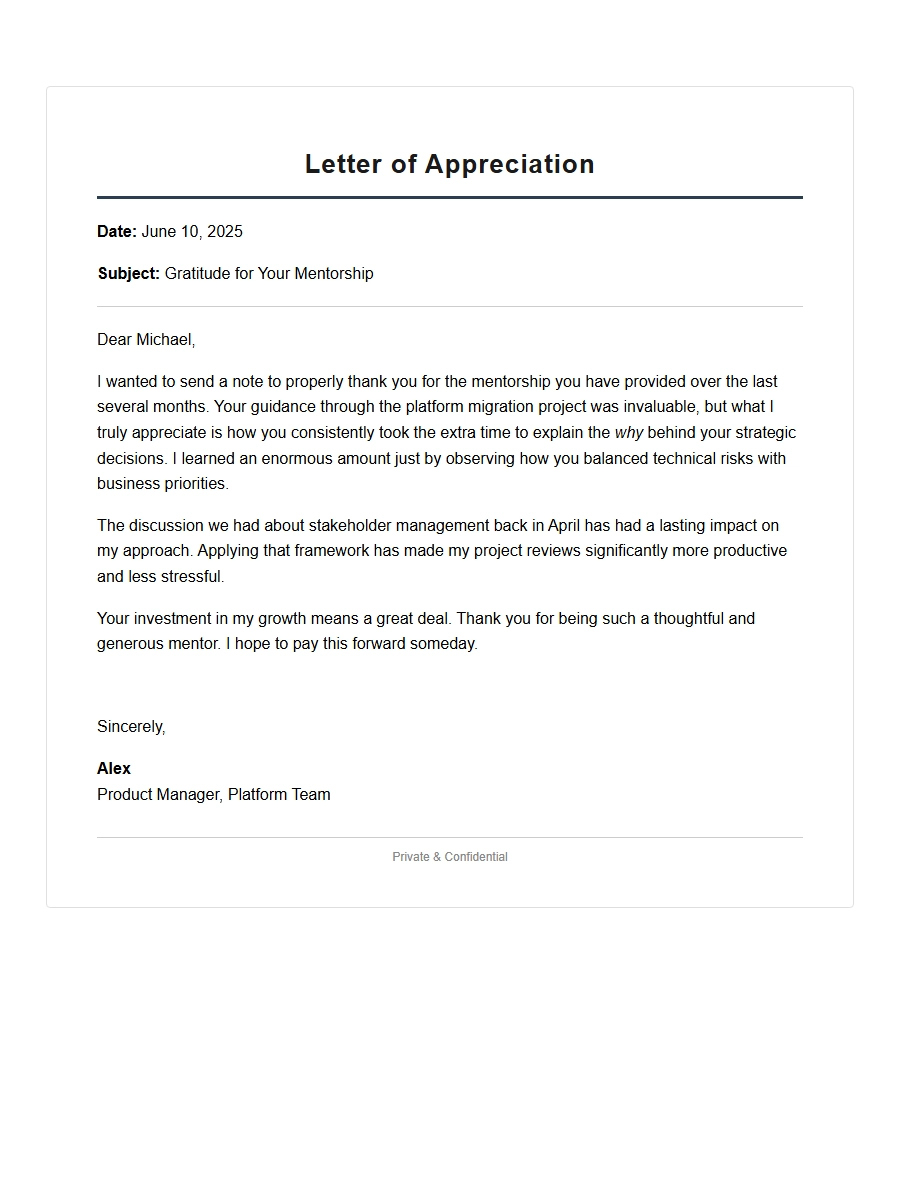 Thanking a Mentor for Guidance: Sample Messages
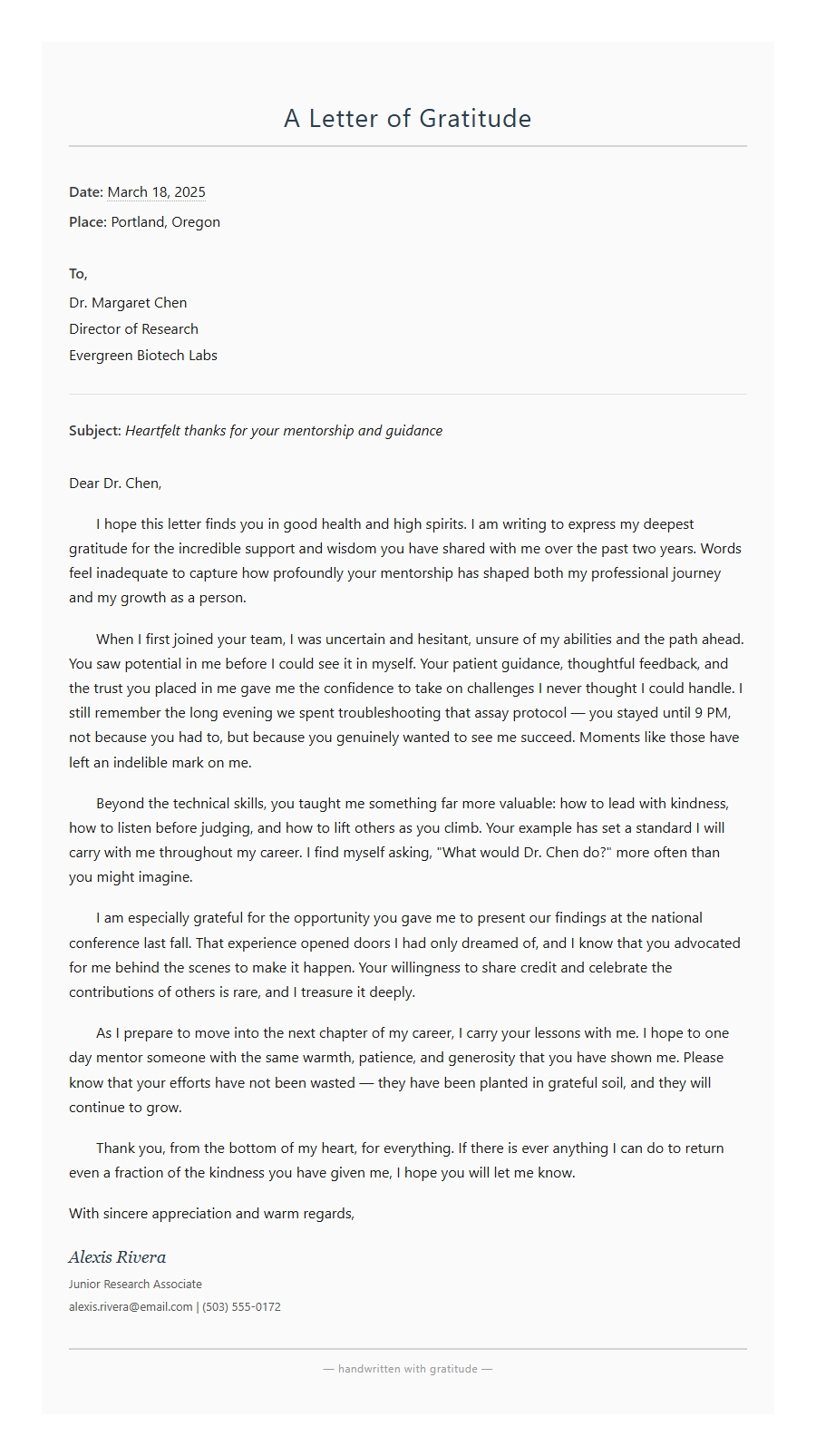 Expressing Gratitude: Handwritten Letter Example
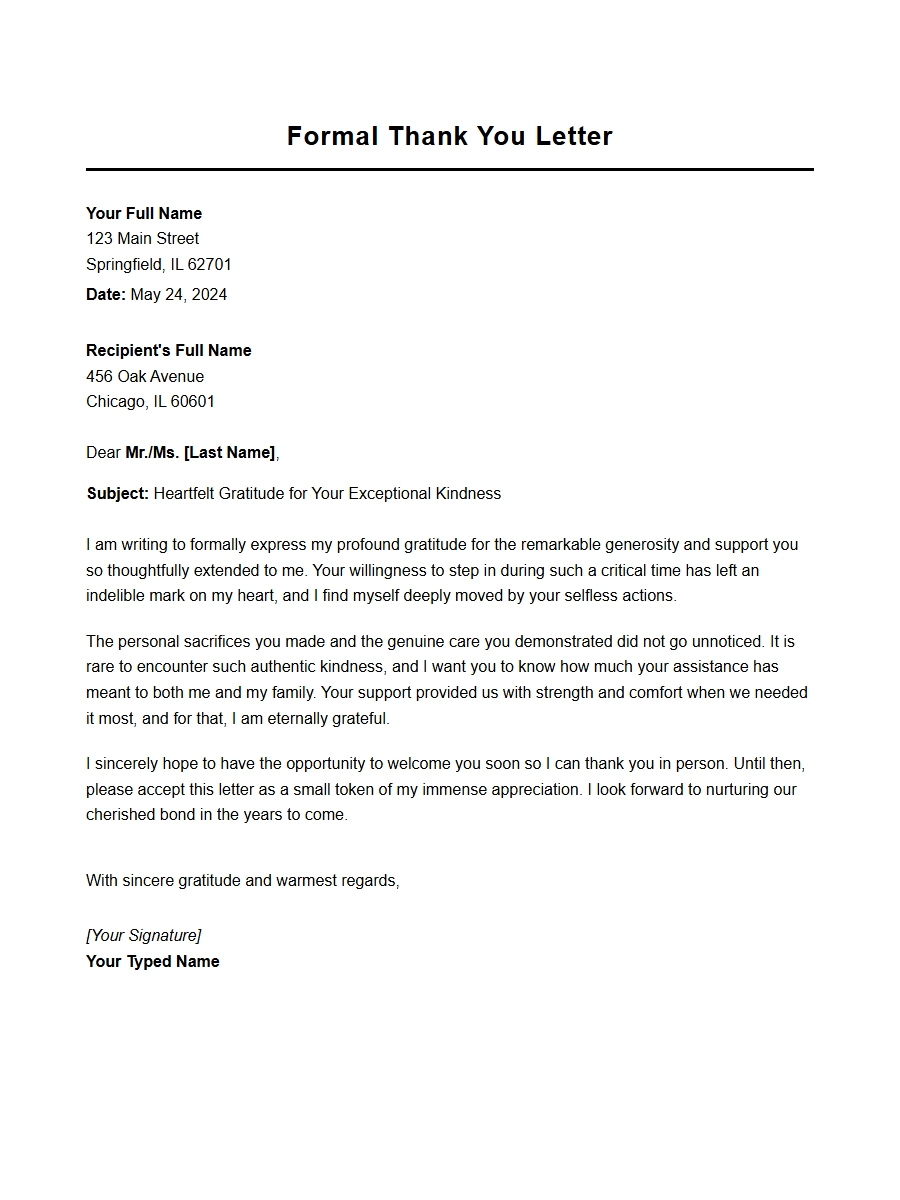 Expressing Thanks in a Formal Personal Letter
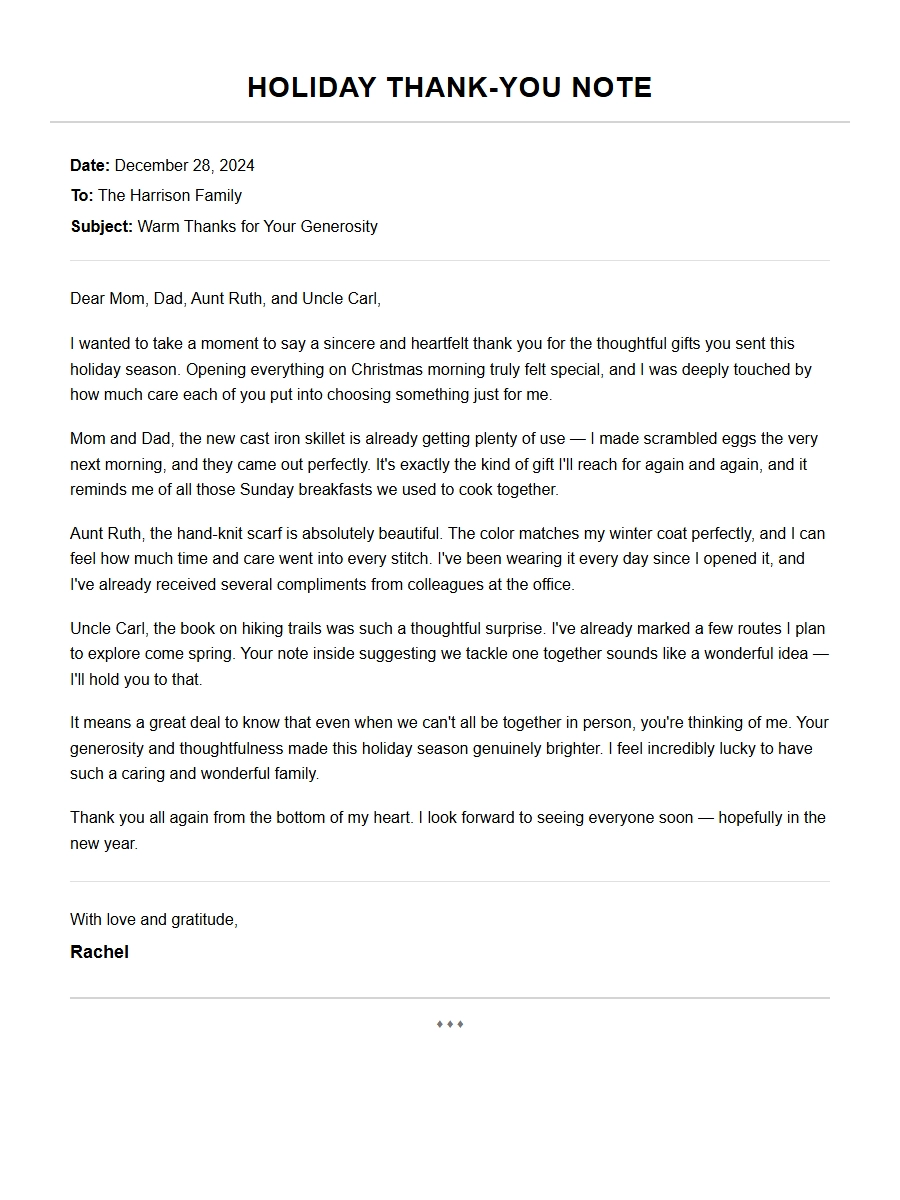 Thank You Letter Examples for Family Holiday Gifts
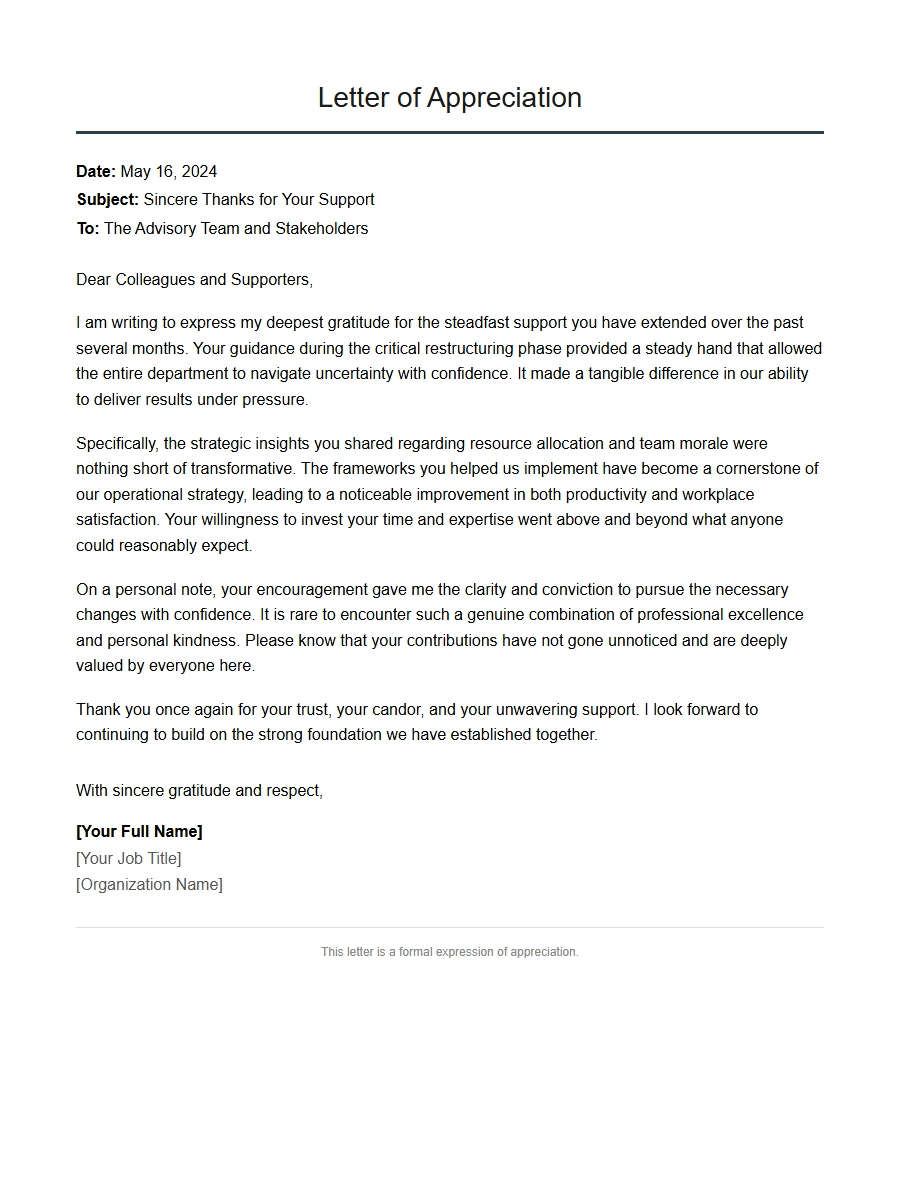 Sample Thank You Letter for Support
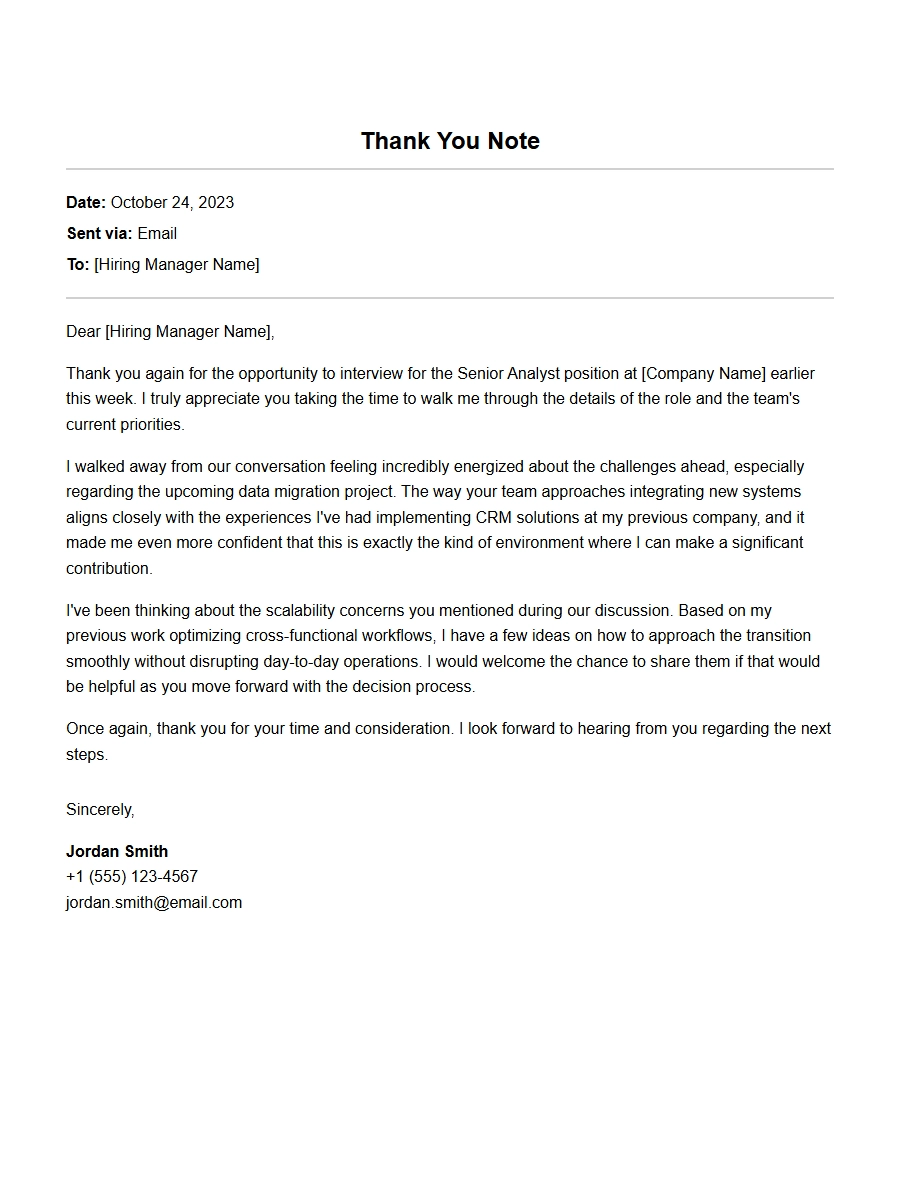 How to Write a Personal Thank-You Note After an Interview