How to Write an Apology Letter to Repair a Relationship
You’ve hurt someone you care about and now you need to say you’re sorry — in writing. That blank page stares back, and the weight of the moment makes every word feel either too dramatic or too shallow. It’s the same feeling you get when you have to write a resignation letter for the first time, or a cover letter after years in the same job. But here’s the truth: a well‑crafted apology letter can repair a relationship faster than an awkward phone call or a rushed text. And the right sample can turn your anxiety into a clear, heartfelt draft in minutes.
Category: Personal Correspondence
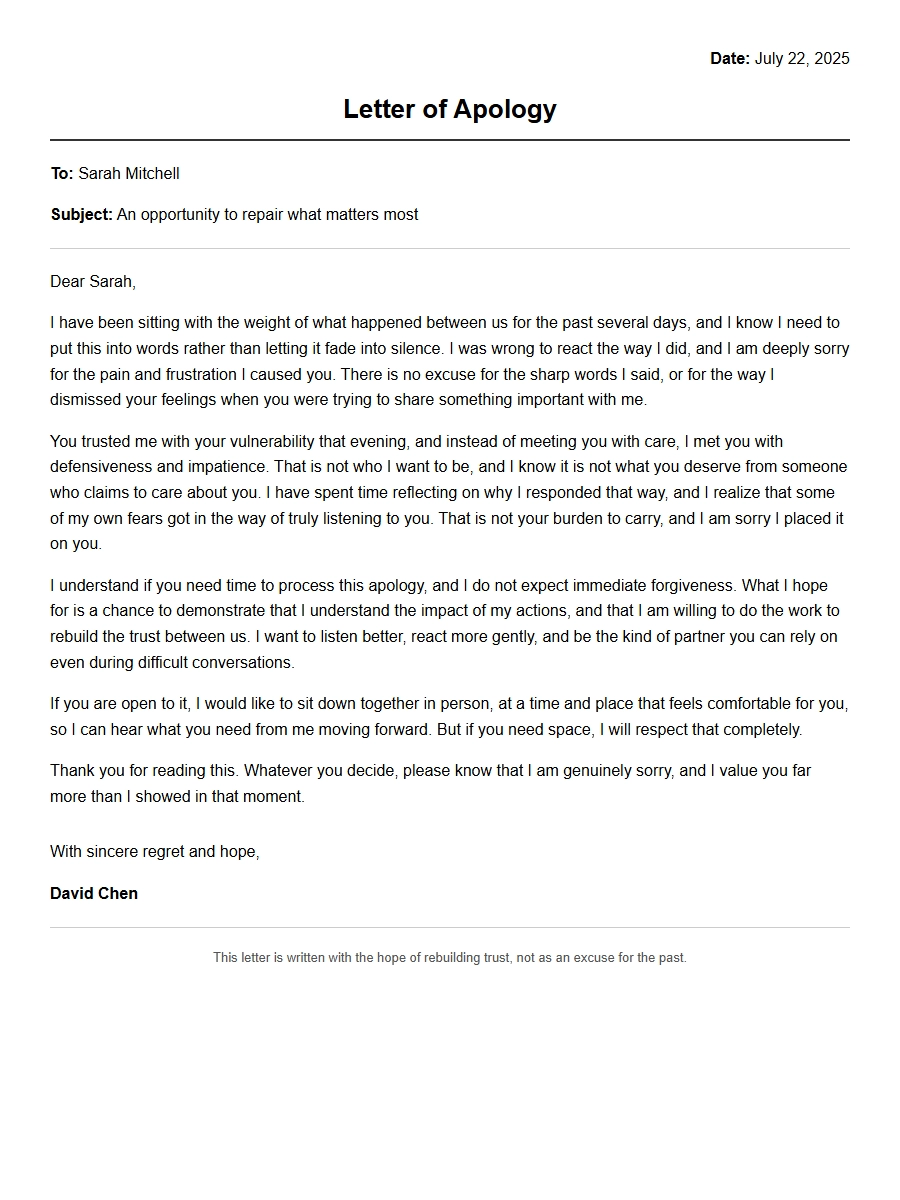
Using a letter template or sample isn’t cheating — it’s strategy. A good sample gives you a proven letter structure, a warm but respectful tone in writing, and ready‑to‑use salutation and closing phrases. You don’t have to reinvent the wheel. Instead, you take a solid foundation and make it your own. Think of it like following a recipe: the first time you bake a cake, you follow the instructions. After that, you adjust spices and sweetness to your taste. Same here — a customizable letter sample saves time and removes the fear of missing something important.
How to choose the right apology letter sample
Not all apology letters are the same. A note to a friend after a misunderstanding is different from a formal letter to a business partner or a relative after a serious conflict. Look for a sample that matches the professional correspondence level you need. If the relationship is personal, keep the tone warm and honest. If it’s semi‑professional, borrow formal writing tips like avoiding overly emotional language but still owning your mistake. Avoid samples that sound like a corporate apology — they feel stiff and insincere.
Ever received a letter that felt too stiff or too casual? That’s the pitfall. A good sample helps you land in the middle: respectful but human. For example, a sample might start with “I’m writing because I’ve been reflecting on what happened…” instead of a cold “This letter serves as an apology.” The latter reads like a form letter, not a real person reaching out.
Adapt the sample without losing your voice
Once you find a sample you like, read it through. Then close the tab and write the same ideas in your own words. This prevents copying phrases that don’t sound like you. Focus on the letter structure: opening, acknowledgment of hurt, your responsibility, your regret, and a forward‑looking offer to make things right. The sample gives you the skeleton. You add the muscle — the specific memory you value about the person, the exact moment you wish you’d handled differently, the concrete change you’ll make.
A quick tip: tailor the opening paragraph to grab attention and show sincerity. Instead of “I’m sorry,” try “I’ve been thinking about that conversation last Tuesday, and I realize I let my frustration get the better of me.” That anchors the apology to a real event and shows you’ve reflected.
Common mistakes to avoid
One big mistake: using an outdated salutation like “To whom it may concern” in a personal apology. That’s for letter of recommendation or formal complaints. In a relationship letter, address the person by name — “Dear Maria” — and keep the closing warm but not overdone (“With sincere regret” works better than “Yours in eternal apology”).
Also, pay attention to digital letter format versus printed. If you’re sending via email, avoid a generic subject line like “Apology.” Instead use “Sorry about yesterday — a few things I need to say.” If you’re mailing a handwritten note, consider letterhead design only if it feels natural — plain stationery is fine. And always proofread your letter. A typo in an apology can look careless, undermining your sincerity.
The sample is your starting block. After you write the letter, read it aloud. Does it sound like you? Does it acknowledge what you did without making excuses? If yes, you’re ready to send it. Remember, the best apology letters feel both professional (in the sense of being well‑composed) and deeply personal. Practice makes the process faster. Next time you need to repair a relationship through writing, you’ll know exactly where to begin — and that blank page won’t look so scary.
Practical Writing Samples
How to Write an Apology Letter to Repair a Relationship
Apology to Spouse for Emotional Neglect
Date: October 15, 2023
From: Your Partner To: My Dearest [Name]
I am writing this letter because I have realized how much I have been neglecting you emotionally. My recent focus on work and personal stress made me blind to your need for attention and support. I am deeply sorry for the loneliness I caused you.
To rebuild our connection, I commit to the following changes:
Area
Action
Timeline
Quality time
Daily device-free hour together
Immediate
Active listening
Weekly check-in with full attention
Start this weekend
Expressing love
Write a weekly thank-you note
Every Friday
I know words alone cannot undo the hurt, but I promise to prove my remorse through consistent actions. Please forgive me. I love you and want to rebuild our bond stronger than before.
Apology to a Best Friend for Betraying Trust
Date: November 2, 2023
From: Your Friend [Name] To: My Dear Friend [Name]
There is no excuse for what I did. I shared a personal secret you trusted me with, and I broke the most important rule of our friendship. I have no right to ask for forgiveness, but I want to explain my actions and offer a sincere apology.
The incident occurred when I was under pressure and I foolishly sought comfort from someone else instead of protecting your confidence. I realize now that I prioritized my own anxiety over your trust.
To make amends, I will:
Never share anything about your life without explicit permission.
Give you space to process your feelings without pressure.
Actively work on my own impulse control through journaling.
I miss our friendship terribly. I hope you can give me a chance to earn back your trust over time. With deepest regret, [Your Name].
Apology to a Parent for Disrespectful Behavior
Date: November 10, 2023
From: Your Child [Name] To: Dear Mom/Dad
I am writing this with a heavy heart. The way I spoke to you last week was completely unacceptable. I was frustrated about my own problems and I took it out on you, using words I can never take back. You have always supported me, and I repaid you with disrespect.
I know an apology cannot erase the hurt, but I want you to know how sorry I am. I have thought about my behavior and identified what I need to change:
Practice pausing before responding when upset.
Remember that your advice comes from love, not control.
Express my frustrations calmly using “I feel” statements.
You raised me better than this, and I am ashamed. Please know that I love and respect you more than anything. I will work every day to be the daughter/son you deserve. With love and regret, [Your Name].
Apology to a Sibling for a Long-Standing Grudge
Date: December 1, 2023
From: Your Brother/Sister [Name] To: My Dear Sibling [Name]
After years of silence between us, I am finally writing this letter because I cannot let another holiday pass without reaching out. The argument we had over [reason] was stupid, and I let pride keep me from apologizing for far too long.
I remember how close we used to be—sharing secrets, laughing until we cried, and defending each other. I miss that. I miss you.
Here is what I have realized during our separation:
My Mistake
Why It Hurt You
How I Will Change
Refusing to listen
Made you feel unheard
Practice active empathy
Bringing up old issues
Kept wound open
Focus on present
Not reaching out first
Showed lack of care
Initiate contact weekly
I hope we can start fresh. I love you, and I am sorry for everything. With hope, [Your Name].
Apology to Partner for Jealous Outburst
Date: November 25, 2023
From: Your Partner [Name] To: My Love [Name]
I am so ashamed of how I acted last night. My jealousy got the best of me, and I accused you of things that were completely unfounded. You have never given me a reason not to trust you, and my insecurities made me treat you unfairly.
You deserve a partner who trusts you fully. Instead, I questioned your loyalty and made you defend yourself. That is not love—that is fear. I am sorry from the bottom of my heart.
To overcome this, I will:
Start seeing a therapist to address my trust issues.
Communicate my worries without blame, using “I feel” statements.
Celebrate your friendships instead of feeling threatened.
Please give me another chance. I want to be the partner you deserve. With all my love, [Your Name].
Apology to a Colleague for a Workplace Mistake
Date: November 18, 2023
From: Your Coworker [Name] To: Dear [Colleague Name]
I want to sincerely apologize for the error I made on the [project name] report that caused extra work for you. I rushed through the data entry and didn't double-check my numbers, which led to a delay in your presentation. That was irresponsible of me, and I am truly sorry.
I value our working relationship and the trust we have built. Please know that I have already taken steps to ensure this does not happen again:
I will use a checklist for all future data submissions.
I will ask for a peer review before finalizing any reports.
I will take responsibility for any consequences of my mistake.
If there is anything I can do to make this right, please let me know. I respect you greatly and hope we can continue collaborating. Sincerely, [Your Name].
Apology to a Child for Missing an Important Event
Date: November 30, 2023
From: Your Parent [Name] To: My Dear Child [Name]
I am so sorry I missed your [school play / recital / game]. I know you worked so hard for it, and I should have been there cheering for you. I let work demands take priority over what really matters—you.
When I saw your face after the event, my heart broke. You deserved to see me in the audience. I failed you that day, and I am deeply sorry.
To make it up to you, I promise to:
Mark all your future events on my calendar with a strict “no cancel” rule.
Spend one full Saturday doing whatever you want to do, just us.
Listen without distraction whenever you want to talk about the event.
You are the most important person in my life, and I will prove it through my actions. With all my love, Mom/Dad.
Apology to Mentor for Not Following Advice
Date: December 5, 2023
From: Your Mentee [Name] To: Dear Mentor [Name]
I am writing to apologize for not following the guidance you gave me about [specific topic, e.g., handling a difficult client]. You took time to share your wisdom, and I arrogantly thought I knew better. As a result, the situation deteriorated and I now see that your advice would have prevented the mess.
I respect you immensely and your mentorship has been invaluable. My failure to listen was a mistake I deeply regret. I want to learn from this and rebuild the trust you placed in me.
Here is my plan going forward:
Issue
Lesson Learned
Future Action
Ignored advice
Experience matters
Always consider mentor input
Didn't update you
Transparency builds trust
Weekly progress emails
Blamed others
Own my mistakes
Accept responsibility
Thank you for your patience. I hope we can continue our mentoring relationship. With gratitude, [Your Name].
Apology to a Neighbor for Noise Complaints
Date: November 22, 2023
From: Your Neighbor [Name] To: Dear [Neighbor Name]
I am writing to apologize for the loud music and parties we have been having recently. I did not realize how much the noise was affecting you until you mentioned it. I understand now that it disturbed your family's sleep and peace, and that was thoughtless of me.
I value being a good neighbor, and I failed at that. I am truly sorry for the inconvenience and frustration I caused.
To fix this, I have already:
Limited music to low volume after 9 PM.
Moved speakers away from shared walls.
Bought rugs to absorb sound.
Additionally, I will notify you in advance if I plan to host a gathering, so you can let me know if it conflicts with your schedule. Please accept my apology and know that I will be more considerate going forward. Sincerely, [Your Name].
Apology to Myself for Past Mistakes (Self-Forgiveness Letter)
Date: December 10, 2023
From: Myself To: Me, [Your Name]
This is the hardest letter to write because I have spent years blaming myself for [specific mistake]. I carried shame and regret, thinking that punishing myself would somehow undo the past. But I realize now that by refusing to forgive myself, I have blocked my own growth and happiness.
I was not a bad person; I made a mistake. I have learned from it and have done my best to make amends where possible. It is time to let go.
To move forward, I commit to:
Stopping the negative self-talk about that event.
Writing down three lessons I gained from the experience.
Practicing self-compassion meditation weekly.
Dear me, I forgive you. You deserve peace. With love and acceptance, [Your Name].
 Thanking a Mentor for Guidance: Sample Messages
 Expressing Gratitude: Handwritten Letter Example
 Expressing Thanks in a Formal Personal Letter
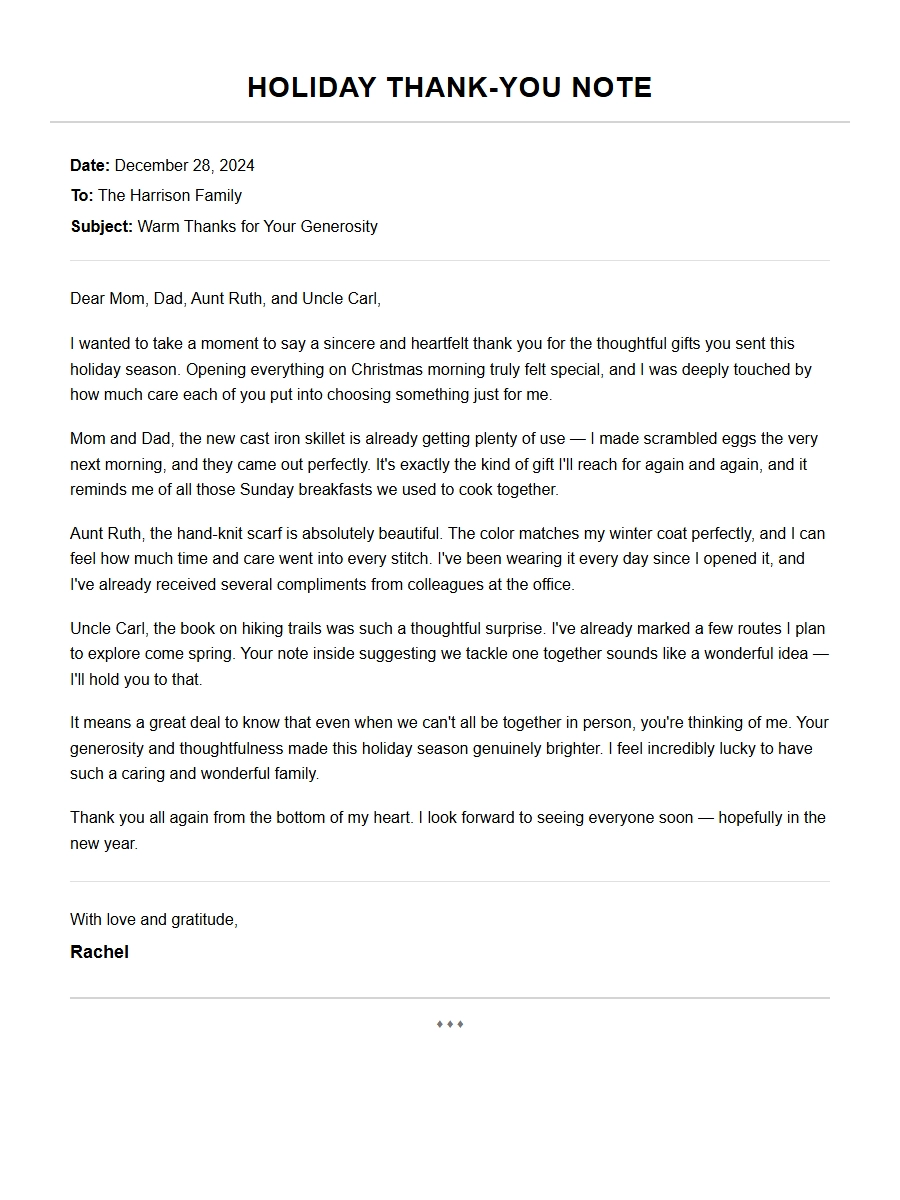 Thank You Letter Examples for Family Holiday Gifts
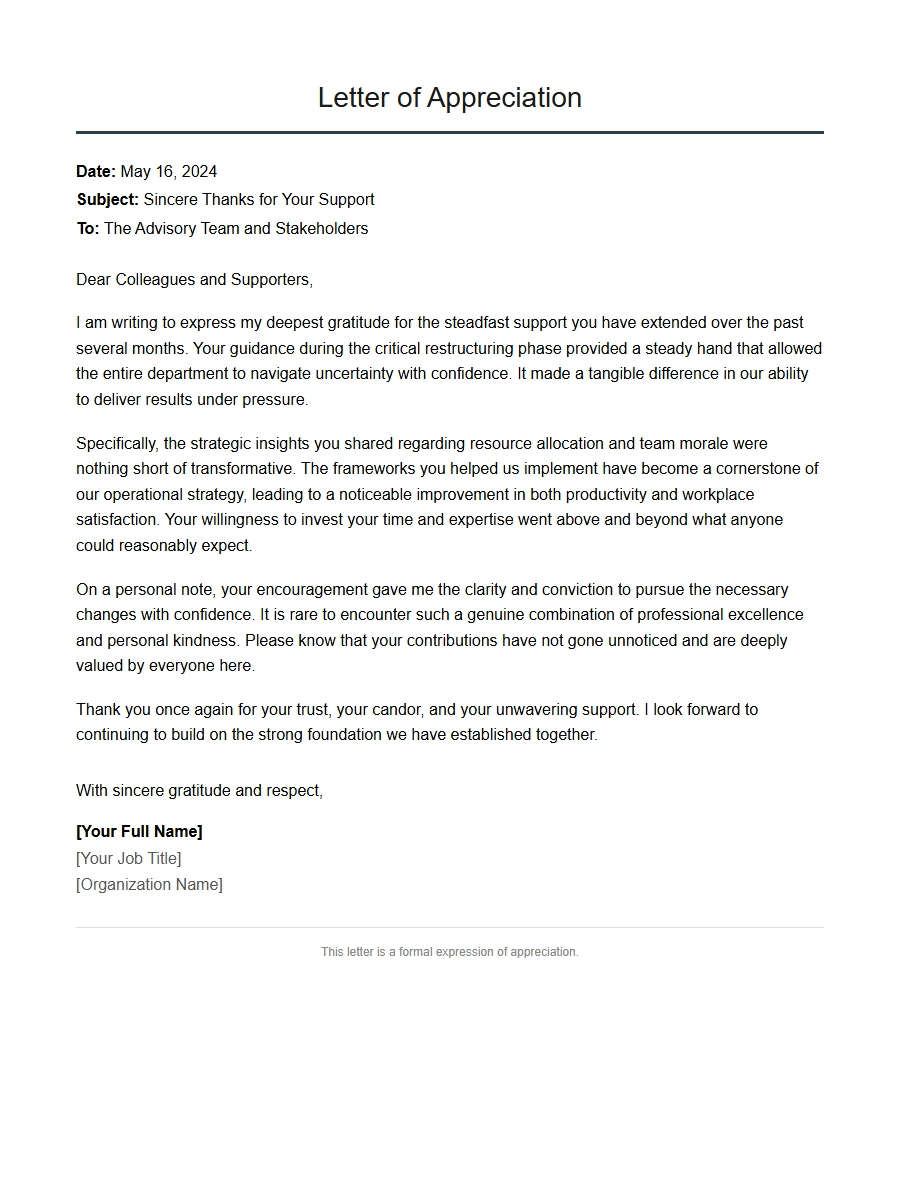 Sample Thank You Letter for Support
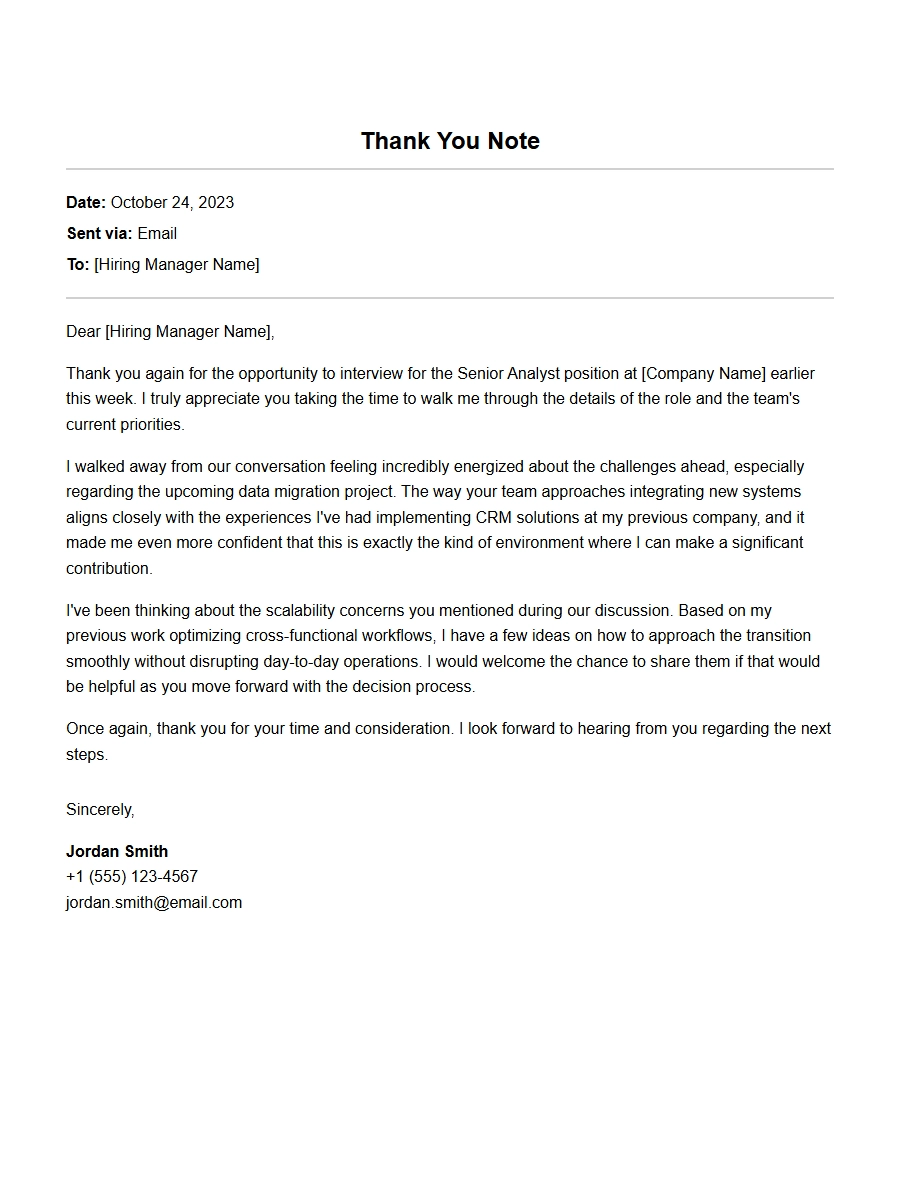 How to Write a Personal Thank-You Note After an Interview