You just walked out of the interview feeling good. The handshake was firm. The conversation flowed. Now you're home, and that quiet panic sets in: What do I say in the follow-up email? You want to seem interested, but not desperate. Grateful, but not pushy. And you want to send it now, before they forget you existed.
So you stare at a blinking cursor. That’s normal. The cure isn’t to write from scratch—it’s to start with a solid sample and make it your own.
Why using a sample isn’t cheating
A follow-up email after a job interview is professional correspondence. It needs a clear structure, a polite salutation and closing, and the right tone in writing. A good sample gives you all of that. It’s a framework, not a script. You fill in the real content: specific things you discussed, a detail that made you laugh, or a skill they emphasized. Using a sample saves you time and keeps you from forgetting basic etiquette—like actually proofreading your own name.
Think of any letter template as training wheels. You’ll take them off once you get your balance.
How to pick the right sample for your situation
Not all follow-up emails are the same. The one you send after a formal corporate interview differs from the one you’d send after a casual chat at a startup. If the interviewer was buttoned-up, keep your tone polished and your format traditional. If they were relaxed, you can loosen up a little—but never cross into sloppy.
If you're in a creative field, you might get away with a slightly more personal note. If you're in law or finance, stick to the business letter format. The key is matching the energy of the interview itself.
Adapting a sample without losing your voice
Here’s where most people mess up. They copy a sample verbatim and send it off. The recipient reads it and thinks: This sounds like boilerplate. You don’t want that. Take the sample’s skeleton—the opening line, the thank you, the closing—and inject your personality into the middle.
For example, change:
“I appreciated learning more about the role.”
To something real:
“Your explanation of the team’s workflow really clicked for me. I’ve done similar work with X project, and I’d love to dive deeper into that.”
That’s how you make it personal. That’s how you stand out.
Your opening line needs to do two things: thank them and remind them who you are. Not in an awkward way—just a quick refresher. “Thanks again for meeting with me on Tuesday to discuss the marketing coordinator role.” Short. Specific. Done.
Don’t lead with “I hope this email finds you well.” It’s overused and says nothing. Get to the point. They already know you’re following up from an interview. You don’t need to dance around it.
Category: Professional correspondence and letter writing etiquette
Common mistakes to avoid
Ever received a letter that felt too stiff or too casual? That’s the tone trap. Aim for warm professionalism. You're a person writing to another person. You don’t need to sound like a robot, but you also shouldn’t say “Hey, what’s up?” unless you already know the interviewer that well.
Also, people forget the basics: proper salutation and closing. Always address them by the name they used. Sign off naturally—“Best regards” or “With thanks” works. Avoid “Yours truly” unless you’re writing an actual formal letter on letterhead design paper. Most of the time, you’re sending a digital letter format email. That changes things. No need for a mailing address block. Just a clear subject line, a friendly greeting, and a clean signature.
One quick tip on format
If you’re copying a sample from a word processor and pasting it into an email, watch the formatting. Emails strip bold, italics, and spacing sometimes. Write directly in your email client if you can, or paste into a plain-text editor first, then add formatting. Nothing looks more careless than a jumbled mess of fonts.
And proofread. Out loud. You’ll catch the weird sentences your eyes skip over on a screen.
Use the follow-up as a springboard, not a crutch
The best follow-up emails do more than say thank you. They subtly reinforce why you’re the right fit. Mention a skill you discussed. Add a quick thought about a challenge they brought up. That shows you were listening and you’re already thinking about the work.
You don’t need to write the perfect email on your first try. The sample gets you started. The practice makes it natural. Over time, you’ll learn how to adjust for cover letter examples, a resignation letter sample, or even a letter of recommendation request. The same rules apply: structure, tone, and honest personalization.
Hit send. Then go do something else. The waiting is the hard part, but you’ve already done what you could.
Useful Formats
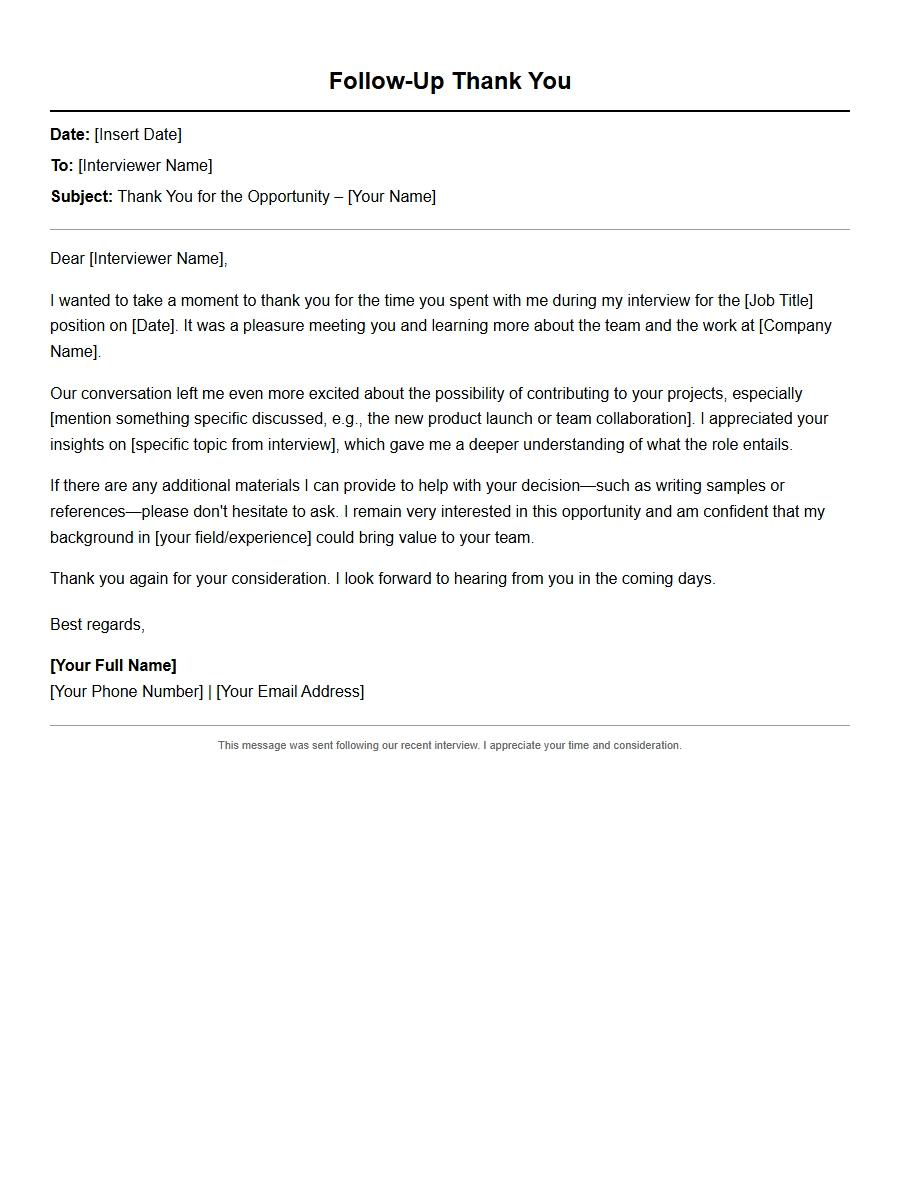
Personal Follow-Up Email After a Job Interview
Grateful Thank-You Follow-Up
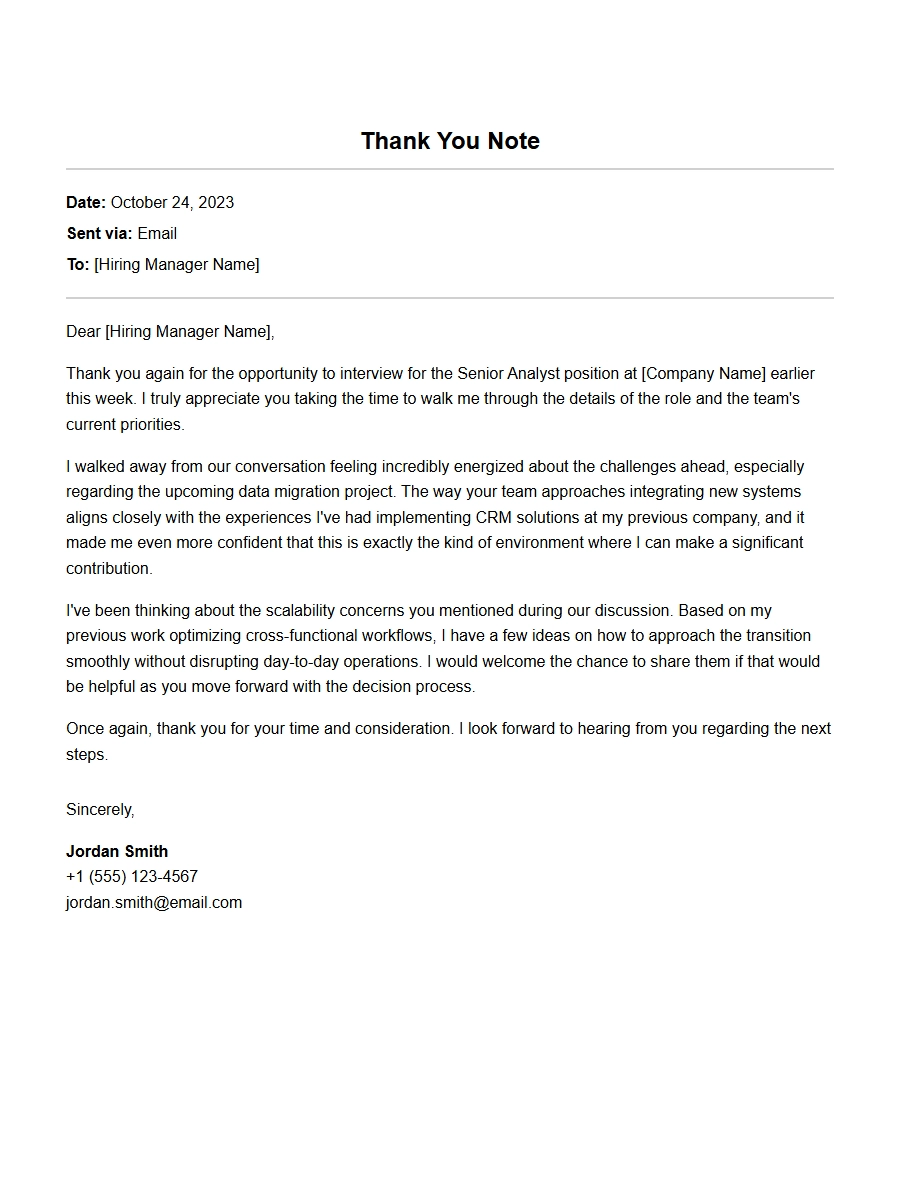
Dear [Hiring Manager Name],
I wanted to send a quick note to thank you again for the opportunity to interview for the [Job Title] position yesterday. I truly enjoyed our conversation about the team’s upcoming projects and the ways my background in [specific skill] could contribute.
I left the interview even more excited about the role and the company’s direction. If you need any further information from me—whether that’s additional work samples or references—please don’t hesitate to ask.
Thank you once more for your time and consideration. I look forward to hearing from you.
Best regards, [Your Name] [Phone Number]
Reinforcing Interest with Specifics
Dear [Interviewer Name],
I hope this message finds you well. I wanted to follow up on my interview for the [Job Title] role last Tuesday. Since then, I’ve reflected on your explanation of the new CRM implementation and have an additional idea I’d love to share:
Integrating automated data validation could reduce manual error by up to 30%.
Using weekly dashboards would align with your goal of real-time reporting.
I’m confident I can bring this kind of value to your team. Please let me know if you’d like to discuss these thoughts further.
Thank you again for your consideration.
Sincerely, [Your Name]
Polite Reminder for Decision Timeline
Dear [HR Contact Name],
I hope you are having a productive week. I’m writing to gently follow up on my interview for the [Job Title] position on [date]. I understand you may still be completing final interviews, but I wanted to reiterate my genuine interest in joining the [Company Name] team.
If possible, could you kindly share an updated timeline for the hiring decision? Knowing when to expect news would be very helpful as I plan my next steps.
Thank you for your time and for keeping me in consideration. I remain enthusiastic about the opportunity to contribute.
Warm regards, [Your Name]
Clarifying a Discussion Point
Dear [Panel Member Name],
Thank you for the insightful conversation during my recent interview for the [Job Title] position. I’ve been thinking about our discussion regarding project prioritization methods and wanted to clarify my perspective.
As I mentioned, I’ve used both MoSCoW and weighted scoring in past roles. However, looking back, I believe that combining them with a simple impact‑effort matrix (as shown below) would be especially effective for your current roadmap:
Criterion
Weight
Score (1‑5)
Strategic alignment
40%
5
Customer value
30%
4
Effort
30%
3
I hope this extra context is helpful. I remain very interested in the role and would love to dive deeper in a follow‑up conversation.
Kind regards, [Your Name]
Thank You with a Personal Touch
Dear [Interviewer Name],
Thank you for the wonderful interview last Thursday. I especially appreciated hearing about your personal journey at [Company Name]—it genuinely made me feel that this is a place where people grow and are valued.
I wanted to share that I’ve already started reading [book or resource mentioned] you recommended. It’s been eye‑opening!
On a professional note, I remain eager to bring my cross‑functional collaboration skills and experience in [specific field] to your team. Please feel free to reach out if any additional information is needed.
With gratitude, [Your Name]
Second Interview Request Follow-Up
Dear [Hiring Manager Name],
I wanted to thank you again for the opportunity to meet with you and the team last Friday. The conversation confirmed my belief that I would be a strong fit for the [Job Title] role.
If you decide to move forward with a second round, I would be delighted to:
Present a brief case study of a similar project I led.
Meet with additional stakeholders to discuss collaboration approaches.
Complete any technical assessment you find useful.
Please let me know if there is anything else I can provide to support your decision process.
Looking forward to the next step.
Best, [Your Name]
After a Group Interview – Team Fit
Dear [Interview Coordinator Name],
I’m writing to follow up on my group interview for the [Job Title] position on [date]. Interacting with several team members gave me a great sense of the collaborative culture at [Company Name].
I particularly connected with the discussion around agile workflows and cross‑team communication. I believe my experience facilitating weekly syncs between engineering and design teams would allow me to hit the ground running.
Below is a quick summary of the key strengths I’d bring:
3+ years of remote agile facilitation
Certified ScrumMaster (CSM)
Proven track record of reducing meeting overhead by 20%
I remain very excited about this opportunity and hope to join your team.
Thank you, [Your Name]
Post-Interview Referral Acknowledgment
Dear [Hiring Manager Name],
Thank you for the engaging interview this past Monday. I also wanted to express my appreciation for the referral from [Mutual Contact Name]—he/she spoke highly of the team dynamic and the meaningful work at [Company Name].
During our conversation, I was particularly struck by the emphasis on employee development and mentorship programs. My background includes mentoring junior developers and organizing internal tech talks, which aligns well with that value.
I’ve attached (via separate email) a list of references that can speak to my mentoring contributions. Please let me know if you need anything else from me.
I look forward to the possibility of working together.
Warmly, [Your Name]
Soft Follow-Up After No Reply
Dear [Interviewer Name],
I hope all is well. I’m writing to gently check in on the status of my candidacy for the [Job Title] role. It’s now been two weeks since our interview, and I remain very interested in the position and the company.
I understand how busy hiring cycles can be—if there’s any delay or additional information I can provide, please let me know. I’m happy to hop on a quick call or answer any lingering questions.
Thank you again for the time you’ve already invested; I know it’s precious. I’m eager to hear about the next steps at your convenience.
Sincerely, [Your Name] [Email Address]
Final Appreciation Before Decision
Dear [Hiring Team],
As I understand you are nearing a decision for the [Job Title] position, I wanted to send one last note of thanks. The interview process has been thoughtful and engaging, and I’ve enjoyed learning more about [Company Name]’s mission and culture.
To recap why I believe I’m the right fit:
Your Need
My Experience
Data‑driven marketing
5 years in analytics, Tableau & SQL
Client relationship management
Managed $2M+ accounts
Team leadership
Led cross‑functional squads of 8
I am genuinely excited about the possibility of contributing to your team. Whatever the outcome, I appreciate the consideration and respect your decision process.
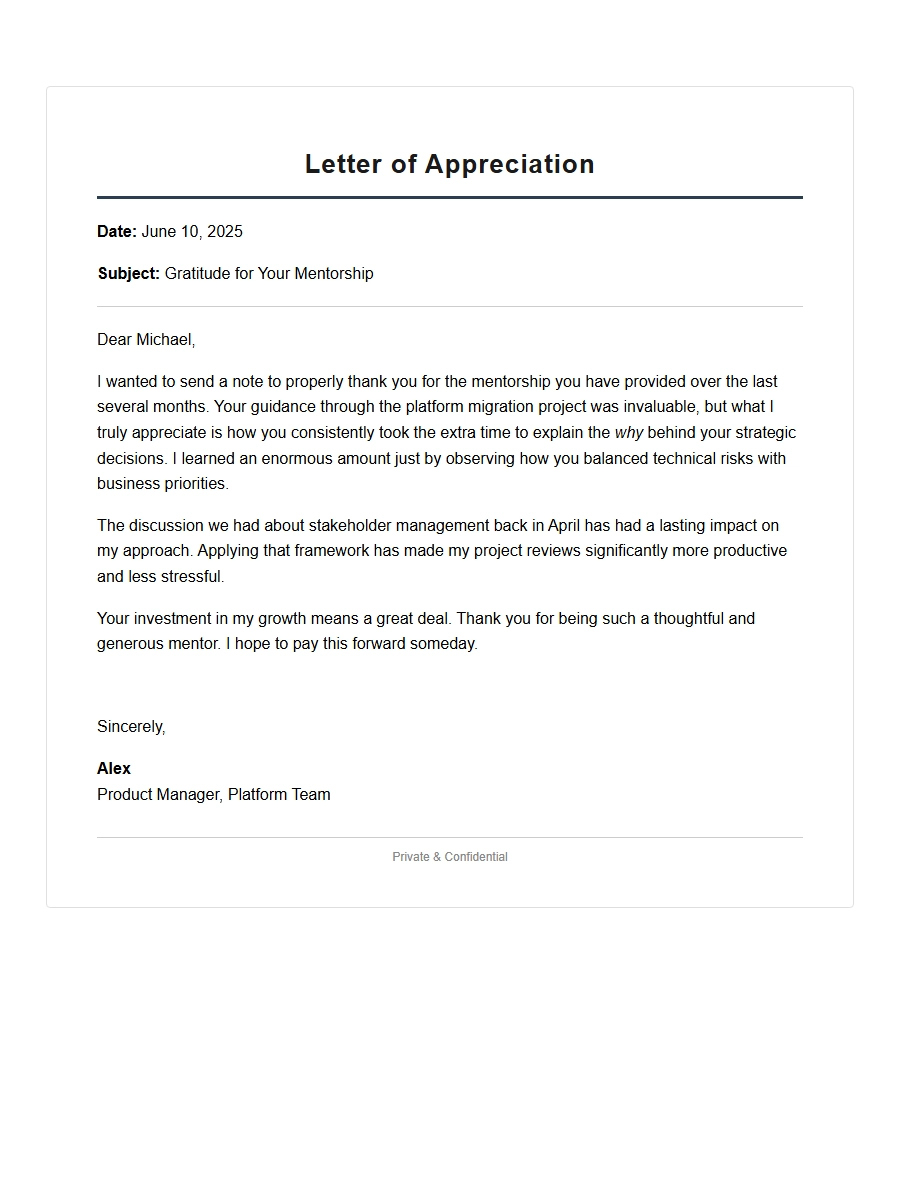 Thanking a Mentor for Guidance: Sample Messages
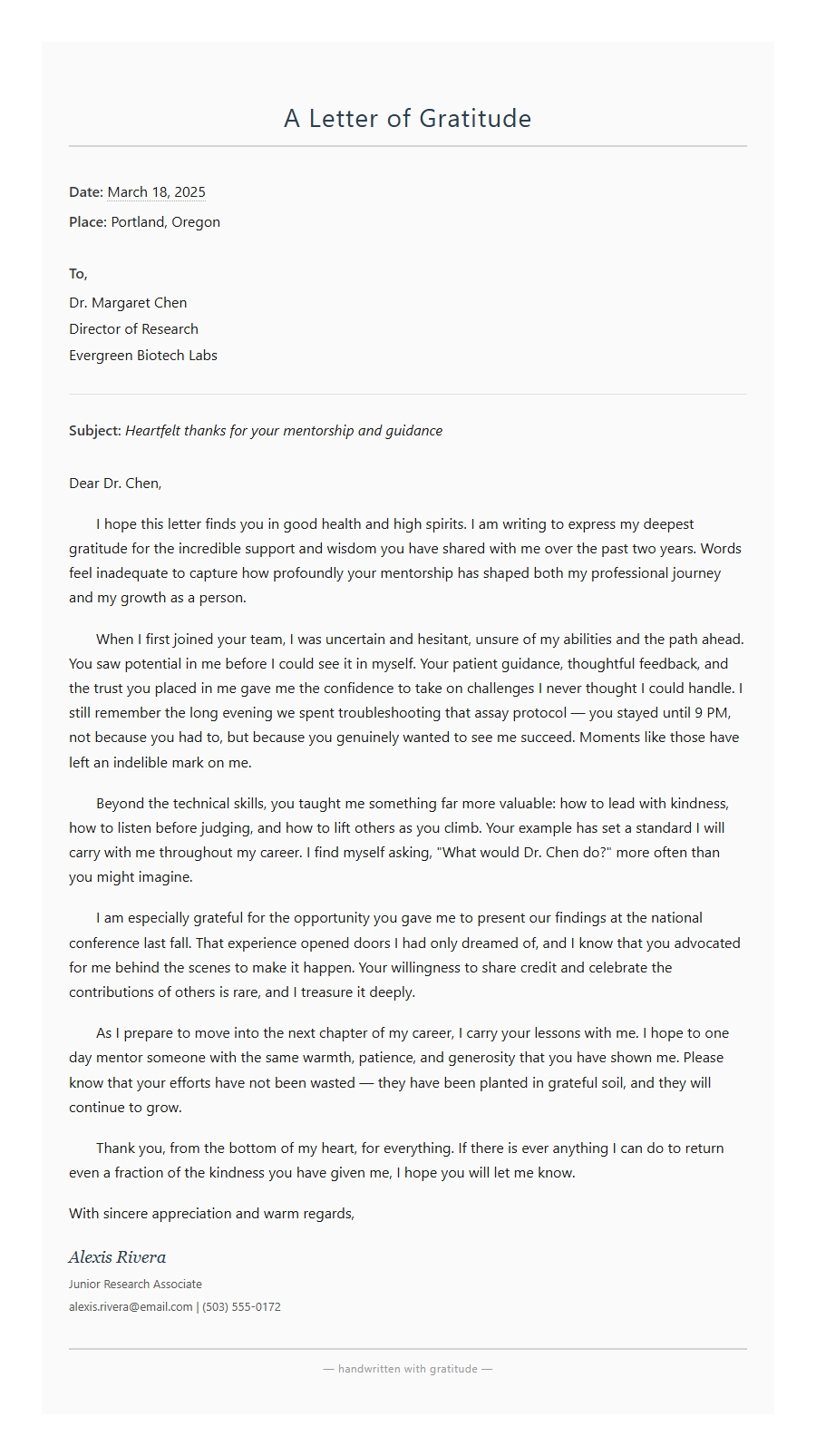 Expressing Gratitude: Handwritten Letter Example
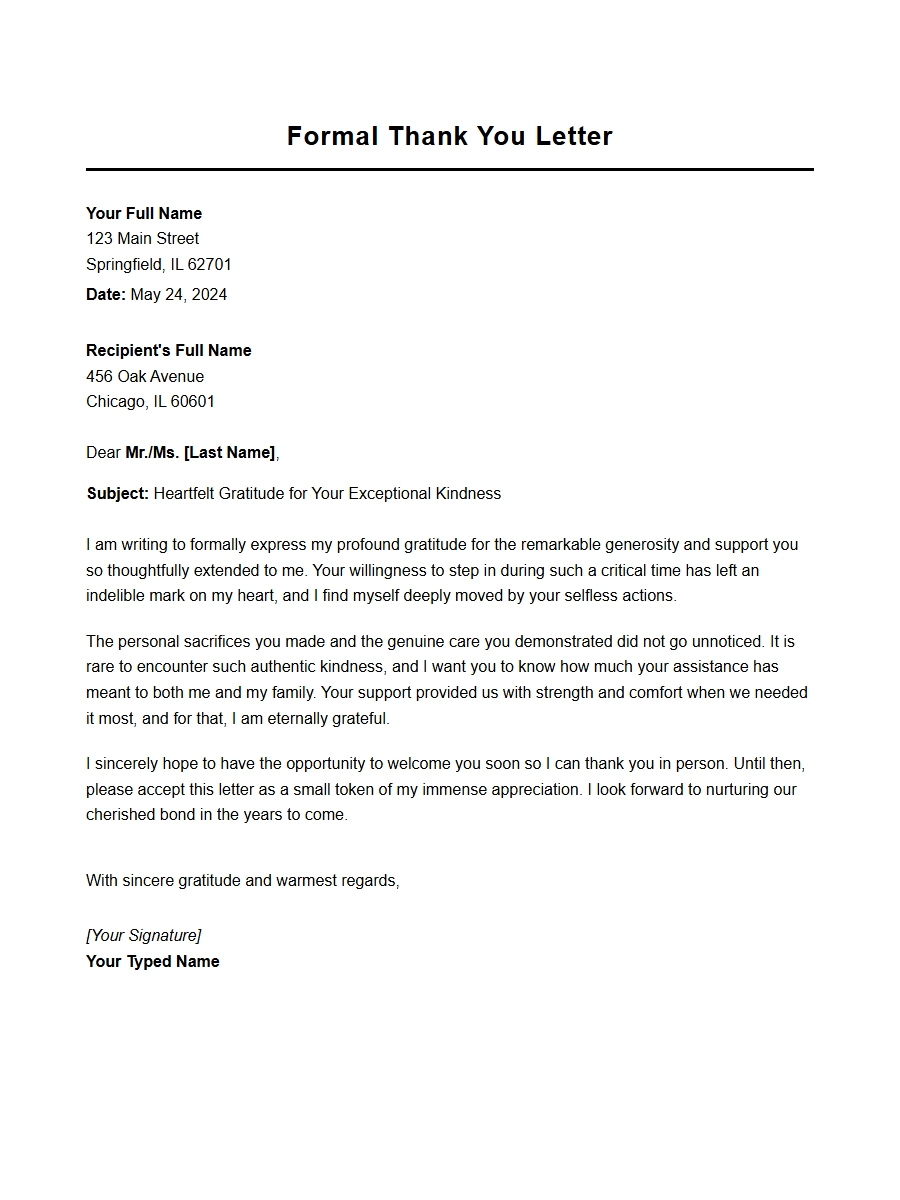 Expressing Thanks in a Formal Personal Letter
 Thank You Letter Examples for Family Holiday Gifts
 Sample Thank You Letter for Support
 How to Write a Personal Thank-You Note After an Interview