You've just spent a lovely evening at a friend's dinner party. The food was great, the conversation flowed, and now you're staring at a blank card wondering what to write. It's easy to freeze up—but a simple thank you note doesn't have to be stressful. It's one of the simplest ways to show you care, and it leaves a warm impression long after the last course.
Using a sample isn't cheating—it's smart
Starting from scratch can feel overwhelming. That's why using a letter template for your hostess thank you note is a practical move. It gives you a clear structure: a polite opening, a specific compliment, and a closing that feels genuine. You just fill in the details. This approach helps you focus on the personal touches instead of worrying about format. Think of it as a helpful guide, not a crutch.
Category: Personal Letters – this note is a classic example of personal correspondence, but it still follows some basic letter writing etiquette. You want to be warm and specific, not overly formal. The right balance makes all the difference.
How to choose the right note for your host
The tone you use depends on your relationship. For a close friend, you can be more casual. For a more formal acquaintance, stick to a respectful tone. A good customizable letter sample lets you adjust the salutation and closing to match. For example, “Dear Sarah” works for friends; “Dear Mr. and Mrs. Thompson” suits a formal event. This is where professional correspondence tips can help even personal notes feel polished.
When you're writing to a close friend, it's okay to be more casual, similar to how you'd ask a favor from a close friend. For a more formal host, keep it respectful.
How to make it sound like you
Once you have a sample, replace the generic phrases with real memories. Mention the dish you loved, the conversation that stuck with you, or the effort you noticed. That move turns a standard letter template into something personal. Pay attention to tone in writing—you want it to sound grateful and natural, not stiff. Imagine you're saying it in person. That clarity of voice is what transforms a note from a duty into a gift.
Think of it as akin to thanking a customer for repeat business—you want to recognize their effort and make them feel appreciated. The same principle applies to a hostess.
What to include (and what to skip)
Start with a greeting, then immediately say thank you. Follow with one or two specific details. Close with a warm sign‑off (e.g., “With gratitude,” or “Warmly”). Avoid phrases like “Thank you for having us” without anything else—that's the most common mistake. Also, don't forget to proofread your letter before sending. A typo can undercut your sincerity.
If you're sending the note by email, use a digital letter format—a clear subject line, a proper greeting, and a closing. That still counts as a thoughtful gesture. And unlike a note complaining about noise disturbance, this is all about appreciation, so keep the tone positive throughout.
Common slip‑ups to avoid
Using an outdated salutation like “To Whom It May Concern” for a dinner party thank you feels off. Stick to a name if you know it. Another pitfall is ignoring letter structure—jumping straight into a compliment without a proper opening can feel abrupt. A sample helps you avoid that. The salutation and closing should match the level of formality you've chosen.
Also, don't make it too long. A short, specific note is more powerful than a long, rambling one. The structure is similar to requesting a recommendation from a professor, but with a grateful instead of asking tone.
Now go write it
You've got the framework. Use it as a springboard, not a script. The first time you write a hostess thank you note, it might feel a little awkward. That's okay. The more you do it, the easier it becomes—until you can dash off a warm note in two minutes. Remember, the best letters feel both professional and personal. And unlike a formal vacating property end of lease notification, this is a chance to be warm and memorable. So grab that card or open that email, and let your gratitude spill out.
Ready-to-Use Examples
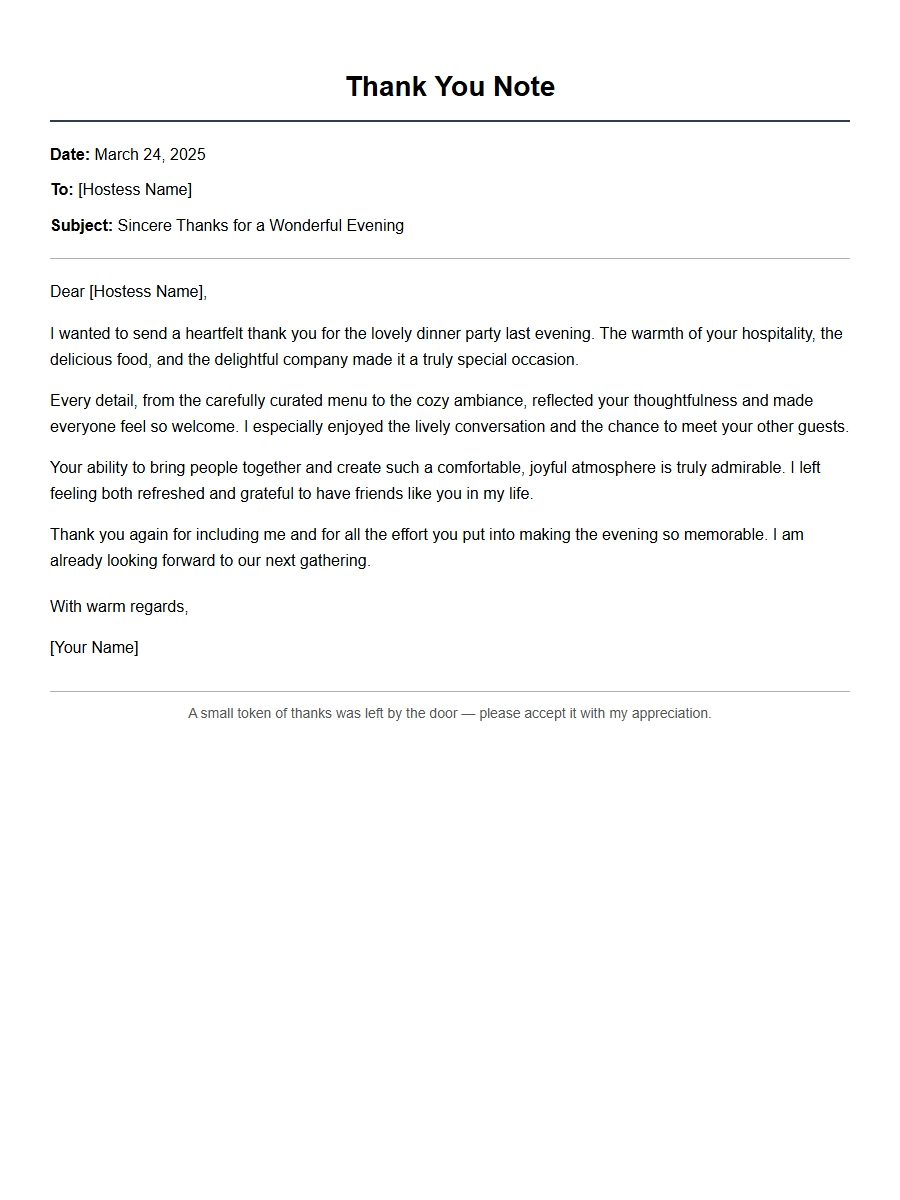
Thank You Note for Hostess Dinner Party Visit
Classic Thank-You Note
Dear Mrs. Henderson,
Thank you so much for inviting me to your wonderful dinner party last Saturday. The evening was truly delightful, from the warm welcome to the delicious meal and sparkling conversation. Your roasted chicken with herb gravy was absolutely memorable, and the chocolate lava cake was the perfect ending.
I especially enjoyed meeting your other guests and learning about their travel stories. You have a gift for bringing people together and making everyone feel at ease.
With heartfelt thanks, Sarah
Detailed List of Highlights
Dear Linda,
I can’t stop thinking about your fabulous dinner party last night. Every detail was perfect. Here are just a few highlights I wanted to mention:
The appetizer spread – especially the smoked salmon on rye.
Your homemade pasta with truffle cream sauce.
The after-dinner jazz playlist – so tasteful.
The way you seamlessly guided the conversation.
You are a wonderful hostess, and I feel so lucky to have been included. Thank you for the lovely evening and for your generous hospitality.
Warmly, Mark
Gratitude with Recipe Request
Dear Aunt Carol,
Thank you for hosting such a lovely dinner party on Sunday. Your home always feels so cozy, and the meal was outstanding. I especially loved the lemon rosemary chicken and that incredible roasted vegetable medley.
Would you be willing to share the recipe for the chicken? It was so flavorful and moist – I would love to try making it for my own family. I promise to give you full credit!
Thank you again for a memorable evening. I look forward to our next gathering.
With appreciation, Jenny
Formal Thank-You Letter
Dear Mr. and Mrs. Blackwood,
I am writing to express my sincere gratitude for the exquisite dinner party you hosted on the 15th. The evening was a perfect blend of elegance, warmth, and delightful culinary artistry.
I particularly appreciated the thoughtful seating arrangement that allowed for engaging conversations and the beautifully set table. The five-course meal was a testament to your skill and attention to detail.
Please accept this note as a token of my thanks. I left feeling enriched by the company and the experience.
Respectfully yours, David Thornton
Fun & Casual Thank-You
Hey Jenna,
Just a quick note to say THANK YOU for the epic dinner party last weekend. Your taco bar was genius – everyone loved building their own creations. I’m still thinking about that mango salsa!
You, Mike, and the kids were such gracious hosts. I had a blast playing board games after dinner – I didn’t know you were such a fierce Catan competitor!
Let’s do it again soon – maybe I’ll host next time and attempt your guacamole recipe (though I doubt I can match yours).
Cheers, Alex
Thank-You with Hostess Gift Mention
Dear Maria,
Thank you again for the wonderful dinner party last Friday. The paella was incredible, and your sangria was the perfect complement. I hope the small orchid I left serves as a lovely reminder of our evening together.
I also want to thank you for introducing me to your friend Laura – we have already planned a coffee date. Your ability to create such a warm, connected atmosphere is truly special.
I look forward to returning the hospitality soon. You are a wonderful hostess and an even better friend.
Warm regards, Sophia
Thank-You from Out-of-Town Guest
Dear Uncle Rob and Aunt Patty,
Thank you so much for the wonderful dinner party during my visit. It meant the world to me that you went to so much trouble – the prime rib was perfectly cooked, and the cheesecake was divine.
More than the food, I treasured the time spent catching up with family. Hearing cousin Emma’s college stories and playing cards with Grandpa made the evening unforgettable.
Your hospitality made my trip feel extra special. I hope to see you all again soon – perhaps you’ll let me treat you to dinner next time.
Love, Tommy
Short & Sweet Note
Dear Diane,
Just a quick thank you for the lovely dinner party last night. The salmon was outstanding, the conversation was stimulating, and your home was as welcoming as ever.
You are a natural hostess. I appreciate all the effort you put into making the evening perfect. I hope to have you over soon for a small gathering at my place.
With gratitude, Karen
Heartfelt Hospitality Acknowledgment
Dear Grandma,
Thank you for the beautiful dinner party on Sunday. Being at your table always feels like a celebration, and this one was no exception. The roast lamb, the garden vegetables, and your famous apple pie – everything was made with so much love.
I noticed how you paid attention to everyone’s preferences, making sure each guest felt special. That is your gift, and I admire it deeply.
Thank you for creating another cherished memory. I love you dearly.
With all my heart, Megan
Thank-You with Future Invitation
Dear Pam and Greg,
What a fantastic dinner party last Saturday! Your backyard barbecue was a hit – the ribs were fall-off-the-bone tender, and the corn salad was a refreshing twist. The bonfire and s’mores afterward were pure magic.
I’d like to return the favor. Would you be free on the 10th for a casual Italian-themed dinner at my place? I’ll send a proper invitation soon, but I wanted to lock the date with you first.
Thanks again for your incredible hospitality. You two set the bar high!
 Thanking a Mentor for Guidance: Sample Messages
 Expressing Gratitude: Handwritten Letter Example
 Expressing Thanks in a Formal Personal Letter
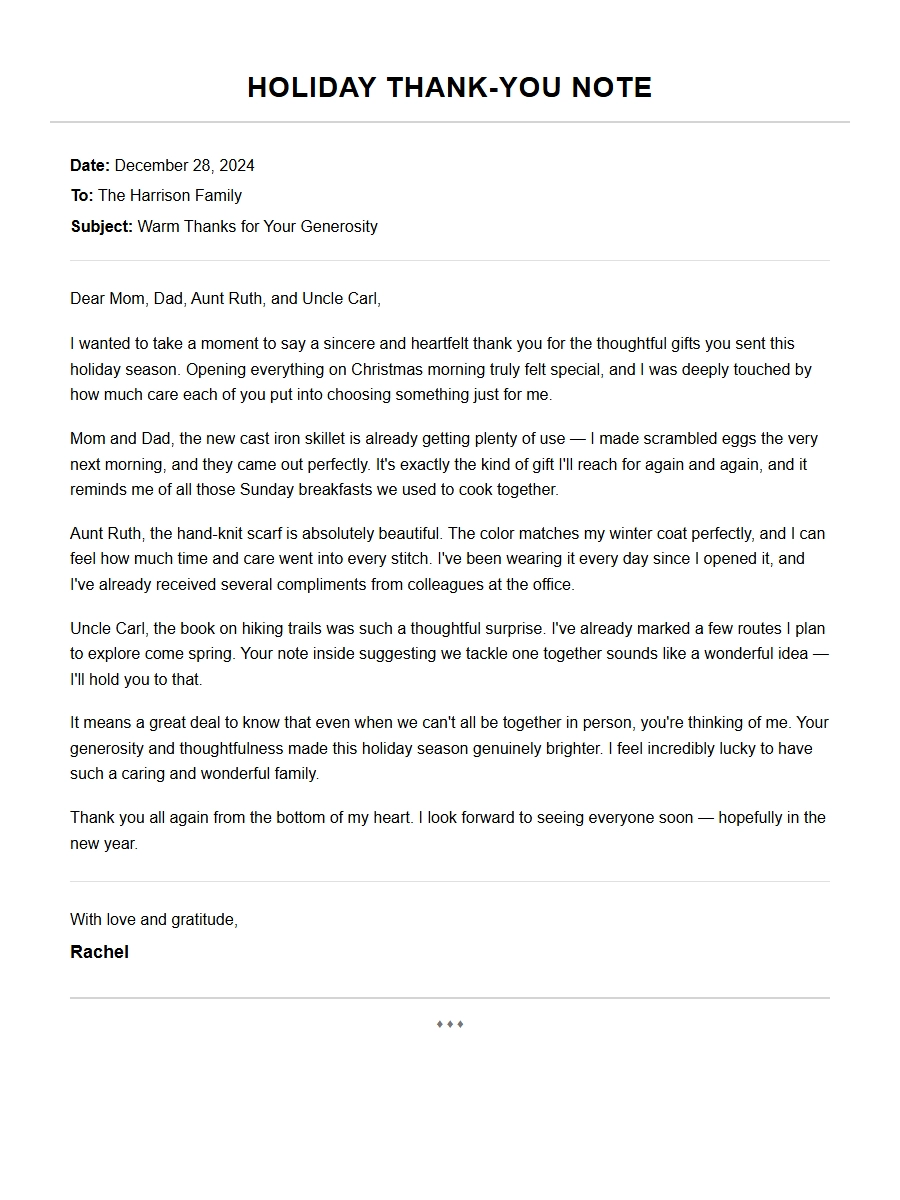 Thank You Letter Examples for Family Holiday Gifts
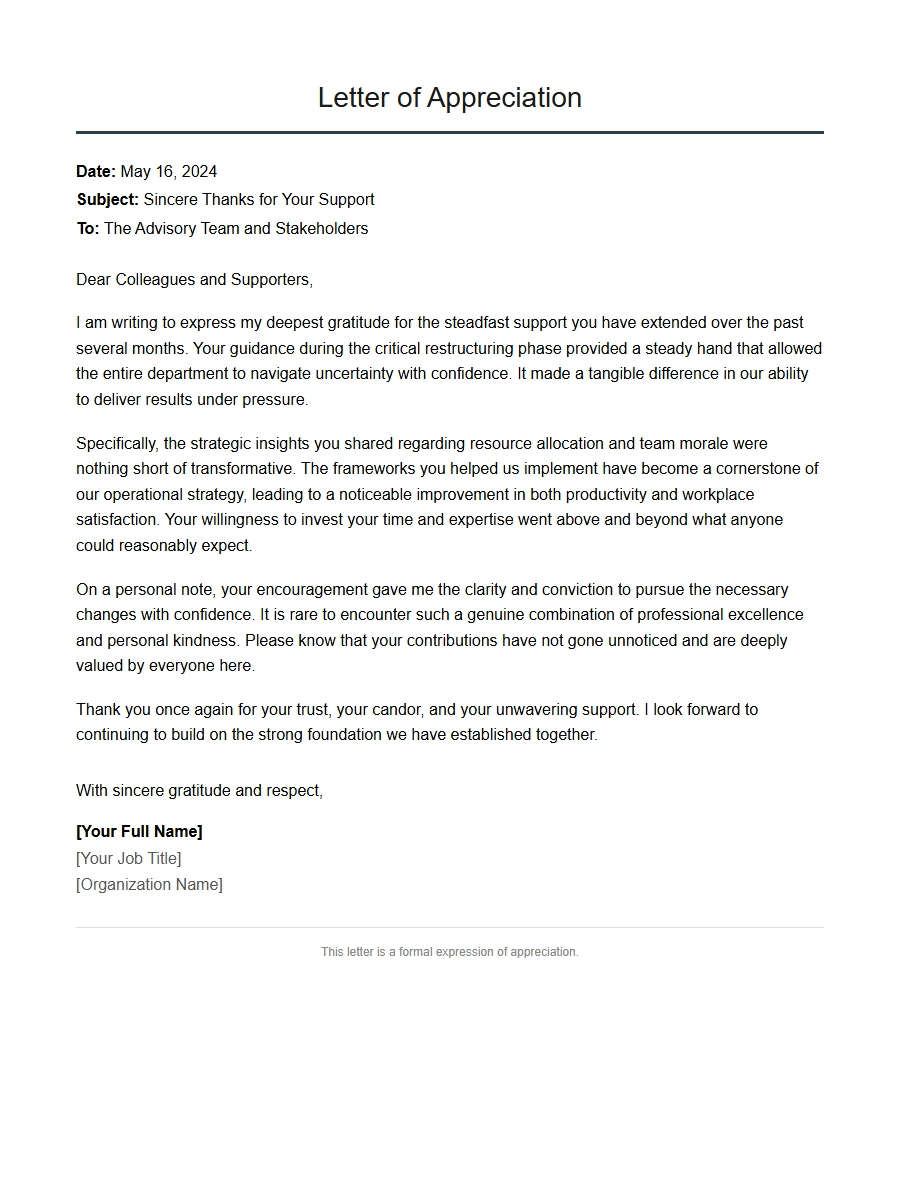 Sample Thank You Letter for Support
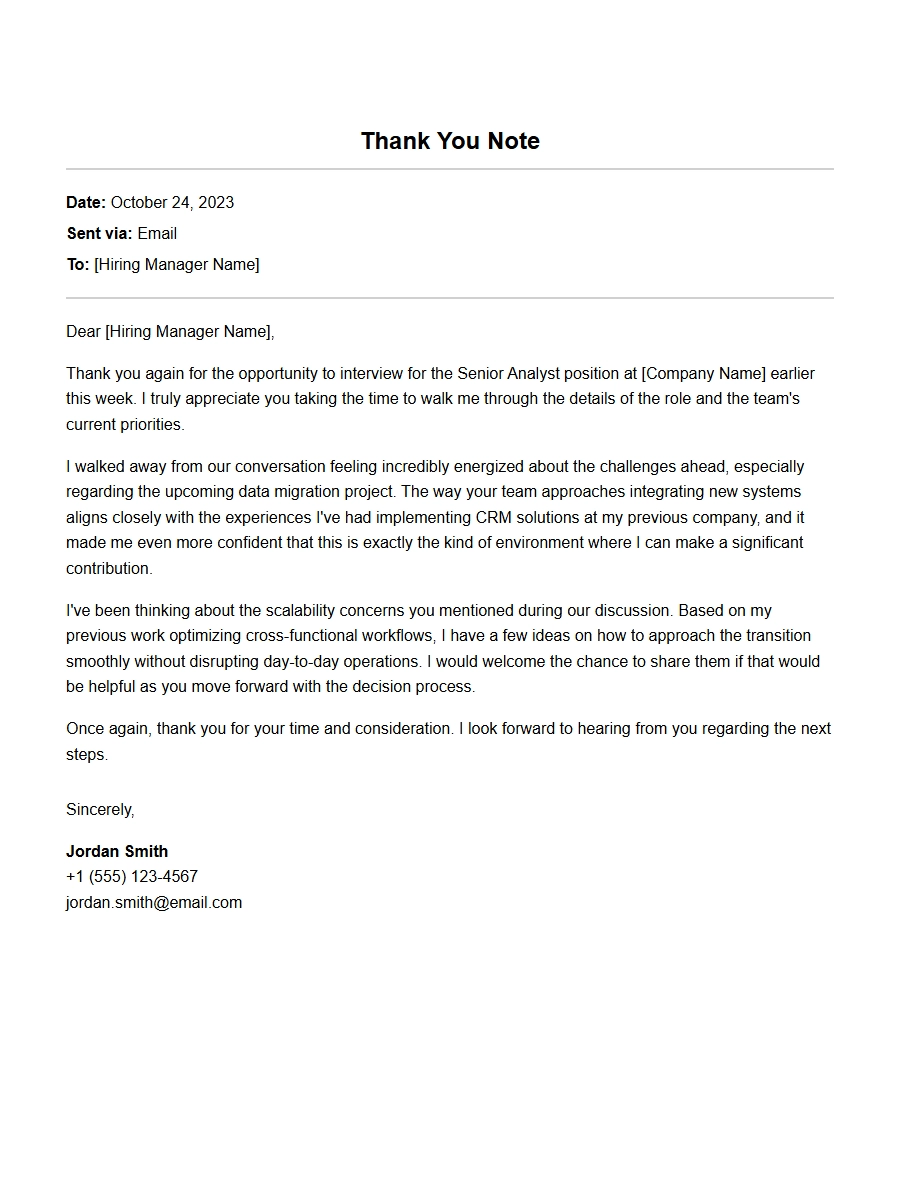 How to Write a Personal Thank-You Note After an Interview