You need to send a cold email to someone you’ve never met, but your cursor blinks on an empty page. You want to connect, build a professional relationship, or ask for advice—but you don’t want to sound desperate, robotic, or like you copied a template from 2010. That anxiety is normal. The good news? A solid networking outreach sample can turn that blank page into a confident draft in minutes.
Using a sample isn’t cheating. It’s a smart time-saver. A good letter template gives you the structure, tone, and key phrases you need for professional correspondence. It handles the boring parts—salutation, closing, basic flow—so you can focus on what matters: making the email feel like you. The trick is to adapt it without losing your authentic voice.
Category: Networking Outreach Emails
How do you choose the right sample for your cold email?
Not all samples are equal. A formal “business letter format” sample might work for a corporate executive but feel stiff when emailing a startup founder. Think about your recipient’s culture. An industry-specific sample (say, from a tech networking guide) will use language that feels natural to that world. If you’re reaching out to someone in a creative field, look for a sample with a conversational tone. For more traditional sectors like law or finance, lean towards a standard business letter structure with a polite opening and closing.
Once you pick a sample, read it through once. Pay attention to the flow: how the writer introduces themselves, makes the ask, and shows gratitude. That structure—often called “letter structure” in formal guides—works for cold emails too. A typical one might be: brief introduction → why you’re reaching out → a specific compliment or connection → a clear request → a thank-you and closing.
Adapting a template without sounding like a robot
This is the hard part. You want to follow the skeleton but add your own meat. Start by changing the opening paragraph to grab attention. Instead of “I hope this email finds you well,” try a specific reference: “I read your article on [topic] and really appreciated your point about [specific detail].” That shows you did your homework. It also makes the email feel less like a copy-paste and more like a genuine outreach.
Common mistakes people make: using outdated salutations like “To Whom It May Concern” (never that in a cold email) or ignoring formatting for the medium. A cold email isn’t a printed letter—no letterhead design needed, but you do need a subject line that isn’t vague. Keep your paragraph length short; people scan emails quickly. And don’t forget to proofread your letter. A typo in the first sentence signals carelessness, not professionalism.
What tone should you aim for?
Ever received a letter that felt too stiff or too casual? The sweet spot is warm but professional. Think of tone in writing like your voice in a conversation: polite, direct, and human. Use contractions (“I’m,” “you’ll”) because they feel natural. Avoid jargon unless you explain it. And remember, this is networking outreach to a connection—not a job application or a sales pitch. You’re building a relationship, so keep the ask small and respectful.
If you’re unsure about the closing, use a simple “Best regards” or “Thanks in advance.” Avoid overly formal sign-offs like “Yours faithfully” unless the context demands it. The salutation and closing should match the level of formality you set in the body.
Follow-ups and personal touches
Most people don’t reply to the first email. That’s okay. Send a polite follow-up after a week or two. A follow-up similar to a doctor visit follow-up correspondence can work—short, referencing your original email, and offering an easy way to respond. Don’t pester.
Also, consider where you found this person. Maybe you met them at an event, or you share a mutual contact. If you’re asking for a favor—like an introduction—think about how you would write a letter asking a favor from a close friend. The core principle is the same: be direct, be grateful, and make it easy for them to say yes. Just adjust the language for a professional setting.
Quick tips on customization
Don't just swap out the name and company. Rework the sample so it sounds like you. If you’re naturally funny, let a little humor in—but don’t force it. If you’re more straightforward, that’s fine too. The best cover letter examples and cold email samples are ones where you can’t tell they used a template.
Think about the digital letter format: plain text is usually better than HTML in cold emails (fewer spam triggers). Keep your subject line under 10 words. And never attach files in a first email unless the sample explicitly calls for it.
Use these as springboards, not crutches
A sample gives you confidence. It shows you what works. But your goal is to eventually write these emails without checking a template. Even personal letters like how to express condolences via mail benefit from practice—you get faster and more genuine. The same applies here. Start with a good sample, then tweak it each time. Over time, you’ll develop your own rhythm and your networking outreach will feel natural, not forced.
Now stop staring at that blank page. Pick a sample, make it yours, and hit send. You’ve got this.
Simple Examples
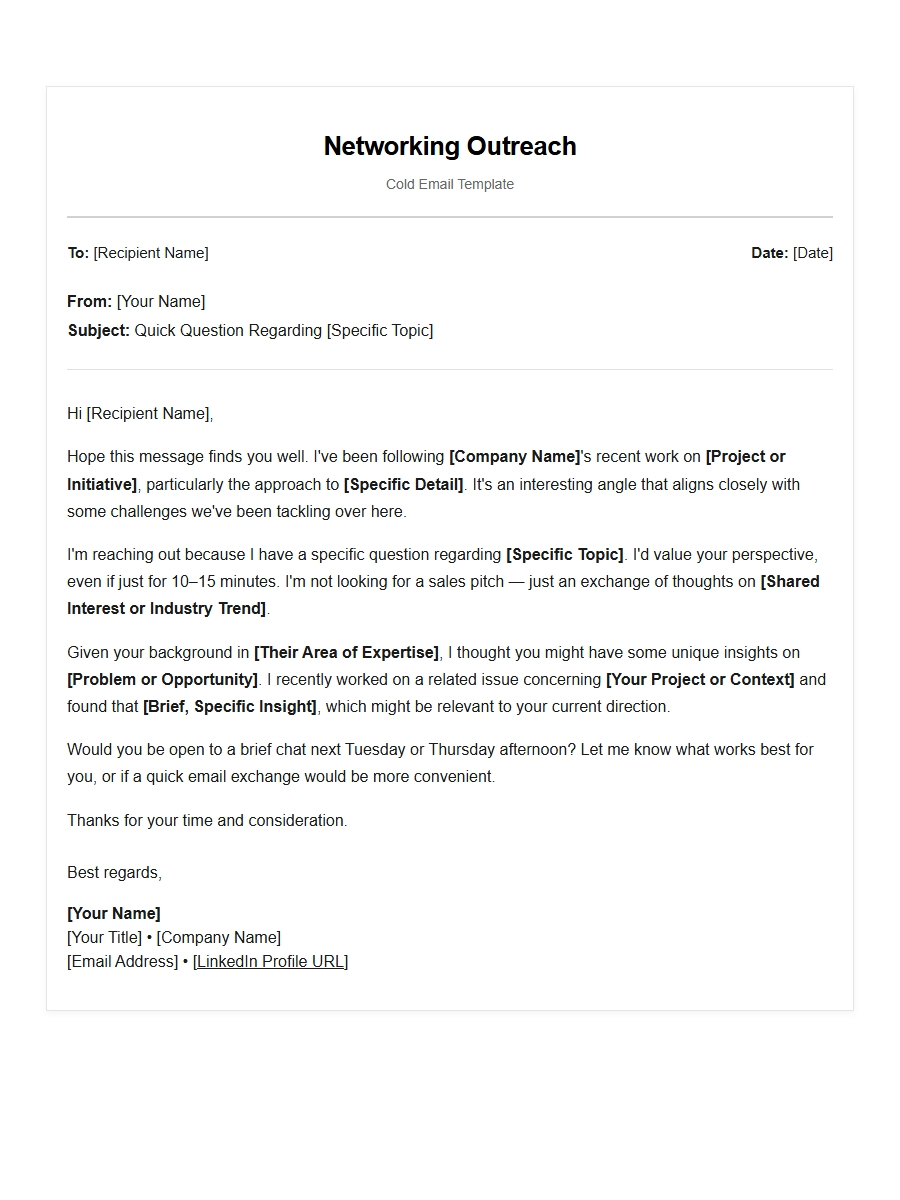
Personal Cold Email for Networking Success
Introductory Cold Email to a Professional Contact
Dear [First Name],
My name is [Your Name], and I am a [Your Role] with a strong interest in [Industry/Field]. I came across your profile on [Platform] and was impressed by your work at [Company], particularly your contributions to [Project or Initiative].
I am reaching out because I am exploring opportunities to expand my network within [Industry] and would greatly value the chance to learn from someone with your experience. Even a brief conversation could provide invaluable insights.
Would you be open to a 15-minute phone call or virtual coffee next week? I am available on [Days/Times]. Please let me know what works best for you.
Thank you for considering my request. I look forward to the possibility of connecting.
Best regards, [Your Full Name] [Your LinkedIn Profile]
Follow-Up After No Response
Subject: Reaching out again – [Topic]
Dear [First Name],
I hope this message finds you well. I sent an email last week introducing myself and expressing interest in learning more about your work at [Company]. I understand you are likely very busy, so I wanted to gently follow up.
To reiterate, I am [Your Name], a [Your Role] passionate about [Industry]. I admire your leadership in [Specific Area] and would love to hear about your career journey and any advice you might have for someone starting out.
If now is not a good time, I completely understand. I will not pester you further, but please feel free to reach out whenever it is convenient.
Thank you again for your time and consideration.
Best, [Your Name]
Request for Informational Interview
Dear [First Name],
I am writing to request an informational interview. As a [Your Current Status, e.g., graduate student / early-career professional] exploring careers in [Industry], your career path stands out as particularly inspiring. Your experience at [Company] and your focus on [Specific Skill or Domain] align closely with my professional goals.
I would be grateful for 20 minutes of your time to ask a few questions about your day-to-day work, the skills you find most valuable, and any advice for breaking into this field. I have prepared a short list of questions and will be respectful of your schedule.
Here are a few potential dates and times that work for me:
Monday, [Date], 10:00 AM – 12:00 PM [Time Zone]
Wednesday, [Date], 2:00 PM – 4:00 PM [Time Zone]
Friday, [Date], any time before 1:00 PM
Thank you for considering this request. I look forward to hearing from you.
Warmly, [Your Name]
Reconnecting After a Conference
Hi [First Name],
I hope you are doing well. It was a pleasure meeting you at [Conference Name] last [Month]. I really enjoyed our conversation about [Topic discussed] and appreciated your perspective on [Specific point].
Since then, I have been reflecting on your advice about [Action or Idea], and I have started implementing it in my own work with promising early results. Thank you again for sharing your insights.
I would love to stay in touch and perhaps continue our discussion. If you are open to it, I would be happy to set up a brief call or simply connect on LinkedIn to follow each other’s work.
Best wishes, [Your Name] [Your LinkedIn Profile]
Asking for Career Advice
Dear [First Name],
I am writing to you because I admire your career trajectory and the expertise you have built in [Field]. As I navigate my own career decisions, I find myself at a crossroads between [Option A] and [Option B]. Your insights would be incredibly valuable.
Specifically, I would love to hear your thoughts on:
How you chose your specialization within [Field]
Any skills you consider essential for success today
What you wish you had known at my stage
I know your time is precious, so I am happy to accommodate your preferred format—whether a short email exchange, a phone call, or a video chat. Please let me know if you would be open to sharing your advice.
Thank you for considering my request. I greatly appreciate your generosity.
Sincerely, [Your Name]
Referral Request to a Mutual Connection
Dear [First Name],
I hope this email finds you well. I am reaching out because I noticed that you are connected with [Target Person's Name] on LinkedIn, and I believe a warm introduction from you would be invaluable.
I am currently exploring opportunities at [Target Company] and would love to learn more about [Target Person's] role and the team culture. Given your professional relationship and your kind reputation, a brief introduction would mean a lot to me.
I have prepared a short blurb below that you could forward to [Target Person's Name], if you are comfortable:
"Hi [Target Person], I hope you are doing well. I wanted to introduce [Your Name], a [Your Role] with a strong background in [Relevant Skill]. [He/She/They] is interested in learning about your work at [Company] and could bring a fresh perspective. Would you be open to a brief chat? Thanks for considering."
Of course, I completely understand if this is not appropriate. Thank you for considering my request regardless.
Best, [Your Name]
Thank You After a Brief Interaction
Dear [First Name],
Thank you so much for taking the time to speak with me earlier today. I truly appreciate your candid advice about [Topic] and the practical tips you shared regarding [Specific Area].
I have already started researching the resources you recommended, particularly [Resource 1] and [Resource 2]. I am excited to apply your suggestions to my current project.
As a small token of my gratitude, I have sent you a connection request on LinkedIn. I would be honored to stay in touch and follow your future work.
If there is ever anything I can do to support you or your team, please do not hesitate to reach out. Thank you again for your generosity.
Warm regards, [Your Name]
Offering Value Before Asking
Hi [First Name],
I came across your recent article on [Topic] and found your analysis of [Specific Point] particularly insightful. It aligns with some work I have been doing on [Related Topic], and I thought you might find the attached summary useful. (Please let me know if you'd like me to email it directly.)
I am a [Your Role] with expertise in [Skill], and I have been following your work for some time. I believe my background could be valuable to projects like [Project or Initiative] that you are currently leading.
If you have a few minutes, I would appreciate the opportunity to ask a couple of questions about your team’s priorities. But first, I hope the article summary adds value to your day.
Thank you for your contributions to the field. I look forward to any feedback or connection.
Best, [Your Name]
Check-In to Maintain Connection
Hi [First Name],
I hope you are having a great week. It has been a while since we last connected, and I wanted to check in and see how things are going on your end.
Since we spoke, I have made some progress on [Project or Goal] that you helped me brainstorm—thanks again for your input! I recently completed [Milestone] and thought you might be interested in the outcome.
I also noticed that your team at [Company] has been doing exciting work in [Area]. If you ever need an extra hand or a fresh perspective, I would be happy to help or contribute in any way I can.
No pressure to reply, but I always enjoy hearing your thoughts. Let me know if you would like to catch up over coffee (virtual or in-person) sometime soon.
Take care, [Your Name]
Networking Outreach for Job Opportunity
Dear [First Name],
I am writing to introduce myself as a [Your Role] with [Number] years of experience in [Industry]. I am currently exploring new opportunities and was particularly drawn to [Company Name] because of its innovative approach to [Specific Area].
I have reviewed the [Job Title] role posted on [Platform], and my background in [Key Skill 1] and [Key Skill 2] aligns closely with the requirements. I would love to learn more about the team culture and the challenges the team is currently addressing.
Could we schedule a brief conversation—perhaps 10–15 minutes—so I can learn more about your perspective? I am flexible with timing and happy to work around your schedule.
Below is a quick overview of my relevant experience:
Skill
Experience Level
Relevant Project
Data Analysis
Advanced
Optimized user engagement metrics
Project Management
Intermediate
Led cross-functional team of 5
Customer Outreach
Advanced
Developed cold email strategies
I have attached my resume for your reference. Thank you for considering my outreach. I look forward to the possibility of connecting.
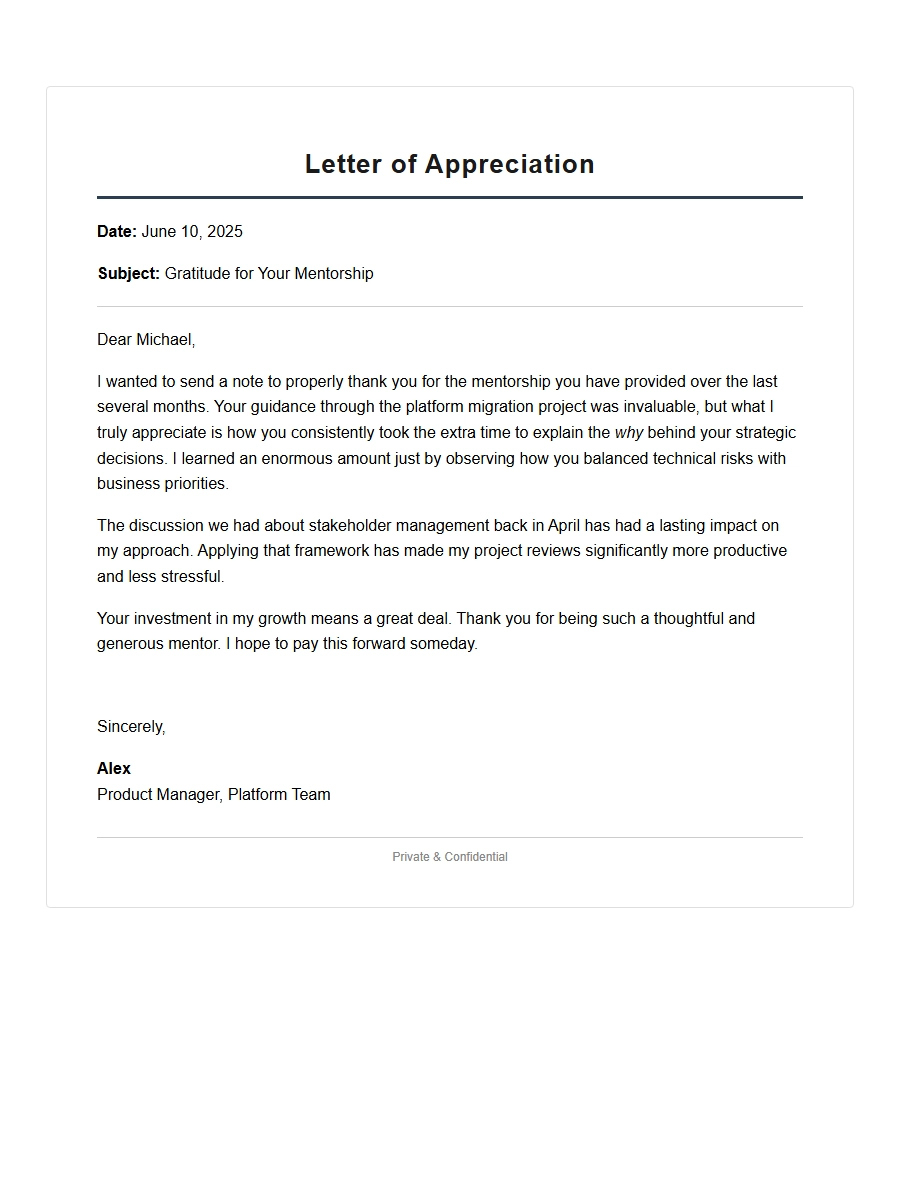 Thanking a Mentor for Guidance: Sample Messages
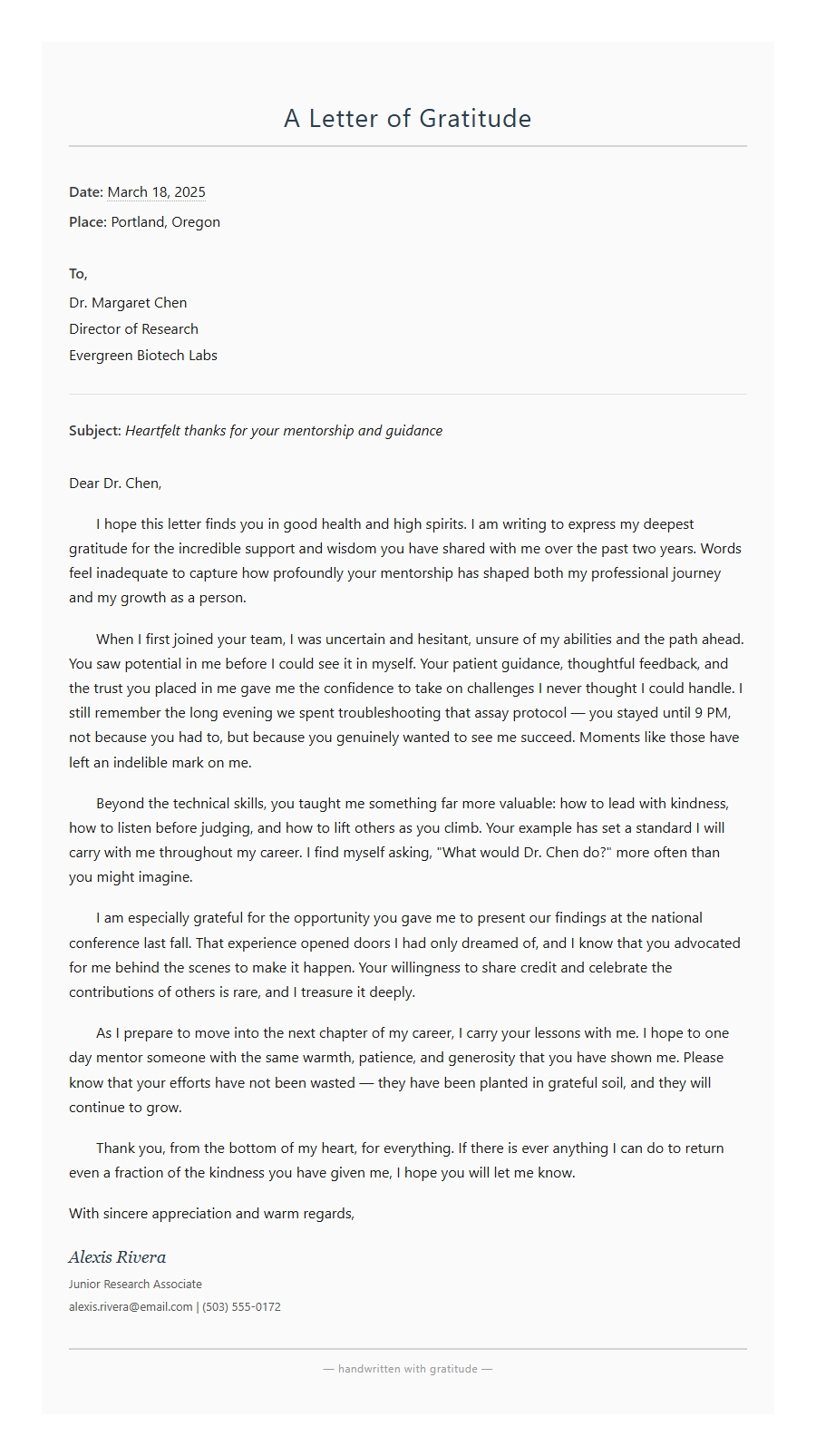 Expressing Gratitude: Handwritten Letter Example
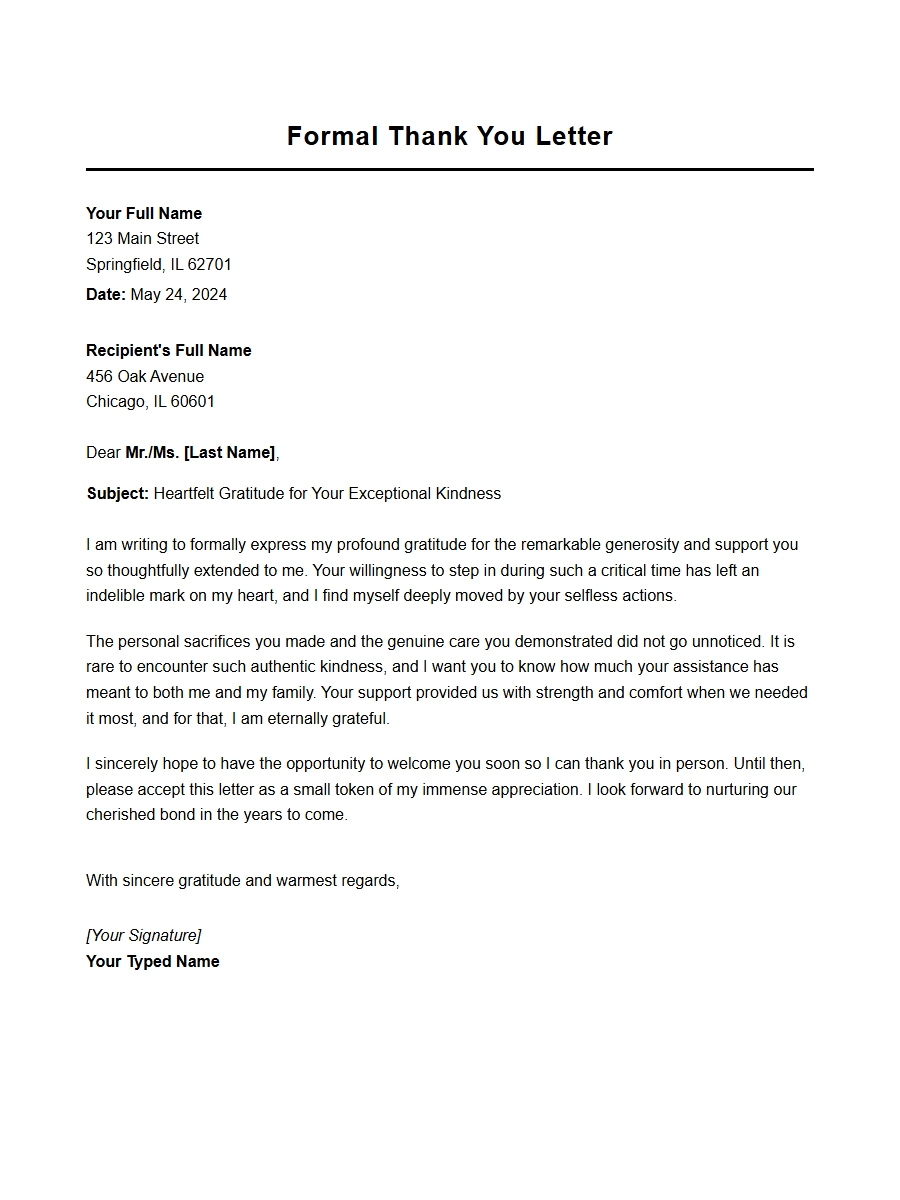 Expressing Thanks in a Formal Personal Letter
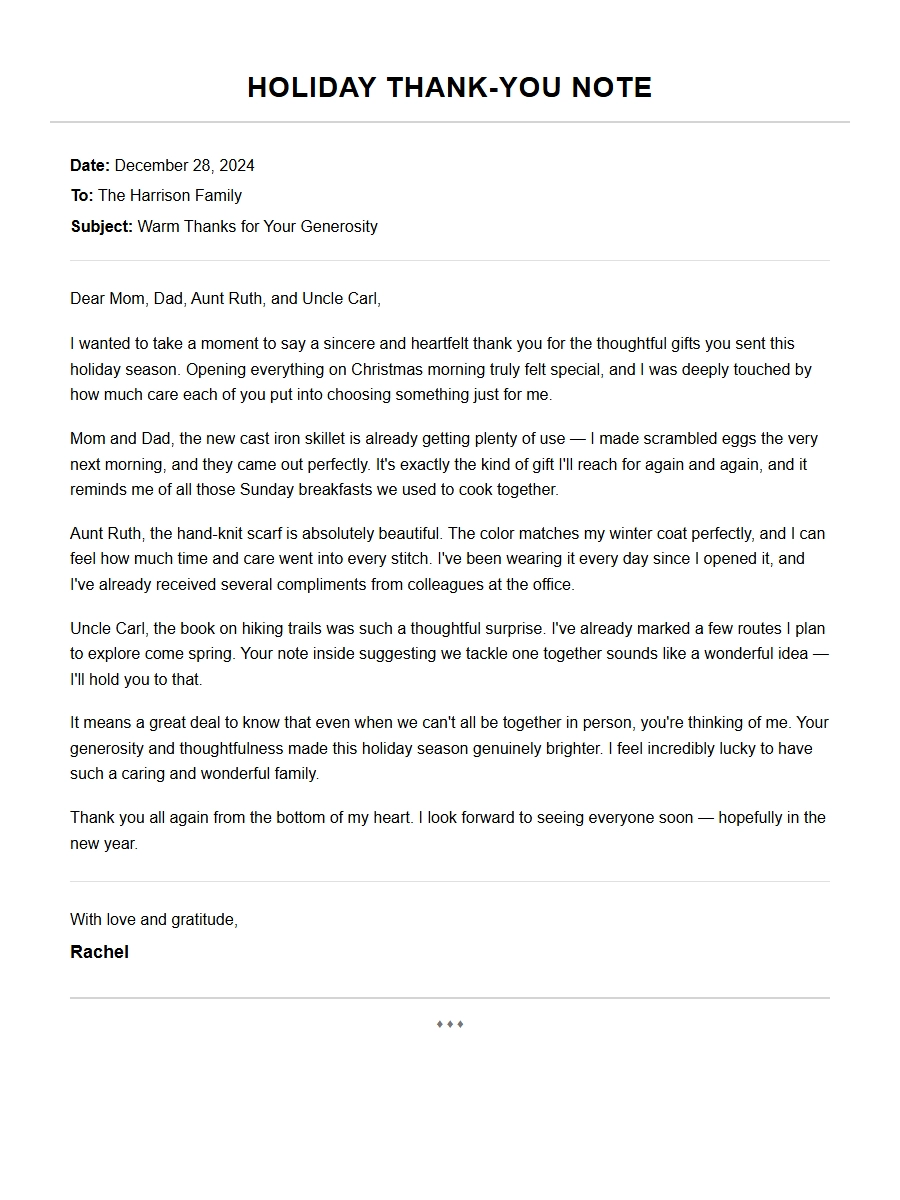 Thank You Letter Examples for Family Holiday Gifts
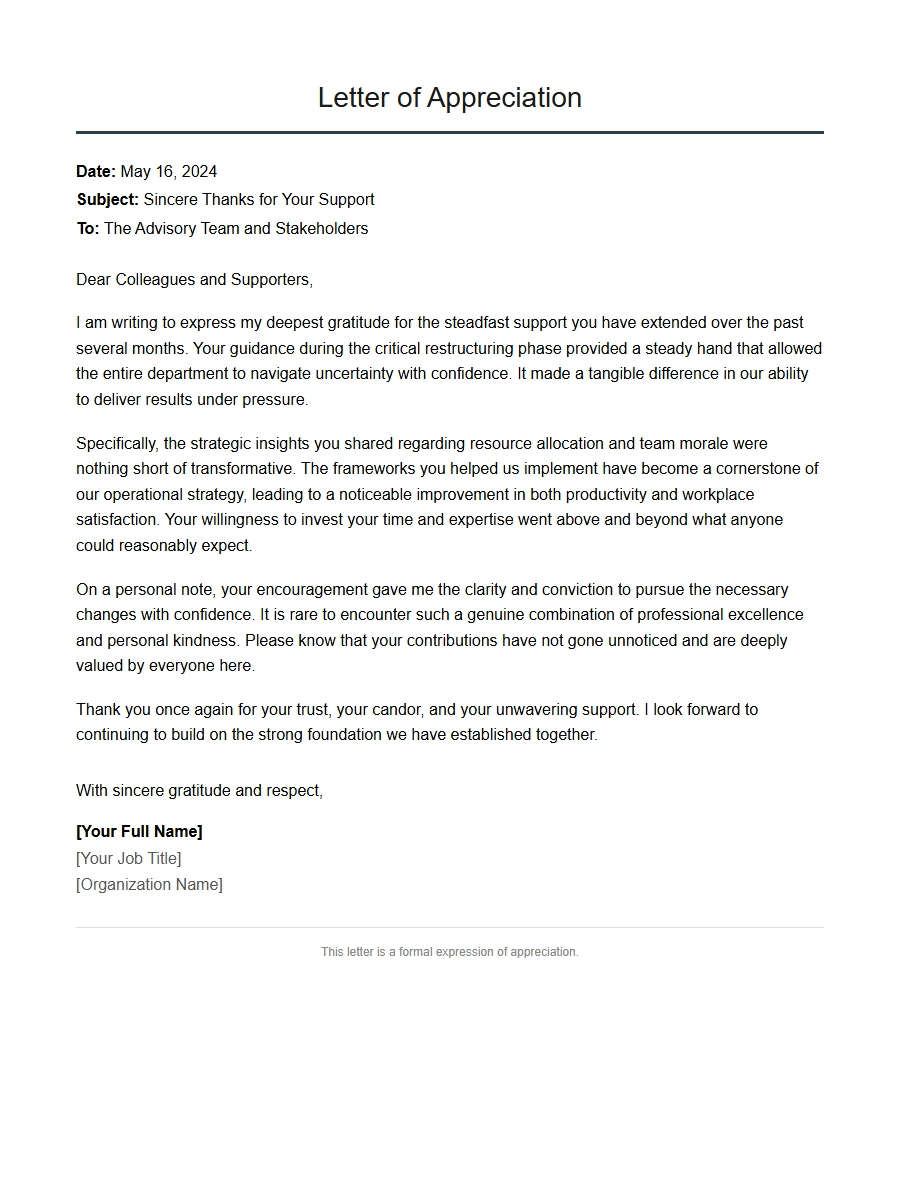 Sample Thank You Letter for Support
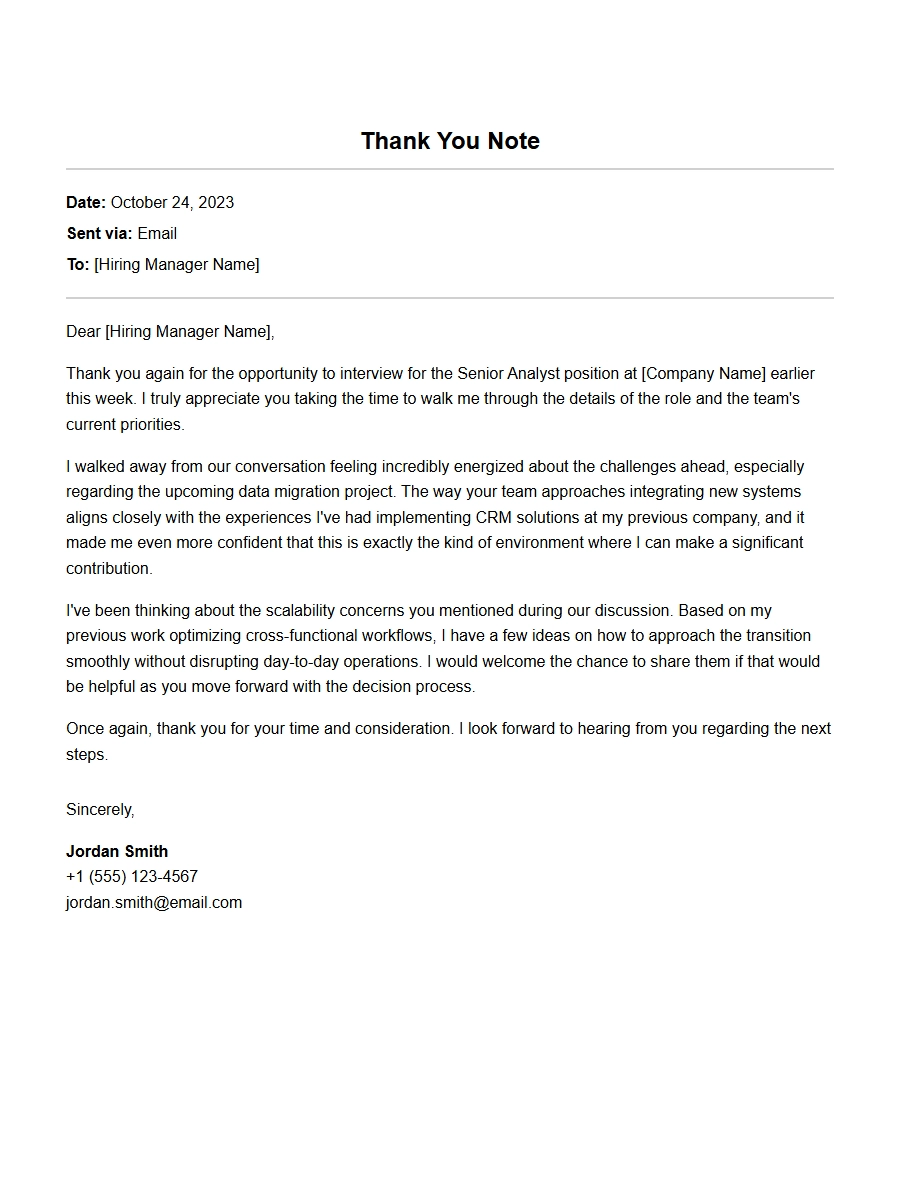 How to Write a Personal Thank-You Note After an Interview